
Friday, November 13, 2026
EDGE is live. Chicago fans can now access and explore the beta.
Home Blog Page 115

Why Ben Johnson Wants To Prioritize Luther Burden Is Far Simpler Than You Think

luther burden
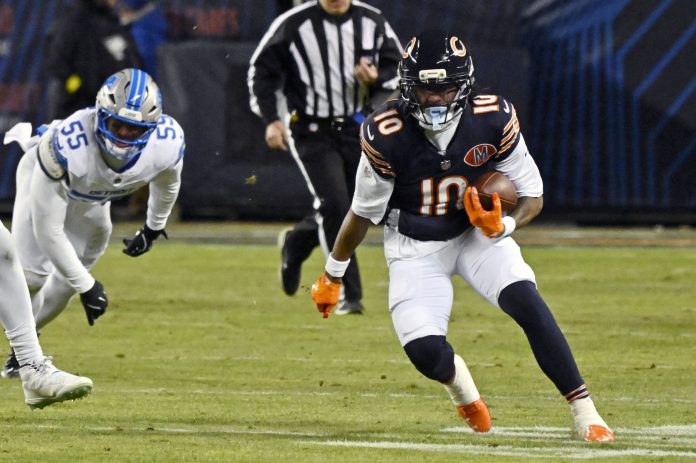
Jan 4, 2026; Chicago, Illinois, USA; Chicago Bears wide receiver Luther Burden III (10) runs with the ball against the Detroit Lions during the second half at Soldier Field. Mandatory Credit: Matt Marton-Imagn Images

“I’d start buying Luther Burden stock.” Those were the words Chicago Bears head coach Ben Johnson used at OTAs last week. For those who could read between the lines, that was a clear signal that the former 2nd round pick will be the featured wide receiver in this offense. Not D.J. Moore, who was traded, and not Rome Odunze, despite the latter being a former top 10 pick. Initial reactions to this stemmed from Johnson feeling he couldn’t trust Odunze with that responsibility because of the foot issue Odunze suffered last season. That might be a small part of it, but the real motivation is far simpler.

One thing we’ve learned about the Bears’ head coach over the past year is that he is big on specific metrics that determine the greatest offensive success. Completion percentage for the quarterback is one. Passing Expected Points Added, or EPA, is another. Both measure a quarterback’s efficiency. When it comes to wide receivers, the stat that Johnson favors in a big way is Yards After the Catch (YAC). Looking back at last season, not only was Burden the best YAC receiver on the Bears’ roster, but one of the best in the entire NFL.

Ben Johnson is merely leaning into an obvious advantage.

Think of it this way. You have two wide receivers. Both are talented. Both are good at running routes and catching the football. However, one is considerably better at making something happen after the catch than the other. Does it not make sense to get him the football more often? That is because it maximizes your offense’s scoring opportunities. You saw this happen in Detroit. Amon-Ra St. Brown was the unquestioned focal point of the team’s passing game in 2023, with 164 targets. There was one problem.

His Yards After the Catch per reception was just 5.6 yards. That isn’t anything special. So in 2024, the Lions began featuring Jameson Williams a lot more. His speed and vision in the open field made him a dangerous threat with the ball in his hands. That was reflected in his whopping 8.6 yards after the catch average. His targets went from 42 the previous year to 91 that season. The player who suffered the most from that shift was tight end Sam LaPorta, who went from 120 targets to 83. That won’t be the case in Chicago.

There is no way Ben Johnson will sacrifice targets to Colston Loveland to elevate Burden. That means Odunze is likely to see his role diminish.

Everything about this shift is about practicality.

Johnson isn’t doing this to spite Odunze or freeze out other players. His goals remain the same as when it started. That is to find the best way to score points. It is basic mathematics. If two receivers can make a catch for ten yards, but one of them can get you six or seven extra yards, you’re doing yourself and the team a disservice by not getting the ball to them more often. The only obstacle was whether Burden could prove himself trustworthy of such a central role in the offense.

That meant improving his route-running, showing his willingness as a blocker, and putting in the work to be a team player. Burden did all of those things and has continued doing so this summer. That is why Johnson felt so comfortable praising him in public. This has nothing to do with favoritism. It is all about the numbers game. More footballs to Burden increases the odds of big plays. Big plays lead to more points. More points lead to greater win probability. Just follow the math.

How The Chicago Bears Are Winning A Critical Battle In Public Perception On Stadium Issue

chicago bears
Gov. JB Pritzker answers questions after signing the Sonya Massey Act at the Illinois State Capitol on Aug. 12, 2025.

Hall of Fame quarterback Steven Young had a terrific saying. When asked about leadership, it took him a long time to realize one fundamental truth. Perception is reality. If you’re perceived to be someone, you might as well be that because it’s the truth in people’s minds. This lesson can be equally applied to the arena of political negotiations. The entire bedrock is built around winning the favor of voters. More people on your side inevitably force the other side to cave. That is the battle the Chicago Bears have waged for the better part of four years.

They want a new stadium. Soldier Field is outdated and does not allow them to maximize the fan experience, which, in turn, maximizes their revenue potential. Governor J.B. Pritzker and his Democratic government in Illinois have resisted such efforts, maintaining their stance that no taxpayer money will be used to help billionaires fund a “vanity project.” That stance has worked up to a point, but it might be backfiring as the Bears follow through on a threat to move to Indiana. Public perception is turning against them, and there is no greater evidence than a scathing rebuke from the Chicago Tribune.

The Chicago Bears seem to have the moral high ground now.

All that said, the inability of Illinois’ political leaders to get their act together so as to put an alternative on the table in the face of Indiana’s aggressive move to poach the Bears is a stinging indictment of this state’s politicians. All of the key players in this drama were Democrats and so were incentivized to grab the political credit for keeping a founding franchise in by far the biggest sports league in America in the state where it was born.

Given our state’s one-party rule, they now shoulder the blame for losing the Chicago Bears — yes, the team will continue to be called the Chicago Bears, even as it plays its future home games in Indiana…

…Pritzker, who’s running for a third term as governor and harbors presidential aspirations, likes to claim substantial economic development wins during his eight years in Springfield. And he indeed has some of which to boast.

Among ordinary folks, however, relatively few are even cognizant of the quantum technology site on the South Side or the Rivian electric vehicle factory in Normal. But the Bears? Yeah, football fans are legion throughout Illinois, as they are in most other parts of the country. The failure to put together a package to keep the Bears in Illinois is something everyone can understand.

Sometimes perception is reality. And the message sent by the sad display in Springfield this past spring is that this state’s political class can’t hammer out a deal even when they’ve all maintained they want to do so.”

Nobody can say the Bears played dirty.

They offered Illinois a pretty sweet deal, at least when compared to other stadium situations around the NFL. The Kansas City Chiefs and Buffalo Bills pried massive amounts of public money to help fund the construction at their new locations. The Bears offered to pay for that entirely themselves. What they needed was help on the brutal property tax laws in Cook County and help to improve the surrounding infrastructure. While still expensive, it is nowhere close to what other areas of the country are paying.

This is not to absolve team president Kevin Warren and the McCaskeys. Some of their decisions throughout this process have been baffling and downright counterintuitive. Still, what was mentioned above holds true. If Illinois had put any effort into offering a legitimate alternative that all sides would’ve been happy with, it never would’ve gone this far.

Stadium NamePrimary TeamOpening YearTotal CostPublic Money ContributedMain Public Funding SourceStatus
EverBank StadiumJacksonville Jaguars2028 (Projected)$1.45 billion$775 millionCity bonds & capital infrastructure fundsUnder Construction
New Nissan StadiumTennessee Titans2027 (Projected)$2.1–$2.2 billion$1.26 billionState bonds ($500M) & Metro Nashville bonds ($760M)Under Construction
New Highmark StadiumBuffalo Bills2026 (Projected)$2.2 billion$850 millionNew York State ($600M) & Erie County ($250M)Under Construction
SoFi StadiumLA Rams / Chargers2020$5.5 billion$0Fully privately funded by team ownershipCompleted
Allegiant StadiumLas Vegas Raiders2020$1.9 billion$750 millionClark County hotel room taxCompleted
Mercedes-Benz StadiumAtlanta Falcons2017$1.6 billion$200 millionAtlanta hotel-motel taxCompleted
Levi’s StadiumSan Francisco 49ers2014$1.3 billion$114 millionSanta Clara redevelopment agency & bondsCompleted
AT&T StadiumDallas Cowboys2009$1.2 billion$325 millionArlington sales, hotel, & car rental taxesCompleted

Illinois politicians are playing a dangerous game.

Yes, they’re trying to look out for the taxpayers. That is noble. However, the taxpayers love the Chicago Bears and seeing their beloved team leave for another state would be a tragedy in the eyes of many. Older New York Jets fans have said many times that it has never been the same since the team left Queens for the Meadowlands in New Jersey. The Bears have played in Chicago since 1920. It is their home. Yet this government couldn’t be bothered to do anything about it.

They sat on their hands for most of the past three years. It took the team threatening to leave for Indiana just to get it to do anything. For all the boasts Pritzker likes to make, his read of this situation could cost him and his allies in Springfield in the next elections. That isn’t great for somebody with presidential aspirations. Critics will immediately use this Bears saga as ammunition against him in the future. If he can’t manage to keep a beloved franchise like it in the state, why should we believe he can run this country?

Why The Packers Hiring Jonathan Gannon To Counter Ben Johnson Was A Mistake

jonathan gannon
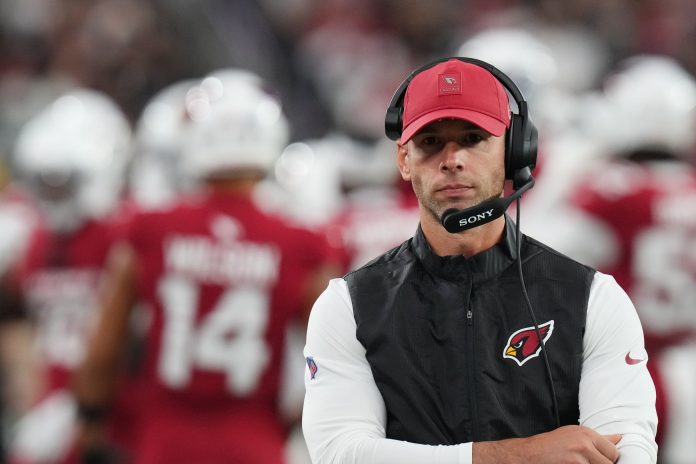
Arizona Cardinals head coach Jonathan Gannon walks the sidelines as his team plays the Jacksonville Jaguars at State Farm Stadium on Nov. 23, 2025.

The Green Bay Packers knew that losing Jeff Hafley was a possibility after two strong seasons as their defensive coordinator. Sure enough, the Miami Dolphins plucked him to become their next head coach this offseason, leaving a void on teh coaching staff they’d need to fill. Their choice was Jonathan Gannon, the former Arizona Cardinals head coach who’d helped the Philadelphia Eagles reach the Super Bowl in 2022 behind one of the best pass rushes in recent NFL history. He felt like a perfect choice to counter rising head coach Ben Johnson and the Chicago Bears.

That may have been a grave miscalculation. Yes, it’s true that Gannon has a certain knack for coaching up pass rushers. However, the same can’t be said for run defense. Truth be told, the defensive coordinator has been mostly unimpressive when it comes to stopping the run in his five seasons leading defenses. Only one of his units ranked higher than 16th.

YearTeamRoleRun Defense RankTotal Rushing Yards Allowed
2021Philadelphia EaglesDefensive Coordinator9th1,834
2022Philadelphia EaglesDefensive Coordinator16th2,068
2023Arizona CardinalsHead Coach26th2,434
2024Arizona CardinalsHead Coach20th2,149
2025Arizona CardinalsHead Coach27th2,158

That could be problematic against Johnson, who is well-known for producing some of the most consistently effective rushing attacks in the NFL.

After all, Jonathan Gannon looked rough in their two matchups.

The first meeting came in 2022 when he was with Philadelphia. Johnson’s Detroit Lions piled up 181 yards on the ground, including 144 from D’Andre Swift. Only 38 points from the Eagles’ offense staved off an embarrassing defeat. Two years later, they met again. This time, Gannon was the head coach in Arizona. It didn’t matter. Johnson’s offense racked up 187 yards on the ground. The Cardinals had no answer for it and lost 20-13. Now Green Bay is asking him to face Johnson twice a year.

He’s not exactly inheriting a favorable situation. The Packers were 18th against the run last season. Johnson put up 288 rushing yards combined in the two regular season meetings. What evidence is there that Gannon can succeed where Hafley mostly failed? This, without mentioning that Micah Parsons will likely miss the first meeting in October due to his ACL injury. Maybe he’ll discover some magic in Green Bay, but all the evidence suggests the original problem won’t be solved.

Johnson has no reason to fear Gannon.

He already knows the type of defense the Packers’ new coordinator prefers and how to beat it. He’ll spend countless hours over the next three months digging into the tape from those two previous meetings, identifying what worked and didn’t. By the time of that first matchup, he’ll have crafted a game plan tailor-made to expose Jonathan Gannon. Unless the Bears completely trip over themselves, Swift and Kyle Monangai could have a big afternoon against that Green Bay front seven.

The Packers operated this offseason as if intending to focus on stopping quarterback Caleb Williams. That is understandable after what he did to them in the two previous meetings. The problem is that much of it was supported by a ground attack that was always a threat, opening up big play action opportunities. Gannon will likely shift to lots of zone coverage to prevent this. Unfortunately, zone comes with a price. It means fewer players in the box and more space to run the ball.

Are The Chicago Bears Bluffing On Indiana? NFL Insider Has Compelling Evidence

chicago bears
Jan 1, 2012; Minneapolis, MN, USA; Minnesota Vikings vice president of public affairs and stadium development Lester Bagley speaks with the media prior to the game with the Chicago Bears at the Metrodome. The Vikings lease ends with the end of the game. Mandatory Credit: Bruce Kluckhohn-USA TODAY Sports

The Chicago Bears didn’t wait long to make their intentions known after the Illinois legislature failed to pass a bill that would’ve given the team property tax and infrastructure support to build a new stadium. They made it clear that their focus is now on the Hammond site in northwest Indiana. It really is the only path forward at this point. There are no indications that the Illinois government will address this issue in the summer or fall, so it would have to wait until next spring. If the Bears did that, it would be a clear admission of defeat and remove any leverage they had. Hammond is their only option.

Most have already given up any remaining hopes that the team might stay in the state. However, some still wonder if the Bears might be bluffing even at this late stage. Indiana lawmakers don’t think so. They believe the franchise is planning to move south once the finer details are ironed out. Yet it’s important to remember who is leading this process: Bears president Kevin Warren. NFL insider Tom Pelissero provided some compelling evidence that this public announcement was a calculated play to scare Springfield into action.

Why? The same thing happened in Minnesota with the Vikings in the early 2010s.

The Chicago Bears might be deploying the same playbook.

On May 10th, 2011, the Vikings announced their intention to build their new stadium in Arden Hills, leaving downtown Minneapolis. This entire process had been ongoing since 2007, and the state had been resistant to enacting legislation to demolish the Metrodome and build a new stadium in its place. Vikings ownership decided enough was enough and began pushing for the Arden Hills plan. Pressure mounted on the government to avoid the tax increases that would’ve accompanied such a move. Their leaders went back to the negotiating table. One year later, in May of 2012, they approved funding for the downtown site.

It stands to reason that Warren, who was in Minnesota’s front office at the time, saw the strategy work before. Why not try it again? Of course, the political situation in Illinois is significantly different. There is also the fact that the Bears don’t have an established downtown stadium site they can bulldoze. They don’t own Soldier Field, and the Chicago Park District would never agree to that. So, unless the city offers an alternate location, the only option is Arlington Heights.

Yet that also presents a problem because it would divert significant commuter revenue from the city to the northwest suburbs.

What is the Bears’ preferred endgame?

Every indication we have to this point, regardless of what they’ve said publicly, is that they want to stay in the city. Warren pivoted away from Arlington Heights back to downtown almost immediately after taking over. When that didn’t work, he started pushing Arlington and then brought Indiana into the mix. When it looked like Arlington had serious promise with the megaprojects bill, Chicago-area politicians pushed hard to get a seat back at the table, which the Chicago Bears clearly wanted, given the half-dozen phone calls the two sides had before the legislative deadline passed.

Indiana is a real option. That much is not up for debate. What we haven’t known is how committed the Bears are to going there vs. how hopeful they are that the threat of it could open the door to getting serious concessions from Illinois. Based on Pelissero’s comments, there is a strong likelihood that this is a tactic meant to give the state one last chance to show it’s willing to do something. If Illinois calls a special session or gives the team some assurance that the issue will be addressed in the fall, a resolution might be found.

Why Is Dennis Allen Stubbornly Waiting On Dayo Odeyingbo? The Answer Is Complicated

dennis allen
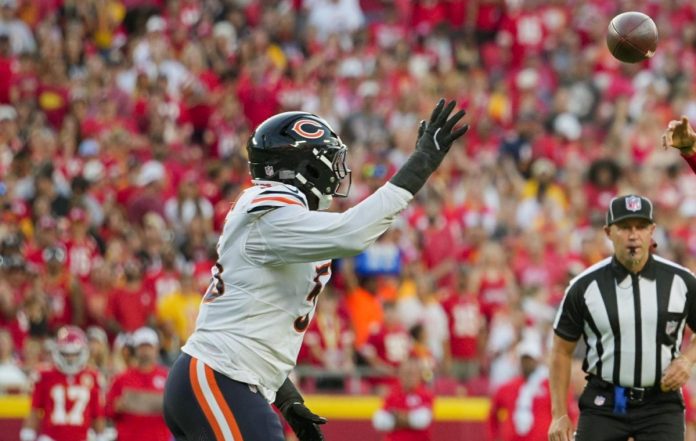
Aug 22, 2025; Kansas City, Missouri, USA; Kansas City Chiefs quarterback Patrick Mahomes (15) throws a pass against Chicago Bears defensive end Dayo Odeyingbo (55) during the first half at GEHA Field at Arrowhead Stadium. Mandatory Credit: Jay Biggerstaff-Imagn Images

The Chicago Bears seemed like one of the most obvious teams that would be aggressive on the edge rusher front this offseason. They need more juice from that group after a somewhat disappointing 2025. So you can imagine the surprise and disappointment that the team failed to make any significant additions between free agency and the draft. General manager Ryan Poles explained that the team still believed they could get strong production from Dayo Odeyingbo, whom they’d signed to a large contract last offseason. This was puzzling, since he hadn’t played well during the season before tearing his Achilles. What would compel defensive coordinator Dennis Allen to accept this?

Well, the answer to that is somewhat complicated. It comes down to usage. Most people think the Bears signed Odeyingbo to be the definitive pass rusher opposite Montez Sweat. That isn’t entirely true. Allen’s original plan for him was two-fold. Odeyingbo would play defensive end in running situations, using his big body and long arms to set the edge. Then he would kick inside on passing downs, where those same attributes would be a big advantage. Then someone else would handle the edge rush duties. Albert Breer of the MMQB laid this out.

Dennis Allen never got to implement that plan.

This is because Austin Booker got injured in the preseason. The former 5th round pick had established himself as the most dynamic pass rusher the Bears had besides Sweat. He was dominating training camp and looked unblockable in the preseason opener against Miami. Then he hurt his knee. This knocked him out for the first half of 2026, leaving the team without a reliable edge rusher. That meant Allen had to keep Odeyingbo out there, even though it wasn’t part of the original plan.

His lack of burst soon became an issue as opposing offenses found ways to slow him down, limiting his effectiveness. At the same time, the Bears’ interior pass rush took a hit when Grady Jarrett suffered a knee injury of his own. Just like that, the entire vision Dennis Allen had for the defensive front was out the window. He never got the chance to implement it. By the time Booker finally returned, Odeyingbo went down for the season. The Bears never got to see if that original idea could work.

The Bears want to use this season to see if the experiment works.

In theory, it should. If healthy, Odeyingbo could end up being one of the team’s best interior pass rushers. Booker finished last season really strong, notching 4.5 sacks in his final six games. The obvious uncertainty is what sort of player the team will get when Odeyingbo returns. Achilles injuries are nasty. They take a long time to recover from, and some players are never quite the same after them. If he can, the Bears may have an avenue to make their pass rush much more effective.

If not, then the path forward seems obvious. The Bears will save $15 million in cap space by cutting Odeyingbo next offseason. Jarrett would net another $13.5 million. If there is a defensive line overhaul coming, it was always going to be in 2027. Dennis Allen seems determined to see his plan through to the end. Thus the Bears will wait things out and hope Odeyingbo starts earning his money at some point. The good news is he should be back in time for training camp.

Why It Sounds Like Garrett Bradbury May Have The Shortest Tenure In Bears History

garrett bradbury
Feb 8, 2026; Santa Clara, CA, USA;General view down the line of scrimmage as New England Patriots center Garrett Bradbury (65) prepares to snap the ball against the Seattle Seahawks during Super Bowl LX at Levi's Stadium. Mandatory Credit: Mark J. Rebilas-Imagn Images

On March 11th, the Chicago Bears traded a 5th round pick to the New England Patriots for veteran center Garrett Bradbury. The team had just lost Pro Bowl center Drew Dalman to a surprise retirement, leaving them in the lurch at one of the most important offensive positions. Head coach Ben Johnson didn’t want to bank on the draft yielding someone he liked, and free agency would be too expensive. So general manager Ryan Poles, knowing the Patriots were about to slide one of their younger players into that spot, called about Bradbury.

The Bears had at least some stability at the spot. Then things took a twist. Chicago ended up landing Logan Jones out of Iowa in the 2nd round. Many experts graded him as the best center in the draft. A month before that, Pro Bowl center Tyler Linderbaum signed a massive free agent deal with the Las Vegas Raiders, leaving the Baltimore Ravens without a viable starter in the middle. These two events have many in Baltimore wondering whether the team might call the Bears about Bradbury’s availability.

Ravens insider Jeff Zrebiec of The Athletic mentioned it on the Glenn Clark Radio show.

Trading Garrett Bradbury does make sense.

The Bears originally acquired him because they had no choice. They badly needed somebody credible to keep the offensive line from falling apart after such a great 2025 season. While not a star, the man is smart, experienced, and dependable. Adding Jones to the mix changed the equation. This isn’t some raw prospect in need of seasoning. Jones started 51 games for Iowa. He is battle-tested and technically sound. He also turns 25 this year. This is a man in the locker room, not a kid. Jones can start immediately.

That raises a simple question. Do the Bears still prefer to ride Garrett Bradbury for this season and wait to hand Jones the baton? So far, it’s been suggested that this is the current plan. However, plans change frequently in the NFL. If Jones shows enough progress between rookie minicamps and the start of training camp, that may convince the team he can handle the starting job. If the Ravens come calling about Bradbury at that point, the Bears may not have a reason to say no.

Bradbury could have the shortest tenure ever.

Almost every notable Bears trade acquisition in history lasted at least one season with the team. Depending on how this goes, Bradbury could end up lasting barely five or six months. He may not even play a down for the team. That is how wild this situation is. Let’s not forget the Bears only have six picks next year. They might be eager to get back what they gave up for Bradbury in the first place. If the Ravens are willing to reimburse them in exchange for his services, the deal makes even more sense.

The Ravens aren’t in any position of leverage. Their current options are Corey Bullock, Jovaughn Gwyn, Danny Pinter, and Nick Dawkins. Pinter is the only one with meaningful experience, having started 10 games across six seasons in Indianapolis. Free agency? Ethan Pocic tore his Achilles last season. Ryan Kelly retired. The only other option is Andre James, who has regressed significantly over the past couple of years after some solid seasons in Las Vegas. Unless the Ravens are willing to roll the dice on him, Bradbury is their only path to finding stability for Lamar Jackson.

Why People Don’t Realize How Big Colston Loveland’s Second Year Will Be

colston loveland
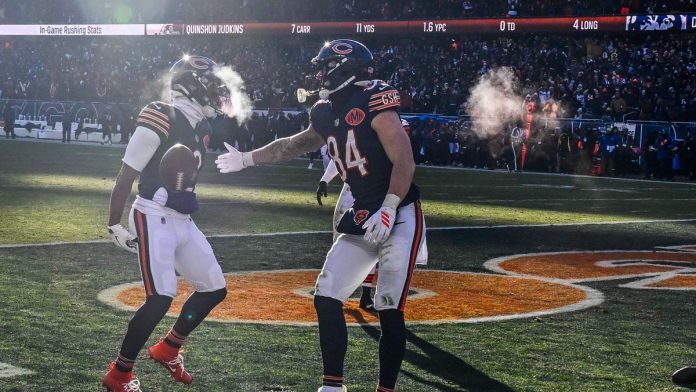
Dec 14, 2025; Chicago, Illinois, USA; Chicago Bears wide receiver DJ Moore (2) celebrates with tight end Colston Loveland (84) after he catches a pass for a touchdown against the Cleveland Browns during the third quarter at Soldier Field. Mandatory Credit: Matt Marton-Imagn Images

Tight end Colston Loveland certainly didn’t disappoint last season. After a slow start to the year, the 10th overall pick stepped into the limelight for the Chicago Bears during their last-second win over the Cincinnati Bengals. Everybody remembers his catch-and-run for a touchdown with just seconds left in the 4th quarter. That was the first indication that the Bears may have scored a big hit in the 2025 draft. Over the following weeks, Loveland emerged more and more as a primary target in the passing game.

Yet even now, many people aren’t fully grasping how serious it got towards the end of the season. Here are Loveland’s first 14 games and the averages he posted in targets, receptions, yards, and touchdowns. All pretty typical for a rookie.

Metric16-Week Cumulative TotalPer-Game Average
Games Played14—
Targets594.2
Receptions423.0
Receiving Yards52837.7
Touchdowns40.29
Yards Per Catch12.6—

Now take a look at what he put up over the final two games of the regular season and the two playoff games.

MetricFinal 4-Game Combined TotalPer-Game Average
Games Played4—
Targets4812.0
Receptions287.0
Receiving Yards37894.5
Touchdowns20.50
Yards Per Catch13.5—

Let’s put it this way. If those averages hold true through the entirety of next season, Loveland would finish with 119 catches for 1,606 yards and nine touchdowns.

Colston Loveland already has several built-in advantages.

This goes beyond his obvious talent. Players who can run and catch at his size are incredibly rare. It’s when you get into the surroundings that you start to realize how screwed defenses are. For one, Loveland is under the guidance of head coach Ben Johnson, one of the league’s top offensive minds and an aficionado of the tight end position. Then you have Caleb Williams. He targeted Loveland at least 10 times in each of the final four games of last season. It is evident there is a blossoming trust between the two. That means the tight end should see the ball come his way a lot.

Last but not least, there is the supporting cast. This is not a situation where Loveland is the only weapon of any note. The Bears had the #3 rushing attack last season, while Rome Odunze and Luther Burden served as legitimate threats at wide receiver. Then you add fellow tight end Cole Kmet to the mix and defenses can’t possibly double-cover Loveland all day without leaving themselves dangerously vulnerable elsewhere. It’s pick your poison. Either single cover Loveland, or single cover everybody else.

Only one thing stands in the way.

That is health. Colston Loveland plays a physical brand of football. So it is always difficult to tell whether his body can handle the violence. This isn’t anything new. It was much the same during his time at Michigan. There is just no way the NFL can stop him from dominating for 17 full games. He is way too good. When general manager Ryan Poles said he has All-Pro expectations for Loveland in the near future, he didn’t say it lightly. He believes that is what is coming.

If so, the Bears are in line to win a lot of football games. There is a strong correlation between teams that have top-five tight ends and teams that compete in the playoffs. We’ve seen it for years in San Francisco with George Kittle and Kansas City with Travis Kelce. It’s rather amazing that it took this long for the Bears to get back to this point after revolutionizing the position with Mike Ditka in the 1960s. Better late than never.

The Real Caleb Williams Stat That Is Holding Him Back From Superstar Status

caleb williams
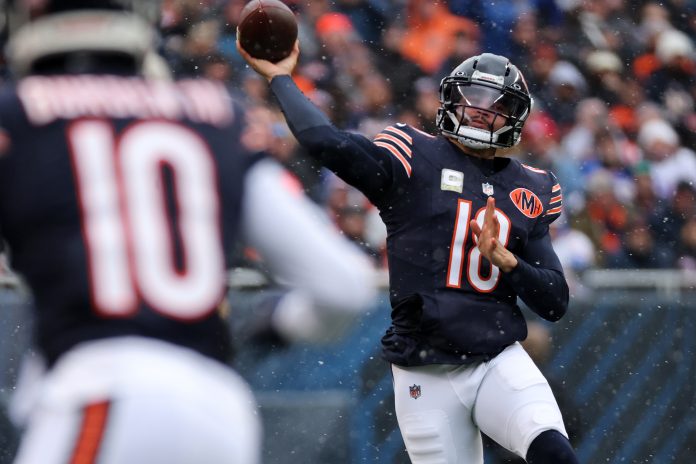
Nov 9, 2025; Chicago, Illinois, USA; Chicago Bears quarterback Caleb Williams (18) drops back to pass against the New York Giants during the first half at Soldier Field. Mandatory Credit: Mike Dinovo-Imagn Images

Caleb Williams was terrific in 2025. He set the Chicago Bears record with 3,941 passing yards, accounted for 30 touchdowns, and led seven 4th quarter comebacks. It is one of the best seasons any signal-caller has ever had for this franchise. However, it wasn’t perfect. Efficiency issues continue to follow him, most notably with his completion percentage. The 58.1% was the worst in the NFL, and a big reason why the Bears offense often struggled to find a rhythm early in games. Most continue to circle that stat as the one that must improve before you can truly start calling Williams a genuine star.

There is another that better explains a core issue with the young quarterback that people haven’t touched on. It is something called TW%, or Tight Window Percentage. NFL Next Gen Stats describes it as follows.

“The percentage of passes where the targeted receiver has less than 1 yard of separation when the pass arrives.”

In other words, the higher the percentage, the more the quarterback was willing to throw the ball into tight coverage. Some may see this as reckless. In reality, the best quarterbacks in the NFL have some of the highest numbers in the league. That is because you can’t beat great teams without being able to throw into tight windows. Reigning MVP Matthew Stafford was second in the league with 18.6%. Runner-up Drake Maye was fourth at 17.3%.

Williams was dead last at 10.6%.

Caleb Williams must be willing to test those windows a little more.

The obvious reasoning behind this low percentage is that the quarterback doesn’t want to throw interceptions. His seven in 2025 was among the best in the league. Williams’ desire to protect the football is a good thing. However, it does rob his team of some key scoring opportunities from time to time. This goes back to what head coach Ben Johnson mentioned about ball placement. Improving that is essential to helping run after the catch opportunities, but it’s also key to hitting more tight window throws.

This is not to say Williams has to drastically bump up that number. Recent history says a quarterback should hover somewhere around 12.4%. That is the average of the last seven Super Bowl champions. Sam Darnold was 13.6%. Put simply, Williams doesn’t have to erase his desire to avoid turnovers, but he must be willing to test tight windows a little more often. He has the arm talent to do this. His iconic throw to D.J. Moore against the Packers last December proves this.

Bears history backs up this assertion.

If you go back to the most recent franchise championships, you’ll find they were defined by some critical, tight-window passes. In 1985, there was Jim McMahon’s first touchdown pass to Dennis McKinnon in the divisional round to break the game open against the New York Giants. In 1963, it was Billy Wade threading a pass to Mike Ditka for 63 yards to set up a field goal that tied the game. That tie gave Chicago the crucial edge over the Green Bay Packers to win the Western Conference, catapulting them to the championship game.

Caleb Williams is better than both of those players. He is capable of making any throw you can fathom in the NFL. The challenge is teaching him when to take calculated risks. Part of it likely comes from two factors. Trust in the player he’s throwing to and the belief that the defense can bail him out if he happens to throw an interception. Given how bad the Bears defense was last year and how many drops the wide receivers had, you can understand some of the hesitation. Even so, he must start testing those windows.

The Chicago Bears Have The Perfect Kevin Warren Replacement Hiding Under Their Nose

chicago bears
Illinois House rep Kam Buckner discusses the Chicago mayoral race.

The Chicago Bears should’ve started constructing their new stadium by now. Northwestern has. The Chicago Fire have. Yet why has the most prominent sports franchise in the city taken this long to do anything? Much of that has been their inability to make headway in Springfield on legislation to address infrastructure and property tax costs. While many blame the fractious Illinois government for that, the harsh reality is that much of the blame falls at the feet of team president Kevin Warren.

Almost from the moment he arrived, it was clear the man had no vision on how to approach this issue. He pivoted away from Arlington Heights almost immediately, got stonewalled, pivoted back to Arlington, couldn’t find any backing for his cause, and then shifted to Indiana. This finally got some dialogue with Springfield, but even then, he kept stepping on toes with his utter inability to keep his mouth shut. He’s made a lot of enemies in the government with his underhanded tactics, and it’s gotten to the point where he has no choice but to take the team to Indiana.

There are only two possible ways this change. Either Illinois caves to the pressure suddenly, or the Bears have to dump Warren.

Firing Warren at this point is difficult for the Chicago Bears.

That means finding a replacement, and doing so threatens to upend any progress they’ve made in stadium talks, little though it may be. The new president would have to get up to speed before deciding on what approach he wants to take. That would take more time and cost more money. Only one thing might make it work. It would have to be somebody familiar with the process who could step in and take control. The funny part is that the Bears probably have the perfect candidate who’s been sitting under their noses the whole time.

Kam Buckner is a Chicago native who played football at the University of Illinois. He entered the political arena after graduating, climbed the ranks, and became instrumental in helping the Chicago Cubs renovate Wrigley Field in 2015. This success led to his election to the Illinois House of Representatives, where he eventually became majority leader. Over the past few years, he has directly assisted the Bears in their efforts to pass legislation to help fund a new stadium.

Buckner is everything the Bears need.

He has previous experience negotiating stadium economics. He was born and raised in the city, so he can communicate well with its leaders. He played football in his younger days and, more importantly, has the necessary political connections and experience to handle the complicated situation in Springfield. Buckner knows which palms to scratch and which doors to knock on. There is no question he would run a far tighter ship than Warren ever could, and he’s still only 41 years old.

The obvious question is, would he be interested? Well, the average salary of an Illinois House member is at most $128,000. Warren’s annual earnings are currently reported to be $13 million. The money alone would be worth making the jump. It comes down to whether Buckner has greater ambitions. He did run for Mayor of Chicago in the most recent election, but came up short. It’s possible he still has that in his sights. Then again, his career exploits have hovered around sports for a long time. Taking over as President of the Chicago Bears would be quite an accomplishment, especially if he can get the stadium situation back on track.

Craig Counsell Finally Benches Worst Chicago Cubs Hitter

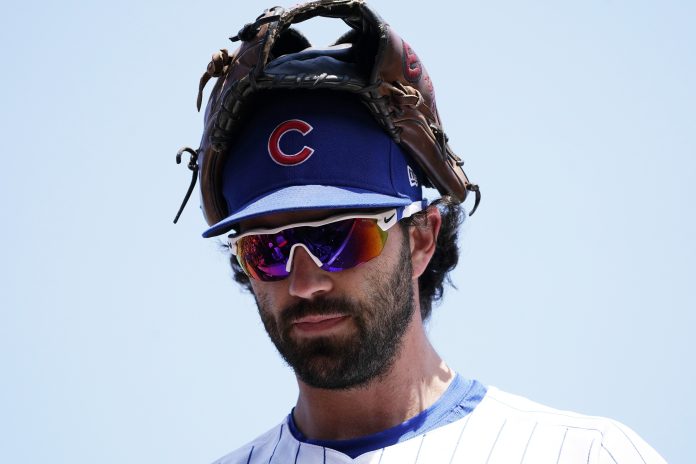
May 23, 2024; Chicago, Illinois, USA; Chicago Cubs shortstop Dansby Swanson (7) before the game against the Atlanta Braves at Wrigley Field. Mandatory Credit: David Banks-USA TODAY Sports

It needed to happen, and honestly, it should have happened before now. That being said, Craig Counsell isn’t just giving one of his veterans a breather on Saturday, as the manager confirmed that he has indeed benched the worst hitter on the Chicago Cubs, shortstop Dansby Swanson.

The 32-year-old delivered the game-tying hit in Thursday’s walk-off victory over the Athletics, but those moments have been rare for Swanson, who has been one of the worst hitters in all of MLB. In 61 games, Swanson has recorded a slash line of .180/.285/.322. His 75 wRC+ is tied with two other players for 17th worst among qualified hitters.

It has been so much worse when you see the numbers on paper. Swanson had four RBI, including the game-winning two-run home run in the ninth inning against the Los Angeles Dodgers on April 24. That big game raised Swanson’s OPS to a season-high .802. Since then, we’re talking 35 games and 131 plate appearances, Swanson has posted a .458 OPS, slashing .160/.231/.227 with one home run and five doubles.

Swanson’s 32 wRC+ since April 25 is the worst among all hitters in the National League and only second-worst in MLB behind Andres Gimenez.

Nico Hoerner is starting at shortstop on Saturday against the San Francisco Giants, while rookie Pedro Ramirez is getting the nod at second base. Swanson has been given a day off twice this season, once against the White Sox and then another seat on the bench against the Houston Astros. However, prior to Saturday’s game, Counsell said this time was different.

Swanson won’t be back in the lineup Sunday either.

We’ve seen this work in the past with Seiya Suzuki and Ian Happ, as the Cubs have sat their veterans for a few games, giving them a reset. Hopefully, it works for Swanson because it’s not that he hasn’t come through, he has become an automatic out in the Cubs lineup for the past six weeks.

We’ll see if Ramirez takes advantage of the playing time. He’s started four times since being called up a few weeks back. The switch-hitter is 4-for-16 with a walk. As for Hoerner, you can depend on him defensively at shortstop, but he’s also been a negative at the plate for the Cubs since April 18, posting a 65 wRC+ in his last 200 plate appearances.

These guys have to hit, and they haven’t, and if they don’t, then it’s going to get much uglier as the season goes on for the Cubs.