
Friday, November 13, 2026
EDGE is live. Chicago fans can now access and explore the beta.
Home Blog Page 129

The Chicago Bears Are Mastering “13” Personnel And Why The NFL Doesn’t Like It

chicago bears
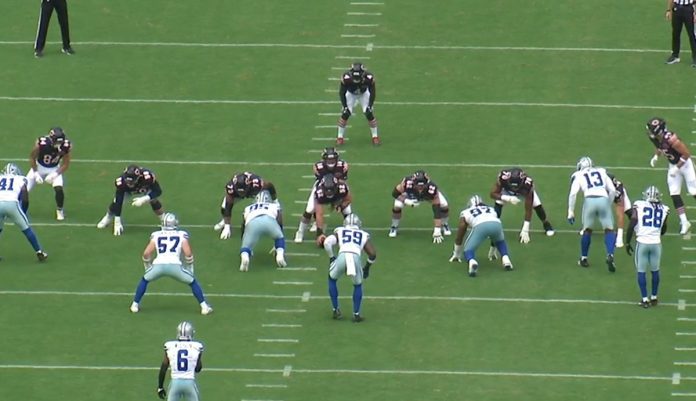
The Chicago Bears run "13" personnel against the Dallas Cowboys during the 2025 season.

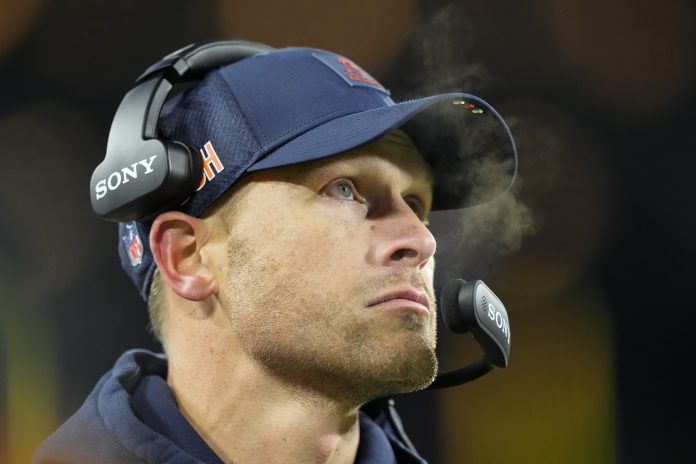
It didn’t take long to realize what the Chicago Bears were doing when they drafted Sam Roush in the 3rd round last month. Taking the Stanford tight end when they already had Colston Loveland and Cole Kmet on the roster wasn’t some weird obsession with competition. This was a declaration from head coach Ben Johnson that the Bears planned to feature more “13” personnel schemes in the offense moving forward. That means sets with three tight ends on the field at once, which the NFL hasn’t done much of in recent years, aside from heavy run packages.

However, an evolution has been taking place. Tight ends are getting bigger and faster seemingly every year. Smart coaches have begun recognizing that “13” personnel has untapped potential because of this. Johnson and Rams head coach Sean McVay are among the leading minds who recognized this and have worked quickly to embrace it. Jumping on Roush was a crucial step in that process. Johnson immediately recognized his mixture of excellent blocking and pass-catching upside would add another layer to Chicago’s already evolving attack.

RankTeam13 Personnel Usage Rate
1Los Angeles Rams30.5%
2Indianapolis Colts13.3%
3Pittsburgh Steelers13.2%
4Baltimore Ravens12.6%
5Chicago Bears8.5%

The Chicago Bears already see what “13” does to defenses.

Johnson understands that the fundamental goal of any offensive mind is to find ways to put a defense in conflict. When you force them to think instead of react, you’ve already won half the battle. Utilizing “13” personnel can be diabolical. Take the play below. As the Bears line up against Baltimore, they have two tight ends to the right with Colston Loveland and an eligible Ozzy Trapilo. Durham Smythe lines up at the fullback spot and is then shifted to the left end of the line.

Conventional wisdom says the Bears will run the ball to the right because that is where their heaviest blocking is concentrated. That is why Baltimore shifts their defensive alignment to counter it. There is one problem. Doing so automatically gives the Bears a numbers advantage on the left side because of the third tight end. As a result, the Bears control the flow of the play and give D’Andre Swift an easy 10 yards.

This reality bleeds into the passing game.

Defenses know this. They understand that having so many bodies along the line of scrimmage must force them to respect the run. Here is where things get really mean. Since tight ends today are more athletic than ever, it opens up significant opportunities in the passing game. Against Dallas, the Bears had all three tight ends line up to the left before putting Loveland in motion. It looks like they’re about to do the same thing as before, running it to the “weak” side. The Cowboys are forced to respond, only to have Caleb Williams run a play action fake, finding a streaking Loveland down the field for 31 yards.

Now think about this. Last season, defenses at least knew one thing. If the Bears did pass out of “13” personnel, the ball was either going to Loveland or Cole Kmet. Smythe was never known as a pass-catcher, even in college. All of that changes with Roush’s arrival. Suddenly, the Bears have three tight ends who can both block and catch passes. If knowing where the ball is going was difficult before, it is downright impossible now. Johnson could do almost anything.

This goes back to a classic golf reference. How many clubs do you have in your bag? In context for the Bears, it’s how many formations can they run without losing the ability to attack defenses. Rome Odunze, Luther Burden, and Kalif Raymond give them a credible trio of receivers to play “11” personnel. Loveland and Kmet give them “12” and now Roush adds “13.” Chicago can run any formation they want and be able to hit defenses hard. When was the last time you could ever say that?
Ben Johnson Hype Is Reaching Unreal Levels Inside NFL Circles

ben johnson
Dec 7, 2025; Green Bay, Wisconsin, USA; Chicago Bears head coach Ben Johnson during the game against the Green Bay Packers at Lambeau Field. Mandatory Credit: Jeff Hanisch-Imagn Images

You don’t have to ask about what Chicago Bears fans think of Ben Johnson. After what happened last season, you could say the head coach walks on water, and some might believe you. The truth is, Johnson delivered on everything that was promised in 2025. He turned around Caleb Williams, elevated the Bears’ offense, won 11 games, claimed the division crown, and won a playoff game. Oh, and he beat the Green Bay Packers twice in one season. That hadn’t happened since 2007. Johnson is the new king of Chicago right now, and justifiably so.

Still, one can imagine opinions on him are far more measured inside the NFL itself. It’s one season. While he had success, there is still a long way to go before he earns a big reputation, right? Nope. According to Robert Mays of The Athletic Football Show, several coaches in the league see Johnson not only as one of the best already, but also as destined for the Pro Football Hall of Fame. One who worked with him went so far as to say that he’ll probably end up being one of the best of all time.

Ben Johnson himself believes this, too.

Recently, a story surfaced from former Miami Dolphins Leontee Carroo, who said Johnson once told Pro Bowl receiver Jarvis Landry he wasn’t striving hard enough for greatness. He was already a good player, but if he wanted to be great, he had to work harder. Doesn’t he want to be a Hall of Famer? After all, Johnson said openly that he expects to end up in Canton when his career is over. That should tell you how self-confident and driven the Bears’ head coach is. He doesn’t feel lucky to be where he is. He expected it, and now he is moving into the next phase of that mission.

Win lots of football games.

Johnson carries the same mentality as Michael Jordan did as a player. Basically, either match his level of commitment or get the hell out of his way. It made him a tough and demanding leader, which teammates sometimes resented. Jordan didn’t care. He knew the sacrifices needed to be a champion. Johnson is the same way. He warned players to get comfortable being uncomfortable. His job isn’t to make their lives easy. It is to win games, which means demanding a lot from them as well as from himself.

Johnson has two paths to this achievement.

He must either revolutionize the NFL in some fashion, changing the game in ways that force other teams to copy him. Don Coryell did that with his innovative passing offenses. George Allen invented the nickel defense of bringing in a fifth defensive back in passing situations. Or he must win. A lot. Historically, it takes at least one championship victory and a winning percentage above .600 to meet the minimum criteria. Hall of Fame coaches have averaged a .630 winning percentage across NFL history.

Only two men in Bears history have sustained a rate of success that high across a decade or longer in Chicago. One was George Halas, and the other was Mike Ditka. Halas was a founder of the league. Ditka coached one of the greatest teams in NFL history. That is the bar Ben Johnson must reach if he wants to fulfill the expectations of both himself and his peers. He’s off to a good start in the wins department. Time will tell if he can make headway on the rings or innovation fronts.

Chicago Bears Megaproject Bill Hit By Stunning Admission From One Of Its Own Backers

chicago bears
Gov. JB Pritzker answers questions after signing the Sonya Massey Act at the Illinois State Capitol on Aug. 12, 2025.

The Chicago Bears have floundered through the process of building a new stadium for five years now. Everything started fine. They purchased the property in Arlington Heights. All they had to do was work through negotiations with Illinois to figure out property taxes and infrastructure costs. Yet team president Kevin Warren has continued to demonstrate a remarkable inability to handle that process, as he’s made constant pivots, issued ill-timed public statements, and shown an appalling lack of understanding of his responsibilities.

Never was that clearer than during the battle happening in the Illinois Senate. There is significant opposition to the PILOT Bill, otherwise known as the Megaprojects bill, which would give the Bears tax certainty and infrastructure help they need to start building. There is one gigantic problem. The team still hasn’t delivered a traffic study as part of the infrastructure plan, so there is no idea how that money will be spent. This is the biggest sticking point, and according to Illinois Senator Bill Cunningham, via NBC 5 Chicago, a co-sponsor of the bill, this could ruin any hope of getting a deal done in 2026.

That is how bad the Chicago Bears have messed this up

The PILOT (payment in lieu of taxes) bill would lock in property tax rates for the Bears at the Arlington Heights site. The team is also seeking hundreds of millions in infrastructure funding around the site as well, but Cunningham echoed the concerns of some suburban mayors who say the team has not yet delivered on a traffic study that would help determine where those funds would be spent.

“They have made a substantial request for a commitment to fund infrastructure improvements around Arlington Heights. We can’t do that without a traffic study…and the Bears don’t have one yet,” he said. “The Bears are asking for $850 million in capital expenditures from the state. We can’t line those things out unless we have a traffic study and we know what those dollars are going to be spent on.”

Cunningham went so far as to say that there is a chance that the May 31 end of the legislative session may not yield a final answer on the Bears question.

“May 31 may come and go without a final answer on all of this. That’s a possibility,” he said.

One would think Kevin Warren would’ve known this.

Remember, he inherited the Bears’ stadium project from Ted Phillips in 2022. The entire reason the team hired him was due to his experience in the Minnesota Vikings front office. He was said to have been a primary contributor to the effort to build U.S. Bank Stadium in Minneapolis. Time has shown that Warren’s influence on that process may have been overblown. Not only has he shown a gross lack of preparation for how challenging negotiations would be, but his inability to stick to a plan has only complicated matters further.

His lone tactic to this point has been constantly threatening to move the team elsewhere. Hammond, Indiana, has been the only threat that has worked to this point. Yet instead of capitalizing on the little momentum it brought by getting the bill across the finish line, his inability to do simple things, like a traffic study, has seen him resort to spamming the threat to move over and over, like a petulant child throwing a tantrum. Now, after promising shovels in the ground by the end of 2025, there is a real possibility it doesn’t happen in 2026 either.

The Bears have ten days left.

As of writing this, it is May 21st. There are ten days remaining before the end of the spring session of the Illinois state legislature. That is how long the Chicago Bears have to fix this problem. Here’s the issue. Traffic studies typically take 3 to 6 months to complete when building a new stadium. There is data collection, analysis, modeling, review, and revision. That is how detailed it is, and this is before its submission. More time is required for public scrutiny. We have no idea whether the Bears have even started a traffic study.

If not, there is no chance they can start one, finish it, and get it past the Illinois Senate in 10 days. Translation: they’re pretty much screwed. Their only hope is that they can somehow convince voters on the bill that the money will be handled with proper care once the stadium construction begins. The political equivalent of “Trust me, bro.” The cold reality is starting to sink in.

Either the Bears will wait another year to get the bill passed, or they will finally decide to move to Hammond.

How The Chicago Bears Finally Prioritizing Offense Will Lead To Greater Success

chicago bears
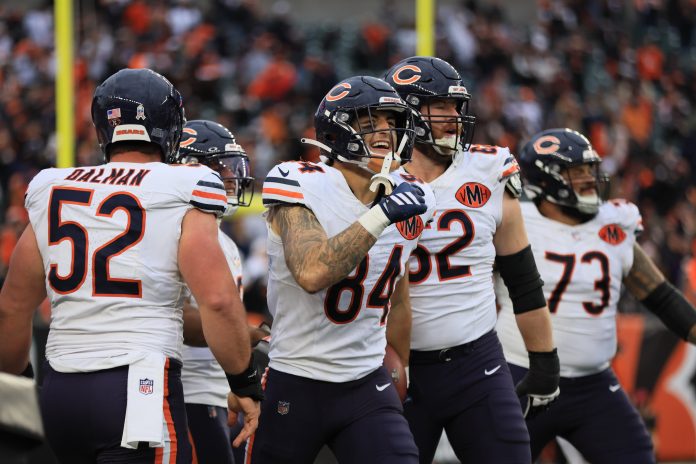
Nov 2, 2025; Cincinnati, Ohio, USA; Chicago Bears tight end Colston Loveland (84) celebrates with guard Joe Thuney (62), center Drew Dalman (52) and guard Jonah Jackson (73) after scoring a touchdown against the Cincinnati Bengals during the fourth quarter at Paycor Stadium. Mandatory Credit: Joseph Maiorana-Imagn Images

If fans weren’t sure before, the 2026 offseason left no doubts. The Chicago Bears have become an offense-first organization. That is not something people have ever considered a possibility. Defensive has been the primary identity of this organization dating back to the days of George Halas himself. Probably not, since the 1940s, when the offense was considered the franchise’s primary identity, led by Sid Luckman and the iconic T-formation. After that, it was era after era of great defenses paired with rudimentary but physical offenses. Not anymore.

Since Ben Johnson arrived as head coach last season, the Bears have invested eleven draft picks (three in trades) on the offensive side of the ball. That includes a 1st round pick, three 2nd round picks, and two 3rd round picks. By contrast, the defense has only gotten seven total picks with one in the 1st, one in the 2nd, and none in the 3rd. There is no getting around reality. The Bears are becoming an offense-first organization, and it’s about time. While some may feel this departure is destined for failure, the numbers say otherwise.

The Chicago Bears haven’t been following the NFL trend.

Thanks to constant rule changes, the league has heavily favored strong offensive teams. Since 2000, teams with a top 10 offense but no top 10 defense have made the playoffs 74 times. On the other side, teams with a top 10 defense but no top 10 offense, otherwise known as the Bears Special, have made the playoffs 67 times. That gulf doesn’t sound overly significant. However, here is where it becomes stark. In the past 25 years, four of those teams with top 10 defenses won a Super Bowl. The top 10 offenses won 12. Triple the amount.

Team Profile (Since 2000)Playoff AppearancesSuper Bowl Champions
Top 10 Offense / Outside Top 10 Defense7412
Top 10 Defense / Outside Top 10 Offense674

If you want a more direct comparison, we have that as well. If there is one organization you can call the direct opposite of the Bears historically, it is the Indianapolis Colts. In the Super Bowl era, the Bears have had 21 defenses ranked in the top 10 and only eight offenses. The Colts had only nine top 10 defenses, but 23 offenses. As of writing this, Indianapolis has made the playoffs 24 times compared to Chicago’s 18. They have two Super Bowl titles to the Bears’ one.

CategoryChicago Bears 🐻Indianapolis Colts 🐴
Top-10 Scoring Defenses219
Top-10 Scoring Offenses823
Playoff Appearances1824

It all goes back to bites the apple.

Great offense alone doesn’t guarantee championships. You need both sides of the ball to be good for the best possible chance to win a Super Bowl. Of the 58 champions so far, 30 have fielded top-10 offenses and defenses. The issue is that getting a team to that point is difficult and can take time. Until then, the goal must be to maximize your opportunities by getting to the playoffs as often as possible. Based on the data collected above, the odds are far better of doing that with a top offense than a top defense.

Johnson has been living proof of that. In his four years as a play caller since 2022, he has reached the playoffs every season. Three of those four years did not involve a top 10 defense. Four bites at the apple. Care to recall how many years it took the Chicago Bears to get four bites before Johnson arrived? That was 14 years, from 2006 to 2020. The Bears had a top-10 offense three times during that span, and they were involved in two of those playoff runs. Are you starting to see the point?

Prioritizing offense doesn’t guarantee a Super Bowl, but it certainly nudges you in the right direction.

Pete Crow-Armstrong’s Embarrassing Week Cannot End Fast Enough

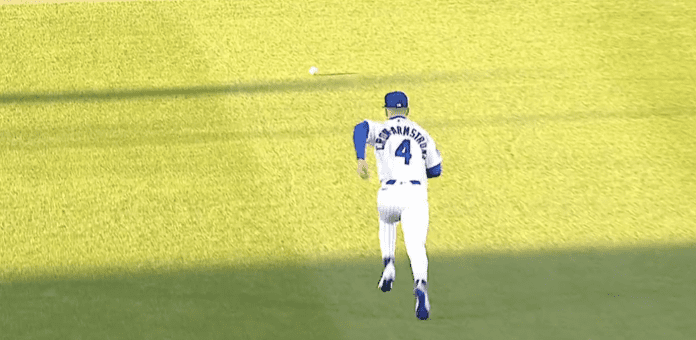
I mean, this is flat-out embarrassing, and even as a die-hard Chicago Cubs fan and a Pete Crow-Armstrong fan, he deserves all the shit that he’s currently getting and will continue to get. He made two errors all of last year, and he’s made two errors in three games against the Milwaukee Brewers this week. The one in Wednesday’s series finale will bring on an avalanche of trash talking and well, there’s no defending this.

With runners at first and second with one out in the second inning, the Brewers hit a single to center field where Crow-Armstrong let the ball go under his glove and roll all the way to the wall. Both runners scored easily, and David Hamilton raced around the bases for a little league home run, giving the Brewers a 3-0 lead on the miserable mistake by Crow-Armstrong.

Embarrassing shit. No excuses, just bad baseball.

Chicago Cubs Injury Update: Edward Cabrera Momentarily Causes Widespread Doom Among Fan Base

There were a few minutes there where it was over for the Chicago Cubs. Justin Steele suffered a setback last month. Cade Horton is already out for the season, while Matthew Boyd is recovering from knee surgery. The last thing the Cubs can afford right now is another pitching injury, and while it’s less than ideal, at least Edward Cabrera didn’t blow out his elbow on Wednesday night.

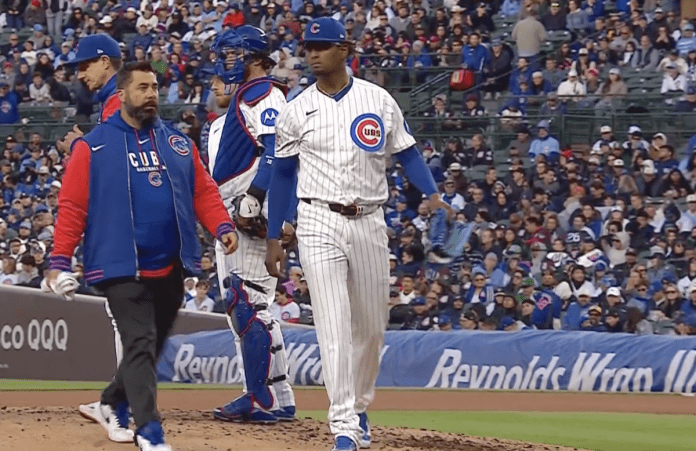
It seemed like that was the case after Cabrera threw a 92.5mph four-seam fastball to begin the fourth inning. That was considerably lower than his average velocity, and the pitch that ended way out of the strike zone made catcher Carson Kelly call for the trainer. A quick conversation on the mound resulted in Cabrera exiting the game in the fourth inning.

The Cubs finally gave an update, but those 10 minutes before hearing anything were painful. Any time you see a pitcher lose 4-5mph on a fastball and the trainer is called, you automatically think there’s an elbow injury, which means months, if not the rest of the year, being missed. Luckily, it turned out to be a blister on Cabrera’s middle finger that caused his early exit against the Milwaukee Brewers.

Cabrera allowed four runs in three innings pitched on Wednesday, but only one of those runs was earned. Yet, it was yet another shaky performance from Cabrera, who has been trending down in the past few weeks. The righty only had two strikeouts, while giving up four hits and two walks in his three innings.

Last year, Cabrera began the regular season on the injured list because he had his right middle fingernail removed to expedite his recovery from the blister that he suffered during spring training. Hopefully, this time around, the recovery will be a lot quicker for Cabrera.

The Bears Have Added Salvon Ahmed At RB And Why It’s A Clear Warning

salvon ahmed
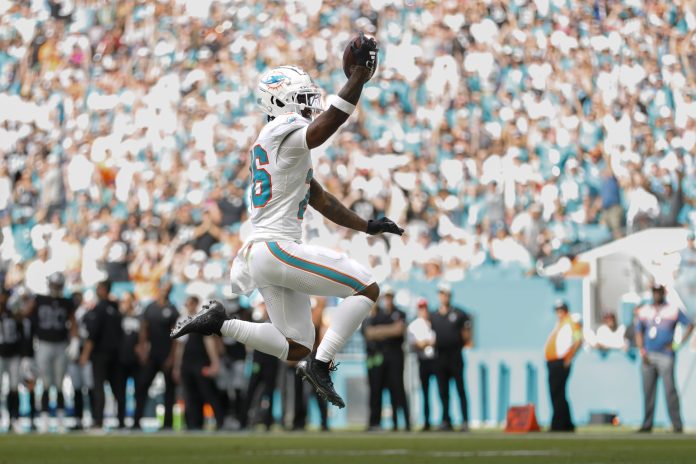
Nov 19, 2023; Miami Gardens, Florida, USA; Miami Dolphins running back Salvon Ahmed (26) reacts after scoring a touchdown against the Las Vegas Raiders during the second quarter at Hard Rock Stadium. Mandatory Credit: Sam Navarro-USA TODAY Sports

The Chicago Bears already knew coming into the summer who their primary running backs would be. D’Andre Swift and Kyle Monangai played great last season, and both are still young and healthy. They should be good to go again this fall. The concern lay with the team’s depth. Travis Homer departed in free agency, leaving them with Roschon Johnson and Brittain Brown as their two options. Undrafted rookie Cameron Bennett soon joined the mix after the draft earlier this month. Most felt that was likely the extent of their moves. Once again, we all underestimated Ben Johnson. News has arrived that the team has signed veteran Salvon Ahmed to the roster ahead of the next spring practices.

Ahmed was a fascinating prospect coming out of Washington in 2020. He’d gone for over 1,000 yards in his final season there. Unfortunately, his smaller size (5’10”, 197 lbs) and 4.62 speed led to him going undrafted. He latched on with Miami and became a backup for four seasons. After being waived, he latched onto Denver’s practice squad in 2024, was cut again, and joined the Colts’ practice squad for the rest of that year. He did enough to earn an invitation to their training camp in 2025 and was performing well. Then, a hip-drop tackle in practice destroyed his ankle, ending his season.

Why would the Bears want Salvon Ahmed?

Well, the easiest answer is depth. Johnson wants to run the football, so the deeper the stable of backs, the better. This is very much likely a signing at the encouragement of running backs coach Eric Studesville. He held the same job in Miami when Ahmed signed there, and the two were together the entire time. Nobody knows what the running back offers better than Studesville. If he thinks Ahmed could fit in this offense, then Johnson will have signed off. It’s not like the young man is devoid of talent.

Scouts and experts saw a player with great footwork and agility. Forty times aside, the tape showed somebody with legitimate field speed, able to burst through holes and turn four-yard runs into 40-yard runs. Add his capable hands as a receiver out of the backfield, and you can see the appeal. The problem holding him back was a mixture of size concerns and lack of vision. He never showed decisiveness with his decision-making. A bad tendency to dance at the line of scrimmage robbed him of too many big plays.

Ahmed is a message to the other roster incumbents.

Most notable is Johnson. The former 4th round pick has flirted with being a productive player in his career. Yet it hasn’t happened. Injuries seem to constantly get in the way every year. At first, the Bears were willing to show some patience, believing he’d come around. It hasn’t happened. Patience has run out. Make no mistake. That third running back spot behind Swift and Monangai is wide open. Everybody on the depth chart will have an equal opportunity to seize it, including Salvon Ahmed.

It will be interesting to see how he fares. This is the best opportunity he’s had since his early days in Miami. That said, the Bears run an offensive system that runs counter to his supposed strengths. They run a wide-zone rushing offense, which requires running backs to have good vision and patience. As we’ve established, Ahmed hasn’t displayed either consistently enough. Perhaps Studesville thinks Coach Johnson can find a way to use him properly. Answers to that should start next month.

Stat Projections For Caleb Williams And The 2026 Bears Offense

caleb williams
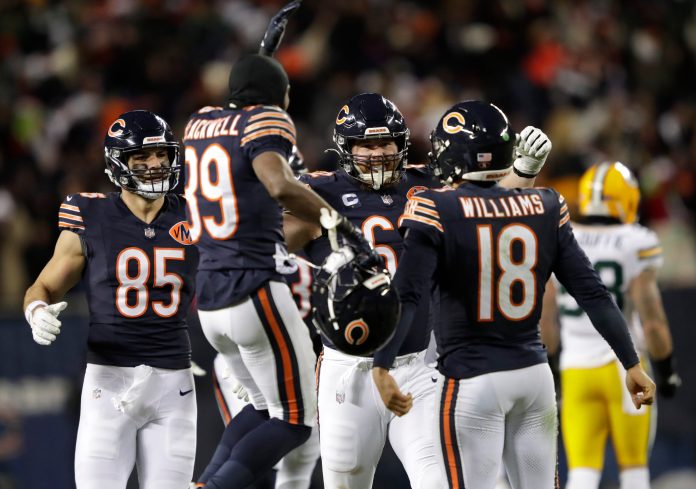
Chicago Bears quarterback Caleb Williams (18) is swarmed by teammates after throwing the game-winning touchdown pass in overtime against the Green Bay Packers during their football game Saturday, December 20, 2025, at Soldier Field in Chicago, Illinois.

The Chicago Bears offense has largely been a joke for the better part of the last 30 years. Aside from a couple of brief booms in 1995 and 2013, that side of the ball was largely a second-class citizen compared to the defense. Head coach Ben Johnson took on the monumental task of changing that when he arrived last season. To the shock of many, his impact was immediate. The running game rose to 3rd-best in the NFL and quarterback Caleb Williams delivered a franchise-best 3,941 passing yards along with 27 touchdowns to put the Bears into the playoffs.

Now, fans are wondering what to expect going into year two. Offenses tend to make a considerable jump as their grasp of the system and playbook grows. It doesn’t seem crazy to believe the same will be true for the Bears. Most of their key players from last season are back. Johnson is calling the plays and will likely dig even deeper into the playbook. Some said he was using maybe about 20% of it last season to avoid overwhelming his players.

That should create some big opportunities on the stat sheet. So here are projections for every notable name on offense.

QB Caleb Williams

  • 4,532 passing yards
  • 31 passing touchdowns
  • 8 interceptions
  • 308 rushing yards
  • 5 rushing touchdowns

Historically, when quarterbacks go from the first year of an offense to the second, there is a stat bump across the board. It usually hovers around 15-20%. Presuming Williams plays the full season again, he is projected to finally become the first Bears quarterback to crack 4,000 yards and 30 touchdowns in the same season.

RB D’Andre Swift

  • 924 yards rushing
  • 6 rushing touchdowns
  • 344 yards receiving
  • 2 receiving touchdowns

RB Kyle Monangai

  • 900 yards rushing
  • 6 rushing touchdowns
  • 180 receiving yards

Nothing has changed regarding the Bears’ backfield. Swift and Monangai remain the primary tandem. Despite some offensive line changes, the blocking should still be good. It doesn’t seem likely Swift will top what he accomplished last season. His best years have hovered between 900 and 1100 rushing yards. He’ll remain productive while Monangai bumps his own contributions up a tick.

WR Rome Odunze

  • 1,076 yards receiving
  • 10 touchdowns

Odunze was on course for a really good season before the foot injury stunted his progress. Presuming he’s healthy, he can pick up right where he left off. With D.J. Moore out of the picture, he is now the unquestioned #1 wide receiver on this team. Williams will look his way often. That should lead to career-best numbers across the board, becoming the first player to post 1,000 yards and ten touchdowns in the same season since Alshon Jeffery in 2014.

WR Luther Burden

  • 850 yards receiving
  • 6 touchdowns

Of all the players on the Chicago Bears’ offense going into this season, the largest room for growth is Burden. His combination of speed, quickness, and strength is devastating. It was always a question of his finding consistency. Due to how much Johnson likes to spread the ball around, Burden’s yardage only gets a modest bump, but his touchdowns end up tripling.

WR Kalif Raymond

  • 352 yards receiving
  • 2 touchdowns

WR Jahdae Walker

  • 274 yards receiving

WR Zavion Thomas

  • 87 yards receiving
  • 175 yards rushing
  • 1 rushing touchdown

The trio of Raymond, Walker, and Thomas will serve as the “situational” pieces for Coach Johnson. Each has certain abilities that can be highly useful in specific situations. Raymond is a strong slot target. Thomas is a versatile chess piece who can be a weapon on jet sweeps, reverses, and even straight hand-offs. Walker showed last season that he can be a reliable option on money downs.

TE Colston Loveland

  • 946 yards
  • 8 touchdowns

Make no mistake. The offense is likely to go through Loveland moving forward. Caleb Williams started looking his way a lot down the stretch last season. Defenses struggled mightily to stop him. He is very much in play to become just the second Bears tight end in franchise history to crack 1,000 yards. Staying healthy is his primary hope. Everything else is lined up for a huge season.

TE Cole Kmet

  • 399 yards
  • 3 touchdowns

Though the Bears did draft Sam Roush in the 3rd round, there is no reason to think Kmet’s role in the offense is suddenly threatened. He was an excellent #2 tight end, serving as a quality blocker and understated threat in the passing game. Every time the team needed a big catch, he was the one making it. Messing with that formula doesn’t seem like something this coaching staff would do.

Betting On Bedard: Why Blackhawks Superstar’s Contract May Not Be A Long-Term Deal

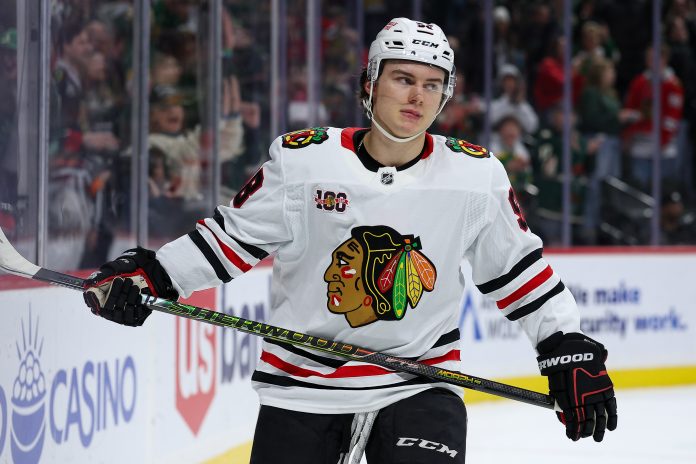
Jan 27, 2026; Saint Paul, Minnesota, USA; Chicago Blackhawks center Connor Bedard (98) reacts to his missed shootout shot against the Minnesota Wild at Grand Casino Arena. Mandatory Credit: Matt Krohn-Imagn Images

Since July 1, 2025, the first day Connor Bedard was eligible to sign his extension with the Chicago Blackhawks, he and the team have essentially brushed off any questions about his next contract. Bedard has said repeatedly that he wants to stay in Chicago and that “a deal will get done.” 

But with Bedard having wrapped up his rookie contract, the clock is ticking faster now for the two sides to get a deal done. Free agency is just over a month away on July 1, so we should see an extension come through any day now. But what will the numbers look like? It may not be as cut-and-dry as many initially thought. 

The most straightforward route is the maximum eight-year deal, and that’s the most favorable one for the Blackhawks. Bedard has shown them he can do everything that was expected of him when he came into the league, notching 75 points in 69 games this year after 67 and 61 in his first two campaigns. Assuming we treat the Kirill Kaprizov 8-year, $136M deal as an anomaly and acknowledge Bedard’s potential, they would have no problem getting him for eight years around $13 million annually, putting him just below Leon Draisaitl and Jack Eichel but above Nathan MacKinnon and Connor McDavid due to his long-term potential. With the 2026-27 salary cap set at $104 million and only continuing to jump, $13 million will seem like a steal in five years, much less eight. The best players always leave money on the table in long-term deals, especially when they sign them at age 20. 

The problem for the Blackhawks and GM Kyle Davidson is that Bedard’s camp knows that, too. While they were able to sign Frank Nazar to a seven-year extension back in August, Davidson has much less leverage in the Bedard deal. If Bedard wants a three-year deal, someone will give him a three-year deal on the open market. It wouldn’t be a huge shock if he wanted a shorter contract—that would allow him to assess how the rebuild is shaping up, especially given his hunger to win. And it gives him more chances to get a big payday now and another one in 2029. 

Plus, while Bedard has expressed a desire to stay in Chicago, and the Blackhawks certainly aren’t letting him go anywhere, the reality is that teams can sign RFAs to offer sheets on July 1. Bedard, of course, is eligible, and the Blackhawks would be compensated four first-round picks if he signed an offer sheet and went elsewhere (which will likely never happen). Teams will jump at the chance to give up four first-rounders for Bedard and sign him to a massive three-year deal if the Blackhawks won’t. That at least puts a time limit on this deal, so Chicago better hope he’s signed within the next month. 

As a result, while Blackhawks fans would love to see him become a $100 million man over eight years and lock himself in until 2034, we might be looking at a five-year bridge deal. That gives Chicago some stability for a while, but also allows Bedard to see how the rebuild turns out and continue to prove himself. That would put him along the same path as Kaprizov, who signed a 5-year, $45 million contract with the Wild at age 24. That allowed him to turn into a franchise superstar and lock up the biggest payday in league history last fall. Fans wouldn’t be thrilled to see him sign for less than eight years, but if that’s what it takes to keep him from hitting the open market, Davidson will have to bite the bullet. They’d be able to get him for less AAV with the shorter deal, but the important thing here is the term. 

BEST-CASE SCENARIO: 8 years / $108M ($13.5M AAV)


LIKELY SCENARIO: 5 years / $55M ($11M AAV)

White Sox Scratch Out Another Win As Anthony Kay Continues To Settle In

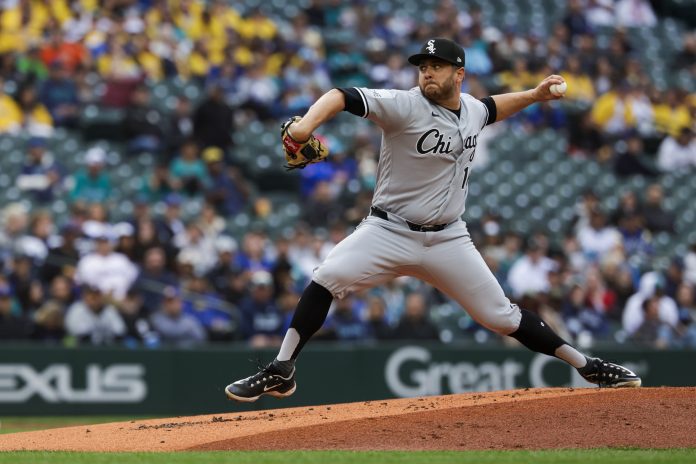
May 19, 2026; Seattle, Washington, USA; Chicago White Sox starting pitcher Anthony Kay (18) throws against the Seattle Mariners during the first inning at T-Mobile Park. Mandatory Credit: Joe Nicholson-Imagn Images

The Chicago White Sox had no business winning on Tuesday night in Seattle. The offense mustered just two hits through eight innings, and starter Anthony Kay needed 35 pitches just to make it out of the first inning. 

But despite entering the ninth inning with a 16.5% win probability, the scrappy White Sox prevailed. Munetaka Murakami drew a leadoff walk, a pitch hit Miguel Vargas, and two batters later, Chase Meidroth tied the game with a softly hit single through the right side that carried an expected batting average of just .080.

But none of that would have been possible without the efforts of the pitching staff, specifically Anthony Kay, whose resilient performance kept the White Sox in the game. 

Things got off to a rocky start for Kay in the first inning. After retiring the leadoff hitter, he allowed a single, a walk and a hit-by-pitch to load the bases. But to his credit, he settled in and limited the damage. Kay induced a force out from Patrick Wisdom and, despite issuing another walk to reload the bases, escaped the jam by blowing a 95 mph fastball past Mitch Garver for a strikeout to keep the deficit at 1-0.

After issuing another leadoff walk in the second inning, Kay settled in and retired the next nine batters he faced, ultimately setting down 15 of the final 17 hitters he saw. That included striking out two of the last four batters he faced before exiting in the sixth inning.

Kay finished the night allowing just one run on one hit over 5.1 innings, while striking out five, walking three, and hitting two batters.

Kay is going to need to limit the number of free passes he is issuing, but the fact that he was able to work into the sixth inning against a tough Seattle Mariners offense helped save the bullpen in what was shaping up to be an ugly outing. 

There were plenty of unknowns surrounding Kay when he signed a two-year deal with the White Sox after spending the previous two seasons putting up impressive numbers in Japan.

But much like his outing Tuesday night in Seattle, after a rocky start, Kay appears to be settling in and emerging as a reliable arm as the season progresses. He entered May with a 6.12 ERA, but in his last four starts, he has managed to lower that to 4.27, which is remarkable when you consider his 1.45 WHIP and 10.4% walk rate. 

Since April 27, Kay has logged 21.1 innings, allowing just five earned runs while striking out 19 batters and posting a 2.11 ERA. While the walks remain a concern, Kay has started to generate far more swings and misses. He has now pitched at least five innings in each of his last four starts, recording five strikeouts in three of those outings. 

Part of the turnaround could be due to the White Sox pumping the brakes on their opener strategy. It’s a strategy that Kay said made it difficult for him to settle into a normal starter’s routine earlier in the season. As a result, he has seen his opponents’ chase rate rise to over 30 percent, placing him in the top half of MLB pitchers. 

Kay is still a long way from being viewed as a top-of-the-rotation arm, but he appears to be finding a rhythm and has become a serviceable option at the back end of the rotation, something the White Sox will need if they hope to remain in the playoff race into August.