
Thursday, November 12, 2026
EDGE is live. Chicago fans can now access and explore the beta.
Home Blog Page 56

Gervon Dexter Just Entered The Trade Market And What The Bears Could Get

gervon dexter
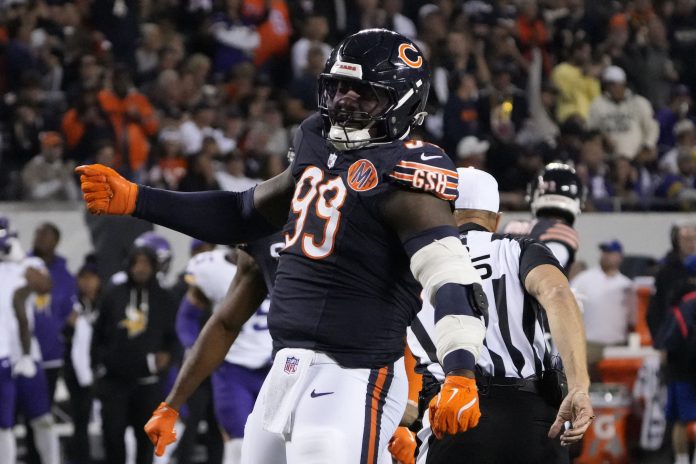
Sep 8, 2025; Chicago, Illinois, USA; Chicago Bears defensive tackle Gervon Dexter Sr. (99) reacts after a sack against the Minnesota Vikings during the second half at Soldier Field. Mandatory Credit: David Banks-Imagn Images

Head coach Ben Johnson said the Chicago Bears have an interior defensive line that isn’t getting enough attention. This is fair since the trio of Jordan Van Den Berg, Neville Gallimore, and James Lynch have all looked good in the preseason. It was assumed that two of those three would land on the roster alongside Gervon Dexter and Grady Jarrett going into the season. That assumption may have been flawed. According to NFL insider Jordan Schultz, the Bears have quietly been having trade discussions involving Dexter for some time.

This might seem shocking at first. Dexter had 6 sacks last season, finishing second on the team behind Montez Sweat. Why trade him? There are a few reasons. For one, he isn’t the best fit for Dennis Allen’s defense. The Bears’ defensive coordinator prefers defensive tackles who are quick and explosive off the ball. Dexter is neither. There is also the contract situation. This will be his last season before becoming a free agent in 2027. If the Bears have no plans to extend him, and it’s looking that way, then flipping him to another team makes sense.

Gervon Dexter absolutely has value.

Contract situation aside, he is still quite young for somebody with three years of experience and coming off his most productive season. Of course, teams would be interested. He is a solid football player who would fit well in other systems. The trick is figuring out his value. Based on the age, production, health, and contract factors, the Bears are likely looking at a 3rd round pick in return for the defensive tackle. A 2nd would be possible if he were under control for more years, but that isn’t the case. Unless a team is desperate, a 3rd feels like the sweet spot.

There is also the possibility they could do a player-for-player swap. Maybe the Bears flip Gervon Dexter to another team willing to unload someone in a different position of need. A recent example saw the Tennessee Titans send big nose tackle T’Vondre Sweat to the New York Jets in exchange for edge rusher Jermaine Johnson. Is there an edge rusher, left tackle, safety, or cornerback out there that the Bears like? Maybe they can pry Joey Porter Jr. from Pittsburgh.

It’s unfortunate that things have come to this.

Alas, this is what can happen when you change coaching staff. If Matt Eberflus were still around, there is no question Dexter would be in line for a payday. Once Allen took over, the priorities in personnel changed. When that happens, players previously considered safe become uncertain. That is what happened with Dexter. He just doesn’t fit the mold of what this staff wants. While he was productive last season, he wasn’t quite disruptive enough. The 6 sacks masked a rather pedestrian 43 pressures. That was good for 20th in the league last season among defensive tackles.

Van Den Berg’s ascent over the past three weeks undoubtedly plays a role in this decision. The Bears are truly excited about the rookie from Georgia Tech. His explosiveness is something they’ve been missing. A foursome of him, Jarrett, Gallimore, and Lynch should be plenty adequate. Remember, the Bears only have six picks in next year’s draft. Flipping a player they have no intention of bringing back to bring that number up makes sense.
Colson Montgomery’s Strikeout Problem Is Becoming a Real Issue for White Sox

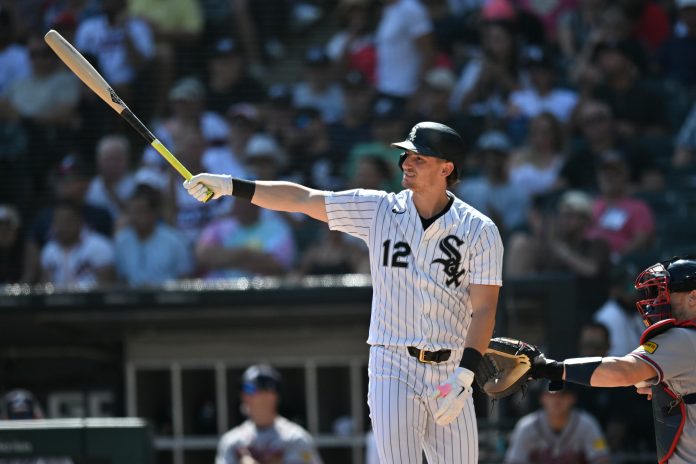
Aug 20, 2026; Chicago, Illinois, USA; Chicago White Sox shortstop Colson Montgomery (12) reacts after striking out against the Atlanta Braves during the seventh inning at Rate Field. Mandatory Credit: Patrick Gorski-Imagn Images

There is plenty to like about Colson Montgomery on the baseball diamond.  He plays elite defense, possesses some of the best bat speed in MLB, and has already launched 27 home runs while driving in 72 runs this season.  But for all the tools Montgomery possesses, his approach at the plate remains a glaring weakness, one that is beginning to cost the Chicago White Sox.

Montgomery stepped to the plate with the bases loaded in the bottom of the third inning Monday night, with the White Sox trailing the Texas Rangers 5-2 in what would prove to be a pivotal moment. With just one out, Montgomery didn’t need to do much. Simply putting the ball in play likely would have brought home a run, while a well-placed hit could have driven in multiple runs.

What followed instead has become an all-too-familiar sight for White Sox fans. Montgomery swung at four consecutive pitches, culminating in chasing a slider in the dirt before he walked back to the dugout without putting a ball in play. It marked his second of three strikeouts on the night, as the game ultimately spiraled into an ugly 11-2 loss for the White Sox.

Montgomery isn’t just leading MLB in strikeouts; he is rapidly approaching the wrong kind of history. With 178 punchouts through 124 games, he is just 45 strikeouts shy of Mark Reynolds’ MLB record of 223 in a single season.

The frustrating part about Montgomery is that his left-handed power is a legitimate weapon. Accumulating 48 career home runs in just 195 games is no small feat and teams are generally willing to trade a high volume of strikeouts for that type of thump in the middle of the lineup. But there is an important distinction: most players who strike out at that rate are true three-outcome hitters, capable of offsetting the swing-and-miss by getting on base. 

For context, here are the five highest single-season strikeout totals in MLB history:

  • Mark Reynolds (2009): 223 strikeouts, 44 home runs, .349 OBP, .892 OPS
  • Adam Dunn (2012): 222 strikeouts, 41 home runs, .333 OBP, .800 OPS
  • James Wood (2025): 221 strikeouts, 31 home runs, .350 OBP, .825 OPS
  • Chris Davis (2016): 219 strikeouts, 38 home runs, .332 OBP, .792 OPS
  • Elly De La Cruz (2024): 218 strikeouts, 25 home runs, .339 OBP, .809 OPS

That hasn’t been the case with Montgomery, who is hitting  .211 with a .289 OBP. He has also seen his OPS fall to .715, after slashing .191/.247/.325 with just seven homers and a near 40% strikeout rate in his last 227 plate appearances. 

While those issues have been more pronounced over his recent 53-game slump, they have followed him all season. Montgomery’s 34% strikeout rate is the highest in MLB, while his 8% walk rate ranks in just the 36th percentile among qualified hitters. His in-zone contact rate also ranks below the league average. 

Montgomery has never been one to hit for a high average and has always had a tendency to chase pitches out of the zone.  But during his rookie season, he punished strikes when pitchers challenged him. Much of his production last season came when he pulled balls in the air, and his 27.2% pull rate on airborne contact ranked among the highest in baseball. 

However, as pitchers have adjusted, Montgomery has yet to counter those adjustments. Not only is he expanding his strike zone far too often, but he is also starting to whiff on more pitches in the strike zone. 

He still possesses one of the fastest bat speeds in MLB and generates a high barrel rate when he does make contact. The problem is, he simply doesn’t make enough of it. In high-leverage moments, Montgomery has become one of the last hitters you want at the plate, because the odds are high that he won’t put the ball in play, let alone come through with a hit.

That’s not to say that Will Venable should take him out of the lineup; his defense is far too valuable. But Montgomery’s approach at the plate needs to change. He chases far too many pitches, often expanding the zone with non-competitive swings. 

As a result, rallies are too often cut short and runs are left on the board. In 142 plate appearances with runners in scoring position, Montgomery has struck out 61 times, recorded just 26 hits and posted a .584 OPS. That simply isn’t good enough for a player viewed as a cornerstone of the franchise.

Those Caleb Williams Not Being A Leader Takes Just Died. Here’s How

caleb williams
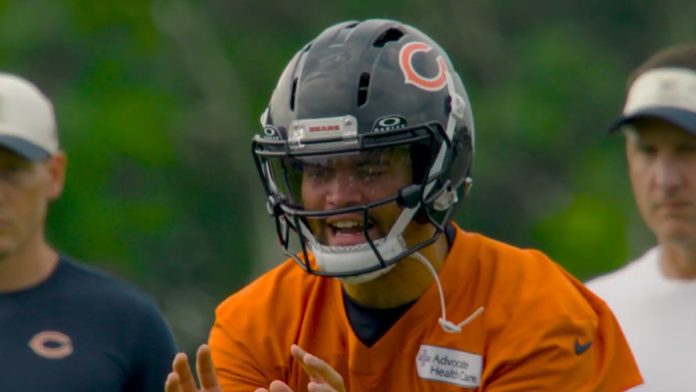
Quarterback Caleb Williams takes the snap during drills in Bears training camp.

The buzz around Caleb Williams has been steadily building heading into 2026. It’s easy to see why. His finish to 2025 was some of the most epic play a quarterback has ever produced for the Chicago Bears. That was in a brand new offense that Williams barely understood for much of the early season. Now he’s had two summers to learn it in depth and has demonstrated a growing mastery of its intricacies. Usually, when this happens, there is a significant jump in productivity.

However, better stats aren’t the endgame for Williams. His goals go so much higher than 4,000 yards and making a Pro Bowl. He wants to win championships. Plural. To do that, more is required from him than just individual excellence. Great teams have quarterbacks who are leaders. They seize control of the locker room, making sure everybody is on the same page. There have been glimpses of Williams embracing this responsibility. The latest episode of 1920 Football Drive offered the biggest yet.

It shows the quarterback standing in the middle of a huddle during training camp, giving a fiery speech to his teammates.

Caleb Williams keeps evolving.

This is often lost on people during draft evaluation. Many don’t leave room for the possibility that young players can mature. Not every quarterback will be the perfect prospect. Some will have fundamental issues, be it with footwork or throwing mechanics. Others will have maturity issues, still too caught up in the college culture. Just look at Brett Favre. He had both problems. Yet through maturation and good coaching, he transformed into an all-time great. If he got the time to figure things out, why not Williams?

This is where the Bears deserve praise. They’ve never once wavered in their approach to helping their young quarterback improve. He was drafted with full knowledge that he still had a lot to learn. While more mature than others his age, he hadn’t yet learned what it truly meant to be a leader. Head coach Ben Johnson and his staff conveyed the right message to him and, to his credit, Caleb Williams listened. Now he is molding into the total package. Guys are responding to him. He is in control.

Williams has crossed a threshold others failed to.

Previous Bears 1st round picks never really grasped the leadership baton as much as they should’ve. Justin Fields, Rex Grossman, and Cade McNown all worked hard, sure. Yet it never felt like they seized command of the locker room. Mitch Trubisky was an underrated leader. He embraced that side of the job quite well. Unfortunately, he just didn’t have the talent or production to back it up. Jim McMahon was the closest the organization came. He was an outspoken leader and played well. Sadly, injuries kept ruining it.

Williams has reached the precipice. He has the leadership, talent, and (knock on wood) the durability to make it all work. He’s also in a system designed to protect him. It is crazy to think the Bears actually did everything right for once. They laid the foundation and picked the right quarterback. Williams isn’t perfect. He has areas to improve. That said, the bust fears are long gone. Chicago found its guy.

New Footage Proves Grady Jarrett Has Embraced Mentoring Jordan Van Den Berg

grady jarrett
Defensive tackle Grady Jarrett mentors rookie Jordan Van Den Berg during the preseason opener against Cleveland.

One common myth about pro sports is that whenever you pair a veteran with a rookie, the veteran will automatically become a mentor to the younger player. That is far from the case. There are many instances when the older player treats his younger teammate with scorn and distrust. This comes from a place of fear, knowing the younger player is a threat to take their spot on the roster. Look at the relationship between Brett Favre and Aaron Rodgers for an example. Don’t bother telling that to Grady Jarrett.

The two-time Pro Bowler joined the Chicago Bears last year, already in his 30s. He didn’t play overly well, hampered by a knee injury for much of the first two months. So you might understand if he were a little prickly about the Bears adding lots of depth at defensive tackle this offseason, headlined by 6th round pick Jordan Van Den Berg.

That isn’t who Jarrett is, though. He’s always been a team-first guy. When the rookie from Georgia Tech arrived in April, the 33-year-old made it his mission to get him ready. We’ve already seen the early results as Van Den Berg creates havoc in the preseason. The Bears have monitored their relationship, providing footage via 1920 Football Drive.

Grady Jarrett is walking a perfect line between motivation and instruction.

That video is less than a minute long, but it manages to convey Jarrett’s approach perfectly. When Van Den Berg talks to him, the veteran is animated and encouraging. Then, at another point between drives, he is giving the rookie detailed instructions on what the offense is doing to block him and how to counter it. Van Den Berg is clearly taking those words to heart and applying them on the field. That is why he is constantly finding ways into the backfield through a series of different moves.

It isn’t a coincidence that Grady Jarrett was the one Van Den Berg was compared to coming out of college. Both have similar body types and athletic profiles. They also went in a similar range of the draft. Jarrett had plenty of people questioning his size, length, and power when he got drafted by the Atlanta Falcons in the 5th round. He figured out early on that if he was going to be successful, he’d have to maximize his strengths by mastering the mental side of the game. Few are better educated about football than he is.

Van Den Berg must follow the same path.

The crazy part is that he might be a better athlete and more powerful than Jarrett was. He’s already demonstrated an ability to throw blockers aside with a hump move and chase down running backs. The key for him, and Jarrett knows this, is learning to play under control. There are still too many instances of Van Den Berg losing his balance or running himself out of position. That isn’t surprising. Rookies tend to do that a lot. The trick is staying on them about it at all times. Jarrett is clearly doing that.

People can criticize the amount of money Chicago paid to sign him. He probably wasn’t worth that much. However, nobody can say the Bears aren’t doing everything they can to make full use of his remaining ability and leadership. If Jarrett can help mold Van Den Berg into the player he’s capable of becoming, it will all have been worth it. Just seeing them operate like mentor and student is so encouraging for the team’s future.

Final Chicago Bears 53-Man Roster Projection Including Some Nailbiters

chicago bears
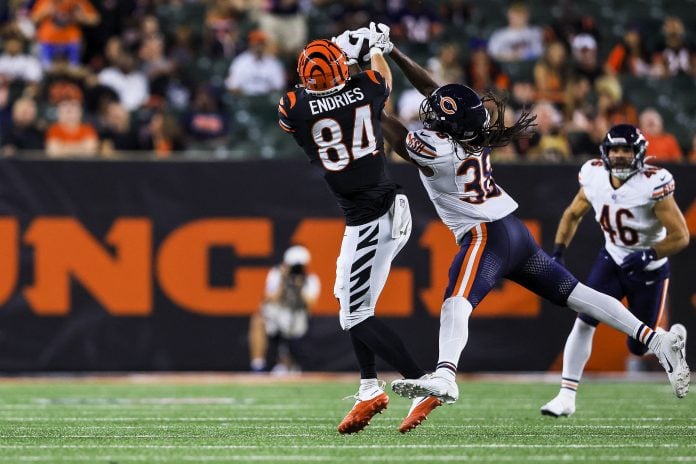
Aug 22, 2026; Cincinnati, Ohio, USA; Chicago Bears safety Skyler Thomas (38) intercepts the ball intended for Cincinnati Bengals tight end Jack Endries (84) in the second half at Paycor Stadium. Mandatory Credit: Katie Stratman-Imagn Images

The Chicago Bears may not have made their final roster decisions official yet. However, anybody with common sense knows that the coaching staff has a pretty good idea of which way they’re going. They know who is a lock for the roster and who is gone. The only remaining discussions concern the final spots at every position. Do they go light at one position so they can go heavy at another? Who are they confident they can stash on the practice squad without risk of losing a player they like?

Knowing all of the factors in play, here is my official prediction for the Bears’ roster come the final cuts. There aren’t any gigantic surprises, but there were certainly a few nailbiters.

Chicago Bears QBs: Caleb Williams, Tyson Bagent, Case Keenum

Zero surprises here. It is the same setup as last season, with Williams leading the way while Bagent serves as the primary backup, and Keenum is essentially a player-coach on the sideline. Miller Moss didn’t show much in camp or the preseason to change this.

RB: D’Andre Swift, Kyle Monangai, Roschon Johnson, Salvon Ahmed

Monangai’s knee injury status likely pushes the Bears to play it safe by keeping two backs instead of one. Johnson is still a good short-yardage back who helps on special teams. Ahmed can provide the versatility they want in the passing game, adding some needed burst to the backfield.

WR: Rome Odunze, Luther Burden, Kalif Raymond, Zavion Thomas, Jahdae Walker, Kaden Davis

Davis is the big winner. He has put together a truly impressive month of work, taking all the big plays from practice and turning them into big plays in the preseason. He’s earned that spot over Scotty Miller and the other hopefuls. Everybody else was never really in question.

TE: Colston Loveland, Cole Kmet, Sam Roush

Hayden Large has really made a strong impression this past month. Under different circumstances, the undrafted tight end would crack the roster, but the Chicago Bears don’t have the spots to spare. A trio of Loveland, Kmet, and Roush is more than enough to cover all of their bases.

OL: Braxton Jones, Ozzy Trapilo, Joe Thuney, Garrett Bradbury, Logan Jones, Jonah Jackson, Darnell Wright, Jordan McFadden, Theo Benedet, Luke Newman

With this setup, the Bears maintain good depth at all three positions up front. Jones will serve as the starter to open the season until Trapilo is healthy enough to take over. McFadden and Newman will handle the guard duties while Jones backs up Bradbury in the middle. That leaves Benedet as a sort of piece they can move around as needed.

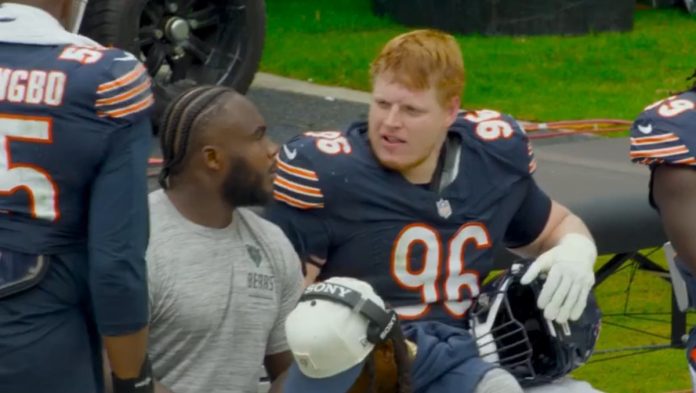
DL: Montez Sweat, Austin Booker, Marcus Davenport, Daniel Hardy, Dayo Odeyingbo, Grady Jarrett, Gervon Dexter, Neville Gallimore, Jordan Van Den Berg

This is tough since the Bears have a lot of intriguing options at defensive tackle. The problem is, they can’t afford to leave Hardy off. He is too important to their special teams. Having an experienced trio to help guide Van Den Berg feels like the right play, while it is hoped Davenport and Odeyingbo can stay healthy.

LB: D’Marco Jackson, T.J. Edwards, Devin Bush, Jack Sanborn, Keyshaun Elliott

Ruben Hyppolite would’ve been on this list if he hadn’t injured his shoulder after the first preseason game. It was another reminder that his body might not be up to the rigors of this league. Sanborn may not be a top athlete, but he’s sturdy and dependable. The Bears aren’t likely to cut Elliott despite him missing training camp with an undisclosed injury.

CB: Jaylon Johnson, Tyrique Stevenson, Kyler Gordon, Cam Lewis, Malik Muhammad, Josh Blackwell

Johnson and Stevenson are likely starters. The unknown is who will replace Gordon at nickel until he’s ready. Lewis feels like the obvious choice unless the coaches decide to gamble on Muhammad. The 4th round pick has played there almost exclusively throughout the preseason. Blackwell, another core special teamer, also wins out.

S: Dillon Thieneman, Xavier Woods, Elijah Hicks, Skyler Thomas

*Coby Bryant is on IR

Since Lewis is capable of playing safety as well, the Chicago Bears aren’t pressed to go heavy at safety, even with Bryant out. Woods should be a solid starter once he’s back from his hamstring issue. Hicks is a special teams ace, and Thomas has really earned his way into a spot after a strong camp.

SPEC: Cairo Santos, Beau Gardner, Tory Taylor

Gardner won the long snapping job early in camp. Santos and Taylor remain entrenched as the kicker and punter, respectively—pretty good continuity in the third phase.

The White Sox Could Be Making Room For Their Top Prospect

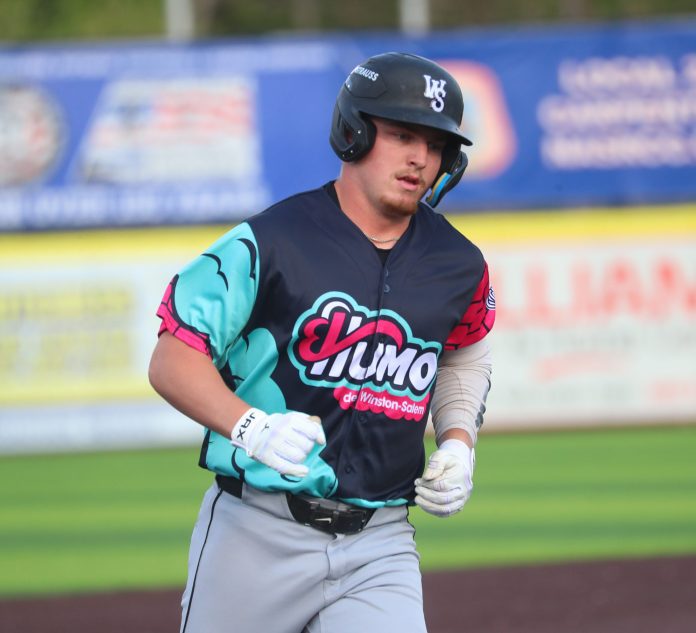
Winston-Salem’s Caleb Bonemer rounds third base after hitting a home run during their game versus the Hudson Valley Renegades on May 5, 2026.

One of the White Sox top prospects could soon have a new defensive home. Caleb Bonemer, the No. 2 prospect in the White Sox organization, will begin getting reps in center field with the Double-A Birmingham Barons and is expected to continue playing the position in the Arizona Fall League, according to Scott Merkin of MLB.com. The position change is a significant development for Bonemer’s individual trajectory and could have major implications for the White Sox moving forward.

Bonemer, 20, had a promising professional debut season in 2025 and has taken his game to a whole new level this year. In 114 games across High-A and Double-A, the former second-round pick has hit 33 home runs, driven in 83, and recorded a .936 OPS. He has also chipped in 24 doubles and stolen 16 bases, a unique blend of speed and power despite being several years younger than the competition. His strikeout rate has also decreased by nearly 5% since getting to Double-A in mid June, another positive development in his already impressive campaign.

Loaded White Sox Infield

The no. 42 prospect in baseball per ESPN and the no. 30 per MLB.com, the biggest obstacle Bonemer faces in making it to the big leagues is not of his own doing. A lifetime infielder who has played shortstop and third base in the minors, he finds himself blocked at those positions in Chicago. With Miguel Vargas and Colson Montgomery currently occupying the left side of the infield at the MLB level and fellow top prospect Roch Cholowsky also being a shortstop, spots on the dirt are scarce. Sam Antonacci moved to left field earlier this season for the same reason and it appears the organization could have a similar vision for Bonemer.

Historical Precedence

Lifetime infielders moving to center field is not unheard of. In fact, several current center fielders initially began their careers as infielders. Jackson Merrill, Ceddanne Rafaela, and Oneil Cruz all fall into this category. Trea Turner played center field early in his career, and Mookie Betts also has experience in both the infield and outfield.

It remains to be seen how well Bonemer will acclimate to the position change, but his 55-grade arm and field and 50-grade run per his MLB.com scouting report suggest he has enough speed and athleticism to give the position a try. “We brought it up to him last week and he was super open about it. By no means is he no longer an infielder. We see this as adding another tool in his bag and he’s super athletic. He’s capable of doing it,” White Sox Assistant General Manager Josh Barfield told Merkin.

Possible Outfield Opening

The White Sox current outfield situation is also a factor in this scenario. Sam Antonacci and Braden Montgomery are likely entrenched in the outfield corners moving forward, and while Tristan Peters has been arguably the biggest surprise in all of MLB this season, center field is likely the biggest question mark on the position player side of the team moving forward. As such, getting Bonemer experience and reps at the position increases his versatility and offers another potential avenue to get his bat in the lineup.

Caleb Bonemer’s arrival at the MLB level with the White Sox is quickly becoming a matter of when, not if. Exploring a position change is further proof of that. Center field is the quickest and most stable avenue for him to get consistent at-bats in a White Sox lineup that is looking more loaded by the day. His progress in learning the position is a storyline worth paying attention to as the season winds down.

Dan Hampton Admits He Sees A Familiar Face When Watching Jordan Van Den Berg

jordan van den berg
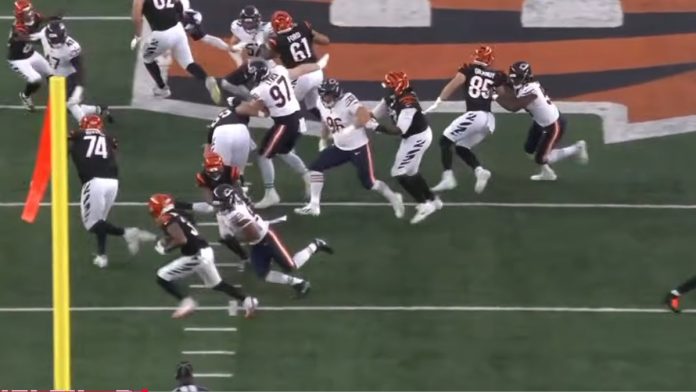
Bears rookie defensive tackle Jordan Van Den Berg breaks through the line to run down a Bengals running back.

Dan Hampton has watched a lot of Chicago Bears football in his life. Pretty much since 1979. In that time, he played with several and watched even more as an analyst and fan. As a former defensive lineman himself, Hampton can imagine he is excited by the brief snapshots he’s gotten of Jordan Van Den Berg. The 6th round defensive tackle from Georgia Tech has been wreaking havoc in Bears training camp and the preseason. His mix of power and explosiveness has many wondering where the hell he came from. How did a talent this clear fall so far?

That is a long story. The easiest explanation is that Van Den Berg started his football career late as a South African native. He got a scholarship from Penn State, but failed to crack the starting lineup for three years. This forced him to risk transferring to Georgia Tech, where he blossomed into a quality starter by 2025. That is how the Bears noticed him. After watching the rookie for weeks, Hampton saw familiar memories stir up. He told Sports Mockery’s Kevin Wells that the Bears may have something.

The Jordan Van Den Berg comp to Steve McMichael isn’t crazy.

Just start with the physical dimensions. They are virtually the same height with similar length. McMichael was 40 lbs lighter, but that was the normal range for defensive tackles in that era. Both ran a sub-5.0 in the 40-yard dash, demonstrating explosiveness. Most of all, “Mongo” was known best for his aggressive and relentless style of play. It was a big reason why he had 90 sacks in his career.

MetricSteve McMichaelJordan van den Berg
Height6’2″6’3″
Weight270 lbs310 lbs
Arm Length31″31 ⅛”
Bench Press (225 lbs)N/A35 reps
40-Yard Dash4.80 seconds4.94 seconds

People these days always assume McMichael was some hot prospect when he got to Chicago. That is not the case at all. He was a 3rd round pick of the New England Patriots and cut after his first season with the team. The Bears took a chance on him in 1982, and he eventually developed into a Hall of Fame player. Jordan Van Den Berg might be coming from a different background, but he has the same mentality. Seek and destroy. No wonder Hampton likes him already.

Hampton sees the talent. Will the rookie have the will?

That is what separated McMichael from many others. For as much talent as he had, the Bears legend was a tireless worker who took no prisoners on Sundays. Finding somebody with that level of willpower is difficult. Based on what we’ve seen over the last two weeks, Van Den Berg checks the boxes. There are no plays taken off. He is flying to the football on every snap. That is stuff you can’t teach. It is what made McMichael nigh-unblockable for over a decade.

The trick for Van Den Berg is bridging the gap between talent and technique. It’s one thing to be so gifted, but it won’t matter much if you can’t sharpen it enough to matter. The best players are the ones who can focus their abilities. The rookie isn’t there yet. He’s out of control and not playing with proper fundamentals. That isn’t a surprise. He’s young and still relatively inexperienced. The good news is that he has an excellent mentor guiding him in Grady Jarrett. If Van Den Berg follows his instructions, he will get a lot better quickly.

Kyle Teel’s Return Creates Surprisingly Difficult Decision for White Sox

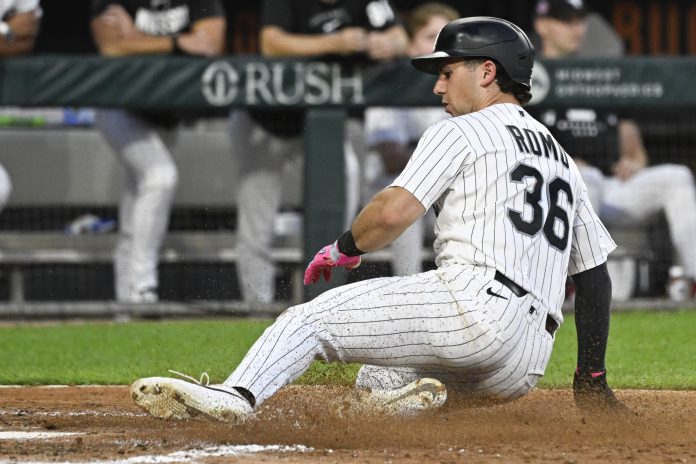
Aug 22, 2026; Chicago, Illinois, USA; Chicago White Sox catcher Drew Romo (36) slides to score a run against the New York Mets during the third inning at Rate Field. Mandatory Credit: Matt Marton-Imagn Images

Kyle Teel continues to take positive steps toward a return, which is welcome news for the Chicago White Sox,  but it will also force the club into another difficult decision behind the plate.

Teel was seen running the bases at Rate Field over the weekend before being sent to Triple-A Charlotte to begin a rehab assignment Tuesday.

The 24-year-old catcher has already dealt with three separate leg injuries this season and has been on the IL since July 20, when an attempt to tag Texas Rangers shortstop Ezequiel Duran went awry. Teel’s metal cleat appeared to get caught in the dirt as he twisted to apply the tag, leaving him in pain and requiring assistance to walk off the field.

That injury comes after he was reinstated from the 60-day IL in June after missing the first 76 games of the season due to a right hamstring strain suffered in the World Baseball Classic. What was initially expected to be a multi-week absence stretched into a much longer recovery after Teel sprained the lateral collateral ligament in his knee during a rehab assignment. 

With Teel expected to return by early September, the White Sox will have roughly a week to decide between Drew Romo and veteran Jake Rogers, with one likely to be jettisoned from the MLB roster to make room for Teel. 

On the surface, the decision appears relatively straightforward. Rogers is a six-year veteran with postseason experience and a proven track record of handling a major league pitching staff, an asset that could prove invaluable to a young White Sox catching corps that has shouldered most of the workload this season. For most of his career, he has also graded as a solid defender and recently hit a walk-off homer against the New York Mets. 

But Romo has been quietly playing really good ball as of late. On Saturday alone, he went a perfect 3-for-3 on ABS challenges and caught Bo Bichette attempting to steal second base in the sixth inning. 

ABS challenges have been a weakness for the White Sox all season, and while Romo only has a 42% success rate this season, he has been particularly effective as of late. In his last 15 challenges as a catcher, he has gotten 12 calls overturned. 

Romo has also proven to be a respectable pitch framer, which is one of the reasons the White Sox have opted to keep him on the major league roster over Edgar Quero, who arguably has a much higher offensive ceiling. While Romo grades around the middle of the pack among MLB catchers, his framing has still been worth an estimated one run saved for the White Sox.

Although Rogers is generally viewed as the better defensive catcher, the metrics tell a slightly different story. Romo has actually graded as the better overall defender this season, albeit over a much larger sample size.

Offensively, however, neither catcher provides much production. Rogers is a career .197 hitter with a .602 OPS this season, while Romo is hitting just .144 with a .535 OPS. But Romo is beginning to show some signs of life at the plate, collecting five hits over his last seven games.

While Rogers brings considerably more veteran experience, he doesn’t have the same familiarity with the White Sox pitching staff, having joined the club as his fourth MLB team of the season. Rogers has even acknowledged that learning an entirely new group of pitchers has been his biggest adjustment since arriving on the South Side.

So while Rogers may be the favorite to remain on the roster, the decision is far from a straightforward one.

Fedde’s Recent Stretch Shows Why He’s Critical To White Sox Pitching Staff

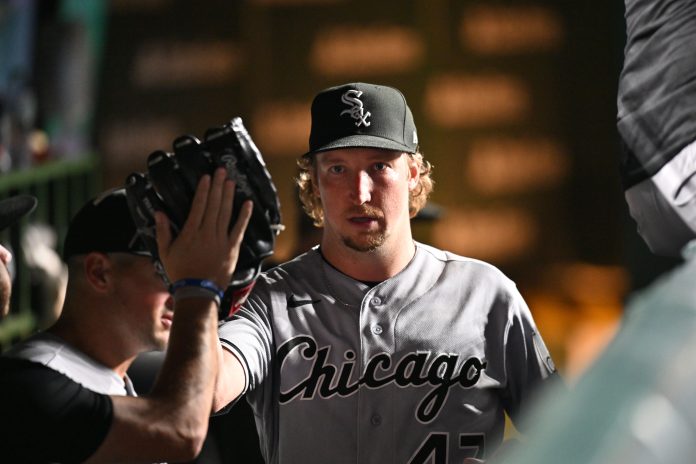
Aug 18, 2026; Chicago, Illinois, USA; Chicago White Sox pitcher Erick Fedde (47) high fives teammates as he is relieved during the sixth inning against the Chicago Cubs at Wrigley Field. Mandatory Credit: Patrick Gorski-Imagn Images

While Tristan Peters will ultimately be remembered as the hero of the Chicago White Sox’s 2-1 victory over the New York Mets, his walk-off homer would not have been possible without Erick Fedde’s performance on the mound. 

Walk-offs and wild come-from-behind victories have almost become routine on the South Side this season. Peters’ ninth-inning homer off Kodai Senga marked the White Sox’s 11th walk-off win of the season and fifth walk-off home run. He is also one of eight players to deliver a walk-off hit for Chicago, but one of just three repeat offenders, following his game-winning single against the Toronto Blue Jays in the home opener.

It was another example of the White Sox continuing to battle through a sluggish start. In fact, Peters’ walk-off homer marked the second time in three days Chicago had beaten the Mets with a game-ending blast, after Jake Rogers delivered the same heroics Friday night.

The difference Sunday was that, instead of a barrage of home runs, it was the pitching that carried the South Siders across the finish line. The White Sox didn’t score their first run until the eighth inning, when an Andrew Benintendi double brought Miguel Vargas all the way around from first.

That lead, however, quickly evaporated when Grant Taylor threw just 12 of his 29 pitches for strikes, walking two batters and surrendering the tying run to blow the save. While Taylor was ultimately credited with the win after a rare rough outing, it was Fedde who carried the bulk of the heavy lifting for the pitching staff. 

Fedde entered in the third inning and promptly delivered four scoreless frames, striking out two while allowing just four baserunners on three hits and a walk. His stability out of the bullpen was especially important in a game where the White Sox only recorded five hits and were struggling to get anything going offensively. 

While the 33-year-old right-hander has flown somewhat under the radar this season, his contributions to the White Sox pitching staff have been invaluable.

Fedde ranks fourth among White Sox pitchers with 118.1 innings this season, despite making just 12 starts across his 28 appearances. While his overall numbers may not jump off the page, he has embraced every role the White Sox have asked him to fill with the same professionalism.

He entered the year as the club’s expected fifth starter, but that plan quickly shifted to having him piggyback off an opener before he was ultimately removed from the rotation and moved to the bullpen full time.

Since making that transition, Fedde has been asked to eat innings as a long reliever, pitch in extra-inning games, and essentially serve as a de facto starter when the White Sox turn to an opener, a strategy they have relied on more heavily since Davis Martin landed on the IL. His contributions have been especially valuable as the White Sox have weathered a grueling stretch that has placed a heavy workload on the bullpen.

But Fedde hasn’t just been a workhorse; he has been remarkably effective as of late. Over his last 15 appearances, he owns a 3.60 ERA across 55 innings, including a current scoreless streak spanning 8.2 innings over his last two outings. 

It’s even more impressive considering Fedde does not have an overpowering arsenal. He doesn’t generate many strikeouts or ground balls, and opponents have generally made hard contact against him. But the veteran right-hander has used his experience to his advantage, finding ways to navigate traffic and limit damage when hitters reach base.

Instead of relying heavily on his fastball, Fedde has increasingly turned to his sweeper, the highest-graded pitch in his five-pitch arsenal, throwing it 37% of the time. While opponents are hitting .263 against him overall this season, that average drops to .211 against his sweeper.

In his last two outings against the Cubs and Mets, Fedde has looked especially locked in, attacking every pitch as if the outcome of a playoff game depended on it. In many ways, he is pitching for his MLB career. 

The reality is that there may not be a robust market for a 33-year-old pitcher carrying a 4.18 ERA who doesn’t overpower hitters or dominate in any one particular area. But what Fedde has proven in this recent stretch is that he is a gamer, willing to take on any role the White Sox have asked of him. 

Will Venable also deserves credit for how he has deployed Fedde. By using him as a long reliever out of the bullpen, Venable has been able to shield Fedde from the top of opposing lineups while limiting him to shorter outings, helping prevent hitters from seeing him a third time through the order.

Will Venable also deserves credit for how he has deployed Fedde. By using him as a long reliever out of the bullpen, he has been able to shield Fedde from the top of the lineup and use him in smaller doses to prevent the opposing lineups from turning over for the third time. 

Fedde may not be the biggest name in the White Sox pitching staff, but with the multiple relievers being pushed to fill multiple roles and the postseason drawing closer, his ability to take on whatever role Venable needs could prove invaluable down the stretch.

The Ozzy Trapilo Return Date Just Became Clearer And What It Means For The Bears

ozzy trapilo
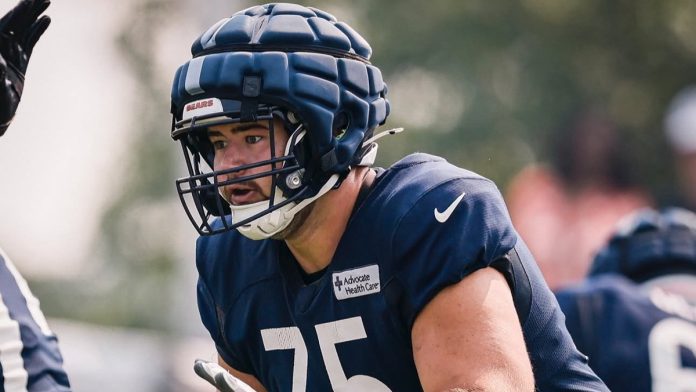
Bears left tackle Ozzy Trapilo goes through drills in training camp.

The Chicago Bears haven’t come any closer to solving their left tackle problems. For the second year in a row, a competition in training camp yielded no results. Braxton Jones once again appears on the cusp of winning by default because every other option has been worse. Theo Benedet, Jedrick Wills, and Kiran Amegadjie all struggled at different points this preseason. Even Jones had some rough moments. It’s just that he is a little more consistent. One thing is undeniable from all of this. Ozzy Trapilo can’t return quickly enough.

Everybody was stunned at the news that the former 2nd round pick had returned to practice just eight months after tearing his patellar tendon in the playoffs. It was a medical marvel. Still, this didn’t immediately indicate when Trapilo actually starts playing again. Is opening day even possible? Probably not. Brad Biggs of the Chicago Tribune made it sound like the Bears have no intention of rushing Trapilo back that fast. They intend to make sure he is absolutely 100% recovered, mentally and physically, before getting him out there. That means one course of action.

Ozzy Trapilo likely ends up on Injured Reserve.

My hunch is the Bears will move Trapilo to injured reserve either simultaneous to forming the 53-man roster or right after. There just isn’t enough time for him to be game ready, and remember what Ben Johnson said: They want Trapilo to be able to build back his confidence.

I referenced in last week’s mailbag that if the Bears, in hindsight, felt they might have pushed Braxton Jones a little too quickly last summer in his return from a serious injury, that’s a good reason to proceed cautiously with Trapilo.

Folks will ask what a timeline for Trapilo being on the field looks like, and I don’t think anyone can provide the answer. If he winds up starting the season on injured reserve, he’ll be sidelined for at least the first four games. That shouldn’t disappoint anyone. Returning in the first half of the season would put him significantly ahead of where the team envisioned he might be back when the offseason program began.

This approach is probably the smart one.

The Bears learned some tough lessons last season with Jones. It became apparent even before the start of last season that the left tackle wasn’t healthy. It felt like he’d rushed back early for training camp, not wanting to lose his job. While commendable, it ultimately hurt his performance on the field. After a month, the coaches had seen enough, benching him in favor of Benedet, who in turn was benched for Trapilo. One can safely assume the Bears don’t want to repeat the same mistakes with him.

Even if he’s feeling recovered, that does not mean he is ready to play. His conditioning isn’t where it needs to be yet. One can’t expect him to get there in just a few short weeks. He needs time. The Bears cannot afford to rush the process. They view Ozzy Trapilo as a core piece of their future on offense. That means doing things the right way to make sure he is around in the long term. If that means sacrificing a month’s worth of games, so be it. The Bears likely feel they can survive four games with Jones in the lineup.

The Bears already have proof of concept.

Remember, it took a long time for them to ramp up Austin Booker when he returned from his knee injury last season. Some wondered if there had been complications. In reality, that was probably the first example of the team learning its lesson from the Jones situation. Thus, when Booker returned in the second half of the season, he actually played quite well. He was a big part of their push in December to lock up the division. The hope is they can now repeat this approach with Trapilo.

It’s fair to assume the young tackle is anxious to get back. He wouldn’t have attacked the rehab process so fervently if that weren’t the case. He may feel he can play opening day. After all, there is still a month to go before week one. That is plenty of time to get himself in shape and back up to speed. This is a situation where the team must protect the player from himself. Trapilo will play in 2026. He’ll just have to wait a little longer. A few extra weeks won’t hurt anything.