
Monday, April 13, 2026
✶ Untold Chicago Stories ✶ Amazon Music
Home Blog Page 2776

The Cubs Do Not Quit, Here’s A Stat That Proves It

I’ll admit, if you go back every year in MLB history I bet the league leaders in come from behind wins just end up being very good teams. That’s not different this season, as the Chicago Cubs just do not quit.

So, it’s not some special quality that defines this team, it’s just another example of how good of a team the Cubs are.

The Cubs took 3-of-5 five games from the St. Louis Cardinals after the all-star break and that included two wins after they were trailing early. Sunday’s 7-2 win was their 32nd victory of the year for the Cubs where they had to overcome a deficit.

The Cubs do not quit.

Jose Quintana got into some trouble immediately, giving up a run in the first inning to St. Louis. The Cardinals scored another run in the fourth, but the Cubs tied the game in the bottom half of the inning.

Then, Kyle Schwarber got the lead for good in the sixth.

Yet, the offense didn’t stop, adding another run in the seventh with an RBI-single by Kris Bryant and then three more runs came across the plate in the eighth.

Through 98 games this season, the Cubs have scored 195 runs from the seventh inning on. That ranks No. 1 in MLB, with the Houston Astros in second with 178 runs.

Plain and simple the offense is relentless.

Looking deeper in those numbers in late-inning situations, you can also see that despite the Cubs’ offense changing it’s not suffering. As a matter of fact, the new approach is off the charts.

Yes, the home run numbers are down in 2018 for the Cubs, despite Javier Baez and Kyle Schwarber on pace to set new career highs in dingers.

The seventh inning or later stats show a smaller example of how the Cubs don’t rely on home runs to score.

Overall, the Cubs have 104 home runs this year, ranked 19th in MLB and ninth in the National League. Despite that, the Cubs rank fourth in runs scored in MLB and number one in the NL with 507.

Just how dominant has the Cubs offense been? The Colorado Rockies are second in the NL in scoring at 485 runs. So, that’s 22 more by the Cubs and the Rockies play half their games at Coors Field and so far have played in one more game overall.

How are the Cubs doing it?

The home runs are down, but the batting average and OBP are better than ever. The Cubs are hitting .268, second to only the Boston Red Sox in 2018, and the Cubs’ .349 OBP is first in MLB.

All that has the Cubs as one of the scariest offenses in baseball the number-one scoring team in the National League.

So yeah, it’s no surprise that the Cubs don’t quit. They’re just really damn good and they don’t need home runs to be dangerous.

Check out this thread for an even deeper look at how the Cubs, in this case specifically against relievers, are getting the job done.

In 2017, the Cubs hit 223 home runs and scored 822 runs. This year, they’re on pace for only 172 homers, but at this rate they’ll end up with 838 runs.

Oh, one last thing.

Bring the DH to the National League please and thank you.

*all stats are from after games were played on 7/22
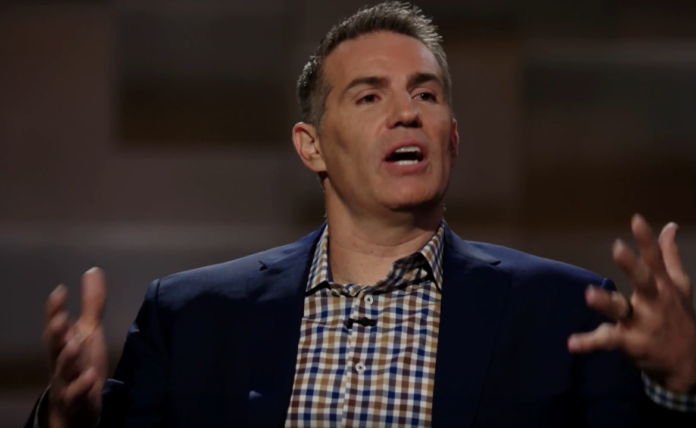
Kurt Warner Tells All On How He Was Almost a Chicago Bear

kurt warner

The Chicago Bears have a long history of painful near-misses at the quarterback position. It’s grown almost comical to this point. In 1970 they lost a coin toss with Pittsburgh that cost them the chance to draft Terry Bradshaw. Nine years later they had a chance to select Joe Montana in the third round of the draft but passed on him for a backup running back to Walter Payton. Yet the most painful miss? That may be Kurt Warner.

Most people have heard at least part of the story by now. In 1997, Warner was looking for a way into the NFL and was hoping for teams to give him a tryout after a successful run in the Arena League. The Bears were one of the teams in need of depth at the position and they were willing to entertain him for a tryout. All that’s known at this point is he came down with an illness in his throwing arm on his honeymoon and the Bears backed out.

What hasn’t been known are the exact details of how everything went down. This might be a tough ride for Chicago, learning just how close the team came to landing the eventual Hall of Famer. He explained himself during an interview on Undeniable with Joe Buck.

Incredibly bad timing and luck robbed Bears of landing Kurt Warner

It’s important to remember that Kurt Warner wasn’t Kurt Warner back then. Most teams knew him as a former Northern Iowa quarterback who did well in the Arena League. The Bears were willing to give him a look because their own quarterback depth chart was not ideal. If Warner had signed, he would’ve been up against Erik Kramer, Rick Mirer, and Steve Stenstrom for a shot to claim the starting job.

Smart money says he probably would’ve at least made the team and from there worked his way up the depth chart like he eventually did with the St. Louis Rams. To think the brutal timing of them calling during his wedding and honeymoon time, then getting stung or bitten by a poisonous critter right where he could least afford it?

It’s not hard to see why the Bears backed out. A team could’ve only been so patient in those circumstances. Still, it’s fascinating to wonder how things might’ve been different had Warner managed to make that tryout 21 years ago. Would Dave Wannstedt had saved his job? Would Brian Urlacher have ever been a Bear?

All of those and more were possibilities that never came to pass.

The Bulls Have Added To Their Roster

The Bulls roster is very close to being a finished product, with 14 players under contract for next season.

Last year, the Bulls regularly utilized two players on two-way contracts, Antonio Blakeney and Ryan Arcidiacono. It’s plausible that the Bulls could fill their final open roster spot with a similar rotation this season.

Blakeney used last year’s opportunity to earn a guaranteed contract, and the Bulls are giving undrafted rookie Rawle Alkins the same opportunity.

Alkins, a 5-star recruit coming out of high school, had his sophomore year derailed by injuries. He still declared early, a move he may regret considering he went undrafted.

But the Bulls are giving him a shot, hopefully he’ll be able to realize his full potential in the Windy City.

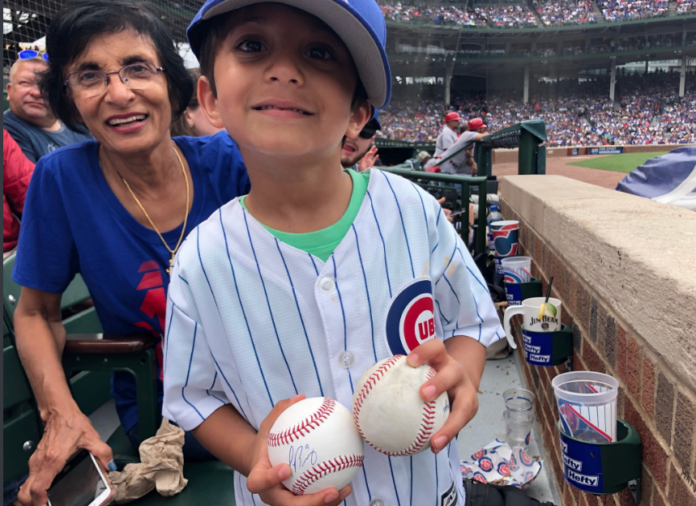
Cubs Give Young Fan A Javier Baez Signed Baseball After Different Fan Gets Shamed On Twitter

Shaming someone on social media results in something good sometimes. Today was one of those times.

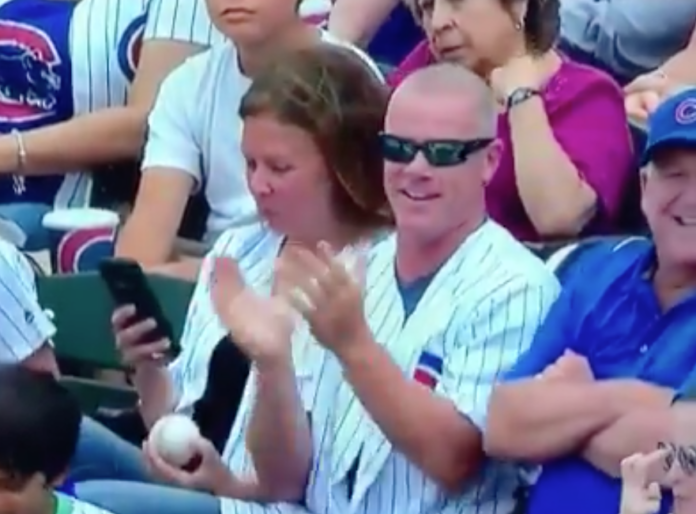
During Sunday’s series finale between the Chicago Cubs and St. Louis Cardinals, this happened.

That went viral on Twitter and the Cubs social media team noticed. That prompted the following.

Well done, @Cubs.

VIDEO: This Cubs Fan Sucks

Always give a ball to a kid. It’s not that complicated.

This douchebag sees a little kid in front of him miss a ball that rolls under the seat and then after the kid’s guardian looks at the dude he claps in her face.

That Cubs fan sure does suck.

UPDATE

The Cubs are awesome.

UPDATE

It appears that there’s more to this story.

Turns Out That Cubs Fan Who Went Viral Isn’t Actually A Terrible Person

Kyle Fuller Showing He’s Still a Bad Man Despite New Contract

kyle fuller

One of the biggest fears for teams, when they’re handing out lucrative new contracts, is the “complacency” rule. It occurs with younger players who didn’t do too much early in their career, then they lit the world on fire for their contract season. This forces a team into a decision, either pay them in hopes that the trend continues or gamble that it was a one-season wonder. The Chicago Bears faced this situation with Kyle Fuller.

Often when the player gets that fat, new contract they tend to vanish as quickly as they appeared. They revert back to the form they showed earlier in their career. It becomes apparent the only reason they tried hard was to get that new payday. This was undoubtedly a fear with Fuller who’d endured a roller coast first three seasons in Chicago before breaking out with a tremendous 2017 performance.

He started all 16 games, had two interceptions, 22 passes defended and finished second on the team in tackles. The Bears elected to use the transition tag on him this offseason betting no other team would make an aggressive offer to get him. Green Bay made an offer he liked, but in the end, Chicago matched it, giving their former first round pick a four-year deal at $14 million per season.

The only thing left to do was wait and see how he’d react.

Early signs show Kyle Fuller is anything but complacent after new deal

Based on impressions from the first three practices of training camp, Fuller is rolling along as if the new contract never even happened. Receivers always seem to find him waiting when the ball arrives, either to knock it away or intercept it. He seems even more comfortable and aggressive in his style than ever before. There’s no thinking in his movements. Just reading and reacting with quick precision.

Try to run an out route to the sideline? He breaks to the ball and knocks it away. Try to run him off on a vertical? He’s in the hip pocket and ready to pounce the second the ball is underthrown. It’s crazy to say but he looks even better than he did at the end of last season. It seems like the only times he gets beat is by a perfect throw or an offensive pass interference.

Why is this still so hard to accept? Fuller was a first round pick for a reason. He’s that talented. It was always felt that if he got the right coaching and found the right work ethic, he could be as good as anybody in the NFL. Maybe his frustrating first three years which included inconsistent play and then a season-ending knee injury convinced people he just wasn’t good enough.

This is proof that not every top draft choice becomes a success right away. Patience is required sometimes. It’s still early and things might change, but the evidence is piling up fast. Fuller not only looks like he could duplicate what he did in 2017 but perhaps even surpass it. Could he be the first cornerback to make a Pro Bowl since Tim Jennings way back in 2013?

It looks like he’s determined to try.

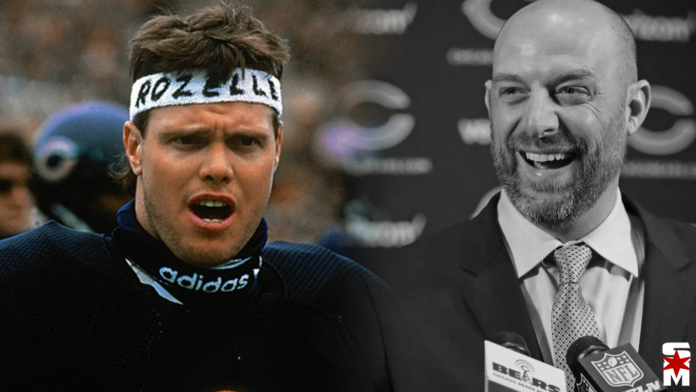
Matt Nagy Stole Page From Jim McMahon to Become a Great Play Caller

matt nagy

It almost seems like fate that Matt Nagy would become head coach of the Chicago Bears. They happened to draft a quarterback in Mitch Trubisky he connected with. Their job became available right when his star was on the rise as a coordinator. Most interestingly, he was coached at one point by former Bears folk hero Doug Plank in the Arena Football League. There were always interesting connections and parallels between the two.

Another interesting one that people may not have realized? It’s a connection to former Bears quarterback Jim McMahon. Now, this is less a direct link and more a meeting of two similar mindsets. One of the things that stuck out about McMahon during his career in Chicago was his ability to elevate the passing game to respectable levels.

This despite playing in a system that was as smashmouth and old school as it could get. Head coach Mike Ditka, for all the good things he did during that time, wasn’t the most innovative offensive strategist. This forced McMahon to stage his own sort of rebellion, often changing play calls that came in.

Ditka hated it. That was a big reason he tightened his grip on quarterbacks that followed McMahon. Yet the results were pretty conclusive. Almost every change the QB made was the right one. It’s interesting what might’ve happened had McMahon ever gone into coaching himself. Perhaps he would’ve been exactly what Nagy has become.

Matt Nagy had the exact same mindset as McMahon

Adam Jahns of the Chicago Sun-Times spoke with former Nagy teammate Brian Ginn about the origins of the Bears head coach. When talking about his time at Delaware as a quarterback, Ginn revealed that Nagy had a bit of McMahon in his blood.

Four or five times a game, the play that was run was not the play that the head coach or the offensive coordinator had called,” Ginn said during an interview during the offseason program. “Matt would claim that I messed the signal up. I would claim that he was changing the plays.”

Jokes aside, Ginn realized halfway through that season that Nagy was right in making the changes. It’s partly why Nagy left Delaware with more than 20 passing records.

“All the plays that he was changing were working, so I just started taking credit for changing the signals, even though I know it was him,” Ginn said, laughing. “It was just like that.”

It takes courage to do something like that. Having that willingness to defy the game plan in order to make a play work. By showing he could do that in college, Nagy had basically planted the seeds of his future as an offensive play caller. One of the hardest things to do in football is seeing the way a defense is playing and adjusting to the right offensive plays best suited to attack it.

That is what good offensive coaches are required to do. Learning this bit of history, it’s even less of a surprise that Nagy became such a successful offensive coordinator during his time in Kansas City. It’s clear he understands how to evaluate a defense and more importantly an ability to change what he’s doing in order to beat it.

This is something the Bears haven’t had in a long time. It’s little wonder they’re so excited about what’s to come.

Javier Baez Has A Message For All These Lame Umpires

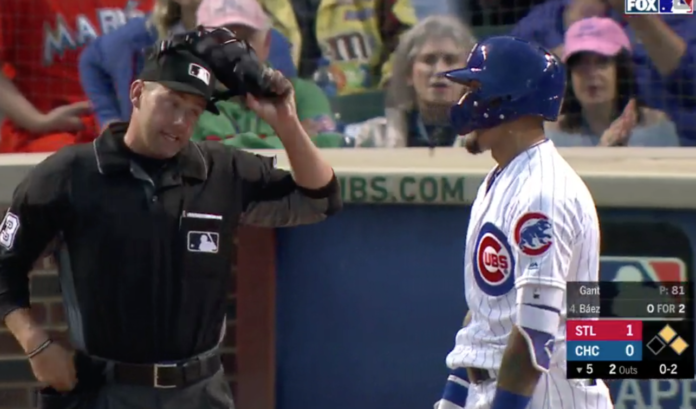
You’ve seen the video by now. Javier Baez was ejected for the first time in his career Saturday night after a check swing was called strike three in the fifth inning, as the Chicago Cubs were threatening with two men on base and two outs against the St. Louis Cardinals.

Baez was pissed that Will Little, the home plate umpire, didn’t appeal down to first and instead made the call himself. Baez had his words and then walked away back to the dugout, throwing his helmet and bat to the ground in frustration. It wasn’t until then that Little ejected Baez.

See for yourself.

Again, Baez had his back turned, walking back to the dugout when he got tossed out of the game.

Following the 6-3 loss, Baez spoke to reporters and he had one clear message for umpires.

Here are the rest of Baez’s postgame comments on the ejection.

And really that’s the biggest thing here. Umpires are way too quick to make these thing about themselves.

At no point did Baez appear to be mouthing off at Little until after he got ejected. All he wanted was an appeal to first and explanation on how he could possibly have a good view behind the plate, while focusing in on the strike zone at the same time.

To then throw Baez out because he threw his helmet and bat toward the dugout and was walking away? Flat out wrong decision by the umpire.

All because he got mad that he was questioned? Embarrassing.

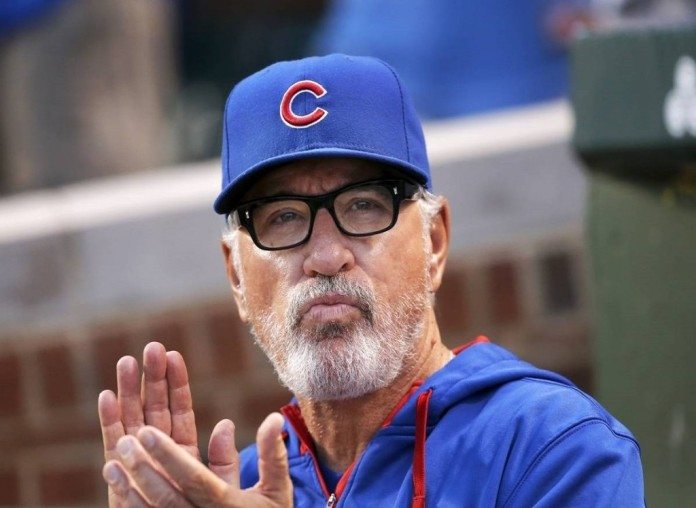
Joe Maddon Reveals The Cubs Secret To Second Half Success

When Joe Maddon agreed to become the 54th manager of the Chicago Cubs in November of 2014, there weren’t a lot of people that understood how big of a deal that was. The Cubs were coming off yet another last place finish in the division and although the team seemed to be trending upward, Cubs President of Baseball Operations, Theo Epstein, was still looking for the perfect person to lead the team during their last stage of the rebuild.

Enter Joe Maddon.

When Epstein found out that Maddon had recently become a free agent, the Cubs front office pounced. In 11 seasons as manager at that time, Maddon had compiled a 781-729 record, including a trip to the World Series in 2008 with the Tampa Bay Rays when he won the American League Manager of the Year Award. He also won the AL Manager of the Year Award in 2011 which is even more impressive when you understand Maddon accomplished all of this with the second lowest payroll in baseball.

Maddon brought a new outlook to the Cubs when he assumed the reigns in 2015. He brought with him all of the quirkiness that made him such a sought after manager at the time and his outlook on the game of baseball seemed to fit the Cubs absolutely perfect in 2015.

As we all know, the entire culture of the Chicago Cubs has changed drastically since Maddon took over in 2015. They were no longer the lovable losers and quickly became the team to beat in the NL Central. A LOT of that had to do with Joe Maddon establishing a winning culture in the clubhouse, getting to know all of his players, and finding the right way to keep big league players fresh and interested.

“I think that’s one of the things that makes Joe such an unbelievable manager is that you never know what you’re gonna do,” Kris Bryant said. “You never know what to expect in the clubhouse and I think more guys should be like that.”

In addition to all the new school aspects Maddon brings to the game, the thing that I think he has become most known for is his team’s second half success.  Since taking over the Cubs, Maddon has gone an astonishing 151-75 during that three-year window and we’ve seen time and time again, the Cubs consistently separate themselves from the rest of the division in the second half.

With that said, there has been a growing contingent of Cubs fans who have seemingly become tired of having Joe Maddon as the Cubs manager (Yes, I don’t know why either.) They’ll tell you he was handed the keys to a Porsche in 2015 and “anyone could have stepped in and managed a team with all that talent.” While I will not deny the fact that he walked into a great situation, people don’t realize his second half success isn’t unique to his time with the Cubs.

So let’s look at a quick snapshot of Maddon’s time in Tampa Bay with a roster that was no where near as talented as the one he took over with the Cubs. From 2010-2014, with a payroll that always was in the bottom third of baseball, Maddon’s Rays teams went 199-155 with a World Series appearance sprinkled in there as well.

So what’s the secret?

What makes Joe Maddon’s teams so damn good in the second half?

The ironic thing of rest being the reason that Maddon claims as being the key to second half success is that it is also the reason why a lot of anti-Maddon fans are becoming fed up with him — giving players off days to rest. Once again, he knows what he’s doing. As of today, there are only two Cubs players that rank in the top 50 in the NL in games played (Baez, Almora) and outside of Willson Contreras who leads all NL catchers in innings played, the team doesn’t have a player ranked in the top four of innings played at their respective positions.

So next time you start complaining about not seeing Kris Bryant in the lineup, please refer back to this article and the fact that giving players rest days will keep them fresh for yet another run at the postseason in 2018.

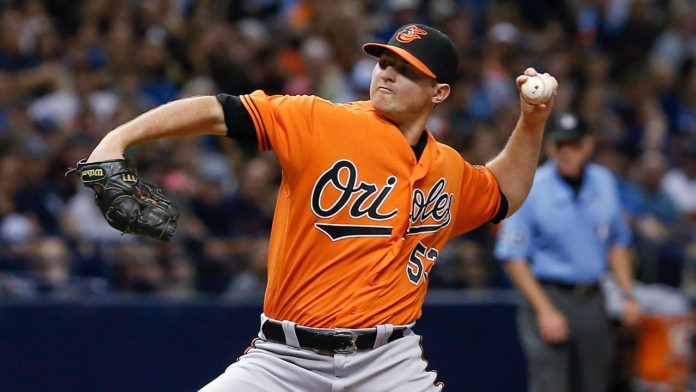
REPORT: Here’s How Much The Cubs Have To Trade For Zach Britton

The Chicago Cubs have been in on Zach Britton since July 2017, and with this season’s trade deadline less than 10 days away they’re once again in trade talks for the Baltimore Orioles closer.

Earlier this week 670 The Score’s Bruce Levine reported that the Cubs are major players for Britton and now there’s a second report from a local writer.

Here’s what The Athletic’s Patrick Mooney wrote Saturday night.

The​ Cubs have​ been tracking​ Zach Britton​ and remain​ deeply​ involved in the​ discussions​ as​ the Baltimore Orioles market​​ their high-profile reliever before the July 31 trade deadline, multiple sources told The Athletic.

However, the Cubs aren’t alone in their pursuit of the left-handed closer, who will be a free agent after the 2018 season.

Basically every playoff contender is trying to trade for Britton.


Britton clearly remains the top priority for the Cubs and they’re making the strongest push for him along with the Houston Astros.

ESPN’s Buster Olney dropped this interesting piece of information as well.

Everyone always asks what a team would have to trade for a certain player and according to Olney the Orioles’ asking price for Britton is similar to what the Kansas City Royals got for Kelvin Herrera.

The Washington Nationals struck early in the trade market for bullpen help, trading for Herrera back in the middle of June. The Nationals sent three players to Kansas City, outfielder Blake Perkins, third baseman Kelvin Gutierrez, and righty Yohanse Morel, for Herrera, who is also a free agent following the season.

Here’s a quick rundown on the three players the Nationals traded for Herrera.

Depending upon who you ask, Gutierrez and Perkins each rated just outside of or just within the ten best prospects on the Nationals farm. The former is a 23-year-old third baseman who has scuffled a bit in his first attempt at Double-A this year, but is regarded as a talented corner defender who possesses a quality hit tool and some power potential. Perkins, 21, has run into some troubles at the High-A level but has an interesting blend of speed, power, and plate discipline along with up-the-middle defensive ability in the outfield. As for Morel, a reputedly live-armed 17-year-old, he’ll represent a long-term wild card in this swap.

Perkins was a second-round draft pick by the Nationals in 2015, and before this year hadn’t played above A-Ball, struggling offensively through his first two years in the minors. Meanwhile, Gutierrez didn’t reach Double-A until 2018, and like Perkins didn’t really have any impressive numbers in the minors. And well Morel, like the description said, is simply a lottery ticket prospect.

So, that gives you a picture as to what the Cubs would need to give up in a trade if Olney’s report is accurate.

You can check out the Cubs’ top-30 prospects according to MLB Pipeline here.

And who knows, a trade could be right around the corner.

Stay tuned. Even if it’s not Britton, the Cubs will make another trade. I guarantee it.