Most players keep their highest expectations to themselves when in front of the media. Sure they’ll state their own personal goals, but they tend to avoid declaring what the team is aiming for. Probably because they don’t want to risk angering the football gods. Tarik Cohen is not one of those guys. The Chicago Bears running back has made it clear from the start that he is a different kind of person. One who isn’t afraid to make bold declarations.
This shouldn’t be a surprise. Being 5’6 in a sport filled with giants, he has to speak up if he wants to be heard. Not only must he have confidence in himself, but also his team. That is how he found success at North Carolina A&T, became a 4th round pick, and then an All-Pro in the NFL. His self-confidence is impossible to ignore. Then on the first day of 2019 training camp, he didn’t shrink from the moment.
Sporting a sharp Walter Payton jersey on Sweetness’ 65th birthday, Cohen was asked by the media what the Bears are striving for. Obviously, it’s to win the Super Bowl. The same as any other team. However, he took it a step further. Being content with winning one championship is how teams get forgotten. That’s why they want multiple. They want to be a dynasty.
FYI, Tarik Cohen used the word 'dynasty' today to describe what these #Bears are striving for. 'Oh yeah definitely. After we win one, it's not going to be our goal just to win one — we're trying to win multiple.'
I thought I heard Bears RB Tarik Cohen use the word “dynasty” to describe their goals: “Oh yea, definitely. After we win one, it’s not going to be our goal to win one. We want to win multiple.”
Cohen seems of the belief that the worst thing a team can do is lower their expectations. If only they can win one championship, they’d be satisfied. To him, that is a surefire fast track to failure. The goal of every player on this team should be to reach the pinnacle of greatness. Why else do they play the game? It’s to be the best. Everybody knows the best teams are centered around those that win multiple championships.
Pittsburgh of the 1980s.
San Francisco in the 1980s
Dallas in the 1990s
New England in the 2000s
The Bears have made it no secret they’re striving to conquer the long shadow of the 1985 team. Not just their great defense but the team in general. They’re the only ones to reach the mountaintop and come home with that trophy. However, for as amazing as that group was, many can’t forget how they also underachieved.
After getting that championship, they failed to win another despite having one of the most talented rosters in franchise history. Cohen wants to succeed where they failed. There is nothing wrong with that. Hopefully his teammates feel the same way.
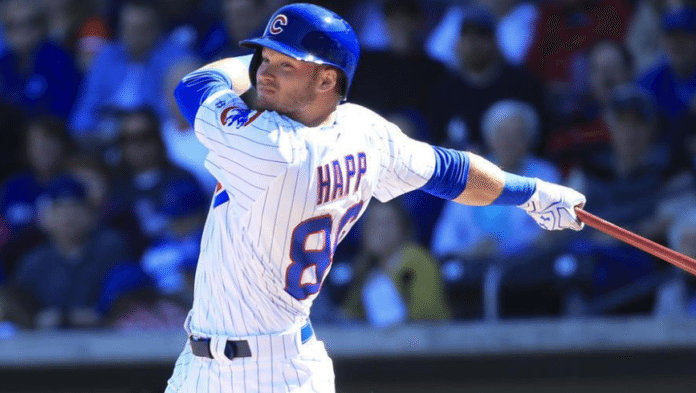
It was only a matter of time before the Cubs called up Ian Happ, who has finally sustained success for more than a few games down in Triple-A.
In 20 games in July, Happ is hitting .324, with a .451 OBP and .608 slugging %. He’s walked almost as many times as he’s struck out, 17 BB, 19 K. Overall in Iowa this year, Happ has a .795 OPS. Certainly not great considering the league is setting record numbers on offense, but Happ has definitely made adjustments since his early-season struggles.
Tommy Birch first broke the news and Cubs GM Jed Hoyer confirmed that Happ will join the Cubs on Friday.
Jed Hoyer confirms Happ call up on @670TheScore and he'll be with the Cubs in Milwaukee tomorrow.
Happ will primarily play in the outfield and might get a look at second, where he has played some at Triple-A this year.
While Hoyer confirmed Happ’s promotion, he didn’t hint at the corresponding move. However, if you thought that the reason for Happ’s call up was because of Kris Bryant’s knee soreness, here’s a sigh of relief.
Kris Bryant (knee soreness) "should be fine" and the #Cubs expect him to play at Brewers tomorrow, Jed Hoyer says.
"We shouldn't be ringing the alarm bells," he adds.
The Cubs currently have nine relievers in the bullpen. Tim Collins and Rowan Wick are probably the top two choices that could be sent away. In Collins’ case, he would be DFA’d.
Daniel Descalso could also be released or maybe put on the injured list, but it really does look like it’ll be a pitcher who gets replaced by Happ.
Ian Happ is being called up, as @dmregister first reported. .795 OPS in 99 games for Iowa. Technically, the Cubs have 9 relievers so expectation would be one of them will be optioned. Happ hitting .324 in July.
The Chicago Bears kicker situation is by no means set. Training camp will begin with two guys vying for the starting job. One is former AAF standout Elliott Fry and the other is former Raiders undrafted free agent Eddy Pineiro. Both have different qualities that make them viable NFL hopefuls but neither has separated himself in the competition to this point. That can change in the coming weeks.
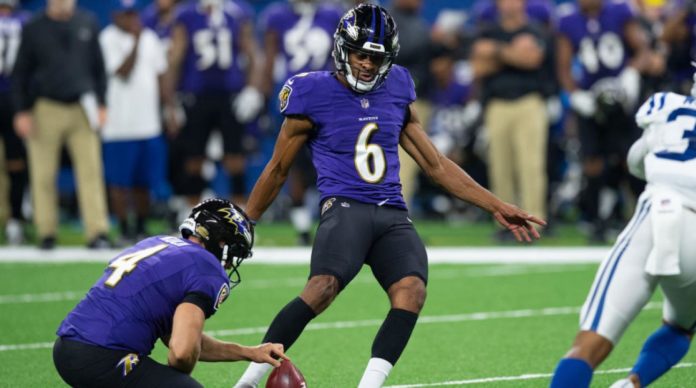
GM Ryan Pace made it crystal clear the team is monitoring the NFL landscape for possible moves if the need arises. That includes a potential trade if the right talent becomes available. If that were to happen, the current outlook around the league seems to point towards one player that might be worth the risk. His name is Kaare Vedvik, currently employed by the Baltimore Ravens.
Rich Campbell of the Chicago Tribune pointed out that the Bears could have an eye on the extremely talented youth. Not only does he have the big leg and accuracy any team looks for, but he’s almost guaranteed to be available thanks to the presence of All-Pro Justin Tucker on the roster. Ravens head coach John Harbaugh even said their endgame is to trade him.
— Bernstein & McKnight (@Bernstein_McK) July 25, 2019
“He was with us all season, he’s training now,” Harbaugh said, via the team’s website. “He’ll be one of our camp kickers. Actually, I fully expect that he’ll kick well enough for us to trade him. That’s kind of, I would say, the goal. Now, if something changes, it’s always competitive. You never know. Watch out Tuck. But I think we’re really set with our specialists. Obviously, we’re not looking to make a change there in all seriousness. But he’s capable of kicking in the NFL. We probably could have traded him last year.”
Kaare Vedvik certainly sounds like a Chicago Bears kicker
The crazy thing about this situation is how similar it could end up being to one Bears fans might not remember. Back in 2005, the Ravens were in a similar position. They had an All-Pro in Matt Stover already in place but ended up signing a young kid out of Penn State named Robbie Gould. The coaches loved him but obviously he couldn’t be kept. So he was released. The Bears soon called for advice on him and were told he had the goods.
Everybody knows the rest.
Vedvik is an impressive specimen. Not only did he connect on 6-of-7 field goals in the preseason last year (including one from 56 yards), he also averaged 46.8 yards on 19 punts. The guy has a gifted leg. One that wouldn’t struggle too much to have success in the adventurous weather conditions of Chicago. It comes down to how high the price will be to acquire him. Since 1994, the highest pick ever given up for a kicker was a 5th rounder. That was when the Kansas City Chiefs acquired Pete Stoyanovich from Miami.
Stoyanovich though had already been an All-Pro by that point in his career. So it’s unlikely Vedvik, with no regular season experience, will command that high of a price.
Aug 11, 2017; Phoenix, AZ, USA; Chicago Cubs infielder Kris Bryant (17), infielder Anthony Rizzo (44), outfielder Ian Happ (8) and infielder Javier Baez (9) celebrate after closing out the MLB game against the Arizona Diamondbacks at Chase Field. Mandatory Credit: Jennifer Stewart-USA TODAY Sports
SAN FRANCISCO — After a rough start to their road trip where the Chicago Cubs lost two of three games to the San Francisco Giants in pain-staking fashion, the Cubs will reportedly recall Ian Happ from Iowa as they head to Milwaukee to open a weekend series.
Happ has not yet played an inning for the major league team in 2019. The Cubs optioned him to Triple-A after Spring Training, where he struggled the whole first half of the year. But July has been a different story. Happ has hit .333 over his last 10 games with 10 runs scored, three homers and nine driven in.
Given how little the Cubs have gotten offensively from the likes of Albert Almora Jr., Daniel Descalso, David Bote, Addison Russell, and with Ben Zobrist still not available, the Cubs are hoping Happ can bring his hot streak and versatility to Milwaukee and contribute the rest of the season.
At the very least, Happ’s performance over the next couple of games will help inform Theo Epstein and Jed Hoyer about the level of investment they need to make by the July 31st trade deadline.
Matt Nagy is happy about the new additions the Chicago Bears have made to his offense the past few months. He loves their new running backs with David Montgomery and Mike Davis. He’s also singled out receiver Riley Ridley for his progress. However, it’s been clear almost from the beginning that there is no player who gets Nagy’s excitement level up more than Cordarrelle Patterson.
One thing we’ve learned about the Bears head coach is he’s a natural “tinkerer.” He loves to design offensive players. The more creative, the better. This is a man who handed a TD to Akiem Hicks, threw a TD pass to an offensive tackle, had a running back throw a TD pass on a reverse, and threw a two-point conversion to a linebacker. He isn’t afraid to do anything.
So when one hands him a Swiss Army knife type of talent like Patterson, it’s not hard to understand his excitement. Patterson has produced splash plays as a wide receiver, a kick returner, and a running back. When talking on the Rich Eisen Show, he referenced the latter as something he fully plans to exploit this coming season.
Matt Nagy sounds like he’ll do anything and everything
Nagy isn’t joking either. The Patriots handed the ball to Patterson 42 times last season, and with good reason. He averaged 5.4 yards per carry and scored a touchdown. He’s more than just a gimmick player from that position. His combination of size and speed is a problem. Why wouldn’t the Bears do all they can to take advantage of that? It only makes life harder on the opposing defense.
Keep in mind this is only one player Nagy is talking about. There are a host of others on that offense with unique versatility. Who knows what mad scientist ideas he’ll cook up for them too. It just goes to show that this may be the most diverse offensive personnel the Bears have fielded in a long time. A group that is not only talented at what they’re supposed to do, but several other things as well.
The more eagle-eyed Chicago Bears fans will have noticed through the first two parts of this series that a number of quarterbacks haven’t been mentioned. Why? Namely, the idea is to focus only on those who started a significant period of time. A minimum of around 7 games when it was clear they were the unquestioned starter, even if they were filling in for somebody injured.
Still, those men were part of this wild ride as well. It feels like now might be as good a time as any to give each of them a quick look. Who they were, what they accomplished, and what (if any) were their claims to fame or infamy in Chicago?
Chicago Bears quarterbacks who went unmentioned thus far
Zeke Bratkowski (1954-1960)
A native of Danville, Illinois, the best way to describe Bratkowski was the perfect backup. No man was better at keeping himself mentally and physically prepared to play even though he was behind George Blanda and Ed Brown his entire run in Chicago.
The man took two years off to serve in the Air Force. He eventually became a heavy advocate of introducing aerobic training to professional football. He went 4-4-1 in his scattered times starting but is more widely known today for being Bart Starr’s backup during the Green Bay championship runs in the 1960s.
Larry Rakestraw (1964-1968)
Rakestraw couldn’t have picked a worse time to enter the NFL. He arrived in 1964 right when the Bears were beginning their decline into oblivion during that time period. He was an 8th round pick out of Georgia where he’d set school records for passing. Yet due to Billy Wade and Rudy Bukich being ahead of him, he didn’t get to touch the ball until his 4th year.
That season he had one of the weirdest great games in team history. In a 34-7 demolition of the Giants, he accounted for just 83 total yards but five touchdowns. The best part is he didn’t even start that game. Unfortunately, it wasn’t enough to convince the coaching staff to give him the ball. He remained a backup the rest of his career and never had another game close to that.
Kent Nix (1970-1971)
Nix is one of those cases of what might’ve happened had he come around when sports medicine was better. His football career was hamstrung from the start due to knee injuries suffered in college. If the league had gotten the guy he was before that, he could’ve been a quality starter in the NFL. Sadly he had the bad luck to end up with some atrocious teams.
First was the Pittsburgh Steelers. This isn’t the Steel Curtain era, mind you. This was in the late ’60s when they were the worst team in football. He left after three seasons where he became a backup in Chicago. Over the next two years, he started four games in relief, went 1-3 and completed less than 40% of his passes in three of those starts.
Rusty Lisch (1984)
It’s hard to understand what possessed the Bears to think Lisch could play when they brought him in for the 1984 season. At that point, the biggest claim to fame he’d had was being Joe Montana’s backup at Notre Dame. He’d thrown one touchdown and four interceptions in four years with the Cardinals before joining the team. Then due to injuries to Jim McMahon and Steve Fuller, he kept getting onto the field.
The true low point came in the only start of his career against Green Bay. He went 10-of-23 for 99 yards and an interception and was so ineffective that Mike Ditka yanked him and put Walter Payton in to play quarterback instead. Payton actually finished with a higher passer rating that day.
Greg Landry (1984)
Once upon a time, Landry actually wasn’t a terrible quarterback. He went to a Pro Bowl in 1971 for the Detroit Lions and threw an impressive 17 touchdowns to eight interceptions in 1976. He just had the bad luck to play on bad teams during those 11 years. Even still he went 40-41-1 as a starter. Landry then spent three years in Baltimore before bolting to the upstart USFL where he played another two.
By 1984, he was more of a name than a talent at 38-years old. The injuries to the position though demanded depth and experience. Landry at least provided that. His only appearance was starting the season finale against his original team, the Lions. He threw for one touchdown and ran for another but also tossed three interceptions. He never saw the field again and retired after the season ended.
Doug Flutie (1986)
Ask Ditka to this day which quarterback he wishes he’d been able to give more of a chance in Chicago. Guaranteed that would be Doug Flutie. The Bears head coach was a big believer in the former college superstar. This despite rampant criticism for his limited 5’9 height. The guy found ways to win, and Ditka clearly loved that about him.
“I never believed any more strongly in 1985 than I believed we were going to the Super Bowl in 1986,” Ditka said. “I thought we were going with Flutie. People say he couldn’t do it. Bull! He’s still winning. He’s been a winner his whole life. I don’t give a darn if he’s 4-feet-1.”
Unfortunately, the coach’s handling of Flutie’s arrival in 1986 led to a team-wide mutiny. Players openly criticized him for starting the outsider over guy’s who’d been with the team for years like Steve Fuller and Mike Tomczak. This led to a ton of locker room friction. So despite Flutie actually playing well with limited knowledge of the offense, the chemistry was out of whack in the playoff opener against Washington.
Flutie threw two interceptions, the defense gave up 27 points and that was that. In 1987, the quarterback left for New England. A year later, he was starting for the Patriots and sent a message about what could’ve been by smoking the Bears defense for four touchdown passes in a 30-7 victory. He went on to Hall of Fame status in the CFL and returned to make a Pro Bowl in 1998 for Buffalo.
Mike Hohensee (1987)
Under normal circumstances, Mike Hohensee likely never would’ve seen an NFL field in his football career. He’d been spending his time in both the USFL and CFL throughout the 1980s until date with destiny arrived. That came in the form of the 1987 players strike. This was the infamous event that led owners to sign replacement players to continue the season. Hohensee was one such player brought in by Chicago.
Most people might assume that he was terrible since he didn’t last long as a starter with just two games. However, that’s not the case at all. The veteran QB threw four touchdowns to just one interception in two blowout victories over Philadelphia and Minnesota. He posted a 92.1 passer rating in that stretch. Unfortunately, being a “scab” player would’ve guaranteed locker room problems had the Bears tried to keep him. So after the strike ended, he was gone.
Chicago never forgot his contribution though. Fourteen years later the man was hired as head coach for the Arena League Chicago Rush. Hohensee made the playoffs every year he was in charge and won Arena Bowl XX in 2006.
Steve Bradley (1987)
Hohensee wasn’t the only “Spare Bear” who played quarterback during the strike in 1987. When he went down with injury for the final game of that stretch, Steve Bradley stepped into his place. The former Indiana Hoosier graduate had been a 12th round pick the year before but failed to make a roster. The strike was a blessing for him as it got him a chance to play.
Sadly his lone appearance did not go over well. He completed just 6-of-18 passes for 77 yards against the New Orleans Saints, throwing two TDs and three interceptions. The ineptitude reached such a point that Ditka began alternating him with a young kid from Eastern Illinois named Sean Payton who only managed to add a 4th interception. The Bears lost 19-17 and the strike ended shortly after. Bradley never played again.
Peter Tom Willis (1990-1993)
Remember Gary Huff? Consider Peter Tom Willis the sequel to him. A Florida State quarterback who had some outstanding performances late in his college career. Enough to intrigue the Bears into spending a higher draft choice on him. This time a 3rd rounder. Also again, it proved to be a wasted pick as Tom Willis failed to take advantage of a rather pedestrian QB room to seize the job for himself.
He was stuck on the bench his first two years behind Jim Harbaugh. Not until 1992 was he given a reasonable opportunity to play late in the season. He started two games against Cleveland and Houston. Both were blowout losses where he threw a combined four interceptions. The Bears had seen enough and he was quickly benched. He did return to start one more game in 1993, but threw three more interceptions and was released after the season.
With that, let the journey continue!
Erik Kramer: The flashbang
“The quarterback position is solidified, obviously. We got the guy we wanted.”
Those were the words of Bears head coach Dave Wannstedt when his team successfully signed veteran quarterback Erik Kramer as a free agent in 1994. Nobody can say he was the Drew Brees of that class by any stretch, but it’s reasonable to say Chicago had sensible reasons to feel they upgraded. Despite having to constantly fight for his job during the previous three years in Detroit, Kramer had established a reputation as a winner.
In 1991, he replaced an ailing Rodney Peete midway through the season. He lost two-straight games to start, but then reeled off seven-straight victories including stellar 341-yard, 3-TD performance against the Dallas Cowboys in the playoffs. A game that advanced them to the NFC championship. The best story about that, and perhaps a sign that Kramer could play the position, came on his first series as a Lion.
There he actually had the nerve to audible out of an offensive play call.
This led to two offensive linemen saying to each other, “This guy’s got brass balls.” The nickname “Brass” stuck. However, Kramer’s success that year did little to fix the Lions’ ongoing ineptitude at handling quarterbacks. In training camp in 1992, Kramer found that out the hard way.
“I thought we’d just finished the last game with me starting,” Kramer said. “No one said anything to me, and it was kind of Andre’s personality to step up if no one said anything. I thought, `What the heck is going on here?’ So Dan Henning (offensive coordinator) says, `Hold on, we’ll flip a coin.’
“They pretty much messed up my mind. It would have been much easier had someone at some point, Wayne preferably, sat everybody down and said, `You’re No. 1, you’re No. 2, you’re No. 3 until things change.’ “
Kramer started just three games that year, throwing four TDs to eight interceptions. It looked like his magic carpet ride was over. However, he got another chance in 1993. Again with injuries striking the position, he stepped in to start the final four games, going 3-1 and pushing Detroit back into the playoffs. This without the aide of star running back Barry Sanders no less. Kramer threw eight touchdowns to just three interceptions.
That was enough for the Bears, who made him their priority to sign a few months later. Things couldn’t have started out much better. Through the first two games, Kramer was on fire. He threw five touchdowns to one interception with a 115.3 quarterback rating. Then in Week 3, he suffered a shoulder injury against the Vikings. An injury that would dog him the rest of the season. He would complete just three more starts.
This forced the Bears to go to backup Steve Walsh, who led them on a surprise run to the playoffs. There he delivered a career performance in an upset of those same Vikings in Minnesota 35-18. Just like that, Kramer had found himself in yet another quarterback controversy.
The 1995 season felt like a make-or-break moment.
Chicago re-signed Walsh to a new contract and re-negotiated with Kramer. This in order to make their salaries almost identical going into that year. Wannstedt then met with both signal-callers and told them without beating around the bush that the starting job was wide open. Whoever did the most in camp and preseason would earn it.
“Some people did not know what to expect out of [the competition],” the retired Kramer said this week. “But Dave is somebody who gives you a chance. You do it or you don’t. It’s all on you. I feel like he set it up for fair competition.”
“I still remember the conversation we had with Dave,” Walsh said. “He said, ‘We’ve given each of you guys $1.5 million, and there’s a bunch more money you can make through incentives. It’s up to you to get it.’
“It was kind of funny to hear Dave talk like that. But he made sure that it was an even competition. Money was not a factor in the decision.”
The battle seemed even in camp, but things began to take a decisive swing in the preseason. Walsh failed to adhere to a lesson he’d learned long ago from his former coach Jimmy Johnson. Quarterbacks who survive don’t do so for how many big plays they make. It’s how many bad ones they avoid. Wannstedt, being an understudy to Johnson in Dallas, adhered to that same thinking. Walsh made too many mistakes.
Kramer won the job, setting the stage for the best single-season quarterback performance in Bears history.
Kramer should’ve gone to the Pro Bowl in 1995. He threw for 3,838 yards, 29 touchdowns, and 10 interceptions. Under normal circumstances, he would’ve been the first to break that streak since Jim McMahon 10 years prior. Unfortunately, he had the hard luck to play in a division that was QB-bonkers that year.
Favre won MVP honors and took Green Bay to the NFC championship. Moon went to the Pro Bowl and Mitchell posted a career-high season while getting Detroit to the playoffs. So despite his best efforts, Kramer’s outstanding year accomplished little more than a 9-7 season. The fact he did it without a single Pro Bowl weapon around him can’t be overlooked as well.
That ended up being his high watermark.
Kramer never played a full season again. Injuries returned to haunt him in 1996 and his numbers took a dramatic slide. He failed to throw as many touchdowns in the following three seasons (26) as he did in ’95. By the end of 1998 and a second 4-12 finish, the writing was on the wall. He was cut prior to the start of the ’99 campaign.
Steve Walsh: Million-dollar brain in a ten-cent body
Many times in Bears history people found themselves uttering this line. This quarterback has the absolutely perfect mind for the position but he just doesn’t have the talent to make it all work. No player embodies that reality better than Steve Walsh. The guy was the absolute consummate football mind. He understood how to manage games, make the right decisions, and be a leader to his teammates.
This is why he was a national champion quarterback at Miami.
Wannstedt had grown familiar with him during their time together in Dallas when Walsh served as Troy Aikman’s backup. The feeling was he would be perfect for that same role in 1994 when the Bears signed him. Somebody who could fill in for Kramer if injuries got in the way. Sure enough, their preparation was proven wise when shoulder issues surfaced for the starter just a couple games into that first season.
The problem with Walsh was he absolutely could not carry a team on his own. For all his intelligence and preparation, the guy was limited as a passer. His arm strength was average at best and he just couldn’t make a lot of the throws needed in the NFL. So the Bears were forced to adopt their classic style.
Walsh explained years later how this set the stage for what followed.
“I think (with) my style, my passing game — which was more of a move-the-chains, less big plays — we didn’t have as many chunk plays (and) our time of possession went up pretty dramatically. … We became control the clock, play good defense, win special teams, rush for more yards than our opponent and make enough plays in the passing game to win. That really was our style for that season.
We won three in a row, then Erik (Kramer) came back (from injury) and we struggled. What happens is guys in the locker room, they don’t like losing almost as much as those coaches. The rumblings started: We need to put Steve back in. … I think the coaches realized the way I was playing fit the makeup of that team.”
Under Walsh’s careful direction, the Bears won all seven of his first starts. He finished 8-3 and did enough to earn them a wild card berth in the playoffs. Though it was more the running game and defense doing the work as he threw for just 2,078 yards, 10 touchdowns, and eight interceptions. It’s not hard to see why nobody gave him and his team a chance in Minnesota against the Vikings.
They had homefield, had swept the Bears during the season, and had a future Hall of Famer in Moon at quarterback. Walsh responded with the best game of his career, throwing for 221 yards and two touchdowns with a 107.3 quarterback rating. Chicago stunned their rivals 35-18 for one of the biggest upsets of the decade.
It was the crowning moment of his career. Sadly, the euphoria didn’t last. Walsh showed all his inadequacies the next week against the eventual champion 49ers with 78 yards passing and two interceptions. This opened the door for Kramer to reclaim the job the next training camp and preseason. The Bears, sensing Walsh’s limitations, decided to return him to backup duty. He spent that ’95 season entirely on the bench before leaving the next year for St. Louis.
As it turns out? That playoff game saw the last touchdown pass he would ever throw.
Dave Krieg: The UFO sighting
When a team goes through as many starters as the Bears have over the years, there is bound to be one or two notable names that people completely forget about. Most fans would agree Dave Krieg fits that description. People who have a good knowledge of the NFL will recognize the name. Krieg was an overlooked but solid quarterback for a long time.
He went to three Pro Bowls, throwing for over 35,000 yards with 247 touchdown passes. Mostly for the Seattle Seahawks. He also spent time with the Kansas City Chiefs, Detroit Lions, and Arizona Cardinals. By the time the Bears signed him in 1996, he was 38-years old. The plan was for him to back up Kramer as he hopefully continued from where he left off in ’95.
Just four games into the season, he was lost for the year to injury.
Krieg was forced into the lineup. Some people might’ve thought he would crash and burn. However, history showed that he had a knack for finding ways to win in spite of rough circumstances. After a 1-3 start to the season under Kramer, the Bears managed a decent 6-6 the rest of the way with Krieg under center. Few stories illustrated his resiliency better than this one.
“In 1995, he went to Arizona and got sacked 53 times in the name of Buddy Ryan. That he lived to tell about it is testimony enough to his credentials as a pro football player. A witness to the carnage, Bears tight ends coach Ted Plumb said Krieg deserved a medal of honor. Rarely had he seen such resiliency.”
Krieg struggled at times from up-and-down play. Six of his starts saw him post a quarterback rating of 66 or less. However, he also could deliver impressive performances. Three games that year saw him throw for three TD passes without an interception. He also helped engineer the most impressive comeback of that season against the Raiders.
Nobody can say Krieg was great during his lone year in Chicago. Then again, he at least did his job. He came in off the bench and helped a banged-up football team avoid a disastrous season while giving fans some fun memorable moments.
Steve Stenstrom: Blemishing the Stanford reputation
The University of Stanford had a glowing reputation for quarterbacks by the 1990s. No fewer than four of their program’s number would go on to NFL success. Frankie Albert made a Pro Bowl with the 49ers in the 1940s. John Brodie was an All-Pro for the same team in the 1960s. Jim Plunkett overcame a tough run in the 1970s to win two Super Bowls with the Raiders. Then, of course, there was all-time great John Elway.
So it’s not hard to see why expectations were high for Steve Stenstrom when he moved on to the pros. Here’s a guy who left the school with every meaningful passing record. Many of which he still holds to this day including passing yards and completions. Throw in the fact he was developed by Bill Walsh? The guy looked like a slam dunk.
Yet things should’ve come across as a red flag almost right away.
Stenstrom was a 4th round pick but held out from his original team the Kansas City Chiefs over a contract dispute. When he finally did sign, the team had planned to place him on waivers feeling nobody would pick up that contract. Then they could put him on the practice squad at a more reasonable price. Just 24 hours later, the Bears claimed him and he was off to Chicago.
They loved his poise and his ability to absorb and master an offense. There was just one lingering concern.
“He did a lot of things real well in college,” said Hatley, a member of the Kansas City staff that drafted and tried to keep Stenstrom. “The only question about him has always been his arm strength.”
Keep in mind that Stenstrom arrived in 1995 when Fuller was still on the roster. The two were remarkably similar in terms of their mental and physical makeups. It’s likely the Bears coaching staff always saw him as an ideal backup. Though it seemed some in the organization had hopes he was their long-term solution. No doubt part of that was Walsh’s influence.
For three years he sat on the bench, throwing just 28 passes total. It wasn’t until 1998 that the team finally gave him a shot. By then though, things were falling apart. Wannstedt was desperate to keep his job and so alternated between three different quarterbacks. Stenstrom started seven games that year, throwing just four touchdown passes with six interceptions. All of this coming in November and December when the season was all but decided. He finished 1-6. The next year he was gone.
Shane Matthews: Fairweather fan
If ever there was a guy who looked like a fish out of water in Chicago, it was Shane Matthews. Here’s someone who was born in Mississippi and went to college at the University of Florida. He’d built his football roots in warm climates without much bad weather. Then suddenly he signs with the Bears, who play in one of the coldest, windiest locations in the NFL. It shouldn’t have been a surprise that struggling in the elements became the calling card of his career.
Matthews spent his first four seasons in Chicago doing nothing as a backup. Then he left for Jacksonville in 1997 and 1998, only to return to the Bears in 1999. It’s clear he probably smelled an opportunity to play. Kramer was gone and the team had no definitive starter. His gamble paid off. The team made him the starter to begin the season and things went well. Matthews went 3-2 with eight TD passes to just four interceptions.
However, he struggled in his sixth start in Washington. So much that the coaches felt it was time to go with 1st round pick Cade McNown. Matthews didn’t see the field again until December 5th. A good performance in Green Bay offered a chance to regain the starting job. Instead he completed barely half his passes with an interception in another customary blowout by the Packers.
Matthews never seemed to find his confidence after that.
He threw just three touchdowns to six interceptions in five starts in 2000. Most didn’t expect him to see action in 2001, but fate intervened when Jim Miller went down with an injury. It was here Matthews became part of the wildest two-game stretch in Bears history.
Trailing at one point 28-9, the Bears stormed back in a game against San Francisco in the second half to make it 31-23. With 33 seconds remaining, Matthews rolled to his left and made a ridiculously accurate throw to rookie David Terrell for a touchdown. The subsequent two-point conversion was good and the Bears would prevail in overtime. A week later against Cleveland, they overcame a 21-7 deficit in the 4th quarter led by two Matthews TD passes in the final 26 seconds. One of them being an improbable 34-yard Hail Mary as time expired.
Again the Bears won in overtime.
Those two victories propelled the team to its first division championship in over a decade. Matthews had carved out a spot in team history with his contributions. Sadly, they would also prove to be his career peak. When he appeared again in the playoffs against Philadelphia, he ran out of magic, throwing two ugly interceptions. He never played another game in a Bears uniform.
Cade McNown: A perfect storm of awful
Anytime a conversation of the biggest draft busts in Chicago Bears history comes up, it’s impossible to do a list without Cade McNown being involved. In 1999, the franchise was hoping to put an ugly decade of mostly bad football behind them. They’d hired a new head coach in Dick Jauron who hoped to kickstart a team renaissance by fixing the most problematic position on the roster.
They had a great chance to do so that year. The 1999 NFL draft had a pretty decent crop of talent including two future Pro Bowlers in Donovan McNabb and Daunte Culpepper. Not to mention quality starter, Aaron Brooks. Chicago held the 7th overall pick courtesy of their 4-12 record from the year before. So the odds were favorable they could get somebody they wanted.
The problem was other teams needed a QB too. That is why the top three picks to start the draft involved one. Tim Couch went to Cleveland. McNabb went to Philadelphia and Akili Smith landed in Cincinnati. This wasn’t necessarily a bad thing. Culpepper was still available when the Bears went on the clock. All they had to do was take him.
Unfortunately, they revealed just how out of touch they were instead.
Chicago made a trade with the Washington Redskins, receiving a package of picks to move back to the 12th spot. Sure enough, it came back to bite them. The Redskins took cornerback Champ Bailey, a future Hall of Famer. Culpepper? He fell to the 11th pick where he was promptly scooped up by the Minnesota Vikings. It’s not clear if the Bears were targeting him, but they ended up taking the 5th quarterback on the board all the same in McNown.
So many things about the pick itself raised red flags. First was the fact he wasn’t even close to the top guy off the board, which most today would say meant he was an obvious reach by the Bears. McNown was undersized at 6’1 and didn’t exactly have the strongest arm in the world. Why did they like him then?
Stop if you’ve heard this before. He was mobile and he won a lot of football games in college. De factor Bears GM Mark Hatley put it best at the time.
“He figures out some way to beat your butt, and that’s what you’re looking for.”
There is no question that McNown had success at UCLA.
In his final two years, he threw for over 6,000 yards with 49 touchdown passes while going 20-4. However, people tend to overlook how much he was aided by players around him. On offense, he had future NFL standouts like Deshaun Foster and Jermaine Lewis. Not to mention occasional assists from Freddie Mitchell. Both of those standout years for him were aided by great rushing attacks. So it wasn’t like he was carrying the load himself.
That became clear when he finally started seeing action. While he did make plays from time to time, the inconsistency with which he played became a nagging problem. His two most prolific games as a Bear came when he threw three TDs against Washington and four against Detroit. The problem was he threw a combined five interceptions in those games. That became his trademark. He could never get through a game without making a bad mistake.
He also couldn’t stay healthy.
McNown suffered a shoulder injury as a rookie to this throwing arm. It seemed like a common issue at the time so he tried to return. The pain didn’t subside though. If anything, it got worse over the course of the next season. His play continued to deteriorate along with it. Eventually, it was discovered the injury hadn’t healed properly. After the Bears traded him in 2001, he retired not long after.
McNown finished with 16 touchdown passes and 19 interceptions. He was actually sacked more often (45 times) than both of those stats combined. Don’t be fooled though. The injury wasn’t the only reason he failed. McNown was reported to have attitude problems. He acted way too immature and suffered a clear lack of tact around veteran players, which soured his position in the locker room.
“A player for the Chicago Bears tells a story about quarterback Cade McNown that symbolizes McNown’s career with the Bears. In essence, despite three years in professional football, McNown just never got it. At a recent practice, one of the Bears’ running backs made an error that caught the attention of the offensive coordinator, John Shoop. When Shoop corrected the player, McNown jokingly urged Shoop to keep piling on the criticism.
Around this time, there was talk of McNown’s impending trade, and it seemed that McNown was being a little too cocky for Shoop, especially since McNown’s career has been somewhat problematic.
Instead of keeping a low profile amid the trade talk, McNown was being the class clown at both Shoop’s and the back’s expense. The coach then chastised McNown and the two had words. It was not a shouting match, but it was clear to observers that Shoop was not in the mood for McNown’s antics.”
Seems like a rather fitting way for the Bears to end the millennium. With a quarterback who perfectly exemplified everything they’d failed to learn about the position.
The Cubs got a great pitching performance from their staff Wednesday afternoon, as Tyler Chatwood was a last-minute replacement for the ill Jon Lester. Chatwood only allowed one run in four innings on short notice, while Kyle Ryan, Rowan Wick, Pedro Strop, Brandon Kintzler and Craig Kimbrel combined for five shutout innings. The Cubs won 4-1 to salvage a game in San Francisco.
The Cubs had the option to skip Lester in the rotation, as they have an off day Thursday, but instead Joe Maddon has shuffled up the rotation after Lester was a late scratch Wednesday.
Jose Quintana and Kyle Hendricks were lined up to pitch the first two games against the Brewers this weekend, but now Hendricks will start the series opener. Lester will go on Saturday and Quintana gets pushed back to Sunday.
Hendricks, Lester, Quintana for the weekend series v Mil.
There was some speculation this week that Cole Hamels could have made his return to the rotation on Sunday. He’s been out since June 28, with an oblique strain and after a couple bullpen sessions Hamels made a rehab assignment Tuesday at Triple-A.
2.1 scoreless innings for LHP Cole Hamels during his MLB Rehab appearance with the @IowaCubs tonight.
Final line: 2.1 IP, 1 H, 0 R, 2 K, 3 BB. Fastball sat 91-92. Threw 35 pitches.
But now that the rotation has shifted, Hamels will get a couple extra days before returning if he feels good these next few days. Hamels could return against the Cardinals in St. Louis next week.
Right now the money discussions for the Chicago Bears are likely centered around Cody Whitehair. The young guard is coming off the best season of his career. One that featured a Pro Bowl nod at center. Keeping him part of their offensive line is crucial to future stability. However, most people are already looking ahead towards the Eddie Jackson contract situation.
This isn’t a big surprise. The young safety established himself as one of the biggest defensive playmakers in the NFL last season. Not only did he post a career-high six interceptions. He also scored three defensive touchdowns. His five defensive scores since 2017 are the highest among all defenders in the league. This earned him All-Pro honors last year. It’s no longer a question of whether he’ll get paid.
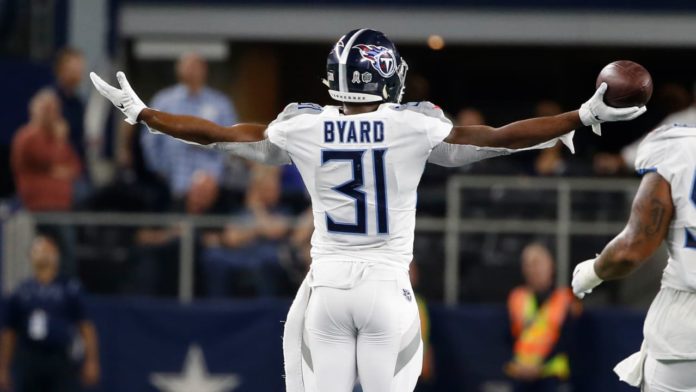
It becomes a matter of how much. That will depend on how he performs in 2019 of course, but there will likely be a set dollar amount the two sides will need for a ballpark. Thankfully the Tennessee Titans provided one. They just handed their own star safety Kevin Byard a new deal. One that should line up close to where Jackson will likely end up.
The #Titans have agreed to terms with star S Kevin Byard on a 5-year, $70.5M extension, source said. He gets $31M in guarantees. He overtakes Landon Collins for the highest paid safety — and they share an agent in David Mulugheta.
Eddie Jackson contract will be expensive but necessary
Paying a safety $14 million a year sounds like a lot, but there aren’t a lot of safeties like Jackson. His ballhawking skill alone doesn’t come around too often and is almost impossible to replace. The Bears found that out when he suffered the unfortunate injury last year that kept him out of the playoffs. This is before what he offers in intelligence and leadership. Smart teams do what is necessary to keep those players around.
There’s a reason the Bears held back on spending on Adrian Amos and Bryce Callahan this year. They knew the Jackson contract was coming up. They had to save money somewhere and sometimes tough sacrifices must be made. Those two players, while good at what they do, aren’t as valuable as Jackson has been. He’ll be expensive, but barring more health setbacks, will be worth every penny in the long run.
It comes down to how GM Ryan Pace will structure the contract and how much in guarantees he’ll have to pay. Odds are both sides will want to get a deal done before the start of the 2020 regular season.
For a kid who was only a 3rd round pick, it’s rather amazing how much buzz surrounds David Montgomery. The running back was considered one of the best in his draft class. A well-rounded talent who ran with both strength and quickness. While not overly fast, his versatility made him a problem on all three downs. Giving a back like that to a creative play caller like Matt Nagy of the Chicago Bears seems to be a perfect match.
Word out of minicamps reinforced the idea. His cutting ability alone drew lots of attention from coaches and teammates. Once he adjusts to the speed of the NFL, it shouldn’t take long for him to become a formidable weapon. At least that’s how the traditional scouting report would view it. So what about the numbers nerds? NFL.com analytics specialist Cynthia Frelund singled out two players who she views as the biggest sleepers of 2019.
One was an unsurprising choice in Tampa Bay quarterback Jameis Winston, now under the capable guidance of Bruce Arians. Her top choice though? None other than Montgomery.
“1) David Montgomery, RB, Chicago Bears. Combining the Bears’ O-line with the rookie running back’s ability to create yards after contact, my model forecasts Chicago to go from averaging 3.97 yards per rush on first down (which ranked 30th) to a projected range of 4.45-4.55 (which would rank 14th). I’m going to keep repeating that I promise to update my team and player rankings after the preseason, but Montgomery currently cracks my top 20 projected fantasy running backs (PPR scoring). And he’s not the only breakout candidate on the roster.”
David Montgomery certainly doesn’t lack self-confidence
If somebody were to point this out to Montgomery, he wouldn’t be surprised. He hasn’t been shy about saying he’s not only the best running back in the 2019 draft class, but one of the best players. He’s not overbearing about it, mind you. Yet if the question comes up he’ll always answer it in that way. Given what he’s had to fight through in order to get this far, it isn’t that hard to understand why.
The young man is on a mission. Not only to better himself and the lives of his family but also to help those who were like him. Less fortunate people living in dangerous areas of the country. If having success in the NFL is another critical step towards that goal, then it’s what needs to happen. The Bears have no plans to get in his way. Quite the opposite. If they are willing to feed him the football, things should work out just fine.
Kris Bryant is having the best year of his career and has been on fire in July. He hit a two-run homer on Wednesday, his 21st of the season, but after striking out in the fifth inning he didn’t come back out to third base.
David Bote replaced him. Here was his last swing on the strikeout.
More coming on this… but it appears Kris Bryant was wincing after this last swing pic.twitter.com/wKAxmHecmy