
Thursday, November 12, 2026
EDGE is live. Chicago fans can now access and explore the beta.
Home Blog Page 24

Is Ben Johnson A Sadist? Why His Players Think So, At Least When It Comes To The Packers

ben johnson
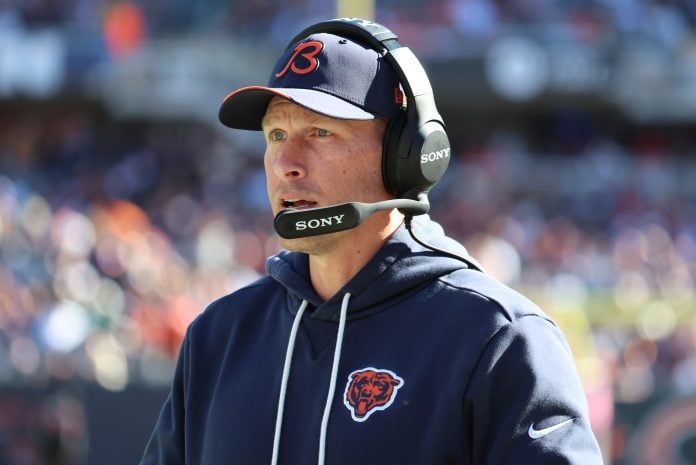
Oct 4, 2026; Chicago, Illinois, USA; Chicago Bears head coach Ben Johnson against the New York Jets at Soldier Field. Mandatory Credit: Mike Dinovo-Imagn Images

People don’t need to be a psychiatrist to recognize that Chicago Bears head coach Ben Johnson is an intense individual. He takes the game of football very seriously. Not a single minute spent should be wasted. If you’re not trying to be great, whether you’re a player or coach, then why are you even in the game? This goes a long way in explaining his aggressive mentality. Johnson has said many times since taking over last year that his goal isn’t just to win games. It is to dominate the opposition.

If you think you understand the full depth of those words, you’re wrong. Johnson might be best known for his occasional pettiness when he feels the Bears are being disrespected. Yet when you hear players talk about what he’s really like behind the scenes, you start to realize the truth.

Johnson is a sadist.

He wants to inflict mental and physical agony on the opponent. None more so than the Green Bay Packers. Wide receiver Luther Burden and tight end Colston Loveland both alluded to this when speaking to Dan Wiederer of The Athletic.

“I feel like he wants to beat them really bad,” Burden said. “Like everybody else in the room. Like every Chicago fan. We want to beat them really bad. And make them quit.”…

…Said Loveland: “We want to control the clock. We want to physically dominate. We want to score a lot of points. And Ben said this recently, ‘We want to impose our will to a point where we ruin the other team’s season.’ Where they lose to us and they lose the next couple games and then they’ve got guys falling by the wayside.”

Ben Johnson is that perfect blend of passionate and ruthless.

He has that mix of a burning desire to inflict pain and a lack of empathy for anyone he does it to. In a football sense, of course. There is no room for camaraderie or class in these games. Not from his point of view. There are 32 teams in the NFL. Only one of them gets to hoist the Lombardi trophy every year. If you’re not willing to exploit any possible advantage, including mind games, to weaken your opponent, you’re doing your own team a disservice. Johnson recognized immediately that Green Bay had something over the Bears.

The mental edge.

They’d beaten Chicago so many times that it eroded the confidence of fans and players alike. They always expected something to go wrong. Ben Johnson would not allow that. What is the best way to counteract a bully? Confront him head-on. So the Bears head coach immediately began taunting them, prodding them, and letting them know they’d better not expect the same docile rivals they’d seen over the past 15 years. All the while, he put his players through an intense grind in training camp, preparing them for the war he knew was coming.

The gambit worked beautifully.

Johnson’s constant jabs, mixed with the Bears’ rebuilt self-confidence, led to two epic victories late last season. Green Bay suddenly looked like the team that wasn’t sure of itself. That much has been reinforced in the months since their January playoff loss. They’re 2-2, and both of their wins were by the skin of their teeth against bad teams. It is completely foreign territory for them, and Johnson aims to keep them there on Sunday. He smells blood in the water and no doubt aims to deliver the kill shot.

Not just because it benefits the Bears. Also, because it brings him joy. So yes, a bit of a sadist indeed. Truth be told, the organization has probably needed someone like that for a long time. Looking back through the years, the Bears have always functioned at their best when they have a bit of a loose cannon in charge. You saw it with George Halas and against with Mike Ditka. Johnson is eager to carry on that tradition.
New Info Proves Chicago Bears’ Pass Rush Trade Options Are Deeper Than Expected

chicago bears
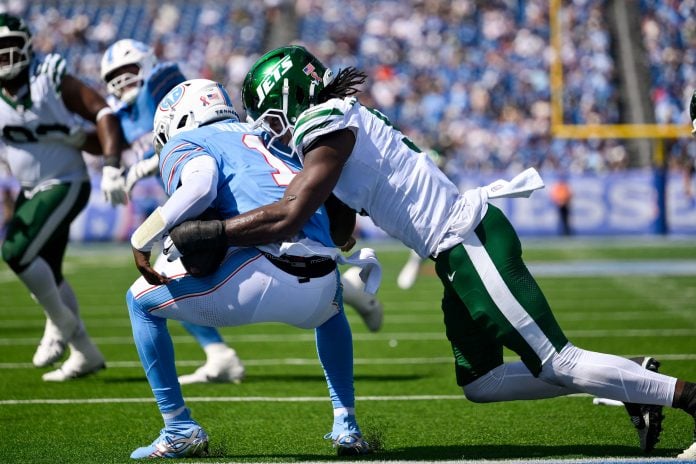
Sep 13, 2026; Nashville, Tennessee, USA; New York Jets defensive end Will McDonald IV (9) sacks Tennessee Titans just outside the end zone during the second half at Nissan Stadium. Mandatory Credit: Steve Roberts-Imagn Images

The Chicago Bears haven’t made any moves ahead of the trade deadline yet. That is no surprise. It is still another month before that becomes a factor. There is no reason to jump the gun on anything. Things are going well for them. They’re 3-1 with an offense that is clicking without its starting quarterback and a defense playing far better than expected. They want to see just how good this team is. If it continues winning, general manager Ryan Poles may decide the time is right for a calculated swing at the deadline.

As always, it comes down to who is or isn’t available. Best estimates indicate the Bears will likely be hunting for pass rush help. Marcus Davenport just retired, and Shemar Turner still hasn’t returned from his torn ACL last season. Will there be any viable options available? Jeremy Fowler of ESPN thinks so. Based on what he’s heard, there is a strong possibility that several prominent names could be on the move next month. A few of them should absolutely interest the Bears.

After talking to teams Tuesday, it’s worth watching defensive linemen on the trade front over the next month. The Arizona Cardinals fended off any Josh Sweat trade interest over the summer, intent on keeping him. Perhaps that changes closer to the Nov. 10 trade deadline. Teams will have interest in Sweat, 29, as well as many other rushers on teams with losing records. The Chargers’ Khalil Mack, Jets’ Will Macdonald IV and Tennessee’s Jermaine Johnson II are among rushers who could attract interest in the coming weeks.

The Chicago Bears must decide how aggressive they want to be.

Of that group, Sweat is probably the player most teams will desire the most. He is still in his prime and coming off a 2025 season in which he recorded 12 sacks. He’s off to a slower start this year, but remains a dangerous presence. He also has the size and length that Dennis Allen usually prefers at defensive end. Throw in his decent contract, and it feels like a sweet setup. In situations like that, you typically have many teams going after the player, making him more expensive to acquire.

If the Chicago Bears want to take a calculated gamble on somebody who’s still young and developing, then Will McDonald is the guy. He has 18.5 sacks over the past two years, and just turned 27 in June. He’s on the thinner side at 245 lbs, but the pass rush skills are impossible to ignore.

Johnson would be cheaper since he hasn’t really produced much since his Pro Bowl season in 2023. Injuries played a part in that. Conversely, if the Bears are looking for a one-year rental who still has some juice left, then a reunion with Mack is the easy choice. He has 3 sacks this season and played for Allen in 2014.

Price tag will be key.

Poles has never given up more than a 2nd round pick for a player in any trade since taking over the Bears in 2022. That feels like the ceiling for any deal that could happen over the next few weeks. McDonald and Sweat may command somewhere around that price, while Mack and Johnson will be less expensive. Given what we know about this regime, they will most likely go hunting for a Joe Thuney-type deal. Add a highly proven player who looks to have some tread still on the tires and acquire them for a mid-round pick.

Mack is the one who fits that profile. Maybe another prominent vet emerges on the market as well. Either way, the Bears will have options to choose from. They must do their part and remain competitive enough to justify such a deal. Fans should keep an eye on Halloween. It should be clear by then whether the circumstances are right for a trade to happen.

How Two Unexpected Dennis Allen Adjustments Have Elevated The Bears Defense

dennis allen
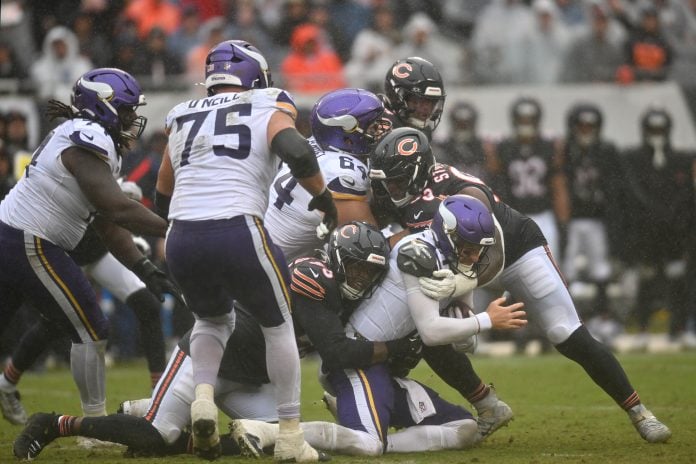
Sep 20, 2026; Chicago, Illinois, USA; Chicago Bears defensive end Dayo Odeyingbo (55) and defensive tackle Kentavius Street (93) sack Minnesota Vikings quarterback Carson Wentz (11) during the second half at Soldier Field. Mandatory Credit: Patrick Gorski-Imagn Images

It felt reasonable for the Chicago Bears‘ defense to experience minor improvement this season. After all, they spent a considerable amount of money in free agency to find some help, including safety Coby Bryant and linebacker Devin Bush. Then they used their 1st-round pick on safety Dillon Thieneman. If they got better injury luck this year, ranking in the teens would feel attainable. Nobody could’ve predicted that it would sit at 4th in points allowed and 3rd overall a month into the season. Much of the credit for that must go to defensive coordinator Dennis Allen.

Remember, the Bears didn’t add any true superstar player to their lineup this offseason. Bryant hasn’t even suited up yet because of a knee injury. Bush and Thieneman have been big positives, but no one stands out as dominant. It has felt like a group that is greater than the sum of its parts, and that is because of the excellent ways Allen has deployed them. Nothing illustrates this more than his considerable adjustments to the team’s pass rush. Analytics expert Tej Seth revealed the extent of the changes.

“Dennis Allen has increased the stunt rate, going from 16.3% in week 1 to 37.0% since (6th highest). They are generating pressure on 56%(!) of their stunts weeks 2-4. They are also blitzing at a 41% rate, which is the 3rd highest in the league weeks 2-4. Devin Bush has 6 pressures on 18 pass rush snaps.”

Dennis Allen has shifted from what he did last season.

The Bears’ defensive coordinator does use stunts, as most do these days. It comes down to frequency. While data is difficult to come by, Allen has typically hovered between 15% and 20% for stunt rate. He seems to use it more as a wrinkle to throw off offensive lines from time to time rather than a regular weapon in the arsenal. The same was largely true of his blitz rate. Allen isn’t afraid to send extra rushers, but he doesn’t make it a habit to do so on the regular. Historically, his units sit between 20% and 25% on that front.

So, going from that to 35.3% on blitzes and 37% on stunts represents a massive philosophical shift for Dennis Allen. What compelled it? The most likely explanation is recognizing the NFL’s recent trend. Some of the best defenses in the NFL frequently utilize heavy blitz packages, including those of the Minnesota Vikings (#5), the Tampa Bay Buccaneers (#4), and the New England Patriots (#6). Meanwhile, no team utilizes stunts more than the Los Angeles Rams, who went above 40% last season. They rank 2nd overall in the league.

The Bears are shifting with the times.

Rather than stubbornly hold onto his usual preferences, Allen has decided to follow what’s been working. It has been pretty evident this season that opposing offenses struggle against teams that blitz or stunt heavily. Perhaps it is due to the new wave of quarterbacks playing the game differently than their predecessors, like Tom Brady, Peyton Manning, and Drew Brees. Whatever the case, Allen’s adjustments have been working. The Bears have allowed just 28 points in their last three games.

Allen did say that you have to do things differently when you don’t have somebody special up front. When your defense has a Myles Garrett, Maxx Crosby, or Will Anderson, you don’t have to worry about blitzing or stunts. Just line those guys up and send them hunting. Most teams don’t have one, though. That means it is the coaches’ responsibility to do everything possible to help their guys get favorable matchups. Stunts and blitzes are the way to go, and Allen is leaning into that more than ever.

The White Sox Had The Crowd In Game 3, They Didn’t Have the Clutch Hits

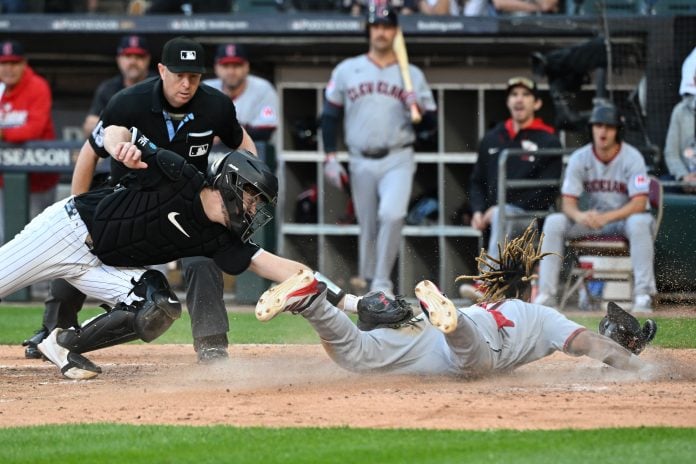
Oct 7, 2026; Chicago, Illinois, USA; Cleveland Guardians third baseman Jose Ramirez (11) scores under the tag of Chicago White Sox catcher Kyle Teel (8) during the fifth inning in game three of the ALDS for the 2026 MLB Playoffs at Rate Field. Mandatory Credit: Matt Marton-Imagn Images

Chicago White Sox fans have waited 120 years to see a home playoff series-clinching win, and for a brief moment in Game 3 of the ALDS, it looked like the wait was coming to an end.

As Sean Newcomb and Kyle Teel walked to the bullpen to warm up, they were met by a thunderous roar from a sea of more than 40,000 fans dressed in black, in an environment that Teel described to the media after the game as “the loudest I’ve ever played in front of.”

It was a level of excitement that hadn’t been felt on 35th and Shields since 2021, and a scene that was enough to make any fan who had endured the last decade of White Sox baseball emotional, as thousands of rally towels waved and the decibel levels climbed in anticipation of first pitch.

While there was plenty of noise during the pregame festivities, Randal Grichuk gave the crowd another reason to erupt just two batters into the game with a diving catch in left field. Those cheers grew even louder when the White Sox jumped out to an early 1-0 lead in the bottom half of the inning, courtesy of a Kyle Teel double that sent Rate Field into a frenzy.

The White Sox couldn’t have asked for a much better start, which is why it felt like such a gut punch when the Cleveland Guardians forced them to wait at least one more day.

The Guardians pitching staff set a new postseason record with 19 strikeouts in a nine-inning game; White Sox pitchers issued 10 walks, and Cleveland staved off elimination with a 9-3 victory in Game 3 of the ALDS that was far more competitive than the final score indicated.

The crowd brought the energy, but when the biggest moments arrived, the Guardians made the plays the White Sox couldn’t.

Despite the Guardians burning through seven pitchers, every starter in the White Sox lineup struck out at least once. Each of the White Sox’s Nos. 2-6 hitters struck out multiple times, while Colson Montgomery added three more strikeouts from the bottom of the order.

On the other side of the ball, six of the seven White Sox pitchers used — excluding Sean Newcomb, who fired two scoreless innings to open the game — issued at least one walk. Teel certainly didn’t help matters, burning through both of the White Sox’s ABS challenges in the third inning. The pair of failed challenges were especially surprising after Teel had gone 7-for-8 on his previous eight attempts.

In the postseason, every pitch is already under a microscope. But with how closely matched these two teams are, the White Sox’ inability to apply pressure in key offensive situations, while simultaneously giving the Guardians free baserunners, proved to be a recipe for disaster that not even the immaculate vibes could fix.

The Guardians countered the White Sox’s early 1-0 lead with four runs in the third inning off Bryan Hudson and Hagen Smith, a rally that began with a leadoff walk and was capped by a Jo Adell triple.

But, as they have all season, the White Sox appeared to feed off the crowd’s energy and hung around before missed opportunities eventually caught up with them.

Chase Meidroth led off the bottom of the fourth inning with a double, then came around to score after Tristan Peters followed with a nine-pitch at-bat against Guardians left-hander Foster Griffin that ended with an RBI double to cut the deficit in half.

But after catching a break in Game 2, this time it was the Chicago White Sox’s turn to feel the wrath of the baseball gods.

The White Sox immediately gave the run back in the fifth inning, but appeared to be in prime position to tie the game after putting runners on first and second with nobody out. Despite advancing both runners into scoring position, they came away empty-handed after Kyle Teel ripped a 98-mph line drive with a .940 expected batting average straight into the glove of Guardians second baseman Travis Bazzana.

The ball was hit so hard that Miguel Vargas, who was on second base, thought he was going to score on the play. Instead, Bazzana made the catch, and Vargas was doubled off second to end the inning.

The following inning, the White Sox loaded the bases and pushed across a run when Sam Antonacci was hit by a pitch for the second time in the game, cutting the Guardians’ lead to 5-3. It marked the first time in franchise history that the White Sox scored a run on a hit-by-pitch.

With Vargas coming to the plate, the White Sox had a golden opportunity to re-establish control of the game. Vargas nearly did just that, ripping a 96-mph line drive down the third-base line, only for a diving José Ramírez to snag it and end the threat.

Those two sequences would mark the final time a White Sox runner would reach base. By the eighth inning, there was still a sense that the White Sox could come back. After all, they had been doing it all season, and they still had a raucous crowd behind them.

But Will Venable made a bizarre decision in the top of the eighth, turning to rookie David Sandlin and setting off a chain of events that took the air out of the building. Sandlin issued a leadoff walk, a recipe for disaster against a Guardians offense that thrives on other teams’ mistakes.

After a Patrick Bailey single and a sacrifice bunt, Sandlin retired Steven Kwan to get within one out of escaping the jam, but Ramírez put a nail in the coffin in the most Guardians way possible — a lazy fly ball with a .010 expected batting average that dropped past a diving Grichuk for a bases-clearing triple.

By the time the Guardians tacked on two more insurance runs off Davis Martin in the ninth inning, Rate Field was a shell of itself, with most of the fans already headed toward the exits.

In the span of nine innings, the White Sox went from believing they might finally end a 120-year wait to watching another opportunity slip through their fingers. Fortunately, this team has proven to have a short memory in the face of adversity and won’t have to wait long for another crack at it.

Ryan Poles And The Bears Have Scouted Only Two College Teams More Than Once In 2026

ryan poles
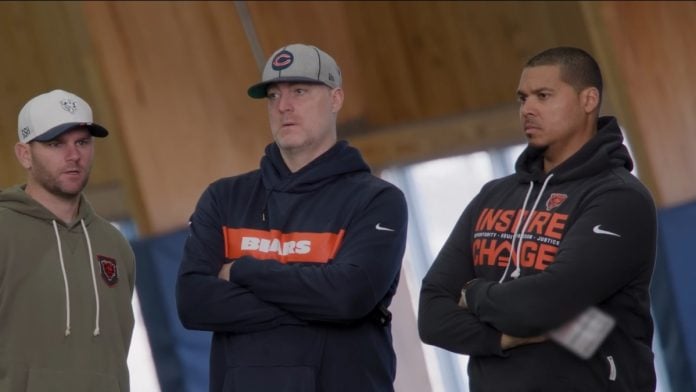
Bears general manager Ryan Poles and assistant general manager Jeff King take in the team's local pro day.

Few things can tell you more about what to expect in an NFL draft than patterns. Which players do general managers, personnel executives, and scouts seem to eye the most? It is no different with Chicago Bears general manager Ryan Poles. He’s been spotted at games frequently over the years, and those visits eventually proved noteworthy, as the Bears would end up selecting certain players from the teams he was there to watch. That is why it remains important to catalog any information that seems interesting regarding Poles’ activities.

Here is where the 2026 scouting season stands. According to independent scout John Vogel, there have been two instances in which he has spotted Bears scouts and execs attending games involving a team more than once. One is Notre Dame, the longtime college power that sits in close proximity to Chicago. The other is Miami. Each has seen Bears representatives show up twice. That feels difficult to explain away as a mere coincidence. Is it possible that both programs possess something the Bears are eyeing for the 2027 draft?

Ryan Poles isn’t masking their intentions too well.

If you look ahead to next spring, those programs will feature prominently. Both have an extensive number of players expected to be selected. Most of the biggest names reside on the defensive side of the ball. Between Miami and Notre Dame, no fewer than 8 of them are currently graded as 1st, 2nd, or 3rd round picks. Just as noteworthy? Four of them are defensive linemen. It isn’t a secret that the Bears have wanted to bolster their defense for some time, still unable to find a genuine difference-maker on that side of the ball.

After years of investing 1st round picks on offense, it feels like now is the time to shift focus to the other side. They already added Dillon Thieneman with the 25th overall pick this year. They may look to finally get that defensive line help they need next year. Ryan Poles has always been pretty straightforward with his scouting philosophy. Many of his plans center around the strengths of each draft. By most accounts, the 2027 class is strong along the defensive front. This feels like a great time to strike. It comes down to which players they believe fit their team.

Keep an eye on these names.

Given where the Bears are trending this season, it is likely they will end up with a 1st round pick that is somewhere in the bottom half. We’re talking #16 all the way to #32. If that holds true, the names to watch include Miami’s Damon Wilson, Justin Scott, and Ahmad Moten Sr. As for Notre Dame? Don’t overlook linebacker Kyngstonn Viliamu-Asa. The Bears need fresh blood at the position and don’t really have a true impact player. Just an assortment of solid ones.

Obviously, the draft is unpredictable. There is no guarantee the Bears will select any of those players. Still, it does point in the direction Poles and the coaching staff are thinking. They understand football at its core. If you have a great offense, the next logical step is seeing if you can get the defense up to the same level. If and when that happens, you probably have a championship-caliber team.

Packers DB Javon Bullard Tempts Fate, Insisting The Bears Are Still The “Little Brother”

javon bullard
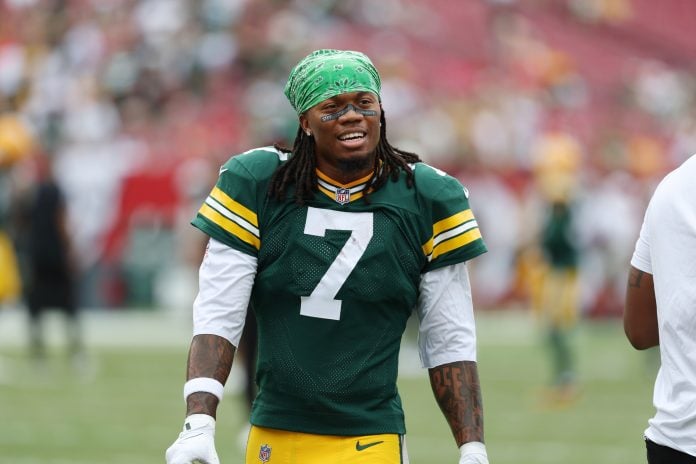
Oct 4, 2026; Tampa, Florida, USA; Green Bay Packers safety Javon Bullard (7) warms up before the game against the Tampa Bay Buccaneers at Raymond James Stadium. Mandatory Credit: Matt Pendleton-Imagn Images

Head coach Ben Johnson knew the grip that the Green Bay Packers have had on the Chicago Bears for most of the past 30 years. It grew so lopsided at points that the organization developed a complex, wondering if they would ever escape the hell they were living in. Johnson decided there was only one way to do it. He’d have to confront the bully straight on. No more gestures of class and appreciation of the history between the two teams. This is a rivalry, and he would treat it as one. Players like Javon Bullard, still new to the experience, weren’t ready for that.

Johnson immediately said how much he loved beating Packers head coach Matt LaFleur twice a year while with the Detroit Lions. Every time Green Bay came up in conversations, he’d take jabs at them. It got to the point where Bullard and others were wondering why LaFleur refused to respond. You can’t let somebody talk about you like that. Still, a win at Lambeau Field reaffirmed everything they knew. The Packers still controlled the rivalry. Then Chicago beat them in overtime in the rematch. Then they erased a 21-3 deficit in the playoffs to stun them in the wild card round. All of Green Bay was left shellshocked.

Javon Bullard remains defiant.

Despite those setbacks, the defensive back insisted to Tyler Dunne of Go Long TD that the Bears are nothing more than a minor blip on the radar. Green Bay would reassert its dominance in the next meeting.

Bullard is a man who hates everything about Chicago (except their food) and doesn’t care who hears him. Multiple times in our conversation, the nickel back implored his head coach to stand up. He didn’t like Ben Johnson’s antics. “Don’t let him try to shit on you like that,” Bullard said.

“They got two little wins last year,” Bullard said. “But don’t forget who the big brother is. We’re still big brother. They got a long way to go before they can try to shit on us. But we got to show them, too. We can’t just talk that shit. We’ve got to be about it. So it’s going to be hell next year, man. It’s going to be hell.”

Bullard clearly isn’t familiar with sibling rivalries.

There are many instances throughout history in which the little brother eventually overtook the big brother, be it in physical stature or accomplishments. He tends to forget that there was a long period in the early days of the NFL where the Bears were the big brother of the rivalry. They were 80-56-6 all-time against the Packers by the end of the 1991 season. Then Green Bay landed Brett Favre in 1992, and everything changed. That is how quickly the dynamic of a rivalry can shift. If the other team gets the right quarterback or head coach, you’re in trouble.

Chicago has put the Packers in this situation for the first time since probably the 1940s. Quarterback Caleb Williams, an uber-talented #1 overall pick, is 3-2 against them in his first two seasons under center. New head coach Ben Johnson fulfilled his pledge to beat LaFleur twice. These two men have no fear of the Green Bay aura. That is because Javon Bullard and his teammates no longer have a Hall of Fame quarterback to erase their mistakes whenever things go sideways. Yet they’re still acting as if everything is status quo.

It most definitely isn’t.

The Packers have looked like a team desperately clinging to the railing of a sinking ship. They’re 2-2 with wins against the 1-3 New York Jets and 0-4 Tampa Bay Buccaneers. They needed a double-digit comeback against the former and beat the latter by 3 despite the Bucs starting an undrafted rookie at quarterback. Worse still, they don’t have Micah Parsons and won’t have Edgerrin Cooper either. It’s hard to understand where Bullard’s confidence comes from. After all, he personally has a losing record against the Bears.

Maybe that confidence will be enough and the Packers take down Chicago this Sunday. It would certainly be a much-needed morale boost. However, this is not the same old Bears team they’ve beaten up on in years past. It is talented, well-coached, and aren’t afraid to punch you in the mouth.

Chicago Cubs Free Agents Who Have No Business Coming Back In 2027

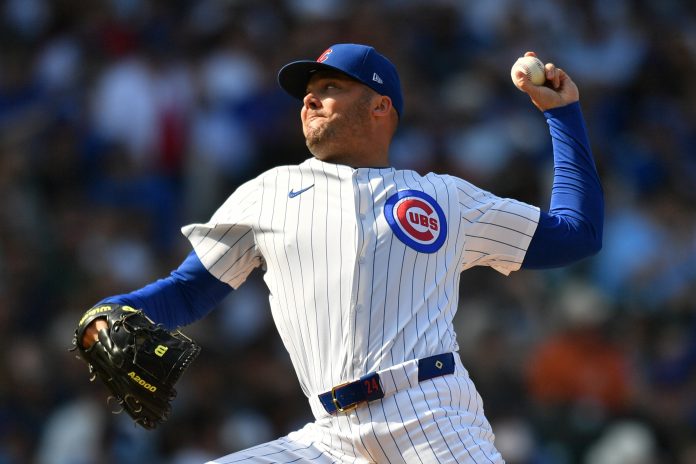
Sep 13, 2025; Chicago, Illinois, USA; Chicago Cubs pitcher Caleb Thielbar (24) pitches against the Tampa Bay Rays during a game at Wrigley Field. Mandatory Credit: Patrick Gorski-Imagn Images

The Chicago Cubs could have as many as 18 players from their roster become free agents heading into the 2027 season, and while some guys should return, let’s talk about the players who have no business coming back.

Caleb Thielbar ($6 million Mutual Option, $500k buyout)

Relief pitchers sure can be unpredictable, huh? Caleb Thielbar was nails for the 2025 Cubs, including five scoreless appearances in the postseason. The left-handed pitcher agreed to return, signing a one-year deal with the Cubs last offseason worth $4 million. Now, fans can’t wait to get rid of him after a disappointing 2026 season that ended with Thielbar off the Cubs’ postseason roster for their Wild Card Series against the San Diego Padres.

In 2026, Thielbar missed time with a hamstring strain that could have affected his pitching throughout the season; after posting a 2.64 ERA and 0.88 WHIP last year, the lefty recorded a 4.86 ERA and 1.30 WHIP this year.

He’ll be 40 next season, and although Thielbar still generated a lot of strikeouts (28.3% strikeout rate), his numbers were down across the board. The walks increased, batters made harder contact at a higher rate, and the Cubs suffered. Thielbar allowed 11 home runs in 50 innings, compared to only five home runs in 58 innings last season.

So, he’ll get a $500,000 buyout from the Cubs, who won’t think twice about the $6 million mutual option.

Hunter Harvey ($8 million mutual option, $1 million buyout)

Well, this move was a total failure. Hunter Harvey certainly had the stuff to excel out of the Cubs’ bullpen, but his injury history also added risk for the front office. Jed Hoyer took a gamble, and it backfired: Harvey threw only four innings for the Cubs in 2026 before landing on the injured list in early April with right triceps inflammation.

Harvey did not return for the Cubs after he was placed on the 60-day injured list in May. The right-handed pitcher never came close to a rehab stint either. His career 3.19 ERA, high-90s fastball, and 26.7% strikeout rate caught the Cubs’ attention enough to earn him $5 million in 2026, despite logging only 10.2 innings in 2025.

So, it’ll ultimately cost the Cubs $6 million, with Harvey’s $5 million guaranteed salary in 2026 and a $1 million buyout this offseason. The only, and I mean the only, scenario in which Harvey should come back is if he signs a minor league deal. Other than that, see ya.

Trent Thornton (Unrestricted Free Agent)

We have a classic case of a pitcher’s numbers looking way better than they actually were. All credit to Trent Thornton, who made his season debut in early May, returning to big-league action for the first time since July 31, 2025, when he tore his left Achilles.

The right-handed pitcher had a 3.35 ERA in 48.1 innings with the Cubs, but his strikeout rate was well below average at 15.8%. He just didn’t look good out there despite getting outs, and we’re not talking about a Javier Assad situation, where he at least can pitch 5-6 innings in a game and get out of jams. Thornton was extremely fortunate to have only a 3.35 ERA, given his poor metrics up and down his Baseball Savant page.

The Cubs need to get way better in the bullpen, and that starts with moving on from guys like Thornton.

Tyler Austin (Unrestricted Free Agent)

Well, at least this signing only cost the Cubs $1.25 million, but Tyler Austin was a complete non-factor for the team in 2026. He came over from Japan after he put up a few great seasons in the power department. The 35-year-old was supposed to be the backup first baseman, a potential platoon bat with Michael Busch, and maybe get an occasional start in left field, but Austin didn’t even make it to spring training action, undergoing surgery in February, a month after he signed with the Cubs.

Austin was never heard from again. The team was vague when it announced that Tyler had a debridement procedure on the patellar tendon in his right knee, saying he would be out for months but never giving a concrete recovery timeline. So, I guess we’ll never know whether Austin really made significant adjustments during his time playing in Japan to make an impact in MLB with the Cubs because there’s no way they’ll be committing more resources into an aging first baseman with a bum knee.

An Unexpected Seller Has Emerged On The Trade Market That The Chicago Bears Must Exploit

chicago bears
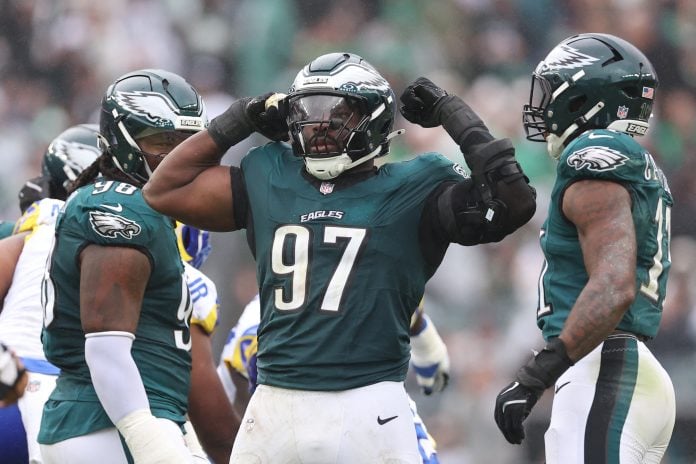
Oct 4, 2026; Philadelphia, Pennsylvania, USA; Philadelphia Eagles defensive tackle Moro Ojomo (97) reacts after a third-down stop against the Los Angeles Rams during the second quarter at Lincoln Financial Field. Mandatory Credit: Bill Streicher-Imagn Images

The Chicago Bears have one eye on the trade deadline in a few weeks. Their 3-1 start has allowed them to start thinking bigger. If they can maintain their momentum until the end of October, there is a strong possibility they will have a green light to be aggressive in finding some extra help. Up until now, the list of potential sellers has been the same group of teams. Tennessee, Houston, Tampa Bay, Miami, and Los Angeles are all winless. They feel like the obvious ones to watch, as well as the 1-3 Arizona Cardinals and 1-3 Washington Commanders.

However, every deadline features an unexpected twist. Often, it’s a team nobody thought would be interested in selling. This year, it looks like that team is the Philadelphia Eagles. After starting the season 2-0, things took a rough turn as they’ve lost two in a row. If that weren’t bad enough, future Hall of Fame right tackle Lane Johnson just retired. The Eagles are going in the wrong direction, and it looks like they realize it. Rather than fight the inevitable, general manager Howie Roseman has gotten proactive. His first big move came when he shipped center Cam Jurgens to the Baltimore Ravens.

If the Eagles are open for business, the Chicago Bears should be shopping.

As a team that won a Super Bowl just two years ago, Philadelphia has plenty of talent. While they likely won’t go for a full fire sale, it’s fair to assume they’ll look to unload hefty contracts or players they know they can’t afford. The first name that immediately comes to mind is Moro Ojomo. The Eagles already handed huge contracts to Jordan Davis and Jalen Carter at defensive tackle. There is no way they can give another to Ojomo, who had a breakout year in 2025 with 6 sacks and 12 QB hits. He doesn’t have a sack this year, but he does have 12 pressures in 4 games.

The other name to watch is Jalyx Hunt. A former 3rd round pick in 2024, Hunt collected 6.5 sacks and 24 QB hits last season. His speed around the edge and closing burst are two things the Chicago Bears don’t really have on defense. Adding some alongside Montez Sweat and Austin Booker would give their pass rush a more diverse flavor. Both players have contracts coming up. Ojomo’s is next spring, and Hunt’s is 2028. Philadelphia can’t pay both of them. That means the Bears should have a chance to trade for the other.

Both players are in Ryan Poles’ wheelhouse.

He typically prefers to target younger, ascending talent at the trade deadline, as we saw with Sweat a few years ago. Ojomo and Hunt fit the bill. The Bears’ GM has already done business with the Eagles multiple times. It comes down to what price he is willing to pay for one of them. No doubt Roseman will look to drive the price tag as high as possible. It’s been his reputation for years. The trick will be to establish a clear line you’re not willing to cross and stick to it. If someone else outbids you? So be it.

If nothing else, this is a welcome sign that the Bears will have plenty of options on the table by the end of the month. The more teams you have willing to sell, the greater the odds of finding a deal you can live with. That is how the team landed Sweat in 2023. Maybe their good fortune will come from another NFC East team.

18 Players Heading Into Free Agency: Who Should The Chicago Cubs Keep for 2027 and Beyond?

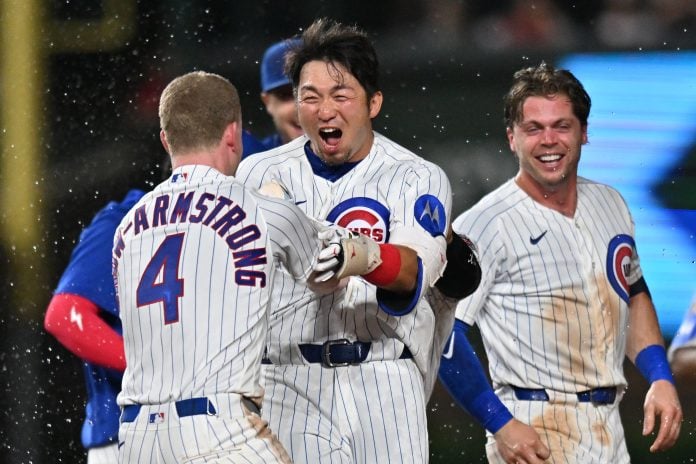
Jun 29, 2026; Chicago, Illinois, USA; Chicago Cubs designated hitter Seiya Suzuki (27) celebrates his walk-off single with teammates after defeating the San Diego Padres in the ninth inning at Wrigley Field. Mandatory Credit: Patrick Gorski-Imagn Images

The Chicago Cubs have many players heading into free agency after the 2026 season, but not all of them will leave. A handful of players will have their club options picked up, while a few others could certainly be re-signed. But who should return for 2027 and beyond, and who should never come back? Let’s go over the list, starting with the trio of pitchers most likely to return based on their club options.

Club Options: Cubs Should Pick Up All 3

Javier Assad ($3.3 million club option)

The 29-year-old pitcher had another great year being the perfect fill-in guy for the Cubs’ pitching staff. Assad made 11 starts, appeared in 28 total games, and finished the regular season with a 3.63 ERA in 94.1 innings. He’s not flashy, doesn’t have the best stuff in the league, but he’s been dependable, now recording a 3.47 ERA in 106 career MLB games.

Assad can start, serve as a swingman out of the bullpen, or pitch in a more traditional relief role. No matter what, he gets outs. The $3.3 million club option will be an easy decision for the Cubs.

Colin Rea ($7.5 million club option, $1 million buyout)

Did you know Rea has started the third-most games for the Cubs in the past two years? It definitely wasn’t by choice, but the veteran righty was asked to step into a starting role in each of the last two seasons, and like Assad, he was an underrated arm who helped a lot. In two years with the Cubs, Rea has posted a 4.13 ERA in nearly 300 innings.

This one will cost the Cubs a bit more, but given the club option worth $7.5 million, including a $1 million buyout, it’s really a $6.5 million decision to retain a steady pitcher.

Jacob Webb ($2.5 million club option)

I can hear Cubs fans screaming to stay the hell away from Webb, but as horrific as the reliever was during the final five weeks of the regular season, you also can’t ignore his overall season and previous work in the big leagues.

Webb had a streak of 24.2 scoreless innings over two months, and while he might not have been that amazing, you also can’t assume he’ll keep being as bad as he was down the stretch. The right-handed reliever has a career 3.07 ERA in 315 MLB games. At $2.5 million, Webb should be back in the bullpen next season, and obviously the Cubs should be making several more moves so that he’s not the one responsible for closing out games in September.

Now, let’s move on to the only guy who has a player option, who will decline it and become a free agent. He sucked at the end, but he’s also the perfect pitcher to be in the middle of the Cubs starting rotation.

Clay Holmes ($12 million Player Option)

The New York Mets signed Clay Holmes to a three-year, $38 million contract prior to the 2025 season. It was a decent chunk of change, but it also caught the baseball industry a bit off guard, as the Mets signed the pitcher with the intention of turning him into a starting pitcher.

Before the 2025 season, Holmes had four MLB starts, all during his rookie year with the Pittsburgh Pirates in 2018. Since then, Holmes was your traditional one-inning reliever, and from 2021-24, he was the go-to man in the New York Yankees bullpen. The righty saved 74 games in his last three seasons with the Yankees, including a 2022 All-Star nod.

But Holmes flawlessly returned to a starter role with the Mets and became an All-Star again in 2025.

He looked dominant in August with the Cubs, then fell apart in September. He was so bad that the Cubs stayed away from him, holding him back for a potential Game 3 against the San Diego Padres in the Wild Card Series. Yet, you look at his jaw-dropping ability to produce ground balls- a 60.7% ground ball rate in 2026 and a 62.3% ground ball rate in his career- and Holmes’ pitching profile is ideal with the elite infield defense that the Cubs feature.

You also have to think the Cubs don’t want to look really stupid by losing Holmes after having him for only a few months, after trading away their top prospect at the time, infielder Jefferson Rojas. So, while Holmes will opt out to test free agency, you should expect the Cubs to be heavily interested in re-signing Holmes, and they should bring him back.

Tyrone Taylor/Michael Conforto (Unrestricted Free Agents)

Take your pick here. The Cubs should bring back one of these two, but not both. We’ll see which direction the organization takes at corner outfield, since Seiya Suzuki and Ian Happ are also free agents this offseason and their futures with the Cubs seem uncertain at best.

I tend to lean toward Tyrone Taylor because of the price. He’s a short-side platoon bat who did a phenomenal job after the Cubs acquired him from the Mets, along with Holmes, at the trade deadline. Taylor can play either corner spot, and he can also give Pete Crow-Armstrong a breather in center field, as he did a handful of times late in the year.

Taylor’s track record isn’t as strong as Michael Conforto’s, so his market won’t be as high. Since the Cubs are already expected to divert most of their resources to the pitching staff, a modest deal for a fourth outfielder like Taylor seems more in their wheelhouse than paying Conforto as a starter.

Seiya Suzuki (Unrestricted Free Agent)

The Cubs should absolutely try to re-sign Seiya Suzuki this offseason, but it pains me to say early reports from team insiders indicate the front office isn’t interested in a bidding war for the right fielder.

Suzuki has been a consistent power bat for the Cubs for the past four years, averaging 25 home runs per season since 2023. His OPS has remained above .800 in his five-year MLB career, including an .840+ OPS in three of the last four years. His defense has always been maligned, but that was a bit unfair because a handful of lousy plays skewed that perception. In reality, Suzuki has been a solid defender in right field, and in 2026 he tied Victor Mesa Jr. of the Tampa Bay Rays for the highest Fielding Run Value mark in MLB among right fielders, according to Baseball Savant.

It is going to be a damn shame when Suzuki eventually signs elsewhere this upcoming winter because his production won’t be easy to replace. His slumps were downright annoying, but Suzuki has done more than enough to earn a longer look from the Cubs, whose pitching situation will apparently keep them from competing for his services in free agency.

Green Bay Packers Coaches Are Anonymously Venting About The Playoff Loss To Chicago

green bay packers
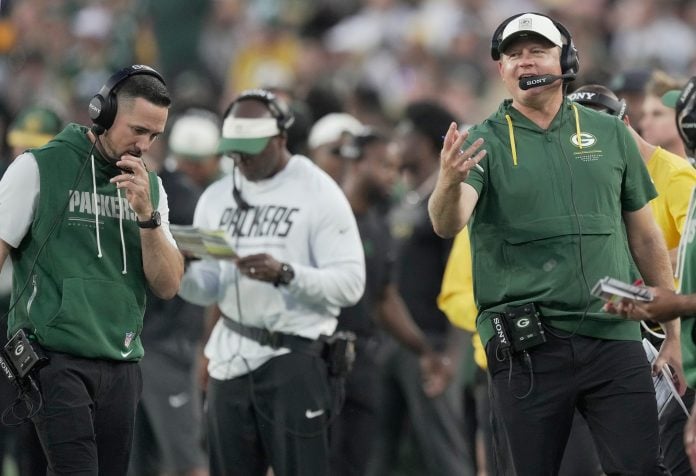
Green Bay Packers quarterbacks coach/assistant head coach-offense Luke Getsy, right, is shown during the first quarter of their preseason game against the Arizona Cardinals Friday, August 28, 2026 at Lambeau Field in Green Bay, Wisconsin. At left is Green Bay Packers head coach Matt LaFleur.

The Chicago Bears flipped a script that had been set for the past 30 years last January. Everybody knew that the Green Bay Packers always won games in the rivalry when it mattered most. You saw it in the 2010 NFC Championship and again in the 2013 season finale with the division on the line. Everybody expected the same outcome when the two teams met in the wild card round of the 2025 playoffs. It certainly unfolded as expected with Green Bay taking a commanding 21-3 lead.

Then things went off the rails. Chicago mounted a second-half comeback, taking advantage of every Packers mistake and scoring 25 points in the 4th quarter to go up 31-27. Green Bay failed to answer in the final seconds, cementing the greatest choke job in the rivalry’s history easily and perhaps the most brutal playoff loss the Packers had suffered since the NFC Championship loss in Seattle 12 years ago. For months, they managed to keep their real feelings about what happened under wraps from the media.

That finally changed when Tyler Dunne of Go Long TD got several coaches on the staff to vent about what happened. Let’s just say they had plenty to say.

“I don’t think we were a soft team,” one coach says, “but there were examples where we weren’t physical enough.”…

…“I don’t think the first half was as good as it seemed and the second half probably wasn’t as bad as it seemed,” one coach on staff says, before pausing. “But it was a shit show. That’s for sure.”…

…“Then, when we were dropping back,” a coach continues, “someone had a catastrophic fuck-up on each play. It was the same plays we were calling. It was just someone freaking out in the moment and making a mistake and it started snowballing. I don’t think we overcame that.”

It is clear the Green Bay Packers still can’t understand what happened.

For literal decades, they were the team that always closed games out when they had the lead in the 4th quarter. It was especially true against the Bears. From 1992 to 2023, Chicago managed only four 4th quarter comebacks to win against the Packers—none in the final 10 seasons of that stretch. Since Caleb Williams came aboard in 2024, the Bears have now done it to them three times in two seasons. That wild card game was by far the most gutwrenching of all. It seemed like something broke that day.

Since then, the Green Bay Packers have looked nothing like the team they’ve been for many years. They’re 2-2 to start the season, and that is by the skin of their teeth. They had to overcome a 17-3 deficit against the New York Jets and barely survived 17-14 against the winless Tampa Bay Buccaneers, who were starting an undrafted rookie quarterback. All of this is happening while injuries keep piling up. Wide receiver Jayden Reed (neck) and linebacker Edgerrin Cooper (Achilles) are both done for the season. It feels like Sunday’s game could be make-or-break for them on several levels.

The Packers haven’t felt this way in a long time.

Being mortal. For 30 years, they sat on a mantle above most other NFL teams because they had a Hall of Fame quarterback under center, first with Brett Favre and then Aaron Rodgers. Everybody assumed the good times would continue with Jordan Love at the helm. While the former 1st round pick has played strong football since becoming a starter, it hasn’t been anywhere close to Favre and Rodgers at their peaks. Without that elite umbrella to shield them, the weaknesses on their roster have become much harder to hide.

Unless you play sound, efficient football across the board, you’re going to lose games against good teams. That is what happened to them on that fateful night at Soldier Field. They started making mistakes, the Bears found some momentum, and there was no Canton-bound quarterback to save them, as in years past. For the first time, they had to watch what being truly vulnerable feels like.