
Friday, April 10, 2026
✶ Untold Chicago Stories ✶ Amazon Music
Home Blog Page 23

Mikail Kamara Becomes First Edge Rusher To Visit Bears — And Why It’s Puzzling

mikail kamara
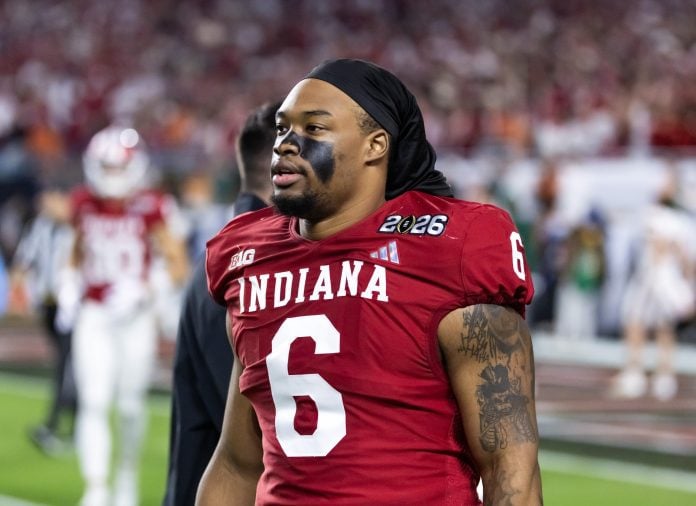
Jan 19, 2026; Miami Gardens, FL, USA; Indiana Hoosiers defensive lineman Mikail Kamara (6) against the Miami Hurricanes in the College Football Playoff National Championship game at Hard Rock Stadium. Mandatory Credit: Mark J. Rebilas-Imagn Images

It isn’t a secret that the Chicago Bears need to find more help at edge rusher. Montez Sweat and Austin Booker are the only two proven options on the roster. They need somebody to provide both competition and depth. That is why the team is expected to attack it early in the NFL draft next month. One would think they’d be more than eager to meet with all of the potential 1st round options who could be available at the 25th pick. Instead, the first name to emerge on their list of private visits is Mikail Kamara.

The 24-year-old defensive end concluded a six-year college career by helping Indiana to its first national championship in program history. While he only had two sacks this past season, he had 59 quarterback pressures as part of a dynamic defensive front that harassed opposing quarterbacks every week. Kamara had 10 sacks in 2024 and 7.5 in 2023. He’s proven he knows how to get into the backfield. There is just one problem.

He doesn’t fit the physical profile Bears defensive coordinator Dennis Allen prefers.

Mikail Kamara has size concerns.

We know from Allen’s long track record that his defensive ends must usually meet certain thresholds. They must be at least 6’3″, 260 lbs, and have 33-inch arms. While Kamara is 265 lbs, he’s only 6’1″ and has arms estimated below 33 inches. That makes him an awkward fit for Allen’s defense. In his long career as a defensive coordinator and head coach, he has employed only one edge rusher under 6’2″: Elvis Dumervil (5’11”) in 2011. He was already an established All-Pro by that point, which is why Allen let it slide.

The selling point of Kamara comes from his ability to maximize what he has. His first step is explosive and he shows an outstanding motor to power through blocks. Thanks to his considerable experience, he has a deep toolbox of pass rush moves he uses to great effect. Perhaps most importantly, he is an above-average run defender, able to penetrate gaps and blow up plays. The problems are his lack of length and tightness in his lower half, which limit his ability to bend or drop into coverage.

The Bears’ interest in Kamara could mean two things.

First is the most straightforward. They feel he has enough tools in his bag to overlook the size issue. Guys with his power, motor, and first step tend to do pretty well at the NFL level. It doesn’t hurt that he can probably be acquired on day three of the draft, meaning it won’t cost more than a 4th round pick. Probably less. The other possibility is that the Bears see Mikail Kamara as a potential position-shifting option. They may wish to attempt moving him inside to defensive tackle. Allen doesn’t mind shorter players at that position. Sheldon Rankins was barely 6’1″.

It is hard to say whether this is feasible. Kamara would have to add at least 25 lbs to get into viable defensive tackle territory. The issue will be whether his frame can handle such significant weight gain without losing explosiveness. He has the power to hold up in that scenario, but the smarter decision might be to keep him at defensive end. Allen is a good coach. He should be able to make the most out of what Kamara does best. He’s a good football player.
Why The Chicago Bears May Snag These 1st Round Prospects In The 2nd Round

kadyn proctor
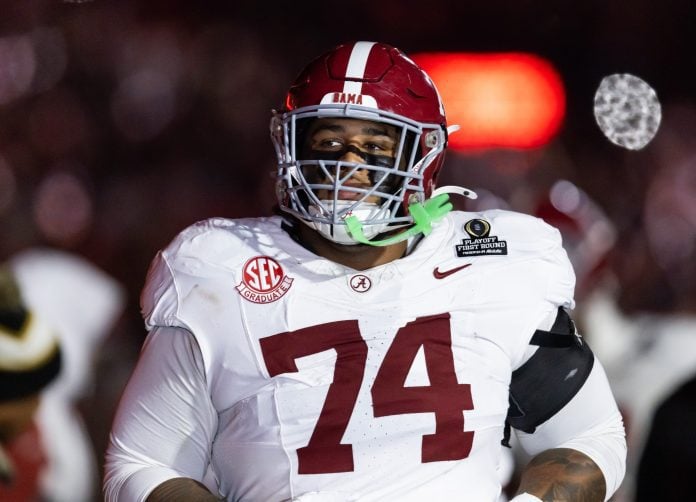
Dec 19, 2025; Norman, OK, USA; Alabama Crimson Tide offensive lineman Kadyn Proctor (74) against the Oklahoma Sooners during the CFP National Playoff First Round at Gaylord Family Oklahoma Memorial Stadium. Mandatory Credit: Mark J. Rebilas-Imagn Images

One of the biggest reasons the Chicago Bears had such a successful 2025 NFL draft was due to some good fortune. After taking Colston Loveland in the 1st round, they held the 39th pick in the 2nd round. To the surprise of many, Luther Burden was still on the board. Many had felt the Missouri wide receiver was a lock for the 1st round given his mix of size, strength, and speed. However, his statistical regression in 2024 cooled his stock, and it wasn’t helped by stories of him being unmotivated in practice.

Clearly, those concerns were overblown as Burden became one of the Bears’ best weapons down the stretch of last season. That begs the question. With them holding two 2nd round picks this year, is there any chance one of the prospects projected to go in the 1st round might fall to them again? In these situations, it is best to rely on what I call the Bermuda Triangle of draft sliding.

  • Age
  • Health
  • Character

If there are significant concerns about a player on any of those three fronts, it is almost certain they will go lower than predicted. Sometimes much lower. Here are some names the Bears could be eyeing.

The Chicago Bears have four names worth watching.

Akheem Mesidor (EDGE, Miami)

Mesidor was a menace for the Hurricanes last season, exploding for 12.5 sacks and 17.5 tackles for a loss. He has that exciting mix of power and closing speed, making it difficult to block him regardless of the scheme. Under normal circumstances, he would probably be a lock to go in the top 15. Unfortunately, there is one major shadow cast over him. He turns 25 this year, making him a considerably older player. In recent NFL draft history, exceptions are not made for prospects over 23 in the 1st round unless they are quarterbacks.

Draft Year Estimated Avg AgeOldest 1st Round Pick
201622.3Josh Doctson (23.4)
201722.1Haason Reddick (22.6)
201821.7Hayden Hurst (24.7)
201921.9Kaleb McGary (24.2)
202022.0Joe Burrow (23.4)
202122.1Najee Harris (23.1)
202223.1Kenny Pickett (23.9)
202322.8Dalton Kincaid (23.5)
202423.2Bo Nix (24.2)
202522.4Tyler Shough (25.6)

Jordyn Tyson (WR, Arizona State)

There is so much to like about Tyson’s game. He is probably one of the two or three most polished receivers in this class, a sharp route-runner with a keen understanding of how to create separation in tight spaces. His competitiveness shows up every time a tough catch is needed, and he seems to play his best in big games. The problem is he’s been hounded by injuries throughout college. It was a knee problem in 2022, a collarbone in 2024, and both hamstrings in 2025. Teams don’t spend 1st round picks on guys who struggle staying on the field. Still, he has the skill set and wiring that the Chicago Bears would love.

Kadyn Proctor (OT, Alabama)

There is a lot to like about Proctor. There were stretches of dominance at Alabama, using his massive size and length to overwhelming advantage against SEC edge defenders. He also has enough foot speed to stay outside in the NFL, which is why many are excited about him. However, recent history shows that drafting gigantic tackles over 340 lbs is a dangerous endeavor. JC Latham, Mekhi Becton, Evan Neal, and Isaiah Wilson were all disappointments. That alone has likely made the league wary of gambling on such types. Then you have the whispers of Proctor having conditioning and focus issues. Combine all of these factors and a plunge to Day 2 is hardly implausible.

Jermod McCoy (CB, Tennessee)

Cornerback is a key position in Dennis Allen’s defense. After letting Nahshon Wright walk, it’s not crazy to think the Chicago Bears may look to hit it early. We know they prefer long, athletic, fast players with a nose for turnovers. McCoy is the spitting image of that prototype, showing incredible potential in 2024. Sadly, he tore his ACL last season, delivering a brutal hit to his draft stock. He hasn’t been able to do any testing as a result, making him somewhat of a gamble. That increases the odds he could slip to the Bears at #57 or #60. In such a case, he would be such a perfect fit for their system, provided they’re willing to take the risk.

Sam Antonacci’s Path To White Sox May Now Be More Clear

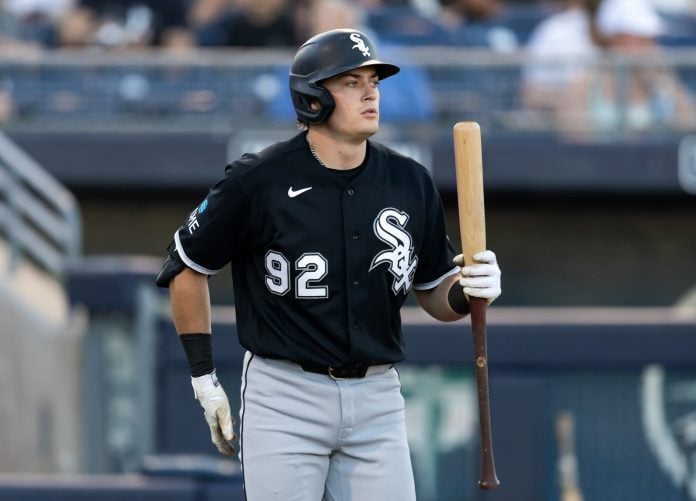
Mar 19, 2026; Peoria, Arizona, USA; Chicago White Sox second baseman Sam Antonacci against the San Diego Padres during a spring training game at Peoria Sports Complex. Mandatory Credit: Mark J. Rebilas-Imagn Images

Sam Antonacci has gone from an unheralded fifth-round draft pick in 2024 to a potentially significant part of the White Sox future thanks to his impressive performance and quick ascent through the farm system. The question the White Sox now face is not whether he deserves a chance at the big leagues, but where he will fit once he gets there. The team may have offered a clue this afternoon, as he was in the lineup playing left field for the first time.

Moving around the field defensively has always been part of Antonacci’s profile as a player. He has displayed his versatility ever since being drafted, playing all four infield positions as a professional. The outfield, on the other hand, would be a new challenge for him. To this point, he has never played in the outfield in college or the pros.

White Sox Crowded Infield Mix

The logic behind experimenting with Antonacci in the outfield is easy to see. Miguel Vargas, Colson Montgomery, and Chase Meidroth project to the starters at third base, shortstop, and second base for the White Sox in 2026, and that is just scratching the surface of the their infield depth.

The White Sox have a lot of infield talent as an organization. Top 100 prospects Caleb Bonemer and Billy Carlson headline the group and are joined by other prospects like Kyle Lodise, William Bergolla Jr., Javier Mogollon, and Jeral Perez, who could enter the equation eventually as well. The infield could become an even bigger area of strength should they draft UCLA shortstop Roch Cholowsky, the consensus top prospect in the 2026 MLB draft.

Needless to say, there is a lot of competition for only a couple of spots. Some of these infielders will have to change positions as a result, and it appears Antonacci could be in the process of doing just that. It’s a possibility he is embracing, per his conversation with Scott Merkin of MLB.com.

“They tell me to grab an outfield glove, I’ll go out there. I always like to say I never got drafted to just be a shortstop or second baseman for the White Sox. I got drafted to help them win. If that’s in the outfield, I’m more than happy to do it,” Antonacci said.

Outfield Full of Opportunity

The White Sox outfield situation presents much more of an opportunity moving forward. Top prospect Braden Montgomery figures to stake his claim to one of the spots in the near future and recent trade acquisition Luisangel Acuña has had an impressive spring. Beyond them, however, there are no real apparent long-term solutions in the outfield as things currently stand. Moving to left field could accelerate Antonacci’s timeline to Chicago and create an immediate opportunity for him to have consistent playing time with the big league club.

For White Sox fans, putting an infielder in the outfield may raise some red flags given past experiments with players like Andrew Vaughn and Gavin Sheets. But Antonacci presents a different profile than either of them. His history as a middle infielder suggests has enough athleticism to handle left field, even if he lacks elite speed and arm strength.

Potential Win/Win Scenario

For Sam Antonacci, his chance at the big leagues feels more a matter of if than when. It’s just a matter of finding a place for him to play that makes sense for him and the team considering the organization’s strengths. If his potential transition to the outfield goes smoothly, it would be a win-win for everyone involved.

Chicago Cubs Willing To Significantly Increase Contract Offer for Pete Crow-Armstrong

Oct 8, 2025; Chicago, Illinois, USA; Chicago Cubs center fielder Pete Crow-Armstrong (4) reacts after striking out against the Milwaukee Brewers in the third inning during game three of the NLDS round for the 2025 MLB playoffs at Wrigley Field. Mandatory Credit: Matt Marton-Imagn Images

Pete Crow-Armstrong already addressed contract talks earlier this year and now we have a new update from national MLB insider Jon Heyman. A year after the Chicago Cubs approached Crow-Armstrong with a modest contract extension offer the team is now reportedly willing to significantly increase their offer to secure their All-Star center fielder on a long-term deal.

Despite local and national reports there still seems to be a disagreement on what the Cubs actually presented Crow-Armstrong with before his breakout 2025 season. The original report from MLB.com reporter Mark Feinsand stated that the offer from the Cubs was in the $70 million range. Meanwhile, Chicago baseball reporter Bruce Levine later said that the contract was in the $90 million range.

This week, Heyman discussed potential extension across MLB and when detailing the case for Crow-Armstrong, Heyman reported the following in the New York Post.

“The Cubs offered $66M last spring and are believed willing to go significantly higher for their star CF. But there’s no indication anything’s close.” -Jon Heyman

In 2025, Crow-Armstrong led the Cubs with a 5.4 fWAR, won a gold glove in center field and had the franchise’s first 30/30 season since the mid-90s. So, what would a contract extension look like for Crow-Armstrong to keep him a Cub for life?

Pete Crow-Armstrong Contract Projection

FanSided’s MLB insider Robert Murray spoke to an agent, who pointed to a pair of mega contract extensions that have been signed in recent years that could be in Crow-Armstrong’s ballpark.

Via FanSided.

There are multiple ways that Crow-Armstrong can go about a potential extension. If he wants to be with the Cubs for the remainder of his career, one rival agent opined he could go for contracts similar to Bobby Witt Jr., Fernando Tatis Jr. or Julio Rodriguez.

In Aug. 2022, the Seattle Mariners and Julio Rodriguez agreed to a huge contract extension during the outfielder’s rookie year. On the surface it was reported as a deal that could be worth up to $470 million, but the contract structure is far more complicated.

Julio Rodriguez Contract Details
-$105 million from 2023-29 (8 year, $120 million base extension includes $15 million signing bonus in 2022)
-After 2028, Mariners can extend deal 8 or 10 years based on MVP finishes
-If Mariners decline to extend after 2028, Rodriguez has a 5-year player option worth $90 million – $125 million
-Rodriguez guaranteed $210 million over 12 years
Contract Value Based on MVP Voting After 2028
$240 million over eight years with two or three top ten finishes
$260 million over eight years with four top ten finishes
$280 million over eight years if he wins an MVP and finishes in the top five once more or finishes in the top five of MVP balloting on three occasions
$350 million over 10 years if he wins two MVP awards or finishes among the top five in balloting on four occasions

In the event Rodriguez hits that highest threshold and the Mariners exercise the option, the contract would max out at 18 years and $470 million in total value.

Meanwhile, the Kansas City Royals and Bobby Witt Jr. agreed to an 11-year, $288.5 million extension, entering the shortstop’s third year in the majors. His deal included opt-outs after the 2030, 2031, 2032 and 2033 seasons. If Witt declines to opt out then, the Royals would receive a team option worth $89 million for three more years, which would bring the max value of the contract to $377 million over 14 years.

Crow-Armstrong is heading into his second full season with the Cubs in 2026 as a 23-year-old. He was called up at the end of 2023, but barely played and then appeared in 123 games as a rookie in 2024.

Interestingly enough, Crow-Armstrong and Witt Jr. put up similar fWAR totals in their first two years in MLB.

Bobby Witt Jr. Year 1
150 games, 20 HR, 30 SB, 98 wRC+, 2.3 fWAR
Year 2
158 games, 30 HR, 49 SB, 116 wRC+, 5.9 fWAR

Pete Crow-Armstrong Year 1
123 games, 10 HR, 27 SB, 86 wRC+, 2.6 fWAR
Year 2
157 games, 31 HR, 35 SB, 109 wRC+, 5.4 fWAR

Maybe there’s combo of the Rodriguez extension that includes future options based on incentives to drive down the initial average annual value because the guaranteed base for Rodriguez is 12 years for $210 million. But maybe Crow-Armstrong looks at Witt Jr.’s AAV and wants a bump up. That is of course if Crow-Armstrong wants a mega extension and not a shorter one that would still give him the ability to test free agency in his 30s.

But if we’re talking about a contract extension that would keep Crow-Armstrong a Cub for life, maybe this structure could work.

Cubs offer 11-year, $240 million contract extension. (2026-36)
-$130 million guaranteed through 2032 (incentives increase annual value)

So, that initial seven-year, $130 million extension would buy out his arbitration years and two free agent years, 2031 and 2032, respectively. Then, you can include escalators for the next four years of the contract where at the minimum Crow-Armstrong is in the $30 million range, incentivizing him to stay with the Cubs and not go into free agency. In turn, the Cubs could add a couple different team options to secure Crow-Armstrong beyond the four years after the initial guaranteed extension expires. Add in three option years and make the total max value near $400 million over 14 or 15 years.

Regardless of whether an extension is worked out now or not, it is great to have Pete Crow-Armstrong on the Chicago Cubs. He’s exactly the type of competitor you want on your team and the center fielder expressed his passion for winning perfectly in Chicago Magazine.

“I saw what bringing playoff baseball back to the city meant,” he says. “That’s an easy, immovable goal. The fuck are you playing for if you’re not trying to play in the playoffs and win the World Series? There’s more to life than baseball, but maybe not for me right now. This shit is my life.” 

DJ Moore Trade Gets Glowing Review From Notorious Bears Critic — Here’s Why

dj moore
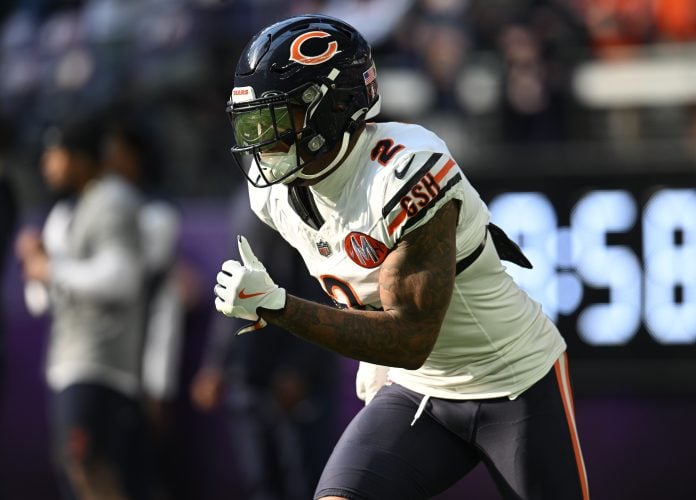
Nov 16, 2025; Minneapolis, Minnesota, USA; Chicago Bears wide receiver DJ Moore (2) warms up before a game against the Minnesota Vikings at U.S. Bank Stadium. Mandatory Credit: Jeffrey Becker-Imagn Images

The Chicago Bears knew going into 2026 they would have to make some tough roster decisions. Salary cap issues meant they would either need to restructure several contracts to keep the team together or they would have to unload some of their most prominent veterans for cap space. In the end, Bears general manager Ryan Poles and head coach Ben Johnson opted for the latter. By far the biggest move in that process was deciding to trade wide receiver DJ Moore to the Buffalo Bills.

It wasn’t easy. Moore was easily one of the biggest heroes of the 2025 season. His touchdown catch in overtime to beat the Green Bay Packers will be immortalized in Bears lore forever. That doesn’t even add the go-ahead score he had to beat them again in the wild card round. He’d earned his place as a true Packer slayer. Trading him was not easy for fans to stomach. Even so, Seth Walder of ESPN came impress and more than a little shocked by what the Bears got for him in the deal.

Why the Bears got an A: Moore looked like a likely trade candidate heading into the offseason after he had failed to really produce in Ben Johnson’s offense and appeared to show lackadaisical route-running effort on what ended up being Chicago’s last offensive play of the season, a Caleb Williams overtime interception in Chicago’s divisional-round loss to the Rams…

Assuming the Bears didn’t take on any additional money, I think this part is sort of remarkable: Moore’s stock seems to have fallen precipitously since signing his extension that had a $27.5 million average per year. Despite that, the Bills will be taking on only a slightly cheaper contract: $90 million over four years ($22.5 million APY) though with all the guarantees this will be a one-year deal for $40 million, two years for $64.5 million or three for $73.5 million if they choose to end it early. Not only that, but the Bills gave up what ESPN’s draft pick values would consider a late-third round pick to do it.

In my view, that makes this a much better result for the Bears than I would have expected heading into the offseason and makes the deal worth criticizing for the Bills.

The Bears knew exactly who to call on the DJ Moore trade.

One thing about Poles is that he always seems to know which teams to probe when he has a player he must unload. It was true with Robert Quinn when flipping him to the pass-rush-needy Eagles. He flipped Khalil Herbert to Cincinnati for a 7th round pick and Chase Claypool to Miami for a 6th. Poles knew the Bills were hurting for wide receiver help. It was a big reason they weren’t able to advance in the playoffs this past season. Chicago had already done tons of business with them, so communication was easy.

Sure enough, Buffalo was receptive. From there, Poles had to navigate the tricky landscape of convincing that the decline in production from DJ Moore last year had nothing to do with his ability. It was more the nature of Johnson’s offense, designed to spread the ball around as much as possible. Moore was still highly capable of being the go-to option he’d been in 2023 and 2024. The Bills felt it was worth the risk, handing over a precious 2nd round pick in the deal. It was a huge win for Chicago.

Walder applauding it is shocking.

The ESPN analyst has built a reputation in recent years of slamming most of the moves the Bears make. He gave the Jonah Jackson trade a D grade last year and the Montez Sweat trade a D- three years ago, calling them terrible value. Sweat has 21.5 sacks in 42 games, and Jackson was a key cog in Chicago’s dominant rushing attack. One would think Walder would’ve been all over the Bears for giving up on a proven wide receiver because of financial problems. Instead, he saw the logic of it from the start and thinks they got way more than they should’ve.

Losing DJ Moore was tough. You don’t unload proven producers like that and expect to improve. The Bears just felt it was better to rip the band-aid off now rather than later. They still have two highly talented receivers in Rome Odunze and Luther Burden. They, along with Khalif Raymond, should give Caleb Williams enough firepower. They can also add more depth to the draft. Meanwhile, that 2nd round pick can be used to help overhaul their defense.

Caleb Williams Has Achieved Status No Bears QB Ever Has According To Coby Bryant

caleb williams
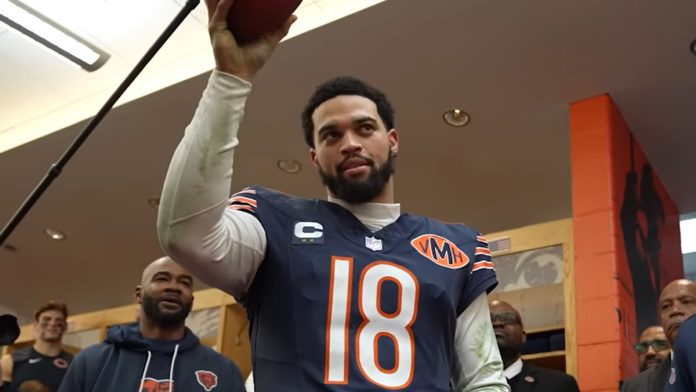
Bears quarterback Caleb Williams gives victory speech after wild card victory over the Green Bay Packers

Coby Bryant had plenty of options when free agency opened earlier this month. Safeties like him always have a healthy market, especially coming off a Super Bowl championship. However, it didn’t take long for him to realize the Chicago Bears were the team he wanted to join. A big part of why was the intense interest they showed from the beginning, even calling him first thing in the morning. It didn’t hurt that they made a strong contract offer as well. There was the Caleb Williams factor.

Bryant admitted to Kay Adams on Up & Adams that the Bears quarterback was a big reason why he came to Chicago. He feels Williams is just scratching the surface of what he can do after his terrific 2025 season. Bryant wants to be part of what’s coming.

This is confirmation of what many felt was possible. If Williams ascended last season to showcase his obvious talent, the Bears would become a hot destination for high-end free agents, eager for the chance to play with him. Bryant’s words are the culmination of everything Chicago has been trying to build over the past two years.

Caleb Williams is embracing his role.

The fact that he reached out to Bryant tells you everything you need to know. It is one thing to welcome a player to a team when they’re signed. It is another to openly encourage them to join, believing they can be a key difference in a potential championship push. Williams hasn’t been shy about indicating his intense interest in everything the Bears do. His presence on social media means he’s well-informed on everything. He knows which players fans want and why those players could make the difference.

He also understands how much his star has elevated after last season. Williams threw for 3,941 yards and 27 touchdowns to just seven interceptions. It was one of the best seasons in Bears history. He then followed it up with two of the greatest passes in NFL playoff history against the Packers and Rams. Williams is must-see TV and is already becoming one of the most clutch quarterbacks in the league. He has the sleeping giant of Chicago stirring like never before. How can you not love the idea of joining in as a free agent?

Many great quarterbacks have made teams attractive destinations.

Tom Brady is a classic example. Top free agents frequently joined the New England Patriots for below top-of-the-market money just for the chance to compete for a Super Bowl thanks to his presence. You had Darrelle Revis do it in 2014. Stephon Gilmore did it in 2017. In 2020, after leaving Tampa Bay, he lured Leonard Fournette and Antonio Brown to the Buccaneers. You’ve been seeing the same thing happen in Kansas City with Patrick Mahomes. Big names like Tyrann Mathieu, Joe Thuney, Justin Reid, and Kenneth Walker have all joined the Chiefs due in large part to his presence.

Not once since free agency was instituted in 1994 has a Bears quarterback been good enough to be considered a lure for big-name free agents. Jay Cutler was probably the closest during his run with the team, but his murky reputation as a leader and inconsistent play ruined that. Mitch Trubisky? Justin Fields? They had fun moments, but nobody ever took them seriously. Caleb Williams is the first to force people to take notice. He isn’t going away.

There is a common saying in the NFL. Players know. If guys are signing in Chicago because they want to team with Williams, that signals the Bears finally got one.

A Mysterious Sponsor Is Making A Push To Keep The Bears In Soldier Field

soldier field
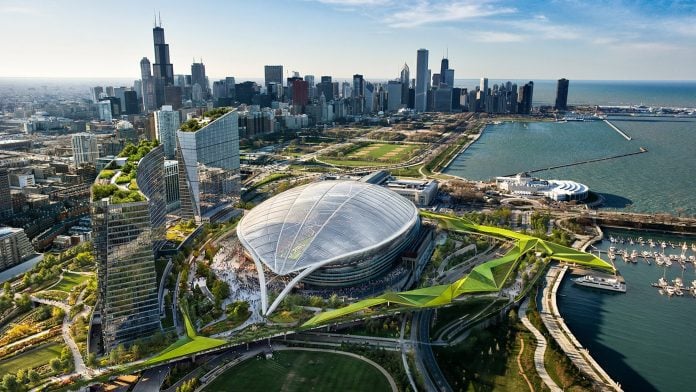
Renderings of a brand new renovated Soldier Field including a transparent roof and brand new infrastructure improvements

If you’ve been following the entire saga up until now, the general consensus is that the Chicago Bears are at a crossroads. They will either receive the final legislation needed to leave Soldier Field and begin construction in Arlington Heights, or they will accept Indiana’s offer to build a new stadium in Hammond. Nobody is sure which direction they’re leaning. The McCaskey family doesn’t want to leave Illinois, but the state government’s stalling in Springfield has worn their patience to dangerous levels. One more delay could push it over the edge.

In the midst of this standoff, someone is trying to make one last attempt to stop it all from happening. According to Fox News 32, a mysterious sponsor had Edward Peck Design concoct new renderings of a complete overhaul of Soldier Field. The idea was to turn it into a year-round venue that maximizes revenue while also addressing issues that have long made the stadium a problem. That includes expanding seating capacity, adding more luxury suites, and improving transportation access.

As the Chicago Bears weigh potential moves to Arlington Heights or Northwest Indiana, a new proposal is pitching a different future — keeping the team at Soldier Field with a major overhaul of the historic stadium.

The concept, released Thursday by architectural firm Edward Peck Design, outlines a plan to transform Soldier Field into a year-round venue with a roof and a new entertainment district along the lakefront…

…Designers say the goal is to keep the Bears at Soldier Field long term while turning the area into a destination beyond game days.

“Our client believes the existing Soldier Field site is the ideal location for a world-class venue,” said Edward Peck, managing director of Edward Peck Design…

It’s not clear who asked Edward Peck Design to develop the proposal or whether the Bears or the Chicago mayor’s office have seen it. FOX Chicago has reached out for comment.

There’s also no word yet on who is backing the proposal, how much it would cost or whether it’s being seriously considered.

This Soldier Field idea still doesn’t account for the main problem.

The Bears’ desire to update the stadium has never been the issue. They’ve been pushing for it for years. The problem has always been the Chicago Park District. They own the property and have been resistant to every kind of proposal on improving both the building and the surrounding area. Part of it is the ongoing backlash from activist groups working to protect public land from private development. There is also the issue of money. Over $460 million is still owed from the last stadium renovation in the 2000s. Lots of people don’t want taxpayers saddled with this bill as well.

Some have argued that the way to get around this is by selling the property to the Bears. By owning Soldier Field, they would be responsible for paying the costs to renovate it. However, it doesn’t appear that the CPD is eager to allow that. They’ve already put forward a plan for a $630 million overhaul of the stadium property. All of this started because the Bears wanted more control over their destiny and more opportunities to improve their revenue-generation. A new stadium is the best way to do that.

This new proposal feels utterly pointless.

Unless this mysterious third party has significant political sway inside Illinois power circles, this endeavor is a waste of time and money. The Bears are committed to their path. Either they will begin construction in Arlington Heights within the next few months, or they will negotiate with Indiana on doing the same across the border. They had already ignored the previous attempt by former mayor Lori Lightfoot to convince them that renovating Soldier Field was a more sensible option. It’s hard to imagine that much has changed since.

Maybe team president Kevin Warren might be open to the idea. He was the one who originally pivoted away from Arlington a couple of years ago to try pushing through a new downtown stadium. It’s clear he feels strongly about keeping the Bears in the city. The problem was always finding the necessary backing for infrastructure. That is now much more possible with the threat of Indiana lingering in the background. He may buy into this idea if he thinks it will benefit his owners as much as a new stadium would.

That seems unlikely, though.

How The Bears Kind Of Crossed A Line To Sign Coby Bryant

coby bryant
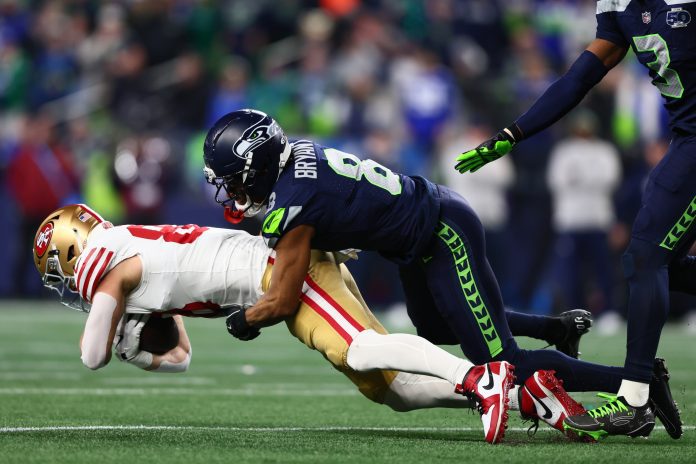
Jan 17, 2026; Seattle, WA, USA; San Francisco 49ers tight end Jake Tonges (88) is tackled by Seattle Seahawks safety Coby Bryant (8) during the first half in an NFC Divisional Round game at Lumen Field. Mandatory Credit: Kevin Ng-Imagn Images

There is a terrific story from 16 years ago. The Chicago Bears needed a pass rusher in the worst way going into the 2010 season. All-Pro Julius Peppers was set to become a free agent. He was the difference-maker they desperately needed. So Bears head coach Lovie Smith decided to do something unconventional. He traveled to North Carolina to Peppers’ house and met with the defensive end in person. That gesture was a key part of helping seal the deal. It appears the new Bears regime took a page out of that playbook in their efforts to land Coby Bryant.

Having lost Kevin Byard and Jaquan Brisker to free agency, the team needed help at safety. Bryant was coming off a career-best season helping the Seattle Seahawks win the Super Bowl. His versatile playing style was something Dennis Allen could make great use of. The trouble was the Bears weren’t the only team interested in him. That meant they might have to get a little aggressive to land their guy. According to Bryant on Up & Adams, that included a somewhat rude phone call in the very early morning.

The Bears took a slight gamble with that move on Coby Bryant.

Some people would hate being hounded by phone calls so early in the morning. It wouldn’t be the greatest first impression. Luckily, Bryant felt flattered by the gesture. The risk paid off. While he undoubtedly had a strong market, it became clear the Bears wanted him and had the type of defensive structure that fit his abilities to perfection. Just like that, the team had nabbed the best safety available in free agency, and at a pretty reasonable price, no less. Bryant’s $13.33 million per year fell outside the top 10 for safeties.

It gave the Bears enough wiggle room to also bring in defensive tackle Neville Gallimore to shore up their interior pass rush and linebacker Devin Bush for speed. While those three moves won’t magically transform the defense into one of the NFL’s best, they certainly made it faster and more versatile. If the Bears can deliver a strong draft next month, this unit should be considerably improved from last season. Finding Bryant’s wingman will be part of that objective.

An interesting risk is being taken.

The Bears seem content with the belief that they can find another starting safety in the upcoming draft. That isn’t totally crazy. Most experts agree that this safety class is strong. Three players are projected to go in the 1st round, with as many or more likely to go in the 2nd. Chicago has three picks in that range. It is hardly difficult to believe they’ll use one of them on a guy they think can click with Coby Bryant. If anything, they will seek somebody who mirrors his own ability.

They’ll want good size, good speed, and the versatility to play deep coverage or around the line of scrimmage. Having two safeties capable of that ensures it’s impossible for offenses to know where to attack. They can’t key on one guy or the other. This wasn’t an advantage the Bears had last year. Everybody knew Byard would be in coverage and Brisker would drop into the box. Smart offensive coaches quickly found ways to attack their weaknesses. The Bears intend to erase those advantages.

De’Zhaun Stribling Emerges On Bears’ Radar Ahead Of Draft – And It’s Obvious Why

de'zhaun stribling
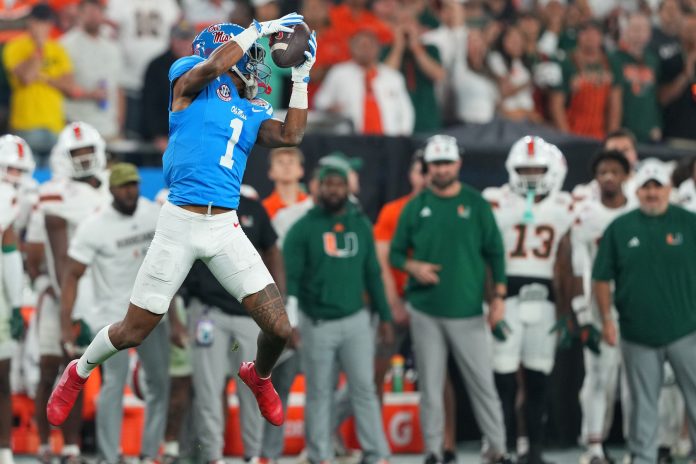
Jan 8, 2026; Glendale, AZ, USA; Mississippi Rebels wide receiver De'zhaun Stribling (1) makes a catch against the Miami Hurricanes in the second half during the 2026 Fiesta Bowl and semifinal game of the College Football Playoff at State Farm Stadium. Mandatory Credit: Joe Camporeale-Imagn Images

While discussions remain ongoing about who the Chicago Bears will take at the top of the 2026 draft, they have been quietly doing lots of legwork on potential players they could snag in the mid and late rounds. That includes positions that might not be considered pressing needs. SM reported recently that the team is much higher on wide receivers this year than many realize. The loss of D.J. Moore and Olamide Zaccheaus has some in the building concerned about the team’s depth. That is why they signed Kalif Raymond in free agency and why they will likely draft somebody. Enter De’Zhaun Stribling.

Ryan Fowler of The Draft Network revealed that the Bears are planning to host the Ole Miss wide receiver for a visit in the coming days.

Stribling turned heads at the scouting combine with that blazing 40-yard dash. It shows up on tape. When he finds space to run, he can easily take the top off of a defense. Get him the ball in his hands with room to run, and he will turn a six-yard pass into 40. He was a central part of the program’s run to the College Football Playoffs and was pivotal in their upset win over Georgia in the Sugar Bowl.

De’Zhaun Stribling checks the Ben Johnson boxes.

Chicago’s head coach has shown tendencies in recent years for what he prefers in his wide receivers. For one, they must be at least 6’0″ tall and 200 lbs or more. Stribling is 6’2″ and 202 lbs. Next, they must have good speed. Jameson Williams ran a blazing 4.2 in the 40 while Luther Burden was in the low 4.4s. Stribling crossed that threshold as well with his 4.36. They must be good after the catch. He doesn’t like players who just make the grab and go down. Stribling averaged 7.8 yards after the catch.

Last but not least, the receiver must be willing to block. Johnson made it clear last spring that if wide receivers wanted plays drawn up for them in the passing game, they better be willing to contribute in the running game. It doesn’t take long to realize De’Zhaun Stribling takes a sort of twisted satisfaction in blocking. He gets after it on every staff, eager to mix it up with anybody lined up across from him. It wouldn’t be shocking if that tape excited Johnson more than the big catches.

Stribling’s draft range seems pretty clear.

His excellent testing, solid, if unremarkable, numbers, and being slightly older likely mean he will fall somewhere in the 3rd or 4th rounds. This would enable the Bears to remain focused on helping the defense early. Johnson is no stranger to finding hidden gems in later rounds. He was with the Lions when they plucked Amon-Ra St. Brown in the 4th round. De’Zhaun Stribling has all the tools necessary to flourish in this offense. His speed would certainly unlock a dimension they didn’t really have last season.

One thing is clear. The Bears are intent on adding wide receiver help in this draft. If it’s not Stribling, it’ll be somebody else. Their depth needs addressing. Raymond is only under contract for a year. Jahdae Walker is still relatively unproven. Rome Odunze hasn’t shaken his consistency issues. Until Johnson is confident the team has an array of weapons he can trust, the Bears will keep firing. That private meeting will be an important one for Stribling.

Chicago Bears Shift Scouting Strategy Ahead Of 2026 NFL Draft — What It Means

chicago bears
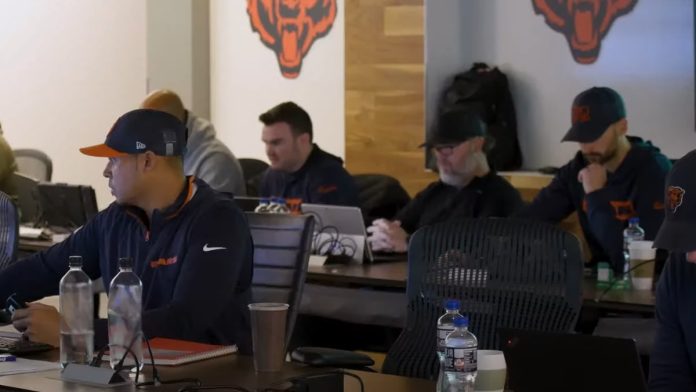
Bears general manager Ryan Poles and his scouting conduct evaluations ahead of the 2025 NFL draft.

The Chicago Bears had somewhat middling drafts during the first three years under general manager Ryan Poles. There were some bright spots like Kyler Gordon, Darnell Wright, Gervon Dexter, and, of course, Caleb Williams. However, there were many misses as well. Not until 2025 did the team produce its best draft class in years, scoring three instant hits with Colston Loveland, Luther Burden, and Kyle Monangai. It led many to wonder what had changed following the arrival of head coach Ben Johnson and his staff.

New Bears assistant general manager Jeff King was recently asked about the team’s ongoing success at finding late-round and undrafted gems. In the course of explaining, the executive revealed what appears to be a significant shift in the team’s overall scouting strategy.

“You know, everybody’s going to see traits. It’s going to be on every card, every draft guru is going to see traits. But where we’ve found those guys that have helped us the most is, you know, whether it be Jack Sanborn or T.J. Edwards, these guys we think that we’ve hit on in the past, I mean, the football player…the instincts…the play temperament…things like that come into play more so than the physical traits.”

For the longest time, Poles seemed to believe that physical traits were a guiding light for their roster-building. He wanted guys who were bigger, stronger, and faster. That is how they ended up with players like Dominique Robinson, Velus Jones, Kiran Amegadjie, and Zacch Pickens. All had great measurables. None of them worked out. Johnson seems to have changed that thinking.

The Chicago Bears aren’t all about traits anymore.

Don’t get it twisted. Physical ability is still very important to on-field success. That said, Johnson stated from the beginning that his goal wasn’t to get great athletes. It was to get great football players. Loveland was a perfect example. While he had good size and speed for his position, he didn’t wow anyone with his physical attributes. The selling point was how smooth and fluid he looked as a pass catcher on the field. Burden was another example. Good size and good speed, but elite in neither category. Again, it just popped on tape.

This confirms that the Chicago Bears have shifted more toward a team that balances measurables with on-field evidence through film study. No more projections. Take guys who have already shown they can do it on a high level. Former Tampa Bay Buccaneers general manager Rich McKay once said his organization often prioritized traits for years, and it got them nowhere. He decided to shift more towards productive players. The Buccaneers experienced a rapid turnaround, culminating in their 2002 Super Bowl championship.

It isn’t the first time the Bears have had to go through this.

When Ryan Pace first took over as general manager, he suffered from the same issues. He was hyper-focused on physical traits vs. on-field success. That is why he took swings at guys like Kevin White, Leonard Floyd, and Mitch Trubisky. It wasn’t until around 2018 that there was a noticeable shift in the team’s approach. They started focusing more on established players. Roquan Smith was their 1st round pick that year. David Montgomery followed in 2019, while Cole Kmet and Jaylon Johnson were the top choices in 2020.

This seems to be a problem with young general managers. They were taught as scouts to always stay focused on traits. Look for the hidden potential. It hadn’t yet set in that those traits are worthless if they don’t have a fundamental understanding of football. Former Bears 1st round pick Michael Haynes was an absolute unit. He also didn’t have the drive or the know-how for the pro level, making him a colossal bust. This shift in philosophy by the Bears couldn’t have happened at a better time.