
Saturday, November 21, 2026
EDGE is live. Chicago fans can now access and explore the beta.
Home Blog Page 2357

Bears Should Sprint to Podium to Draft Lucas Niang When He Falls

chicago bears
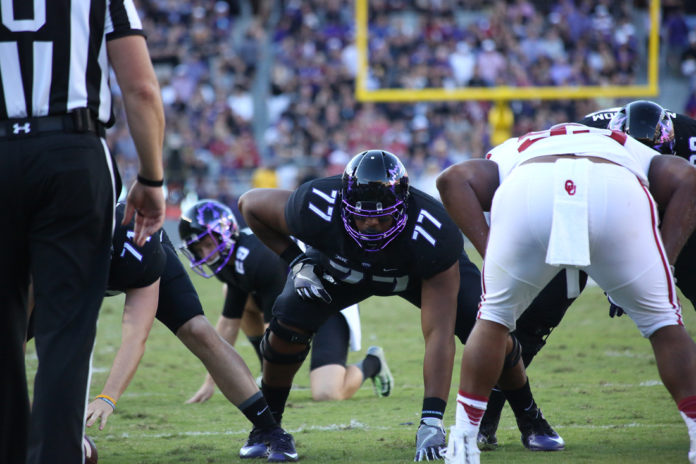
Right tackle Lucas Niang (77) returns for his senior season and is an All Big-12 selection on what should be an improved offensive line. Courtesy TCU.

Not having a 1st round pick makes the job for GM Ryan Pace difficult going into the 2020 NFL draft. He does have two 2nd round picks, but those carry a lot more uncertainty given a lower hit rate for finding good players. This is often why teams tend to target certain names who they deem having “1st round talent” but fell for some reason. Most often concerns over medicals. A perfect example is Lucas Niang.

Most people aren’t really talking about the TCU offensive tackle. This isn’t a big surprise. The 2020 draft class of offensive tackles is positively stacked. So it’s easy for a guy recovering from hip surgery to be lost in the shuffle. However, a team like the Bears should pay close attention. They are looking for possible answers beyond Charles Leno and Bobby Massie this offseason.

Niang was widely viewed as a 1st round prospect prior to his injury. A dominant right tackle who didn’t allow a sack as a junior in 2018. If Pace is smart and willing to wait a year, then this kid will be a fixture for the Bears offensive line for 10 years.

“Dancing bear with good agility and a great football IQ. He doesn’t carry his weight proportionally and looked heavier/slower in 2019, but he clearly has NFL starting talent. Niang is a scheme-diverse run blocker with athleticism for move blocks and technique/leverage to open running lanes with power. He plays with top-notch awareness and instincts in pass pro…”

Lucas Niang is a shut down pass blocker when healthy

Keep in mind that Chase Young is considered one of the best pass rushers to come out of college football in many years. For him to give such respect to Niang is something to note. It’s not like the big tackle isn’t tough either. He actually played through his hip injury last season. Doctors eventually convinced him that he might do more damage if he didn’t have surgery. So he bowed out for the year.

This is a potentially huge break for the Bears. One thing about the offensive scheme that head coach Matt Nagy runs is it works best with at least one dominant pass blocker. Mitchell Schwartz in Kansas City is a perfect example. Lane Johnson in Philadelphia is another. Chicago hasn’t had that with Massie. There is no question Niang has that potential. All he has to do is get healthy. The best part is he’ll have a year to do so since Massie should remain the starter in 2020.

It might not be an instant contributor the Bears would like as a draft pick, but sometimes the long-term gain is worth the short-term sacrifice.
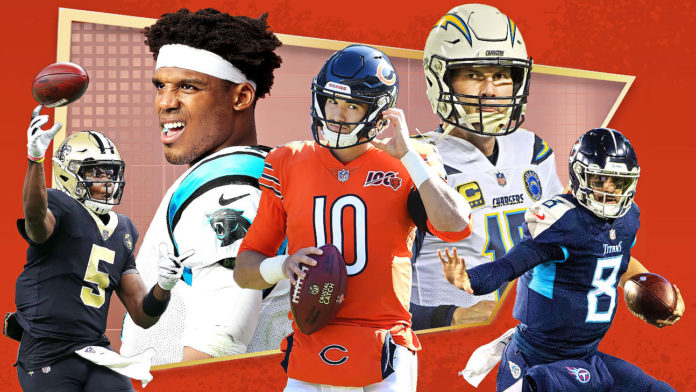
Projected Costs of Top Chicago Bears Free Agent QB Targets

chicago bears

Don’t be distracted by team fit talk and all that stuff. While it’s important, the ultimate deciding factors for what the Chicago Bears do at quarterback in free agency is money. No players cost more on average in the game of football than quarterbacks. Patrick Mahomes is projected to be the first $40 million player at the position once his own contract situation gets settled. This is just the nature of things. If you want to get a good QB, odds are you’ll have to pay up for him.

This 2020 class of veterans is probably the best and deepest the NFL has seen in its history. Just in terms of talent and proven success. The Bears insist they’re still committed to making it work with Mitch Trubisky. Yet the reality of the situation is unavoidable. GM Ryan Pace and head coach Matt Nagy are on the hot seat. If they fail to make the playoffs again despite having an elite defense, their incompetence will be impossible to mask.

They need a quarterback. If not a great one, then at least a consistent one. Can they find that without breaking the bank? Here is what the projections are for the top names via Spotrac.

Chicago Bears free agent QB targets are about risk-reward

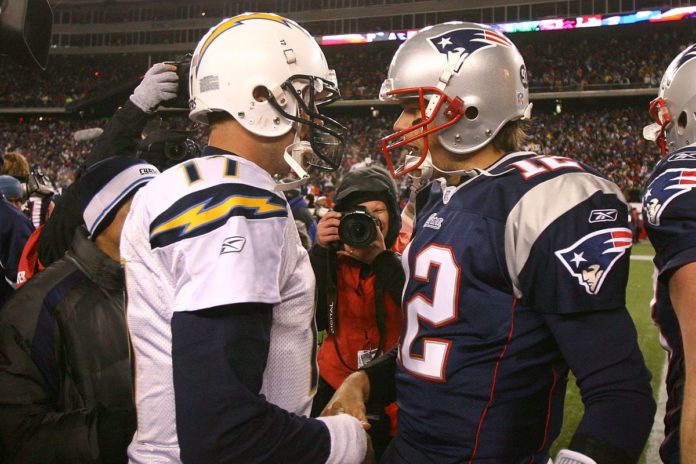
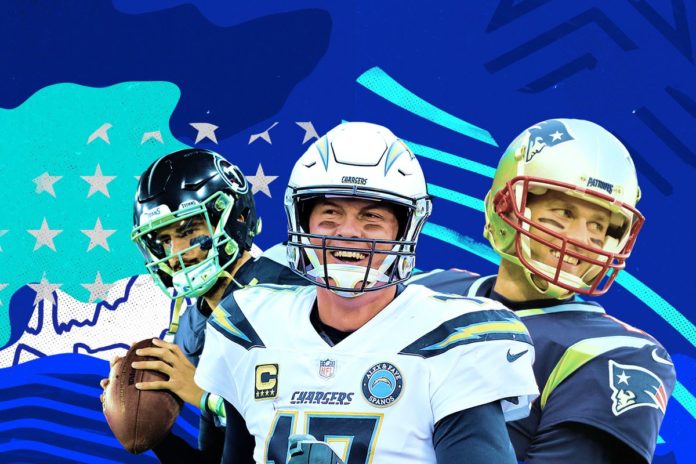
Tom Brady – $33.8 million per year

Being the winningest quarterback in modern NFL history has its perks. Brady is 42-years old and usually one’s price tag drops around that time. Yet because he’s been so consistently great for so long, belief is several teams would be willing to look past that and give the man his biggest payday ever. Despite clear signs he’s not quite the player he was five years ago, Brady is still ridiculously experienced, a great leader, and can make accurate throws at most levels with consistency.

Jameis Winston – $26.7 million per year

Opinions are all over the map on Winston. Many struggle to see the former #1 overall pick getting a look as a starter in 2020. Such is reality of throwing 30 interceptions in a season. That said, he did also throw for 5,100 yards and 33 touchdowns. Is it so crazy to think there might be one coach out there who feels he can at least curb Winston’s gunslinger tendencies just enough to make him effective? He’s unquestionably a gamble. Still, if they take him at this price and succeed in that mission then they just got a steal.

Ryan Tannehill – $26.6 million per year

Timing is everything. Tannehill was a backup to start 2019, looking at a possible longterm future in that role. Then he elevated to the Titans starting job, caught fire in the second half of the season and helped the team reach the AFC championship. This earned him Comeback Player of the Year honors and legitimate interest from teams on the free agent market. Great story. Tannehill features a good arm, plenty of starting experience, and underrated mobility. Among this QB group, he might be considered one of the “safer” options.

Philip Rivers – $24.3 million per year

His rather disappointing 2019 season and being 38-years old was enough to finally push Rivers out of Los Angeles. It also explains while his price tag is much lower than Brady’s. People are confident his skill level is declining. That said, Rivers still threw for over 4,000 yards. This despite poor blocking from the offensive line and no running game to speak of. He showed in 2018 that if givens some balance on offense (32 TDs), he could still be a dangerous passer. If a team feels they can give him that, then this price tag could be a bargain.

Teddy Bridgewater – $21.5 million per year

One has to respect Bridgewater. He almost lost his career after a horrific knee injury in 2016. It took two years to battle back from it. He showcased strong play as a backup in New York, got traded to the Saints and rather than join the Dolphins as a free agent in 2019, chose to stay in New Orleans on a one-year deal. He ends up starting five games, wins them all and now is about to get a healthy new deal. That said, he won’t be bringing the loaded Saints offense with him, so there is a definite risk. This projection is actually lower than what Nick Foles got from Jacksonville last year.

Case Keenum and Marcus Mariota – $3-7 million per year

Nobody believes that either Keenum or Mariota will garner markets that hand them starting jobs. This means it will come down to how many teams see them as desirable backups who perhaps could compete for top jobs. Bridgewater was the highest-paid backup last season at $7.2 million. So if the interest is high enough, either of those quarterbacks could make something similar. If the Bears wanted to play the cheap route, then these are the two names to watch.

Analytics Point Out Who Chicago Bears QB Target Should Actually Be

chicago bears

At this point the array of opinions on who the Chicago Bears should target at quarterback are plentiful. Everybody has their favorite. Some think Andy Dalton is the obvious choice. Others like Hub Arkush think the upside of Marcus Mariota is worth the risk. Then there are those who say a bold trade for somebody like Derek Carr or Nick Foles can get the necessary jolt they need. Every option seems to have its upsides and downsides.

So what about the simple numbers?

Analytics has a place in the NFL today like never before. Experts love to use them in helping to determine the outcome of everything. Free agency is no different. Football Outsiders, one of the most respected analytic sites in the game offered their take on the Bears’ situation. Based on their own model, the quarterback they should be pursuing is one people haven’t really talked about.

Philip Rivers.

“The bold move, however, would be to bring in a future Hall of Famer to run the offense. Rivers is coming off a down year, for sure, but he was working behind an injured offensive line in front of roughly zero fans at home for all of 2019. He has bounced back from down years before, and his 6.8% DVOA in 2019 would have been the best mark for a Bears quarterback since Jay Cutler in 2015. Signing Rivers, riding out the one or two good seasons he has left, and then finding the next quarterback of the future in the next couple of drafts would be the boldest move Ryan Pace could make.”

Chicago Bears would technically get what they want in Rivers

Recent rumors are fairly straightforward. The Bears are looking for a quarterback with extensive pedigree and starting experience. Rivers, having been in the league since 2004 and a future Hall of Famer fits that profile as well as anybody. While having a reputation for being a major trash talker, he’s also a leader, tough as nails, and highly intelligent.

People proclaimed him a lost cause after last season, which is odd. Though he did throw 20 interceptions, he still finished sixth in the league in passing. This despite a ground game that ranked 28th in the NFL. He was pretty much doing it by himself behind a swiss cheese offensive line riddled by injuries. There is no denying he’s a risk at 38-years old, but if the Bears are looking for a bridge out of the Mitch Trubisky era, he’s as good as any.

Whether GM Ryan Pace is willing to put up the money it will take to get him? That’s another story.

Talent vs. Production: How Bears GM Ryan Pace Changed Draft Strategies

chicago bears draft

One fundamental rule of the NFL? If one cannot change, one dies. Adaptation and a willingness to admit when something isn’t working is a cornerstone of those who have long-term success in this league. It’s true of players, coaches, and executives alike. In the case of GM Ryan Pace, his evolution has quietly been ongoing. Specifically in regards to how he’s conducted drafts for the Chicago Bears.

Most people probably didn’t notice the subtle shift that happened not to long ago. See the draft tends to come with two fundamental schools of thought. Those who prioritize overall talent and physical upside and those who value experience and productivity. During the first part of his tenure as GM, Pace was squarely in the former camp. He loved targeting freak athletes. Guys who could end up being the best in the game if they realized their full potential.

After three years though, he started to adjust approach. Suddenly the Bears were more focused on proven players. Ones who showed their capability over stretches of at least two years in college. By the look of things, this could have a profound impact on how the upcoming 2020 draft could play out.

Ryan Pace is still aggressive but starting to play it safe

2015 to 2017: Bears prioritize physical upside vs. production

Pace’s first-ever pick is a glowing example of a scout’s approach. Scouts are groomed by NFL teams to search for the most talented athletes possible. This is how they’re able to find potential hidden gems every year in later rounds and undrafted free agency. The problem is scouts tend to fall too much in love with the upside of a player and lose focus on what they accomplished.

Kevin White was basically a no-name at West Virginia until 2014 when he exploded for over 1,400 yards receiving. Then he ran a blistering 4.35 in the 40-yard dash at the scouting combine. That was pretty much it. Pace was sold. The Bears drafted him 7th overall. White had 285 yards receiving total in four seasons with the team.

Next year in 2016, the trend continued. Pace traded up from #11 overall to #9 to secure Georgia outside linebacker Leonard Floyd. Despite never having more than 6.5 sack in any of his three seasons as a starter, the Bears felt his unique athleticism and length would eventually transform into an elite pass rusher. Through four seasons, Floyd has 18.5 sacks.

Last but certainly not least is Mitch Trubisky. Mr. Ohio Football out of high school, he spent two years on the bench at North Carolina before getting the starting job in 2016. He had a good year, throwing 30 touchdowns to just six interceptions. Despite just 13 games of starting experience he chose to declare for the draft. Pace, enamored with his potential, traded up from #3 overall to #2, bypassing more experienced and productive options in Deshaun Watson and Patrick Mahomes to take him.

Chicago has been a laughing stock for this decision ever since.

2018 to 2019: Productive players start to take over

It felt like the Bears altered their strategy at the start of 2018. By picking Roquan Smith out of Georgia 8th overall, it was their first truly proven player they’d drafted in the 1st round. Smith had dominated for two years with the Bulldogs, helping them reach the national title game in 2017. In two years since being drafted, he’s topped 100 tackles both times with seven sacks and two interceptions.

A year later, the trend continued. Chicago traded up in the 3rd round to take Iowa State running back David Montgomery. Across three seasons he finished just shy of 3,000 yards rushing with 26 touchdowns. Unquestionably the workhorse of that offense. Despite poor blocking most of the season as a rookie, Montgomery still finished with 1,074 yards from scrimmage and seven touchdowns. Not bad for a player drafted where he was.

This proves that Pace might’ve learned a valuable lesson.

Athleticism and physical talent are important. This is undeniable. The most talented teams win. Yet players who have the talent but not the production in college to back it up should always be a red flag. It means they either don’t want or don’t know how to get the most out of their gifts. Balance is vital in drafting. No strategy is perfect but disregarding production in favor of raw athletic skill rarely works out for teams in the long run.

If Pace applies his new strategy again this year, the Bears should come away with some good players in April.

Predicting Fates of the Biggest Chicago Bears Free Agents

chicago bears
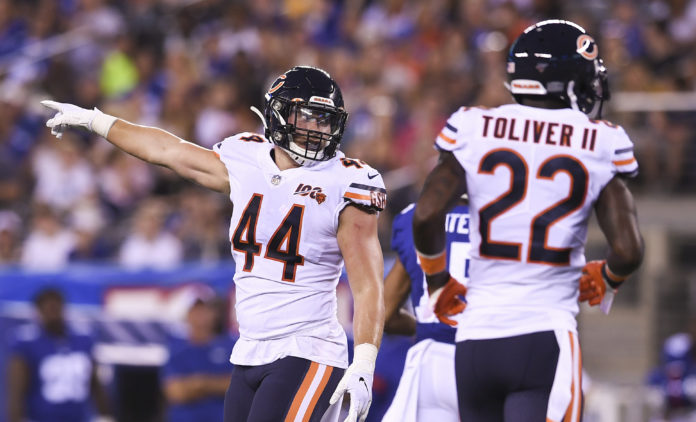
Chicago Bears inside linebacker Nick Kwiatkoski (44) motions during the second quarter of a preseason NFL football game against the New York Giants, Friday, Aug. 16, 2019, in East Rutherford, N.J. (AP Photo/Sarah Stier)

The class of Chicago Bears free agents for 2020 is pretty extensive in terms of numbers. A total of 22 not including recent cuts Taylor Gabriel and Prince Amukamara. With somewhere between $24-26 million in salary cap space, GM Ryan Pace doesn’t have a lot of wiggle room. So he’ll have to approach things with caution on who he decides to keep and who he’ll have to let test the market just over a week from now.

So who are the names that will be a priority for them to reach decisions on? While plenty of notable players like Patrick Scales and Cornelius Lucas have vital functions on the roster, they don’t move the needle like certain others do. Here are the five people should keep a close watch on and what their likely fates will be.

What happens to the biggest Chicago Bears free agents?

Ha Ha Clinton-Dix

  • 27-years old
  • 78 tackles
  • 2 INTs
  • 1 TD

Clinton-Dix agreed to a discounted one-year deal to join the Bears defense in 2019. All things considered, he played well. He made some nice plays and didn’t have too many negative ones. He’s squarely in his prime now. By most accounts, he is definitely interested in staying put. He is great friends with Eddie Jackson and seems to like the freedom he has in Chuck Pagano’s system.

Likely fate: Free agency

Wanting to stay and being able to are different things. Multiple experts believe Clinton-Dix should have a robust market given the general lack of free safeties this year. Chicago just made Jackson the highest-paid safety in the league and some think the two of them together aren’t the best pairing because Clinton-Dix doesn’t fit the role of a box safety like Adrian Amos did. With bigger priorities elsewhere, the Bears will let him walk.

Nick Kwiatkoski

  • 26-years old
  • 76 tackles
  • 3 sacks
  • 1 INT
  • 1 safety
  • 1 forced fumble

What a story this kid has become. A 4th round pick in 2016, Kwiatkoski spent three years as a backup in Chicago, often being passed up for other options like Jerrell Freeman and Roquan Smith. Then his opportunity finally came last year when Danny Trevathan went down. He more than seized it, looking like a legitimate starter from the moment he got on the field. Other teams have taken notice with a lot of buzz that he’ll have suitors if the Bears let him reach the market.

Likely fate: Free agency

It sounds like Pace really wants to keep Kwiatkoski. Not a surprise. The GM always prefers to reward his own players. The problem is the price tag is getting to a point where the Bears can’t afford it. They have to start thinking about paying Roquan Smith soon and if he plays like he did before getting hurt last year, that will require considerable cash. Kwiatkoski is a good player, but in this business, sacrifices are sometimes needed. He’ll likely do what Amos did a year ago. Sign a nice deal elsewhere and secure the Bears a compensatory draft pick in 2021.

Danny Trevathan

  • 29-years old
  • 70 tackles
  • 1 sack
  • 1 forced fumble

Trevathan was on pace to set a career-high in tackles last season with 70 through his first nine games. Then a freak accident while talking Jeff Driskel in a game against Detroit saw him dislocate his elbow. He was lost for the rest of the year. So the good news is his injury wasn’t to his lower body. Trevathan showed he still has plenty of quickness and speed. Even with his 30th birthday at hand. Throw in the leadership he brings, and the guy has plenty of value.

Likely fate: Re-signs

With Kwiatkoski gone, the Bears keeping Trevathan is the avenue to expect. Though older, he can still play and should come at a reduced price given his age and coming off a season-ending injury. They will likely sign him to a two or three-year deal with the hope he can keep producing while they resume their search for a possible heir down the line. Pace did draft Kwiatkoski after all.

Nick Williams

  • 30-years old
  • 42 tackles
  • 6 sacks

Such a great story. Williams could barely get on the field for the first four seasons of his career. He signs with the Bears and manages to work his way onto the roster and then last season comes out of nowhere to collect six sacks after Akiem Hicks went down with his elbow injury. The second-most on the entire team behind Khalil Mack. Really cool stuff and the timing might be perfect.

Likely fate: Free agency

Teams are always looking for big interior defensive linemen who can rush the quarterback. Williams proved he was capable of doing that last season. While keeping him would be nice for the Bears, they have a lot of depth on that part of their roster and not a lot of money to spend. Unless he was willing to take a team-friendly deal, his return doesn’t feel likely. At his age, he knows this is probably his last chance to get a decent payday.

Sherrick McManis

The last man standing of the Lovie Smith era. Who would’ve thought that? McManis arrived as a backup corner in 2012 and has stuck around for eight years as one of the best special teams players in the league. He’s also done well in part-time work on defense when asked. An injury shortened his season to just nine games last year, but there have been no signs of sagging effectiveness in the third phase. So keeping him would certainly help.

Likely fate: Re-signs

The cost of keeping him shouldn’t be too bad for the Bears. Probably just over $1 million. That is a nice bargain for a guy who can keep your third phase steady alongside Cordarrelle Patterson. At this stage of his career there’s no reason to think McManis is interested in going anywhere else. So negotiations shouldn’t be that much of an issue.

The Chicago Bears Won’t Ever See an Opportunity Like This Again

chicago bears

One can understand the feelings of Ryan Pace. He invested a lot in Mitch Trubisky as the future of the Chicago Bears franchise. He did it with conviction and belief that everything would work out in time. The GM must’ve been so excited after 2018. Trubisky reached a Pro Bowl and had one of the better passing seasons in Bears history. Not that it was a hard bar to clear. Still, it felt like the light was finally at the end of the tunnel for this QB-starved organization.

Then 2019 happened.

Trubisky regressed in every area. He failed to make even the easier completions with consistency. He stopped running like he used to and just couldn’t seem to handle the pressure at times. Most franchise quarterbacks are expected to lift the offense out of prolonged slumps. It felt instead like Trubisky was often the cause of it. Something that was made even more depressing by the fact it was his third season and his second in Matt Nagy’s offense.

Three years in and the progress just hasn’t shown. Not nearly enough for a former #2 overall pick. This is why many are calling for change. Pace is clearly reluctant due to a personal stake in the player. Here’s the thing though.

He’ll likely never have a better chance to find an easy exit from his mistake than this year.

Chicago Bears must realize 2020 free agent QB class is rare

If this were any other offseason, keeping Trubisky would likely make sense for the Bears. Traditionally, free agency is a dead area for the quarterback position. Combine that with no 1st round pick in the draft and they’d have few viable options. That is not the case in 2020. Due to a rather incredible series of circumstances, this upcoming crop of names is easily the biggest and deepest the NFL has seen in modern history.

You have two future Hall of Famers in Tom Brady and Philip Rivers. Some current or former Pro Bowlers in Dak Prescott and Ryan Tannehill. Then the former 1st round picks who have played well at times in the past like Teddy Bridgewater, Marcus Mariota, and Jameis Winston. Last but not least is the longtime veteran who once went to a conference championship in Case Keenum.

This isn’t even counting possible trade targets like Andy Dalton, Derek Carr, Nick Foles, and Cam Newton. The options for a QB-needy team are plentiful. Yet by the sound of things, the Bears are content to settle for one of the less desired targets like a Dalton or Keenum. Guys with plenty of experience but minimal odds of actually get much more out of the most important position on the roster.

It would be such a Bears move.

An unwillingness to be bold when the market presents them with an opportunity that never comes around. Especially this day and age. Remember they passed on chances to sign Kurt Warner and draft Aaron Rodgers in 2005. Stubbornness with a previous quarterback who isn’t working out as hoped is nothing new.

Unless Pace decides to alter this trend in just over a week, he’ll likely feel the same emptiness previous Bears GMs did when they showed faith in “their guys.”

Giolito Not Thinking About Extension, Grandal Debuts And More White Sox Notes

The White Sox started their rebuild after 2016 and following three long seasons the front office has done a great job of not only acquiring young talent, but locking them up with guaranteed deals. The latest was Yoan Moncada’s five-year extension that includes a sixth-year team option.

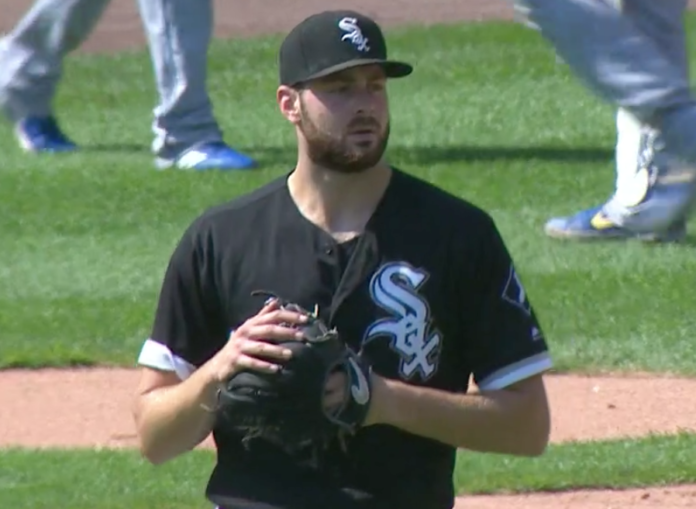
The next logical extension that fans might be thinking about is right-handed starter Lucas Giolito, but that’s not exactly something that’s on his mind right now.

Via NBC Sports Chicago.

After throwing one scoreless, hitless inning against the Cubs in his first Cactus League start of 2020, Giolito indicated that he’s focusing right now on baseball, not his bank account.
“That’s not something I’m thinking about for me.  I’m more like present moment. What more can I do this day to improve and become a better player?  All that stuff. The money, the contracts, that’s all going to fall into place if I keep focusing on what makes me successful,”  Giolito said.

Giolito had an unbelievable turnaround in 2019 after being the worst starting pitcher in his first full MLB season in 2018. The righty posted a 3.41 ERA and 1.06 WHIP, while striking out 228 and walking only 57 in 176.2 innings. The 25-year-old will be arbitration eligible for the first time following the 2020 season.

Like Giolito, White Sox catcher Yasmani Grandal made his spring training debut Friday against the Cubs. Grandal had been slowed down because of a calf strain at the beginning of camp.

Grandal played three innings behind the plate and was lifted for a pinch-runner in the fourth inning after drawing a walk. He was 0-for-2 with two strikeouts in his first Cactus League game with the Sox.

Cubs lefty Jon Lester started Friday against the White Sox and he had some high praise for the lineup and reliever Aaron Bummer.

The White Sox beat the Cubs 6-3, with Moncada, Luis Robert, Jose Abreu and Adam Engel all having a good day at the plate.

Do Bears Dare Make a Run at Melvin Gordon? Here’s What the Market Says

melvin gordon
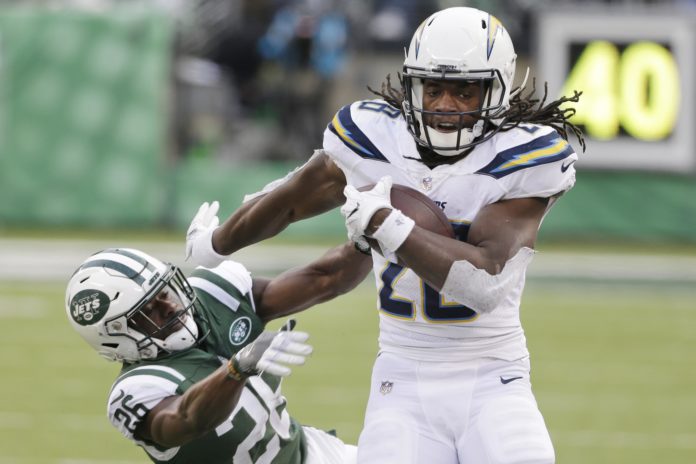
FILE - In this Sunday, Dec. 24, 2017 file photo, Los Angeles Chargers running back Melvin Gordon (28) breaks a tackle by New York Jets' Marcus Maye (26) during the second half of an NFL football game in East Rutherford, N.J. Melvin Gordon got better as last season went on for the Los Angeles Chargers because he got healthier. The durable running back subsequently structured his offseason around staying fresh for another playoff chase, and he's already in top form in training camp. (AP Photo/Seth Wenig, File) ORG XMIT: NY165

Let’s stop for a second and consider this. What if the Chicago Bears are serious about their Mitch Trubisky statement? That he is their guy in 2020. While plenty of people will criticize that decision for obvious reasons, it at least makes matters less complicated. It means GM Ryan Pace will devote every resource in his arsenal to beefing up the offense in an effort to help his young quarterback finally take off. This includes new wide receivers, new tight ends, and a bolstered offensive line. Could running back be included? Sure, especially if Melvin Gordon is involved.

David Montgomery is a good football player. He should remain a key fixture in the Bears backfield. However, he showed last year there are clear limitations to his game. Most notably a lack of explosiveness. Gordon showed both in college and his last five years with the Los Angeles Chargers that he has considerably more. Not to mention his value in the passing game with 1,873 yards and 11 touchdowns during that span.

He’s only 26-years old. By all accounts the running back market this offseason is going to be among the coldest in free agency. This means even the biggest names aren’t likely to get the kind of money they’re hoping for. This could work to the Bears’ advantage since they have limited cap space. Is a run at Gordon financially feasible?

Melvin Gordon can be had if Bears go cheap at QB

One thing to remember here is the Bears had the 27th ranked rushing attack in 2019. If people were looking for a reason why the offense couldn’t function, it’s because this team had no way to take the pressure off Trubisky. If they’re truly committed to be being the guy this coming season, then they absolutely have to invest in their ground attack. That means boosting the offensive line and loading up the backfield.

So what might Gordon cost?

According to Spotrac, his current market value stands at around $8.3 million per year. That would make him the 5th-highest-paid running back in the league. However, there is a belief in NFL circles that teams won’t be interested in shelling out that kind of cash. Not after guys like David Johnson and Todd Gurley quickly fizzled out after getting their big contracts. Tony Pauline of Pro Football Network explained.

“Sources here tell me that the running backs slated to be free agents in a few weeks will not be getting paid huge contracts. According to many, this means it will be much easier for the Tennessee Titans to re-sign Derrick Henry, who’s scheduled to become an unrestricted free agent once the market opens.

Teams feel they can get by selecting a running back during the second and even third day of the draft versus shelling out big bucks for a free agent at the position.”

This means Gordon may have to settle for less money.

Chicago always loves to seek out potential bargains Getting a two-time Pro Bowl running back in his prime for perhaps $5-7 million per year would be a steal. Especially if they can somehow improve the blocking up front. A trio of Gordon, Montgomery, and Tarik Cohen would make for an exciting backfield that can be good for a lot of touchdowns.

Marcus Johnson Could Give Bears a Needed Jolt of Speed For Cheap

marcus johnson

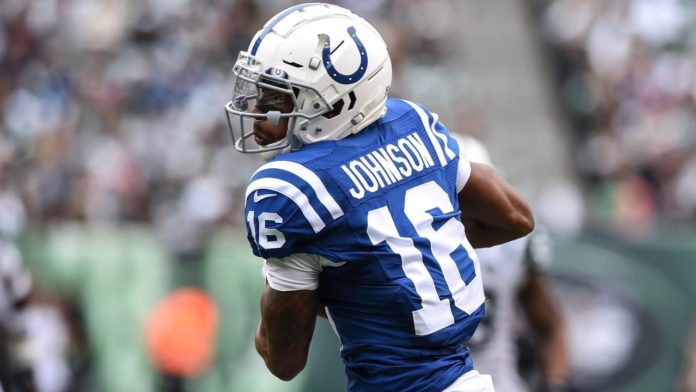
While the Chicago Bears offense has plenty of needs to sort through, they’re at least fairly straightforward. Find consistency at quarterback. Improving the run blocking up front. Add a tight end who can catch the ball. Focus on adding speed at wide receiver. That last one became even more vital after the Bears decided to part ways with Taylor Gabriel. The problem is they don’t have a lot of money to spend and fast receivers are typically a sought-after commodity in the NFL. This is why they should take a calculated risk on Marcus Johnson.

Don’t feel bad if you haven’t heard the name. Most people outside of Indianapolis haven’t. A former undrafted free agent out of Texas, he started his career in Philadelphia in 2017. From there he was traded to Seattle but didn’t last long. Eventually, he landed with the Indianapolis Colts as a backup. He had some nice flashes in 2018 before disappearing again. Then last year he started to emerge down the stretch.

Over the final five games of the season, he had 230 yards and one touchdown. He averaged 19.17 yards per catch in that time, showcasing legitimate vertical speed. Not a surprise after reported running a 4.38 at his pro day. Johnson looks like a talent who is trending up in his career. He has some familiarity with the type of system the Bears run. On top of that, the Colts have made him available as a restricted free agent, choosing not to tender him.

Marcus Johnson is quite a story in NFL terms

By rights, Johnson should no longer be in the league. He didn’t do much of anything in college. Across three seasons he managed just 793 yards and four touchdowns. The guy was a complete unknown and likely viewed as a camp body who could run pretty fast. That he was able to survive being dismissed by two different teams and take advantage of his few opportunities is a testament to his resilience and work ethic.

The Bears should be able to get him for cheap and give him an opportunity to take his career to the next step. Nobody is saying it’s THE solution for the offense’s speed problem but it would be a notable jolt to their heart rate. This is the kind of player Ryan Pace loves to target.

Should the Bears Trade for Dwayne Haskins? Making a Case

dwayne haskins
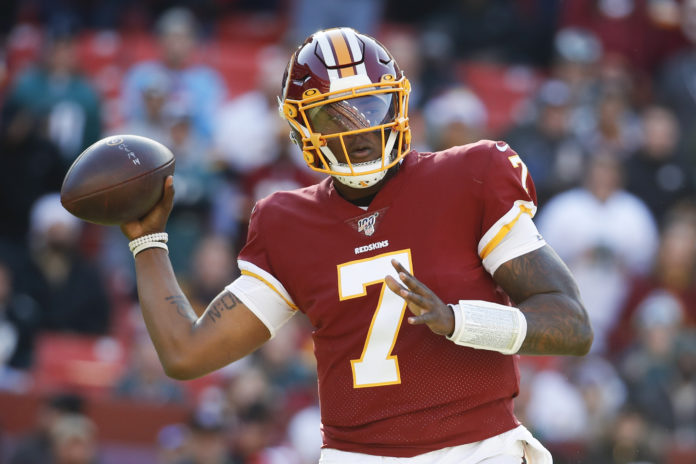
Washington Redskins quarterback Dwayne Haskins (7) looks to pass the ball against the Philadelphia Eagles in the first half of an NFL football game, Sunday, Dec. 15, 2019, in Landover, Md. (AP Photo/Alex Brandon)

There are so many names mentioned around the quarterback market for 2020. It truly is something unique. Not only is free agency loaded with notable names. Even the trade market appears to have its fair share of players for the Chicago Bears to consider. Andy Dalton is the most discussed of late. One name who has quietly traveled under the radar is Dwayne Haskins.

The 1st round pick of the Washington Redskins in 2019 has suddenly found himself on uncertain ground. Everybody from the regime that drafted him is gone from the head coach to the team president. Ron Rivera is in charge now and word has already spread the team is doing considerable research into the quarterbacks for this upcoming draft class. It wouldn’t be the first time a new head coach took over a year after a top QB was picked and decided to make a change.

See Kliff Kingsbury and Josh Rosen just last season.

Now some are wondering if Haskins could follow the Rosen trail, being traded to another team. He’s 22-years old with three cheap seasons left on his contract. Somebody might see the value of taking a risk on him. Bucky Brooks of NFL.com believes Washington is making a huge mistake if they do this.

“I know that statement will be met with eye rolls, laughs and snickers from some folks, but I’m willing to go all in on the second-year pro after reviewing the All-22 Coaches Film from his rookie season. Haskins not only exhibits the arm talent, poise and confidence to be a franchise quarterback but his steady improvement over the course of the season suggests that his game will pop in Year 2.

It’s important to note that Haskins posted a 67.1 percent completion rate and 5:1 touchdown-to-interception ratio in his final three starts. In fact, he recorded a 120-plus passer rating in each of his last two outings (against the Eagles and Giants).”

Dwayne Haskins is a better gamble than any 2020 QB

Think of it like this. Haskins is still the age most QB prospects are when they come out of college. Yet he already has seven games of starting NFL experience. What’s a better idea? Taking a gamble on guys like Jake Fromm and Jalen Hurts or sending a 2nd round pick to Washington for him? Haskins is significantly more talented throwing the football than either of them. The way he finished last season despite suspect protection and few weapons also shows he is learning the game quickly.

Is there a risk in doing this? Of course. At the same time, it’s actually less of a risk than taking a rookie in the 2nd round this year. Haskins checks most of the boxes. He’s big, has a strong arm, is young, and comes at a cheap price. Just a $3.27 salary cap hit for 2020. The one trade-off is his lack of “extensive” experience that the Bears reportedly would prefer.

Why not trade for him and then maybe sign somebody like a Josh McCown who can provide the necessary veteran presence to the QB room? Not to mention his prior tenures working in Chicago. It’s not a terrible idea and would preserve most of the money and draft resources for other areas of need.