Friday, November 13, 2026
EDGE is live. Chicago fans can now access and explore the beta.
Home Blog Page 160

Chicago Cubs Change Starting Pitcher After Getting Crushed by the Philadelphia Phillies

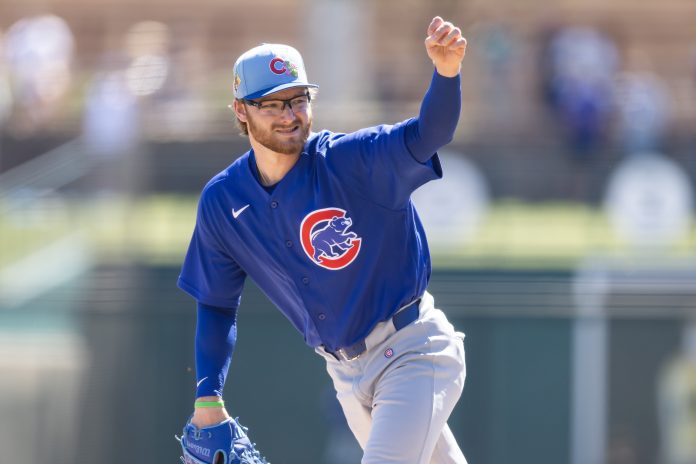
Mar 13, 2026; Phoenix, Arizona, USA; Chicago Cubs pitcher Riley Martin against the Chicago White Sox during a spring training game at Camelback Ranch-Glendale. Mandatory Credit: Mark J. Rebilas-Imagn Images

Javier Assad had the worst start of his career as the Chicago Cubs got crushed by the Philadelphia Phillies in Monday’s series opener. The right-handed pitcher only lasted 4.1 innings, which meant that journeyman lefty Charlie Barnes came in relief in mop-up duty after Jacob Webb recorded the final two outs in the fifth. After watching the Phillies score 13 runs on 15 hits, Cubs manager Craig Counsell announced a new starting pitcher for the second game of the series.

The Cubs used the opener throughout the 2025 season, and Counsell is utilizing the strategy Tuesday night. Instead of veteran right-hander Colin Rea, it’ll be rookie lefty Riley Martin making the start against the Phillies.

We saw how much damage the Phillies can cause from the left side of the plate on Monday night as Kyle Schwarber hit two home runs, Bryce Harper reached base twice, and Brandon Marsh broke the game open with a two-run double as part of his three-hit performance. Those lefties all hit in the top five of Philadelphia’s batting order, so instead of Rea facing them right away it’ll be Martin.

The Cubs called up Martin earlier this season after Cade Horton went down with an elbow injury. The 28-year-old pitcher has appeared in three games so far since his big-league promotion, and Martin still hasn’t allowed a run. The left-handed pitcher has three strikeouts and no walks, while giving up two hits in 3.1 innings of work.

There’s a possibility that Martin may pitch multiple innings on Tuesday. He does have previous experience as a starting pitcher in the minor leagues, including a three-inning outing for the Iowa Cubs at Triple-A to begin his year.

As a team, the Phillies rank 25th in MLB with a 59 wRC+ when hitting against left-handed pitching so far in 2026. They’re slashing .173/.286/.252, and have two home runs in 161 plate appearances. The Cubs don’t want them to get an extra look at Rea, as the Phillies have been much better against right-handed pitching, posting a .759 OPS compared to a .538 OPS against left-handed pitching.

The Cubs used an opener twice in 2025, with Rea coming in afterward as the bulk pitcher, and it worked out great: Rea threw 5.1 innings in each game and allowed only one earned run.

So far in 2026, Rea has pitched in three games, and although he only has one official start, he was the one who came in relief in the second inning when Horton left with his injury against the Cleveland Guardians. Like he did last year, Rea is doing a great job filling in. He pitched five innings against the Tampa Bay Rays last week and allowed only one run on two hits.

Javier Assad’s Worst Career Start: Craig Counsell to Blame?

Sep 25, 2024; Philadelphia, Pennsylvania, USA; Chicago Cubs starting pitcher Javier Assad (72) throws a pitch against the Philadelphia Phillies in the first inning at Citizens Bank Park. Mandatory Credit: Kyle Ross-Imagn Images

The Chicago Cubs could not continue their momentum from Sunday’s comeback win as right-handed pitcher Javier Assad had the worst start of his career in a 13-7 loss to the Philadelphia Phillies Monday night. Assad was charged with nine earned runs after he was unable to escape the fifth inning after surrendering 11 hits, which included a pair of Kyle Schwarber home runs.

Some Cubs fans were irate over manager Craig Counsell letting Assad wear it when it seemed obvious to everyone that the pitcher had nothing left on the mound. The Cubs were only trailing 4-2 to begin the bottom of the fifth inning, but after Assad pitched around Schwarber to lead off the inning, Bryce Harper and Adolis Garcia hit back-to-back singles to load the bases.

This was the back-breaker for Assad and the Cubs as Brandon Marsh stepped up and delivered a two-run double. The Cubs currently have four left-handed relievers in the bullpen after calling up two pitchers from Triple-A in the past few weeks, so this seemed like a perfect spot to try to stop the bleeding.

However, Counsell didn’t make the call to the pen; the Phillies added three more runs after the Marsh double, and the Cubs were on their way to a bad loss. It kinda spiraled fast. Assad did have a clean fourth, retiring the side in order, but the walk to Schwarber and the next three hits happened in a span of five pitches.

Plus, it looks like the Cubs are going with an opener on Tuesday night, so Counsell was obviously desperate to get some length out of Assad in the series opener. On top of that, the Cubs’ bullpen had to cover 11 innings over the previous series against the Pittsburgh Pirates.

I mean, yeah, in an ideal situation, Counsell pulls Assad before it gets too ugly, but at the same time, you can’t manage every game in April like it’s Game 7 of the World Series. Also, Assad was flat-out bad. He was grooving pitches right down the middle of the plate, and the Phillies made him pay. One of those things where the Phillies seemingly have Assad’s numbers because throughout his MLB career, he’s only given up more than four earned runs three times out of 56 starts, and two of those have come against the Phillies.

One more note: also consider who was on the other side for the Phillies. Cristopher Sanchez, the 2025 NL Cy Young runner-up, had given up two runs through five innings, and while he wasn’t overly dominant, the chances were low that the Cubs were going to get any more runs off of him. Sanchez struck out eight and gave up two runs in six innings of work.

Bottom line, Assad was bad. We’ll see how the Cubs use him going forward, as left-handed pitcher Matthew Boyd is expected to return to the starting rotation next week.

How The Bears May Have Just Found Their Next Jack Sanborn

jack sanborn
Nov 23, 2024; Ann Arbor, Michigan, USA; Michigan Wolverines running back Kalel Mullings (20) is tackled by Northwestern Wildcats linebacker Mac Uihlein (37) in the second half at Michigan Stadium. Mandatory Credit: Rick Osentoski-Imagn Images

The Chicago Bears have looked to undrafted free agency plenty of times over the years. While it rarely produces a massive hit, this approach can often yield capable backups or, at the very least, decent starters. The Bears have made good use of it over the past few years. Probably their biggest success story is Jack Sanborn. A standout linebacker at Wisconsin, he didn’t get any buzz leading up to the draft. However, the Bears liked him early on in the process, and he helped his case at their local pro day that year. Sure enough, they landed him as an undrafted rookie, and he quickly became a starter.

It might be happening again. While the Bears hosted several players at their local pro day this month, one name generated some smoke. That was Mac Uihlein. A 6’1″, 230 lbs linebacker, it’s not hard to see why he might’ve been overlooked going into this draft. He is somewhat undersized for his position and played for a struggling program. Still, that didn’t stop Uihlein from making an impact. Over two seasons as a starter, he gobbled up 185 tackles, 9.5 tackles for a loss, two sacks, and four interceptions.

Uihlein mirrors what made Jack Sanborn good.

He may not have the ideal size or electric speed, but he has instincts for days and couples it with both toughness and strength. His leadership became apparent almost immediately, and he often worked hard to set the tone for his teammates on and off the field. Perhaps the biggest surprise was how good he is in coverage. For somebody who lacks speed, he always seems able to get his hands on the football. Guys like that find their way onto a roster. Sanborn proved it could be done. Uihlein is made of the same stuff.

He also grew up right in the Bears’ backyard. He was born in Lake Forest, the same location as Halas Hall. He’s been in close proximity to the franchise for decades. There is no question he would love the opportunity to play for his hometown team. The obvious question is whether he gets drafted. Right now, it looks like he’ll go the Sanborn route. His limited size and speed usually lead to going unselected. If that happens, one can imagine the Bears will be happy to bring him to training camp. They have depth concerns at linebacker. He would be allowed to compete for a spot.

It will be interesting to see what he can accomplish.

Players with his speed often don’t find their way onto the field. Not with how speed-obsessed today’s coaches are. It’s possible, but the climb will be difficult. In truth, Uihein’s best path to a true career will be special teams. He certainly has the intensity and intelligence for the job. He is unselfish and willing to do anything asked of him. If he carves out a role in the third phase, he would be a valuable addition to the team. GM Ryan Poles does have a knack for finding guys like him.

Ironically, he may arrive in Chicago at the same time Jack Sanborn returned to the organization. He spent a year in Dallas playing for Matt Eberflus before deciding he wanted to come home. At the very least, he will be a primary backup. Depending on what the Bears do in the draft, he’ll have a legitimate chance to claim a starting job.

Keldric Faulk? Why The Bears Might Be Forced To Draft The Divisive Edge Rusher

keldric faulk
Auburn Tigers defensive end Keldric Faulk (15) warms up before Auburn Tigers take on Mercer Bears at Jordan-Hare Stadium in Auburn, Ala. on Saturday, Nov. 22, 2025.

Every year, there are a handful of draft prospects who might be called divisive. People have mixed opinions on them. In 2025, some of those names included left tackle Will Campbell (short arms), defensive end Shemar Stewart (very limited production), and edge rusher James Pearce (character concerns). Some teams will remove such players from their board. Others believe the talent they have warrants the risk of taking them in the 1st round. It sounds like the Chicago Bears might be involved with one such player this year. That is Auburn defensive lineman Keldric Faulk.

Brad Biggs of the Chicago Tribune revealed his belief that the Bears would take him 25th overall in the 1st round if Faulk falls to that spot. This would be a bold decision. Faulk only had 10 sacks in three college seasons. His overall impact as a pass rusher is inconsistent. Many aren’t comfortable betting such a high selection on what looks like a project. Biggs’ reasoning? It comes down to a simple reality. There aren’t many guys like him in this draft. Few players have his size (6’6″, 276 lbs), length (34 inches), power, and athleticism in one package. Players like that become stars if the light ever goes on, and he’s also a perfect fit for Dennis Allen’s defense.

Keldric Faulk would be a true roll of the dice.

His talent is obvious. There are moments where he overwhelms blockers with his sheer power and quickness. He can be moved around the line, hunting matchups. One thing nobody can dispute is his run defense. Faulk has a terrific anchor and can set the edge as well as anybody in this class. He is also only 20 years old. That is shockingly young for somebody with three years of college experience. This means there is a chance he has a chance to grow exponentially over the next couple of years.

At the very least, the Bears would be getting a stout run defender. Remember, their defense was 27th against the run last year. Shoring that up is a big priority. The real question is whether he can mold those athletic gifts into a proper arsenal of pass rush weapons. That falls at the feet of Allen and defensive line coach Jeremy Garrett. Allen is no stranger to developing young players. Trey Hendrickson and Carl Granderson were major success stories that the coach helped mold. If Faulk is willing to learn, the path ahead is realistic.

Allen has a bad habit of chasing ghosts.

He worked with Cameron Jordan for ten years in New Orleans. The Saints legend is the absolute pinnacle of what Allen covets: big, long, powerful, and a dangerous pass rush. For years, Allen kept trying to find the next Jordan. It was Marcus Davenport in 2018. It was Payton Turner in 2021. Then, in 2023, it was Isaiah Foskey. All of them proved to be major disappointments. Then he uses the same strategy with Dayo Odeyingbo in Chicago, only to be met with poor results again.

It might not be a coincidence that the best pass rushers ever drafted under his watch didn’t fit his profile. Von Miller, Khalil Mack, and Trey Hendrickson were definitely not built like Keldric Faulk is. Yet the reality is that if the Bears give Allen a serious say in that 25th pick, no player screams his type more. The only lingering question is whether he will be available. Some think he’s too talented to go that late in the 1st round. We’re about to find out how many other teams are willing to take the risk.

Analyzing The Lenyn Sosa Trade From The White Sox Perspective

Apr 4, 2026; Chicago, Illinois, USA; Chicago White Sox designated hitter Lenyn Sosa (50) runs after hitting a single against the Toronto Blue Jays during the first inning at Rate Field. Mandatory Credit: Kamil Krzaczynski-Imagn Images

In a surprise move this afternoon, the White Sox traded infielder Lenyn Sosa to the Toronto Blue Jays in exchange for minor-league outfielder Jordan Rich and a player to be named later or cash considerations. The deal came out of nowhere and raised immediate questions from fans, as trades only a few weeks into April are quite unusual.

White Sox Infield Logjam

With the White Sox bringing in Munetaka Murakami via free agency to play first base and Andrew Benintendi shifting to more of a designated hitter role in the end stages of his five-year contract, opportunities for Sosa to get in the lineup became hard to come by this season. He started just eight of the team’s first 16 games, slashing .212/.212/.303 in 33 plate appearances. His playing time was sporadic, and his numbers reflect a player who hadn’t found his groove. Even as the team leader in hits, home runs, and RBI last season, the writing was on the wall that his time in Chicago was coming to an end.

While Murakami and Benintendi played direct roles in Sosa’s decreased playing time, the White Sox infield situation as a whole worked against Sosa as well. Miguel Vargas and Chase Meidroth are entrenched at third and second base, two positions Sosa has played over the years. Top prospect Sam Antonacci also likely plays a factor in this decision. The team hasn’t officially called him up yet, but it’s fair to say it’s only a matter of time before he gets his chance. They needed to create a roster spot for him, and this trade accomplishes that.

Sosa’s Clear Flaws

Roster construction aside, Sosa’s weaknesses have always been apparent. Despite improving offensively every season to this point, he has never had a walk rate above 3.3% in his MLB career. He also lacks a defensive home. He played all four infield positions with the White Sox but never stood out at any of them. The combination of a poor offensive approach and a lack of defensive value apparently became too much for the team to ignore.

Newest White Sox Prospect

In return, the South Siders receive 18-year-old left-handed hitting outfielder Jordan Rich, a 17th-round pick by the Blue Jays in 2025. Rich, who is praised for his speed and athleticism, led Florida Class 4A with seven home runs and 38 stolen bases. He is now a name to watch in the lower levels of the White Sox farm system.

The Blue Jays Perspective

Sosa heads to an injury-plagued Blue Jays squad that could use all the help they can get. Addison Barger and George Springer have both recently landed on the injured list, opening the door for Sosa to get at-bats in somewhat of a super utility role. His team control his also appealing to a contender like the Blue Jays. Sosa will not reach free agency until after the 2029 season, providing them with an affordable bench piece for the next several years. He will join Dylan Cease and Eloy Jiménez as former White Sox players on Toronto’s active roster.

The End Of An Era

Lenyn Sosa was an enigma of sorts for the White Sox. As a 26-year-old who has improved offensively every season with four years of control, he seemed like the type of player the team would want to keep, not trade away. For all his strengths, however, his weaknesses were also very apparent. Trading him removes some redundancy from the roster and improves the team’s defense and plate discipline.

White Sox Gamble On Upside In Surprise Trade

Apr 5, 2026; Chicago, Illinois, USA; Chicago White Sox designated hitter Lenyn Sosa (50) reacts after he hits an RBI double against the Toronto Blue Jays during the third inning at Rate Field. Mandatory Credit: Matt Marton-Imagn Images

The White Sox have not gotten off to the start that fans were hoping for, as they are currently in last place in the division with a 6-10 record. This has caused the team to shuffle some things around, as they have reportedly called up their top pitching prospect, Noah Schultz.

The White Sox didn’t stop there, as they have now made a shocking early season trade. According to the White Sox, they have traded infielder Lenyn Sosa to the Toronto Blue Jays in exchange for outfielder Jordan Rich and a player to be named later or cash considerations.

This is surprising given the state of the White Sox offense, as they were shutout in two consecutive games against the Kansas City Royals, so they could use as much help as they could get. Last year, Sosa hit .264 with a .293 OBP, adding 22 home runs and 75 RBIs, both among the best on the team.

However, Sosa hasn’t gotten off to the same start, as he is currently hitting .212 with a .212 OBP, with no home runs and just three RBIs. While he is a better hitter than his early season stats, this was clearly not the start the White Sox wanted him to have. Additionally, his lack of a true defensive position didn’t help, as the White Sox had a pretty full infield.

When looking at the return, the White Sox got a very intriguing prospect in Jordan Rich. Rich is an 18 year old outfielder from Florida, who was selected in the 17th round in last year’s draft. He has a ton of upside, as he is much better than his draft stock indicates.

Rich has yet to appear in any minor league games to this point, and according to his MLB page, he will be assigned to the White Sox Arizona Complex League. Hopefully he will get off to a good start and make his way to Kannapolis to join the other 2025 draft picks in the organization.

While I thought that Sosa could have fetched a more major league ready player, Rich is a swing on upside that could pay off in a big way if things go right. Sosa finally broke through with the team last year and we wish him nothing but the best of luck in Toronto.

Is Craig Counsell Changing His Mind with Michael Busch?

Aug 3, 2025; Chicago, Illinois, USA; Chicago Cubs first base Michael Busch (29) is greeted by manager Craig Counsell (11) after scoring against the Baltimore Orioles during the first inning at Wrigley Field. Mandatory Credit: David Banks-Imagn Images

For most of his first two years with the Chicago Cubs, Michael Busch was limited to mainly starting against right-handed pitching, and fans were upset. It was an automatic benching whenever the Cubs faced a left-handed starter, but Craig Counsell made sure to minimize Busch’s plate appearances vs. left-handed pitching. That all changed down the stretch in 2025, and Counsell publicly noted that Busch had earned every day starts in 2026 regardless of the opposing pitcher.

Well, Counsell may be changing his mind on that because after Busch was on the bench to start Sunday’s series finale against the Pittsburgh Pirates, Busch is on the bench again for Monday’s series opener against the Philadelphia Phillies.

Left-hander Cristopher Sanchez is off to another great start for the Phillies. The 29-year-old has only given up three earned runs through his first three starts of 2026, and he’s been especially tough against right-handed hitters, who are only slashing .182/.217/.182 in 23 plate appearances so far this season.

Busch came through with a clutch hit in Sunday’s 7-6 comeback win, but that’s not going to erase his early-season struggles. It hasn’t really mattered who Busch has faced through the first three weeks of the year, as the first baseman is only 7-for-52 at the plate overall without a home run. He’s 2-for-10 vs. lefties, but interestingly enough, Busch has at least shown good plate discipline with four walks and only one strikeout.

So, this is now two straight games in which Busch will begin on the bench. We’ll see just how down Counsell is on the first baseman later this week because the Cubs are scheduled to face another left-handed starter on Wednesday, when Jesús Luzardo takes the ball for the Phillies.

Probably a smart choice by Counsell to give Busch another breather. A mental reset, if you will, and it’s a good time with the 2025 Cy Young runner-up on the mound. Including the RBI single on Sunday, Busch is only 3-for-44 in his last 13 games. That’s a slash line of .068/.160/.068, in his previous 50 plate appearances, with all three hits being singles.

No Moises Ballesteros either Monday night, so we’ll see if this continues with the rookie as well. But again, you can’t really knock Counsell stacking right-handed hitters against Sanchez. In his career, Sanchez has held left-handed hitters to a slash line of .211/.263/.277.

How ESPN Dropped 4 Names Ben Johnson Likely Has Circled For The Draft

keylan rutledge
Jan 29, 2026; Mobile, AL, USA; National offensive lineman Keylan Rutledge (77) of Georgia Tech blocks during National Senior Bowl practice at Hancock Whitney Stadium. Mandatory Credit: Vasha Hunt-Imagn Images

While the Chicago Bears‘ draft prep is a collaborative effort between the front office and coaching staff, many feel that in a decisive moment, head coach Ben Johnson would have the final say. It wasn’t difficult to notice the shift in how the team operated after he came on board last year. The heavy focus on offense aside, the Bears seemed to care more about acquiring the best possible players than about pressing team needs. There is no reason to think that will change this year. The hard part is determining which players Johnson will have circled on his board.

ESPN analyst Matt Bowen provided an unexpected assist. He did a fascinating article covering 100 different superlatives spread across all positions, determining which players in this class are best at specific things. Like any coach, Johnson has certain priorities for what he wants in his players. After reading the article, four names immediately stood out as obvious targets. Two of them are wide receivers, and the other two are offensive linemen. The reasons for them cracking the list aren’t what you think.

Ben Johnson is specific about what he likes best.

Best after the catch: Skyler Bell, UConn

Bell had 833 yards after the catch in 2025, the second most in the FBS behind Miami’s Malachi Toney. Bell has the 4.4 speed, short-area acceleration and open-field vision to turn underneath throws and in-breakers into big gains.

Best perimeter blocking receiver: Makai Lemon, USC

Lemon plays with an NFL mentality as a run blocker, and he’s willing to mix it up between the numbers versus safeties and linebackers. Lemon didn’t have a blown block on 274 blocking reps in 2025.

Best OL handwork: Keylan Rutledge, Georgia Tech

Rutledge is quick to punch in pass protection, delivering strong, on-point strikes to slow down opposing rushers. He’s a technician with toughness and nastiness from the interior.

Most instinctive OL: Logan Jones, Iowa

Jones is steady in pass protection and had experience in a multiple-run scheme at Iowa. He has the field awareness to identify pressure and late movement to anchor the offensive front.

Johnson has told us what he likes through words and actions.

It was evident, dating back to his time in Detroit, that he wanted wide receivers who could do two things: block on the perimeter and make plays after the catch. You saw that with Amon-Ra St. Brown and Jameson Williams, then again with Luther Burden. No block, no rock. That is why Lemon will absolutely be a consideration in the 1st round if he falls to #25. As for Bell, he also has sharp route-running skills in addition to his YAC ability, which will only enhance his appeal.

Then you shift to the offensive line. Ben Johnson doesn’t like projects. He prefers young players with strong technical skills and high intelligence. He’d be willing to live with maybe a lack of size or lack of elite athleticism if he knows they will always do the right thing on every snap. That is why the Bears traded for Joe Thuney last year and signed Drew Dalman. Both guys were technicians who operated with consistency. Both became Pro Bowlers. Rutledge and Jones fit those criteria, in addition to being football maniacs.

For the most part, these names will come up on day two.

Right now, Lemon is the only player listed above who is all but certain to go in the 1st round. He’s been slotted in that area since the pre-draft process began. Everybody else is sitting somewhere in the 2nd to 3rd range. The Bears have three picks in that window, meaning they could technically land all three if they’re lucky. Will it play out that way? Probably not, but it would not be a shock at all if at least one of them ends up in a Bears jersey before the start of day three.

Ben Johnson may not wish to tip the team’s hand ahead of this draft for obvious reasons. However, everybody has preferences. It is just the way things are. A head coach wants certain types of players. In his case, he wants receivers who are physical and offensive linemen who are smart. That might be oversimplifying it somewhat, but the basic outline is set. No doubt it’s the same for Dennis Allen on the defensive side. The trick will be finding good players who fit those parameters.

White Sox Face Dilemma In How To Best Deploy Grant Taylor

Apr 12, 2026; Kansas City, Missouri, USA; Chicago White Sox pitcher Grant Taylor (31) pitches during the first inning against the Kansas City Royals at Kauffman Stadium. Mandatory Credit: Jay Biggerstaff-Imagn Images

Grant Taylor has emerged as one of the Chicago White Sox most effective weapons early in the season, but a key question remains: What is the best way to deploy him?

Kauffman Stadium has long been a house of horrors for the White Sox, but after snapping a 14-game losing streak in Kansas City on Thursday, they capped off the series with a gritty 6-5 win Sunday to earn a four-game split, with Taylor playing a key role. Sunday’s victory forced Will Venable to empty his bullpen, using nine pitchers to record 27 outs, bookending a series that showed both sides of the coin in how Taylor can be deployed for better or for worse. 

On Thursday, Taylor entered the game out of the bullpen in the sixth inning, tasked with protecting a one-run lead while inheriting runners at first and second. He managed to escape the jam by getting Jonathan India to fly out to left field. 

After the offense tacked on an insurance run in the top of the seventh, Taylor returned to the mound for the bottom half of the inning and recorded two quick outs. After allowing back-to-back singles to Maikel Garcia and Bobby Witt Jr., he once again wiggled out of trouble by getting Vinnie Pasquantino to ground out to second before passing the baton to Jordan Leasure and Seranthony Dominguez, who closed out the 2-0 shutout.

Entering the season, this is what many envisioned out of the back end of the White Sox bullpen: a three-headed monster of hard-throwing righties, spearheaded by Taylor, Leasure, and Dominguez. Taylor has yet to give up a home run in the MLB, making him an ideal candidate for late inning situtions.

The only problem is that Taylor has made four of his seven appearances as an opener this season. It’s a strategy that Will Venable found success with last season, but not one he intended to use so early in the year.

However, after seeing the starting rotation allow a combined 25 runs through the first six games of the season, Venable felt compelled to turn to Taylor during the home opener to try to position their starters for more success. There is no denying that it has made the White Sox more competitive. After starting the season 1-5 using traditional starters, the White Sox are now 3-1 in games that Taylor has opened. 

Taylor has yet to allow a run as an opener and has held opponents to a .063 batting average. By delivering a scoreless first inning, he has allowed pitchers like Erick Fedde and Sean Burke to ease into the game without facing the top of the lineup, while also giving the offense a chance to hit without being in an early hole. 

Taylor returned to his opener role Sunday and delivered two scoreless innings, throwing 21 of 27 pitches for strikes. His electric arsenal was on display again, freezing Bobby Witt Jr. with a 100 mph fastball in the first inning and striking out Salvador Perez on a 99 mph heater in the second. He finished the day with a pair of strikeouts and no walks.

But that strategy comes with a cost late in games. The White Sox needed the help of some late-game defensive heroics from Dustin Harris, who robbed Michael Massey of what would have been a game-tying home run in the eighth inning. 

It was the type of high-leverage spot where the White Sox would typically turn to a pitcher like Taylor. But instead, Venable was forced to exhaust his bullpen after Taylor opened and Jonathan Cannon exited with an injury in the third inning without recording an out. It was a situation that easily could have turned into a disaster. Five days earlier, the White Sox weren’t as fortunate.

On April 7 against the Orioles, they held a 2-1 lead in the eighth inning,  a spot that would typically suit Taylor. The only issue: he was unavailable after opening the day before. The White Sox went on to allow three runs in the eighth and lost 4-2.

When you have a player with the potential to be a Mason Miller–caliber arm at the back end of the bullpen, using him in the first inning can feel like a waste of resources, despite the early success the strategy has produced.

Taylor wants to be a starter long term, and while the White Sox are open to exploring that option, they have been clear that they think the 23-year-old is better served coming out of the bullpen this season. 

Given Taylor’s triple-digit fastball, it’s easy to see why the White Sox prefer him in a hybrid role. He owns a 30% strikeout rate, has walked just 6% of batters faced, and has limited opponents to a .211 expected batting average, one of the best marks in Major League Baseball this season.

In a starter role, he may not be able to give the same max effort that would allow him to consistently pump triple-digit heat. He is also young, with just 45 career innings under his belt, and hasn’t been built up to a true starter’s workload. 

But at the same time, Taylor has been remarkably efficient. He needed just nine pitches to get through the first inning against the Blue Jays on April 3, then another nine the next day to record another scoreless first inning. If the White Sox truly wanted to stretch him out more as a true starter, Taylor, in theory, could easily make it through at least four innings in under 60 pitches. 

It’s not an enviable decision for the White Sox, who need Taylor to help stabilize a struggling starting rotation but risk leaving themselves exposed when they need him most in the late innings.

There are reinforcements on the way, with Noah Schultz set to make his MLB debut on Tuesday. As more of the White Sox top pitching prospects get called up, Taylor could settle back into more of a consistent high-leverage role. 

Because of this, it seems unwise to try to convert Taylor into a full-time starter in the middle of the season, for the time being. But if the opener strategy is the approach they stick with, there’s no reason he shouldn’t be given a shot in the starting rotation next season.


Draft Insider Hints The Chicago Bears Are A Wild Card Teams Are Wary Of

chicago bears
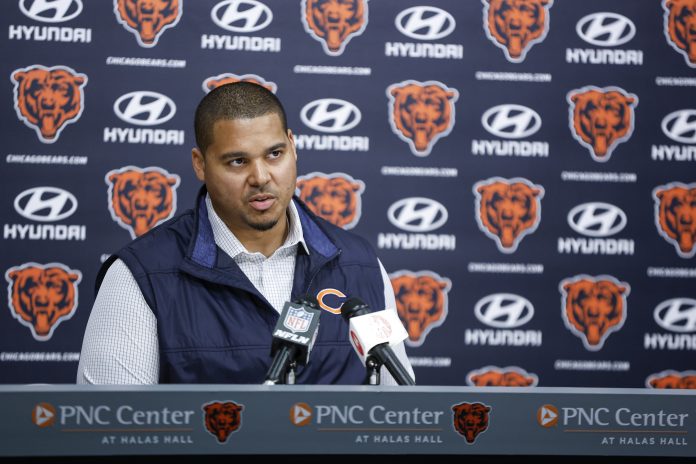
Mar 16, 2023; Lake Forest, IL, USA; Chicago Bears general manager Ryan Poles speaks during a press conference at Halas Hall. Mandatory Credit: Kamil Krzaczynski-USA TODAY Sports

There are usually two types of teams that generate excitement going into an NFL draft. Mostly, it’s the teams that are picking in the top 10. Everybody wants to know where the most talented players in the draft end up going, particularly the quarterbacks. It is just the nature of the process. However, another type of team creates intrigue. It is the one that nobody knows what it will do. They can literally go in any direction, from the type of player picked to trading up or down. That seems to be the spot the Chicago Bears have found themselves, and it’s creating some excitement in the draft community.

Dane Brugler of The Athletic alluded to this in a discussion with Jarrett Payton of WGN. He believes that because of where the Bears sit in the 1st round, it is likely general manager Ryan Poles and head coach Ben Johnson have reached the conclusion that this isn’t a good year to zero in on a specific position.

“You talk to fans, you might get a couple different answers about what they feel like is the top need,” Brugler said. “But I also think this is a draft where Poles might just look [and say,] let’s go best available. Let’s go with the guy that — because he’s looking at the 2027 roster, the 2028 roster — Let’s go with maybe a player that we didn’t expect to be here, and maybe it’s not an immediate need, but we feel like we’re making our team better by adding this to the mix.

“So, the Bears are really wide open.”

In other words, there is no way to know what the Bears will do. Even local insiders haven’t gotten a firm grasp on their intentions. That might be deliberate on the team’s part, hoping to create as much uncertainty as possible to throw other teams off the scent. In truth, it might just be because they have no idea how the board will fall.

The Chicago Bears aren’t able to focus on one or two positions.

The harsh reality is that despite their success in 2025, their roster is still incomplete. They have several positions in need of starters or upgrades before they can start being taken seriously as a Super Bowl contender. At the top of the list is left tackle, followed closely by edge rusher, defensive tackle, safety, and linebacker. This doesn’t mention the D.J. Moore void at wide receiver or the uncertainty at cornerback due to injuries last season. So you start to understand why the Bears are simply more interested in drafting good players at this stage.

It certainly worked out for them last year. Tight end and wide receiver were not at the top of the needs list last offseason. However, the Bears still chose Colston Loveland and Luther Burden because they were the best players available. Both became instant playmakers for the team. One would think the team has become more emboldened to use the same strategy this year. That means any assumptions being made about which position they target can’t go beyond speculation. That could terrify certain teams in the draft.

This entire discussion hinges on one factor.

That is where the Chicago Bears can trade down. The most consistent information SM has received in recent weeks is that the team would prefer moving out of the #25 spot and down the board. They aren’t afraid to jump out of the 1st round entirely. This would secure a couple of extra picks for them and put Poles in a spot he’s more comfortable with the player-value ratios. However, if the team is forced to stay put, the question becomes: which position likely offers the most talent with the least risk?

Based on what we’ve seen over recent weeks, it looks like that is offensive tackle. The Bears have paid close attention to every notable 1st round prospect in this class who could be available. They attended Kadyn Proctor’s pro day and have had private visits with Max Iheanachor and Caleb Lomu. You can’t ignore how left tackle, the most important position on offense that isn’t the quarterback, remains totally unsettled for Chicago. This may offer their best chance to fix it.