
Thursday, November 12, 2026
EDGE is live. Chicago fans can now access and explore the beta.
Home Blog Page 9

ChiSoxFanMike’s White Sox Offseason Plan

Aug 18, 2014; Chicago, IL, USA; The Chicago White Sox logo behind home plate before a game between the Chicago White Sox and the Texas Rangers at U.S Cellular Field. Mandatory Credit: Jon Durr-USA TODAY Sports

What a season it was for the White Sox. After three straight years of 100+ losses, the team took a massive leap forward in 2026, improving by 24 wins from their 102 loss campaign a season earlier. One of the true feel-good stories of MLB, the season ultimately culminated in a playoff berth for the first time since 2021 and a playoff series win for the first time since 2005.

It has been a long time coming, but we can now wholeheartedly say that the organization is trending in the right direction again and that there is hope for the future. Both the coaching staff and core of the team will largely return next season, an indication that things are on the right track. With a young roster, more top prospects coming, and no guaranteed contracts on the books after the 2027 season, the sky is the limit for what this franchise can be in the future.

​With that comes big responsibility and a new set of challenges for the front office. This is no longer a rebuilding situation and the offseason moves should reflect that. The expectation is that the team will not only make the playoffs again, but overtake the Guardians in the division following a disappointing ALDS in which they could not seal the deal after taking a 2-0 series lead. Chris Getz will be operating from a position he has never been in as the White Sox General Manager until now: constructing a team hopeful of winning the World Series next year. This plan will explain what I would do if I were in his shoes.

Payroll Estimate

Like any other offseason plan, the payroll is an integral aspect of constructing the roster. The team’s 2026 payroll was just over $100 million in 2026, ranking just 24th in MLB per Spotrac. There is no doubt in my mind that payroll will increase in 2027 given the team’s success last season, but multiple factors make it difficult to estimate the exact number they will have to work with.

One of those factors is Jerry Reinsdorf, and by extension, Justin Ishbia. The team cut payroll dramatically over the last several seasons as they went into a rebuild, but there is precedent for Reinsdorf to spend at a reasonable level when he feels the team is ready to contend. The 2022 team, for example, had a payroll north of $200 million with a roster full of established veterans. Ishbia’s involvement is also an interesting wrinkle. It’s anyone’s best guess as to how involved he will be this offseason knowing that this will eventually be his franchise.

The impending lockout is another major consideration. The collective bargaining agreement is set to expire on December 1st, and there have already been discussions of a potential salary floor and cap among other changes. While I am not going to speculate on how that situation ultimately plays out, it’s possible we could see a league-wide frenzy of action before that happens so teams have some level of certainty heading into what could be a considerable period of time with no activity.

With these factors in mind, I will give myself $175 million to work with to build the 2027 team. It is entirely possible that they still won’t spend at this level, but it’s within reason given how the franchise has operated historically, and this figure would have ranked just 16th in MLB last season. It’s a number I feel is at least somewhat realistic and not a fantasy scenario with zero chance of happening in real life. I will use Dealin’ The Cards model as a guideline for projected player salaries and the overall team payroll. While there might be slight discrepancies for arbitration and league minimum salaries, the overall numbers should be fairly close.

Arbitration Eligible Players

One of the first orders of business is evaluating the team’s arbitration eligible players and whether to tender them contracts for next season. I examined the group of players that fall into this category not too long ago, with explanations for each decision.

In that article, I went with non-tendering Joey Bart. For the purposes of this plan, however, I will tender him a contract. The catching market in free agency doesn’t do much for me and I think he will be serviceable enough as a relatively productive backup for Kyle Teel at a minimal price point. All my other decisions remain the same.

Tender: Miguel Vargas, Joey Bart, Brenton Doyle, Huascar Brazobán

Non-tender: Chris Murphy, Jordan Leasure

The Andrew Benintendi Conundrum

It’s a very low bar, but I felt 2026 was Benintendi’s best overall season in a White Sox uniform. While his numbers still weren’t great, he provided several clutch moments while serving as a veteran leader in the clubhouse. To be completely honest though, I do not want him on this team next year. He only played a whopping 58 innings in the field all season, and as a roughly average offensive platoon DH, I think it’s a waste of a roster spot to keep him on the team. He just doesn’t hit well enough as a DH to justify keeping him around given that he doesn’t provide value anywhere else on the field. Removing him from the roster would create significantly more flexibility, both financially and in terms of roster fit.

Now entering the final season of the five-year/$75 million contract he signed in January 2023, enough time has passed that the contract is no longer a completely untradable albatross. He is owed $15.1 million for the 2027 season, and while he certainly doesn’t have any positive trade value at that price, I do think it is possible to unload him in a salary-dump scenario with a bad team that can absorb him for a season. And that is what I will do.

Trade #1

DH Andrew Benintendi, RHP Shane Smith, and $5 million to the Washington Nationals for RHP Joe Glassey

The Nationals are a team I identified as a potential fit for a salary-dump trade. I view them similarly to how I viewed the White Sox at this time last year. That is, a team on the rise that is not quite ready to be a legit contender, but is on the right track. They lost quite a bit of offense by trading Luis Garcia Jr. and Curtis Mead at last year’s trade deadline, and there is a place for Benintendi to get DH at-bats and serve as a veteran presence on that team.

In exchange for taking Benintendi off the White Sox hands, I will send $5 million and Shane Smith to the Nationals in this deal as a sweetener. Smith fell on hard times last season, but showed flashes of being a quality pitcher in 2025 and is still just 26 years old. He represents an intriguing reclamation project for Washington as they look to improve a pitching staff that ranked among the worst in MLB in 2026.

In exchange, I have Joe Glassey heading back to the White Sox. A 25-year-old right-handed reliever who is a local product, he put up a 1.64 ERA in 40 appearances with 76 strikeouts in 49.1 innings across three different minor league levels in 2026 and could potentially earn a role in the big league bullpen down the line. He is probably just a guy who won’t ever make a considerable impact at the MLB level, but that is the type of player you expect in return for a Benintendi salary dump.

In a lot of ways, this deal is reminiscent of the Jordan Hicks and David Sandlin trade with the Red Sox last offseason, except the White Sox are on the other end of the deal. They free up approximately $10 million and a roster spot in this trade while only giving up a guy who likely isn’t going to be in the 2027 plans anyway. I am willing to part with Smith in a trade like this to create more flexibility for the other moves that will be part of this plan. From the Nationals’ perspective, I think they would take Benintendi on for one season if they receive an MLB-ready arm like Smith who could factor into what they are trying to build.

Trade #2

LHP Anthony Kay to the San Francisco Giants for OF Damian Bravo

Signed to a two-year/$12 million contract last offseason after a stint in Japan, Kay is another guy who I felt did a serviceable enough job for the 2026 White Sox. While his numbers weren’t anything all that special, he took the ball whenever he was asked and generally did enough to give the team a chance to win.​

This particular trade is not as straightforward for me as the Benintendi one because there is no doubt in my mind that Kay is better than Luis Castillo at this point in their careers, and I think there is a scenario in which Kay could contribute positively to the team next year. But with Castillo being paid nearly 5x as much next season, Kay is the odd man out. Of the two, it is significantly easier to trade Kay because he is only making $5 million in 2027. I do not want both of them in the rotation next year, and Kay’s tendency to lose command and to hit batters gives me reservations about putting him in a full-time relief role. As such, he will be playing elsewhere next year.

Bravo was the Giants’ 15th-round pick in 2025 and has put up good numbers in the minors while being roughly the average age of the leagues he’s played in. An outfielder, he is another lottery-ticket prospect who represents some return for Kay and will be worth monitoring in the farm system.

The Giants are another team I don’t expect to be very good next year but need pitchers to fill a rotation and eat innings. I also think there is a possibility that pitching in pitcher-friendly Oracle Park would benefit Kay and potentially give the Giants an opportunity to flip him at the deadline. From the Giants’ perspective, the hope would be that Kay pitches well enough to be traded for a prospect better than Bravo.

This trade frees up another $5 million and an additional roster spot, which was my intention from the beginning. Between this trade and the Benintendi trade, an extra $15 million has been shaved off the payroll before a single addition is made.

Trade #3

LHP Noah Schultz, SS Billy Carlson, OF George Wolkow, RHP Tanner McDougal, and C Fernando Graterol to the Los Angeles Angels for LHP Reid Detmers and LHP Samy Natera Jr

This is where things get fun. Reid Detmers is a name that has come up frequently in White Sox circles in recent months and is someone that I have had my eye on for a while now. Taken one pick ahead of Garrett Crochet in 2020, Detmers bounced between the starting rotation and bullpen between 2021 and 2025, achieving success in both roles but also struggling at times to find consistency.

2026 was his true breakout season. In 185 innings across 32 starts, he recorded a 3.36 ERA, 3.01 FIP, 1.04 WHIP, and 211 strikeouts with only 48 walks. The metrics also back up his performance. He grades out favorably in most categories, in large part because of his devastating slider, which opponents hit just .187 against last season. It appears that the light has finally turned on for him, and in my opinion, he is one of the more underrated pitchers in the league. I feel he would have significantly more fanfare and attention if he played for a better team.

Detmers’ contract status is another key reason why he appeals to me. He will not reach free agency until after the 2028 season, so he has two years of affordable team control remaining. For a team like the White Sox that historically does not spend money on elite pitching in free agency, those two seasons of cost certainty are key. Bringing Detmers aboard would provide a much-needed boost to the rotation for the next two seasons, and with Justin Ishbia likely playing a bigger role down the line, perhaps they could keep him beyond 2028 as well.

Samy Natera Jr.’s inclusion in this trade is not coincidental. He is another guy who caught my eye this past season. Soon to be 27, he just concluded his rookie season and posted impressive numbers. In 31.2 innings across 28 relief appearances, he struck out 48 while recording a 3.13 ERA. He is unique in that he threw his four-seam fastball 80% of the time, but it was a truly effective pitch and the results proved it.

Natera Jr. is a long-term upside play in this trade. He is not projected to become a free agent until 2033, making him a potential integral part of the bullpen for years to come. Lefty relievers with the ability to miss bats are highly sought after and he is someone I would like to have in this bullpen. It is worth noting that he went on the injured list with left forearm inflammation at the end of last season, but the MRI showed no structural damage. He should be good to go moving forward.

The Logic

The Angels are an organization that have needed to rebuild for a long time. They spent several years in a proverbial no man’s land, and this trade will help get them on the right path again. They already traded Jose Soriano to the Blue Jays at the trade deadline for a few intriguing prospects and this trade will give them an additional package of young players to build with.

Schultz struggled somewhat in his first taste of MLB experience, but has prospect pedigree, high upside, and can immediately slot into the Angels rotation to replace Detmers. Carlson and Wolkow are both very high-upside position player prospects for the Angels to dream on, and McDougal is another interesting arm that is close to MLB-ready. Graterol is a lotto ticket prospect who spent 2026 in the Dominican Summer League but put up good numbers and will be another guy for the Angels to watch progress through their system.

White Sox fans will likely look at this proposal and say they are giving up way too much, but I consider that the price of making a deal. It will not be easy to nab a pitcher like Detmers who will be very desirable on the trade market and has ace-level potential in my opinion. Schultz is the toughest player of this package for me to part with, but I feel like he is someone the Angels would want and it takes two sides to make a trade. From the Angels’ perspective, they cash in on Detmers at arguably his peak value for a substantial package of prospects, while the White Sox add two talented pitchers to help them win right now. I consider this trade a win/win.

Free Agent Signing #1

RHP Michael King to a four-year/$120 million contract

Even with Detmers in the fold, I still think adding another proven veteran starting pitcher is essential if this team wants to be a true contender. Enter Michael King and the first $100+ million contract in franchise history. The 31-year-old right-hander began his career as a reliever but has transitioned to being a full-time starter over the last three seasons and has taken to the role like a glove. He is coming off another strong season with the Padres in which he made 32 starts, posting a 3.21 ERA, 1.18 WHIP, 7.7 K/9, 4.3 bWAR, and 2.6 fWAR over 185 regular season innings.

King has also proven to rise to the occasion when the lights are bright. He allowed only one run in 14 innings this postseason and has a career 1.86 ERA and 0.76 WHIP in 29 playoff innings. The White Sox need more pitchers with proven postseason experience who don’t fold on the big stage, and he provides just that. King recently turned down his player option with the Padres in search of more money, and a contract of this structure would give him a raise from an AAV perspective and add two additional years for even more earnings.

I debated long and hard between King and Freddy Peralta for this spot. Wear and tear was the ultimate differentiator for me. Even though King is a year older, he has roughly 400 fewer MLB innings on his arm than Peralta and was better in 2026. I think he has more good years ahead of him than Peralta, and of the two, I would bet on King being the better pitcher moving forward.

Free Agent Signing #2

OF Seiya Suzuki to a five-year/$125 million contract

The White Sox have never given a free agent a $100 million contract in franchise history, but I have them handing out two such deals this offseason. Even as a hater of all things Cubs, Suzuki is a player I have always admired and thought highly of. He has been a well above-average hitter every year of his career and has shown no signs of slowing down, and his defense in right field improved significantly as well this past season.

As things currently stand, the White Sox lineup is very left-handed heavy after the departure of Randal Grichuk in free agency. Suzuki adds a much-needed right-handed power bat to the middle of the lineup while providing additional thump to an outfield that didn’t show much power last year.

This was another signing I thought long and hard about, ultimately choosing between Suzuki and Randy Arozarena. Both will have qualifying offers attached, meaning the White Sox would forfeit a draft pick to sign either of them. I ultimately lean toward Suzuki because I feel he is the better overall player and already has a friendship with Munetaka Murakami. While forfeiting a draft pick and giving a five-year contract to a 32-year-old isn’t ideal, it’s a trade-off I am willing to make to land a hitter of Suzuki’s caliber.

Free Agent Signing #3

IF/OF Edmundo Sosa to a two-year/$10 million contract

For as productive as the White Sox infield was in 2026, they lacked depth beyond the starters. Luisangel Acuña spent most of the season in a backup infield role but showed very little with the bat and isn’t someone I have much interest in bringing back.

A veteran of parts of eight MLB seasons, the 30-year-old Sosa has always mashed lefties and 2026 was no exception. In 138 plate appearances against southpaws last season, he slashed .290/.343/.492. He also appeared defensively at third base, shortstop, second base, and left field, making him an ideal bench player. He can play multiple positions in the field and is good enough to start against lefty pitchers. Even though he lacks the speed of Acuña and isn’t particularly good against right-handers, I think he is a substantial upgrade in the same role and will see a fair amount of playing time with the way this team will be constructed.

Free Agent Signing #4

RHP Evan Phillips to a one-year/$5 million contract

Historically, I have been against paying free agent relievers who aren’t established closers and this signing directly contradicts that thought process. I have my reasons for why this makes sense, however.

Phillips has a track record of being a quality reliever, especially in the playoffs. He has never allowed a run in 17 career playoff appearances and has some closer experience on Dodger teams that were really good. I want more pitchers who have proven they can handle the big moments. Like King, Phillips is one of those guys. I wouldn’t want or expect him to be the closer for the 2027 White Sox, but his experience in the role provides a safety net and a backup plan if needed.

The biggest question mark for Phillips is health. He has only made 38 regular season appearances over the last two seasons because of shoulder, elbow, and forearm issues and had Tommy John Surgery in June of 2025. Gambling on him to stay healthy is a risk, but it is a chance I am willing to take on a one-year deal. From Phillips’ perspective, I think a prove-it deal makes sense from his side too. If he proves he can stay healthy and contribute in a bullpen for a team that figures to be pretty good, he can enter free agency again next offseason and get a larger payday.

Free Agent Signing #5

RHP Erick Fedde to a one-year/$3 million contract

I can’t quit Erick Fedde, as I advocated for them to bring him back last offseason too. Sure enough they did and he performed admirably. While his stuff and stats aren’t all that impressive, I think he is a valuable innings eater who can pitch both out of the rotation and the bullpen. He seemed to enjoy being part of this team, and while he might get offers elsewhere, I think he would consider returning if the money is comparable.

I will give him a slight raise based on what he did last year to be a swingman on this team. The plan is to have him pitch in multi-inning stints out of the bullpen, but he also serves as insurance in case of an injury in the starting rotation.  

Projected 2027 White Sox Opening Day 26-Man Roster

​Lineup:

DH: Sam Antonacci (24) (L) ($780,000)

3B: Miguel Vargas (27) (R) ($5,400,000)

1B: Munetaka Murakami (27) (L) ($17,500,000)

RF: Seiya Suzuki (32) (R) ($25,000,000)

C: Kyle Teel (25) (L) ($788,000)

2B: Chase Meidroth (25) (R) ($789,000)

SS: Colson Montgomery (25) (L) ($799,000)

LF: Braden Montgomery (23) (S) ($780,000)

CF: Tristan Peters (27) (L) ($780,000)

Lineup total: $52,616,000

Bench:

IF/OF: Edmundo Sosa (30) (R) ($5,000,000)

IF/OF: Brooks Baldwin (26) (S) ($780,000)

C: Joey Bart (30) (R) ($2,900,000)

OF: Brenton Doyle (28) (R) ($3,600,000)

​Bench total: $12,280,000

Starting Rotation:

SP: Michael King (31) (R) ($30,000,000)

SP: Reid Detmers (27) (L) ($7,500,000)

SP: Sean Burke (27) (R) ($793,000)

SP: Davis Martin (30) (R) ($799,000)

SP: Luis Castillo (34) (R) ($24,150,000)

Starting rotation total: $63,242,000

Bullpen:

RP: Erick Fedde (34) (R) ($3,000,000)

RP: Huascar Brazobán (37) (R) ($1,600,000)

RP: Evan Phillips (32) (R) ($5,000,000)

RP: Samy Natera Jr. (27) (L) ($780,000)

RP: Jordan Hicks (30) (R) ($12,500,000)

RP: Bryan Hudson (29) (L) ($798,000)

RP: Hagen Smith (23) (L) ($780,000)

RP: Grant Taylor (24) (R) ($788,000)

Bullpen total: $25,246,000

Total team payroll: $153,384,000

Players Who Just Missed The Cut

C Edgar Quero, IF/OF Rikuu Nishida, OF Tanner Murray, IF/OF Caleb Bonemer, RHP Tyler Davis, RHP David Sandlin, RHP Drew Thorpe, LHP Tyler Schweitzer, RHP Mike Vasil (Tommy John recovery)

Takeaways

I think the biggest eyesore on this entire team is Luis Castillo still in the starting rotation because that does not compute with being a contender. I am willing to give him another chance based on his track record in hopes that an offseason and a spring training with the White Sox pitching coaches can rejuvenate him, but the leash should be very short. As in 2016 John Danks and 2022 Dallas Keuchel level short. If he makes a handful of starts and is still as bad as he was in 2026, I expect them to bite the bullet and part ways with him quickly even if it means eating a substantial amount of money.

There have been a lot of discussions about moving both Grant Taylor and Hagen Smith into the starting rotation, but I do not want to do that just yet. I think another season of being in the bullpen would benefit both of them. I could see a scenario where the team starts to stretch them out for longer appearances throughout 2027 with the intention of making them starters in 2028, which I am fine with. But for now, the bullpen is a good place for them. They both excelled in that role and will be the two highest-leverage relievers on this team.

Caleb Bonemer not being on this roster will probably raise some eyebrows as well. He is a tremendous talent and will likely play a meaningful role by the end of the season, but I do not want to rush his development. We have seen that play out too many times before and it usually causes more harm than good. He can come up when he is ready, but I am not expecting or banking on him to be on the opening day roster. That said, I wouldn’t be surprised if he breaks camp with the team if he has a strong spring. I will also add William Bergolla Jr. to the 40 man roster to protect him from being selected in the upcoming Rule 5 Draft.

Mike Vasil and Drew Thorpe’s omission from this roster is also noteworthy. Thorpe is ahead of Vasil in the recovery process since he had his Tommy John Surgery nearly a year earlier than Vasil, but I think he will start the season in Triple-A as depth. I don’t expect Vasil to become a factor until the summer given that he only had the procedure done in April, but I think both will play roles on this pitching staff at some point in 2027.

Unlike some other plans I have seen, I chose not to hand out any contract extensions. While I was in favor of extending Munetaka Murakami at times last season, I would like to see how he performs in 2027 and whether he can reduce his strikeouts somewhat before committing big money to him. He will be more expensive to retain his services if he has another strong year, but I would be lying if I said the swing-and-miss didn’t concern me a bit. As for the rest of the team, I don’t feel any urgency to extend anyone. Maybe it’s PTSD from the last core, but I want these guys to keep playing hard in hopes of earning bigger contracts and not reward them with big extensions before they have proven anything.

I also did not bring back any of the impending free agents from last year except for Erick Fedde. As much as I like Sean Newcomb and Randal Grichuk, I think we saw the best versions of them last year and feel they are unlikely to replicate what they did this past season. I thank them for a job well done and they hold a special place in my heart, but I am content with each of them going elsewhere.

Final Thoughts

Going into this offseason, the needs of this team are pretty clear in my eyes. I feel they need two proven starting pitchers, a right-handed power-hitting bat, a couple of relievers, and a bench bat. This plan accomplishes all of those things while still keeping the payroll at a reasonable total. In fact, the payroll of the team above is roughly $20 million less than what I allotted myself to spend, before including dead money. And with Castillo, Hicks, and potentially Murakami coming off the books after the 2027 season, they will shed a lot of salary to reload at this time next year.

Should the offseason play out like this, I feel the White Sox would be by far the best and most complete team in the division and have a very realistic chance of making noise in the playoffs. It is a much deeper and well-rounded squad than what they had last year, with lineup balance from top to bottom, and the postseason disappointment against the Guardians should only make this group hungrier and better for 2027. Following a season of growth and excitement, the organization owes it to the fanbase to put in a good-faith effort to meaningfully improve the team. Let’s see if they hold up their end of the bargain.

​Offseason Plan Summary

Trade DH Andrew Benintendi, RHP Shane Smith, and $5 million to the Washington Nationals for RHP Joe Glassey

Trade LHP Anthony Kay to the San Francisco Giants for OF Damian Bravo

Trade LHP Noah Schultz, SS Billy Carlson, OF George Wolkow, RHP Tanner McDougal, and C Fernando Graterol to the Los Angeles Angels for LHP Reid Detmers and LHP Samy Natera Jr

Sign RHP Michael King to a four-year/$120 million contract

Sign OF Seiya Suzuki to a five-year/$125 million contract

Sign IF/OF Edmundo Sosa to a two-year/$10 million contract

Sign RHP Evan Phillips to a one-year/$5 million contract

Sign RHP Erick Fedde to a one-year/$3 million contract
How Jeffery Simmons Just Hijacked Command Of The Bears Defense In One Presser

jeffery simmons
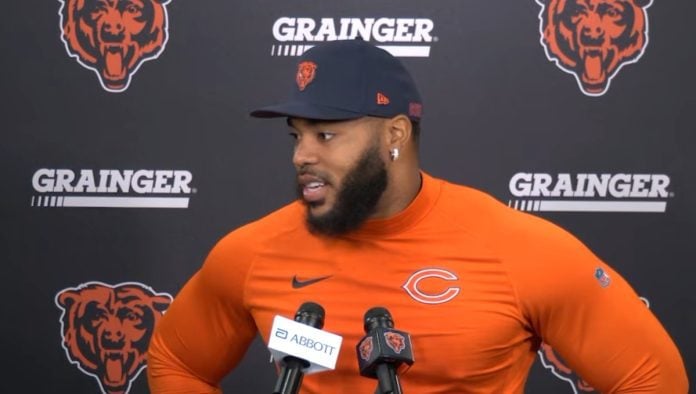
New Bears defensive tackle Jeffery Simmons meets with the Chicago media upon arrival.

The Chicago Bears knew why they traded for Jeffery Simmons long before they pulled the trigger. General manager Ryan Poles had been a big admirer of the All-Pro defensive tackle for years. In fact, for the past two years he’d been trying to find a way to swing a deal. The Tennessee Titans just weren’t willing to entertain offers until now. Poles knew it would be expensive, but he felt Simmons was the caliber of player that is incredibly hard to find in this league. Mind you, it wasn’t only about the physical tools.

Granted, Simmons has many. He is big, strong, quick, and explosive. Trying to block him without double teams is asking for trouble. However, one of the biggest draws for the Bears was his reputation as a leader. Despite playing on some bad Titans teams, nobody ever questioned what Simmons meant to that unit. His willingness to hold himself and others accountable is why that defense frankly overachieved over the past few years. If you thought he’d keep things discreet upon joining the Bears and mesh with the locker room gradually, you don’t know him at all.

He set the tone from the moment he arrived, telling his new defensive line mates that he expects them to get to the quarterback when he starts drawing double teams.

Jeffery Simmons has no time for easing into things.

He was brought here to win a championship. It is why the Bears traded so much to get him. There is nothing gradual about this. If the Bears are going to accomplish that objective, he must integrate as quickly as possible. If they want him to be a leader, then he intends to lead—no tiptoeing around anybody. Guys will know what his expectations are for both them and himself. He demonstrated that presence of mind from the outset.

“This team believes in what they have here, and they want it right now. My game, my passion, my energy, my leadership, I can only help this team even more than what it’s got. This is a great locker room from quarterback all the way down. So, my job is to come in here and be nothing more than but myself. I’m excited to be able to help this team compete for a championship.”

People talk about force multipliers in football. Those are guys who make teammates around them better. Jeffery Simmons is one of those few who qualify. It isn’t a coincidence that players like Harold Landry, Denico Autry, DeMarcus Walker, Arden Key, and Jihad Ward all set career highs in sacks during their careers when playing alongside him. Austin Booker already has 4 sacks this season. Try to imagine what he and Montez Sweat might accomplish with Simmons suddenly creating havoc in the middle. To say nothing of what the interior could look like when Dayo Odeyingbo returns in a few weeks.

This is a level the Bears haven’t reached in a long time.

They haven’t had a defensive tackle of this caliber probably since peak Tommie Harris, at least. He might actually be closer to Dan Hampton. The guy is unblockable in every phase of the game. This isn’t just a great pass rusher teams can avoid by running the ball more often. He’s devastating there too. Simmons takes immense pride in being a complete player. There is no escaping him. That forces offenses to devote extra resources his way, and thus away from his teammates.

Simmons is doing exactly what the Bears brought him in to do: seize control and elevate this defense. Be the beating heart. While the team isn’t short on talent on that side of the ball, nobody has really filled that role. Some guys have the voice but not the production. Others have the opposite. Simmons has both. That will garner immediate respect from the locker room.

Cubs Reportedly Offering Contract to Taiwanese Star Closer Jyun-Yue Tseng

Jyun-Yue Tseng Cubs Contract

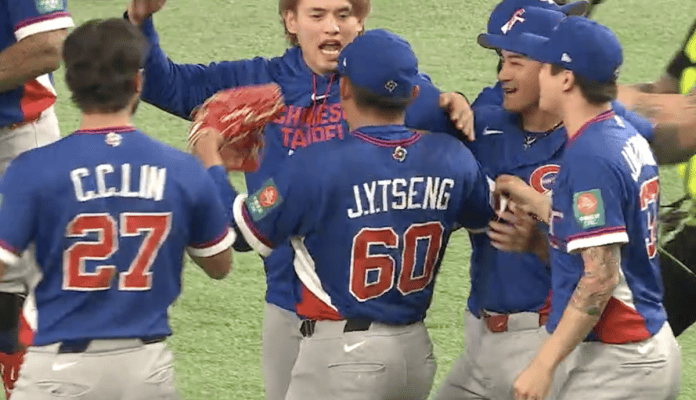
The Chicago Cubs are reportedly interested in signing Taiwanese star closer Jyun-Yue Tseng. The right-handed reliever has been a stud in the CPBL, and the 24-year-old may be coming to the United States, as the Cubs have made their interest in him known.

Cubs Offer to Jyun-Yue Tseng

Earlier this week, a story from Taiwan reported that a mystery team from the National League Central Division had approached Tseng. Now, it’s been confirmed that the team is none other than the Cubs.

Tseng wasn’t just been great in 2026, the righty has been dominant since becoming a pro at age 19.

Jyun-Yue Tseng Career CPBL Stats (2021-26)
2.36 ERA, 1.22 WHIP, 342 K, 91 BB, 240.1 IP, 12.8 K/9

In 2026, Tseng reached a new level, allowing only 9 earned runs in 51.1 innings pitched while striking out 65 batters and walking 13. He recorded a career-high 25 saves for the Fubon Guardians.

Unlike international free agents from Japan or South Korea, Taiwan hasn’t produced many success stories in recent history. Chien-Ming Wang and Wei-Yin Chen are two of Taiwan’s most productive MLB players, but Wang pitched from 2005-16, while Chen pitched from 2012-19. It’s been a while. So, that’s why Tseng isn’t exactly a well-known target this offseason, but it doesn’t mean the Cubs shouldn’t be interested in him.

Seeing that the Cubs are apparently offering Tseng a minor league contract with an invite to spring training, it could be a great first step for Tseng state-side. Yes, MLB will have a lockout, and that will most likely push back the regular season and spring training, but minor league spring training will continue as normal.

Jyun-Yue Tseng Scouting Report

The 5-foot-8 pitcher throws a mid-90s fastball, topping out at 99mph on the radar gun. Tseng also mixes in a slider and sweeper.

He’s also pitched at the highest level for Taiwan in the World Baseball Classic and was on the mound for their upset win over South Korea in 2026. Before that, he starred in the qualifying round, earning the save to punch Taiwan’s ticket to the tournament.

It certainly wouldn’t be a major free-agent acquisition, but it would be a nice add for the Cubs to bring in Tseng and see if he can excel against better competition before getting a chance in the majors.

Ryan Poles Just Dropped A Hint About How The Simmons Trade Will Change The Bears’ Draft Plans

ryan poles
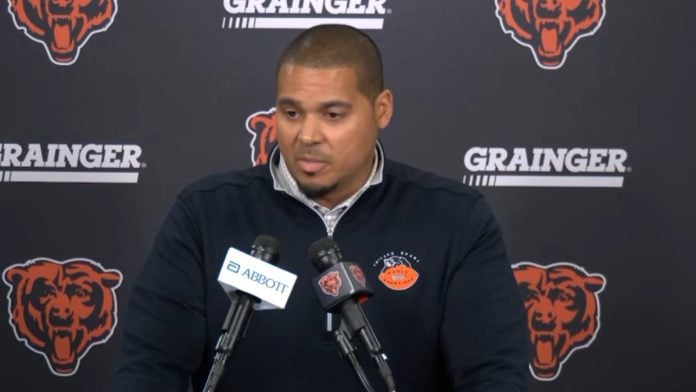
Bears general manager Ryan Poles tells the media how the team will approach the draft after the Simmons trade.

The Chicago Bears paid a premium for Jeffery Simmons. The All-Pro defensive tackle cost them two 1st round picks, with a late-round pick swap (4th for a 5th). General manager Ryan Poles felt the time to strike was now. The Bears have their young quarterback, Caleb Williams, and an excellent coaching staff led by Ben Johnson. If they could add a true difference-maker on defense, they might put themselves in position to compete for a championship. Still, many people couldn’t get past the price tag.

Giving up two 1sts makes it feel like a team is mortgaging the future for the present. Poles was asked about that when he met with the media a day after the trade took place. He made it crystal clear that this is not an indication that the Bears have stopped being draft-focused. This was merely an opportunity they couldn’t pass up.

“I know it’s kind of a joke that goes around, like, ‘F them picks is like a big thing.’ That’s really not what we’re about. I know it took a lot to get this done, but we absolutely believe that the draft and bringing in young talent is a way to sustain success around here. I’m challenging myself and our crew that for the picks we do have, we have to hit. We have to be great with our undrafted free agent process. And whatever tier of free agency we’re working in, which will have constraints, we got to hit there too. We got a great track record. It continues to get better every year. So, I got a lot of faith that we’ll be able to get that done and sustain success.”

Adding to this is Simmons’ contract. Since Tennessee already paid most of his bonus money, the Bears actually acquire a deal that is very cap friendly. Lastly, he feels the good job the team has done assembling a young core of talent from previous drafts enabled them to take this swing.

Ryan Poles has operated without a 1st round pick before.

His first draft with the team in 2022 saw him do that. His predecessor, Ryan Pace, had flipped that pick to New York for Justin Fields. All things considered, Poles handled the challenge fairly well. To compensate for not having that pick, he made several moves to accumulate extra draft capital. He sent Khalil Mack to Los Angeles for 2nd and 6th round picks. Then, in the draft itself, he moved down four separate times to add 4 extra picks. It worked out pretty well. The Bears landed Kyler Gordon, Jaquan Brisker, Braxton Jones, and Elijah Hicks in that draft.

This would explain why Ryan Poles is confident he can keep the roster supplied with young talent despite having no 1st rounders. He certainly has a much better coaching staff to help develop it under Ben Johnson. One thing that we can be certain of from Poles’ comments is that he probably isn’t going to sit on 5 draft picks next year. He’ll search for ways to add more, be it flipping a player on the roster elsewhere or moving around during the draft itself. We’ve already seen him do it.

Poles just has not to do what Pace did.

Remember, Pace did the same thing 8 years ago when the Bears traded for Khalil Mack. While the player himself was great, the team couldn’t sustain any success. Part of the reason was the poor draft operation Pace did in those two years without 1st rounders. He sacrificed a 2nd rounder in 2019 to get Anthony Miller in 2018. While the Bears did end up with David Montgomery in that ’19 class, the rest was a bust. Had they kept the 2nd rounder, they would’ve had a shot at names like DK Metcalf and Zach Allen. Pace did recover somewhat in 2020 with the selections of Jaylon Johnson and Cole Kmet, but it couldn’t cover up the team’s quarterback woes.

Poles knows he has that part of the equation figured out with Caleb Williams. He doesn’t have to hit home runs in the next two drafts. All he has to do is not completely fumble them. Add some quality young players who can become starters and don’t give away any more draft picks in reckless trades. Poles is smart enough to know the challenge in front of him. Don’t expect him to lose sight of his identity.

Josh Jacobs Explains His Scumbag Handcuff Touchdown Celebration

Josh Jacobs handcuff celebration

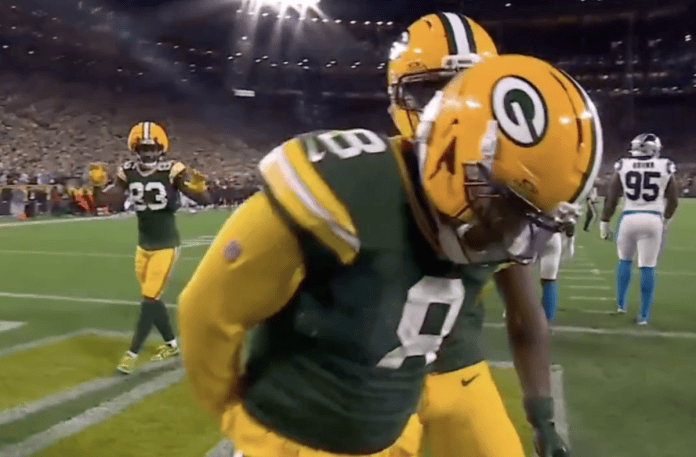
Is it in poor taste to celebrate scoring a touchdown by simulating being arrested, put in handcuffs, and then breaking out of the handcuffs after you were actually arrested in real life for domestic violence? Green Bay Packers running back Josh Jacobs doesn’t think so, and it’s actually your fault if you think he did anything tasteless in Thursday night’s 27-19 win over the Carolina Panthers. It was a reference to a gospel song; duh, everyone should know that.

Jacobs played in his second game of the season since being removed from the Commissioner’s Exempt List after missing the first six games. The 28-year-old running back was arrested on May 26, 2026, by the Hobart-Lawrence Police Department following a May 23 domestic disturbance involving his then-girlfriend. According to the criminal complaint, Jacobs grabbed her, threw her to the ground, and struck her head as she was trying to leave his garage.

Per the report, a police officer “observed redness to [her] face and neck and was able to feel that she had a bump on the back of her head. She described that she was in pain as a result of the injuries.”

Jacobs pleaded no contest to misdemeanor battery and criminal damage to property. Evidence from the case, including the video of the alleged incident that was caught on a camera in Jacobs’ garage, was sealed by a temporary order from Judge Marc Hammer in September.

Josh Jacobs Handcuff Celebration

In Thursday night’s game at Lambeau Field, Jacobs scored a rushing touchdown from one yard out in the second quarter, giving the Packers a lead that they would not relinquish against the Panthers. Then, Jacobs celebrated by putting his hands behind his back, acting as if he were in handcuffs.

Josh Jacobs Explains Celebration

After Green Bay’s victory, Jacobs was asked directly about the celebration. This is what he told the reporters in the locker room.

“Yeah, they didn’t even get the whole celebration. Me and Savion came up with the celebration. If they would have seen the whole celebration, basically last week we said the first celebration when I score I was going to thank God; that’s what I did last week. Second, was going to be “Break Every Chain”; it’s a gospel song; that’s what was going to be the next celebration. It’s just a correlation. Like I said, the media is going to run with it; they’re going to make it something that wasn’t. It is what it is.” -Josh Jacobs

And here’s the full video of the touchdown celebration that was not shown on Amazon Prime.

Even if you want to believe Jacobs’ story, it’s astonishing to hear him complain that the entire celebration wasn’t shown on the broadcast. Yeah, Jacob, I wonder why the NFL wouldn’t want to show a guy who allegedly threw down his girlfriend and hit her in the head, celebrating by mimicking being handcuffed?

This dude simply hasn’t shown any remorse for his actions and has been playing the victim card since rejoining the Packers.

Bad judgment, bad guy, and despite the touchdown, Jacobs has been a bad player in his first two games back this season. On Thursday, he faced the NFL’s worst rushing defense and managed only 1.9 yards per carry, with a long of six yards.

Former GM’s Caleb Williams Confession Reveals How Much The Bears QB Has Changed

caleb williams
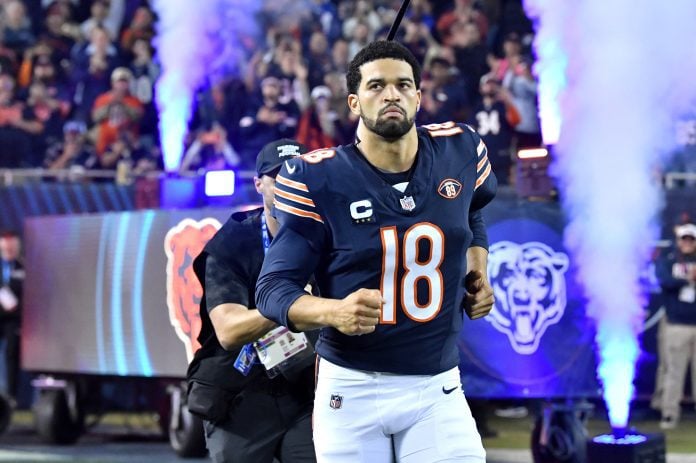
Oct 22, 2026; Chicago, Illinois, USA; Chicago Bears quarterback Caleb Williams (18) takes the field prior to the game against the New England Patriots at Soldier Field. Mandatory Credit: Patrick Gorski-Imagn Images

Caleb Williams was a star in college. Not a single person argued against that. He won a Heisman trophy and put up ridiculous numbers for two storied programs. He had everything from arm strength and accuracy to mobility and supernatural playmaking instincts. It wasn’t a shock that he would go #1 overall in the draft. Less talented quarterbacks than him have. The core issue for many evaluators, both inside and outside the league, was whether Williams could learn to play the more traditional way.

One of those people was Mike Tannenbaum. The former New York Jets and Miami Dolphins general manager had spent almost two decades evaluating quarterbacks as a scout and executive. He was outspoken before and after the 2024 draft that Williams’ preferred style of play would never work in the NFL at a high enough level. Fast forward to this week, and Tannenbaum became the first prominent NFL analyst to openly admit he was wrong. He went into detail about how much he regrets his assessment of Williams on the This Is Football podcast with Kevin Clark.

Caleb Williams succeeded where everybody thought he’d fail.

The running belief among most people is that quarterbacks predisposed to scrambling are rarely capable of learning how to operate from the pocket. Why should they? All of their success up to that point came primarily from being a superior athlete. It would be the same in the NFL. It’s not until it’s too late that they realize everybody at the pro level is a great athlete. If you want a decisive edge at this level, you must learn how to process the game mentally. Less running around, trying to hit big plays, and more taking what the defense gives you.

That first year, Caleb Williams had the same problem. He fell back on what made him great in college. It led to some spectacular plays, but defenses soon began adjusting to it. The opportunities dried up, and Williams started taking way too many sacks. Going into 2025, the quarterback had a decision to make. Does he stand his ground and force new head coach Ben Johnson to adjust the offense to what he does best, or does he embrace the challenge of learning how to play like a professional?

Williams chose the latter.

The evolution has been mesmerizing.

Over the past two weeks, his operation of the offense has reached new levels. Williams is completing 70% of his passes and not turning the ball over. This isn’t being done the cheap way with countless checkdowns either. He’s still being aggressive. The difference is that his fundamentals are sharper, and he has way more trust in the offense compared to last year. Atlanta and New England had pretty good defenses. Williams hung 30 on both of them. He never once appeared out of control.

This is the player many thought he could never become. In hindsight, it is somewhat bizarre that they felt that way after watching Lamar Jackson, Josh Allen, and Patrick Mahomes all successfully make the transition in previous years. If you get a motivated young quarterback under the right head coach, they can learn. It’s always been that way. At least Tannenbaum had the guts to admit he was wrong.

How The Simmons Trade Proves The Chicago Bears Learned Their Lesson

chicago bears
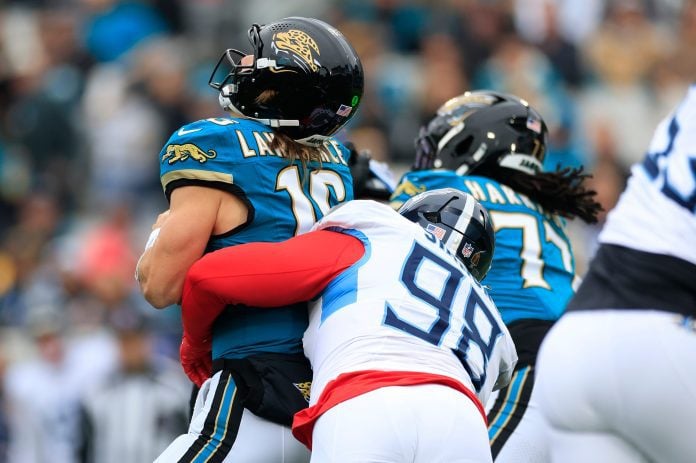
Jacksonville Jaguars quarterback Trevor Lawrence (16) is sacked by Tennessee Titans defensive tackle Jeffery Simmons (98) during the first quarter of an NFL football matchup at EverBank Stadium, Sunday, Jan. 4, 2026, in Jacksonville, Fla. The Jaguars defeated the Titans 41-7, capturing the AFC South title. [Corey Perrine/Florida Times-Union]

Blockbuster trades for veteran players are always a dangerous proposition. You’re giving up multiple high-value assets for one guy. Granted, that guy is usually a superstar, but it narrows the margin of error for your team. The Chicago Bears have been in this position before. In 2018, they flipped two 1st round picks to the Oakland Raiders for star pass rusher Khalil Mack. While it did lead to a division title that season, the Bears were never able to capitalize on it after that. They never finished better than 8-8 in Mack’s remaining three seasons with the team. Yet here they are again, this time trading two 1st round picks for Jeffery Simmons.

Why would they try this again after what happened with Mack? To answer that, it might be wise to look at similar trades over the year. I compiled a list of every major trade involving a 1st and 2nd round pick or more for a veteran player. Quarterbacks were excluded for a reason that will become clear. Here is a list of all those that qualified.

PlayerYearAcquiring TeamTrading TeamAcquiring Team’s Starting QB
Jeffery Simmons2026Chicago BearsTennessee TitansCaleb Williams
Quinnen Williams2025Dallas CowboysNew York JetsDak Prescott
Sauce Gardner2025Indianapolis ColtsNew York JetsDaniel Jones
Myles Garrett2026Los Angeles RamsCleveland BrownsMatthew Stafford
Micah Parsons2025Green Bay PackersDallas CowboysJordan Love
Jamal Adams2020Seattle SeahawksNew York JetsRussell Wilson
Jalen Ramsey2019Los Angeles RamsJacksonville JaguarsJared Goff
Laremy Tunsil2019Houston TexansMiami DolphinsDeshaun Watson
Minkah Fitzpatrick2019Pittsburgh SteelersMiami DolphinsMason Rudolph
Khalil Mack2018Chicago BearsOakland RaidersMitch Trubisky
Roy Williams2008Dallas CowboysDetroit LionsTony Romo
Ricky Williams2002Miami DolphinsNew Orleans SaintsJay Fiedler
Keyshawn Johnson2000Tampa Bay BuccaneersNew York JetsShaun King
Joey Galloway2000Dallas CowboysSeattle SeahawksTroy Aikman
Herschel Walker1989Minnesota VikingsDallas CowboysWade Wilson
Eric Dickerson1987Indianapolis ColtsLos Angeles RamsJack Trudeau
Mike Haynes1983Los Angeles RaidersNew England PatriotsJim Plunkett

The Chicago Bears learned their lesson.

If you look at the list, there are three instances in which the acquiring team went on to win the Super Bowl after acquiring the player. In each situation, those teams had a proven quarterback. Jim Plunkett had won a Super Bowl in 1980 for the Raiders. Tampa Bay moved to Brad Johnson a year after adding Keyshaun. The same was true of Los Angeles, which traded for Matthew Stafford two years after securing Ramsey. In way too many of those situations, the acquiring team did not have a definite franchise quarterback under center.

That includes the Chicago Bears in 2018. They had seen nothing to that point indicating Trubisky was legit. It was his second season. They rolled the dice without any evidence, and it backfired on them after he regressed in 2019 and beyond. Way too many teams have done the same thing. Indianapolis just did it last year with Jones. For once, it looks like the Bears learned their lesson. General manager Ryan Poles didn’t make any big moves until he had a clear assessment of quarterback Caleb Williams.

Now that it appears the Bears have a budding star under center, they made the swing for Simmons.

The timing makes it even better.

If you look at the prominent quarterbacks on that list before Williams, all of them were on the older side when their teams went all out. Aikman was 34 and would retire after that season. Romo was 28, Wilson was 32, Prescott was 32, and Stafford was 38. Williams is by far the youngest on the entire list at 24. This isn’t a player who is on the downside of his career. He’s in the middle of ascending. So even if the Simmons trade doesn’t pan out, he’ll still be in his prime, giving the Bears ample time to retool.

More than anything, the process was sound. The Bears didn’t jump the gun this time. They made sure to assemble a young, talented roster through their draft picks and waited to see whether their quarterback would develop. Only once they were certain he was the real deal did they allocate the assets to get a difference-maker at a position of need. This is smart football. It is refreshing to see how the organization actually learned its lesson from eight years ago.

Why Kevin Warren Really Won’t Like The Latest Reports On A Bears Stadium Deal

kevin warren
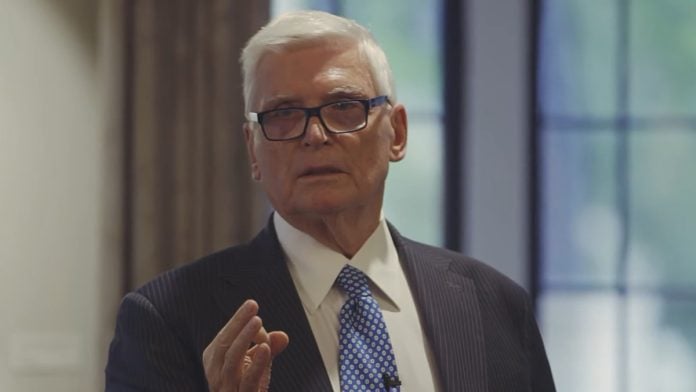
Chicago billionaire Pat Ryan speaks to students about the promise of business careers.

The positive news arrived early on Thursday for the Chicago Bears when they traded for All-Pro defensive tackle Jeffery Simmons. Suddenly, a defense that didn’t have a central star for years has one of the absolute best in the league. A team that looked offensively driven has legitimate balance on both sides of the ball. People can start thinking about a Super Bowl push. On the same day, a report from Crain’s Chicago Business revealed that momentum is building towards a deal between the team and the state on property tax assistance legislation. Based on the details, team president Kevin Warren won’t like it.

According to Greg Hinz, there is mutual optimism that enough support can be found in the House and Senate to push a deal through during the fall veto session next month in Springfield. It will look something like what the Senate put forward in the spring, involving a publicly owned stadium through municipalities that the Bears would then lease. What led to this sudden surge? People tell Hinz that Bears part-owner Pat Ryan stepping in was a key turning point, along with the inclusion of NFL commissioner Roger Goodell.

That and the sidelining of Kevin Warren.

“Insiders tell me the recent involvement of Bears minority owner Pat Ryan has made a big difference. The insurance billionaire has a reputation for getting things done and arguably has better relationships with the billionaires who really run the National Football League than the McCaskey family does. He also has strong ties to Pritzker and Illinois House Speaker Emanuel “Chris” Welch, whom he knows through their shared involvement in Northwestern athletics…

…NFL Commissioner Roger Goodell also has joined the negotiations with Pritzker, a sign that the league may be eager to keep the Bears in Illinois. Perhaps that’s thanks to Ryan’s influence, or maybe Goodell’s own Chicago ties: His father-in-law is Sam Skinner, the former U.S. attorney in Chicago who served as transportation secretary and White House chief of staff under President George H.W. Bush before returning home to run Commonwealth Edison.”

The intrigue doesn’t stop there.

It appears Arlington Heights isn’t the only choice on the table any longer. There has been a groundswell of support for keeping the Bears in Chicago. The problem has been finding a suitable location that politicians and activist groups inside the city would accept. The museum campus is out of the question. Many have offered the South Works area. It certainly has the size. However, it is pretty far south. The Bears would prefer to remain at least close to downtown. That is where the latest proposal comes in.

It is known that the Chicago White Sox are planning a move to a new stadium as well. They’ve picked up a location in the South Loop, about 10 minutes north of their current one. That means the property where Guaranteed Rate Field sits will become available. The ballpark could be demolished, paving the way for the Chicago Bears to build their new state-of-the-art complex on that spot. It is less than 3 miles from Soldier Field’s location and already has infrastructure in place to funnel fans. The key would be to expand parking and add amenities like bars and hotels.

The humiliation is almost complete.

Kevin Warren took over as Bears president in 2022. He’s spent four years trying to close a stadium deal while having the advantage of already owning the property. His only job from that point on was to get the necessary support from the state. Rather than focus on that objective, he spent numerous months and millions of dollars fruitlessly pivoting from one possibility to the next. Each time it was clear he had no concept of a plan or the ability to do proper research. Combine that with his bad tendency to put things out in the media, and it’s little wonder people didn’t like him.

If Ryan manages to close this deal mere months after essentially hijacking the process, it should be the final nail in Warren’s coffin. A part-owner does your job for you in a fraction of the time. The Bears will be left with a simple question: What good is this guy to the organization? No doubt this must be going through his head right now. This was supposed to be his victory. Instead, his mismanagement could cost him everything.

5 White Sox Prospects Who Could Be Traded This Offseason

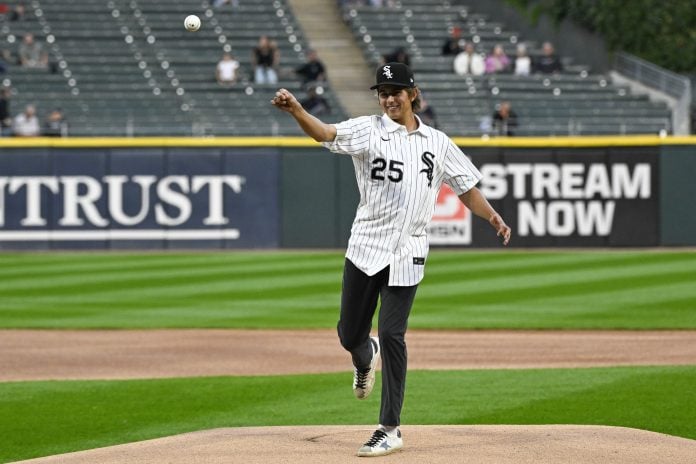
Sep 9, 2025; Chicago, Illinois, USA; Chicago White Sox 2025 draft pic Billy Carlson throws out a ceremonial pitch before the teams game against the Tampa Bay Rays at Rate Field. Mandatory Credit: Matt Marton-Imagn Images

With the offseason now in full swing and clear roster needs that must be addressed, it is time to assess the state of the White Sox farm system to identify candidates who could be traded for proven talent this winter. Given the organization’s surplus of position player prospects and its need for starting pitching, there are several names who could find themselves in different places by Opening Day 2027.

Billy Carlson

If you have been part of the White Sox online community for any length of time, you have most likely seen a trade proposal involving Billy Carlson. The tenth overall pick in the 2025 draft, he has undeniable talent. He got a signing bonus of more than $6 million as a high schooler, with some scouts describing him as the best defensive high school shortstop they had ever seen.

Unfortunately for Carlson, he faces an uphill battle to ever make it to Chicago for circumstances out of his control. The White Sox are loaded with infielders, and their two top prospects, Roch Cholowsky and Caleb Bonemer, are also infielders. Bonemer recently shifted to the outfield in the Arizona Fall League because of the logjam, and by the time Carlson could be ready for the big leagues, every spot on the dirt might be taken. The odds are stacked against him to ever contribute in a starting role in Chicago.

The Dilemma

The thought of trading Carlson this offseason presents an interesting dilemma. On one hand, he put up respectable numbers in Low-A, including an on-base percentage of nearly .400. His combination of offensive potential and exceptional defense makes him a quality trade chip as things stand right now. Yet at the same time, trading him this soon could ultimately prove to be selling low on his talent if he adds some power to his game. If he starts showing more pop at the plate, his prospect stock could rise considerably and make him a much more valuable trade chip down the road.

I see arguments for both sides of the debate and won’t go so far as to say it’s a foregone conclusion that Carlson will be dealt this offseason. That said, he is a logical trade chip and could be one of the headlining pieces in a deal for a controllable starting pitcher. The fact that he is a no-doubt shortstop with impressive on-base skills at only 20 years old is a profile any other organization would love to add to their farm system, especially one that is willing to wait a couple more years for him to fully develop.

Kyle Lodise

The team’s third-round pick in 2025 out of Georgia Tech, the 23-year-old Lodise put together an impressive season with the High-A Winston-Salem Dash in 2026. In 111 games, he recorded 20 doubles, 20 home runs, and 42 stolen bases with a .380 on-base percentage and an .820 OPS. He also steadily improved as the season went on, recording a .983 OPS with six home runs and nine stolen bases in August alone.

While not as highly regarded as Carlson on prospect lists, Lodise falls into the same category of being a potential casualty of the White Sox organizational infield logjam. It’s hard to envision a starting spot for him ever opening up at the big league level. As such, it could make sense to include him in a trade package as a higher-floor prospect given his college pedigree and minor league success.

George Wolkow

It feels like George Wolkow has been in the White Sox farm system forever even though he is still only 20 years old. Selected in the seventh round in 2023, he possesses some of the most intriguing physical tools in the organization. At 6-foot-7 and 239 pounds, he has the build of a football player and his tools and raw power are what scouts dream of. After a somewhat disappointing season in 2025, he rebounded this past year in High-A with 25 doubles, 22 home runs, and 15 stolen bases with a .762 OPS in 123 games. Much like Lodise, he improved as the season went on after a slow start in April.

I have seen many White Sox fans over the years label him as untouchable because of his sky-high potential, which is understandable. Players with a physical build comparable to Aaron Judge don’t grow on trees. That tantalizing upside is exactly why he would also appeal to other teams. With a strikeout rate of over 32% in High-A, I do not consider him untouchable and think he could be used in a trade package as a high-upside second or third piece.

Anthony DePino

A lesser-known name to most fans, Anthony DePino was taken by the White Sox in the seventh round in 2025 out of the University of Rhode Island and has mashed in pro ball since. Across 93 games with the Double-A Birmingham Barons, he slashed .260/.357/.482 with 14 doubles and 19 home runs in 392 plate appearances. The numbers are especially impressive when you consider that Double-A is typically considered the toughest level of competition in the minors, as well as the fact that Regions Field, the Barons’ home stadium, is pitcher-friendly.

DePino does have his fair share of limitations. As a 23-year-old first baseman, he doesn’t offer the same level of future upside as Carlson or Wolkow because he is older and has limited value defensively. Still, he could be of interest to a rebuilding team with playing time available at first base. Unfortunately for him, that opportunity won’t be with the White Sox.

Javier Mogollon

At 5-foot-8 and 160 pounds, what Javier Mogollon lacks in size, he makes up for in production. An international signing by the team for $75,000 in 2023, Mogollon has hit at every level he’s been at since becoming a professional. He’s also shown impressive power for a player smaller in stature, hitting 14 home runs in 91 games in 2026 between the Low and High A levels while adding in 36 stolen bases.

Another infielder, Mogollon has the same problem as several other players on this list. There just likely won’t be anywhere for him to play as he continues to ascend up the system. He is another prime candidate to be traded for that reason, and it could make sense to cash in now given his track record of performing everywhere he’s been.

Big Decisions Loom

Chris Getz will be swimming in uncharted waters this offseason. For the first time in his tenure as general manager, he will focus on strengthening a team looking to establish itself as a legitimate contender rather than dismantling the roster as part of a rebuild. With an excess of position player talent, particularly on the infield, and a clear need for pitching, it feels like only a matter of time before some of his prospects are shipped out to fill needs on the big league roster. It will be interesting to see how aggressive he is on the trade market this offseason.

Chicago Bears Go All-In: Jeffery Simmons Deal Signals Super Bowl Intentions, Khalil Mack Should Be Next

khalil mack
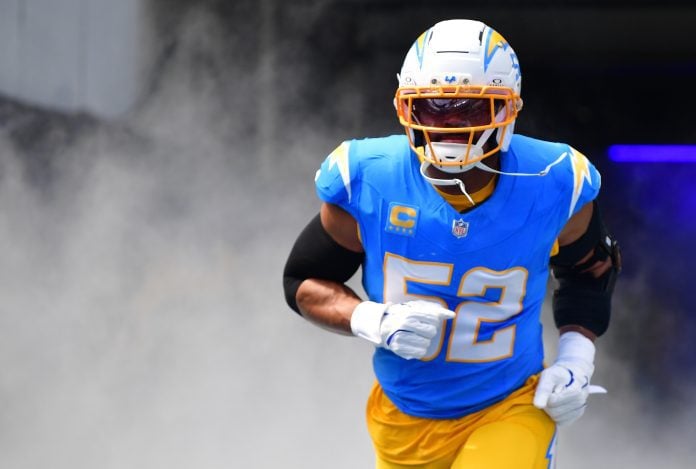
Sep 20, 2026; Inglewood, California, USA; Los Angeles Chargers linebacker Khalil Mack (52) is introduced prior to the game against the Las Vegas Raiders at SoFi Stadium. Mandatory Credit: Gary A. Vasquez-Imagn Images

Ryan Poles feels it. The Chicago Bears have the foundation to contend with any team, any time, anywhere this season, with Ben Johnson guiding Caleb Williams, who has unlocked the offense in his second year under Johnson. Dennis Allen has proven he can elevate a defense that lacks overall talent, but as we look ahead to the 2026-27 NFL season, the Bears are no longer concerned about competing; they’re trying to win a Super Bowl.

Bears Blockbuster Trade for Jeffery Simmons

The intentions were made clear on Thursday, when Poles shocked the league by trading for the best defensive tackle in the NFL. Jeffery Simmons will now anchor Chicago’s D-line after the Bears’ GM sent the Tennessee Titans a 2027 and 2028 first-round pick and a 2027 fourth-round pick to complete the deal. It’s a lofty price for the 29-year-old, but few teams are willing to make a move like this.

It speaks to the team’s confidence in Williams, as any intelligent front office is aggressive while their star quarterback is still under his rookie contract. But why stop at Simmons?

Before the blockbuster Simmons trade, the popular name connected to the Bears was Khalil Mack. He may not be the superstar edge rusher he was when the Bears pulled off a stunner heading into the 2018 season, but Mack can still give opposing teams headaches. Now imagine him lined up opposite Montez Sweat, with Simmons in the middle wreaking havoc.

What’s the Most You’d Trade for Khalil Mack?

On the latest episode of J-Mack Reacts with Jason McKie, the former Bears fullback was cautious about Mack’s price. Yet it aligns with what other NFL analysts expect to cost to acquire the current San Diego Chargers defensive lineman.

“I would say, right what we were talking about, a fifth. I wouldn’t go higher than that. You know what I’m saying? And I’m a fan of Khalil Mack too. You gotta take your feelings out of it. You got to put your GM hat on; I got to put my Ryan Poles hat on, right? You know what I’m saying? I just wouldn’t go higher than that just because of the age.

How long can he help you? You know what I’m saying? Is it just, is it this year? You’re trying to go all in this year and say, you know what, we got a chance to be really special. We want to make some noise in the playoffs and not just get to the playoffs and we may need a guy, you know, like Khalil Mack in the rotation, more pressure on the quarterback to help us get over that hump.

So, I just think, you know, Ryan Poles is going to do what he has done since his tenure as GM, what makes sense for the Bears, not just in the present, but mostly in the future.”

That answer was before Poles made a franchise-altering trade for Simmons. He showed that while keeping an eye on the future is important, capitalizing on the present reigns supreme. The future is now. Simmons was the big piece the Bears needed. Mack could be the extra edge that might actually get them over the top.

Don’t miss J-Mack Reacts, every week with Jason McKie.