
Thursday, November 12, 2026
EDGE is live. Chicago fans can now access and explore the beta.
Home Blog Page 47

Is It Time to Get Excited About a Justin Steele Return for the 2026 Chicago Cubs?

Sure, Jed Hoyer tempered expectations when discussing Justin Steele’s potential impact on the 2026 Chicago Cubs, but for just a moment, let’s get excited about the left-handed pitcher’s possible return.

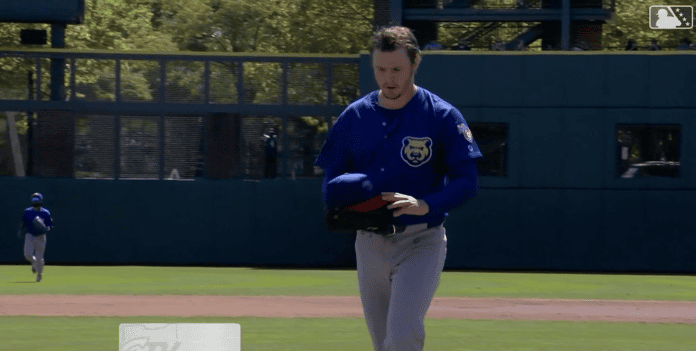
Steele made his long-awaited comeback to game action last week with the Iowa Cubs at Triple-A. It was the left-hander’s first game in 17 months, since he suffered an elbow injury that required season-ending surgery in 2025. A setback this past April threatened to take Steele out for all of 2026 as well, but Steele has been able to stay on schedule this time around, and on Sunday he made his second rehab appearance in the minors.

It was another multi-inning effort by Steele, who ended up throwing 27 pitches over two innings of work for Iowa. He generated four whiffs, struck out one batter, and in terms of in-game aspects that may determine if Steele can actually make an impact late this season and into the postseason, his fastball velocity was a tick above 91mph.

Steele’s fastball velocity is right around, and actually slightly above, where it was at the beginning of the 2025 season, so that’s an encouraging note moving forward. He’s never been a guy who will overpower opponents with velocity, but it’s still a good measure of where his strength is at as Steele eyes a return on the Cubs.

Seeing that the Cubs are using Steele for multiple innings early on in his rehab assignment is certainly a great sign for what could be if the organization determines that the lefty is ready to go to pitch in the majors this year. Health remains the top priority, but the Cubs obviously would love to have Steele back as a potential multi-inning reliever out of the bullpen.

The Triple-A season ends on Sept. 20, a week before the end of the Cubs’ regular season. If Steele remains on this pitching schedule, then he could have two or possibly three more appearances left with Iowa before a decision is made on his return. You would think the Cubs would want Steele to have at least one, or maybe a couple, of MLB outings before the regular season ends, rather than bringing him back for his first MLB action in the playoffs after an 18-month layoff.

So, we’ll see how Steele looks later this week, and hopefully he returns to the Cubs to end the 2026 season. It wouldn’t just be an emotional boost for the guys in the clubhouse, but if he can knock off the rust, Steele can be a real difference-maker in the playoffs, which the Cubs badly need, as the bullpen has been struggling as of late.
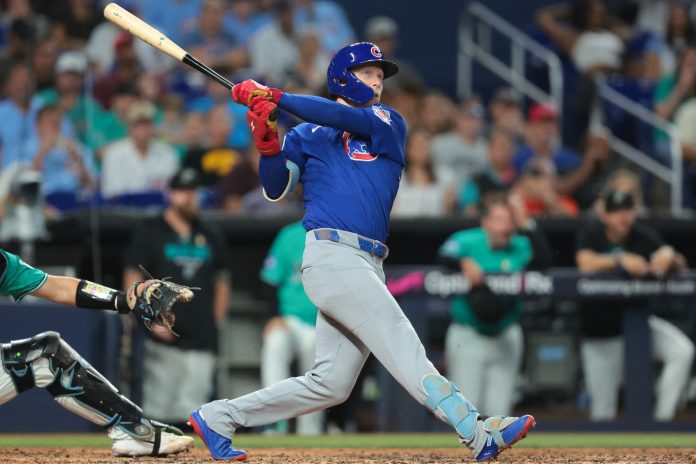
Pete Crow-Armstrong’s 40-Home Run Season is More Special Than You Think

Sep 6, 2026; Miami, Florida, USA; Chicago Cubs center fielder Pete Crow-Armstrong (4) hits a home run against the Miami Marlins during the fifth inning at loanDepot Park. Mandatory Credit: Sam Navarro-Imagn Images

Pete Crow-Armstrong’s incredible 2026 season continued in Sunday’s series finale against the Miami Marlins as he became the first left-handed batter in franchise history to hit 40 home runs in a single season since Billy Williams hit 42 in 1970. The 56-year gap to reach the 40-homer season milestone is astonishing as is, but the star center fielder also accomplished the feat sooner than anyone in Chicago Cubs history.

Back in 1955, Mr. Cub Ernie Banks hit his 40th home run of the season, becoming the youngest player to do it at that point in franchise history. Well, after PCA crushed a Tyler Phillips pitch more than 400 feet to right field in Miami, Crow-Armstrong became the youngest Cubs player to hit 40 home runs in a year, beating Banks by 49 days.

We can’t say it enough, Cubs fans are so lucky to have Pete Crow-Armstrong. He has shattered all expectations, becoming not only the best defensive player in MLB, but now, in his third full season as a major leaguer, the center fielder is among the league leaders in home runs.

Entering Monday’s series opener against the Milwaukee Brewers, Crow-Armstrong remained in a class of his own, leading all MLB players with a 9.6 fWAR. Kansas City Royals shortstop Bobby Witt Jr. trails in second place at 6.5 fWAR. As for Shohei Ohtani, his recent slump and injury, plus time running out on him returning to the mound, have pretty much made the National League MVP race over, with PCA as the clear favorite with three weeks left in the regular season.

Crow-Armstrong also entered play on Monday with 33 stolen bases, seven away from 40, which would make him the first player in Cubs history to reach that milestone, and only the seventh player to do it in MLB history.

40/40 Players in MLB History
Shohei Ohtani: 2024
Ronald Acuña Jr.: 2023
Alfonso Soriano: 2006
Alex Rodriguez: 1998
Barry Bonds: 1996
Jose Canseco: 1988

That would be some insanely good company to join for Crow-Armstrong. Not so bad for your age-24 season in the big leagues.

How Ben Johnson Revealed The Moment He Knew Caleb Williams Was His Guy

ben johnson
Bears head coach Ben Johnson and quarterback Caleb Williams embrace after a massive win over the Packers in the playoffs.

Chicago Bears head coach Ben Johnson wanted to work with Caleb Williams from the moment the job became available. He was well aware of the quarterback’s incredible talent. Polishing a player like that can lead to great things. However, Johnson also knew it would take time for him to know for sure whether Williams had “it.” Talent is one thing. Did the quarterback have the work ethic, leadership, and big-game mentality to achieve the coach’s plans? More importantly, would their relationship hold up under his strict tutelage?

The answer to both questions was yes. Williams embraced the grind from the beginning, putting in as much time as possible to learn the offense and play quarterback the way one must to win. After a shaky start to the season, the two men engineered magic, leading the Bears to an 11-6 record, a division title, and a playoff victory over Green Bay. They also produced the best offensive performance Chicago has seen in 12 years. There were so many moments that Johnson could pick as his favorite.

The flea flicker to Luther Burden against Dallas.

Hitting Colston Loveland for a TD to stun the Bengals.

Toppling Green Bay in overtime with that unforgettable bomb to D.J. Moore.

His Jumpman wizardry throw to Rome Odunze on 4th down in the playoffs.

The last-ditch TD to Cole Kmet to force overtime against the Rams.

However, Johnson’s favorite moment actually came right after the season ended in the tough loss to L.A. It was a moment that quietly confirmed to him that Williams was his guy moving forward. Dan Wiederer of The Athletic learned about it.

Ben Johnson cemented a relationship that day.

Johnson had just finished answering questions for nine minutes — on the defeat, on the exhilarating season, on the future — and Williams was headed to give his own eulogy.

For a few seconds, though, the coach and quarterback stopped. They spoke to one another, hugged, then held that moment for an extra beat.

This was, in essence, a thank-you note. Genuine and reciprocal.

A few months later, even the oft hard-edged Johnson still felt gratitude for what that short embrace represented. He paused and, through glassy eyes, offered this.

“It’s why you do what you do as a coach. You know?” Johnson told The Athletic. “At this level, yeah, you want to win games and all that. But the relationships you forge, it’s really still all about that.”

Johnson and Williams have reached a level few have in Bears history.

Anybody who has followed the NFL for long enough understands one fundamental truth. There is no more important relationship in the game than the one between coach and quarterback. If the two aren’t on the same page, the team won’t win many games. Conversely, if they’re in perfect sync, magic happens. You have Patrick Mahomes and Andy Reid, Tom Brady and Bill Belichick, Drew Brees and Sean Payton, Joe Montana and Bill Walsh, and so on. Unfortunately, the Bears have struggled for decades to solve this formula.

Matt Nagy never had complete faith in Mitch Trubisky. Jay Cutler never trusted Lovie Smith. Even Jim McMahon and Mike Ditka were often at odds because of their personalities. You’d have to go all the way back to Sid Luckman and George Halas to find that kind of tight bond. It sounds like Ben Johnson understood the need to learn not just about Williams the player, but also the person. Their growing affection for one another has become impossible to miss as training camp unfolded in August.

Credit must go where it is due.

It would’ve been so easy for Johnson to approach the situation with skepticism. Sure, Williams was a former #1 pick, but he’d never run the type of offense the Bears head coach had planned. Johnson could’ve gone in with assumptions. Then, once Williams struggled at first, he could’ve used it as confirmation that this wasn’t the type of quarterback he needed. The relationship would get off to a bad start and could sour even further over time. We’ve seen it happen many times across the NFL.

Johnson did not do that. He made a conscious effort to learn how Williams took coaching and played the game. Then he adapted his approach both on and off the field to help maximize the young quarterback. It worked beautifully. Williams finished with a franchise record 3,941 passing yards and led 7 comebacks in the 4th quarter. Soon, Johnson fully trusted his quarterback when the chips were down, and the quarterback trusted the head coach to make the right calls.

There are no further questions. The two men are joined at the hip, ready to sink or swim together.

Why Clark Phillips? We Finally Got An Interesting Explanation From Ryan Poles

clark phillips
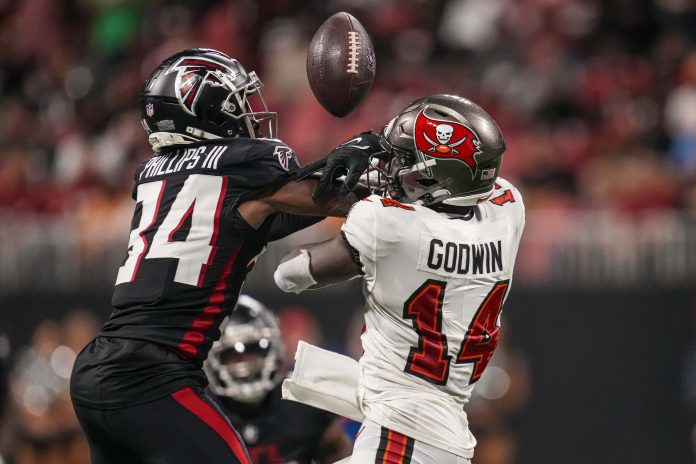
Dec 10, 2023; Atlanta, Georgia, USA; Atlanta Falcons cornerback Clark Phillips III (34) breaks up a pass against Tampa Bay Buccaneers wide receiver Chris Godwin (14) during the second half at Mercedes-Benz Stadium. Mandatory Credit: Dale Zanine-USA TODAY Sports

Trading Gervon Dexter was a surprise by the Chicago Bears. While it was becoming common knowledge that the team would likely not retain him with a second contract, it still felt like they could’ve used his help in 2026. After all, he finished second on the team with 6 sacks last season. However, general manager Ryan Poles and defensive coordinator Dennis Allen felt the depth at defensive tackle was strong enough to justify the move. They wanted to get something in return for Dexter before it was too late. They eventually settled on a deal with the Atlanta Falcons, sending him south in exchange for a 5th round pick and cornerback Clark Phillips.

The draft pick was expected. The player was not. Most people expected Dexter to strictly fetch draft compensation. However, if we’ve learned anything about Poles during his time as GM, it’s that he is always open to going player-for-player in deals. We saw that with the D.J. Moore trade in 2023. So why Phillips? Poles explained what led the Bears to accept his inclusion.

“He’s definitely going to add depth to our corner room. We like, from the tape that we watched, his man-coverage skills. Short-area quickness is really good, speed is really good, sticky in coverage.”

Cornerback has become a problem spot for the Bears due to recent health issues. Kyler Gordon still hasn’t returned from a calf issue. Tyrique Stevenson was nicked at times throughout camp. Cam Lewis is busy helping out at safety. They needed some insurance.

Dennis Allen clearly has plans for Clark Phillips.

One thing about the Bears’ defensive coordinator that has become a fundamental truth over the years is that he’s a big believer in coverage first. While many coaches preach the need for a strong pass rush above all, Allen believes that doesn’t matter if the secondary can’t cover well enough to force quarterbacks to their second or third read. That is why his teams have often invested heavily at cornerback. In hindsight, the structure of this trade shouldn’t have been a surprise. It’s pretty clear Allen already has plans for Phillips.

“Actually the majority of the tape we saw, he played a little bit more outside. And yet I see him fitting into that nickel mix a little bit. We’ll see. How quickly does he pick everything up? And then kind of go from there.”

While the cornerback spent most of his NFL career on the boundary in Atlanta, some felt he wasn’t being used according to his strengths. After all, Clark Phillips made a name for himself in Utah playing the nickel position. He was highly effective in the slot, showcasing a great mix of intelligence and toughness. The Bears have been at the mercy of Gordon’s health problems since last season. He missed 14 games in 2025 and will miss at least another four to start 2026. Adding Phillips softens that blow somewhat.

The Bears now at least have some flexibility.

Bringing Phillips into the fold allowed Lewis to focus on helping at safety, which might be his more natural position anyway. Xavier Woods tweaked his hamstring a couple of weeks ago and is still trying to catch up on the defensive scheme anyway. Now you have a foursome of Stevenson, Jaylon Johnson, rookie Malik Muhammad, and Phillips at cornerback. That gives you a nice blend of youth and veteran experience. It might not be a star-studded group, but it has the characteristics this coaching staff was looking for.

Phillips is still only 24 years old. There is plenty of time for him to overcome the failed launch in Atlanta. The Bears likely believe he was misused by the organization during his time there. Allen is a defensive backs specialist, and he’s aided by Al Harris, one of the best in the business. If that tandem can’t get Phillips playing up to his potential, nobody can. Either way, the trade was worth the risk in their eyes.

Bears Hero Matt Suhey Has Died. It’s Time To Discuss His Underappreciated Legacy

matt suhey
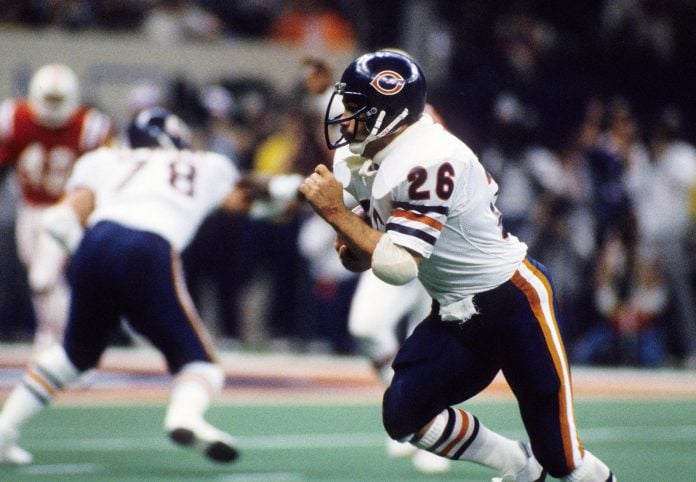
Jan 26, 1986; New Orleans, LA, USA; FILE PHOTO; Chicago Bears running back Matt Suhey (26) carries the ball against the New England Patriots during Super Bowl XX at the Superdome. The Bears defeated the Patriots 46-10. Mandatory Credit: Manny Rubio-USA TODAY Sports

The Chicago Bears drafted Matt Suhey in the 2nd round of the 1980 NFL draft. The Penn State standout knew his objective from the moment he arrived. Become the lead blocker for superstar running back Walter Payton. This would be a job he would accomplish exceptionally well. Payton had two of his four best seasons in the league at ages 31 and 32, with Suhey leading the way. Their bond became stuff they wrote stories about. Unfortunately, the franchise legend has now followed his old friend and teammate into the next life.

New broke via NBC Sports that Suhey has passed away at the age of 68. No details have surfaced on how it happened. The former player has led a quiet personal life for many years.

“Matt Suhey, a former Chicago Bears running back and member of the legendary 1985 Super Bowl championship team, died on Sunday, NBC Chicago confirmed.

He was 68 years old.”

It is unfortunate that Suhey isn’t more widely remembered by fans today. That is a byproduct of playing on teams loaded with Hall of Fame talent and outlandish personalities like Payton, Jim McMahon, Steve McMichael, Dan Hampton, Richard Dent, and Mike Singletary. Most only remember him leading the way for Payton. People never realize that Suhey was ahead of his time. In a period when fullbacks were strictly blockers, he spearheaded a renaissance that made the position a legitimate threat in the passing game. Suhey caught 260 passes in his career. That still puts him in the top 10 all-time among fullbacks.

Matt Suhey was the Cole Kmet of his day.

He was a good player who could do a little bit of everything for you. Yet he never got much acknowledgment because of the teammates around him. Not that it mattered. Suhey was a team player down to his core. He cared about winning. It probably isn’t a coincidence that Chicago’s best decade in the Super Bowl era came when he was on the roster. In many ways, while Payton was the soul of that team, Suhey was the guts. The guy fought through tons of pain without complaint and always delivered.

Most agree that his 11-yard run for a touchdown in the Super Bowl is what essentially opened the floodgates, leading to a 46-10 Bears route of the New England Patriots. Yet, in a microcosm of his entire career, most people don’t remember that. They remember the dominant defensive performance and that Payton failed to score a touchdown. It didn’t matter. The objective was achieved. That is all Matt Suhey cared about. Let the historians debate how the game was won.

The Bears should’ve stayed focused on finding players like him.

Unselfish, determined, physical, and dedicated. All heart. Suhey was a special player. If the organization had geared its scouting efforts around finding players like him, it probably would’ve won more championships. The fullback retired following the 1989 season. Eventually, he took on the responsibility of mentoring Jarrett Payton after his father died of liver disease in 1999. Suhey was always on the young man about playing the right way. No showboating. Conduct yourself like a professional. All class.

Suhey is one of those unsung heroes of Bears history. A man lost in the shuffle during an era of giants. Yet all of those big names would’ve told you the same thing. If they were in a foxhole, Suhey would’ve been the man they wanted watching their backs. That is the highest compliment you can pay a football player. One final tip of the cap to a franchise legend.

Defensive Rookie Of The Year? Why Dillon Thieneman Has Become A Popular Pick

dillon thieneman
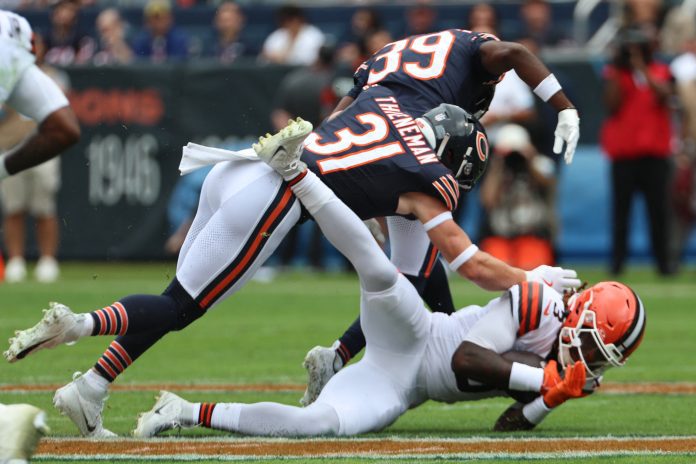
Aug 15, 2026; Chicago, Illinois, USA; Chicago Bears safety Dillon Thieneman (31) tackles Cleveland Browns wide receiver Jerry Jeudy (3) during the first half at Soldier Field. Mandatory Credit: Mike Dinovo-Imagn Images

Chicago Bears players don’t win major awards. At least they haven’t for a long time. Joe Thuney broke that drought somewhat last season when he claimed the first-ever Offensive Lineman of the Year honor. While a well-deserved nod, it doesn’t carry the same prestige as MVP, Offensive Player of the Year, Defensive Player of the Year, or Rookie of the Year. The last time a Bear won any of those was Brian Urlacher in 2005, taking home DPOY honors. Since then, fans have been waiting for someone else to break through. Could Dillon Thieneman be the unlikely hero?

ESPN thinks there is an outside shot. They listed the Bears’ 1st round pick as the third-ranked favorite for Defensive Rookie of the Year this coming season.

3. Dillon Thieneman, S, Chicago Bears (+2500)

As a calculated long shot, the first-round pick is already Chicago’s starting strong safety. He should be around the ball plenty after playing 40% of his snaps in the box last season. Thieneman recorded 94 tackles in his final college season, while missing just 7.8% of his attempts.

Safeties rarely win DROY, but the last one to do it was Mark Carrier with the Bears in 1990. Thieneman is worthy of bringing the award back home, given his immediate role.

This is a bold mention. After all, no safety has won that award in the NFL for 35 years. Mark Carrier pulled it off in 1990 with Chicago. He had 10 interceptions that season. Truly one of the best for any rookie in history, regardless of position. What will it take for Thieneman to end that drought? That depends on what kind of production he puts together.

What must Dillon Thieneman do to get in the conversation?

Let’s be real. For this to be even a discussion, two things must happen. The young safety must have standout production, and the Bears must win games. No safety is winning Rookie of the Year without both. The more your team wins, the more you get noticed individually. It’s the law of sports. As for production? That is pretty straightforward. Only two safeties have won the award since its creation in 1967. We already noted that Carrier had 10 interceptions during his year. The other was Erik McMillan of the New York Jets. He finished with 8 as a rookie.

Something like that hasn’t been done in the NFL in 17 years. The last one to reach it was Jairus Byrd in 2009, snagging 9 interceptions with the Buffalo Bills. He likely would’ve been a favorite for the award had the team not finished 6-10. The good news for Dillon Thieneman is that the Bears are a considerably better team than Buffalo was. He’s also in a defensive scheme under Dennis Allen that should give him ample opportunities to go after the ball. We saw that last season with Kevin Byard.

With Coby Bryant out, it should only lead to more.

Competition will be substantial.

Four defensive players went in the top seven picks alone this year. Two of them were pass rushers (David Bailey and Arvell Reese). We know how much the NFL loves sacks. If either of them goes off for big totals, there won’t be much Thieneman can do. Safeties don’t get the same recognition as that position, or cornerback, for that matter. It isn’t fair, but that is the reality. Not that the Bears are concerned. They have the utmost confidence that Thieneman will be up to the challenge.

We already know he catches on quickly. He had 6 interceptions as a freshman in college. There have been signs throughout training camp that Thieneman is improving. His grinding mentality was always going to serve him well. Never mind that he’s an athletic freak. Players like that almost always find early success in the NFL. Much will depend on staying healthy and how the team around him fares.

Caleb Williams Finally Got The Bruce Arians Lecture From Ben Johnson And Why It Matters

caleb williams
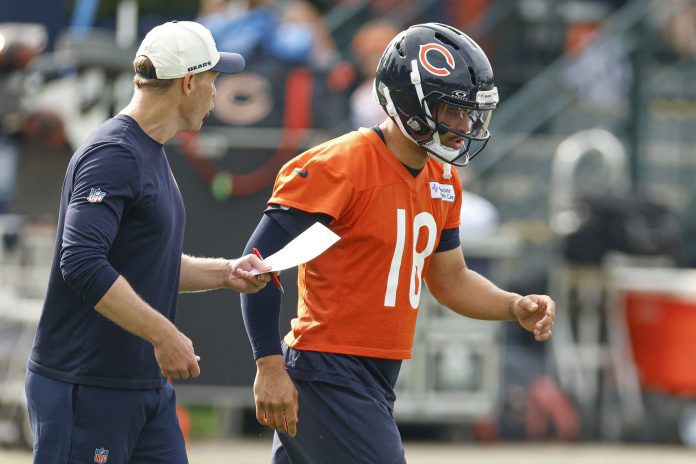
Jul 31, 2026; Lake Forest, IL, USA; Chicago Bears head coach Ben Johnson talks to quarterback Caleb Williams (18) during Training Camp at Halas Hall. Mandatory Credit: Kamil Krzaczynski-Imagn Images

Caleb Williams takes great pride in the way he plays football. The Chicago Bears quarterback turned himself into a star by adopting two key traits: improvisation and ball security. Few at any level are better than Williams at slithering out of trouble and making a big play off-script. It’s one of the reasons defenses hate playing against him. What makes it even worse is that he doesn’t throw interceptions either. Across two seasons, Williams has only had 13 picks. Protecting the football is something very important to him.

However, not many people talk about the other side of that way of thinking. Sure, not throwing interceptions is good. It limits the number of chances an opponent can swing the momentum of a game. At the same time, it also means a quarterback might be passing on too many opportunities for game-changing completions. This is something head coach Ben Johnson noticed from last season and has urged Williams to address. Don’t be afraid to take a few more chances. Let your playmakers make plays. The quarterback summed it up like this.

“It’s a little bit more putting the ball in danger, more trust in them,” Williams said.

Caleb Williams is good enough to do it.

It’s not like the quarterback is unfamiliar with being aggressive. To date, he has five games in his career with 40 or more passing attempts. He has 1,584 yards, 8 touchdowns, and 2 interceptions in those games with a 62.2 completion percentage. Those are more than adequate numbers. Williams’ aversion to interceptions isn’t uncommon. All quarterbacks hate throwing them. The problem is that intentionally going out of your way to throw them can be detrimental at the NFL level. It limits the number of big-play opportunities.

This is a lesson the great Peyton Manning learned early in his career as well. He told the story of his early years in Indianapolis when future legend Bruce Arians was coaching him. The two were reviewing film, and Arians asked why Manning didn’t throw on a particular play. The quarterback, a bit puzzled, said nobody was open. Arians looked at him, pointed at the screen, and stated in his classic wry tone, “That’s open in the NFL.” After that, Manning became far more cognisant of attacking tight windows when the situation allowed.

There is a stat for this.

NFL Next Gen Stats track something called Aggressiveness Percentage. It measures the number of passes a quarterback completes when a defender is within 1 yard of the receiver at the time of completion or incompletion. Caleb Williams was second-to-last in 2025 at 11.3%, trailed only by Denver’s Bo Nix. By contrast, eventual league MVP Matthew Stafford was second in the league at 19.3%. Patriots quarterback Drake Maye was third at 17.9%. Since the stat started being tracked in 2018, the eventual Super Bowl champion quarterback averaged around 13.29%. Sam Darnold was 13.2% for Seattle.

That should be the bar Williams must shoot for. Based on the math, 74 of his passes were into tight windows last season. To be league average, he would’ve needed around 87. That may seem like a small bump up, but even a handful of such passes being completed can mean the difference between wins and losses. The point stands that Williams must start trusting his teammates to make plays for him. That is why the Bears drafted them.

How One Stat Helps Illustrate Why Case Keenum Is Key To The Bears’ Championship Hopes

case keenum
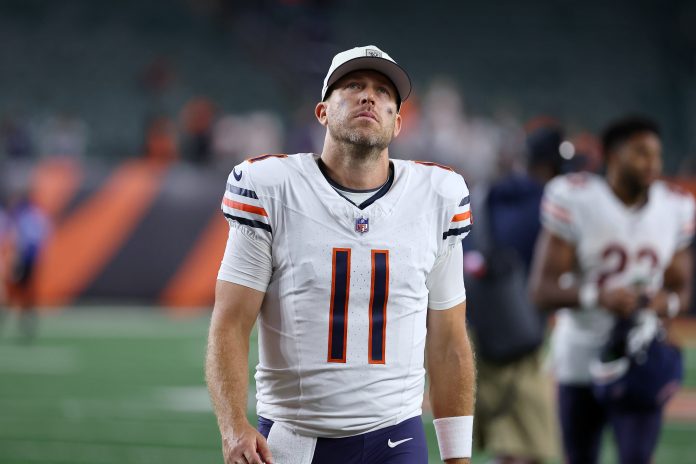
Aug 22, 2026; Cincinnati, Ohio, USA; Chicago Bears quarterback Case Keenum (11) after a game against the Cincinnati Bengals at Paycor Stadium. Mandatory Credit: Joseph Maiorana-Imagn Images

When people discuss the Chicago Bears’ quarterback position, two names tend to dominate the conversation. One is, of course, Caleb Williams. He is the starter and possibly an emerging star in the NFL. The other is Tyson Bagent, arguably one of the league’s best backups. Case Keenum isn’t a name that comes up often. Yet the Bears seem to treat him as royalty. A truly vital part of their locker room. That seems odd for a third-string quarterback. Yet when you hear Williams talk about Keenum, you begin to understand why.

Not enough people acknowledge an important fact about the 38-year-old. He is one of just 51 quarterbacks in NFL history to log 15 or more seasons in a career. Only five of them can be classified as career backups like Keenum. So he’s in rare company.

“Coach said it today – there’s 340 ever in the history of the NFL and Case Keenum’s one of them to be 15 years in this league,” Williams said. “The league’s been around for 100 years and that’s a low number. I think having that type of people around me and then also just having people that I look up to and idolize to be able to kind of refer back to.”

One thing you can always say about players like this is they’ve seen just about everything there is to see. Keenum has suited up for eight different franchises in his career. That experience has run the gamut from miserable bottom-dwelling seasons to one win away from the Super Bowl. The same was true for his fellow ageless backups.

PlayerSeasonsYearsGamesStartsPrimary teams
Earl Morrall211956–1976294104Lions, Giants, Colts, Dolphins
Bill Munson161964–197925666Rams, Lions
Don Strock151974–198823222Dolphins
Josh McCown16+2002–201925676Cardinals, Bears, Bucs, Browns, Jets
Tyrod Taylor152011–202524062Ravens, Bills, Browns, Chargers, Texans, Giants, Jets

Having a Case Keenum on your roster is always beneficial.

That is particularly true if you have a young quarterback. Morrall was a vital mentor to Bob Griese during their time together with the Miami Dolphins, leading to two Super Bowl titles in 1972 and 1973. Munson oversaw the early development of future Hall of Famer Dan Fouts in San Diego. Strock was there to oversee Dan Marino’s rise to superstardom in Miami. Taylor was a massive help to Justin Herbert when he took over the Chargers in Los Angeles. Don’t underestimate the value of a wily veteran in the room.

We already saw what Case Keenum did for Williams last season. His constant encouragement was a big part of why the Bears managed to win so many games in comeback fashion. That encyclopedic knowledge he had of defenses undoubtedly gave Williams some tips on how to attack them in key situations. It is no wonder the Bears were quick to bring him back, and with a pay raise no less. It feels almost inevitable at this point that Keenum has a job as a coach waiting for him whenever he finally does retire.

Don’t forget the Bears have exploited this idea before.

Everybody remembers that the Bears won the Super Bowl in 1985. What they don’t remember is the year before, in 1984. They signed a 38-year-old quarterback named Greg Landry. That was his 15th season. With his presence, Jim McMahon played some of his best football, going 7-2 that season. Then backup Steve Fuller came in, threw 3 touchdowns, no interceptions, and went 2-2. Neither quarterback would be quite as sharp after that despite the rousing success. Landry’s influence was pretty obvious.

That is what Keenum brings to the table. He is a perfect sounding board for Williams because he’s seen everything there is to see in this league. If you listen to his advice, it’s probably pretty good. Williams is smart enough to recognize it. He doesn’t know everything. Listen to the guy who has been around longer. Credit must go to head coach Ben Johnson for recognizing what the team needed last year.

Why Kentavius Street Is The Bears’ Most Baffling Roster Decision By Far

kentavius street
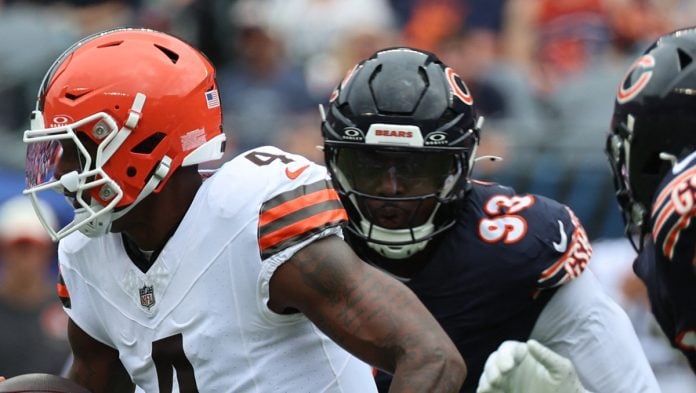
Aug 15, 2026; Chicago, Illinois, USA; Cleveland Browns quarterback Deshaun Watson (4) rushes the ball past Chicago Bears defensive tackle Kentavius Street (93) during the first half at Soldier Field. Mandatory Credit: Mike Dinovo-Imagn Images

The Chicago Bears made some unusual roster decisions this summer. Most of them were of the minor variety. Not retaining training camp standout Kaden Davis was one. Trading Gervon Dexter was another. Yet the one that caught most people by surprise was Kentavius Street. The former Atlanta Falcons defensive tackle signed with the Bears this offseason at the behest of defensive coordinator Dennis Allen, who previously coached him in 2022 with the New Orleans Saints. That in itself wasn’t a big deal. The Bears needed defensive tackle depth. He was a veteran with starting experience.

What nobody was prepared for was Allen’s announcement after the preseason ended that Street would likely replace Dexter in the starting lineup.

“He was the most productive tackle we had throughout the course of training camp,” Allen said. “He’s got the suddenness and the explosiveness off the ball that we’re looking for to create penetration and disrupt the line of scrimmage. And he’s really taken to the things that (we) are coaching and how we want to play that position. He’s been productive throughout the course of training camp and hopefully we’ll be able to continue that.”

This is such a bizarre decision. After all, nobody once mentioned Street in practice reports, and he didn’t register a single interior pressure during either of his preseason appearances. Meanwhile, Neville Gallimore, James Lynch, and Jordan Van Den Berg all stood out. Where is this confidence coming from? Nobody else has seen what Allen talked about.

Kentavius Street is a downgrade.

Let’s make that clear right now. Dexter wasn’t perfect as an interior pass rusher. He may have lacked the burst Allen prefers, but he still had 6 sacks and 43 pressures last season. The most pressures Street has managed in a season was 19, doing so in back-to-back seasons in 2021 and 2022. His career high in sacks is 3.5. Just because he might be more naturally suited to what Allen likes doesn’t make him a superior option. If Street hasn’t had a breakout year by now, why should anybody think it’s coming at age 29?

He certainly wasn’t brought in for his run defense. Kentavius Street has routinely graded poorly at stopping the run since coming into the league. His 49.9 grade last season ranked 121st among defensive tackles. That is the price you pay for being 6’2″ and 287 lbs. If he were closer to John Randall or Aaron Donald, that wouldn’t be a problem. He is not. It is difficult not to feel like Allen is letting their brief experience together four years ago cloud his better judgment at the position.

A lot is being placed on faith.

Right now, there isn’t enough evidence to justify Street being the starter. Nothing about his career up to this point says. Just because he’s been the most “productive” in training camp doesn’t mean that will translate to actual games. It hasn’t yet happened in his career. There is such a thing as being a player who’s great in practice but not in games, just like the reverse is true. Allen is under a lot of pressure to improve this defense in 2026. Decisions like this don’t seem like they’re helping his case.

He’d better hope Street lives up to the praise, or one of the other guys, like Van Den Berg or Gallimore, masks the decision by playing well. Otherwise, that decision to trade Dexter will look like a monumental blunder. Head coach Ben Johnson has given Allen mostly free rein on defense. This unit is his baby now. He wants to run it his way with his preferred personnel. Street fits the profile. Whether he can actually play at a high level remains to be seen.

How A Ryan Poles Blown Opportunity Extended The Most Consequential Drought In Bears History

ryan poles
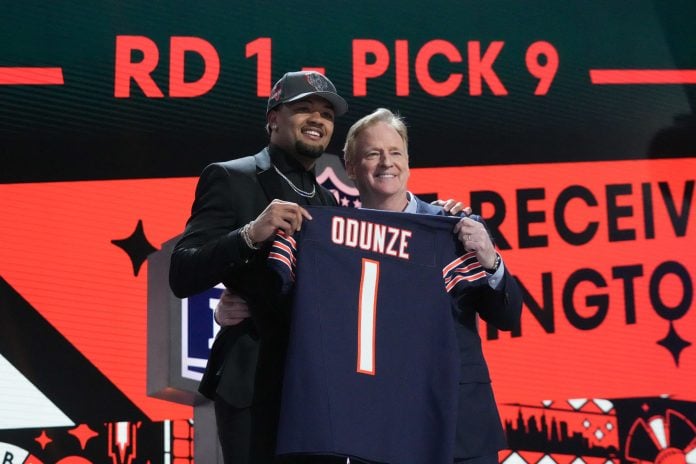
Apr 25, 2024; Detroit, MI, USA; Washington Huskies wide receiver Rome Odunze poses with NFL commissioner Roger Goodell after being selected by the Chicago Bears as the No. 8 pick in the first round of the 2024 NFL Draft at Campus Martius Park and Hart Plaza. Mandatory Credit: Kirby Lee-USA TODAY Sports

The Chicago Bears have historically been pretty good about investing in key positions in the draft. Premium positions, as they call them today. For better or worse, they’ve drafted seven quarterbacks in the 1st round since 1982. They’ve drafted seven offensive tackles since 1981. Perhaps the most heavily addressed area has been the defensive line, with 10 1st-rounders since 1979. There is one underlying problem. Amidst those moves, the Bears have gone through some pretty sizable dry spells that ended up biting them. Ryan Poles, for all of his efforts, is part of that problem.

The first drought ran from 1995 through 2002, a span of eight years during which they didn’t spend a 1st-round pick on any defensive linemen. Over time, you notice the impact up front starts to wane.

YearPickPlayerPositionTeam Sacks
199521Rashaan SalaamRunning Back15
199613Walt HarrisCornerback23
1997—No selectionTraded to Seattle43
19985Curtis EnisRunning Back31
199912Cade McNownQuarterback38
20009Brian UrlacherLinebacker34
20018David TerrellWide Receiver17
200229Marc ColomboOffensive Tackle44

Well, somehow the Bears have managed to top themselves. As of writing this, the franchise has gone without a defensive line addition in the 1st round since 2016, a span of 10 drafts. Akiem Hicks and Khalil Mack masked the problem for a few seasons, but over the past four years, it has become an increasing concern.

YearPickPlayerPositionTeam Sacks
20172Mitchell TrubiskyQuarterback42
20188Roquan SmithLinebacker50
2019—No selectionTraded to Oakland32
2020—No selectionTraded to Oakland36
202111Justin FieldsQuarterback49
2022—No selectionTraded to NY Giants20
202310Darnell WrightOffensive Tackle30
20241Caleb WilliamsQuarterback40
20249Rome OdunzeWide Receiver –
202510Colston LovelandTight End24
202625Dillon ThienemanSafety?

The Chicago Bears have gotten away from what made them great.

It isn’t a coincidence that the 1980s Bears defense was so dominant. A huge part of why was that the organization constantly invested top draft picks in it. Dan Hampton, William Perry, and Al Harris were all 1st round picks. If you looked around the league last year, almost every defense that ranked top 10 in sacks had at least one 1st round pick up front.

  • Atlanta Falcons (Jalon Walker)
  • Cleveland Browns (Myles Garrett and Mason Graham)
  • Detroit Lions (Aidan Hutchinson)
  • Minnesota Vikings (Dallas Turner)
  • Pittsburgh Steelers (T.J. Watt)
  • Houston Texans (Will Anderson)
  • Los Angeles Rams (Jared Verse)
  • Seattle Seahawks (Byron Murphy)
  • New Orleans Saints (Cameron Jordan and Bryan Bresee)

It isn’t rocket science. History says that when you invest top picks in certain areas of the roster, they tend to get good. That is why what the Chicago Bears have done is so frustrating. Ryan Poles shouldn’t get all the blame for this problem. However, he absolutely deserves blame for letting it go on so long. He has made five 1st round picks as GM. None have been defensive linemen, and only one was defense at all.

Ryan Poles talks all the time about opportunities.

In fairness, he made the obvious right call with Caleb Williams at #1 in 2024 and Colston Loveland at #10 in 2025. However, there is room for criticism for his decisions at #9 in 2023 and 2024. He had Georgia defensive tackle Jalen Carter on the board, but elected to trade out of that spot with Philadelphia, opting for right tackle Darnell Wright instead. Nobody criticizes that much because Wright turned out to be an excellent pick. However, the decision to draft Rome Odunze #9 the next year looks more questionable in hindsight.

Now, the wide receiver has shown flashes of brilliance over his first two seasons, but they’ve also been marred by health issues and drops. Meanwhile, Verse, Turner, Murphy, and Laiatu Latu have all become productive pass rushers for their respective teams. How much of a difference would one of them have made across from Montez Sweat? Poles has been fairly good at getting a feel for where the board is trending each year, but his decision to lock in on Odunze two years ago may have been his biggest missed opportunity.

The Bears are certainly paying for it.