Apparently someone is hinting that it’s time to rev up the Jeff Fisher Bears rumor mill and they need to stop that right now. It isn’t a secret by this point that head coach John Fox is on the hot seat. After seasons of 5-11 and 3-13, that’s going to happen. The guy is 62-years old and many wonder if he’s mentally and physically equipped to see this rebuild through.
Hence why many are already looking towards 2018 for possible replacements. Several names have already been placed on the list. Michigan head coach John Harbaugh, Patriots offensive coordinator Josh McDaniels and Saints head coach Sean Payton are the most popular names. Well Matt Miller of Bleacher Report believes another should be added.
Jeff Fisher Bears reunion after three plus decades?
It’s his belief that if Fox is gone, either former Oklahoma head coach Bob Stoops or former Rams head coach Fisher should be considered prime candidates. His reasoning for why? Obvious, and a little weak to be honest.
“There was plenty of speculation that Stoops would be in line for a job with the Chicago Bears if John Fox is gone after this season. That wouldn’t surprise me, but I’d also keep this name in mind: Jeff Fisher.
Fisher played for the Bears and spent one season there as a coaching assistant in 1985. It’s too soon to say Fox is done after only two seasons on the job, but if he’s out, these are two names I expect to be linked to that job.”
There are just so many things wrong with that prediction that it would be too difficult to lay them all out. So the next best thing is to run through the most obvious problems. Starting with this simple fact that got so summarily ignored.
He’s no different from Fox
Fisher is going to be 60-years old in 2018. So in essence the Bears would just be getting a slightly younger version of Fox. Think about it. Two older head coaches who’d already run two franchise before landing in Chicago. Both have defensive backgrounds. If anything one could argue the Bears would be trading for the poor man’s version of Fox.
He was never really that good
There is one fact that is impossible to ignore regarding Fisher as a head coach. He may have a strong reputation among the NFL higher-ups, but he has never really been a man known for results. Thus far he’s coached 22 years in pro football. In all that time, he made the playoffs a total of six times. Six. Not only that but his record in the postseason was 5-6 and he failed to post a winning record over his previous seven season. Oh and no rings either. Feeling the hype yet?
His track record protecting his QBs is bad
To be fair, Fisher actually has a solid reputation when it comes to developing quarterbacks. Steve McNair was a three-time Pro Bowler and MVP for him in Tennessee. He even got two Pro Bowls out of Vince Young. That wasn’t the problem. The problem was Fisher had a hard time keeping his guys protected. McNair was hit a lot during his years as starter, resulting in 18 missed games when the two were together. Young missed his fair share as well. Jared Goff was sacked 26 times in just seven appearances during his lone stint with Fisher.
It’s time for the Bears to stop living in the past. They tried that with Marc Trestman. They’ve tried it with John Fox. There is zero reason to think Jeff Fisher will suddenly figure things out and learn how to be a Super Bowl-winning head coach. He had over two decades. Way longer than other head coaches ever got. It’s high time this franchise looked to the future.
Earlier this week, I released Part One of my Bulls Top 10 Most Likely Draft Picks list for 2017. That list featured big men T.J. Leaf and Ike Anigbogu of UCLA, Jarrett Allen of Texas and Justin Patton of Creighton. Also cracking the top ten were Indiana’s defensive sensation OG Anunoby and Louisville shooting guard Donovan Mitchell.
Now we get to the final five: based on their current draft projections and the Bulls’ roster needs, these five guys are the ones most likely to be taken with the 16th pick.
Top 5 Most Likely Bulls Draft Picks In 2017
5. Terrance Ferguson – Adelaide (Australia NBL)
Year: 1 year pro (NBL) Position: SG/SF Meet/Workout with Bulls: Yes
Ferguson is a wildcard. The five-star recruit out of high school turned down Arizona to play his one pre-NBA year professionally in Australia. He served as a role player off the bench for the Adelaide 36ers, so his stats are nothing special. However, in his meeting with the Bulls at the NBA combine he talked about the benefits of playing against “grown men” in Australia’s pro league.
Terrance could be a great fit for Fred Hoiberg’s system in Chicago. He has the necessary physicality and skillset to develop into a great 3-and-D wing in the NBA. He mostly played shooting guard in Australia but has the size (6’7, 6’9 wingspan) to play minutes at small forward as well. Ferguson can get hot from three point range, and is also a very smart passer. In Fred’s pace and space offense, he’d be ready and willing to make the extra pass. His athletic ability is among the best in this draft class, and he just turned 19. “Younger and more athletic”? This kid definitely checks those boxes for GarPax.
4. D.J. Wilson – Michigan
Year: Sophomore Position: PF Meet/Workout with Bulls: No
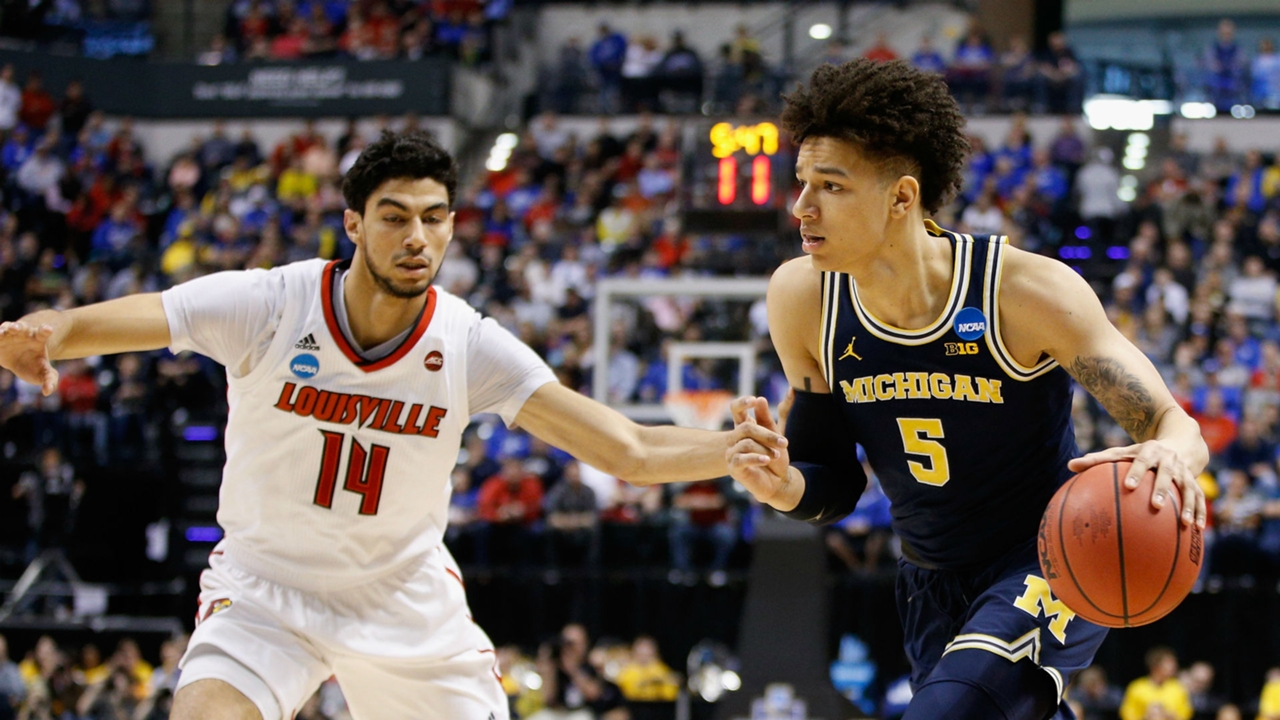
The Bulls taking Wilson would definitely be a “bold strategy, Cotton.” The sophomore was on the fence about entering this year’s draft but ultimately decided to go for it. Originally projected as an early second rounder, he’s beginning to jump into the early 20s in some mocks around the web. He really helped his draft stock with an impressive performance in the tail end of the season. Between Michigan’s Big Ten Championship run and their Sweet 16 appearance, D.J. averaged 15.6 points (54% FGs), 5 rebounds and 2 blocks.
Wilson, like T.J. Leaf, could be a great stretch four for Hoiberg’s offense. He’s got the size (6’10, 7’3 wingspan) and confident stroke needed for the position. Wilson also has impressive ballhandling skills for a power forward, and can drive confidently if his defender closes out on his shot from deep. His lateral quickness is there for perimeter defending, but he needs to add more muscle to his frame before he’s ready to guard NBA bigs in the paint.
3. Justin Jackson – North Carolina
Year: Junior Position: SF Meet/Workout with Bulls: Yes
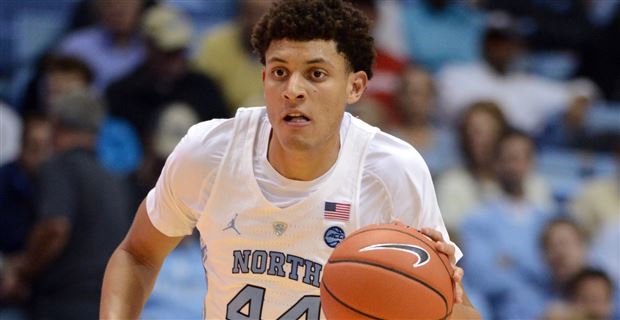
Jackson might be the prospect most frequently paired with the Bulls in mock drafts going back several months. The junior forward helped the Tarheels reach back to back championship games in the NCAA Tournament. His strong play through UNC’s triumph this spring vaulted him up several draft boards from late first rounder to potential lottery pick. He might be gone by the time the Bulls pick at 16.
Fun fact: Jackson is from Tomball, Texas. Yeah, Jimmy Butler’s hometown.
Jackson is a stereotypical pick for GarPax. He’s older (already 22) and has three years of college experience. He’s not the most athletic guy or the most skilled guy in the draft, but he’s a well-rounded player ready for the NBA. Jackson saw great improvement in his three point production as a junior, setting a Tarheels record with 105 made threes at a 37% clip. He has the makings of a great wing defender, and his high basketball IQ should attract Hoiberg and the Bulls.
“It was probably one of my best workouts as far as learning and competition. I loved it. It was intense. I feel I shot the ball really well.” – Justin Jackson
Will Jackson be there at 16? If he is, there’s a very good chance the Bulls take him.
2. John Collins – Wake Forest
Year: Sophomore Position: PF Meet/Workout with Bulls: No
This is my “being salty towards GarPax” prediction. Collins is definitely a first round talent, and might actually be off the board before 16. He’s a remarkably efficient scorer around the rim; finishing last season with 67% true shooting percentage and the highest PER among all Division I players. He earned the ACC’s Most Improved Player award as a sophomore, averaging 19.2 points and 9.8 rebounds. John’s skills on the glass might be the best among the bigs in this year’s draft, but his defensive footwork and awareness needs serious development.
The reason I call Collins my “salty” pick is that he makes little sense for the Bulls’ needs. Paxson continuously cited their need for shooters at the end of the season. This draft is stacked with stretch four players who can shoot the long ball (some of whom appear earlier on this list), but Collins isn’t one of them. His offensive game is built like the power forwards of NBA generations gone by. He doesn’t fit the mold of what Hoiberg wants to do offensively.
Let’s not forget, though, that GarPax chose Bobby Portis two years ago when they spent most of their time scouting point guards to replace Derrick Rose. Why? He was the highest-ranked player on their draft board. Taking Collins at 16 could be another classic example of GarPax ignoring their roster needs and taking the best available player.
1. Luke Kennard – Duke
Year: Sophomore Position: SG Meet/Workout with Bulls: Yes
I can already hear the groans from Bulls fans everywhere. “Seriously? Luke Kennard is just another version of Doug McDermott, and look how that panned out.” I understand that Kennard seems like a boring pick, but comparing him to Doug is misguided.
This kid unexpectedly turned into Duke’s most reliable scoring option (19.5 PPG) last season. Not only is Luke an excellent shooter with range (52.5% FGs, 43.8% 3PT), but he’s sneakily good off the dribble. He can create his own shot with underrated ballhandling and crafty footwork, and has good floor vision for a shooting guard (2.5 assists per game last season). His offensive versatility and NBA potential is already higher than McDermott’s.
Kennard won’t be leaping out of the United Center with the high-flying, acrobatic athleticism fans are demanding. But it is a smart pick.
Break down the situation the Bulls are in: 1) Nikola Mirotic is all but guaranteed to be re-signed. 2) The Bulls still believe Bobby Portis can turn into a reliable stretch four. With both of them in the fold, I think GarPax will decide they’re set at the power forward position. 3) Dwyane Wade and Rajon Rondo will probably return this season, but they’ll likely be gone after that. The Bulls need shooters in their backcourt. Right now, it doesn’t look like Jerian Grant or Cameron Payne can provide that. Denzel Valentine? Maybe. But we still haven’t seen enough to know for sure.
Kennard might not play big minutes as a rookie, but his skillset makes the most sense for the Bulls’ needs going forward. He’s projected to go somewhere in the early/mid teens and worked out for the Bulls last week, so you know he’s on their board.
There they are, your most likely draft picks for the Chicago Bulls in 2017. Keep it here at Sports Mockery for any developments or news about prospect meetings/workouts before the draft next Thursday!
If you want to talk more about any of these Bulls prospects, find me on Twitter @Bulls_Peck.
What are the Kevin White 2017 expectations? Chicago Bears fans would love nothing better than to see him light it up. The perfect end to one of the most arduous journeys for a high team draft pick in recent memory. This isn’t the first time a talented young player the Bears took out of college was ravaged by injuries to start his career. White though is a bit unique in that he suffered broken bones on each of his legs.
Suddenly people are wondering whether he’ll ever have that trademark speed and explosiveness that made him so attractive in the draft. White himself said he’s re-learning how to run. He didn’t elaborate on what that meant, but it certainly made people skeptical about his future. A player only gets so many chances before he’s labeled a bust.
I decided to send out feelers to multiple experts who either cover the Bears primarily or have extensive knowledge of them. The question was simple. What are your expectations/predictions for White in 2017? The answers I got back were informative, and some were even a little surprising.
A few of them were willing to offer specific numbers they envision him reaching.
Aaron Leming (Bear Report)
“Honestly, I think he goes 40 catches, 650 yards & 3 TDs or somewhere there about. Haven’t spoke with many people that have been at those practices that have said many positive things about him so far.”
Adam Rank (NFL.com)
“I see Cam (Meredith) as the #1. I would like Victor (Cruz) to just be a solid NFL wide receiver. Doesn’t have to go back to his salsa-dancing heyday. So for Kevin White.
I hope he takes the opportunity to be a solid WR2. Work on some things and show improvement. I will go 714 yards, but 4 TDs. And if stuff goes right, that should be good.”
Lester A. Wiltfong Jr. (SB Nation)
“If he stays healthy and has no setbacks, he does have the skill set to give the Bears some production. Something along the lines of 40-50 catches, 500-600 yards.”
Others shied away from attaching a specific number to their own beliefs. They felt it was way too early in the process to determine how things might go. White needs to be seen performing in training camp and the preseason before any sort of reasonable prediction can be made.
Adam Jahns (Chicago Sun-Times)
“It’s best to hold off on predictions until training camp. The quarterbacks still are learning Dowell Loggains’ system. Gauging quarterback-receiver chemistry is difficult right now.
The Bears still have high hopes for White. They won’t scale back their expectations yet. But the Bears also signed a handful of free agents to improve competition and provide better depth should White or others get hurt.”
Chris Emma (CBS Chicago)
“White and (Mike) Glennon have a good connection building. I imagine he could be a key target. But there are many unknowns after two surgeries.
Really hard to say. A lot of competition at receiver and roles being defined.”
Dan Durkin (The Athletic)
“White is a complete unknown. Ultra athletic, but raw coming out WV. Ran a limited route tree and only lined up on right side of formation.”
Rich Campbell (Chicago Tribune)
“Impossible to say. And, as White said well, what I predict doesn’t affect his output anyway. If he stays healthy, he should steadily improve.
I think if he puts up the numbers Cam Meredith did last season (888 yards, 4 TDs) it would be a good year for him, considering he’s played 4 games since 2015.”
It’s easy to pile on and say White may never be the player he was. Then again is it really wise to give up on him so soon. It’s easy to forget that he’s only 24-years old. He’s still a kid. There is time for him to turn things around. Don’t believe it? Here’s an interesting nugget. Future Hall of Famer Marvin Harrison wasn’t even drafted until he was 24. The same goes for Pro Bowlers like Clifford Branch, Donald Driver and Keyshawn Johnson.
Adversity is nothing new to White. He had to fight his way up the ladder from junior college just to get a chance at West Virginia. He’s been battling for his football career his entire life. Besides that, people are overlooking how well he was starting to play early last season. Each week it was reflected in the stats:
First game: 34 yards
Second game: 36 yards
Third game: 62 yards
Fourth game: 55 yards (through 2.5 quarters)
By all accounts his legs are 100%. Moving forward conditioning will be important, but confidence will be even more so. White needs to reach that point where he can run and react without thinking. Either about his injuries or his lack of experience. We were just starting to see glimpses of it last year before he went down. For those wondering, he was on pace to hit 825 yards. That’s pretty solid.
If he comes close to that ballpark considering what he’s been through, Bears fans should be ecstatic. One thing is for sure. GM Ryan Pace and the coaching staff haven’t lost faith in him yet. That vote of confidence will be vital in the months to come.
Up until the end of last season, Bears defensive coordinator Vic Fangio kept his focus on the entire defense. He left coaching of specific positions to his assistants. This year the Bears decided to make some changes. A big one was letting outside linebacker coach Clint Hurtt walk in free agency and announcing Fangio himself would take over developing that position. It seem his focus narrowed even further than that. The personal one-on-one coaching of Leonard Floyd.
This might seem like a bit of micromanaging from the veteran coach. At the same time, it’s a job he knows well. Coaching linebackers was the first assistant job Fangio had in the NFL. He was very good at it. The New Orleans Saints sent four different linebackers to the Pro Bowl during his time there. He’s had similar success almost everywhere else he’s been. He knows what he is doing.
Besides, he has added incentive to do it.
The coaching of Leonard Floyd begins and ends with technique
Floyd told a rather scary story at minicamp practices. Apparently it took him two months to recover from the second of two concussions he suffered during the 2016 season. Both of them a result of poor tackling technique. He led with his head both times, slamming into teammate Akiem Hicks trying to make a tackle.
This was a shame not just for his health but also because Floyd was playing so well. He had 6.5 sacks in a five-game span before the head injuries struck. Fangio isn’t dumb. He knows the key to success for the Bears defense in 2017 is having Floyd on the field. To do that the young linebacker must learn proper technique to avoid such dangers. So the 58-year old coach took personal command of his offseason development.
To avoid concussions, Leonard Floyd working with #Bears DC Vic Fangio on "putting our hands and hat in the right places" on sled machine.
Floyd himself also believes he’ll be aided by his better understanding of NFL schemes and speed. He’s not thinking as much as he was last season. He’s reacting more, and that should help him avoid unnecessary collisions. On top of that, he confirmed the many reports from a few weeks ago that he’s heavier this year. Adam Jahns of Chicago Sun-Times elaborated.
“Floyd declared himself in better shape — “It’s like night and day,” he said — than he was this time last year, when he was feeling his way through his first pro minicamp after being selected No. 9 overall.
Listed at 240 pounds, Floyd said he probably weighs a little under 247.
“I just wanted to be as heavy as I could get as a person,” he said, “to just eat my three meals a day, eat my snacks in between, and whatever I weigh, I weigh.”
For comparison, Von Miller entered the league at around 240-245 lbs as well. He had 11.5 sacks as a rookie. The next year he’d bulked up to around 250 and posted 18.5 his second year. Floyd insists the muscle gain is noticeable on the field. He feels faster than he’s ever been. The only reason he isn’t consistently beating tackles in practice is his own fundamental mistakes. Things that Fangio plans to have ironed out by opening day.
It seems like every year there are stories that surface from the MLB draft that tug on your heart strings.
Chris Singleton’s story is just that.
Singleton was drafted during Day 3 of the 2017 MLB draft when the Cubs selected him with the final pick of the 19th round. Normally you’d only hear about the 585th overall pick during random conversation about minor league baseball but Singleton’s story is one that is bigger than the game.
Singleton, a center fielder at Charleston Southern University, just finished his junior season in which he started all 51 games for the team, hit .276, had 18 steals, 10 doubles and four home runs. He was also among the nation’s leaders with 10 outfield assists. The stats alone are nothing that are terribly impressive but when you understand what the young man had to overcome to get to where he is today, the stats become irrelevant.
Singleton lost his mother, Sharonda Coleman-Singleton, during the tragic Charleston church shooting on June 15, 2015. This was the shooting that was done by white supremacist Dylann Roof when he walked into the Emanuel AME Church in Charleston and opened fire killing nine and wounding three.
The church held a vigil two nights after the tragedy and asked Singleton to say a few words about his mother who was a speech pathologist and a pastor. Here’s a 19-year-old young man who just lost his mother in a senseless act, now is faced with caring for his two younger siblings by himself, and this is the message that he stood up and delivered.
The strength it must have took to deliver that is absolutely incredible.
His coach at CSU, Adam Ward, called Singleton “the hardest worker on the team” and his former coach believes that the young outfielder has earned the right to play professional ball. Yes, Singleton overcame a huge personal tragedy but all of his former coaches believe he has the tools to play professional baseball.
“Everyone who gets drafted has earned it, and this kid has earned it, there’s no doubt in my mind.”
I don’t know if Chris Singleton will ever make it to the big leagues but you can bet your money every Cubs fan will be pulling for him once he begins his journey.
The 2017 NBA draft is just one short week away. The Chicago Bulls have the 16th pick in the first round and the 38th pick in the second round. Vice President John Paxson admitted during his season-ending press conference with GM Gar Forman that finding franchise-changing players is tough when you’re picking in the middle. So what can Bulls fans expect? Hopefully someone with more apparent potential than what Bobby Portis has shown in two seasons or Denzel Valentine showed as a rookie.
Draft Strategy
Forman and Paxson have a track record of drafting “best available” as opposed to drafting to fit the roster’s specific needs. However, we might see them stray from that course a bit this time around. Paxson made note several times that this roster seriously lacked shooting threats last season, and they’ll try to add a shooter in some way. That could mean a guard, a wing or even a stretch power forward with potential as an NBA three point shooter.
The other common denominator among previous GarPax picks is age and experience. The only two “one-and-done” players they’ve drafted in recent history are Derrick Rose and Marquis Teague. One of those worked out great (at least in the beginning) and the other was a total bust. Will we see them draft another player with several years of college experience? That might be difficult in this draft, as this class is very heavily saturated with one-year guys. If the best player available only has one year (either overseas or in college) under his belt, look for GarPax to take a chance.
With that, let’s take a look at the top ten most likely candidates for the Bulls to select with the 16th pick. We’ll begin with 10-6, and get to the prime candidates later this week.
Top 10 Most Likely Bulls Draft Picks In 2017
10. T.J. Leaf – UCLA
Year: Freshman Position: PF Meet/Workout with Bulls: No
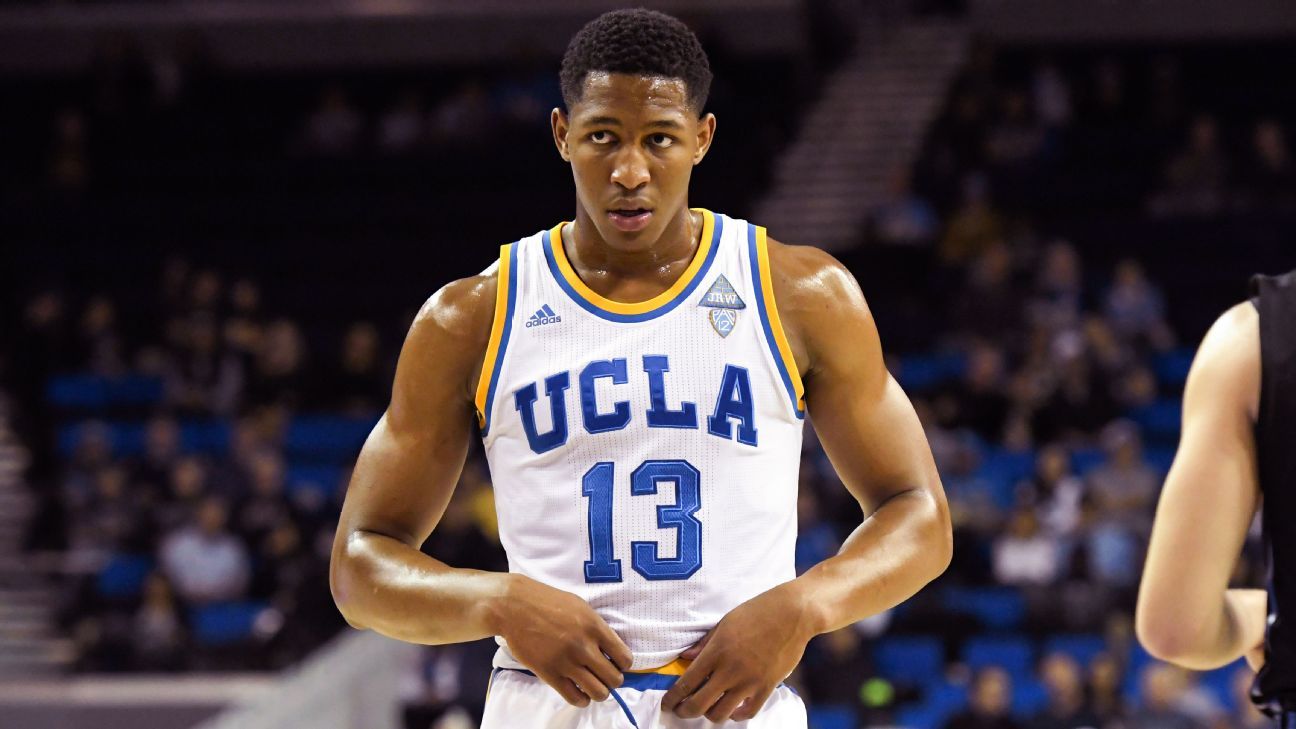
Leaf is projected to go somewhere in the late teens or early twenties, but the Bulls might surprise people and nab him at 16. He’s the prototypical stretch four for the modern NBA, and shot a blistering 46.6% from downtown for the Bruins. He can also attack and play above the rim with power and runs the floor very well for a guy his size. Downside? His defense is a mess. While he’d fit in beautifully with Fred Hoiberg’s desired “pace and space” offense, The Mayor can’t do much to develop Leaf’s defense or hide its weaknesses schematically.
*While we’re talking about guys from UCLA, I’ll put Ike Anigbogu here as option 10(b).
10(b). Ike Anigbogu – UCLA
Year: Freshman Position: C Meet/Workout with Bulls: No
This kid is a big project, but he could be well worth it someday. At only 18.5 years old and playing a reserve role in his one season with UCLA, Anigbogu is very raw. But the physical tools are there. He might have the highest potential in this class to develop the ideal “big man” body in today’s NBA that’s both quick and strong. Ike is 6’10 with a 7’3 wingspan and has great multiple-jump efforts on blocks and contests. He also has pretty good lateral feet that will only improve over time. There’s not much to offer on the offensive end yet, but he could turn into a defensive star. If GarPax want someone “young and athletic” to eventually replace Robin Lopez, this guy should be on their board.
9. Jarrett Allen – Texas
Year: Freshman Position: C Meet/Workout with Bulls: Yes
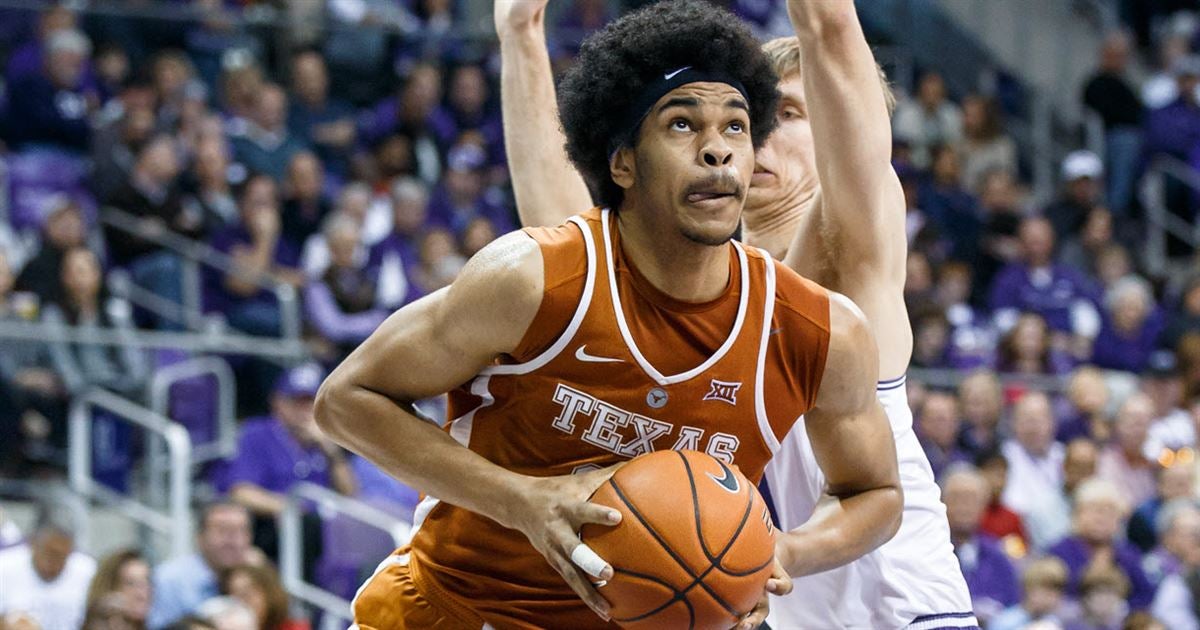
Allen had a private workout with the Bulls earlier this week, according to K.C. Johnson of the Chicago Tribune. The center from Texas was a one-man wrecking crew through the Big 12 last season. Like Anigbogu, he will need time to develop his offensive game at the NBA level, but he has more in his arsenal coming into the draft. He’s decent executing the pick and roll, and his enormous hands make him a great rim runner and lob target. Allen’s physique is top notch, standing 6’10 with a whopping 7’5.5 wingspan. The defensive skills are ready for the NBA.
Downside? Virtually zero chance at developing perimeter offense. While he converted 68% of his shots around rim for Texas, he played enough minutes at the four to prove he has no business playing the four in the NBA. If the Bulls insist on drafting a shooter, Allen’s out.
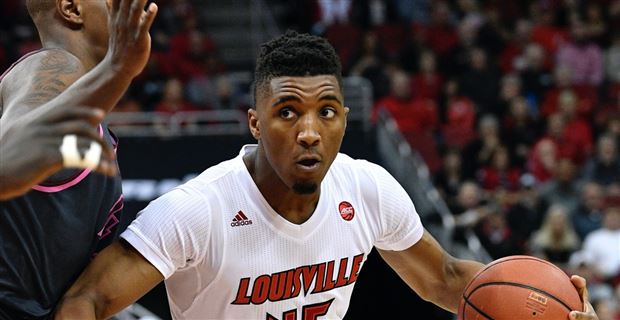
8. Donovan Mitchell – Louisville
Year: Sophomore Position: SG Meet/Workout with Bulls: Yes
I so wish Mitchell were closer to #1 on this list. But this is a list of most likely Bulls draft picks, not best cast scenario draft picks. Mitchell did work out for the Bulls, and unsurprisingly they were very impressed. He may be undersized for an NBA shooting guard (6’3) but he has an insane wingspan for his height (6’10). That, combined with his lateral quickness and instincts, should make for a pretty ferocious perimeter defender.
On top of his defensive upside, Mitchell might be the most athletic guy in this entire draft. His midrange and three point skills are average, but his athleticism and strength going coast-to-coast and attacking the basket reminds me of pre-ACL Derrick Rose. Seriously. He’s also a gifted distributor and could turn into an option at point guard in the NBA. Given the expected departures of Dwyane Wade and Rajon Rondo next summer, this kid would be a great addition to the young core’s backcourt.
Unfortunately for the Bulls, Mitchell’s draft stock has been rising steadily for the past month and he’ll likely be gone before the 16th pick. If he somehow miraculously falls, the Bulls must steal him.
7. Justin Patton – Creighton
Year: Freshman Position: C Meet/Workout with Bulls: Yes
When chatting with Bulls scouts at the NBA Combine, Patton expressed confidence in his ability to contribute offensively around the perimeter at the NBA level. Smart kid, knowing that’s the answer they were looking for. But is it true? Let’s pump the brakes. His eye-popping 57.1% shooting from deep last season falls flat when you realize he only attempted 0.4 threes per game. He does have the size (7’0, 7’2.5 wingspan) and quickness to be an effective NBA center. He runs the floor well in transition and can play above the rim.
I wouldn’t necessarily take Patton over Allen or Anigbogu if you’re talking about NBA potential at the center position, but we can’t forget the Gar Factor (patent pending). Patton played at Creighton under whom? Coach Greg McDermott. The Ames, Iowa connection might strike again in the 2017 draft.
6. OG Anunoby – Indiana
Year: Sophomore Position: SF/PF Meet/Workout with Bulls: No
Anunoby is one of the more fascinating unknowns of this draft. He burst onto the scene with a dominant defensive performance against Kentucky’s Jamal Murray in the 2016 Tournament his freshman year. Then OG hit a huge roadblock midway through his sophomore season with a torn ACL.
Even with that big injury asterisk, most are expecting Anunoby to be a lottery pick. Why? The kid is an athletic freak of nature in every perfect way for today’s NBA. The combo forward is long (6’8, 7’2 wingspan), strong and confident on the defensive end. He could very well turn into a Draymond Green/Kawhi Leonard type, capable of guarding 4 or 5 positions on the floor. He still needs a lot of work on the offensive end, but that can come with time. Draymond wasn’t the confident three point shooter he is now when he came out of Michigan State. Kawhi had virtually no offensive versatility when he got drafted from San Diego State. Look at them now.
If the Bulls want young, athletic guys who can guard multiple positions while developing a better NBA stroke, Anunoby would be a great option at 16. But with a different torn ACL so fresh in their memory, GarPax might shy away from him.
That’s 10-6 (with a bonus 10b) on my list of the Bulls’ most likely draft picks. Keep it here at Sports Mockery to find out who makes the top half of the list later this week!
I feel pretty confident declaring, at least at this point in time, if the Blackhawks were indeed able to find a viable trade partner for Brent Seabrook, they wouldn’t hesitate for even microsecond to emancipate themselves from the regressing defenseman’s albatross and monumentally troublesome contract.
As the title of this piece reminds us, unfortunately, unearthing such a feasible scenario will be no easy task for Stan Bowman and the Blackhawks as Seabrook’s contract ranks among the worst in all of hockey.
To put it bluntly, the 32-year old is a slightly-above-average, second-pairing NHL defenseman at this point in his career who is being paid as an elite blue-liner in his prime. Not only is Seabrook the highest paid defenseman on the Blackhawks, he’s the 11th highest paid blue-liner in all all of hockey – right there alongside names like Erik Karlsson, Alex Pietrangelo, Drew Doughty, Kris Letang, and Victor Hedman.
Needless to say, his output as a player hasn’t exactly been proportional to the $6,875,000 awarded to him annually by the penniless Blackhawks. There’s countless analytics nerds out there that can reinforce this reality for you just in case your eyes ceased to work each time he was on the ice the past two seasons.
His regression is not his fault, though. Rather than pointing fingers at Seabrook, your more logical target should be the team that rewarded a gargantuan superstar’s contract team’s normally reserve for 22-25-year old’s to a physically-past-his-prime then 30-year old defenseman with more mileage on his body than a 92-year old triathlete. If you don’t have the gall to criticize the Blackhawks front office, then blame Seabrook’s body for abiding by the basic rules of human anatomy.
Oh, and did I mention Seabrook is under non-voidable contract until 2023-2024 when he’ll be at the tender age of 38-years old and likely relying heavily on a wheel-barrow for mobility by that time?
Can you see where this might get complicated? After what I described above I’m sure – aside from playing out his past achievements over-and-over in your head – you’re just about at that point where you’re asking yourself “who would even think of taking on his contract?”
Well, that’s precisely what I’ll be spending the next couple of paragraphs attempting to decipher for myself. Not to go all Neil DeGrasse Tyson on your asses, but let’s just say the stars would have to align. Let’s go through the checklist of obstacles.
Cap space
This is really a difficult time to project teams’ cap space seeing that we’re still weeks away from the NHL draft, expansion draft and, most significantly, free agency. No one knows who’s going to sign where and what trades will be made and who will be claimed etc. With this info behind us, regardless of what transpires during free agency or either draft, there aren’t many teams out there with the space accommodate nearly $7 million in cap hits over the course of 7 more seasons. And the few teams that can accommodate this number are, in traveling equivalence, the Flint, Michigan’s and Newark, New Jersey’s of the NHL. Not the most desirable of destinations in Layman’s terms. There’s really only one team that makes sense at this point, but I’ll get to them later.
2. Even if you could afford him, why would you want him?
Hypothetically, there are a handful of teams out there that can afford Seabrook, but then the question arises, why the hell would they invest that type of the capital into a player who has regressed substantially just one season into an 8-year deal? And before his past achievements start racing again inside your head, remember GM’s are investing in what you can do, not what you’ve done. It doesn’t work that way. Being an essential piece in 3 Cup runs years prior holds no bearing in what might happen in the future. Plus, if you’re the guy in charge of building and managing rosters for a young, inexpensive and up-and-coming franchise, wouldn’t you want to allocate your money elsewhere, into safer resources? Perhaps into younger players that pose no longevity concerns and have an overall higher ceiling than a 32-year old with degenerating legs?
3. Why would Seabrook want to go anywhere?
Say by some miracle – like perhaps Stan Bowman split the pieces of his soul into fragments – sort of like how Voldemort did with his Horcruxes and was able to gambit these remaining pieces that have yet to be bartered into a deal – Bowman indeed was able to coerce a partner into taking Seabrook’s contract, what’s to stop the blue-liner from nixing the trade? You see, Seabrook possesses a full no movement clause until the 2021-2022 season. What this mandates is that Seabrook can basically refuse any sort of trade involving him. You’re living comfortably in the same, wonderful city you’ve been in for a large percentage of your adult life with a wife and child playing for perhaps the league’s most popular and recently successful franchises among all your teammates and friends who have essentially grown to become family now; Do you know what doesn’t sound very appealing? Having (to quote the great Mike Commodore) to “pack your shit” and move to Colorado or Arizona or Vancouver or whatever other bottom-of-the-barrel, basement franchise might want to trade for you.
4. The Vancouver Canucks
This franchise in it’s current state is a damn dumpster fire. You’re more likely to see a mega earthquake rock the city of Vancouver before you see a competitive Canucks team take the ice. While bad news for hockey fans and, uh, all people in the Pacific Northwest alike, this is fantastic news for a Blackhawks team in need of a landfill to unload their expensive but otherwise useless garbage into. Longevity and suckiness is the key here. You see, as I just mentioned, Vancouver is going to be a very cheap and very bad team for many years to come as they continue to embark on their cost-effective rebuild that centers primarily around the load-up of prospects and young talent. Like any team restocking their arsenal with young, cost-effective talent, the Canucks will need to load up on bad contracts simply to reach the cap floor, especially after Daniel and Henrik Sedin’s combined $14 million comes off the books at the conclusion of next season. While it isn’t typical for franchises to take on long-term deadweight money, hometown guy Brent Seabrook could be just the contract Vancouver needs to balance the scale. Perhaps he’d be willing to waive his NMC and look past the years of bad hockey ahead of him in order to ride into the sunset in his hometown.
5. Collateral
Needless to say, if by some miracle the stars do align and a team decides to inherit Seabrook’s deadweight contract, you better believe they wont be taking it for free. Like I said, the ideal candidate will be a team in the midst of a long-term rebuild. In order for a team to take on Seabrook’s contract, a smart GM would demand collateral or a “I scratched your back, you scratch mine” scenario. A good, recent example would be Carolina’s absorption of Bryan Bickell’s contract that came with the collateral demand of Teuvo Teravainen as insurance. So if Seabrook is moved, don’t be surprised to see a first round pick or top prospect (please god not Debrincat) go the other way with him.
It’s no surprise to anyone that Cubs third baseman Kris Bryant is well on his way to earning his third consecutive All-Star bid. He currently leads all NL third basemen in fan voting and barring any major voting conspiracies, we’ll see the reigning NL MVP playing in the mid-summer classic on July 11th in Miami.
Being a three-time All-Star by the age of 25 made me want to dig a little bit deeper into Bryant’s history to try and determine how he became such a once-in-a-lifetime baseball player. I decided to call my good friend, Rich Hill, to get his insight as to what he thinks made Kris Bryant the player he is today.
The Recruiting Begins
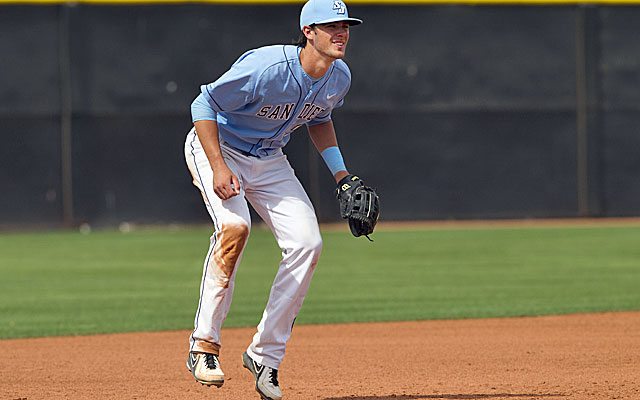
Hill was Bryant’s college coach at the University of San Diego from 2011-2013 and has been coaching for over 30 years. Besides Bryant, Hill has had the opportunity to coach a handful of other big leaguers including: A.J. Griffin (Texas), Brian Matusz (F.A.), Sammy Solis (Washington), Paul Sewald (NY Mets), and James Pazos (Seattle). Hill has seen thousands of players come and go but none of them were like Kris Bryant.
I was curious how a player like Bryant ended up at USD after being such a highly sought after player during his time at Bonanza High School in Las Vegas.
PHOTO: Courtesy of Derek Stafford
Hill explained,
“We had a great recruiting coordinator at USD by the name of Eric Valenzuela (who’s now the head coach at St. Mary’s) and he first heard about Bryant his sophomore year in Las Vegas.
Eric saw Kris play a few games but what really sold eric on kris was when he saw Kris in the batting cage. He called me IMMEDIATELY after that and said, ‘rich, we’ve got to offer this kid.’
Because Eric is great at what he does and I had that amount of trust in him, I told him to go ahead and offer Kris right then and there.”
Hill made a trip to Vegas to visit Bryant and his parents during the Spring of his senior year after he had already been drafted by the Toronto Blue Jays in the 18th round of the 2010 MLB draft. The MLB was a very real option for the 18-year-old Bryant and Hill said Toronto was offering somewhere between $1.2-1.4 million for Kris to sign. As he was sitting at the kitchen table with Bryant’s parents, Mike and Susie, Hill said he’ll never forget the exchange that took place.
“Even after he was drafted by Toronto in 2010, I was sitting at the kitchen table with his parents and his mother looked me dead in my eye and said, ‘Kris is going to college.’ I’ll never forget that. it’s a great example of the values that the bryant family has.”
Bryant Arrives At The University Of San Diego
After a couple campus visits to beautiful San Diego, Bryant officially joined to USD Torreros in the Fall of 2010. Hill said that UCLA and Stanford were also in play to land Bryant but they “kind of dragged their feet” and missed out on the opportunity to land him and his incredible baseball skill.
I was surprised to hear that when Bryant arrived at USD that he was still a pretty unpolished player. Hill told me that while his natural talents were very evident, Bryant still had a lot of stuff to work on to become an elite player. He said Bryant had a lot to learn about the game from a defensive standpoint and since he’d be making the move from high school shortstop to Division I third baseman, an entire new set of skills had to be learned. Add to that, the level of pitching he’d be facing was much greater than what he saw in high school.
“early on, we worked with kris on his plate discipline quite a bit. “
Clearly, the coaching of discipline at the plate paid off immensely as Bryant led the nation in walks during his last season at USD (66 in 62 games). While Bryant’s plate discipline was impressive in and of itself, it wasn’t even the most impressive thing about Bryant according to Hill.
I asked Hill what stood out most about Bryant and before I could get the question out of my mouth, he cut me off with his answer.
“His athleticism. It’s unbelievable. To see a kid that size run and move like he does is truly a sight to see. I don’t think people appreciate what Kris can do on the base paths and when they see him go from first to third on a single, that’s not a common thing to be able to do.”
Bryant’s athleticism was on full display during a Sunday afternoon game in 2013. It was during this game against Portland that opened Hill’s eyes to exactly how special Bryant was. Or in his own words, “a generational player.”
“We were playing Portland during a WCC game at home and Kris was on first base with one out. Our guy hit a ball pretty good back up through the middle of the field and Kris got a great read on it and went from first to third right in front of the center fielder.
Then, literally five minutes later, in the bottom half of the inning, a kid hit a slow roller at Kris who attacked the ball, bare handed it, and threw the runner out by at least a step. That combination of base running followed by an unbelievable defensive play was definitely the moment that I realized that Kris was truly a special player.”
Having a player with that amount of talent is a coach’s dream. However, sometimes superstar’s talent creeps into their minds and begin to inflate their egos. Even though he was by far the best player on the field during most of his time at USD, Bryant never allowed his natural talents to allow him to be bigger than the team.
I’ve heard about how great he was as a high school teammate and I’ve read countless articles about how great of a club house guy he is at the big league level but I was curious how he was as a teammate in college because let’s face it, all of us were assholes to some degree in college.
Not Kris.
“He was just one of the guys, man. His teammates loved him because regardless of his talent, he could still not shave for a couple of days and still be that ‘dirtbag’ type of player that everyone loves.”
“Nobody Saw The Ball Land”
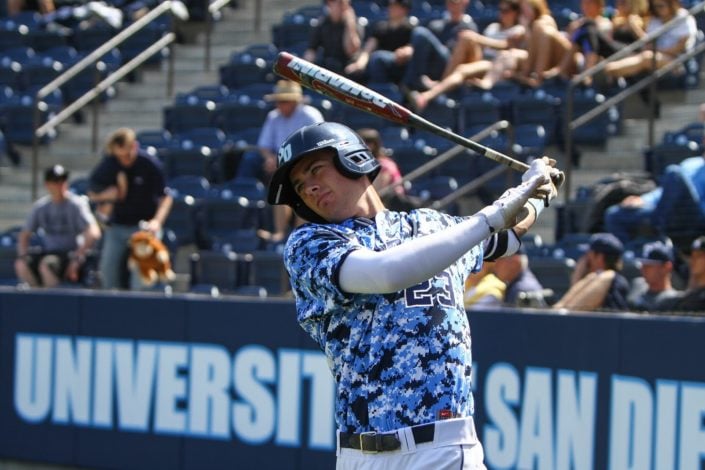
His teammates (and coaches) really must have loved him by the end of his junior season when he led the nation in home runs with 31 bombs. Out of all the 31 home runs he hit, there was one that is still talked about on the campus of San Diego even to this day.
The home run Bryant hit against St. Louis in March of 2013 has become somewhat of baseball lore in the San Diego area.
It was a hazy Friday night at USD’s home field, Fowler Park, when Bryant hit a moon ball that Torrero play-by-play radio announcer, Jack Murray, claimed went above and beyond the left field lights (which stood 80-feet tall) and disappeared into the fog. When later asked how far he thought Bryant’s ball went, Murray claimed it easily went “at least 550-feet.”
Unfortunately there is no video evidence of the home run because the USD basketball team was playing in their conference tournament that same day and needed the video equipment so the baseball team missed out.
Hill laughed when I asked him about his recollection of the home run,
“I think I’ve been quoted saying it went 520, then 580, now it’s over 600-feet. I don’t know man, all I know is Kris got all of it.”
The Cubs Brass And Their Evaluation
As his career at USD was coming to a close, Hill shared a great story about the day he noticed that the Cubs front office was in attendance during the team’s WCC tournament to do some in person “scouting” of Bryant.
In May of 2013, about a week before the MLB Draft, Theo Epstein, Jed Hoyer, and Jason McCleod were in attendance to watch Bryant lead the number two-seeded Torreros to the WCC conference championship. After one of the games, the Cubs front office wanted to talk to Hill about their prospective future pick but Hill told me he was shocked when he realized they didn’t want to know anything about Kris Bryant the baseball player — they wanted to hear about Kris Bryant the person.
“It was the most thorough interview I’ve ever been a part of. I couldn’t believe they didn’t want to know anything about his baseball skill. They’d ask me questions like ‘How are his grades? Any discipline issues? How hard does he work? Does he miss classes? and things of that nature.
Those were all real easy questions to answer because Kris’ character is the best I’ve ever been around. Humble, loyal, and a very centered and balanced young man.”
As Cubs fans all know, the Houston Astros made the idiotic move of selecting Stanford pitcher, Mark Appel, ahead of Bryant with the number one overall pick in the 2013 MLB draft which allowed the Cubs to steal Bryant with the second pick.
Here’s a snapshot of Bryant’s accolades during his time at USD:
Freshman (2011): Named WCC Co-Player and Co-Freshman of the Year, America’s first-team Freshman All-American, Louisville Slugger third-team All-American, and All-WCC Freshman Team
Sophomore (2012): Was selected as an All-Conference selection for the second consecutive season, named a First Team All-American by Baseball America, and a Third Team All American by Louisville Slugger
Junior (2013): Named Golden Spikes Award winner, Dick Houser Award winner, National Player of the Year and was drafted No. 2 overall by the Chicago Cubs, marking the highest draft pick in USD history…named first-team All-American by Baseball America, and Collegiate Baseball…named first-team All-WCC and the WCC Co-Player of the Year.
The hot start to Ian Happ’s MLB career with the Chicago Cubs cooled down fast and his performance against the New York Mets on Tuesday night was a microcosm of his first 100 plate appearances in the Big Leagues.
The Cubs smacked five home runs against the Mets, including Happ’s first career grand slam that highlighted a seven-run, second inning. The opposite field blast was Happ’s sixth home run of the season, but he also struck out four times. The rookie could have been the first player ever to hit a grand slam and strike out five times in a game, but Happ walked in his sixth plate appearance.
Nonetheless, Happ joined a unique list with his grand slam and four strikeout game, as it was only the fifth time to happen in MLB history. According to Baseball Reference, Reggie Jackson did it twice in 1982 and 1985, Cory Snyder in 1987, Mark Teixeira in 2003 and most recently before Happ, Derek Norris accomplished the feat in 2015.
Much has been made about Kyle Schwarber’s extreme outcomes this season, with 20 of his 35 hits being either a double or home run, while striking out 72 times and drawing 33 walks. Yet, Happ’s numbers are equally jaw-dropping. The rookie has 18 hits and 12 of them have been for extra bases, six homers, five doubles, one triple, and he’s struck out 37 percent of the time.
So, that game against the Mets was essentially THE Ian Happ game. Power, strikeouts and a walk. But hey, if the Cubs keep scoring 14 runs and hitting five home runs a game they can strikeout all they want.