Saturday, November 14, 2026
EDGE is live. Chicago fans can now access and explore the beta.
Home Blog Page 293

The Cubs Signed a Free Agent Infielder

Jun 1, 2025; Cleveland, Ohio, USA; Los Angeles Angels second baseman Scott Kingery (13) throws to first base in the first inning against the Cleveland Guardians at Progressive Field. Mandatory Credit: David Richard-Imagn Images

The Chicago Cubs have signed free agent infielder Scott Kingery and before you get your panties in a bunch it’s only a minor league contract. Kingery, now 31-years-old and long removed from his days as a top prospect for the Philadelphia Phillies, will get an invite to spring training in 2026 with the Cubs.

The right-handed hitting utility infielder has only played in 19 MLB games in the past four years, so he’ll be motivated to earn a bench spot coming out of Arizona next March.

Kingery was a consensus top-40 prospect going into the 2018 season with the Phillies and at the time he signed a jaw-dropping six-year contract. The guaranteed money wasn’t crazy or anything as the deal was worth $24 million, but it became somewhat controversial as the Phillies agreed to that contract before Kingery played a single game in MLB.

He struggled in his rookie season, slashing .226/.267/.338, with eight home runs and a 61 wRC+ in 484 plate appearances. It was a rough first year for the then 24-year-old, who put up a -0.7 fWAR in 147 games, but his numbers did improve in 2019, when Kingery hit 19 home runs and posted a 2.1 fWAR. However, that was during the juiced ball era and his .788 OPS translated to a league average 100 wRC+.

The 2020 season was the beginning of the end for Kingery being a permanent member of the Phillies in the majors. He suffered from the COVID-19 pandemic, only played in 36 games and hit a lackluster .159/.228/.283, in 124 plate appearances. He played in a total of 15 games the following year before the Phillies designated Kingery for assignment and then outrighted him to the minor leagues after he went unclaimed on waivers.

Kingery has primarily been stuck at Triple-A since the middle of the 2021 season. That was until last year, when the Phillies traded their once star prospect to the Los Angeles Angels for cash considerations. The infielder played most of the 2025 season at Triple-A in the Angels’ minor league system, but he did manage to appear in 19 games in the big leagues for Los Angeles.

It wasn’t much of a sample size as Kingery was given a total of 29 plate appearances. He went 4-for-27, with 11 strikeouts and two walks. During his time at Triple-A in 2025, the right-handed hitter recorded a .727 OPS in 64 games.

Kingery has a career slash line of .227/.278/.382, with 30 home runs in 343 MLB games. He’s played second, third and shortstop as well as all three outfield positions.

In a sense, Kingery will be competing for an Opening Day roster spot with the Cubs in spring training, but the reality is he’s just another body in camp and if he sticks around he’ll be down at Triple-A with the Iowa Cubs as a veteran to help mentor prospects coming up in Chicago’s minor league system.

You don’t have to get too mad about this signing. It’ll be all right, Cubs fans.

The Bears Are Breaking the Run Game And Here’s Exactly How

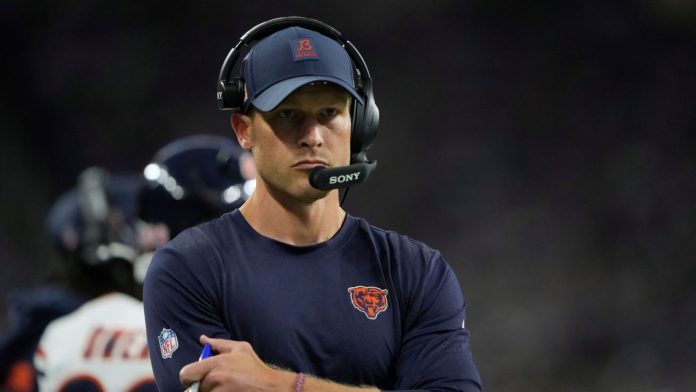
ben johnson

If you’re still thinking of the Bears as that same old, run-heavy team stuck in neutral with a glorified running back playing quarterback, it’s time to wake the hell up. The 2025 Chicago Bears aren’t just leaning on the ground game — they’re obliterating the league with it. Through Week 13, this isn’t just a good rushing offense. It’s the blueprint for how a run-first identity can be modern, lethal, and backed by cold-blooded analytics.

Let’s break down the anatomy of the NFL’s nastiest rushing attack.

*Data is through week 12*


From Volume to Violence: Bears By The Numbers

Chicago is putting up 153.8 rushing yards per game — second only to the Bills, and that gap is thinner than the excuses from defensive coordinators trying to explain it. But it’s not just volume. They’re averaging 4.9 yards per carry with +0.05 EPA per rush, and lead the damn league in EPA per rushing play, per StatMuse/RBSDM.

You get that? In a year where rushing EPA is negative across most of the league, the Bears are adding points by keeping the ball on the ground. That’s not supposed to happen.

And they’re doing it with explosiveness (top-5 in 10+ yard runs), consistency (top-5 in success rate), and sheer dominance before contact — a league-best 1,565 rushing yards before contact. That’s not just winning up front. That’s pulling the other team’s pants down and laughing while you do it.


Ben Johnson: Mad Scientist with a Clipboard

Here’s where it gets beautiful. This isn’t just the same old Bears slogging through inside zone 30 times a game. This is Ben Johnson’s Frankenstein offense — wide zone, counter, windback, play-action, two-tight end sets, and actual creativity baked into every snap.

They’ve shifted to a heavy under-center approach, ranking 4th in under-center usage and 2nd in play-action rate. And guess what? That’s where most of their explosives are coming from.

When you’re pounding out yards in 12 personnel and making defenses guess whether it’s a toss, a boot, or a deep shot, you force them to play honest. And when they play honest, they get gashed.


Trench Warfare: The Line Is That Good

Want to know how the Bears are No. 1 in yards before contact? Start with the OL. Chicago has gone from a bottom-5 unit to arguably one of the most efficient run-blocking lines in football. ESPN puts their run-block win rate at 72% (11th), and it feels even better than that when you watch them bully people on tape.

They’re athletic, cohesive, and nasty as hell. Joe Thuney’s been a monster. Darnell Wright‘s been a monster. The rest of the group? Playing as one brutal hive mind. Add tight ends who can block (what a concept), and you get that YBC per carry north of 2.0 — best in the league.


The Skill Guys: Perfectly Slotted Killers

  • D’Andre Swift: Outside zone monster, finally being used properly with tosses and stretch plays that hit his skillset. 2.7 YBC per carry. 21 explosive runs. Get out of his damn way.
  • Kyle Monangai: North-south sledgehammer with vision. 2.6 YBC, 2.0 YAC. No wasted motion. Just pain.
  • Caleb Williams: Not Fields-level fast, but slippery enough to pull the edge defender, keep on boots, and add 25–30 yards a game with his legs. Plus, he’s not taking sacks, which keeps the EPA clean.
  • WRs & TEs: Rome Odunze and DJ Moore force defenses to stay honest. Add in two-tight end sets with real dual-threats, and suddenly you can run on light boxes with muscle.

Play Calling That Actually Makes Sense

This isn’t “run-run-pass-punt.” Johnson mixes his calls like a damn DJ. Chicago’s running on 47% of their plays (7th in the league), but here’s the kicker: they lead the NFL in plays per game (66.3). More plays + better design + smarter timing = a run game that doesn’t just chew clock — it wins games.

They’re top-5 in RB runs from under center, which are naturally more efficient and fit the play-action setups they live in. They’re running more when leading, staying balanced early, and refusing to get cute in short yardage. This is how you actually be a run-first team without being predictable garbage.


EPA, Success Rate, and the Analytics Love Fest

In case you thought this was just about grinding out yards, here’s the data dagger:

  • +0.05 EPA per rush.
  • Top-5 in success rate.
  • No. 1 in EPA per rush, per StatMuse.
  • Top-5 in explosive rate.

Even the advanced nerd metrics that usually shit on run-first teams are out here clapping for the Bears. Because this run game isn’t just effective — it’s efficient, explosive, and tied directly to a passing game that feeds off the run looks.


Year-Over-Year Turnaround: A Masterclass

Let’s zoom out. In 2024:

  • Bears averaged 102.0 rushing YPG.
  • ‑0.06 EPA per rush.
  • 24th in ground production.

Now?

  • 153.8 rushing YPG.
  • +0.05 EPA per rush.
  • Top-2 in production, #1 in advanced metrics.

That’s a 50+ yard/game jump and an 0.11 EPA per rush swing. That doesn’t happen without elite coaching, personnel upgrades, and a front office actually giving a damn about the trenches.


Sustainable or Smoke?

This isn’t a fluke. Sure, EPA can swing, and health always matters. But the Bears are doing this against real defenses and still leading in YBC. The explosive rate is stable, the usage is smart, and the offensive line is the real damn deal.

Barring a collapse or mass injury, this offense is built to last.


Final Verdict

This is what it looks like when a team stops screwing around and builds a run game that actually works in the modern NFL:

  • Top-tier blocking.
  • Scheme that manipulates the defense.
  • Explosive backs who fit their roles.
  • A QB who keeps the backside honest.
  • Play calling that doesn’t insult your intelligence.

This isn’t “three yards and a cloud of dust.” This is three yards before contact, and a 20-yard gain after it.

The 2025 Bears aren’t just pounding the rock. They’re engineering violence with precision, and the numbers are backing every damn bit of it.

MLB Insider Predicts High Odds Of Luis Robert Jr. Being Traded

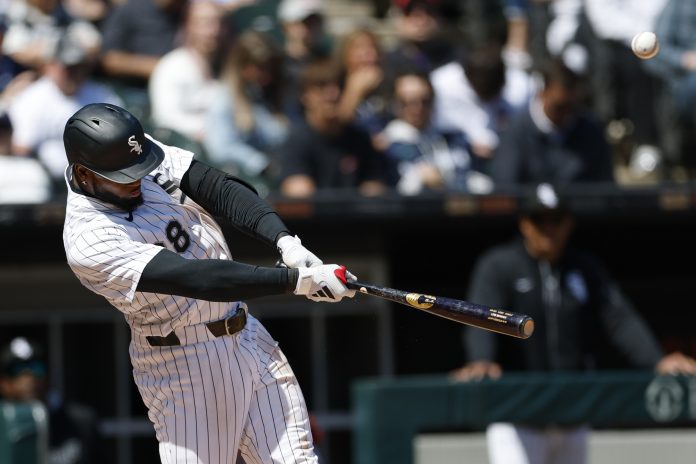
May 25, 2025; Chicago, Illinois, USA; Chicago White Sox center fielder Luis Robert Jr. (88) hits an RBI-sacrifice fly against the Texas Rangers during the sixth inning at Rate Field. Mandatory Credit: Kamil Krzaczynski-Imagn Images

With the MLB’s annual winter meetings set to kick off next week, the offseason is expected to heat up in the coming days, and ESPN’s Jeff Passan believes one White Sox player is expected to garner some trade interest. 

Passan predicts that Luis Robert Jr, who has been at the center of trade discussions for the last two seasons, has a 60 percent chance of getting dealt this offseason. 

After an All-Star season in 2023 that saw him post a 4.9 WAR with 38 homers and 20 stolen bases, the White Sox hoped to cash in at the 2024 deadline. But after being limited to 100 games and posting the lowest OPS of his career, Robert tanked his trade value, which forced the White Sox to hang onto him for another season. 

After a slow start to the 2025 season, the front office was once again unable to find a trade partner offering what they believed was fair value. As a result, Chris Getz chose to pick up his $20 million option for 2026. 

While Getz stated that he believed Robert Jr can be an impactful piece next season, Passan believes now is the time to move Robert. With another $20 million option for 2027 and elite tools, sprint speed, defensive range, and bat speed all ranking in the 90th percentile or higher, Robert remains a tantalizing asset for contending teams.

Passan lists the Giants, Phillies, and Reds as potential fits; however, after back-to-back down seasons, the return for Robert could be limited. If the White Sox are going to make a move, they may be in a better position to do so during the trade deadline. 

The White Sox have also signaled that they do not intend to move Robert. 

Getz told reporters back in August that the organization was “committed to Luis.” It wasn’t the first time that Robert had gotten an endorsement from the front office. Getz also reaffirmed that stance following the trade deadline, calling Robert “a valuable part of the club’s future” and emphasizing his importance to the team’s rebuild. Even with a dip in offensive production, Robert remains a difference-maker thanks to his elite defense, veteran leadership, and speed on the basepaths.

With a young roster lacking established MLB hitters, Robert’s presence in the lineup could be beneficial. With Andrew Benintendi’s defensive range continuing to show signs of decline in left field, Robert’s Gold Glove–caliber presence in center also remains a critical asset for the White Sox defense.

The organization also lacks any outfield prospects who are truly ready to handle everyday duties at the major league level. If Robert can find his rhythm early next season, the White Sox could once again explore trading him at the deadline to bolster a farm system that currently ranks in the middle of the pack across the MLB.

Cubs Setting Themselves Up for Failure with Head-Scratching Decision

Aug 19, 2025; Chicago, Illinois, USA; Chicago Cubs outfielder Owen Caissie (19) scores against the Milwaukee Brewers during the second inning at Wrigley Field. Mandatory Credit: Matt Marton-Imagn Images

I do not like this whatsoever. There’s no doubt that the Cubs need to add more pitching. Duh, no shit. The bullpen needs multiple arms and most likely a new closer, while the starting rotation needs at least one new pitcher who can either be a one or a two. Oh, and there’s a budget and depending on how pessimistic you want to be, it might be a fairly restrictive budget that might steer the Cubs away from spending at the top of the market. But that’s Jed Hoyer’s job to figure out how to improve the roster and I absolutely hate this continuing narrative surrounding the club which points to a focus on pitching and not much else.

I kind of get how Cubs fans have become apathetic toward Kyle Tucker because of how his 2025 season ended. I mean, it was brutal in the worst type of way and he didn’t do himself any favors with some on-field laziness and further lost support following his subpar performance in the postseason. That being said, the Cubs offense was on fire when Tucker was healthy and the team 100% needs to find a replacement for him in the lineup heading into the 2026 season if they want to have a competitive starting nine.

Did we forget that getting Tucker was so huge last offseason because the Cubs NEEDED a bat like his after a few years of uneven performance. Sure, the Cubs may have quality depth, but they desperately needed star power and Tucker provided that for at least three months in which the offense ranked near the top of the league.

So, yeah it really bothers me and should bother more fans that this offseason the front office seems to have one singular focus and that’s only adding to the pitching, while ignoring any potential offensive moves. And with Tucker pretty much out of the picture the Cubs plan to replace his production at the plate? A pair of rookies.

Via The Athletic.

Inexperience means Ballesteros and Caissie likely won’t replicate Tucker’s fast start with the Cubs, when he looked like a leading MVP candidate. Tucker, however, played in only 41 games after the All-Star break (.738 OPS), substantially lowering the external pressure to sign him to a long-term contract.

While Hoyer’s group still has a lot of work to do on the pitching side — and persistent questions about the payroll parameters for baseball operations remain — the Cubs are holding together most of the nucleus that won 92 games and the franchise’s first postseason round in seven years.

“Kyle was a big part of that,” Hoyer said during MLB’s GM meetings. “But I do think that we have a very capable position-player group, a playoff-worthy group.”

Hey, Owen Caissie and Moises Ballesteros may turn out to be great and maybe they even put together strong seasons immediately. I have more confidence in Ballesteros’ skill-set translating to success against MLB pitching sooner than Caissie, but even then it’s not like Ballesteros is known for his power and despite a great track record of high OBP he’s limited running the bases.

There’s just no way you can convince me that the Cubs are better off ignoring hitters on the free agent market and instead opting to count on inexperienced, young hitters to replace one of your best offensive producers from a season ago. I hope I’m wrong about this, but not adding another established bat to take some pressure off the young guys seems like a bad plan by the front office this offseason.

Three Internal Arms Who Could Anchor The White Sox Bullpen In 2026

Aug 12, 2025; Chicago, Illinois, USA; Chicago White Sox pitcher Jordan Leasure (49) pumps his fist after the game against the Detroit Tigers at Rate Field. Mandatory Credit: Matt Marton-Imagn Images

It’s no secret the White Sox struggled in close games last season. That’s one of the reasons that Chris Getz said he is looking to add bullpen help this offseason. 

The White Sox 24 blown saves last season marked the fourth most in the American League, after converting on just over half of their save opportunities. The bullpen’s 4.16 ERA was also the sixth-highest mark in the AL. 

Getz has already added Chris Murphy and Duncan Davitt to the 40-man roster. But with the front office already signaling that free-agent spending will be limited, the club may instead lean on internal arms capable of taking a step forward.  Here are three players who could play a significant role in the relief corps next season.

Jordan Leasure

Last season, Jordan Leasure led the team with a modest seven saves. However, the 27-year-old right-hander took a major step forward and could emerge as the type of back-end relief the team is looking for. 

Leasure posted a 3.92 ERA over 68 games, striking out 81. While his 30 walks and 12 home runs allowed in 64.1 innings raise some concern, the hard-throwing right-hander struck out 30 percent of opposing hitters and held them to a .144 average in the second half.

This is a massive jump from his 2024 rookie campaign, which saw his ERA balloon up to 6.32.  If Leasure can clean up some of his control issues, he has all the tools to be an effective big league closer. 

Grant Taylor

Grant Taylor also figures to be a key piece of the White Sox bullpen next season. The LSU product flashed plenty of potential in his first 36 big-league appearances, but didn’t have the results to show for it. 

After just 46 innings in the minors, the White Sox struggled to find a role for Taylor, who was working his way back from Tommy John surgery after being selected in the second round of the 2023 Draft. Before his call-up, six of his 15 appearances in Double-A Birmingham came as a starter.

Ultimately, the White Sox decided to slot him into the bullpen, bringing him directly from Double-A. While there was talks of making him a starter long-term, Getz indicated that the plan is to keep Taylor in the bullpen in 2026 in a multi-inning relief role. 

In 36.2 innings, Taylor recorded six saves, posted a 4.91 ERA and struck out just over 34 percent of opponents. He also generated a 51 percent ground-ball rate, enough to rank near the top of the league had he thrown enough innings to qualify.

While Taylor was thrown into the fire early on, his presence gave Will Venable a much needed weapon to help close out games. His fastball averages nearly 98mph, making him one of the hardest throwers in the game, while his slider and curveball each produced a whiff rate over 30 percent. 

Taylor really found his stride in the final month of the season, delivering eight scoreless innings with 15 strikeouts across nine appearances. His versatility and ability to go multiple innings could make him a key contributor in a variety of bullpen roles next season.

Prelander Berroa 

After coming over from the Mariners, Prelander Berroa emerged as an intriguing arm out of the White Sox bullpen in 2024. In 17 games, he posted a 3.32 ERA with 26 strikeouts across just 19 innings of work. During that stretch, he limited opponents to a .217 batting average and generated a 34 percent whiff rate. 

Berroa has a lively arm, with a fastball that averages 97 mph and a slider that produced a 43 percent whiff rate. However, he was placed on the 60-day IL in March after undergoing Tommy John surgery, which sidelined him for the entire 2025 season.

Taylor was able to return from the same procedure and continued to touch triple digits. If Berroa can come back healthy, his swing-and-miss stuff could make him a dangerous weapon late in games.

Familiar Pattern Emerging as Cubs Miss On Another Top Free Agent

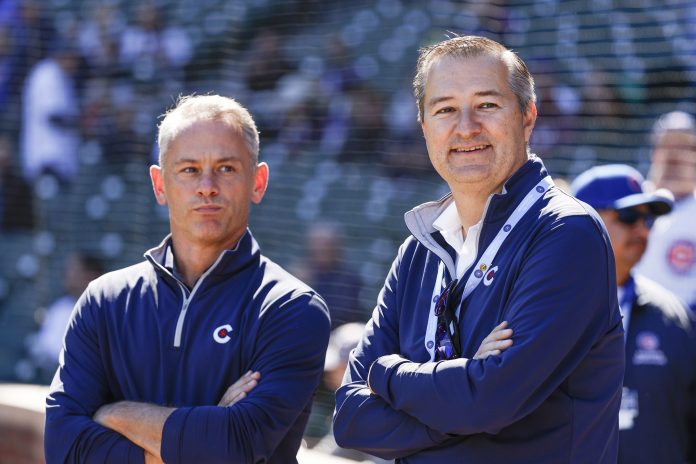
Oct 1, 2022; Chicago, Illinois, USA; Chicago Cubs Chairman Tom Ricketts (R) smiles next to Chicago Cubs President of baseball operations Jed Hoyer (L) before a baseball game between the Chicago Cubs and Cincinnati Reds at Wrigley Field. Mandatory Credit: Kamil Krzaczynski-USA TODAY Sports

So much for that week or so that we thought the Chicago Cubs would actually try to sign one of the top free agent closers. There’s been some sense of encouragement on the Cubs’ offseason spending after they signed Phil Maton to a two-year deal, but there have now been a couple major free agent targets who have signed elsewhere and both contracts have one thing in common: deferrals.

First, Dylan Cease agreed to a seven-year, $210 million contract with the Toronto Blue Jays, a deal that surprised many as few analysts believed the right-handed pitcher would get remotely close to that figure this offseason. However, the average annual value of Cease’s deal with the Blue Jays will be at about $26 million as the deferred money brings the current value of his contract to $182 million.

Now, closer Devin Williams has signed a three-year deal with the New York Mets.

The deal is reportedly worth $45 million and includes a $6 million signing bonus and more importantly the agreement also has deferred money. According to Will Sammon, $15 million will be paid out in deferrals.

Who knows if deferrals will be eliminated in the next CBA between the league and the players association, but it’s a tool that has become more widely used in these big free agent contracts in recent years. The Cubs included deferred money a decade ago, when they signed Jon Lester and Jason Heyward to their record-setting deals and players since have agreed to take money later on in life in order to secure a bigger contract figure all across MLB.

However, as we see more players take deferrals during this free agent period here’s a reminder that the Cubs are willfully closing off that option for players and thus putting themselves at a disadvantage in negotiations.

Last offseason the Cubs were attempting to sign Alex Bregman, but he ultimately signed with the Boston Red Sox. In that pursuit, fans found out that Cubs ownership will no longer offer deferred money to free agents.

So, keep that in mind as you see free agents agree to big contracts elsewhere. Far too often the Cubs stand in their own way.

(Previous Update)

Hey, hey! The Chicago Cubs finally signed a reliever to a multi-year contract and if Phil Maton doesn’t excite you, then here’s another dose of optimism as we look ahead to the rest of the offseason and the potential of more fire-power coming to the Cubs’ bullpen.

Most fans have been under the impression that pretty much any high-caliber free agent reliever is a no-go for the Cubs based on historical spending and Jed Hoyer leaning toward a cautious approach when filling out the team’s bullpen. It was certainly a bit stunning last week, when Maton’s agreement with the Cubs was reported as a two-year guaranteed deal that also included an option for the 2028 season. The Cubs have not signed a reliever to a guaranteed contract longer than one year since Craig Kimbrel in 2019.

The Cubs have a lot of work to do this offseason to improve the pitching staff and that’s especially true for the bullpen. Out of the eight pitchers who made up the Cubs’ bullpen in the NLDS, six are currently free agents. Maton is a solid first step in upgrading Craig Counsell’s reliever group, but the Cubs are still aiming higher in free agency.

Bleacher Nation’s Michael Cerami, who was the first to report the signing of Maton, added more context on the Cubs’ plans for the bullpen moving forward. No, the Cubs still aren’t targeting closers Edwin Diaz or Robert Suarez, but if you’re intrigued by the idea of the team reuniting two-time NL Reliever of the Year Devin Williams with Counsell, then get ready for a great bit of insight coming your way.

Via Bleacher Nation.

According to a source, the Cubs remain engaged in the impact free-agent relief market even after signing Phil Maton last night. Nothing is thought to be close, but Maton won’t likely be their only established relief signing this offseason. In fact, it sounds like they’re aiming even higher than Maton for their next target.

Who might that be? Well, you can probably keep Edwin Diaz and Robert Suarez off your Christmas list. Those guys are expected to command much more (in both money and years) than the Cubs are likely to commit to any reliever.

But I do think you can keep open the possibility of a Craig Counsell reunion with Devin Williams, or perhaps a Cubs reunion with Brad Keller. Other pitchers in this tier include Pete Fairbanks, who’s already been connected to the Cubs this offseason, and Ryan Helsley, who’s saved 70 games over the past two seasons (3rd most in MLB), though most of those came in 2024.

Brad Keller, Pete Fairbanks and Ryan Helsley would also be significant upgrades and definitely a welcomed sight to the Cubs’ bullpen, but Williams is the guy who has the highest star potential of them all.

Sure, some might freak out looking at his 4.79 ERA with the New York Yankees in 2025, but Williams did settle in after April and finished the regular season with a 3.58 ERA in his last 50.1 innings. Overall, Williams was still putting up monster strikeout numbers, 90 in 62 innings, as his 34.7 K% ranked eighth among qualified relievers in MLB. The right-hander also had a 3.11 xERA, 2.68 FIP and 2.95 xFIP, while recording a 44.6 ground ball rate.

Williams also pitched well in the postseason for the Yankees as the reliever struck out four and only allowed four hits and two walks in four scoreless innings. From 2019 through 2024, Williams posted a 1.83 ERA in 241 appearances with the Milwaukee Brewers. That obviously included five years with Counsell as his manager in Milwaukee.

Williams did suffer a back injury in 2024, when he was sidelined until the end of July. In 2023, Williams earned his second NL Reliever of the Year award after he recorded a 1.53 ERA with 87 strikeouts in 58.2 innings, while closing 36 of 40 save opportunities.

Will we see the Cubs commit $15 million per year or potentially more for Williams? Baby steps, but seeing this as a realistic possibility is much better than the expectations that were set at the start of free agency.


NFL Coach Says Ben Johnson’s Plan For Caleb Williams Is Working

caleb williams
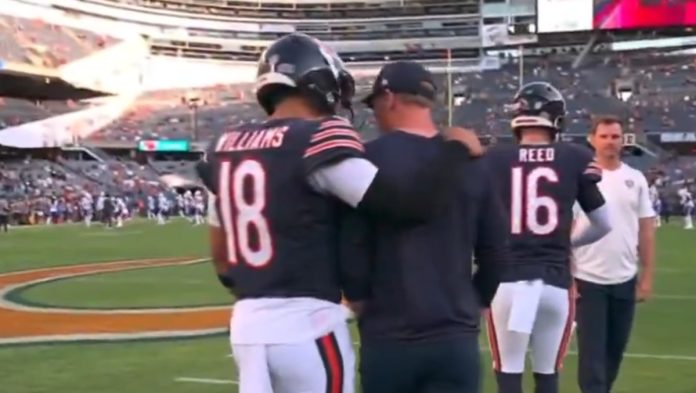
Bears quarterback Caleb Williams confers with head coach Ben Johnson before a game.

When Ben Johnson was hired as the head coach, most assumed the primary motivation was to help develop quarterback Caleb Williams. That was only part of it. Johnson knew his job involved every player on the roster. Yes, the quarterback was the most important, but he could not put everything on Williams. That would be irresponsible. Johnson needed a plan, something that would keep the offense functional without relying too heavily on the quarterback while still allowing Williams to learn.

Twelve games into the season, the results are mostly positive. The Bears are 9-3, the offense ranks in the top 10, and Williams has 17 touchdowns to just five interceptions. However, many remain worried. The quarterback is barely completing 58% of his passes, leaving some wondering if he can ever clean up his accuracy problems. Mike Sando of The Athletic reached out to an experienced offensive coach for their opinion. He believes Johnson’s priorities were different this year, and correct.

“The No. 1 thing that Ben Johnson is doing with Caleb is teaching him how to play quarterback,” a veteran play caller said. “He is not doing anything different with his throwing motion or anything like that. What is the down and distance? If it’s second-and-3, we don’t need to throw the fade here.”

Such an assessment should remind everybody of reality.

Williams was more of a project than people wanted to admit coming out of USC. He played in a true spread offense in college, sitting almost exclusively in shotgun and relying entirely on the head coach to make calls. Johnson’s goal this year was to teach Williams how to play under center, learn proper footwork, and understand how to diagnose defenses. The throwing fundamentals were secondary. Johnson himself even admitted this at his latest press conference.

“He continues to get better each and every week. I couldn’t be more pleased with how he played last week. And I know what the stats say – throw those out the window. He’s doing a really good job managing the ballgame. That’s step No. 1 for the quarterback. So, he’s going to continue to get better. The process is really good right now with how he approaches the week, the way he’s taking to coaching, the way he’s applying the coaching. I’m very pleased with that. I think we’re going to continue to see him ascend, whether the stats tell the story or not.”

Ben Johnson remains committed to the process.

The odds of him fixing everything wrong with Williams in one go were remote. He had to prioritize. For Ben Johnson, having a quarterback who could get everybody lined up right and run the offense with good tempo was more important than having one who was pinpoint accurate. The former made moving the ball much easier than an accurate quarterback who still didn’t quite understand what he was doing. Ben Johnson is playing the long game. Williams should have a large chunk of the offense mastered by the end of this season.

That means the Bears won’t have to focus on installing it nearly as much next offseason. That time can instead be spent on cleaning up the quarterback’s fundamentals. It is a good plan that has proven it can work before. Buffalo did it with Josh Allen. Detroit did it with Matthew Stafford. San Diego did with Drew Brees. This playbook from Johnson is nothing new.

Blackhawks Activate Long-Lost Goaltender, Sparking Questions Between The Pipes

Apr 1, 2024; Winnipeg, Manitoba, CAN; Winnipeg Jets goaltender Laurent Brossoit (39) warms up before a game against the Los Angeles Kings at Canada Life Centre. Mandatory Credit: James Carey Lauder-USA TODAY Sports

A few weeks ago, goaltender Laurent Brossoit came out of nowhere, hitting the ice for practice at Fifth Third Arena. It was a pleasant surprise given that he still has yet to suit up for a game for the Blackhawks after signing a two-year contract in summer 2024. In August 2024, he underwent knee surgery, then a follow-up procedure that knocked him out for the rest of the year. Then, this past summer, he had a hip surgery that put him on the team’s injured, non-roster list for the start of the season.

According to the Blackhawks, Brossoit is finally ready to go—sort of. On Tuesday, Chicago activated him from the injured, non-roster list and assigned him to the IceHogs for a conditioning stint.

AHL conditioning stint rules allow an NHL team to temporarily send a player to the AHL without clearing waivers. The stint cannot exceed 14 days. Brossoit will get a few days of practice and could see some action when the IceHogs play Friday and Saturday in Rockford.

But while it’s great that Brossoit is feeling healthy and the Blackhawks have another solid goaltender in the system, that leaves them with a tough decision to make within the next two weeks. They can’t leave him in Rockford, as he would then have to go through waivers and would certainly be snagged by another team. Several franchises across the league are hurting between the pipes right now, and while Brossoit hasn’t been on the ice in almost two years, he was excellent the last time he played, posting a .927 save percentage and 2.00 GAA. There are plenty of teams who would take that all day.

The Blackhawks probably aren’t dealing either of their other goaltenders. Spencer Knight is one of the most untouchable players in the league at the moment, and Arvid Soderblom has been inconsistent at times this year, but he’s still 26 years old and has another year left on his contract. That means Chicago will be looking to trade Brossoit sometime soon. He’s been linked to the Oilers lately, but there are several teams who will be calling GM Kyle Davidson. With a $3.3 million cap hit, 50% of that will likely be absorbed by the Blackhawks, who have more than enough room under the cap ceiling.

It’ll be interesting to see what kind of return Chicago can get in exchange for Brossoit. On one hand, goaltenders are in short supply at the moment, and having one available could spark a bidding war. On the other hand, the league knows that Davidson doesn’t have a lot of bargaining power, as he’ll probably have to move Brossoit. If he can turn him into a bona fide NHL player (rather than more prospects the Blackhawks don’t have room for), it’ll be another big win for the Davidson regime.

Nahshon Wright Is Having Historic Year According To NFL Researcher

chicago bears
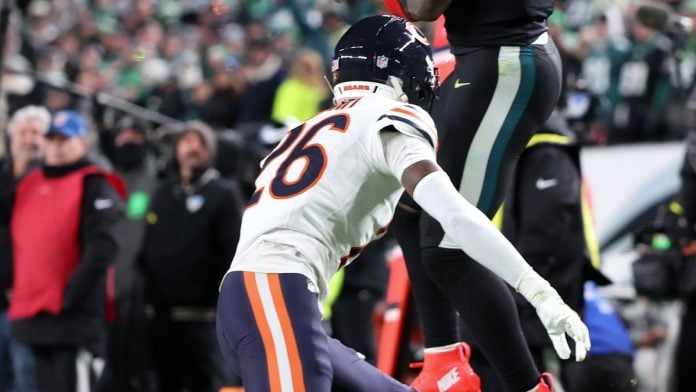
Nov 28, 2025; Philadelphia, Pennsylvania, USA; Philadelphia Eagles wide receiver A.J. Brown (11) makes a reception defended by Chicago Bears cornerback Nahshon Wright (26) during the fourth quarter of the game at Lincoln Financial Field. Mandatory Credit: Bill Streicher-Imagn Images

Nahshon Wright was a nobody when the Chicago Bears signed him. He’d had a quiet career as a 3rd round pick with the Dallas Cowboys before failing to latch on with the Minnesota Vikings earlier this year. He joined the Bears for $1.1 million at the behest of secondary coach Al Harris, who knew him from Dallas. Everybody expected Wright to compete for one of the last reserve cornerback spots on the roster. Jaylon Johnson, Kyler Gordon, Tyrique Stevenson, and Terell Smith already had the top four locked up.

Nobody could’ve imagined what would follow. Three of those four names would end up on Injured Reserve in the coming week. Chicago’s cornerback room was decimated. Wright had been thrust into the starting lineup out of necessity. Rather than look like a boy among men, as many backups usually do, the 27-year-old met the moment. He is now tied for second in the league with five interceptions. In fact, the season he is having is approaching historic territory, according to senior NFL researcher Tony Holzman-Escareno.

Nahshon Wright is rubbing shoulders with greatness.

Think about that list. Charles Woodson? Hall of Famer. Minkah Fizpatrick and Marcus Peters? All-Pros. All were also 1st round picks. What Nahshon Wright is doing shouldn’t be possible, at least not so out of the blue like this. Going from backup to playing like one of the best defensive backs of the decade is unheard of. It’s a testament to the work done by Harris and defensive coordinator Dennis Allen in getting him ready. All of this serves as a reminder that more good players exist in the league than people realize. It is always about finding the right situation and getting an opportunity.

Wright certainly found his. This season has been easily one of the most pleasant surprises in Bears history. It will also secure the cornerback a hefty new contract next spring. Sadly, Chicago is unlikely to be able to give it to him due to salary cap constraints. Still, this year has benefited all parties regardless.

Chicago Bears Super Bowl? Future Hall Of Famer Reveals Why It’s Not Crazy

ben johnson
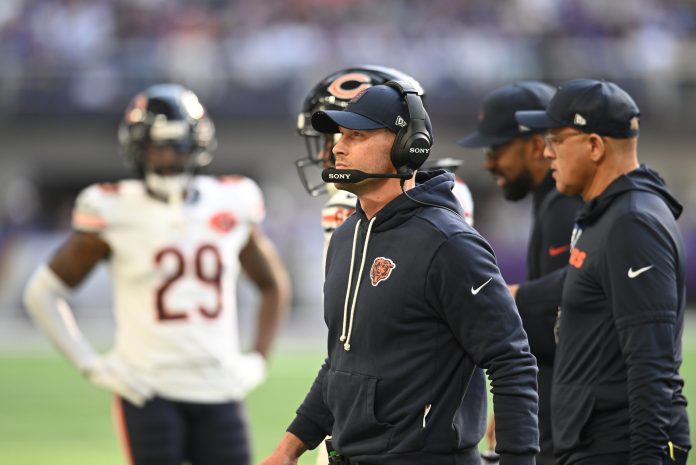
Nov 16, 2025; Minneapolis, Minnesota, USA; Chicago Bears head coach Ben Johnson walks the sideline during the second quarter against the Minnesota Vikings at U.S. Bank Stadium. Mandatory Credit: Jeffrey Becker-Imagn Images

Nobody on planet Earth thought for a second the Chicago Bears would be in the Super Bowl conversation this year. Why would they? This team was 5-12 last year, with a fractured locker room and serious questions about their young quarterback. The arrival of Ben Johnson was expected to at least make them decent in 2025, maybe setting the stage for gradual improvement in the next few years. Instead, the Bears have catapulted to a 9-3 record and are in control of the NFC’s #1 seed. Suddenly, the question has become unavoidable.

Can this team reach the Super Bowl?

Most people would say no. They still have a lot of flaws despite their remarkable turnaround. Caleb Williams remains a work in progress, completing just 58% of his passes. Many of their victories have required last-second heroics, which typically do not indicate a contender. However, future Hall of Fame cornerback Patrick Peterson believes a deep playoff run is more than possible for the Bears. He believes their ability to control the line of scrimmage on offense and take the ball away on defense is an excellent recipe for success.

The Chicago Bears feel like a team that is not quite there yet.

Their success this season is more due to luck and timing than actual great play. They’ve benefited from their opponents suffering timely injuries to key players. Five of their wins involved 4th quarter comebacks. While it has made the Chicago Bears must-see TV, it remains difficult to buy them as the likely contender coming out of the NFC. That remains Los Angeles, Green Bay, and even the team they just beat, Philadelphia. The Bears need another infusion of high-end talent and maturation from their young core before things really start clicking.

That said, Peterson is correct. Teams that run the ball well and can take it away defensively tend to do well in the playoffs. Ask the 2006 Bears. They had a mediocre quarterback, but ran the ball well and led the league in takeaways. That formula carried them to the Super Bowl. This version of the team has a better quarterback and a more dynamic head coach. Maybe it’s time to start at least accepting the possibility.