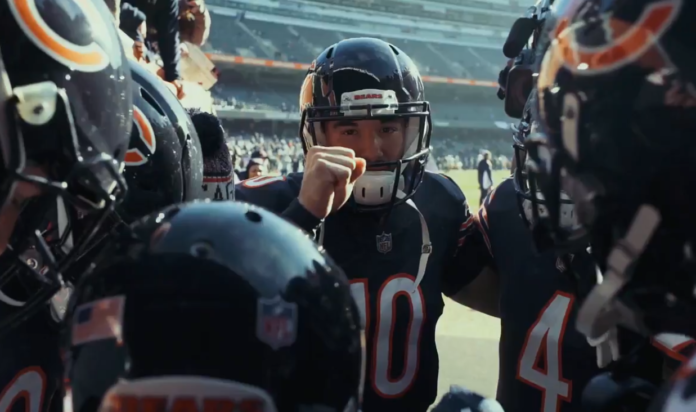
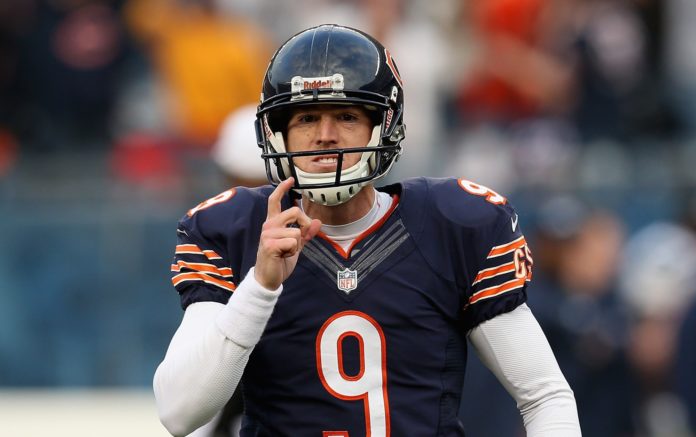
Simply being a talented quarterback is one thing. A lot of guys can throw a football to a receiver with accuracy or simply launch it far down the field. Many can also run pretty fast. What separates the average from the great and even the good from the great is how they operate as a leader. Mitch Trubisky seems to understand this well.
According to head coach Matt Nagy, when he arrived with the Chicago Bears last year as head coach, one of his first jobs was to assess the quarterback. He already knew what Trubisky was like on the field, having evaluated him extensively both before the 2017 draft and when preparing for his interview.
What he wanted to figure out was where the young QB sat in the Bears locker room. How did the rest of the team view him as a leader? It didn’t take him long to find out according to Dan Durkin of The Athletic.
In fact, Nagy was far more concerned about the team buying in to him as their coach than Trubisky as their quarterback.
“I felt it right away,” Nagy said of the team’s confidence in Trubisky. “I really did. I think really our team last year, it wasn’t even about that. I think it was about me. When were they going to buy into me? A lot of those guys last year, they already knew about Mitch. The new guys we brought in didn’t and they developed a chemistry offensively.”
Mitch Trubisky cemented his hold on locker room with play last year
Anybody who has watched clips before games or on the sideline during them would’ve seen it. Trubisky isn’t afraid to get vocal in order to motivate his guys. If he has to scream he screams but more often than not he’s offering encouragement and telling them they’ll get it done.
Last year he delivered on that promise a lot. He had two game-winning drives in 2018 and delivered several time-consuming marches late in the 4th quarter to put others away. His performance against Philadelphia in the wild card playoff was especially good. He got them the lead late and then had them in position to win before Cody Parkey’s missed field goal.
He led by both words and action. He also embraced that role off the field, constantly hanging out with guys away from the locker room. It should be no surprise the rest of the team firmly has his back. It’s why so many were pissed off at the dirty hits he took against Minnesota and San Francisco.
Nagy knows that when the quarterback has the locker room, everything else becomes easier.
11 days ago, Tyler Dunne of Bleacher Report published an article that set NFL Twitter on fire.
In the article, Dunne broke down the perpetual dysfunction in Green Bay and how that played a role in the breakup between quarterback Aaron Rodgers and head coach Mike McCarthy.
Dunne highlighted everything from Rodgers rolling his eyes when a play call came in from McCarthy on the sidelines to McCarthy reportedly skipping team meetings to receive massages in his office.
All this did was point fingers and assign blame for the dysfunction in Green Bay. Is CEO Mike Murphy the cause of dysfunction? Was Mike McCarthy the one who needs to shoulder the blame? Or does this solely rest on the shoulders of the Green Bay quarterback, Aaron Rodgers?
No matter who is to blame in Green Bay, it’s not our problem as Bears fans. We’re simply here to drink it all in and revel in the chaos that’s ensued for years up north. However, the Packers might be on the verge of making a huge move in the draft that could cause a seismic implosion in Wisconsin.
The Packers Are Hosting Quarterback Drew Lock For A Pre-Draft Visit
Drew Lock is a talented, strong-armed quarterback out of the University of Missouri. Throughout the draft process, he’s garnered comparisons to everyone from Matthew Stafford to Jay Cutler.
While it’s certainly not a shock that a NFL team would do its homework on quarterbacks each year for backup purposes, etc. this headline becomes interesting because of where Lock is projected to go off the board on April 25th…
While some scouts may be divided on where he’s worth drafting this year, Lock appears to be a Top-15 guarantee in the 2019 NFL Draft.
This is where the plot thickens for the Packers and a potential implosion…the Packers hold the #12 overall selection this year.
With the buzz surrounding Lock and his draft status, the Packers would have to use that #12 overall selection to draft him if he’s still available then. This would be a major investment in a quarterback of the future…while Rodgers is one season removed from signing a 4-year, $134 million extension.
There’s Potential For This Pick To Fan The Fire In GB
If the Packers are indeed seriously looking at selecting Lock with the #12 overall pick, Rodgers will not be happy with this move. After all the fallout Green Bay has endured from the Dunne article, Rodgers has to already be on edge.
This move would signify that the Packers are not satisfied with Rodgers being the leader they need him to be and are choosing to draft the heir apparent instead of surrounding him with talent.
It’s vital to consider institutional memory/knowledge with the #Packers and the Drew Lock visit: Favre was 35 when Rodgers was drafted, Rodgers is now 36. Current GM Brian Gutekunst was a scout in the org. Team CEO Mark Murphy took over in 2007, during Favre/Rodgers handoff.
Now combining the friction from the article fallout, a first-year head coach in Matt LaFleur, the tension that would exist between Lock and Rodgers, and the organization caught between competing now and planning for the future, this has the potential to be an absolute train wreck.
Rodgers’ ego has been well-documented and is not one that would be open to a mentorship role, à la Alex Smith & Patrick Mahomes. However, Brian Gutekunst and Mike Murphy are going to do what they believe is in the best interest of the Packers moving forward.
If they perceive that Lock is the long-term answer at quarterback and can provide them the same longevity that Rodgers did after Brett Favre, they’ll make that move.
But what will it do in the meantime? That’s the million dollar question.
Who knows? But the Packers taking Lock at #12 overall should do nothing but set off a ticking time bomb in that organization. Now it’s time to sit back and see if the fuse gets lit.
Matt Nagy knows how to think like a quarterback. He should. He used to be one. He had success at it in college at Delaware and again during his time in the Arena Football League. This gives him a unique insight into how that position thinks and most importantly how it can be made to grow and excel.
So what could he have planned for Mitch Trubisky in 2019? He’s already said the goal moving forward is to refine the system further. Trubisky has learned the terminology. Now he has to perfect the fundamentals and learn to eliminate the questionable throws he sometimes had last year.
There is another idea Nagy has in mind though. One that can be a bit risky with a young quarterback, but also one that he thinks can ultimate serve the kid’s development far better in the long run. Dan Durkin of The Athletic made the revelation.
Trubisky progressed so well in those areas that Nagy is going to hand over the reins to Trubisky and let him call the plays at some point.
“There might be some times this year where I say, ‘Hey, just take this series,’” Nagy said. “In OTAs or training camp, ‘Hey, call this series right here. I’m going to let you run the show.’ I couldn’t do that last year, because he didn’t know what to call. This year, he’ll be able to do that.”
Matt Nagy demonstrates keen sense by giving Trubisky more control
Quarterbacks calling their own plays isn’t a thing these days in the NFL. Or rather it’s ultra-rare. Now head coaches or offensive coordinators are expected to call the plays and the quarterbacks are supposed to execute them, with only the freedom to audible depending on what the defense shows.
Believe it or not, there was a point in time where the quarterbacks themselves were the offensive coordinators. They called the plays in the huddle and ran the show entirely on the field. The last one to do this was Peyton Manning during his extended run with the Indianapolis Colts.
Others who had such freedom were Jim Kelly in Buffalo, Terry Bradshaw in Pittsburgh, Ken Stabler in Oakland, Fran Tarkenton in Minnesota, and Johnny Unitas in Baltimore. Know what all of those men have in common?
They all in the Hall of Fame.
Tarkenton himself stated his big problem with the growing trend of coaches calling plays way back in 1978.
“Robots,” he says disdainfully. “They’re told what to do in every situation.
“I came up in the days with Y.A. Tittle, Norm Van Brocklin, Bobby Layne and Johnny Unitas. They were the ones who created mass interest in the NFL by stamping their personalities on the game.
“Hell, now you’ve got quarterbacks who don’t even want to call their own plays. And the coaches just want a 6-foot-4 mechanic in there with a rifle arm.
“The coaches have gotten so timid that they think, “This quarterback can win for me, but he can also beat me quick. I better protect my job and call all the plays.’
Sound familiar? Indeed that is what the NFL has largely become. Quarterbacks acting as extensions of the coach. This is why so many teams are trying to find the next great play caller for their head coach.
Nagy understands that is part of his job, but he also understands Trubisky can’t reach his full potential unless the direction of the offense is placed entirely in his hands. It’s a bold and inspired move by a young coach.
Something is going on between Robbie Gould and the San Francisco 49ers. It looked like the 37-year old former Chicago Bears star would be going back to the Bay for a third season after two outstanding ones in 2017 and 2018 when the 49ers used their franchise tag on him. At that point it looked like a done deal that he wasn’t going anywhere.
Time passed. Then more timed passed. Then out of nowhere Matt Maiocco of NBC Sports in San Francisco reported the 49ers had heavy interest in Pro Bowl kicker Stephen Gostkowski who was still a free agent at the time. Shortly after, Gostkowski re-signed with the New England Patriots. However, the interest had been there.
It was the first sign that something was going on in the negotiations between them and Gould. He still hasn’t signed the tag contract tender and now has apparently decided to take it a step further.
The #49ers open their “voluntary” offseason program on Monday in Santa Clara. Kicker Robbie Gould has not signed his franchise tender, therefore he will not attend.
Robbie Gould holdout likely for one of two reasons
So what exactly could be the cause of this situation. We’ll start with the most likely. Gould made it clear a few weeks ago that his desire is for a more long-term contract. He is tired of playing on one-year deals and wants more stability for himself and his family who has remained in Chicago while he plays elsewhere.
Then there is the possibility that he is trying to force the 49ers hand to rescind the tag and let him become a free agent. This would give him the chance to re-sign with the Bears. Something he’s hinted he wants for months. It would reunite him with his family and give him a chance to finish out his career where it started. On a winning team no less.
Much of this depends on how stubborn GM John Lynch is going to be. If he is dead set on Gould kicking only for the 49ers this year, he can keep the tag in place all season as the Steelers did with Le’Veon Bell last year. Then again, if he’s convinced Gould wants out and they can find a replacement they like in the draft or elsewhere, then he may grant the request.
For the second consecutive year, Patrick Kane will serve as captain of the U.S. National Team at the IIHF Men’s World Championship. The Tournament is set for May 10-26 and will be played in Kosice and Bratislava, Slovakia. The rest of Team USA’s 2019 preliminary roster is expected to be named later this week.
Blackhawks' Patrick Kane will serve as captain of the 2019 U.S. Men's National Team that will compete in the IIHF Men's World Championship in Slovakia.
It’s only right for Kane to be named captain after the dominant season he just completed. The Buffalo, N.Y. native posted a career high in assists (66) and points (110) in his 12th NHL season. He also had 11 more points than the next American, Johnny Gaudreau. Kane will likely not win the Hart Trophy for league’s most valuable player, but he is more than deserving after carrying the Blackhawks for months.
Patrick Kane (44-65—109 in 80 GP) is the second player in @NHLBlackhawks history to record 109+ points in a season.
Patrick Kane has been successful while representing the United States on multiple occasions in his career. When Kane was captain of the U.S. Men’s National Team at the IIHF World Championships last year, he was named MVP after recording a tournament-high 20 points in 10 games. He also led Team USA to a bronze medal after defeating Canada 4-1 in the third-place game. He previously won a gold medal with the U.S at the 2006 IIHF Under-18 Men’s World Championship in Sweden, where he was also the tournament’s leading scorer. Kane won a silver medal back at the 2010 Olympic Winter Games in Vancouver as well. Patrick Kane’s NHL resume includes three Stanley Cup championships, a Conn Smyth Trophy in 2013, a Hart Memorial Trophy in 2016, and three Ted Lindsay Awards. All in all, Kane is a smart choice to lead the United States in the 2019 IIHF Men’s World Championship.
Patrick Kane returning to the men's worlds with Team USA this spring. Expecting some other big names as well when preliminary roster announced later. Have heard Jack Eichel, Dylan Larkin and Alex DeBrincat among those likely to participate. Should be a competitive team.
Alex DeBrincat sounds likely to join Team USA’s preliminary roster at this point. Connor Murphy was on the team last year, and Brandon Saad has shown some interest as well. It will be interesting to see if any of Patrick Kane’s Blackhawks teammates join him and Team USA at the 2019 IIHF Men’s World Championship in May.
The Chicago Bears free agent plan appears to have been executed. Most of their objectives were met. In the event of losing Bryce Callahan and Adrian Amos to the market, they found adequate replacements in Buster Skrine and Ha Ha Clinton-Dix. Cordarelle Patterson boosts their kick return game. Mike Davis adds more flexibility to the run game.
Aaron Lynch was also re-signed to keep the depth at edge rusher intact. Bobby Massie and Pat O’Donnell received extensions. All things considered they appear to be in good shape going into the draft. Does this mean their notable spending on the market is complete though?
One would think so. Assumptions are GM Ryan Pace will retain the remaining cap space to start working on potential contract extensions for players already on the roster. Cody Whitehair and Leonard Floyd likely topping the list. However, recent financial updates would indicate they might be a bit more aggressive than we think.
Chicago Bears free agent plans could get extended by cheap draft class
Believe it or not, there is a silver lining to not having 1st or 2nd round picks in a draft. That comes from the money aspect. Not having to make those players the required money has resulted in the Bears having what will likely be the cheapest 2019 draft class of any team in the league.
According to Jason Fitzgerald of Over The Cap, the Bears 2019 rookie crop of picks will cost just $436,572 against their salary cap. They currently have an estimated $17.6 million in cap space. This means they would still have over $17 million. That is more than enough to make another couple of moves on the veteran market to improve their depth.
There are still a lot of intriguing names out there who could be a big help to this team:
Expectations are spending will resume after the first week of May when the deadline for free agents to count against the compensatory pick formula for 2020 will pass. It’s likely all of those names will still be available. Better still, their prices will have dropped to a point where several could be had for cheaper than they’re probably worth.
Exactly the sort of business play that would entice a guy like Pace.
Most experts would tend to agree on what the biggest Chicago Bears need is going into the 2019 NFL draft. Doesn’t matter if they’re national or local guys. The general consensus is the team needs a running back. Trading Jordan Howard made that the obvious choice. People don’t have a lot of belief in the Mike Davis–Tarik Cohen combination.
For the cheeky members of the crowd, they’ll say kicker. Not a surprise given how the 2018 season ended thanks to He Must Not Be Named. It’s unlikely though the Bears will consider that position early in the draft. Or even draft one at all. So is there any other that could possibly have an argument for being a bigger need than running back?
Football Outsiders, a group known for their extensive analytics work, wrote a detailed article on the biggest draft needs for every team going into the draft. Long story short? Running back was nowhere near the list for the Bears.
Biggest Chicago Bears need will be cornerback before too long
Their data says that this is the time for GM Ryan Pace to start thinking a year or two ahead. He has a good team in place now but soon salary cap and age concerns will start popping up at certain key positions. None more so than at cornerback.
“Third-round picks and beyond should not be expected to step in immediately and start the way first-rounders should. Therefore the Bears’ draft strategy should be about identifying developmental players at positions where they might soon need help. Cornerback is the most glaring opportunity for the Bears to do this.
Kyle Fuller and Prince Amukamara are an excellent duo, but declining an Amukamara option after the 2019 season would save the Bears some much-needed cap space.
Additionally, the roster of depth cornerbacks behind Fuller and Amukamara is not good, save for flashes from Sherrick McManis last year. The Bears would be smart to grab a cornerback with one of their earliest picks to secure depth and potentially develop a starter for when the roster needs to be turned over down the line.”
Amukamara will turn 31-years old before the start of the 2020 season. It would not be a surprise if the Bears chose to move on, saving a projected $8 million in cap space along the way. If they don’t draft somebody now, their projected starting lineup could be Fuller, Buster Skrine, and Kevin Toliver.
Not exactly the most inspiring trio. They could add help in the 2020 draft as well but it might be wise to get a head start on it this year. The cornerback class for 2019 appears to have a strong depth to it with several prospects have the skill set to fit their scheme. It will be interesting to see which, if any, Pace goes after.
The team of today are a fun bunch. They’re characters. They’re leaders. Above all? They’re winners. Last season marked the first time the team had posted a winning record in six years. It was the first time they’d won the division in eight. After so much pain over the previous decade, fans could feel good again. The Chicago Bears dark age was finally over.
Most would prefer to forget the bad times. That unforgettable run of misery from 2013 through 2017 where everything seemed to go against them at the worst possible times. It’s hard to blame anybody for feeling that way. Any fan who experienced it first hand is likely still suffering the football version of Post Traumatic Stress Disorder.
Yet, as any psychologist will say, it’s important to confront your past in order to embrace your future. So it is time to ask the question. Where did the downfall begin? How did a team that was competing for the Super Bowl suddenly become an NFL laughingstock?
There are traces that come from multiple points going back years before they hit bottom. However, the root of the decay was planted during a single offseason. In order to get there though, we must go back to before it all went down.
Seeds of Chicago Bears dark age were sown as far back as 2009
Going into 2009, the Bears had no reason to panic. They had gone 9-7 the year before and still had a strong veteran core in place. GM Jerry Angelo reached the conclusion that if he could give the roster one more big push, they would be able to get back to the Super Bowl. It started, of course, with the trade for Jay Cutler.
The blockbuster with Denver saw the Bears send two 1st round picks, a 3rd round pick, and quarterback Kyle Orton to the Broncos in exchange for Cutler and a 5th round pick. It was a hefty price to pay, but Angelo was confident the team had made the upgrade they needed. Cutler had been a Pro Bowler the previous year and was entering his prime.
Angelo even continued his success in the draft shortly after, grabbing future Pro Bowlers Henry Melton and Johnny Knox in the 4th and 5th rounds respectively. However, his good fortune soon began to wither away.
Brian Urlacher broke his wrist and was lost for the season on opening night in Green Bay. The defense took a serious step back without him, especially in the pass rush department. Cutler, trying to learn a new offense with limited help around him, threw 26 interceptions.
Chicago went 7-9, but Angelo already had high expectations for 2010. All he had to do was fix a few holes. He tried to get a jump on one of them when he traded his 2nd round pick in the 2010 draft to secure former Tampa Bay Buccaneers 1st rounder, Gaines Adams.
That decision would have severe consequences as Adams died in January of the next year from cardiomyopathy or an enlarged heart.
The 2010 NFL draft
Suddenly Angelo found himself in a tough situation. Not only did he have just five picks going into the 2010 draft, but he’d given away his best one (the 2nd rounder) for a player who appeared in just 10 games for the Bears. If he’d held onto it, he would’ve had a chance to draft the likes of Rob Gronkowski, Zane Beadles, Linval Joseph, Carlos Dunlap, or Golden Tate.
Instead he had to wait and as a result had one of the worst drafts of his tenure as Bears GM.
Wright became a starter for a few years at safety. Wootton was a decent backup defensive end and Webb started some games at tackle. None of them could be considered anywhere close to impact players. A shame too because the Bears ended up making it to the NFC championship that season.
If they’d gotten more out of this draft class, they might’ve gotten past Green Bay that day. It didn’t happen, and suddenly age was starting to become a factor for several of their stars going into 2011. Urlacher was turning 33, Lance Briggs 31, and Charles Tillman 30. Meanwhile, the offense was still a mess and needed some re-configuring. This only put more pressure on Angelo.
A “miscommunication” leads to controversy
It was no secret to anybody where the Bears were likely going to focus with their first 1st round pick since 2008. The offensive line had allowed a staggering 56 sacks the year before. That couldn’t be allowed to continue. Not if they wanted Cutler to live to see his future children. They held the 29th pick and Angelo seemed in good shape.
The 2011 draft was considered one of the most talented to come around in years. There was playmaking potential across the board on both offense and defense. This was the class that produced Cam Newton, Von Miller, A.J. Green, Patrick Peterson, Julio Jones, and J.J. Watt among many others. The odds of Chicago getting a good player were favorable.
Soon it became clear though that Angelo wasn’t in firm control of the situation. As the time for their pick neared, the Bears reportedly wanted to move up to get their guy. The Baltimore Ravens, who sat at the 26th pick, were willing to move down.
The two sides had verbally agreed to a trade. Chicago would send #29 and a 4th round pick to the Ravens for #26. Yet for some reason, it wasn’t phoned in to the league office.
This not only caused Baltimore to slip down the board because time expired on their selection, but they also didn’t get the 4th round pick Angelo had agreed to send in the trade. At that point, the Bears backed off any deal and later explained the snafu came from a miscommunication with his staff.
“We had a disconnect, and there might be something said about it because of not communicating with the league and proper protocol and that was my fault.”
The conspiracy theorists believe Angelo learned right before the trade went through that Kansas City, who sat at #27, would not be taking the player he coveted as the team had feared. So he set up a convenient excuse to get out of making the deal and kept the 4th rounder. A few moments later, the Bears selected Wisconsin tackle Gabe Carimi.
Gabe Carimi, the Bear Jew
Everything about Carimi said he was born to play for the Bears. He was a giant 6’7, 320 lbs tackle who had become a terror blocking for the Badgers in college. His size, length, and power were made for the NFL and he fit perfectly with the rugged offensive approach Chicago had always preferred.
“Carimi is simply a “bad man” who looks to punish defensive ends on every play. His non-stop motor, coupled with his ideal size, make him a terror in the running game and he has enough athleticism to hold his own in pass protection. Like all tall lineman, Carimi struggles at times with leverage and may have to make the move to right tackle in the NFL. Overall, Carimi is a beast who should be picked in the middle of the first round.”
He seemed to be as safe a pick as a team could hope for. A surefire 10-year starter at a position of need. He even had a catchy nickname, the “Bear Jew.” This was a clever play on one of the famous characters from Quentin Tarantino’s hit Inglorious Basterds movie. Carimi was Jewish and now he was a Bear. It was perfect.
Trading a future Pro Bowler
All things considered, the Bears were already looking better on offense following the draft. They had more help up front. Now they needed to see if they could find Cutler more weaponry to work with. They had a couple of interesting young pieces in speedy receiver Johnny Knox and athletic tight end Greg Olsen. It was felt they needed something more.
What Angelo delivered instead went against all football logic. When free agency began on July 30th, this due to the owners lockout earlier that year, the Bears dropped a bombshell when they traded Olsen to the Carolina Panthers for a 3rd round pick in 2012.
It was a baffling move for many. Olsen was turning 26-years old. He tied for the team lead with five TD catches in 2010 and had one of the best games in Bears playoff history with 113 yards and a touchdown in the win over Seattle. What could he have possibly done to get traded?
The simple answer was scheme fit. Then-offensive coordinator Mike Martz ran a system that focused on the wide receivers and running backs. Tight ends were primarily used as blockers. That wasn’t the strength of Olsen’s game. Rather than ask Martz to make an exception for a talented player, Angelo acquiesced and traded him instead.
Olsen would go on to three Pro Bowls in Carolina including three-straight seasons over 1,000 yards.
Free agent follies
It didn’t stop there though. If Angelo was going to trade Olsen, he would have to make some counter moves in free agency to help the offense. His solutions were, for lack of a better term, underwhelming. His three biggest “scores” were wide receiver Roy Williams, tight end Matt Spaeth, and running back Marion Barber.
All three had something in common. They were cheap.
Williams had been a Pro Bowler in Detroit back in 2006 but fading production the next year eventually led to him being traded in 2008 to Dallas where he floundered as a middle-of-the-road option for Tony Romo. He was finally released in 2011 at age 30 when the Bears grabbed him.
Spaeth was more along the lines of what Martz wanted. He was a big, physical player who did good work as a blocker in Pittsburgh. He could be that extra pass protector needed to give Cutler extra time. This at least he did well, not allowing a sack in 91 pass blocking snaps. As a pass target though? He caught seven total all season.
As for Barber? It was plain as day the former Cowboys running back was washed up. He was a monster in Dallas for several years. A true powerhouse who ran with violence. What the Bears got was the version who had lost a step, and the one who forgot how to play smart football as well.
A blowout and a catastrophic injury
Karma does have a way of catching up to people though. Looking back it feels like Carimi was doomed to fail. For one, Angelo had a horrible reputation for picking offensive linemen in the 1st round. Prior to Carimi he’d selected Marc Columbo and Chris Williams in 2002 and 2008 respectively.
Both immediately became encumbered by injury problems and ended up having forgettable careers in Chicago. Columbo even went with the 29th pick, so that only added to the red flags.
It doesn’t end there though. The Bears also have hard luck picking players from Wisconsin. Dennis Lick, another tackle was taken by them in 1976. His career seemed to be going well for the first few seasons and then it abruptly ended due to a knee injury in 1981. He was 27-years old.
This time would have to be different, right? Things started off fine. Carimi filled his starting spot at right tackle throughout the preseason and opening day against Atlanta. A 30-12 blowout win where Cutler threw for 312 yards and two touchdowns. Everything clicked and excitement was high.
Then a week later it all came crashing down.
Amidst a 30-13 thrashing at the hands of the Saints in the Superdome, Carimi hit the turf writhing in pain. He was taken off by cart and it was later revealed he’d fully dislocated his kneecap. The rookie was done for the year and would require multiple surgeries to repair the extensive damage.
He was never the same after that injury
Late-season collapse becomes the final straw
The Bears didn’t have much time to mourn the loss. The season was only two weeks old. There was lots of work left to do. To their credit, they soldiered on. For a time it looked like they were starting to find their mojo. By the start of November they were 7-3 and humming with five-straight wins.
Then, as had become typical, injury struck again. This time with Cutler breaking the thumb on his throwing hand in a win over the Chargers.
From there, every move Angelo made seemed to blow up in his face. Williams had a number of crucial drops down the stretch. No amount of protection mattered from Spaeth because Caleb Hanie was the quarterback. They needed somebody who could go out and offer a nice, big target down the field. Somebody like that Olsen guy they traded.
Last but not least was Barber, who delivered the knockout blow to their season with the single-biggest sequence of blunders in recent Bears history during a 13-10 collapse in Denver.
At that point, Angelo’s credibility was shot. The failed Adams trade. The fiasco with Baltimore in the draft. Another 1st round offensive tackle who’d become damaged goods. Trading away a weapon who could’ve helped them in Olsen. Signing guys who were five years past being able to move the needle in Williams and Barber.
A man can only survive so many mistakes. George McCaskey and ownership fired the GM on January 3rd, 2012 after 10 years on the job.
The consequences
From there, things moved fast. Phil Emery, a former scout for the team and Director of Scouting in Kansas City, became the new GM in 2012. One of his first actions was to package the pick received in the Olsen trade with another 3rd rounder to acquire wide receiver Brandon Marshall.
A move that paid off on the stat sheet for a few years certainly ( 218 catches, 2803 yards, and 23 TDs in 2012 and 2013) but also ended up poisoning the locker room.
Then came the Shea McClellin draft pick. The first true revelation that Emery might be out of his depth. In a moment where Chandler Jones and Harrison Smith were still on the board, the Bears went with an unheralded kid from Boise State who’d been projected to go at the end of the 1st round and even the 2nd. It didn’t take long for another sign to arrive though.
After the 2012 season ended, one where the Bears finished 10-6 but didn’t make the playoffs, Emery chose to fire head coach Lovie Smith. The man who had engineered the second-most successful Bears run of the Super Bowl era was gone just like that.
Emery’s top choice to replace him? Marc Trestman, a former CFL head coach who hadn’t been in the NFL since 2004. This was the man Emery chose. Over the current Coach of the Year at that time in Bruce Arians, no less.
Two years later, the team was in ruins.
This courtesy of a string of humiliating defeats that included back-to-back games the Bears defense allowed 50 or more points. Then a huge controversy involving then-offensive coordinator Aaron Kromer calling out Cutler secretly to the media. Trestman being criticized for having no control of the locker room.
It was too much. Emery and his coach were fired at the end of the season.
All of those events, many of which Bears fans still see in their nightmares, can be traced back to what happened in that spring and summer of 2011.
The what-ifs
Most people probably wouldn’t change what they have now. The Bears are a good football team again. They went 12-4 in 2018 and won the division. GM Ryan Pace and head coach Matt Nagy have them pointed in the right direction. Still, it’s always fun to wonder how different things could’ve been.
Start with Carimi. By that point, Angelo should’ve known drafting offensive linemen wasn’t his strength. In contrast, he’d been good with defensive linemen consistently throughout his tenure. Muhammad Wilkerson, a future Pro Bowler, went on the very neck pick at #30. He would’ve looked pretty good next to Henry Melton and Julius Peppers.
As for the free agency situation? They could’ve had a young man named Darren Sproles at running back instead of Barber. He and Matt Forte would’ve been a fun combination in the backfield. There was also Willis McGahee, who ran for over 1,000 yards and made the Pro Bowl that year in Denver.
Adding one of them, not trading Olsen and signing Williams actually would’ve given the Bears an offense with serious options together with Knox, Devin Hester, and Earl Bennett. That team would’ve been something to watch, not only in 2011 but perhaps beyond.
Maurice Jones-Drew knows football. Specifically, he knows how to run the football. He is a former All-Pro running back for the Jacksonville Jaguars after all. The man had over 11,000 yards from scrimmage and 79 touchdowns in his career. If anybody is qualified to give the Chicago Bears running backs advice going into the draft, it’s him.
In a full study of the upcoming 2019 class, he put together his rankings of every notable name from #1 to #41. From Day 1 starters to developmental projects. His choice for the top spot was no surprise in Alabama standout Josh Jacobs. The one many think has a chance to go in the 1st round.
It’s the #5 guy on the list though that should have the Bears’ attention. Somebody who could be in striking distance when they go on the clock in the 3rd round on April 26th. He is Oklahoma State standout Justice Hill.
The 5-10, 198-pound back had an impressive combine performance, ranking first among all running backs in the 40-yard dash (4.40), as well as the broad (10 feet, 10 inches) and vertical (40 inches) jumps, before cutting his day short with a tweaked hamstring. His speed, shifty running style and natural catching ability should give him the opportunity to compete for a starting job.
Justice Hill fits new Chicago Bears running backs parameters
Hill seems to have the scouting community divided. Some see him as a potential stud with standout athletic traits. Others think he lacks the instinct and vision for the position. This is why he’s hovering between the 3rd and 4th round in projections.
One thing is for sure. His skill set from the speed to elusiveness and pass catching ability all fit with what Bears head coach Matt Nagy wants from that position. He may never be a featured player, but as part of a committee, he could be a dangerous weapon. Another chess piece for Nagy to move around the board looking for weaknesses.
This is not to say others ranked above him on the list won’t be available. Stranger things have happened. However, the consensus is all of them will be gone before the Bears go on the clock. Hill is the one who has a reasonable chance of being there. The fact Jones-Drew likes him is a big plus.
Good football players have come from many, many different schools over the course of Chicago Bears draft history. From the top of the college world at Alabama to the lowly confines of Jackson State. The Bears know that stars can come from just about anywhere.
Still, certain schools tend to produce good players more often than other. This begs an interesting question. Which programs have historically produced the highest number of productive Bears players during the Super Bowl era?
After doing some research, I narrowed it down to a top 10 rankings. Not every player involved on the list is a star but all of them were productive in some form or fashion during their time in Chicago. Can you guess which school takes the prize?
Brupbacher looked like he could’ve been a steal in the 4th round in 1970. In his first three seasons he had five interception and was a steady presence next to Dick Butkus. Then he abruptly left in 1973 to join the World Football League. After it folded, he returned for one season in 1976 and had seven interceptions before retiring at age 29.
Holdman was another quality find in the 4th round in 1999 and worked his way into the starting lineup his second year. He was part of that great 2001 Bears defense that guided the team to a 13-3 record.
Fontenot never gets any love in Bears history and that’s a shame. He came around as 3rd round pick in 1989 and didn’t become the starter until four seasons later. It was right around that time the team began to sink into mediocrity. Even so, his quality play at center led to one of the best offensive years in franchise history in 1995. He started 89 games in Chicago.
Harris gets overlooked because he arrived in Chicago right before Brian Urlacher did. So his efforts came at a time when the team was bad and then was gone once arguably the greatest linebacker in team history began his ascent. Even so, he had three solid years from 1997 to 2000 despite having to play different positions.
Wade was a jack-of-all-trades sort of player for two years in Chicago. He caught some passes at wide receiver, took some carries at running back, and was a nice presence on special teams.
Does Briggs really need an introduction? He’s one of the greatest outside linebackers of his generation and in Bears history. A seven-time Pro Bowler, he racked up over 1,100 tackles with 16 interceptions, and 15 interceptions. Simply calling him a Robin to Urlacher’s Batman doesn’t do his career proper service.
Becker was a dependable guard for the Bears throughout the 1980s. He was the starter at right guard in 1984 when Walter Payton broke the all-time rushing record before becoming Tom Thayer‘s backup from 1985 to 1988.
Thomas sort of reinvigorated the Bears offense during one of its most destitute periods in the early 2000s. He claimed Rookie of the Year honors in 2001 and topped 1,000 yards in two of his three seasons as the starter.
Harbaugh is remembered mostly for his coaching these days, but he was actually a pretty good football player. The Bears thought so when they drafted him in the 1st round in 1987. Though his numbers weren’t great, he went 35-30 as their starter and got them to the playoffs twice.
Most people look back at Spellman as a bad pick. That’s not true. Sure he didn’t become a star as a former 1st rounder, but the defensive end was a productive starter for their defense across six years, collecting 32 sacks.
Bell has to still wonder what his career might’ve been like had he not chosen to hold out on a new contract in 1985. He was coming off a Pro Bowl year at safety where he had four interception. His decision to sit led to second-year man Dave Duerson filling his spot. By the time Bell returned in 1986, it was far too late. He never regained that old form again.
Plank remains a folk hero in Bears lore to this day. One of the most ferocious hitters in franchise history. Someone who embodied what old school Chicago football was about. He had 15 interceptions in his career and was the inspiration for then-defensive coordinator Buddy Ryan to invent the “46” defense.
Gayle experienced two phases in his NFL career. During his early years in Chicago, he was a backup safety and a core special teams player. Then in 1989 he finally became a starter and went to the Pro Bowl in 1991. He had one of the signature moments in team history when he returned a whiffed New York Giants punt for a TD in the 1985 divisional playoff.
Amos was one of the bigger steals in recent Bears draft memory. A 5th rounder in 2015, he became the starting strong safety as a rookie and would hold that job for the next four seasons. He was a reliable player during that time, known for his good run defense and strong hits. Sadly he departed as a free agent to sign in Green Bay.
Fullbacks don’t get any love these days, but they did back in the 1980s. Suhey was arguably the most beloved fullback in Bears history. The best friend and lead blocker for Payton during the final seven seasons of his career. During that time Suhey wasn’t just pushing guys out of the way. He had over 5,000 yards from scrimmage and 25 touchdowns himself.
Engram could be called one of the more underrated wide receivers the Bears have produced. A lot of people don’t remember him. Yet he had two years in 1998 and ’99 where he 987 and 947 yards receiving respectively. Perhaps he’d be remembered better if he hadn’t left for Seattle after just four seasons.
Hartenstine may not have been the flashy sports car that grabbed the attention. He was more like the sturdy pickup truck that ran well forever. Just a consistently good and productive defensive end for the Bears. He played 184 games in Chicago and collected 24 sacks, though it was definitely more since half his career was played prior to that stat becoming official.
Johnson comes across as a disappointment. Not because he was bad but because he never realized his full potential. For a brief two-year window in 2005 and 2006, he was an excellent nose tackle for the Bears with 8.5 sacks and a key part of their run defense. Sadly he couldn’t keep himself out of trouble off the field.
Jackson had four okay years with the Bears and one brilliant one in the late 1980s. After posting four interceptions his first two seasons, he had eight in 1988. He regressed after that though, appearing to lose speed by 1990. So much that after he left Chicago, the Dolphins converted him to linebacker.
It’s still difficult to understand why the Bears let Parrish walk in 2002. He’d just produced his second-straight year with three interceptions and was a key part of their #1 defense in 2001. A good all-around player who produced 20 interceptions in the three years following his exit from Chicago.
Kreutz was a revelation in 1998. A 3rd round pick out of Washington, teams weren’t sure what he’d be at the pro level. It turns out? Dominant. The man became the unquestioned enforcer for the Bears over the next decade, reaching six Pro Bowls and helping guide the team to four division championships including a Super Bowl appearance.
Gentry is one of those utility players who never gets the media attention but always seems to show up once or twice with a good play on Sundays. It certainly worked out for him because he compiled 159 games as a Bear. During that time he had 2,840 yards from scrimmage and 12 touchdowns and was a core special teams ace including three kick return TDs.
Fontenot never emerged as a huge factor on defense but the 4th round pick proved himself a quality rotation backup at both defensive tackle and end. He had 12 sacks and 90 tackles in this role.
Is it possible for one player to carry his school this high into the rankings? When that man is Mike Singletary, it is. “Samurai” is one of the greatest middle linebackers in history. A 10-time Pro Bowler and two-time Defensive Player of the Year who captained the greatest defense in NFL history. A Hall of Famer and undeniable legend.
Remember Henry Melton and how it looked like he was a budding star for a brief period in 2011 and 2012? Well he wasn’t the first to do that. Zorich had copyright claims first. The former 2nd round pick seemed poised for big things after 12.5 sacks between 1993 and 1994. That proved to be his peak though. He disappeared not long after.
Gandy was the starting left tackle for two years in the early 2000s. While he wasn’t a major standout, he did help their running game continue to produce. His problem wasn’t talent. It was health. Injuries hampered him constantly but his soldier through it for a time.
Flanigan was another of those really good players who got lost in the quagmire of the 1990s. A rare bright spot on defenses that were below average. In seven seasons for the Bears, he produced 40.5 sacks. How he never made the Pro Bowl remains a forgotten crime.
Thayer became a fixture at right guard for the best offensive line in Bears history. One that produced the #1 rushing attack four-straight years in the 1980s and paved the way to a Super Bowl title. He started 120 games total in his career before being forced to retire at age 33.
Duerson really came out of nowhere in 1985 but it didn’t take him long to establish himself as one of the best strong safeties in the league. A four-time Pro Bowler, he had 18 interceptions and 16 sacks during his Bears career. A forever-immortalized member of the ’85 Bears defense.
Before getting into this list, how about a fun fact? USC is #2 in the rankings and the Bears haven’t selected a player from that school since 1999. Let that sink in.
Gunn wasn’t a standout player in his career. He only started one season on defense but he was a reliable backup and also a nice presence on special teams during a dark period in the 1970s.
Evans was another in a long line of underwhelming quarterbacks in Bears history. He was just 12-20 as a starter with 31 touchdowns to 53 interceptions. However, he did contribute to the greatest rout in the history of the Bears/Packers rivalry. A 61-7 thrashing in 1981 where he threw three touchdowns.
Van Horne anchored the right tackle spot for the Bears across the entirety of the 1980s. He started 169 games total and was a big contributor to their dominant rushing attacks of that era. Another of those really good players who gets overlooked for being on a great team.
Conway was one of the rare 1st round wide receivers in Bears history who actually worked out. He was a big-time threat in the mid-1990s, going over 1,000 yards in two consecutive seasons. Sadly QB and injury problems never let him explore his full potential.
Carrier should’ve been a legend in Chicago. Things started that way when he had 10 interceptions as a rookie in 1990s. He eventually made three Pro Bowls with the Bears but declining talent in front of him and changes to the scheme eventually led to him struggling. Had things been diferent, he might be the best safety in team history.
Florida has been the true honey hole for the Bears throughout the Super Bowl era. Every decade it seems like they score at least one highly productive player from that program.
Wright was a decent starter for three years with nine interceptions and over 220 tackles from 2011 to 2013. He was just never anything special. An okay player who served a role on a veteran defense.
Most will look at Bostic as another Phil Emery bust, which is fair. Still, he had 140 tackles, two sacks and an interception in two seasons for the team. One could argue his development was ruined by the Mel Tucker era.
Scott was the primary nose tackle in 2005 when the Bears had the #1 defense. He was a tough, rugged player who gave maximum effort. His talent was never high but he made the most of it while he could.
Grossman gets plenty of heat from Bears fans for never being good enough as a quarterback. While that is mostly true, he did have one productive year in 2006. A year in which there were three games he threw three or more touchdowns and had a 100+ passer rating seven times. Like it or not, he helped them get to the Super Bowl that year.
Brown came along right when the Bears needed him. An injection to their pass rush that would help elevate the defense to major heights in the mid-2000s. He would play eight seasons in Chicago, stacking up 43.5 sacks, 17 forced fumbles, and five interceptions.
Nobody envied Anderson in 1988. That was the year he became the starting running back, having to replace the retired Walter Payton. Impossibly big shoes to fill. All things considered, the kid did a hell of a job. He ran for over 6,000 yards and 51 touchdowns in his career, reaching four Pro Bowls despite having to retire before age 30.
One thing that becomes clear about players from Florida the Bears drafted? They were really good for a few years and then suddenly left the team. It was true of Anderson due to injury. For Armstrong? He was traded. A move the team would later regret. He had 42 sacks in six years for Chicago. After leaving, he played another nine years and had 63 more sacks.
The greatest Gator in Bears history. Marshall was a wrecking ball at outside linebacker during his run in the mid-1980s. In just four years he had 295 tackles, 16.5 sacks, nine interceptions, and eight forced fumbles. He was a two-time Pro Bowler as well. Yet the Bears didn’t want to pay him a new contract in 1988. So he left to sign with Washington. They never did successfully replace him.