Probably the most intriguing signing of 2019 for the Chicago Bears was safety Ha Ha Clinton-Dix. Here’s a former Pro Bowler entering the prime of his career. A man who played for the Green Bay Packers no less. Suddenly he decides to leave Washington, a team that traded for him, in order to sign with a team that he’d spent years trying to beat.
It makes one curious as to what exactly the Bears did to convince him. It wasn’t money, that’s for sure. Clinton-Dix ended up signing for just one year worth $3.5 million. By comparison, the man who replaced him in Washington, Landon Collins, netted $14 million a year. Odds are he would’ve garnered more money if he’d signed elsewhere.
So that leave the big question. What convinced him that taking a discount to play in Chicago was the right decision? As it turns out, the Bears can thank two of their most prominent team leaders. Both of whom personally attended Clinton-Dix’s visit to make sure the pitch was understood.
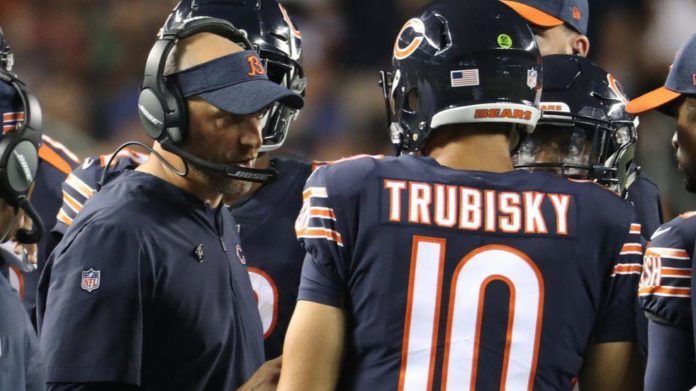
Interesting tidbit from today: when the #Bears hosted Ha Ha Clinton-Dix for a free-agent visit, Eddie Jackson said that he and Mitch Trubisky walked into the office and convinced him to sign, essentially by highlighting what it’s like to play for Matt Nagy.
Eddie Jackson on his own pitch to Ha Ha Clinton-Dix: "This defense is just like Bama. I told him coach Nagy is one of those coaches, he lets us be us, go out there and have fun with swag." https://t.co/k6yAekSbcH
If Ha Ha Clinton-Dix thrives, Trubisky and Jackson deserve props
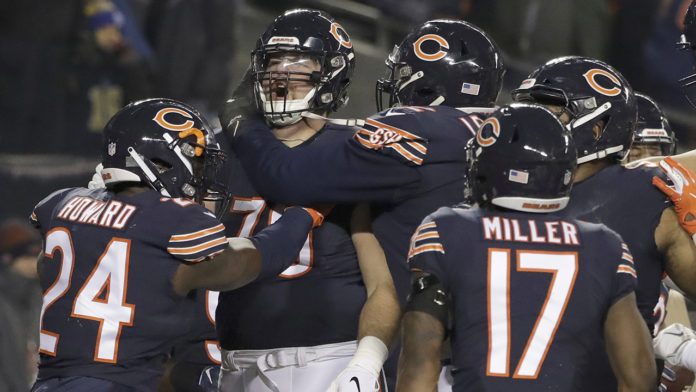
There is no doubt anymore that Mitch Trubisky and Eddie Jackson have emerged as two of the biggest voices in the Bears locker room. Their presence is impossible to ignore. Not only do they lead by their words, but also their actions. Each made it to the Pro Bowl this past season and have taken it upon themselves to do anything possible to make the team better.
If that means recruiting other talented players to the cause? So be it.
How many other team will have two of their best players attend a meeting with a free agent? It’s not hard to think that it made a hell of an impression on Clinton-Dix. This was the sort of culture he wanted to play for. One completely dedicated to winning football games and having fun doing it. If he ends up regaining his old form, then those two deserve special mentions for making it happen.
The revolving door in the White Sox bullpen is still spinning and the latest call up is a somewhat familiar face in right-hander Thyago Vieira. Following Tuesday night’s 5-1 loss to the Astros, the White Sox sent Jose Ruiz to Triple-A and on Wednesday the team officially brought back Vieira.
Vieira, 25, pitched in 16 games for the White Sox last year and had one appearance earlier this season, throwing two shutout innings against the Orioles.
The Brazilian right-hander has been much better at Triple-A this season, after recording a 5.06 ERA in 36 games in Charlotte in 2018. Vieira struggled in his first stint in the majors last year too with the White Sox, posting a 7.13 ERA in 17.2 innings.
Despite the better ERA in 13 relief appearances, Vieira is allowing a lot of base runners. In 16.1 innings he’s surrendered 15 hits and 8 walks, which amounts to a 1.41 WHIP.
The White Sox still have two more games left in Houston and then they’ll start a three-game series against the division-leading Twins.
The next stage of the top 100 Chicago Bears ever continued on Wednesday with numbers 50-26. Mart Bortz, the former two-time Pro Bowl guard from the 1980s kicked things off. He was soon joined by former teammates like Dave Duerson (#47), Otis Wilson (#45), Wilber Marshall (#43), and Neal Anderson (#41). However, the biggest winner of this section and perhaps the entire list to this point? Matt Forte.
The former Bears running back spent his entire career being underappreciated by the wide NFL. He had more rushing and total yards than the far more celebrated names from his 2008 draft class like Chris Johnson and Jamaal Charles. Yet he is never considered to be in their league, which is funny in context.
Bears fans though. They remember. He was the man who basically carried the offense on his back for the first six seasons of his career. A versatile and dangerous weapon who could gash you for a 10-yard run and then catch a pass for 12 on the next play. Despite his limited accolades, Dan Pompei and his partner saw fit to place him at #34.
Matt Forte beats out several notable names for his spot
To understand the honor that Forte is given to his career, one must recognize who he beat out. In the four slots before him from 38-35, they’re all Hall of Famers. That includes the “Galloping Ghost” Red Grange himself. While his numbers don’t compare to modern backs like Forte, Grange did win championships and is often credited with bringing the pro game into the public consciousness.
To rank ahead of somebody of that stature is indicative of the contributions Forte gave to the organization. He may not have made a lot of Pro Bowls or won a championship, but none of that was within his control. The running back was a model citizen in Chicago for year, played his heart out and did everything he could to win on Sundays. He richly deserves where he’s been placed.
Matt Nagy and his coaching staff already proved last year they aren’t afraid to use players outside of their traditional positions. They used Akiem Hicks as a running back and Nick Kwiatkoski as a wide receiver. Is it really a huge stretch to think they might considering asking some players to make a permanent switch? That appears to be in the process of happening.
On the first roster listed for the Chicago Bears OTAs (Organized Team Activities), it was quickly revealed that two players were not listed at the same positions they were last season. The first was Taquan Mizzell. After being a running back in the scheme a year ago, he is now a wide receiver. The bigger shock though was Bradley Sowell.
A career offensive tackle since he entered the NFL, the Bears have shifted him to tight end. It’s a somewhat curious move given the importance of offensive line depth. It must signal they like what they have and feel has he more to offer as a blocking tight end who can also catch. He proved that much last year against the Rams.
Two #Bears players have changed positions and numbers: Bradley Sowell from tackle to tight end (79 to 85) and Taquan Mizzell from running back to receiver (33 to 11).
The Sowell switch does make logical sense. Chicago doesn’t have anybody on the roster who could be called a blocking tight end. Rather than try to find one in free agency at this point, they decided to move a guy they know is a good athlete and can catch the ball well. It also signals they like what they see from Rashaad Coward as the primary swing tackle.
As for Mizzell? His fate at running back was sealed when the Bears added Mike Davis, David Montgomery, and Kerrith Whyte in just under two months. With no room left there, they likely felt wide receiver was a bit more of an open competition that he could battle in. It was either that or get cut and try his hand elsewhere. He chose the former. Good for him.
LAKE FOREST, Ill. — After a wildly successful first year under head coach Matt Nagy, the levels of anticipation for the Chicago Bears’ 2019 season are through the roof. This team is fun and exciting. Here’s a clip from earlier this week that reinforces that notion:
Seriously, who doesn’t want to be a part of this?!
And after an impressive NFL Draft weekend where Ryan Pace made the most of his limited picks by bringing in future key players such as RB David Montgomery and WR Riley Ridley, the Bears take the next step in building for September, today: OTAs begin at Halas Hall.
Despite this team and roster being largely set from top to bottom, there are a few critical things to look out for as OTAs get underway. I outline them below:
How smoothly is Mitch Trubisky running the offense?
Trubisky comes in as the Bears’ unquestioned starter at quarterback, not that that was actually in question. But this is a key season for the young signal caller. He showed plenty growth throughout his first year under Nagy, but still demonstrated enough bouts of inexperience to make skepticism not entirely unfair. There are plenty of things he must clean up in Year 2 under Nagy and Year 3 in the NFL. The Bears’ reasonable Super Bowl hopes depend on him taking the next step.
The Bears will need to make a decision on his fifth-year option after this season. I don’t think there’s much doubt that they will exercise it, but in the unlikely scenario where he falls apart or just doesn’t progress to the level that Pace and Nagy are expecting, then the Bears will have an interesting decision to make.
Of course, how the offense shows in OTAs will not the be-all, end-all indicator of this upcoming season or Trubisky’s individual status. But a strong performance against the Bears’ monster of a defense would go a long way in building some momentum.
Here’s the kicker!
Maybe; maybe not. But after a crazy kicking competition during rookie minicamp that resulted in Chicago cutting everyone except for Chris Blewitt and Elliott Fry, the Bears then went out and traded for Eddy Piniero from the Oakland Raiders.
I won’t beat a dead horse — we all know why this is important: Something something, Cody Parkey, something, Double-Doink, something something, lost to Philadelphia.
Sorry, I guess I beat the dead horse anyway.
Point being: The Bears believe they have something in each one of these kickers. There’s a possibility that none of them will be on the roster Week 1 at Soldier Field against Green Bay, but chances are the Bears think they have their guy on the roster right now. Each kicker is intriguing in their own way.
May the best man win. And may the winner have a lengthy and wildly successful career in Chicago.
For the love of football, stay healthy
As far as other things to watch go, I could’ve brought up David Montgomery’s immersion into the offense. I could’ve brought up the wide receiver competition between Javon Wims, Emanuel Hall, and Marvin Hall. I could’ve brought up the potential Guard/Center swap between James Daniels and Cody Whitehair. I could’ve brought up Stephen Denmark’s progress. I could’ve brought up Cordarrelle Patterson’s inclusion on offense. I could’ve brought up Kerrith Whyte’s return abilities.
But none of it means squat if something happens to Trubisky or Montgomery or Khalil Mack or Akiem Hicks or Eddie Goldman or Eddie Jackson or Tarik Cohen or … you get the point.
Adam Eaton is getting dragged online and from all accounts he deserves it over a fight that he had with Todd Frazier in 2016, when they were both on the White Sox. That feud hasn’t stopped and it escalated this week, when the two players had to be separated between innings and then Eaton called Frazier childish, acting like a bitter ex-girlfriend.
Frazier responded and now we know some more details about their fight in 2016. And really Eaton being hated by the White Sox.
But one thing is clear, no one really likes Adam Eaton and that goes way back to his days with the Diamondbacks. And in his few years with the White Sox he made himself pretty unlikable there too.
Ozzie Guillen joined in and piled on Eaton yesterday, just roasting him on NBC Sports Chicago.
The Shea McClellin pick. Merely mention those few words to Chicago Bears fans. It’s almost guaranteed you’ll receive a collective groan and deep eye roll from most of them. It was supposed to be the pick that heralded the start of a new era. A pick that began the process of a youth movement on the Bears defense. Instead, it became the one that fast-tracked its demise.
As with any draft pick, it is the player who gets a chunk of the blame for its success or failure. They are the ones who ultimately determine whether they are worth it. However, that is neither fair nor accurate. Football is game where talent matters, but so does scheme fit. This isn’t basketball or baseball where a man can be moved from place to place and excel regardless.
This is an exploration of how the McClellin pick was a complete failure from top to bottom. It’s about a rookie GM who showed just how out of depth he was, failing to understand the types of players his team required. It’s about a rigid coaching staff being unable to adapt. Last but not least, it’s about a young player who couldn’t live up to the legacy he was stepping into.
Shea McClellin pick took root in 2011
To understand the situation, one must always look for the flashpoint. In this case, a look back to the 2011 season. While the Bears defense had an okay year by their standards of the time (14th in points allowed, 5th against the run), there were significant concerns regarding their pass defense. They finished 28th in the league. A big part of why?
The pass rush.
As a team, they had only 33 sacks that season. Star defensive end Julius Peppers had 11 of them. His primary counterpart, Israel Idonije, managed only five. Chauncey Davis was the only other defensive end to get a sack that year. Throw in the fact that both Peppers and Idonije were 31-years old at the time? It’s little wonder the team felt that position was a primary need going into 2012.
Not that it was a huge concern. GM Jerry Angelo had a solid history with defensive ends. He’d drafted Alex Brown years back and traded for Adewale Ogunleye. He knew what good ones looked like. Unfortunately, he wouldn’t get the chance to try. After a disappointing 8-8 finish that season, new Bears chairman George McCaskey fired him.
Kansas City Director of Scouting Phil Emery, who’d worked in Chicago from 1998 to 2004, would take his place. Suddenly the vision for where the Bears were supposed to go had changed.
Deciding on where to find the solution
Emery was made aware of the pass rush issue from the moment he arrived. However, that was not the only problem he’d have to tackle. The Bears offense was the primary reason the team had fallen apart. A thumb injury to quarterback Jay Cutler exposed how limited in talent the team was at the skill positions. If anything, there were more pressing needs on that side of the ball.
This left Emery a choice. Did he go after a quick fix to the rush in free agency and focus on offense in the draft or the other way around. His best option for the former would’ve been defensive end Mario Williams. The former #1 overall pick struggled in his final year with the Houston Texans with just five sacks but a change in schemes might serve him well.
The money though was a big obstacle. Buffalo signed him to a $96 million deal that was worth $16 million per year. Chicago no doubt felt they couldn’t match that offer because of what they were already paying Peppers. Williams had 10.5 sacks that same year. Emery wasn’t deterred. He felt confident help could be found in the draft.
There was a reason to think so.
All signs indicated the 2012 college class was loaded up on potential pass rushers. Among them were Chandler Jones of Syracuse, Melvin Ingram of South Carolina, Bruce Irvin of West Virginia, Whitney Mercilus of Illinois, and Nick Perry of USC. The odds of one of them falling to the Bears’ spot at #19 was fairly strong. So Emery decided to focus his salary cap dollars elsewhere.
Chicago traded two 3rd round picks to the Miami Dolphins in exchange for mercurial Pro Bowl wide receiver Brandon Marshall. Then they quickly snatched up big, athletic tight end Martellus Bennett on the open market. Finally, he added veteran left tackle Jermon Bushrod. The goal of upgrading the offense had been achieved.
Emery was free to focus on the draft where defensive end was squarely at the top of the priorities list. All he had to do was not screw it up.
How the board fell prior to #19
The 1st round couldn’t have started any better for the Bears. Every pick in the top five was an offensive player and a defensive end didn’t go until the 15th selection when Seattle hatched a minor surprise by taking Irvin. That meant three picks separated Chicago from going on the clock. It was a certainty at that point that one of the top edge rushers would be on the board.
Next came Quinton Coples to the Jets, then Dre Kirkpatrick to the Bengals. Only the San Diego Chargers remained. They took Ingram, whom many considered too small for defensive end anyway. The Bears had their choice of Jones, Perry, or their home state kid Mercilus. Emery had a softball delivered right down the middle. All he had to do was take a good swing.
The clock ticked, but nothing changed. There would be no trades. The pick went in. Commissioner Roger Goodell walked to the podium. Casually and carefully, he made the announcement.
“Who the hell is Shea McClellin?”
That was pretty much the sentence on the lips of a majority of Bears fans when the announcement hit. Only the most diehard college football lovers would’ve known who he was at that point. McClellin was a hybrid defensive end and linebacker at Boise State. Across four years at the program, he showcased his athleticism and versatility by being able to move around the field based on the situation.
One play he’d be on the edge. The next he could be lined up at inside linebacker. This enabled him to make 130 tackles, compile 20.5 sacks, and snag four interceptions in his college career. He soon followed up that productive run with a strong pre-draft, most notably a 4.63 time in the 40-yard dash at 260 lbs. It was an impressive display.
By the time the draft rolled around, he was considered a late-riser in scouting circles. Somebody who looked like Day 2 pick but might end up sneaking into the 1st round. Sure enough, the Bears made that a reality.
What made the selection so baffling
While McClellin was technically a pass rusher by the pure definition of the term, quick research revealed he was not a defensive end. Not in a traditional sense anyway. He looked like a player that would require a defensive coach with a bit more creativity in mind. Somebody who would move him around trying to find matchups.
This is why teams like New England and Green Bay, with their diverse systems, were reportedly the most interested. Lovie Smith, for all his success as a defensive coach, wasn’t known for his flexibility. He ran a traditional 4-3 defense and it demands specific types of players. Especially on the edges. There was one glaring concern in that regard with McClellin as Lance Zierlein of NFL.com pointed out.
“McClellin will have a tough time convincing teams, even though he has been productive, to take a shot on him early in the draft because of his size. He has displayed enough athletic ability for teams to consider him at outside backer, but size is his only true, glaring fault and he could absolutely stand to lose weight as he enters the next level. He can get smothered by double teams and moved aside by more powerful linemen with NFL talent.”
All one had to do was look at the most successful defensive ends in the Bears’ system under Smith.
Julius Peppers – 6’7, 290 lbs
Adewale Ogunleye – 6’6, 260 lbs
Alex Brown – 6’3, 260 lbs
Israel Idonije – 6’6, 275 lbs
Almost universally they were either much taller or heavier than McClellin, or both. Brown was the only one with a similar stature but he had the benefit of longer arms. McClellin was not only smaller by defensive end standards, he didn’t have the length or natural power to compensate.
Worst fears realized
Still, the decision was made. Emery stated to defensive coordinator Rod Marinelli, “You got a Chicago Bear.” Things started off well enough. McClellin flashed in the preseason, sacking former Bears QB Caleb Hanie. Then in the second game of the regular season, he delivered 1.5 sacks against the hated Green Bay Packers. People started to think maybe the Emery had outsmarted some people.
He had not.
McClellin would have just one more sack the rest of the season. Not a good sign considering Peppers and defensive tackle Henry Melton were dominating that year. Combined they had 17.5 sacks. Offensive lines were devoting constant double teams in their direction. With all the single-blocking McClellin saw, he should have had more than three sacks.
Meanwhile, guys like Jones and Mercilus whom they had passed on in the draft each had six sacks as rookies. Jones now has 77 in his career. Mercilus has 42.5. Even Jack Crawford, a 5th round pick that year, has more sacks than McClellin ended up with (15.5 to 7.5). Emery hadn’t just misfired on that pick. He’d missed the target and blew up an orphanage as collateral damage.
Emery doubles down
The best part of this though is the part people tend to forget. After the 2013 season, McClellin had four sacks. A modest improvement but nowhere near the big jump people hoped for. It was becoming clear the Bears might need to add more help on the edge to help Peppers. Emery, with his relentless “genius”, decided on a better course of action.
He cut Peppers instead.
The reasoning for it was age and money. Peppers had seven sacks that year, his lowest total since 2007. He’d be 34 in 2014 and command a lot of cap space that year. Emery felt he was finally slowing down and the Bears could fill that production with cheaper options. As things turned out, he was only half right.
Chicago signed two defensive ends in free agency. The first was overlooked Lions reserve Willie Young who had a career-high three sacks the year before on limited snaps. The other was former Vikings star Jared Allen, who was only a year younger than Peppers don’t forget. Young ended up with 10 sacks that year, a huge spike in production. Allen? He disappointed with only 5.5.
Peppers?
He would play five more seasons after that, including three in Green Bay. He had 41 sacks over that span. That is more than Young and Allen had combined over the same time span (34.5). So not only had Emery made a mistake by drafting McClellin, he compounded that mistake by releasing a player who was still productive.
It’s little wonder the defense endured its darkest period in 2014, finishing 31st in points allowed including back-to-back 50-point humiliations against the Patriots and Packers. McClellin had just one sack amidst that carnage. His last as a Bear. Emery was fired at the end of the season. His first and most disappointing draft pick followed a year later.
Not before multiple positions shifts to outside linebacker and then inside linebacker though. McClellin would be out of the league by 2017 at the age of 28.
Jay Cutler was probably the most polarizing Chicago Bears player in the past 30 years. That’s not an exaggeration. The former quarterback had people who loved him and people who hated him. It was the same down the line from the coaching staff, to the locker room, to the fans. There was never a middle ground with him.
That played out his entire career. Just look at the record. He was 51-51 in the regular season as a starter. He was 1-1 in the playoffs as a starter. His career passer rating in Chicago was 85.2, which was right around the league average of that time period. Cutler wasn’t an easy guy to like but it was also difficult to hate him entirely. He was that frustrating.
Perhaps no man put it in context better than Sherrick McManis. The Bears cornerback was there for the entire second half of Cutler’s career in Chicago from 2012 to 2016. So he got a good feel for who the man was as a player, person, and teammate. His description to Adam Jahns of The Athletic? Pretty dead on.
Jay Cutler: “Patience and heart.”
Patience? Please explain.
“You’ve got to be patient with Jay,” McManis said. “Or I would say, a book. He’s like a book. The cover, you see it, but the more you open up and read him, the better it is with Jay.”
Or he’s like an onion.
“There’s many layers to him,” McManis added.
Jay Cutler was moody and erratic but also courageous
It is hard to top that. Such a simple explanation but also 100% correct. Cutler wasn’t easy to get along with. It took effort. Something a lot of people felt they shouldn’t have to give him since he was supposed to be the leader of the team. Yet the guy was who he was. He was a unique personality who had his moods and could be hard to predict, both on and off the field.
Yet this is also the guy who put his body on the line in countless situations, taking tons of hits and sacks every week behind some awful offensive lines and never complaining. Cutler was a warrior. If shows like Game of Thrones teach anything, it’s that warriors can be loved and hated at the same time. That is the nature of their existence.
After one of the most frustrating losses of the year on Monday night, the Cubs were almost on their way to an even more agonizing defeat against the Phillies. They led 1-0 until the bullpen gave up two runs in the seventh inning and the offense once again couldn’t come through with runners in scoring position.
Still down 2-1 in the ninth, Kris Bryant started the rally with a walk, Anthony Rizzo doubled and after a good battle by Willson Contreras that ended up in a pop fly to shallow right field the Phillies intentionally walked Jason Heyward to load the bases with one out.
Albert Almora Jr. hit a slow chopper between the mound and first base that allowed Bryant to score the game-tying run. Then, with the bases loaded Javier Báez came in to pinch-hit and even with a sore heel he delivered a walk-off single on the first pitch he saw.
A little over three weeks ago on Monday, April 29th, Jonathan Toews turned 31 years old. It’s hard to comprehend that he and Patrick Kane have already played 12 seasons for the Chicago Blackhawks. It seems like just yesterday Toews was scoring goals like this as a rookie.
Toews may not be the stick-handler that fans had hoped for after watching that goal, but he’s accomplished quite a bit during his tenure as captain of the Chicago Blackhawks. He’s a three-time Stanley Cup champion, a two-time Olympic gold medalist, and he’s the second-youngest player to win the Conn Smyth Trophy in NHL history. He also won the Frank J. Selke Trophy for demonstrating the most skill in the defensive component of the game in 2012-13.
Somehow, Jonathan Toews still gets dubbed as “overrated” despite all his accomplishments. In 2017 he was named one of the top 100 players in the history of the National Hockey League. Toews has also recorded 110 points (40G, 70A) in 128 career playoff games. All of that success and some Blackhawks fans still aren’t satisfied. Luckily for them, Jonathan Toews isn’t satisfied yet either.
Jonathan Toews in 2018-19
After three consecutive seasons with fewer than 60 points, Toews responded with career-highs across the board last year. He recorded 30 goals for the first time since 2010-11 and reached the 80-point plateau for the first time in his NHL career. The Winnipeg, Manitoba native also had the highest average time on ice of his 12-year career. It was encouraging to see Toews have his best season (arguably) in his first as a 30-year-old. Jonathan Toews’ 2018-19 campaign re-established him as one of the NHL’s premier center icemen.
Jonathan Toews’ Career Statistics
Be Thankful For Jonathan Toews
Although Jonathan Toews struggled offensively from 2015-18, he was as sturdy defensively as ever. Toews won 58% of his faceoffs in both 2015-16 and 2017-18, and he was no slouch in 2016-17 when he won 54.9% of his draws. He also maintained above average possession numbers despite the lack of the finished product (pucks in the net). Jonathan Toews remained one of the NHL’s best defensive centers, but because of the lack of offense, critics wrote him off. He was still receiving votes for the Selke Trophy in what people were considering “down years”.
The fact of the matter is that Jonathan Toews remained a force, just in different aspects of the game. He continued to play strong defensively while providing unmatched leadership. Toews wasn’t deserving of the criticism he received, and it was frustrating to see fans turn on him so quickly. Remember Toews’ 29 points in 22 playoff games in 2010? What about two goals in Game 7 vs. Anaheim to go to the Stanley Cup? People are quick to forget when things aren’t going well. What Toews brings to the table won’t always show on the stat sheet, but his presence is felt every game. Don’t forget about all that Jonathan Toews has done for the Chicago Blackhawks. He’s already 31 years old, and who knows how many more seasons he has left. After all, the 2006 3rd overall pick has won just about all there is to win in hockey.
Let’s hope Jonathan Toews keeps trending in the right direction as he enters his age 31 season.
For more Blackhawks news and updates, follow the author @JackBushman2 on Twitter. Also, make sure to check out the author’s podcast, Talkin’ Hawkey, which can be found on Apple Podcasts and Anchor.