Josh McCown is finally walking away from the game of football after 17 years. The man may have never worked out as a starter, but he has a firm place in NFL history as one of the best backup quarterbacks of his generation. He played for 10 different teams during his long run including a stretch with the Chicago Bears from 2011 to 2013.
During that span, he appeared in 11 games, started seven, and threw for 2,243 yards with 15 touchdowns and five interceptions. His incredible run in 2013 in place of the injured Jay Cutler where he had 13 TDs and just one INT is still talked about to this day. Some Bears fans can’t help but wonder what might’ve happened had the team stuck with him that year.
McCown though isn’t the type to lament on such things. He instead remembers the good times. During an interview with Connor Hughes of The Athletic, the veteran QB covered some of the favorite teammates he’s ever had across his career. A healthy chunk of them came during his time with the Bears. None received more praise though than Brian Urlacher.
Josh McCown is biased but still believes Urlacher is the best ever
McCown played for almost two decades. Remember that. During such a long stretch of time, he had a chance to play with or against some of the best middle and inside linebackers in professional football. This includes Ray Lewis, Patrick Willis, and Luke Kuechly. However, it seems in his mind nobody will ever be able to touch #54.
“What a stud. What a stud. You know, when I got to Chicago, I was a backup and doing a lot of scout-team stuff. I had a chance to watch him run that defense, and that’s when that defense was rolling. He was the Peyton Manning of that side of the ball. It was unbelievable to watch him dissect plays, call them out by what he was seeing in the alignment.
He would turn and tell (linebacker) Lance Briggs what was coming. He’d be yelling, ‘Here comes the toss!’ or ‘Here comes the lead weak!’ It was fascinating. He had so much fun doing it. It was so awesome to watch that dude work. He was, I don’t know what the word is, but from a mental-processing standpoint in the game of football, he was so gifted.”
McCown isn’t the only person to say something like that. Even arch nemesis Aaron Rodgers said more than once how difficult it was to match Urlacher mentally. He was on top of everything an offense was trying to do. For as physically imposing as he was, it was his brain that turned him into a first ballot Hall of Famer. Other names will get votes for best middle linebacker in Bears history, but McCown knows where his will always go.
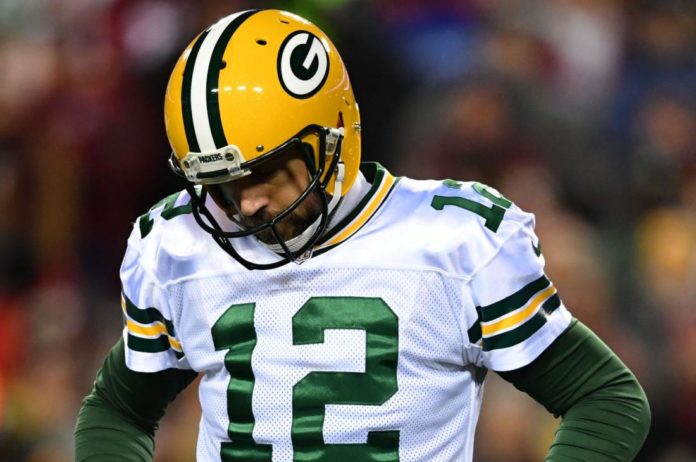
Aaron Rodgers remains one of the most dangerous quarterbacks in the NFL. However, over the past couple of years, he also seems to have become one of the most toxic. His constantly butting heads with Mike McCarthy eventually got the former Green Bay Packers head coach fired. Rodgers has a reputation for being highly intelligent but also difficult to work with. Somebody who doesn’t always accept instruction willingly.
That is why there was a significant degree of concern when the Packers hired Matt Lafleur as their new head coach. Not only is he on the younger side (39), he’s also relatively inexperienced running his own system. He only coordinated the Tennessee Titans offense for one season. Now he’s being tasked with taking over the career and legacy of a future Hall of Famer?
One can imagine that comes with a lot of pressure. It seems things have not gotten off to a good start. Not only did Lafleur tear his Achilles during a game of basketball this spring, but he’s also already running into problems with Rodgers involving the new offense. Mike Silver of NFL.com explained.
“Aaron and I have had some good talks, and we’re going to have to talk a lot more — and one thing we have to work through is the audible thing,” LaFleur explained. “We’re running a system I first picked up while working with Kyle (Shanahan) in Houston a decade ago, and we’ve never really had a quarterback who’s had complete freedom to change plays at the line, because that’s not really the way the offense is set up.
But, I mean, this is Aaron Rodgers. He’s had a lot of freedom to make those calls, and deservedly so. Now, how do we reconcile that, and get to a place where we put him in the best position to succeed?”
Aaron Rodgers has a choice to make regarding his new reality
One of the things that makes Rodgers so dangerous is his ability to improvise. What so often gets overlooked is how good he is at make adjustments at the line. Few defensive players have ever been able to match wits with him in terms of matching check for check. Rodgers always said Brian Urlacher was the one who always gave him the biggest problems.
Towards the end of his standoff with McCarthey, he was changing plays constantly. That didn’t stop the offense from being productive, or at least himself anyway. It’s hard to tell whether Rodgers has it in him to relinquish some of the freedoms of audibles in favor of trusting Lafleur’s system. The Shanahan style of offense has a long track record of success and has carried Hall of Fame quarterbacks to late-career glory before.
John Elway had plenty of freedom during his long career in Denver but could never win a Super Bowl. Then Mike Shanahan took over with that offense and within four years he’d won two championships. Gary Kubiak, an understudy of Shanahan, used that system to help carry Peyton Manning across the finish line in 2015 for Denver. Kyle Shanahan got Matt Ryan to a Super Bowl and an MVP award in 2016.
The system works, provided the quarterback embraces it. Rodgers apparently isn’t quite there yet. If he’ll ever be.
Early in 2019, it was reported that the Cubs invested into the Action Network, a sports betting media outlet, but that was just a small step into the gambling word compared to what’s coming in the future on the North Side of Chicago.
Action Network gets $17.5 million in new round of funding, including cash from Cubs, 76ers & NJ Devils owners https://t.co/Ylj9LZQ756
The Chicago Cubs have considered opening a sportsbook at Wrigley Field and at locations just outside of the Friendly Confines, multiple sources familiar with the team’s thinking told ESPN. Betting windows, automated kiosks and even a full-blown sportsbook venue inside the stadium are among the options that have been considered by the Cubs and other Chicago professional franchises, as Illinois prepares to put it new sports gambling law into effect.
Again, these plans aren’t close to being finalized, but with Illinois legalizing sports gambling, it’s only a matter of time before the Cubs fully dive into this giant revenue stream.
As of now MLB prohibits sportsbooks in their stadiums, but as long as the league gets a cut of the money you know it will be allowed in the future.
“We will work with our clubs to explore the opportunities presented by the rapidly evolving sports betting landscape in a socially responsible manner,” a spokesperson for MLB told ESPN in a statement.
Although sports gambling has been legalized in several states during the past year, the Cubs could still be in a unique position to be one of the first MLB teams to have a sportsbook.
Just one more advantage the Cubs may have in upcoming years, as the team continues to try and find more revenue streams. A sportsbook would be a huge money-maker.
“Look, Wrigley Field draws people year round,” Vic Salerno, founder of sportsbook operator US Bookmaking and a member of UNLV’s Gaming Hall of Fame, told ESPN. “It’s going to be a great location for them.” Asked if he thought it would be feasible for the Cubs to open a sportsbook by next baseball season, Salerno said, “Oh, yeah. For sure.”
The Cubs will also debut their new TV network in 2020. Crane Kenney has already said the front office will have more resources to spend because of it.
Cubs playing on the West Coast has always sucked. No clue what the actual team record is out there, but the only good memories I have are the two wins against the Angels to start 2016 and the ninth-inning comeback win against the Giants to clinch that year’s NLDS. West Coast baseball, hate it.
Anyway, after yet another brutal road trip the Cubs come back to Wrigley Field for a 10-game home stand, while being one game back of the Brewers for first place in the division. The All-Star Game is three weeks away and after the second voting update from MLB, it looks like the Cubs are getting plenty of love.
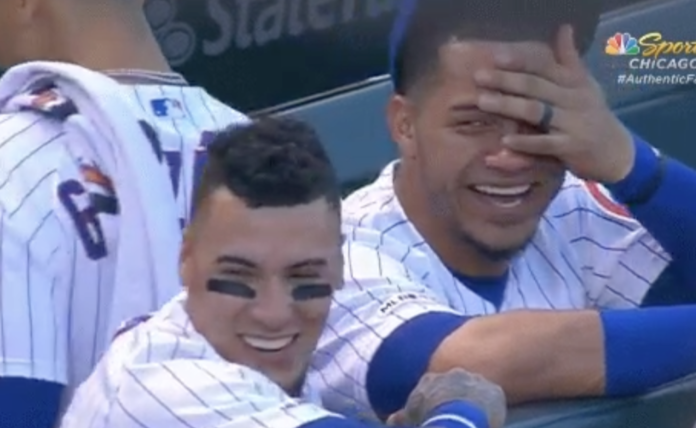
Javier Báez and Willson Contreras are currently the top vote-getters in the NL at their respective positions, while Kris Bryant and Anthony Rizzo are in the top-three at third and first base, respectively.
In case you missed how the new voting works for the 2019 All-Star Game, here’s a quick overview. After the next and final voting update, only four days left to vote, the top-three players at each position will move on to the “Election Day” ballot. Then, fans will vote for the starters from those three players at each position.
The top-nine outfielders from the primary voting will move on to the Election Day voting. Right now, the Cubs are projected to have seven players in the Election Day ballot to determine the All-Star Game starters.
While Contreras, Báez, Rizzo and Bryant definitely deserve the honor, the trio of outfielders, Albert Almora Jr., Jason Heyward and Kyle Schwarber are simply getting the push because of the giant Cubs fan base.
At this point, based on Contreras and Báez doubling the number of votes from the players second behind them, the duo is on its way to Cleveland as starters in the All-Star Game. Bryzzo will also have a good chance at being voted in as starters.
LOS ANGELES — Another road trip, another disappointing set of results for the Chicago Cubs. With yesterday’s tough 3-2 loss to the Dodgers, the Cubs dropped the series and finished their tour through Denver and L.A. with a 2-5 record. Over their last two road trips, the Cubs are 3-10. Three and Ten. That’s not a typo.
However, they remain just one game behind the NL Central leading Milwaukee Brewers. The Cubs return to Wrigley Field on Tuesday to take on the improved Chicago White Sox.
A few thoughts and observations from their series losses to the Rockies and Dodgers:
Thoughts
1. The starting pitching and bullpen failed the Cubs frequently on this trip. For example, Game 1 vs. the Rockies, the Cubs took a 4-0 lead in the third inning, only for Colorado to tie it up in the bottom half in the eventual loss. Brad Brach fell apart in Game 2 to put the loss away. In Games 1 and 2 against the Dodgers, the Cubs jumped out to 3-0 and 2-0 leads respectively, only to lose both leads and lose. Far too often, the Cubs are unable to put up shutdown innings after the offense has tied it up or provided the lead, giving the momentum right back to the opposition. It’s always tougher to play on the road, but the lack of mental fortitude was a little ridiculous in these two series.
2. Mike Montgomery is not a lefty specialist — he should not be pitching to the opposing team’s best left handed hitters. Tim Collins should not have been brought up over Dillon Maples. Addison Russell should not be on the roster. The Cubs’ personnel moves continue to confound at times.
3. Anthony Rizzo is on fire. So are Kyle Schwarber and Javy Baez. The rest of the lineup needs to catch up. The Cubs continue to largely be a home run or nothing lineup and it’s extremely aggravating.
4. The Cubs beat Kenley Jansen on Saturday and had him on the ropes again on Sunday. It should’ve been back-to-back blown saves for the Dodgers’ elite closer. Jansen struggles on zero days rest, and it’s certainly a scenario that could come up again in October. The Cubs have at least proven that they can get to him.
K.Jansen: He has a 7.88 ERA (7 ER/8 IP) on 0 days rest this season, compared to 1.74 ERA (4 ER/20 2/3 IP) with 1 or more days rest. This is 3rd day in a row.
5. Kyle Hendricks going on the IL is certainly unsettling, but he didn’t seem too worried about it in his post-game interview. As far as his subpar start, after almost two months of elite pitching, a stinker on the road against the Dodgers is forgivable.
6. Yu Darvish was sensational against the Dodgers. It was so important for him to come in and pitch well in Los Angeles after what happened two years ago. He did that. He’s been very good in a few consecutive starts now. Let’s hope he’s turning a corner.
7. Is Craig Kimbrel ready yet?
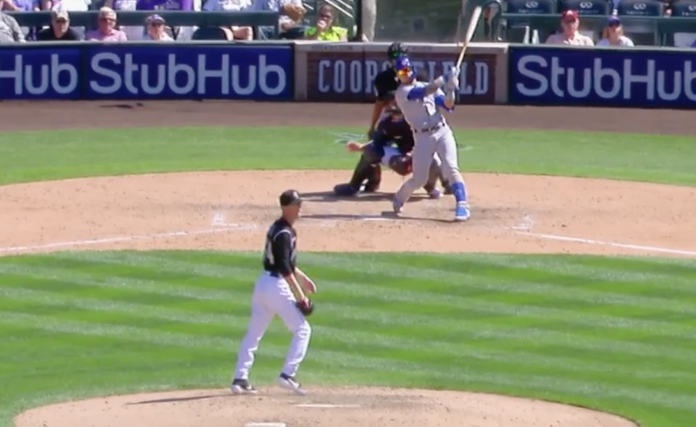
8. Based on where we are right now, if the Cubs make the playoffs this season, Cole Hamels is my Game 1 starter. What a mesmerizing performance at Coors Field to hold down that nuclear lineup.
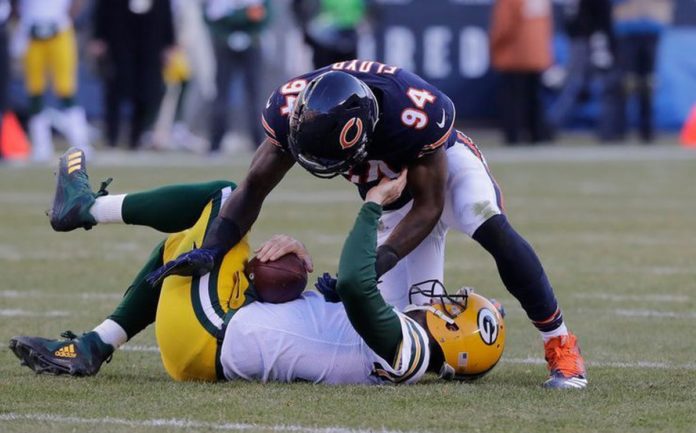
Ted Monachino, the new Chicago Bears outside linebackers coach, kicked off his career with the team with a bold statement. He stated without any subtlety that he feels Leonard Floyd has a chance to be “special” as a pass rusher. In terms of pure athletic gives, he even exceeds Khalil Mack. The trick has been getting his technique to a point where he has a full toolbox to attack pass blockers with.
Monachino believes just a little more work will get him to that point. Floyd already knows how to attack blockers on the initial rush. The tricky part has been learning how to finish better. Often the most difficult piece of the puzzle to master. All signs indicate that the fourth-year defender is working tirelessly on his fundamentals to get it right.
It seems the Bears coach isn’t the only one feeling confident though. As Brad Biggs of the Chicago Tribune points out, Floyd himself is starting to believe he’s on the cusp of playing his best football.
“Being violent and just going out with a mindset of getting to the quarterback. I have to sharpen my tools. It’s been very different because I have been able to train and do all of the things with no limitations this spring.
I believe I was playing my best football during the second half of last year after I really got over my hand injury. I felt like I was playing a lot better and I am looking forward to this year and just building off of that.”
Leonard Floyd has a lot at stake going into 2019
The Bears have maintained a steadfast belief that Floyd continues to improve. His problem isn’t ability. It’s been health. Each year has involved a seriously debilitating injury. In 2016 it was a bout with concussions. The next year it was a torn up right knee. Then last year he broke his hand in the preseason and spent the first eight weeks in a cast.
It isn’t hard to imagine he thinks the key to breaking through in the NFL is managing to play a full season without any serious health setbacks. The timely would certainly be perfect for 2019. Things have reached the point of no return regarding his next contract. At 27-years old, he’ll never have a better opportunity to land big money.
Though the Bears have already picked up his 5th-year option, it doesn’t mean they’re committed to giving him any sort of lucrative new deal. That is why he has to deliver this season. His financial future rests upon it. That, along with the pursuit of a Super Bowl, should serve as ample motivation.
Chicago’s known as one of the best cities when it comes to sports, as it’s home to some of the most loved teams in the country. Not only that, but some of the best players, stadiums, and fans have come from Chicago. Also, let’s not forget that it is one of the 10 American cities which has teams from 5 big professional team sports in the country, respectively football, hockey, baseball, soccer, and basketball.
Here are some of the best teams in Chicago and what you need to know about them.
Chicago Bulls
Having been founded in 1966, Chicago Bulls have grown a lot since then and became one of the most loved teams. Basically, they were the 3rd NBA team that was established in Chicago, and they’ve won quite some NBA championships. Consecutive awards were taken from 1991 to 1993, as well as from 1996 to 1998. The team is very much alive today and continuing their tradition of outstanding basketball matches, so you still have the chance to support them.
Chicago Cubs
If you love baseball, then you must already know about the team Chicago Cubs. It was one of the founding members of the National League in 1876, and it has become what is known as today in 1903. Today, they may not be the team with the most wins, although they did win consecutive World Series championships in 1907 and 1908. Nonetheless, they still have lots of fans, and in 2016, they succeeded in taking home the award of the championship once again.
Chicago Fire
In the soccer area, Chicago has the Chicago Fire team. The team has chosen their name after the Great Chicago Fire and they’ve been around ever since 1998. They have had their fair share of wins, such as the MLS Cup Championship during their debuting year, after which they’ve won four U.S. Open Cup prizes. You can still support the team to this day.
Final Thoughts
These are only some of the stars of Chicago sports, some you can still do online sports betting on and support. If you want to engage in some fun betting, the sports betting site BestSportsBets is at your service, so do not hesitate to bet on your favorite teams.
Johnny Morris remains the all-time career leader in receiving yards for the Chicago Bears. An incredible reality given he stopped playing football in 1967. Over the years there have been several challenges to his record. Willie Gault got off to a good start over five years but was traded in 1988. Curtis Conway had great run early in his career before injuries got in the way. Brandon Marshall and Alshon Jeffery both looked like virtual guarantees to break it. Then the former was traded and the latter left as a free agent. Not enough people remember the name Marcus Robinson.
Maybe that shouldn’t be a surprise. The man came out of Fort Valley, Georgia. A town with a population of less than 10,000 today. Imagine what it probably was back in the 1970s. However, one thing the town became known for by the 1980s was football. Slowly but surely a number of its young men began to find their way to the NFL
None became more of a household name than Greg Lloyd. After starring in high school, he attended Fort Valley State University. There he accomplished enough to become a 6th round pick of the Pittsburgh Steelers. He would go on to become a five-time Pro Bowler with 54.5 sacks. Except there was one asterisk next to his name. Lloyd was not a native of Fort Valley. He’d been born in Miami, Florida.
Robinson was pure blood of the town and wanted a chance to become just the eighth player in the town’s history to reach the NFL.
Marcus Robinson begins his climb to the top
Robinson wasn’t just a star football player in Fort Valley. He was a star athlete. He was an All-American and All-State player for Peach County High School. Not only as a wide receiver too. He also did work as a safety and a punter. When he wasn’t dominating the gridiron, he was smoking opponents on the track, winning regional championships in the 100 and 200-meter dashes.
These exploits got Robinson widely recruited. He decided to stick closer to home by attending the University of South Carolina. It seemed like a smart decision at the time. The college had recently done a tremendous job of churning out great receivers for the NFL. Sterling Sharpe was drafted in 1988 and became a five-time Pro Bowler. Robert Brooks followed in 1992. He had over 4,200 yards and 32 touchdowns in just 100 career games while winning a Super Bowl with Green Bay.
Unfortunately, Robinson arrived at a bad time. The man who had recruited both of those players to South Carolina, Joe Morrison, was gone by 1989. His offenses had been built around throwing the football. Not surprising since the man was a former receiver himself. Robinson came in under the direction of Sparky Woods. While he was a former QB himself, he was also a former defensive back.
Thus the passing game wasn’t exactly proficient under his watch.
It was apparent he didn’t know what he had in Robinson either, who only caught three passes as a freshman. Matters soon became even more complicated for the young receiver when Woods was fired after the season ended, ushering in the era of Brad Scott. It seemed like a dream come true. Scott had delivered a dynamic offensive show at Florida State while winning a national championship. He loved to open things up.
There was one problem though. Scott wasn’t good at identifying or developing great receivers.
During his time at FSU, the Seminoles saw six receivers get drafted who played under him. Only one (Lawrence Dawsey) became a starter in the NFL. Sure enough, Scott built his South Carolina offense around a twin set of running backs. Receivers were involved but not the focal point. As a result, Robinson caught just 13 passes over his sophomore and junior seasons.
Even by 1996 in his senior year, he still only caught 21 as a starter. The saving grace for him was that they amassed 505 yards (24 per catch). That, along with his size (6’3) and strong scouting combine was enough to get him noticed by the NFL. On April 20th, 1997, the Chicago Bears selected him in the 4th round.
Right back where he started
Robinson may have reached the big time, but it’s likely that about midway through his second year in Chicago he must’ve felt like he was at South Carolina all over again. Bears head coach Dave Wannstedt had a reputation. It seemed unless a player was a high draft choice, there was no way you’d get a chance to see the field early in your career.
This proved the case for Robinson. After missing his rookie year with a thumb injury, the Bears agreed to send the young receiver over to Germany to participate in NFL Europe. There he played for the Rhein Fire. Part of the reason was to knock off the rust, but also it was a chance to showcase to the world that he was more than a “project” player.
He didn’t waste time. Robinson delivered 41 catches for 925 yards and six touchdowns in 10 games. The Fire tied for the best record in the league at 7-3 and crushed the Frankfurt Galaxy in the 1998 World Bowl for the league championship. He may have made the pivotal play of the game too. Frankfurt had narrowed the score to 17-10 in the 3rd quarter. Then Robinson hit them with a backbreaking 74-yard touchdown catch.
He was named offensive MVP that year.
Unfortunately, that didn’t seem to impress Wannstedt. When Robinson got back from Europe, it was almost the same exact situation as when he’d left.
“I went over there because I just wanted to play football,” he said. “Then all of a sudden, bam, my first three games I had 100 yards receiving. I came back and I figured, `OK, I proved I can do it, they saw the film, that must amount to something.’ I was feeling pretty good about being the third or fourth wide receiver, but there I was in the same spot, fifth or sixth all over again.”
The coach’s stubbornness ended up costing him. Chicago’s passing game was even worse in 1998, finishing 23rd. The Bears went 4-12 for the second-straight year. Robinson appeared in just three games and caught four passes. Despite that, he found a way to make an impact. In one of those few wins that year, a 31-27 thriller over Detroit, he caught a 20-yard touchdown from Erik Kramer. It was the Bears’ first score of the game and finally got the offense going after a dismal 1st quarter.
Wannstedt was fired. If he didn’t see the value in the young receiver, maybe somebody else would.
An epic season nobody saw coming
Sometimes the thing that is needed in order to kickstart a career is a fresh start. Robinson got his when the Bears hired Dick Jauron as their new head coach. With him, he brought a young offensive coordinator named Gary Crowton. Before arriving in Chicago, Crowton had been the offensive coordinator at Louisiana Tech where he developed a reputation for a wide open offense. He liked to throw the football and knew how to develop receivers.
One of his prized players, Troy Edwards, was the 13th overall pick that year and would play 92 games in the NFL.
“The offense was fun. It was an upbeat offense. We ran a lot of swing passes and things like that. They got the ball in your hand, and I developed that practice of being able to go up for the football.”
Sure enough, it didn’t take Crowton long to recognize the potential ability the third-year receiver had. By the time the season kicked off in September of that year, Robinson was elevated to the top three on the wide receiver depth chart. He celebrated with four catches for 47 yards in his first game.
For the first few weeks, he was a steady contributor but hadn’t really established himself. That all changed during a trip to Minnesota. Facing the defending NFC Central champion Vikings, the Bears had been crushed the previous year up there 48-22. Robinson ensured that wouldn’t happen again, catching four passes for 136 yards and a touchdown. Chicago prevailed 24-22. One of their few bright spots of that season.
For Robinson, it was a moment the beast had awakened.
Between October 17th and December 19th of that season, Robinson would have games of 136, 161, 148, 163, and 170 yards. One of the most dominant stretches a Bears receiver has ever had. He finished the year with 1,400 yards, a franchise record that would stand for the next 13 years. What made it all the more impressive is how he did it.
Robinson didn’t have a Steve Young, Brett Favre or Peyton Manning throwing him the ball. He produced that season with three different quarterbacks passing it: Shane Matthews, Jim Miller, and Cade McNown. This would be something the receiver always had a problem with according to Jack M. Silverstein of Windy City Gridiron.
“You would come in on Saturdays and they would be like, ‘Okay, Jim Miller’s starting this week,’” says a still incredulous Robinson with a laugh. “‘Okay, we’re going to let Cade start.’ This would be on a Saturday before the Sunday game.”
Still, Robinson did appreciate one thing. The Bears coaches allowed him a much freer hand to get calls changed if he saw an opportunity for a big play. Something he took advantage of frequently that year. There was no doubt. Chicago appeared to have a superstar in their midst.
His greatest regret
The next year, Robinson remained a steady and dangerous threat through the first 10 games of 2000. He didn’t have any explosive games like the year before but he was on track for his second-straight season over 1,000 yards (741 yards with six to play). Then in a game against the New York Jets, he suffered an injury to his back. It knocked him out of the contest and the remainder of that season.
Nobody knew it at the time, but this would start a tragic trend for the receiver that would ruin his career.
The next year in 2001, everybody felt the Bears might have something. Their defense had been greatly bolstered by the arrival of Brian Urlacher and Mike Brown the year before. They had a new presence at running back in Anthony Thomas. Jim Miller had finally won the starting QB job. If Robinson returned to form, this team looked dangerous.
Things started out well.
After being blanked in the opener by the defending champion Ravens, Robinson exploded over the next two games for 213 yards and two touchdowns. This sparked a run of victories for the Bears that would go on for the next six weeks. Unfortunately, he wouldn’t be there to see it.
During a game in Cincinnati, Robinson was on course for a big day. He’d just made his fifth catch of the game for 23 yards when two Bengals tackled him. The contact led to tearing of both the ACL and LCL in his left knee. A devastating injury that would prove destructive to his career. Yet as painful as that was, what hurt the most for him was not being part of the rest of that season.
“It was rough. It was rough,” Robinson lamented. “I came back and was playing really well. … We went 13-3 that year, man. If I would have been able to play, we could have—ugh. It was definitely frustrating.”
There is no question the Bears missed Robinson in the playoffs. Against Philadelphia, their passing game was utterly inept. Miller and Matthews combined for 89 yards and three interceptions. The Eagles defensive backs pretty much had their way with Chicago’s receivers. Had he been there, things might’ve gone differently.
Wanting out
By the start of 2002, things had changed for Robinson. The Bears coaching staff, with new coordinator John Shoop, didn’t feel they could wait on him any longer. They had another young receiver in Marty Booker who was ascending and also their 1st round pick from the year before David Terrell to develop. Not to mention the desire to get more speed on the field, which explains why Dez White got more action as well.
Despite making it through all 16 games that season, Robinson was targeted just 52 times. He made 21 catches for 244 yards and 3 touchdowns. By the end of the year in what was another losing season, he’d had enough. In April of 2003 before the draft, the Bears granted him his release. DIck Jauron lamented what could’ve been.
“He wanted his release. This was in the best interests of Marcus, not necessarily the Bears. We try to do what’s in the best interests of our players. We appreciate what he’s done for us.”
Anxious to show people that he still could play, he signed with the Baltimore Ravens. Unfortunately, like the Bears, they were in the midst of a major quarterback crisis with names like Kyle Boller and Anthony Wright as their primary options. Thus the opportunities weren’t as plentiful as he’d hoped. Nonetheless, he still showed flashes of that old 1999 magic.
Getting the last word
Robinson left Baltimore after one year. His desire by 2004 was to join a playoff-caliber team that had an established quarterback. His choice, much to the dismay of Bears fans, was the Minnesota Vikings. Between that season and 2005, he made 78 catches for 1,172 yards and 13 touchdowns. Not bad considering he was sharing targets with Randy Moss.
He helped the Vikings make the playoffs that first year and even managed to show everybody what he might’ve done four seasons back for Chicago. On a cold day in Philadelphia, when the rest of the offense was struggling, he delivered one of his best games of the season with five catches for 119 yards and a touchdown.
How did the Vikings show their appreciation? By cutting him on Christmas Eve the next year. The move came as a surprise given he led the team in touchdown receptions. The team offered no explanations to him. All he could theorize was head coach Brad Childress got offended when Robinson expressed concern that there was a lack of communication between players and coaches.
In an interview Sunday afternoon, Robinson said he and some other players have “a total lack of communication” with Childress, and said that offensive coaches rarely heed suggestions or other input from players. That sentiment corroborates a recent statement from quarterback Brad Johnson, who lost his starting job a day after saying he and Childress “never talk.”
Robinson failed to make it on another roster after that. Rather than continue to hold out hope, in June of 2008 he requested that he be allowed to retire with the Bears. They gave him a one-day contract and he officially stepped away on the 9th. He’d played his last game before the age of 32.
The great what-if
To this day it’s hard not to wonder how things might’ve been different for the Bears had Robinson avoided those injuries in 2000 and 2001. Not only did they rob him of that extra gear he seemed to have, but they also killed the confidence the Bears coaches had him in. Imagine if he had avoided them and was still firmly planted in the offense by the time Lovie Smith arrived.
Robinson would’ve been 32 going into that 2006 season. Keep this in mind. That year, despite his banged-up body state, he still had 381 yards and four touchdowns in just 10 games. That would’ve made him the third-most productive receiver on the Bears offense that year. If they had a healthier version of him? Maybe, just maybe Super Bowl XLI would’ve gone differently.
If nothing else, his legacy would be far different. Prior to the knee injury, Robinson had 2,407 receiving yards in just 32 games as a starter. It’s hard to imagine he wouldn’t have broken Morris’ long-standing franchise record of 5,059 yards for a career.
Another tough reminder of how cruel and unforgiving the world of professional sports can be. Especially football. Still, what Robinson was able to accomplish for that ever-so-brief window at the dawn of the new millennium is deserving of high praise and a permanent place in Bears lore.
Not to mention as a reminder of what happens when you give players an opportunity. Something the new generation of coaches and executives at Halas Hall learned well.
Most people probably won’t recall the name Gary Zauner. He was a notable special team coordinator who spent time in Minnesota, Baltimore, and Arizona from 1994 to 2006. He also has a long and respected career as a kicking consultant that dates all the way back to 1980. He even did some work for the Chicago Bears in 1992. Oh, and he also discovered Robbie Gould.
The man has worked with a lot of good specialists in his career. It includes names like Kevin Butler, Gary Anderson, and Matt Stover. Safe to say the guy knows what top kickers are supposed to look like. What many people don’t remember is that he had a huge hand in the Bears securing the best leg in franchise history back.
According to Adam Jahns of The Athletic, Zauner is an acquaintance and friend of Bears special teams coordinator Chris Tabor. He is also the man who helped the Ravens sign Gould out of Penn State in 2005. The man was so taken with the kid’s talent that he advised Baltimore to part ways with Stover and keep Gould.
They refused.
The Bears brought Robbie Gould in for a workout
They placed a call to Zauner asked for any notes he had on the young man. The coach didn’t mince words, merely stating Chicago might be making a wise decision by bringing the lanky kid in for a tryout.
Zauner runs a camp and a combine for free-agent specialists. He’s also known Tabor for years…
…Zauner has Bears connections, too. Mike Ditka hired him as a consultant in 1992. Zauner also worked with Kevin Butler and his son.
Better yet, Zauner vouched for a young Robbie Gould when Gould was an undrafted rookie with the Ravens in 2005…
“But all I remember is that when we cut him, that Bobby DePaul, who was the personnel guy with the Bears, he calls me. He goes, ‘Gary, what are you doing?’ I said, ‘Why? …. Well, all I can tell you is that he’s pretty good.’ He goes, ‘Well, we’re bringing him in for a workout.’”
As it turns out, Zauner has connections to the Bears this year once again. He helped out in coaching both Chris Blewitt and undrafted rookie snapper John Wirtel. So he’s been in contact with Tabor during this kicking competition. How much is unknown. Still, knowing the guy who tipped the Bears off to Gould is involved once again?
That certainly gives one some encouragement that they might be headed in the right direction.