
Saturday, November 14, 2026
EDGE is live. Chicago fans can now access and explore the beta.
Home Blog Page 262

Chicago Bears 2026 Mock Offseason: How To Fix A Defense

chicago bears 2026 mock offseason
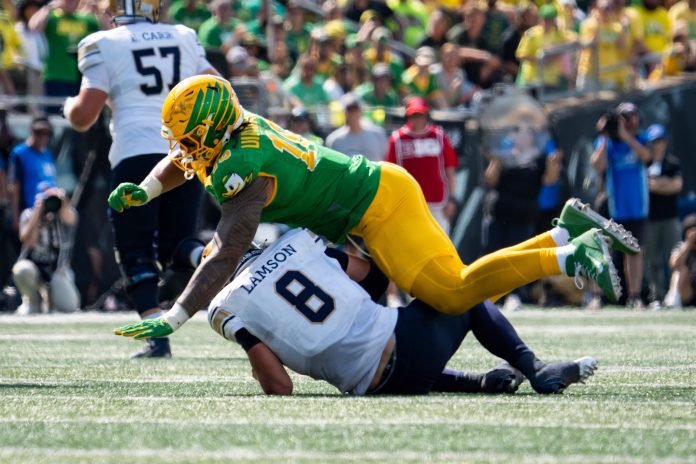
Oregon outside linebacker Matayo Uiagalelei sacks Montana State quarterback Justin Lamson as the Oregon Ducks host the Montana State Bobcats on Aug. 30, 2025, at Autzen Stadium in Eugene, Oregon.

The first Chicago Bears 2026 mock offseason comes far later than previous years. It is a byproduct of the team being good for once. With one game left, they’re playing for a chance at the #2 seed in the playoffs. However, it has become apparent by now what their objectives will be next spring. GM Ryan Poles and head coach Ben Johnson accomplished their objective for 2025, which was to build around Caleb Williams. Now, their focus will shift to a defense that has been underwhelming for most of the season, outside of turnovers. Plenty of work must be done. Here is how they can go about it.

The Chicago Bears’ 2026 mock offseason will feature some tough decisions

Cuts/Trades:

D.J. Moore to the Las Vegas Raiders for a 3rd round pick in 2027

This is the toughest decision to make. Moore has been a trusted playmaker for the Bears, but they have to find a strong kick of salary cap space somewhere. Trading their wide receiver will secure $16 million in cap space, along with a solid future pick they can retool with. They have Rome Odunze and Luther Burden under manageable contracts. This is one of those moves you never like making, but sometimes can’t avoid.

Restructures/Extensions:

Salary cap: $12.69 million

Free Agency:

Fans won’t like the idea of this Chicago Bears 2026 mock offseason coming and going with no notable moves in free agency. Sadly, it has to be this way. The team has no wiggle room to make any significant additions on the veteran market this year. They can probably add a few guys on the cheap, but that’s it. If ever there was a year to focus on trying to get compensatory picks, this is the one.

The Draft:

1st Round – Matayo Uiagalelei (EDGE, Oregon)

If you’re looking for a poster child of a classic 4-3 defensive end, it’s Uiagalelei. He’s 6’5 and 270 lbs with good length. He’s already an excellent run defender, but has also flashed a lot of promise as a pass rusher. His mix of power and athleticism makes him a difficult matchup in any situation. At one point in a 16-game span for Oregon, he had 12.5 sacks and 15.5 tackles for a loss.

2nd Round – Derrick Moore (EDGE, Michigan)

You always want to see steady progress from a player throughout their college career. That is exactly what Moore presented despite the carnival show at Michigan this past year. He had 10 sacks in 12 games, 7.5 of them coming in the final six contests. He’s average in size, but makes up for it with an explosive burst, raw power, and a strong motor. What he needs is development.

3rd Round – Darrell Jackson (DT, Florida State)

Interior run defense has been a persistent issue for the Bears for a long time. Andrew Billings has eased the pain at times, but he’s in his 30s and likely nearing the end of his career. They need a true nose tackle for the long term. When he’s in a groove, Jackson is the type of big, powerful guy who is impossible to move. He has natural leverage to get under blocks, and the lower-body strength to hold his ground is perfect.

4th Round – Lander Barton (LB, Utah)

If you’re looking for the modern era linebacker, look no further. Barton has great size for his position at 6’4 and couples it with great range and coverage instincts. Chicago has struggled covering the middle of the field all year. Barton, with his five interceptions in three years, could help with that.

5th Round – Tao Johnson (S, Utah)

As with Billings, the Bears must think about life after Kevin Byard. Johnson is the type of athletic safety who can fit perfectly in single-high. He has the range to cover lots of ground and the awareness to go after the football when it’s in the air.

7th Round (via CLE) – Barion Brown (WR, LSU)

While the Bears have plenty of talent at wide receiver, one thing you could argue they’ve lacked for too long is legitimate vertical speed. They don’t have a burner. Brown is the type of gamble worth taking. While he never had a breakout year for LSU, his 4.3 speed is no joke. Defenses will have to respect him.

7th Round – Raion Strader (CB, Auburn)

Depth at cornerback is never a bad thing. Injuries ravaged the position for Chicago this season. Adding another body won’t hurt. Strader had 31 passes defended and three interceptions in his two years at Miami (OH) before transferring to Auburn this season. He has a nose for the football.
Audio: Why I’d Play Nobody on Sunday

ben johnson
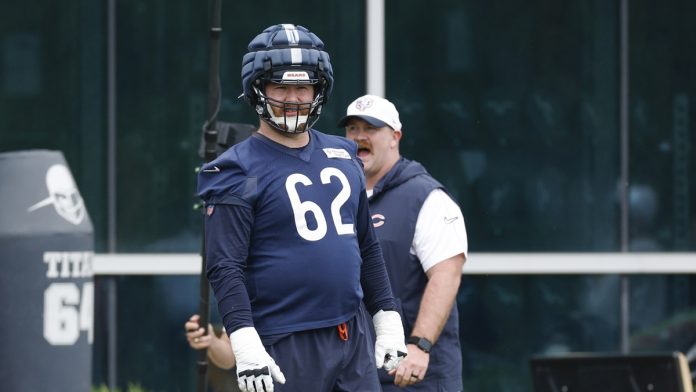
Jun 3, 2025; Lake Forest, IL, USA; Chicago Bears guard Joe Thuney (62) looks on during minicamp at Halas Hall. Mandatory Credit: Kamil Krzaczynski-Imagn Images

LeSean McCoy Rapidly Backtracked On Caleb Williams After Showcase In San Francisco

lesean mccoy

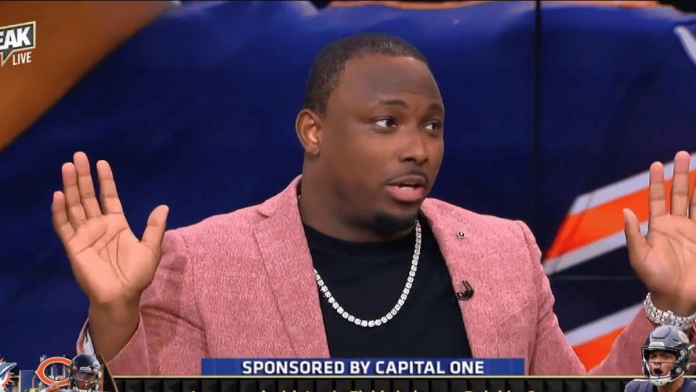
If there’s one thing people know about LeSean McCoy, it’s that he isn’t afraid to open his mouth. The former Pro Bowl running back has transitioned seamlessly into the modern media sphere, thanks to his willingness to share hot takes left and right. One of his favorite targets of opportunity is the Chicago Bears quarterback position. Justin Fields was a frequent victim of his criticism throughout his time as the starter. When Caleb Williams took over last year, McCoy turned his verbal jabs on him.

Things reached peak meatball a few weeks ago when he openly stated that Cleveland Browns rookie Shedeur Sanders was better than Williams. This came after Sanders put up 364 yards and three touchdowns on the lowly Tennessee Titans. Williams took exception to that, and didn’t mind saying so after the Bears crushed the Browns the next week.

McCoy didn’t back off his comments. He held to the belief that Williams was too reliant on making plays outside the pocket. That changed on Sunday night in San Francisco, where the Bears quarterback lit up the 49ers for 330 yards and two touchdowns. Only then did McCoy admit he may have been mistaken.

LeSean McCoy understands what good quarterbacks look like.

He played with quite a few of them in his career. It began with Donovan McNabb in his early years with the Philadelphia Eagles, followed by Michael Vick and Nick Foles. He spent a season with Josh Allen in Buffalo, another with Patrick Mahomes in Kansas City, and his last one in Tampa Bay with Tom Brady. Say what you will of LeSean McCoy, but he at least has experience working with great quarterbacks. That is why he likely feels so confident about his assessments of the position, even if they might be premature.

His statement on Williams never felt like it came from a place of honest evaluation. He recalled what he’d seen from the USC days and thought that would always be the player Caleb would remain. There was no room to grow. The San Francisco game served as a perfect encapsulation of why it’s important to wait before assessing if a quarterback is good or not. McCoy probably thought Allen wouldn’t amount to much, given his rough rookie year. Maybe this will serve as a lesson for the future.

Previewing The White Sox Infield As We Head Into 2026

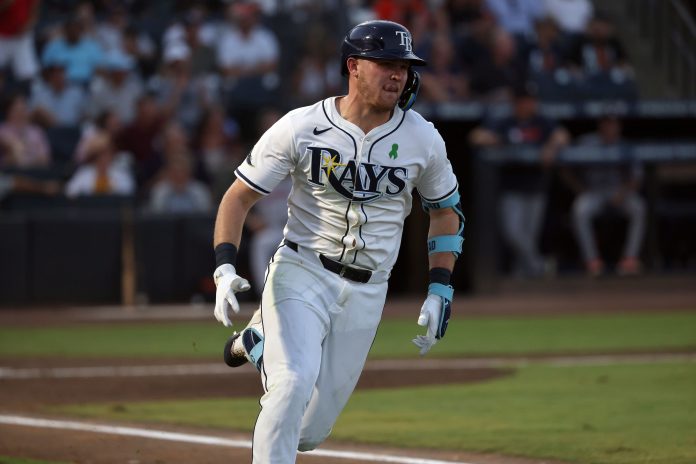
May 20, 2025; St. Petersburg, Florida, USA; Tampa Bay Rays infielder Curtis Mead (25) doubles against the Houston Astros during the third inning at George M. Steinbrenner Field. Mandatory Credit: Kim Klement Neitzel-Imagn Images

As we approach the new year, the White Sox have made some improvements to their roster, as they should be a much better team than the past few years. However, the bulk of the improvement is expected to come from the younger players on the team, as they are filled with a ton of talented rookies and second year players.

The White Sox currently have a full 40-man roster and will have some trimming to do if they add a few more players, as there are certainly some spots on the roster they can continue to try and upgrade.

However, it does not appear that any moves are imminent, so it seems the current roster is going to carry over into the new year. As we approach 2026, we are going to take a look at each position group to see how it will play out as we enter Spring Training. Here, we will take a look at the current state of the infield.

The Locks

The starting infield is essentially set at this point, barring any injuries or shocking trades. Come Opening Day, Miguel Vargas will be the starting third baseman, Colson Montgomery will be the starting shortstop, Chase Meidroth will be the starting second baseman, and Munetaka Murakami will be the starting first baseman. That will be your starting infield most of the season, and it will be one of the better young infields in the major leagues.

At catcher, Kyle Teel and Edgar Quero will be rotating in, but I would imagine that Teel gets most of the innings behind the plate, as he is better defensively. When one isn’t playing, I would imagine the other will DH depending on the matchup.

Lenyn Sosa will also be on the roster come Opening Day, but he is more of a curious case. He has played every infield position for the White Sox, but he isn’t known for his defensive prowess. He certainly has a major league bat, but if Quero or Teel are in the DH spot, there is not room for Sosa in the everyday lineup. Manager Will Venable will need to get creative to get Sosa’s bat in the lineup, because he certainly belongs there.

Fringe Guys

The rest of the infield is up for grabs. I would imagine they keep around six infielders, so if you include Sosa in that mix, there would be only room for one more. That wouldn’t take into account if they wanted Korey Lee on the roster and have three catchers.

Besides Sosa, there are a few more infielders on the 40-man roster. They have Ben Cowles, who they claimed late last year, Curtis Mead, who was a trade deadline acquisition, Tanner Murray, who was acquired earlier in the offseason, and Bryan Ramos.

As of right now, I would imagine that Curtis Mead has the lead over everyone else. He was a former top-100 prospect and had a very solid debut with the White Sox last season. In 41 games with the White Sox, Mead slashed .240/.280/.304 and added 11 RBIs with eight doubles. This was a solid line but it would have been much better if he had not gone 4 for 37 to end the year.

Mead has a ton of potential and I would love to see him get consistent at-bats. However, with the addition of Murakami, that may be hard to come by, unless the White Sox trade a player or two. However, since he has the most major league experience, I would imagine that he likely makes the Opening Day roster.

At this point, unless there is an injury or a crazy Spring Training, I see Cowles, Murray, and Ramos opening up the year with the Charlotte Knights. Each of them have potential, so if there is an injury, they would be able to fill in admirably. However, I would like to see each of them get an extended look in Chicago at some point throughout the season.

As it currently stands, the White Sox have a very young and exciting infield. Outside of Meidroth, who is more of a leadoff hitter, each could realistically hit 20+ homeruns this season. That would be a fantastic development and for the first time in a while, the White Sox have a promising lineup.

Chicago’s Trade Deadline Plan Just Added A New Twist

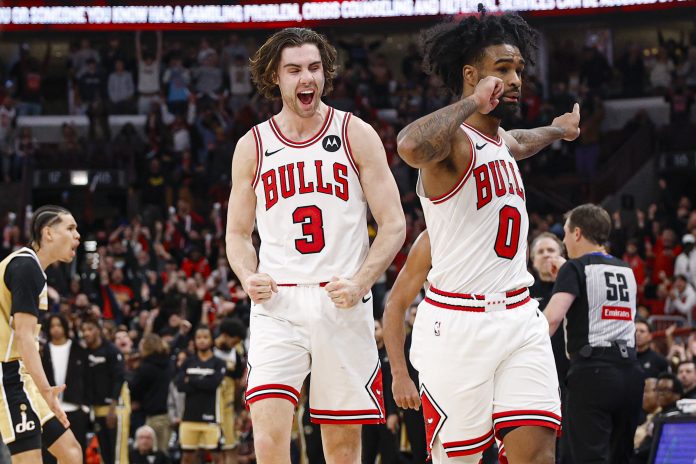
Nov 22, 2025; Chicago, Illinois, USA; Chicago Bulls guard Josh Giddey (3) and guard Coby White (0) celebrate a defensive stop against the Washington Wizards during the second half at United Center. Mandatory Credit: Kamil Krzaczynski-Imagn Images

The Chicago Bulls dropped their second consecutive game tonight, losing to the Minnesota Timberwolves 136-101. Zach Collins was sorely missed in this one, having been the most consistent center on the roster and providing energy in the paint on both ends. Chicago trailed almost the entire way, and this was a lopsided contest for the final three quarters of action. The last two outings have continued the trend of extreme polarity for the Bulls this season. After winning five in a row, they’ve now begun a new losing streak, one they will hope to snap against the New Orleans Pelicans on Wednesday night. They’re 0-2 against the eight-win Pels this year. One late injury in tonight’s game might turn the tide for the next month of Arturas Karnisovas’s decisions.

Josh Giddey Limped Off And Did Not Return

Tonight’s game went from bad to worse when starting point guard Josh Giddey walked off the floor gingerly. Early reports indicate a hamstring injury for the 23-year-old, and he did not return to the game. If his absence is extended, and the Bulls continue to drop in the standings without his impact, a fire sale at the trade deadline would be practically guaranteed.

In his second year with Chicago, Giddey has emerged as the best player on the roster. He’s nearly averaging a triple-double, posting 19.5 points, 9.1 rebounds, and 9.2 assists per contest. Without his offensive playmaking and orchaestrating that side of the floor, the Bulls will tumble quickly.

Coby White Also Left The Game

As if Giddey wasn’t enough of a blow for Chicago on the night in addition to the loss, Coby White was also sidelined. White’s injury is more problematic, seeing that it is the same right calf that held him out of the first portion of the season, this might mean longer term issues. He would exit and head straight to the locker room, and not return for the remainder of the game. The Bulls are now without their two top scoring and playmaking guards.

If the team has to play any games without one or two of their best players, things could go south in a hurry. Both injuries on the same night have to lean the franchise toward a fire sale mentality, especially if the losses start to pile up in the next month.

Did these injuries officially force Karnisovas’s hand on the trade market, or will the reserves somehow scrap together enough wins to keep the front office’s faith in contention alive?

NFL Insider Warns Eric Bieniemy May Leave Chicago — And Why It’s Almost Unavoidable

chicago bears

The Chicago Bears have had a tremendous 2025 season in almost every aspect. None more so than their running game. With one week left in the regular season, they are 3rd in rushing. Much of that is thanks to the excellent work by running backs D'Andre Swift and Kyle Monangai. The two have combined for over 1800 yards and 14 touchdowns this season. There is no denying the impact they’ve had. Much of the credit for this goes to Eric Bieniemy. His hiring as the running backs coach has clearly affected their development. Swift is having the best season of his career, and Monangai is a 7th round pick who might be the best #2 back in the league.

This is a big reason why head coach Ben Johnson sought him out in January. He knew Bieniemy’s reputation as one of the best in the business. It was fortuitous that the coach was available, given his recent success as an offensive coordinator. Unfortunately, it sounds like Chicago may not get to enjoy it for long. Experts believe there is a growing possibility Bieniemy will leave this offseason. The general consensus is he likely returns to Kansas City, where they could make a change at offensive coordinator following a disappointing season from Patrick Mahomes.

Bringing back Eric Bieniemy feels inevitable for the Chiefs.

He was their offensive coordinator from 2018 through 2022. In that time, Mahomes averaged 4,791 yards, 38 touchdowns, and 10 interceptions. In the three years since Bieniemy left, those numbers dropped to 3,899 yards, 25 touchdowns, and 12 interceptions. Mahomes went from the best in the sport to really good, and that has clearly made the Chiefs mortal. Whatever work Bieniemy did had an impact on their success. Bringing him back is a logical decision. It would be a pay bump for him and perhaps reignite his chance to become a head coach down the line.

The Bears can certainly beg him to stay. They could even offer a pay raise and maybe a promotion to run game coordinator. Such tactics have worked in the past. However, it feels like Eric Bieniemy made his point when he left Kansas City. While they did win another Super Bowl without him, it was already evident that the offense was losing steam even then. Things finally bottomed out this year. Kansas City knows it can’t afford to waste prime years of Mahomes anymore. Bringing Bieniemy back is the obvious decision.

Jed Hoyer Likes a Different Kind of Risk in Free Agency

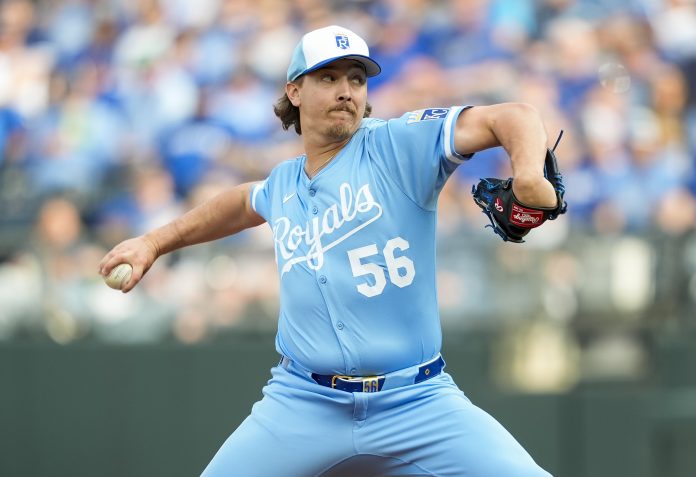
Mar 27, 2025; Kansas City, Missouri, USA; Kansas City Royals relief pitcher Hunter Harvey (56) pitches during the eighth inning against the Cleveland Guardians at Kauffman Stadium. Mandatory Credit: Jay Biggerstaff-Imagn Images

The Chicago Cubs have signed right-handed reliever Hunter Harvey to a one-year contract and at first you might scratch your head, wondering how this is a risk at all for Jed Hoyer. Yes, there’s never anything wrong with one-year contracts and even the $6 million price tag isn’t breaking the bank, but make no mistake about i the Cubs are bringing in Harvey and are counting on him to be an important piece to the bullpen in 2026.

So, what makes this latest free agent signing risky? Harvey pitched in 12 total games for the Kansas City Royals in 2025, and the 31-year-old has only ever made more than 50 appearances once since breaking into the big leagues with the Baltimore Orioles in 2019.

Yet, as we saw last offseason, the Cubs don’t seem to mind signing players with a shaky track record of injuries. Matthew Boyd pitched in 11 total games in his return from Tommy John surgery with the Cleveland Guardians before signing a two-year deal with the Cubs. Then, Boyd had the best season of his career, was named an All-Star and was the Cubs’ Game 1 starter in the postseason. Not bad.

Now, the Cubs have identified Harvey as their next hidden gem. Yes, despite logging a total of 10.2 innings with the Royals last season, the right-handed reliever still managed to nearly match Phil Maton’s AAV from the Cubs this offseason in free agency.

In his small sample during the 2025 season, Harvey did not allow an earned run, while striking out 11 and walking one batter. He gave a total of six hits, all singles, and recorded five holds out of Kansas City’s bullpen.

Harvey broke out with the Washington Nationals in 2023, when he recorded a 2.82 ERA and 0.94 WHIP in 60.2 innings with 67 strikeouts and 13 walks. He was really damn good and despite his numbers taking a dip in 2024, he was still a hot trade target and was dealt for a late first round pick and a prospect in a deal with the Royals. But the injuries have piled up ever since he arrived to Kansas City,

After the 2024 trade deadline, Harvey pitched in six games before he was shut down and then in 2025, he missed most of the season because of a teres major strain and then missed the final seven weeks of the regular season because of a Grade 2 adductor strain.

Dating back to July 24, 2024, when he made his debut with the Royals, Harvey has pitched in 18 total games and now the Cubs agreed to pay him the second-highest salary from their free agent relievers heading into next season.

The stuff is there, though, as Harvey has touched upper 90s with his fastball in the past. He doesn’t walk guys and carries a career a 26.8 K% rate with a 3.11 ERA in 185 innings. There’s a real chance here that if Harvey remains healthy, gets back to averaging 98mph (96.4mph in 2025) he could become Brad Keller 2.0. A guy who starts off as a middle relief option and then turns out to be the most important reliever on the team.

The injuries certainly make this a risk and seeing that the Cubs seem determined to stay below the luxury tax payroll Harvey may very well be the final free agent reliever the team signs this offseason. Harvey has to pan out for Jed Hoyer, who may not like to risk signing players to big contracts, but instead is betting on another bounce back performance from a pitcher with plenty of talent and a sketchy injury past.

Why The White Sox Should Consider Trading Lenyn Sosa

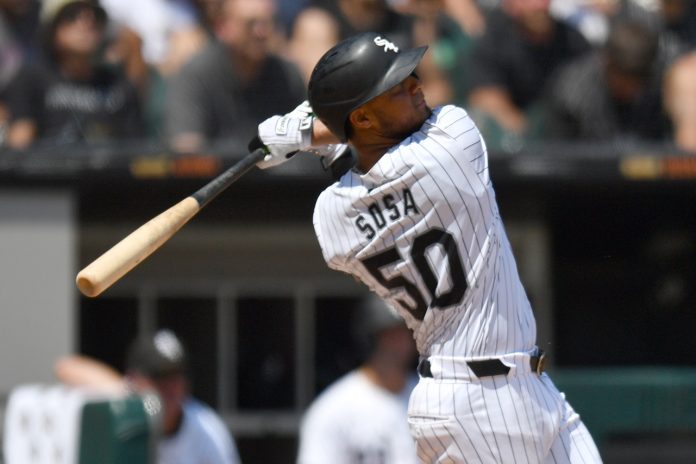
Jun 29, 2024; Chicago, Illinois, USA; Chicago White Sox third base Lenyn Sosa (50) hits a two-run home run during the fifth inning against the Colorado Rockies at Guaranteed Rate Field. Mandatory Credit: Patrick Gorski-USA TODAY Sports

Lenyn Sosa was arguably one of the White Sox most consistent bats last season, but with a crowded infield and difficult 40-man roster decisions looming, the club could look to move the 25-year-old Venezuelan.

Sosa led the White Sox in hits (137), home runs (22), and RBIs (75), finishing the season with a much-improved .264/.293/.434 slash line. While his strikeout rate sat north of 23% and he posted one of the lowest walk rates in baseball at 3.3%, he consistently barreled the ball, ranking in the top half of MLB in barrel rate, average exit velocity, and expected slugging percentage.

However, when the White Sox added Curtis Mead in a trade from the Tampa Bay Rays, it limited where the White Sox could put Sosa. His defense at first base was poor, and while he is a capable second and third baseman, he is blocked on the roster by Miguel Vargas and Chase Meidroth. That roster squeeze became even tighter when the White Sox signed Munetaka Murakami, making Vargas the leading candidate to man the hot corner on Opening Day. 

While Sosa is the superior bat, the 25-year-old Australian Mead offers significantly more defensive versatility. Though he also lacks a clearly defined role, his stronger glove may make him a better fit for a bench spot than Sosa.

Both players are out of minor-league options, meaning the White Sox must keep them on the major-league roster or risk losing them on waivers. 

There is clear value in keeping a bat of Sosa’s caliber on the roster, but his trade value is likely as high as it has ever been. If Marakama lives up to his billing as an impact power hitter, the roster may place a greater premium on defense.

For a team looking for a cheap right-handed bat, Sosa could draw some interest. Trading away Sosa would also free up some roster space to give Tanner Murray, whom the White Sox acquired in a trade with Tampa Bay for Steven Wilson and Yoendry Gomez, more of an extended look. 

Murray still has three minor league options remaining and is capable of playing shortstop, second base, and third base.

His three minor league options do give the White Sox a bit more flexibility with Murray, who has yet to play in the big leagues. In 572 plate appearances with Tampa’s Triple-A affiliate last season, he slashed .241/.299/.400 with 18 homers. 

The White Sox still need pitching and outfield help, and trading away Sosa could help the White Sox address some of those needs.

49ers Exposed Two Glaring Weaknesses In The Chicago Bears’ Defense

chicago bears
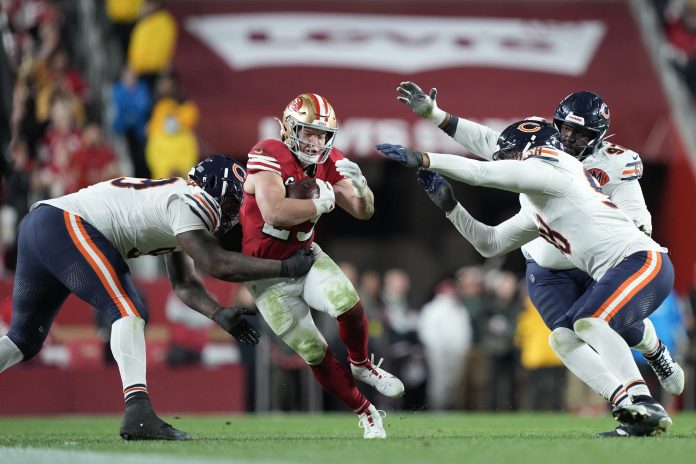
Dec 28, 2025; Santa Clara, California, USA; Chicago Bears defensive tackle Gervon Dexter Sr. (99) tackles San Francisco 49ers running back Christian McCaffrey (23) in the second half at Levi's Stadium. Mandatory Credit: Kyle Terada-Imagn Images

San Francisco has been an offensive juggernaut for years. Everybody knew going into Sunday night that it would be difficult to slow them down. Unfortunately, the Chicago Bears couldn’t even manage that. Outside of a pick-six on the first play, the 49ers had their way most of the night. Brock Purdy scored five total touchdowns, and the offense had 496 total yards. The Bears’ defense had no answers for them, which was discouraging since San Francisco didn’t even have George Kittle available and lost Trent Williams in the middle of the game.

It became clear early on that the 49ers were exploiting two glaring weaknesses in Chicago’s defense. First was their lack of pass rush. This isn’t a big surprise. That has been a problem all year. The Bears only pressured Purdy ten times and sacked him once. You won’t stop good offenses that way. What made things worse was the alarming lack of speed on the back end. Bears linebackers really struggled to contain Purdy’s mobility while 49ers receivers were open all night. Ricky Pearsall averaged 3.31 yards of separation while Kendrick Bourne averaged 4.23.

The league average is 2.99. They were wide open.

The 49ers scored touchdowns on four of their next five possessions. For the game, they had TD drives of 65, 66, 75, 72, 65 and 75 yards. There weren’t any short fields where the defense was in a bad spot. The Bears simply had no answers for Purdy, who completed 24 of 33 passes for 303 yards and three touchdowns and ran for two more scores. Even with star tight end George Kittle missing the game with an ankle injury, Purdy feasted on open windows in the middle of the field and diced up zone coverage.

The Chicago Bears badly need speed up the middle.

That goes from up front to the safeties. None of their defensive tackles can be categorized as explosive. Gervon Dexter is more of a power player. Grady Jarrett has lost a step due to age and injuries. Tremaine Edmunds is a great athlete, but he may be hampered by the injury he sustained a few weeks ago. T.J. Edwards, for all his mental brilliance, is 29 and has been haunted by soft tissue problems all season. Kevin Byard is 32 years old. Jaquan Brisker was never known for elite range.

When your defense can’t rush the quarterback and is too slow on the back end, you are in big trouble. The Chicago Bears have survived to this point because they’re outstanding at forcing takeaways. When they can’t do that, it becomes obvious how limited they are. Sadly, there isn’t much they can do about it. Defensive coordinator Dennis Allen is doing his best to mask the problems, but coaching can only do so much. This group badly needs a refresh. San Francisco was merely the most recent reminder.

Why Bears Playing Starters Vs. Detroit Is The Right Call — Especially For Caleb Williams

caleb williams
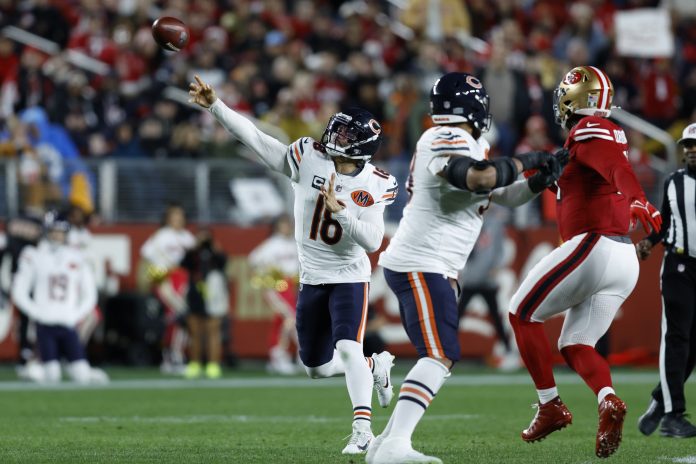
Dec 28, 2025; Santa Clara, California, USA; Chicago Bears quarterback Caleb Williams (18) passes against the San Francisco 49ers in the first half at Levi's Stadium. Mandatory Credit: Sergio Estrada-Imagn Images

The Chicago Bears won’t be able to get the #1 seed in the playoffs this year. Their loss to the San Francisco 49ers in that wild shootout made that clear. Now, fans and media are debating the obvious question. Should the team rest their starters in the season finale against the Detroit Lions? They’re already guaranteed a home game in the playoffs as NFC North champions. It feels like there won’t be much difference between the #2 seed and the #3 seed aside from determining who they play in the wild card round. However, quarterback Caleb Williams plays a big part in this decision.

With his stellar performance in San Francisco, he sits at 3,730 yards passing for the season. That means he is 270 yards away from becoming the first Bears quarterback in NFL history to throw for 4,000. You can bet head coach Ben Johnson would love nothing better than to get his young quarterback there against his former team. That aside, don’t tell Johnson the seeds don’t matter. Securing the #2 seed guarantees the Bears two home games in the playoffs, instead of just one. That matters.

Caleb Wiliams has a promise to keep.

He stated that he believed he’d get to 4,000 yards. Now he’s within reach. Don’t forget there is an element of revenge involved here. The Bears haven’t forgotten that the Lions scored 51 points against them in their last meeting. You can bet they’re itching to get some payback for that humiliation. Being the team to allow the first-ever Bears 4,000-yard passer would be a nice little rubbing of salt in the wound. The Lions have been soft against the pass for most of the past two months. Jameis Winston, Dak Prescott, and Matthew Stafford all cleared 300 easily against them.

Health is important. That is obvious. Still, the Bears have multiple things to play for. Every home game they can snag in the playoffs is important. Don’t forget this franchise is 2-6 on the road in the postseason during the Super Bowl era. Soldier Field is pivotal to any playoff ambitions they have. Using that as a pretext to get Caleb Williams to a milestone nobody else has reached in franchise history is a cherry on the sundae.