
Saturday, November 14, 2026
EDGE is live. Chicago fans can now access and explore the beta.
Home Blog Page 244

Bears vs. Rams AI Analysis: 20 Things Media and Fans Are Failing To See

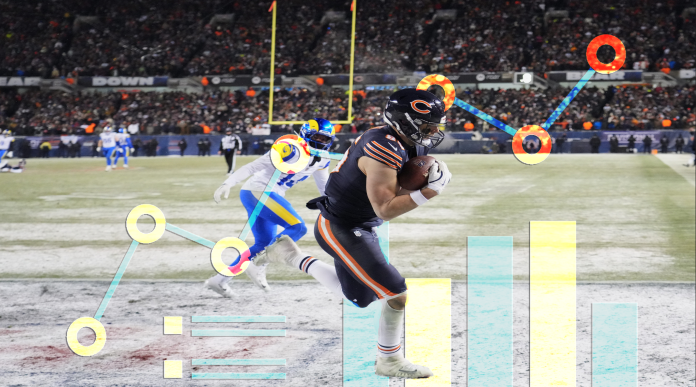
Cole Kmet TD vs Rams

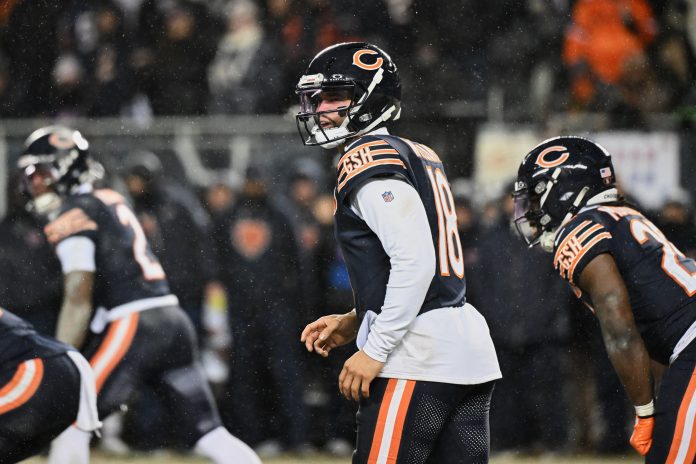
The Chicago Bears lost a heartbreaking Divisional Round playoff game to the Los Angeles Rams last night to seal their fate for the 2025-26 season. The energy at Soldier Field was electric. Every single seat was taken, and every fan stayed until the very end to support their beloved team. The moment Cole Kmet caught the game-tying touchdown was something words can’t fully describe; the crowd reaction almost brought the stadium down. The fans, all 60,000+, gave Caleb Williams a standing ovation as he exited the field for the final time this year, showing their full appreciation for the “Cardiac Bears” season. It was a sad moment to see the playoff run end, but after the 10 seconds of shock/silence when the Rams converted the game-winning field goal, Bears fans started discussing how exciting the season was and how thankful they were. As media, fans, and former players cast blame for the loss, an AI model trained in NFL playing experience, high-level mathematics, and data science expertise has identified 20 things most people are missing about the game.

AI Model Education, Expertise, and Background:

  • NFL linebacker with 15 years experience
  • A PhD in applied mathematics from MIT
  • Ex-head of Data Brick’s NFL Next Gen Stats Division (pioneered advanced EPA (Expected Points Added) frameworks and situational risk algorithms)

20 Subtle, Data-driven Insights That Redefine This Bears vs. Rams Game Beyond The Headlines

1. The Bears’ offensive line posted an elite 91% pass-block win rate (PBWR) per Next Gen tracking, allowing zero sacks on Williams’ 42 dropbacks—yet this protection was undermined by his three INTs, each with <45% completion probability, boosting Rams’ defensive EPA by +9.3 points overall.

2. Stafford’s elongated 3.8-second average time to throw (up from his 3.1-second season norm) resulted from Bears’ edges Montez Sweat and Dominique Robinson combining for 11 pressures (29% rate), but Chicago’s secondary permitted 2.0 yards of separation on targets, enabling Rams’ 5-of-16 third-down conversions (31.3%).

3. Kyren Williams’ two rushing TDs hid his modest efficiency: -0.06 RYOE (rushing yards over expected) per carry in snowy conditions, where traction models predict a 12% drop in burst speed—Bears’ run defense held him to 4.1 YPC, but poor tackling (eight missed) in the red zone gifted 11 hidden points.

4. Cole Kmet’s 14-yard TD grab to tie it late had a 28% completion probability (per frame analysis of Williams’ off-platform throw), but media ignores how Rams’ safety Kam Curl’s pre-snap disguise forced the hero ball—Curl’s coverage grade was 88.4, yet he was targeted only twice all game.

5. Bears’ 39:15 TOP advantage translated to a +8.2 expected points via possession modeling, but their red-zone efficiency (1-for-4 TDs) tanked due to play-calling conservatism—three straight runs inside the 10 on one drive, ignoring Williams’ 78% completion rate in clean pockets.

6. Cobie Durant’s two picks weren’t fluky; advanced tracking shows he played with the NFL’s tightest man coverage (0.9 yards separation allowed), but public overlooks how Bears’ receivers averaged just 1.2 YAC (yards after catch), stifled by Rams’ rally tackling in sub-freezing temps.

7. The snow impacted pass velocity: Stafford’s throws averaged 51 mph (down from his 54 mph season norm), per radar data, leading to three batted passes at the line—yet Bears failed to capitalize, with zero deflections recovered, a 10% situational risk miss per my models.

8. Chicago’s rushing attack (4.2 YPC) exploited Rams’ light boxes (6-man fronts on 64% of runs), generating +0.11 EPA/run, but media misses how D’Andre Swift‘s 78 yards came on misdirection plays that averaged 2.1 missed tackles—Rams’ linebackers overpursued 13 times.

9. Williams’ 26-yard scramble in the fourth (longest Bears rush) shifted win probability +11%, but frame-by-frame video reveals Rams’ spy defender Omar Speights slipped on snow (traction loss estimated at 18%), a weather-induced anomaly not discussed.

10. Rams’ zero turnovers weren’t luck; their ball security index (fumble rate under 1% adjusted for conditions) ranked top-3 league-wide, but overlooked is how Bears’ safeties Jaquan Brisker and Kevin Byard III combined for zero forced fumbles despite 19 tackles—a coverage lapse in zone drops.

11. Puka Nacua’s 58 receiving yards came on schemed-up rub routes (success rate 74%), exploiting Bears’ nickel Kyler Gordon‘s 57.9 coverage grade, yet public ignores how Chicago’s blitz rate (31%) left Gordon isolated, allowing 1.9 yards per route run.

12. The OT interception by Curl on Williams had a 68% turnover risk based on pre-snap alignment (Bears in empty set vs. Rams’ Cover 0), but media focuses on the throw—ignoring how Rams’ pressure package forced a 3.8-second hold, above Williams’ 2.9-second average.

13. Bears’ defense generated four sacks (all in the first half), but their pressure-to-sack conversion (35%) dropped to 0% post-halftime as Rams adjusted with quicker releases—a coaching win for Sean McVay, adding +4.5 EPA in the second half via rhythm passes.

14. Cole Kmet’s 14-yard TD in the second quarter exploited a Rams seam mismatch (linebacker grade 52.1 in zone), but overlooked is Chicago’s tight end usage: 9 targets to Colston Loveland/Kmet combined, yielding 89 yards at 2.0 YPRR, underutilized against LA’s base personnel.

15. Win probability swung -21% on Williams’ second INT (returned 12 yards by Durant), but data shows it stemmed from a route concept collision—Luther Burden III and Rome Odunze crossed paths, creating a 0.5-second window, a schematic flaw in Ben Johnson’s play design.

16. Rams’ field goal in OT (Joshua Karty’s 41-yarder) had an 81% make probability adjusted for wind/snow, but public misses how Bears’ fatigue (87 defensive snaps) led to a 1.1-second longer get-off on the block attempt, per timing metrics.

17. Chicago’s 160 rush yards masked inefficiency in short-yardage: 2-for-5 on 3rd/4th-and-1, with -0.15 EPA on those plays—Rams’ interior (Poona Ford, Tyler Davis) stuffed gaps at a 78% win rate, but weather hid the physical toll.

18. Stafford’s 68.2 passer rating belies his +0.08 CPOE (completion percentage over expected) on deep balls (3-for-6, 94 yards), targeting Puka Nacua/Cooper Kupp—Bears’ deep safeties allowed 2.3 yards cushion, a coverage bust not called out.

19. Situational risk in the red zone: Bears’ three INTs correlated with a 45% higher turnover probability in scoring range due to compressed windows, but Rams’ bend-don’t-break D (allowing 417 yards but just 17 points) saved via +9.3 EPA on goal-line stands.

20. The game’s true decider was hidden in special teams: Rams’ kick returns averaged 21 yards (long 25), setting up short fields for two scoring drives, while Bears’ Devin Duvernay fumbled once (recovered)—a +3.0 expected points swing per models, amplified by snow reducing return burst by 10%.

The AI model insists the Bears were the better team on paper, for the game, but they crumbled under pressure. The Rams used experience to turn a tough environment at Soldier Field into a big win. The 2025-26 Bears season, based on 4th quarter comebacks and game-winning drives, ranks among the most exciting in NFL history. In the last 25 years, only five other NFL teams matched the level of late-game drama the Bears were part of this season. When you blend the future potential, current talent, resurgence, and heart-pounding excitement this team has, the future is limitless for the Chicago Bears. 
Why The Chicago Bears Might Be More Aggressive This Offseason Than You Think

chicago bears
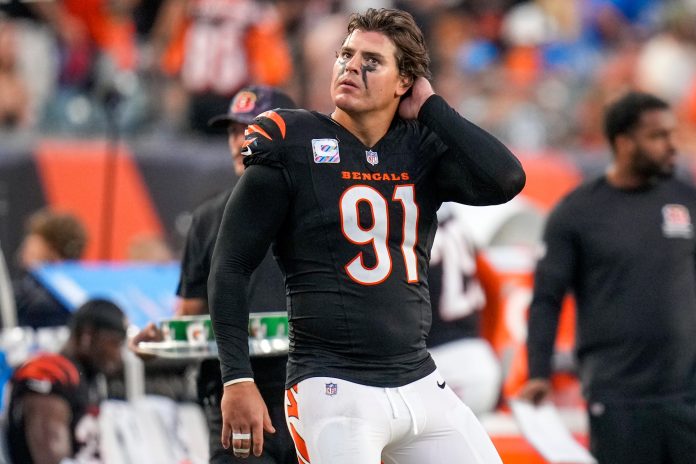
Cincinnati Bengals defensive end Trey Hendrickson (91) watches a replay as the Detroit Lions celebrate a touchdown in the fourth quarter of the NFL Week 5 game between the Cincinnati Bengals and the Detroit Lions at Paycor Stadium in downtown Cincinnati on Sunday, Oct. 5, 2025. The Bengals continued a losing streak, falling 37-24 to the Lions.

The Chicago Bears went much further than anybody expected this year. After going 5-12 in 2024, they rocketed up the NFC rankings to 11-6, then won a playoff game by knocking out the Green Bay Packers in the wild card round. They couldn’t quite finish against the powerhouse Los Angeles Rams, but the overtime loss was confirmation that this team is capable of hanging with the big dogs in the conference. All they might need is one more good push in the offseason to get them over the hump.

However, some are concerned that the team doesn’t have the resources for any aggressive moves. They’re projected to be $4 million over the cap when the offseason begins. There aren’t many things they can do to fix that, right? Wrong. Here are some simple moves Spotrac says they can do without significant consequences.

WR D.J. Moore’s 2026 salary is already fully guaranteed. Processing a simple salary conversion (no void years) can free up $17.4M. That can increase to $18.5M saved by adding a void year.

OL Joe Thuney’s 2026 salary is already fully guaranteed. Converting most of it to bonus can free up $7.3M. Those savings can increase to $11.7M with the use of void years.

Most of DL Grady Jarrett’s 2026 salary is guaranteed. Converting it to bonus frees up $6.9M of cap. That figure increases to $10.8M with the use of void years.

Those three moves alone, without void years, would put the Bears at over $27 million in cap space. If they were to also cut Tremaine Edmunds, which feels like a possibility, that would jump to $43 million. This would give them more than enough room to take one or two aggressive shots in free agency.

The Chicago Bears have plenty of targets to choose from.

Obviously, with free agency, there is a strong chance many of the big names won’t be available when the market opens. Still, there could be some immediate impact players who help this team improve. The first that comes to mind is Trey Hendrickson. The four-time Pro Bowler is unlikely to return to Cincinnati and has ties to Dennis Allen. Though 31 years old, he’s been highly productive and would give them the pass rush jolt they sorely need opposite Montez Sweat. They could also go for John Franklin-Myers, who would provide much-needed interior pass rush after two excellent years in Denver. You could also look at Coby Bryant as a replacement for Kevin Byard at free safety.

There is no shortage of offensive options, too. Breece Hall and Kenneth Walker will both be available if the Chicago Bears are thinking about life beyond D’Andre Swift. The bigger question mark is left tackle. Ozzy Newsome will spend all offseason recovering from patella surgery. Theo Benedet and Braxton Jones are free agents. Ben Johnson may want to bring in some insurance at that spot. Rasheed Walker, Cam Robinson, and Jermaine Eluemunor are names worth keeping an eye on there.

Everything depends on how aggressive the Bears want to be. After how close they came this season, don’t be surprised if they take at least one calculated swing.

Cubs Still Trying to Sign a Free Agent Starting Pitcher

May 28, 2025; Phoenix, Arizona, USA; Arizona Diamondbacks pitcher Zac Gallen reacts against the Pittsburgh Pirates at Chase Field. Mandatory Credit: Mark J. Rebilas-Imagn Images

Ironic, right? The Cubs have no issue going over the luxury tax, which they shouldn’t ever really be that worried about, and now they’re still being linked to a somewhat top free agent starting pitcher. Yet, fans aren’t exactly enthused about the fit. It’s kind of weird at this point and while it’s a good thing to keep adding talent, especially guys with success in their careers, Zac Gallen has been trending in the wrong direction for a few years.

Gallen should be very familiar to Cubs fans as the right-handed pitcher was a trade target back at the deadline and his name reappeared in Cubs’ rumors as free agency picked up in December. You’ll probably remember that heading into the Winter Meetings, USA Today’s Bob Nightengale erroneously reported that the Cubs were actually close to signing Gallen to a multi-year contract. That was almost immediately refuted by other outlets and well obviously there was never an agreement between Gallen and the two sides,

Since then, the Cubs were involved with Japanese free agent Tatsuya Imai, but ultimately were the runner up for him behind the Houston Astros. Following that pursuit the Cubs pivoted to the trade market and acquired Edward Cabrera. A few days later Jed Hoyer flexed the team’s payroll advantage and signed Alex Bregman and apparently the Cubs are still trying to add more MLB talent.

Last week Hoyer alluded to not being done, but following the Cabrera and Bregman moves, it didn’t really seem like this team would be targeting anyone of major significance.

On Monday, Bruce Levine dropped a meaty rumor on 670 The Score, reporting that the Cubs continue to have discussions with Scott Boras about Gallen, who remains available in free agency.

 “The Cubs and Scott Boras have continued talks about Zac Gallen becoming a Chicago Cub. Those talks are ongoing. My reporting is the possibility is that it’ll be a shorter-term type contract.”

The argument against bringing in Gallen is plain and simple, he was really bad in 2025, and has been declining the past few years. His numbers across the board were ugly with the Arizona Diamondbacks last season as Gallen recorded a 4.83 ERA, 4.50 FIP and 4.12 xFIP. His strikeout rate dropped to 21.5% from 25.1% in 2024, while Gallen’s home run rate skyrocketed to 1.45 HR/9, as the right-hander gave up 31 home runs in 192 innings.

On the flip side, maybe the Cubs can sign Gallen to a somewhat modest contract that can become a bargain for them in the future. Gallen is only 30-years-old and prior to 2025, he was pretty damn good. I mean, from 2019-2023, he had a strikeout rate of 26.9% and posted a 3.21 ERA across those five seasons. Gallen was still good in 2024, when he had a 3.65 ERA in 28 starts with a 25.1 K%.

Plus, there’s the silver lining to Gallen’s 2025 season as he was able to finish off the year on a high. The right-handed pitcher recorded a 3.32 ERA in his final 11 starts that covered 65 innings of work.

You always need more pitching and Gallen has certainly pitched to an elite level at times throughout his career, so it’s not like the Cubs are taking a flyer on a project. Yes, the team has to make adjustments to Gallen’s game after his down year, but the pieces are there to potentially get him back on track, including a potential reunion with catcher Carson Kelly, who has caught Gallen at his best.

However, the Cubs have 10+ starting pitchers already on their depth chart heading into the 2026 season, so would allocating more money on another starter make sense? I wouldn’t necessarily hate a Gallen signing, but I wouldn’t be overly excited about it either.

Ultimately, it may come down to the Cubs being able to sign Gallen to a contract that doesn’t really break the bank. You know he wants to re-establish his value after a down year, but there’s no way the Cubs give up their second highest draft pick and IFA signing bonus money for only one season of Gallen. So, if the Cubs do get him, then I’d expect a contract that guarantees Gallen pitching for the Cubs for at least two years and then he’ll have the chance to opt out.

We’ll see. Hey, as much as I preferred other free agent targets earlier in the offseason, I’m glad the Cubs aren’t stopping in pursuit of upgrading the team. Could Gallen still be bad? Sure, but that’s the type risks teams like the Cubs can and should be able to afford. This is what we’ve wanted from the Cubs for a long time and if Levine’s report is true, then they’re acting like the big-market team that they are.

Chilling Foreshadowing: Caleb Williams Predicted The Mistake That Ended The Bears’ Season

caleb williams
Jan 18, 2026; Chicago, IL, USA; Chicago Bears quarterback Caleb Williams (18) calls the snap count from shotgun formation against the Los Angeles Rams during the third quarter of an NFC Divisional Round game at Soldier Field. Mandatory Credit: Matt Marton-Imagn Images

The Chicago Bears were so close. They were maybe 15 yards from being in field goal range for a chance to reach the NFC championship. Then Caleb Williams threw his third and most costly interception of the game. At first, it looked like he just got greedy, and it sailed on him. However, a closer inspection of the pay revealed that D.J. Moore, his intended target, seemed to run his route with far less precision and urgency than he should’ve, allowing the Los Angeles Rams safety to easily undercut the throw.

Williams didn’t throw around any blame. He merely called it a miscommunication between the two of them.

“Just a miscommunication between him and I. Tried to flatten him off under the safety and he kept it vertical from what I saw.”

What hurts so much about this play, aside from the result, is that Williams seemed to recognize the danger of it happening as early as last week. During the game against Green Bay, the Bears’ quarterback was seen on the sideline loudly instructing his receivers on what he wanted. One of the biggest points was if they had leverage on the safety with their routes to go full speed. He’d find them. It sure looks like Moore has the inside track on Kurl if he flattens his route and goes 100%. He did neither.

Caleb Williams watched the prophecy get fulfilled.

He knew his receivers were showing a tendency to slow up on their route. That speech was meant to ensure they stayed at full speed. He had the arm strength to find them even if it came late. That interception will be replayed over and over for months to come. This doesn’t absolve the quarterback of blame. He didn’t need to be that aggressive in that situation. It was 2nd and 8. He could’ve taken something shorter for an easier completion or, better yet, just run it himself. There was space.

However, this was another painful example of the Bears’ wide receivers not being on the same page with their quarterback. This has been a persistent issue all year. Guys aren’t in the right spots or don’t make the catches when the ball hits their hands. All of that was on display in the loss to Los Angeles. Caleb Williams will get the blame because of the interceptions, but much of that game falls at their feet. Guys weren’t sharp, and in the most important game of the season. You can’t excuse stuff like that.

Ben Johnson Reveals Motive Behind His Most Controversial Decision In Bears Loss

ben johnson
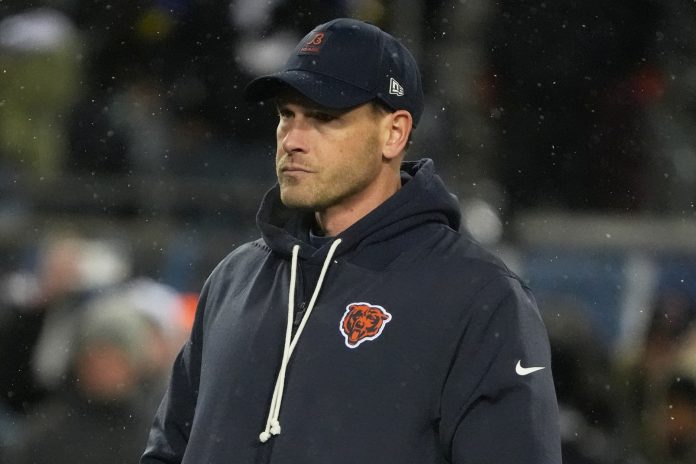
Jan 18, 2026; Chicago, IL, USA; Chicago Bears head coach Ben Johnson looks on during warmups before an NFC Divisional Round game against the Los Angeles Rams at Soldier Field. Mandatory Credit: David Banks-Imagn Images

Ben Johnson did so much to get the Chicago Bears to the precipice of the NFC championship game. Sadly, it wasn’t quite enough. Sunday night’s defeat at the hands of the Los Angeles Rams saw plenty of blame to go around. Caleb Williams threw some bad interceptions. Rome Odunze and the receivers had some ugly drops. The team did not play efficiently. That goes for Johnson as well, who made some questionable decisions throughout the evening. Most will pinpoint his decision to pass on some field goal opportunities earlier in the game. However, the one that had the most people shocked came in the final seconds of regulation.

It came right after Caleb Williams delivered that all-time great touchdown pass on 4th down to make it 17-16. The stadium was rocking. Los Angeles was in disbelief. Immediately, the calls began going out: go for two. Get the conversion and win the game. Instead, Johnson took the safer bet by kicking the extra point and forcing overtime. Obviously, we all know the result after that. The Rams prevailed on a game-winning field goal after a Williams interception.

So why did Johnson not go for the win? He explained his reasoning post-game. It came down to the Bears’ struggles in short yardage.

Ben Johnson makes a perfectly reasonable point.

The fact is, he’s correct. Chicago had been bad in short yardage all night against L.A.’s tough defensive line. In the first half alone, they were 0-3 in 3rd or 4th and short situations. By far the worst came in the 4th quarter when the Bears passed up a field goal on the Rams’ 2-yard line to go for it on 4th down. It was stuffed in large part because of poor blocking by Rome Odunze. Johnson had no reason to trust that the offense would suddenly be able to execute a two-point conversion in those conditions. So he opted for the kick.

In retrospect, that was the right call. The game went to overtime. Chicago then got an immediate stop on defense. All they needed was a field goal to win it. Unfortunately, a miscommunication between Williams and D.J. Moore led to an interception. That proved the difference in the game. Going for two might’ve made sense in a vacuum, but Ben Johnson made the right call. His offense wasn’t executing in short yardage. Gambling your season on that suddenly changing would not have been a wise gamble.

Bears Free Agents and Who They Need to Bring Back

tremaine edmunds
Dec 20, 2025; Chicago, Illinois, USA; Chicago Bears linebacker Tremaine Edmunds (49) poses for a television camera with safety Kevin Byard III (31) after recovering a fumble against the Green Bay Packers during the third quarter at Soldier Field. Mandatory Credit: Mike Dinovo-Imagn Images

As the Bears head into the 2026 offseason with momentum from a magical 2025 campaign, Ryan Poles faces several critical free-agency decisions. With a roster on the rise, the goal should be clear: retain high-impact players while avoiding unnecessary overpays.

The top priority for pending free agents should be the secondary, starting with Kevin Byard. An All-Pro safety and proven leader, Byard remains one of the smartest and most reliable defensive backs in the league. His communication, positioning, and ability to stabilize the back end were invaluable in 2025. Keeping Byard should be non-negotiable. His experience and consistency are exactly what a young, playoff-caliber defense needs.

Alongside him, Jaquan Brisker and C.J. Gardner-Johnson should also be key re-signing targets. Brisker has grown into a good sometimes even great player. We saw him at his peak against the Rams. Physical, rangy, and impactful when healthy. He’s likely earned an extension, but only at the right price. A fair, incentive-based deal would protect the team from injury risk while locking in long-term upside.

Gardner-Johnson’s return would give Chicago one even more versatility. His ball skills, slot flexibility, and edge brought real juice to the defense in 2025. A multi-year deal would make sense, again at the right price.

On the offensive line, Theo Benedet is worth bringing back as affordable depth. He showed promising play and athleticism in some snaps and could compete for a swing tackle role.

Other pending free agents: Andrew Billings, Jonathan Owens, Nahshon Wright, and Olamide Zaccheus are solid contributors but more replaceable through the draft or lower-cost veterans. Billings will be interesting name to watch for Chicago.

Poles has built a great foundation with hopefully a high floor. Prioritizing Byard as the centerpiece of the secondary, retaining Brisker and Gardner-Johnson at the right value, and keeping Benedet as depth would keep the Bears ascending without sacrificing long-term flexibility.

Smart, targeted decisions now can push this team toward deeper playoff runs in 2026 and beyond.

Bears vs Rams Instant Reactions

Chicago Bears Coaching Staff Is About To Take A Hit — But Why It’s No Surprise

chicago bears

Winning comes at a price in the NFL. There’s a reason head coach Ben Johnson said the team they going into 2026 with won’t be the same as this one in 2025. Every team endures changes, be it through personnel or coaching staff. For the Chicago Bears, it looks like it will be both. Word has come out that the Kansas City Chiefs have requested an interview with running backs coach Eric Bieniemy for their offensive coordinator position. Matt Nagy’s contract is expiring and he might be headed elsewhere for a head coaching job. Bieniemy served in that role with Kansas City from 2018 through 2022, during which time the team won two Super Bowls.

It isn’t a surprise. Patrick Mahomes played his best football under Bieniemy’s direction, but seemed to regress under Nagy in recent years. If he does leave, it would be a tough blow for the Bears. The man has been a terrific addition to the staff, helping develop rookie running back Kyle Monangai while getting a career-best season from D’Andre Swift. Replacing that kind of quality coaching won’t be easy, but the team likely knew someone like Bieniemy wouldn’t stick around long. He’s too good at what he does.

The Chicago Bears must prepare to seek possible alternatives.

Ben Johnson could place a call to Jeff Nixon, who was the running backs coach in Miami when the Bears coach was down there as an assistant. The smarter play would be looking to pluck somebody from the large number of staff that just saw their head coaches fired. Kelly Skipper in Buffalo would be a big one. Willie Taggert in Baltimore and Autry Denson in Arizona all bring quality backgrounds. Much depends on what Johnson is looking for. No doubt he’d prefer somebody with a similar no-nonsense style.

That said, it’s important to note Bieniemy isn’t gone yet. This is only an interview. Perhaps the Chiefs decide they’d rather go in a different direction. In such a case, the Chicago Bears get to keep a great coach for at least another year. Either way, fans should make sure to appreciate what Bieniemy helped accomplish. They don’t get as far as they did this season without his presence on the staff. Here is hoping they get a little more luck to keep it going.

Why Ryan Poles Now Faces His Toughest Challenge Yet As Bears GM

ryan poles
Bears general manager Ryan Poles evaluates draft prospects with his scouting department and front office before the 2025 NFL draft

Ryan Poles spent four years getting the Chicago Bears to this point. Despite lots of trial and error, he succeeded in the two most critical tasks of every NFL general manager. He found a quarterback and head coach. Caleb Williams looks like a budding superstar after his playoff debut. Despite his five interceptions in two games, his late-game magic almost sent the Bears to the NFC Championship. Ben Johnson instilled the team with the discipline and belief they’d been sorely lacking for years. In the end, inexperience and a more talented team did them in.

Now comes the hard part for Poles. He has his foundation. The goal moving forward is assembling a talent cast around them. A terrific first step was made in the previous NFL draft with the arrivals of Colston Loveland, Luther Burden, and Kyle Monangai. Hopefully Ozzy Trapilo recovers from his knee injury.

This upcoming offseason will be more challenging. The Bears are projected to be over the salary cap, meaning they must do lots of work to free up space. They have several key players becoming free agents, and for the first time, they won’t have the benefit of a top-10 draft pick.

Ryan Poles must decide how aggressive he wants to be.

Up until now, the Bears’ GM has avoided restructuring existing contracts. While that frees up cap space, it kicks the can down the road, creating future cap problems. Still, Poles may have no choice. His team was an overtime away from the conference title game. It feels like he’s duty-bound to be aggressive in pushing his team over the hump. Restructuring deals like Montez Sweat and Jaylon Johnson would give them more flexibility, allowing them to retain some key players like Kevin Byard, Jaquan Brisker, C.J. Gardner-Johnson, and D’Marco Jackson. Maybe enough would be left over for a significant swing in free agency.

As for the draft, that is the tough part. Often, what undoes many aspiring contenders is their inability to adjust from picking high in the early rounds to picking later. It really puts pressure on your scouting department’s ability to evaluate talent. Few teams have mastered the ability to find talent in that range every year. Baltimore, Philadelphia, and Kansas City come to mind.

Luckily, Ryan Poles and assistant GM Ian Cunningham rose through those organizations. They know the challenge ahead and should be well-prepared.

The Chicago Bears’ Youth Was Finally Their Undoing — Here’s Why

chicago bears
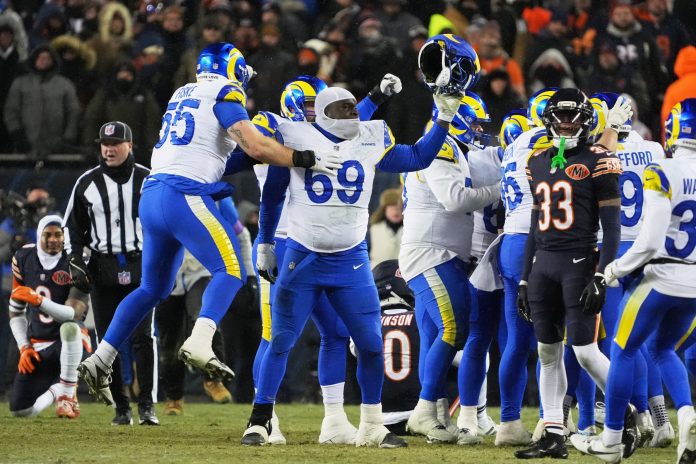
Jan 18, 2026; Chicago, IL, USA; Los Angeles Rams guard Kevin Dotson (69) celebrates with defensive end Braden Fiske (55) after defeating the Chicago Bears in overtime of an NFC Divisional Round game at Soldier Field. Mandatory Credit: David Banks-Imagn Images

Anybody who understands playoff football in the NFL knows the most fundamental rule. The least efficient teams are the most punished. The Chicago Bears played their hearts out on Sunday night against the Los Angeles Rams. Per usual, it was a tough and gritty game that went right down to the wire. The Rams had the lead 17-10 in the final seconds before Caleb Williams once again did the unfathomable, hitting Cole Kmet on a ridiculous 4th down heave for a touchdown to force overtime.

Sadly, their magic ran out. Williams was intercepted on the Bears’ first drive of the extra session, allowing Los Angeles to drive down for a winning 42-yard field goal. The truth is, this game was defined by missed opportunities. Chicago’s evening was frustrated by three key factors:

  1. Turnovers
  2. Dropped passes
  3. Poor execution on 3rd and 4th down.

Williams had three interceptions. Rome Odunze, Luther Burden, and Colston Loveland were all guilty of some tough drops. Chicago was 9-of-19 on 3rd down and 3-of-6 on 4th down. What hurt even more was that many of those failures were in short-yardage situations, indicating the Rams were able to control the line of scrimmage.

The Chicago Bears must learn some important lessons from this.

They aren’t the first young team to come into the playoffs and exit this way. When you’re facing the best teams in the NFL, every mistake gets magnified. The more you make, the greater your odds of losing skyrocket. It happened to Josh Allen and Buffalo. It happened to Jalen Hurts and Philadelphia. This experience is nothing new in the NFL. For Williams and the Bears, it will be about how they apply the lessons learned in the coming offseason. Will they rest on their laurels or put in extra work to clean up the areas that hurt them this year?

Knowing how Ben Johnson operates, you can bet he will attack the summer with renewed fervor. He has no intentions of being a one-year wonder. The Chicago Bears will be a factor in the NFC every year if this head coach has anything to say about it. First on the agenda is seeing if they can provide the roster with some additional support, which won’t be easy given their tight budget. The next few months should be interesting as they take stock and prepare for what comes next.