Saturday, November 14, 2026
EDGE is live. Chicago fans can now access and explore the beta.
Home Blog Page 241

Ozzy Trapilo Update From Ryan Poles Just Made Bears’ Offseason Plans Clear

ozzy trapilo
January 10th, 2026: Bears left tackle Ozzy Trapilo receives help after suffering a knee injury against the Packers.

The Chicago Bears should be thrilled with their 2025 draft class. Colston Loveland already looks like a budding star at tight end. Luther Burden emerged as an explosive weapon at wide receiver. Kyle Monangai was a big part of their resurgent running game. Perhaps the most encouraging development was Ozzy Trapilo, who’d taken over at left tackle down the stretch of the season and was playing well. Sadly, he suffered a patella injury in the wild card win over the Green Bay Packers.

Now people are left wondering what happens next. GM Ryan Poles provided an update. Trapilo underwent surgery, which was successful. The rehab process is set to begin. What people wanted to know is how long he could be out. Poles’ answer was telling.

“I don’t have a specific timetable. I’m sure it’ll be somewhere deep into next year.”

The simple translation is Trapilo won’t be ready for training camp, and there is a strong possibility he will miss the first part of the 2026 season. While not surprising, it does crystallize what the Bears’ plans will be this spring.

Ozzy Trapilo may find competition waiting when he returns.

Keep in mind, the Bears coaching staff felt he still needed work even before his injury happened. They weren’t satisfied with his lower-body strength. The injury now makes improving it this offseason almost impossible. He’ll be focused on recovery. It puts Poles and head coach Ben Johnson in a tricky spot. Do they seek a placeholder who can man the starting job until Trapilo is ready, or do they go after full-fledged competition in the form of another high draft pick? Both carry consequences.

The left tackle market in free agency is best described as weak this year. Among the best options including Rasheed Walker (Packers), Jermaine Eluemunor (Giants), Cam Robinson, and Trevor Penning (Chargers). They could bring back Theo Benedet or Braxton Jones, but it was already evident that Coach Johnson wasn’t happy with either of them.

That leaves the NFL draft. If the Bears want a definitive solution, or as close to one as they can get, they must target him in the 1st round. In such a case, it would mean the team isn’t getting their hopes up that Ozzy Trapilo will be the same player when he returns.

Jed Hoyer Confirmed Important Shift in Cubs Free Agent Strategy

Jan 15, 2026; Chicago, Illinois, USA; Alex Bergman, (L) and Jed Hoyer as Bergman is introduced as a new Chicago Cubs player at a press conference at Wrigley Field. Mandatory Credit: David Banks-Imagn Images

The cynical side of me is kind of still annoyed that the Chicago Cubs dumped Cody Bellinger last offseason and didn’t use the money saved by off loading his contract to fully go all-in with one year of Kyle Tucker. They tried, pursuing Alex Bregman, but ended up empty handed after he signed with the Boston Red Sox. Heading into the 2026 season Jed Hoyer got his man in free agency and during Bregman’s introductory press conference Hoyer confirmed how the Cubs finally changed their strategy this offseason.

It would have been great if ownership would have been more opened minded on their approach heading into 2025, but better late than never I guess. As a reminder, the Cubs offered Bregman a four-year, $115 million contract last February. The third baseman turned that deal down along with a longer term contract from the Detroit Tigers and instead signed a three-year agreement with the Boston Red Sox.

Bregman’s $40 million AAV was certainly surprising to see when the contract was first reported, but that deal with the Red Sox included a big chunk of deferred money and maybe more importantly it gave him the chance to opt out after year one.

The Cubs wanted absolutely no part in offering Bregman deferred money a year ago, a strategy that ownership was firmly against for any top free agent. I mean, the Cubs didn’t even consider deferrals for Shohei Ohtani.

Maybe it was the embarrassment of losing to the Brewers in the NLDS, but the Cubs did change their mind on deferred money and for as much hate as Hoyer has received since he took over in 2020, at least he convinced the Cubs to act like a big-market team again.

Hoyer openly discussed how he was able to approach Scott Boras with a much more attractive offer for Bregman this offseason after speaking to Cubs ownership that allowed deferred money to be included in the final agreement.

Alex Bregman Contract Details

On the surface, Bregman is signed to a five-year, $175 million contract. That comes out to an average annual value of $35 million. However, because the Cubs included deferrals, $70 million of the $175 million will be paid out from 2034-41, here’s how much Bregman will be paid during the next five years.

Alex Bregman Cubs’ Salary 2026-30
2026: $20 million
2027: $20 million
2028: $25 million
2029: $25 million
2030:
$15 million

Here’s a breakdown via Mike Mayer on how the deferred money will be paid out by the Cubs to Bregman.

Total Deferred Money $70 million
$15 million deferred in 2026 and 2029
$10 million deferred in 2027 and 2028
$20 million deferred in 2030

Deferred money is paid each July 31, 2034-41:
2026 and 2029 in installments of $1.875 million
2027 and 2028 in installments of $1.25 million
2030 in installments of $2.5 million

So, it’s good to see the Cubs flexing their financial muscles, something that has kind of felt lacking in previous years. The hope is that the Cubs don’t shy away from offering deferrals to get free agents in the future because that’s just a part of the game now and all the major markets are doing it. Avoiding the strategy only puts the Cubs at a disadvantage.

And what’s even better is that they may be looking to add more to the roster before the regular season begins.

In the past few days the Cubs have appeared in couple more free agent rumors. Cody Bellinger is off the table, but former Yankees’ third baseman and corner outfielder Miguel Andujar is reportedly on the Cubs radar as a potential bench piece for the 2026 roster. Yet, the bigger rumor surrounds free agent starting pitcher Zac Gallen, who has been a target since the summer and is still viewed as a potential addition to the Cubs’ starting rotation.

We’ll see what the Cubs do next, but it finally feels like they are using all their resources to build out a true contender heading into the regular season.

A Closer Look At The White Sox Return For Luis Robert Jr.

Jun 15, 2025; New York City, New York, USA; New York Mets shortstop Luisangel Acuna (2) hits a single against the Tampa Bay Rays during the ninth inning at Citi Field. Mandatory Credit: Gregory Fisher-Imagn Images

Last night the White Sox finally pulled the trigger on a Luis Robert Jr. trade, as they shipped him to the New York Mets in exchange for two players. While there have been rumors of a trade for quite some time, there was no indication that a trade yesterday was imminent, so the trade sort of feels like it came out of nowhere.

Now, the White Sox are looking to start a new era of baseball, one that aligns more with what Chris Getz has in mind, not Rick Hahn. The two players that were acquired yesterday will be part of that new era, so let’s take a deeper dive into who the White Sox acquired in exchange for Luis Robert Jr.

Luisangel Acuña

Acuña is the headliner in this deal, as he was a former top-75 prospect in baseball and has just 214 major league at-bats under his belt. While he doesn’t provide as much power as Robert Jr., he makes up for it with his legs.

Acuña made his major league debut in 2024, where he appeared in 14 games with the Mets. In those games, he hit .308 with a .325 OBP, adding two doubles, a triple, and three homeruns, while adding six RBIs. For his first 40 major league games, that was a pretty good start.

In 2025, Acuña got more playing time with the big league club, as he appeared in 95 games, getting 175 at-bats. In total, he slashed .234/.293/.274, adding seven doubles, eight RBIs, and 16 stolen bases. He also walked 16 times compared to 37 strikeouts. While this wasn’t as good as his 2024 season, he was just 23 years old. Moving forward, he has plenty of time to continue to grow, and he will do just that with more consistent playing time.

Outside of his limited MLB playing time, Acuña has been a productive minor league baseball player, as in his minor league career, he has slashed .282/.351/.400 over 533 games, adding 41 homeruns, 273 RBIs, and 206 stolen bases.

Acuña will likely get everyday reps in centerfield this year for the White Sox and should be closer to his 2024 performance than 2025. Now in a position to get consistent playing time, he should be able to build on his top prospect pedigree, hopefully hitting around .285 and stealing 35+ bases. Any power he adds will be icing on the cake, but Acuña will likely be in line to produce right away for the White Sox. I am a big fan of Acuña and I believe he will be a very good player for the White Sox.

Truman Pauley

The other player in the deal is Truman Pauley, a 12th round pick in last year’s draft from Harvard. Pauley could be someone who flies through the farm system, as if he converts to a reliever, he could find his way to Chicago in a year or two.

While Pauley’s ERA at Harvard was a bit elevated, as he had a 5.20 ERA over 114 innings, he had some fantastic strikeout numbers, as he struck out 10.4 batters per nine innings. Pauley also had a very nice summer league showing in 2024, as he had a 2.08 over 26 innings, striking out an elite 16 batters per nine innings.

There are some concerns about his ability to command his pitches, but a shift to the bullpen could help fix that, as Brian Bannister and the White Sox organization will likely have some things they want him to tweak.

With Pauley’s fastball and slider combo, he could be a very valuable late inning reliever for the White Sox, something that doesn’t grow on trees. Time will tell with Pauley, but the White Sox clearly zeroed in on him in this trade, so there must be a lot they like with him.

While the overall haul feels light, Robert Jr. wasn’t going to fetch anything insane with his current value. However, Acuña will make an immediate impact this season and Pauley could be a valuable player for the White Sox in just a few years. Time will tell, but I am a fan of both of these players and they will likely be contributors for the next good White Sox team.

White Sox Now Face $20 Million Question After Trading Luis Robert Jr.

May 7, 2025; Phoenix, Arizona, USA; New York Mets second base Luisangel Acu–a (2) makes the play against the Arizona Diamondbacks in the eighth inning at Chase Field. Mandatory Credit: Rick Scuteri-Imagn Images

One of the driving forces behind the trade that sent Luis Robert Jr. to the Mets was money.

The White Sox freed up $20 million that Robert was owed while adding a player in Luisangel Acuña, who has five-plus years of control. In fact, when White Sox general manager Chris Getz met the media, he cited that as one of the reasons he pulled the trigger on the deal.

“We’re talking about a player with five-plus years of control, one of the younger, exciting players in our game who hasn’t really gotten a runway at the major league level,” Getz said when discussing Acuña. “We have an opportunity here, and we can provide that runway to show off his talent and his ability.”

Getz claimed that Acuña was a player that the Mets were hesitant to give up, given his high ceiling and versatility across the diamond. He also emphasized that Acuña was squeezed by a Mets roster in win-now mode, with playoff aspirations limiting his opportunities for consistent playing time, opportunities he will now have on the White Sox.

All of that sounds fine and well, but Robert’s departure still leaves a major void in the outfield. Getz said the front office plans to reinvest the $20 million in newfound financial flexibility back into the roster. This will likely come in the form of another outfielder.

As things stand, Brooks Baldwin, Andrew Benintendi, Derek Hill, Everson Pereira, and Tristan Peters are the only outfielders currently on the roster.

Hill is currently the fifth-highest player on the roster, despite making just $900,000. However, his career .629 OPS across six MLB seasons doesn’t inspire a ton of confidence as an everyday option.

Baldwin settled into a utility role last season, with his outfield defense remaining a clear area for improvement. Benintendi’s defense has also deteriorated in recent years, making him better suited for a full-time designated hitter role.

Pereira currently looks like the favorite to start in center field, but may have to split time with Acuña depending on how the White Sox want to structure their infield. Colson Montgomery and Chase Meidroth have the middle infield covered, while Munetaka Murakami and Miguel Vargas are penciled in at the corner spots. The White Sox also have Lenyn Sosa, who led the team in home runs last season, coming off the bench.

Unless Sosa gets traded, Acuña may see the bulk of his playing time in the outfield.

To add depth, the front office also signed Dustin Harris and former first-round pick Jarred Kelenic to minor league deals.

Harris and Kelenic will get opportunities in camp to compete for starting roles, but the White Sox recent strategy of targeting former high-end prospects, like Kelenic, Pereira, and Acuña, has produced limited returns. While it’s possible all three players could pan out, the White Sox leaning on a “hope everyone has a career year” approach hardly resembles a sustainable formula for winning.

With newfound financial flexibility, Getz could look to reinvest in a free agent such as Michael Conforto, though that option comes with clear risk. The 32-year-old is coming off a down season in which he hit .199 with a .637 OPS and just 12 home runs.

If the White Sox fail to add another outfielder, it’s difficult to envision meaningful improvement from last season—especially with several young hitters potentially facing regression as opposing pitchers adjust.

Starting pitching also remains a priority. The White Sox are still in need of a reliable innings-eater and have been linked to free-agent right-hander Griffin Canning as a possible option.

That $20 million could be enough to get both deals done in theory, but there are still plenty of question marks for the White Sox as the offseason continues.

Biggest Winner on the Cubs After Cody Bellinger’s New Deal

Well, it didn’t really seem like the Cubs were still players for Cody Bellinger after signing Alex Bregman, but if you were one of the fans still holding out hope on a reunion Bellingr’s new deal with the Yankees has officially ended that possibility.

Despite previous rumors that the Yankees were ready to move on from Bellinger they also seemed like the only team willing to actually pay him anything close to his contract demands. The left-handed hitter didn’t receive the seven-year, $240 million deal that was his rumored asking price, but the Yankees did extend a healthy five-year, $162.5 million contract to keep Bellinger around in the Bronx.

The new contract for Bellinger comes with no deferred money, a full no-trade clause and the ability to opt out following the second or third year of the deal. Yet, as you take a closer look at the agreement you’ll notice that Bellinger is pretty much incentivized to opt out after 2027, seeing as he’ll earn $85 million in the first two years of the deal, which includes a $20 million signing bonus in 2026.

Bellinger opted out of his three-year deal that he originally signed with the Cubs heading into 2024 back in November. He was traded to the Yankees last offseason in what was essentially a salary dump as the Cubs didn’t use the money saved to bring in another difference-maker for the 2025 season.

While it’s a great fit for both sides, the way this contract is structured also makes you think the Yankees don’t really want to fully commit to Bellinger on a long-term deal. The 30-year-old did have a good first year in New York, ending the season with a 125 wRC+ and 29 home runs in 152 games. However, Bellinger certainly benefited from playing at Yankee Stadium because his home/road splits were drastic.

Cody Bellinger 2025 Home/Road Splits
Home: 80 G, 337 PA, .302/.365/.544, 152 wRC+, 18 HR, 33 XBH
Road: 72 G, 319 PA, .241/.301/.414, 97 wRC+, 11 HR, 26 XBH

So, what does Bellinger re-signing with the Yankees have to do with the Cubs? Well, there’s one player extremely happy to see the Cubs not bring back Bellinger because his presence in the lineup would have meant a diminished role for rookie Moises Ballesteros.

Again, maybe this was the plan all along and the rumors of signing Bellinger were exaggerated, but now that Kyle Tucker is with the Dodgers and Owen Caissie has been traded to the Marlins, Seiya Suzuki will be the starting right fielder for the Cubs, leaving the DH spot open for Ballesteros.

Considering the Cubs were telling teams that Ballesteros was off the table back at the trade deadline you could already guess how much the team loved his future potential on the roster. At that point in 2025, Ballesteros had a total of 20 plate appearances in the majors and was mainly an emergency call up option from Triple-A.

The prolific left-handed hitter got a bigger opportunity in September, filling in for Tucker who was on the injured list. Ballesteros did what he does best, rake, earning a spot on the Cubs’ postseason roster. In his first stint in MLB, Ballesteros slashed .298/.394/.474, with two home runs in 66 plate appearances.

In September, Ballesteros was 13-for-39 at the plate in 14 games.

While there were some fans wanting Bellinger back other Cubs fans worried that another position player coming in would mean fewer plate appearances for Ballesteros. Now, those worries are gone and the pathway is clear for Ballesteros to continue his development in the big leagues with regular playing time with the Cubs in 2026.

An Unexpected Turn In Nikola Vucevic’s Trade Deadline Fate

Jan 14, 2026; Chicago, Illinois, USA; Chicago Bulls center Nikola Vucevic (9) smiles as he walks off the court after an NBA game against the Utah Jazz at United Center. Mandatory Credit: Kamil Krzaczynski-Imagn Images

Over the past two months, Chicago’s veteran center Nikola Vucevic has been one of the most commonly named players in trade talks. All of the signs point toward him being dealt away before the February 5th deadline. He’s 35, in the last year of his contract, and has said many times over the past year that he wants to spend the remainder of his career contending for an NBA title. With the Bulls seemingly making all the moves that signal a rebuild is imminent, he has no place on the roster. Although the evidence overwhelmingly hints at his departure, one report has recently suggested otherwise. What’s the alternate route, and how does it benefit him or the Bulls?

An Extension Is Not Out Of The Question

It feels like Vucevic’s fate depends on who Chicago’s future staff looks like. While the best option for the franchise’s future is for him to be shipped off to a playoff roster and gain some return before he leaves in unrestricted free agency, this recent report says that head coach Billy Donovan would vote otherwise.

No one can deny how much of a glue guy and consistent piece the man in the middle has been for the Bulls during his tenure with the organization. That being said, if the ultimate goal is to rebuild, which is what front office leader Arturas Karnisovas has leaned into over the last 12 months, he has to be traded. Donovan has consistently spoken highly of his veteran big man, so a potential extension makes sense from that front. However, if Vucevic’s career goal is to contend for a title, he’ll opt to sign elsewhere.

Breaking Down The Possibilities

It seems there are three paths that this franchise can take over the next four months. First, they can trade away Vucevic and other expiring contracts for future capital or draft stock. The fanbase strongly prefers this option and, given the current reports, is the most likely to occur.

Second, they will hold steady at the deadline, or make minimal moves, retain Vucevic until this summer, and offer him an extension. This route would mean he would have to sacrifice his goal of being a contributor to an NBA Finals run and likely take a pay cut. This would also mean that the Bulls, despite missing the playoffs for a fourth straight season, would have to retain Donovan and Karnisovas, as they are the ones vouching for the aging center.

The third route is that the Bulls retain Vucevic past the deadline, and either fire their head coach and front office as a result of yet another mediocre finish, or that he leaves in unrestricted free agency. This option may be the second-most likely, as it would mean either Chicago finally moves on from a leadership standpoint or Vucevic goes to chase his title, which he’s stated as a career goal.

What happens with Nikola Vucevic at the trade deadline, and if he’s still around afterwards, does he stick around for the rest of his career?

Craig Counsell Revealed Lineup Change That Will Please Cubs Fans in 2026

Jul 4, 2025; Chicago, Illinois, USA; Chicago Cubs first baseman Michael Busch (29) rounds the bases after hitting a solo home run against the St. Louis Cardinals during the seventh inning at Wrigley Field. Mandatory Credit: Kamil Krzaczynski-Imagn Images

Our long, national nightmare is over. Have you been a victim of dreading what the Cubs’ lineup will look like when a left-handed starting pitcher is scheduled to make a start, knowing that Craig Counsell is obsessed with ruining your life by relegating Michael Busch to the bench? Well, fear no more because the Cubs manager is no longer brainwashed into handling of the team’s best hitters as if he’s another data point on a spread sheet.

OK, that was a little extreme, but the point remains, Michael Busch will no longer be cornered into a strong-side platoon. During this past week’s Cubs Con, Counsell told fans that at the end of the 2025 season he went to Busch with a message; Busch will be play every day regardless of the opposing starting pitcher.

Busch had an outstanding second season with the Cubs in 2025, ending the year with 34 home runs and a 140 wRC+, both numbers leading the team. The left-handed hitting first baseman slashed .261/.343/.523, in 592 plate appearances and he was especially great against right-handed pitching, posting a 151 wRC+ in 497 plate appearances against them.

Counsell has obviously been careful using Busch against left-handed pitching. In 2024, Busch had 567 total plate appearances and 100 were vs. left-handed pitchers. In 2025, Busch was given fewer plate appearances against lefties, only 95 out of 592.

His chances against LHP were few and far between during the first three months of the 2025 season and whether you attribute the bad numbers because of lack of rhythm or skill, Busch really struggled with a slash line of .105/.209/.132, with 10 strikeouts in 38 at-bats. Yet, that sample size was only 43 plate appearances and while Counsell didn’t necessarily ramp up Busch’s playing time against lefties from July through the end of the season, Busch turned the corner in the final three months of 2025.

Michael Busch vs. LHP in 2025
March-June: 43 PA, 0 HR, .105/.209/.132, 5 wRC+, 10 K, 4 BB
July-Sept.: 52 PA, 4 HR, .286/.327/.551, 143 wRC+, 16 K, 3 BB

Busch became much more aggressive and while the strikeouts increased vs LHP so did his power numbers from July through September. Again, these are still small sample sizes and through his entire MLB career Busch is hitting .230/.295/.366, resulting in an 87 wRC+ vs. LHP. Obviously not good, but not awful either. He made substantial strides in the second of 2025, and after his breakout performance in the postseason there’s no more denying that Busch should be an every-day starter regardless of the matchup.

By the way, Busch went 4-for-11, with that solo home run in Game 4 of the NLDS against lefties in the playoffs.

Ryan Poles Had Eye-Opening Comments On Plans For Bears Safety Position

ryan poles
Dec 28, 2025; Santa Clara, California, USA; Chicago Bears safety Kevin Byard III (31) and safety Jaquan Brisker (9) tackle San Francisco 49ers running back Brian Robinson Jr. (3) in the first half at Levi's Stadium. Mandatory Credit: Kyle Terada-Imagn Images

Before the Chicago Bears can think about getting better for next season, they have several important decisions to make regarding in-house free agents. No position group is more in flux than the safeties. As things stand, four names are set to become free agents, including both of their primary starters: Kevin Byard, Jaquan Brisker, C.J. Gardner-Johnson, and Jonathan Owens. It creates an interesting situation for GM Ryan Poles to tackle ahead of the new league year in March.

Bears reporters asked him what the team’s plans might be regarding that position, knowing the salary cap could make things tricky. Poles’ reply was careful, but may have betrayed his priorities.

“Yeah, like I said, we’re going to take a step back and kind of evaluate that and put that puzzle together. It’s actually four safeties that are not under contract for next year. So, I got a lot of faith in our process that we’ll do that. I will. I think Kevin’s a special player. I have no problem saying, you know, that’s a player that we would like to have back.”

Remember, Poles said there are four safeties becoming free agents. However, he only mentioned one of them by name. It seems pretty clear that the Bears GM will be focused on keeping Byard in Chicago for at least another year or two. That isn’t entirely a surprise after seven interceptions this season, along with the safety’s outstanding leadership.

Ryan Poles must ask himself a difficult question.

Who does he think the defense can live without? Brisker has been a solid player for them since being drafted in 2022. However, his production has never stood out too much. This year, he had 90+ tackles, a sack, and an interception. Yes, his versatility provided them with great flexibility, but such players are easier to find than ones like Byard, who can force turnovers at such a high rate. Defensive coordinator Dennis Allen has a strong track record for finding capable safeties. It isn’t hard to imagine he can navigate life without Brisker.

The complicating factor in this is Byard’s age. He turns 33 before next season. There is no telling how many good seasons he has left. Even if the Bears keep him, they must start thinking about the future anyway. GM Ryan Poles will likely have safety high on his list for the upcoming NFL draft. Gardner-Johnson figures to be a discussion as well. Owens is a top special teams ace. Poles has some tough decisions ahead. Based on his comments, at least one person won’t be back.

Grading the Trade: Did the White Sox Make the Right Call Moving Robert?

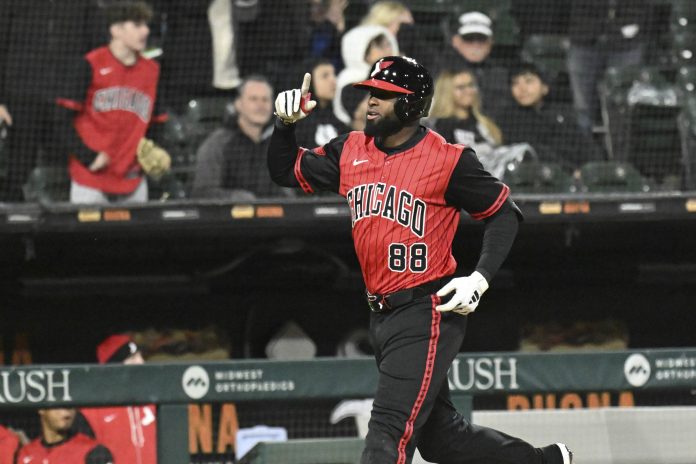
May 2, 2025; Chicago, Illinois, USA; Chicago White Sox outfielder Luis Robert Jr. (88) points after hitting a home run against the Houston Astros during the fifth inning at Rate Field. Mandatory Credit: Matt Marton-Imagn Images

After trading Luis Robert Jr. to the Mets, the White Sox outfield will take on a drastically different look.

In exchange for their longtime center fielder, the White Sox received infielder Luisangel Acuña and right-hander Truman Pauley. As things stand, Brooks Baldwin, Andrew Benintendi, Derek Hill, Everson Pereira, and Tristan Peters are the only outfielders currently on the roster. To add depth, the front office also signed Dustin Harris and former first-round pick Jarred Kelenic to minor league deals.

White Sox Outfield Faces Major Shake-Up

While Baldwin offers value as a utility option, he isn’t good enough defensively to be an everyday outfielder. The front office has also indicated that they want to dial back Benintendi’s workload in left field, with plans to transition him into a more consistent designated hitter role.

Acuña’s arrival further reshapes the roster and could intensify competition across the White Sox infield. As things stand, Chase Meidroth and Colson Montgomery are penciled in up the middle, with Munetaka Murakami and Miguel Vargas occupying the corner spots, setting the stage for a crowded and competitive infield picture.

However, Acuña’s versatility adds another layer of intrigue. Though he spent most of last season at second base, he has experience at shortstop, third base, and center field.

That leaves the door open for a White Sox outfield filled with Kelenic, Pereira, and Acuna, three former high-end prospects who have failed to find success at the big league level.

The Case For Holding Onto Robert

Given that Acuna was the centerpiece of the return, there is a case to be made that the White Sox would have been better off holding onto Robert. In 95 games last season, Acuña posted a .567 OPS with no home runs and just eight RBIs, though he has yet to reach 300 career at-bats.

While the White Sox also added hard-throwing right-hander Truman Pauley, who brings legitimate swing-and-miss potential, he remains a former 12th-round pick. He is best viewed as a lottery ticket in the organization’s rebuild.

Robert, at the very least, provided elite defense in center field, speed on the basepaths, and a proven big-league bat capable of protecting a young lineup as the team’s next core continues to take shape. That defense up the middle would also be beneficial to a young White Sox pitching staff.

That’s why Chris Getz’s decision to exercise Robert’s  $20 million option seemed like a smart decision, given there were no upgrades available on the open market within the White Sox’s price range.

But after being followed by trade rumors for months, it was clear that Robert’s days in Chicago were numbered.

End Of An Era

Robert was the final holdover from a previous era of White Sox baseball defined by unmet expectations. Once hailed as a potential franchise-altering talent, Robert finished his six seasons in Chicago, slashing .259/.313/.455 with 102 home runs and 298 RBIs. Along the way, he won a Gold Glove Award in 2020, captured a Silver Slugger Award in 2023, and was named an All-Star after posting a 4.9 WAR with 38 home runs and 20 stolen bases.

But the 28-year-old quickly came crashing back to earth. An injury-riddled 2024 season limited Robert to just 100 games and produced the lowest OPS of his career. That slump carried into 2025, as he matched a career-low 1.4 WAR.

The lack of production made finding a trade partner difficult, but there were signs of life late in the season. Before a hamstring injury ended his year in late August, Robert posted an .808 OPS in the second half. He also appeared reenergized by the team’s young core, routinely hustling down the line and tracking down balls in the outfield that few players could even dream of reaching.

Initial Trade Grade

Had Getz been willing to roll the dice and hold onto Robert into the season, there was a real chance Chicago could have cashed in on a much larger return if he picked up where he left off.

Instead, Getz determined that a 210-game sample over the past two seasons was sufficient to make a move and take the safer path forward. While Robert’s ceiling may still be higher than Acuña’s, the Mets’ willingness to absorb his entire salary proved too enticing to pass up. The trade gives the White Sox $20 million in financial flexibility, which Getz has said will be reinvested into the roster, while also bringing back a speedy, versatile, cost-controlled player in Acuña and a lottery-ticket arm in Pauley.

However, the White Sox are now left with question marks across the outfield after losing one of the best defensive centerfielders in baseball. Does Acuna make the White Sox drastically better next season? Probably not.

The grade of the trade reflects the move, passable but uninspiring.

The Grade: C+

Ben Johnson Called Out Bears’ Pass Catchers, And One Name Should Be Nervous

ben johnson
Jan 18, 2026; Chicago, IL, USA; Chicago Bears head coach Ben Johnson watches game play against the Los Angeles Rams during the second quarter of an NFC Divisional Round game at Soldier Field. Mandatory Credit: David Banks-Imagn Images

Ben Johnson held his end-of-season press conference with Ryan Poles on Wednesday. Here, he finally took time to dissect the 2025 season, what was accomplished, and what must be done to push the Chicago Bears further in 2026. He didn’t mince words. There will be no momentum to carry into next season. The Bears must start from scratch this spring and summer and once again build from the ground up. Players and coaches must work harder to get further than they did this season. When asked about what must improve the most for that to happen, Johnson did not hesitate with his answer.

They “have to be better catching the football.”

It will be a major point of emphasis starting in the spring. It isn’t a surprise that Johnson mentioned this. Drops plagued the Bears all season. According to Pro Football Reference, they had 29 this year, ranking fifth-most in the NFL. While Johnson didn’t single out any one player, you can bet the name he was referencing at the top was Rome Odunze. His brutal drop on the first drive of the playoff loss to Los Angeles set the tone for the game, and it’s been a problem for him since he was drafted.

Odunze is a former #9 overall pick. He was drafted to make plays like that. If he wants to be a key part of the offense, he’d better start making those catches.

Ben Johnson won’t be one to suffer inconsistency forever.

The Bears head coach is a perfectionist who demands precision and execution. Just look at how he’s handled the left tackle position this year. If a guy doesn’t perform exactly as he wants, he will give somebody else a try. It is why they went with Joe Thuney at that spot against the Rams rather than back to Theo Benedet or Braxton Jones. If he senses you can’t get the job done, you won’t get second chances. It isn’t a stretch to think Odunze, DJ Moore, and everybody else in that room will get similar treatment if the drop issues persist.

Expect the head coach to follow through on his promise. You can bet all Bears skill positions will be spending extra time with JUGS machines throughout the spring and summer, working on their hands. Antwaan Randle El is known for his creative coaching methods to improve concentration. It’s a safe assumption he’ll have some ideas to help with the problem as well. Ben Johnson will not relent on that statement. Once players return from vacation, they’d better be ready to work.