
Friday, November 13, 2026
EDGE is live. Chicago fans can now access and explore the beta.
Home Blog Page 201

Ryan Poles Just Admitted Bears Draft Strategy Is Changing This Year — Here’s How

chicago bears
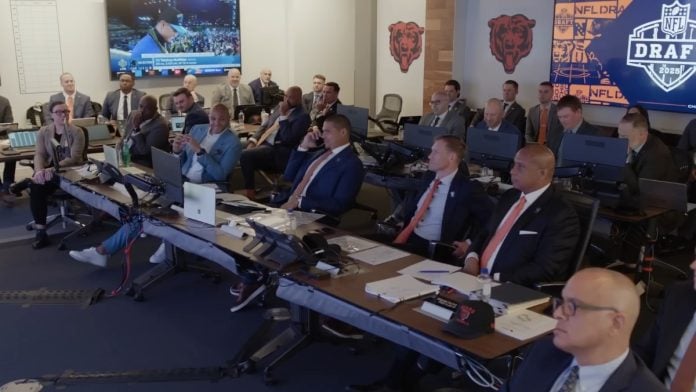
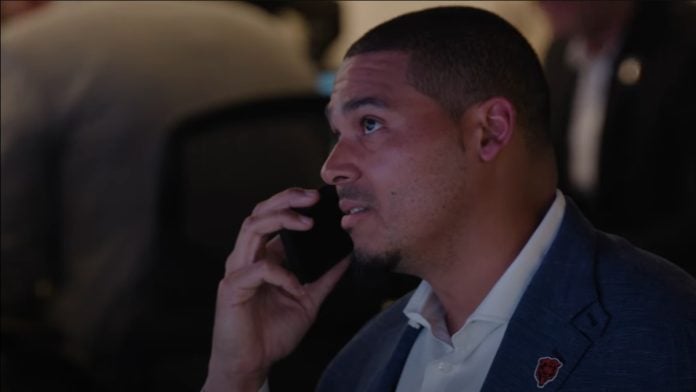
General manager Ryan Poles and head coach Ben Johnson oversee the 1st round of the 2025 draft.

The Chicago Bears are in unfamiliar territory this year. They haven’t selected outside of the top 20 in the 1st round since 2011. That will change this year, as they sit at 25th overall following their successful playoff run. It’s led to plenty of speculation about what the team will do. They won’t have the benefit of a top-10 selection like in the past three years, giving them ample opportunities to land a difference-making talent. Bears general manager Ryan Poles has used a somewhat similar strategy throughout that time.

Not anymore.

He admitted at his recent scouting combine press conference that the team’s strategy must change this year. In the top 10, you can afford to take calculated risks on talent because most of the players that high have the proper work ethic and mental wiring. As the round goes on, that changes. Soon, you’re choosing between guys who are unproven on tape but have crazy athletic upside or guys who were productive but may not have the highest ceiling. From Poles’ perspective, the Bears must lean towards the latter.

“You can go get a flashy guy that may not (have) the wiring in terms of culture fit,” Poles said. “(That) isn’t the right thing to do. You take a chance there. Or he flashes or they are a young player and you’re going to project this crazy growth.

“I think taking good football players at 25. I think back to the Steelers, I think back to the Ravens and some of these teams that were able to put really good rosters together and draft well late. Those guys aren’t sexy. They’re just good, hearty football players. So that’s what we’re going to focus on. I think that will put our team in the best position to be successful.”

Ryan Poles is correct to follow the example of Baltimore and Pittsburgh.

When you look at their track record going back to 2000, both teams employ largely the same strategy when picking the 20s. They’re not focused on specific positions. Instead, they circle guys who they think fit their specific identity. Most importantly, the majority of them have at least two years of experience as a starter. In fact, the most successful ones had three or four. Of the seven players listed below who went on to become Pro Bowlers, five of them had three years or more of starting experience.

Team YearPickPlayerPositionCollege Starts (Seasons)
Steelers202521Derrick HarmonDT2 Seasons (15 starts at MSU, 14 at Oregon)
Ravens202527Malaki StarksS3 Seasons
Steelers202420Troy FautanuOT2 Seasons (Started 29 games)
Ravens202322Zay FlowersWR3 Seasons (4-year contributor)
Steelers202220Kenny PickettQB4 Seasons (Started 49 games)
Ravens202225Tyler LinderbaumC3 Seasons (Started 35 consecutive games)
Steelers202124Najee HarrisRB2 Seasons (Started 25 of 55 games)
Ravens202127Rashod BatemanWR3 Seasons (Started all 13 games as freshman)
Ravens202028Patrick QueenLB1 Season (16 career starts)
Ravens201925Marquise BrownWR2 Seasons (Junior college transfer)
Steelers201828Terrell EdmundsS3 Seasons (Started 31 of 37 games)
Ravens201825Hayden HurstTE2 Seasons (Former pro baseball player)
Steelers201625Artie BurnsCB2 Seasons (Started as sophomore and junior)
Steelers201522Bud DupreeOLB3 Seasons (Started 38 games)
Ravens201526Breshad PerrimanWR2 Seasons (Started 25 games)
Steelers201224David DeCastroG3 Seasons (Started 39 consecutive games)
Ravens201127Jimmy SmithCB3 Seasons (Full-time starter final three years)
Ravens200923Michael OherOT4 Seasons (Started 47 consecutive games)
Steelers200823Rashard MendenhallRB1 Season (Primary starter in final year)
Ravens200729Ben GrubbsG3 Seasons (Started 38 consecutive games)
Steelers200625Santonio HolmesWR3 Seasons
Ravens200522Mark ClaytonWR3 Seasons
Ravens200224Ed ReedS4 Seasons

If the Bears adhere to a similar strategy, the list of prospects narrows.

It is impossible to tell for certain which players will be available at #25. However, we can at least compile a group of names that have a reasonable chance of being there. Here is a list of those with 3 or more years of starting experience in college.

  • Toledo safety Emmanuel McNeil-Warren (3)
  • Oregon safety Dillon Thieneman (3)
  • Miami edge rusher Akheem Mesidor (4)
  • Clemson defensive tackle Peter Woods (3)
  • Clemson defensive end T.J. Parker (3)
  • Texas A&M edge rusher Cashius Howell (3)
  • Missouri edge rusher Zion Young (3)
  • Texas linebacker Anthony Hill Jr. (3)
  • Alabama left tackle Kadyn Proctor (3)
  • Illinois edge rusher Gabe Jacas (3)
  • Texas Tech linebacker Jacob Rodriguez (3)

From there, it comes down to who Ryan Poles, head coach Ben Johnson, and the team brass prefer. The Bears know they’re in a tricky position. While they just made the playoffs, they still have no clear left tackle and are undergoing a significant restructure on defense. They absolutely cannot afford to miss on that 25th pick. That is probably why they’re a little more risk-averse than they might be if they were sitting higher.

Notably, this was the approach Chicago used in the 1980s. William Perry started three seasons, Neal Anderson started three seasons, and Brad Muster started four seasons. All three helped keep the Bears competitive through the rest of the decade.
NFL Execs Predict The Bears Could Trade Down From Pick #25 — And Why It Makes Sense

chicago bears
Bears general manager Ryan Poles calls tight end Colston Loveland after the team selected him 10th overall in the 1st round

The Chicago Bears haven’t picked in the 20s of the 1st round since 2013, when they selected 20th overall. It is somewhat unfamiliar territory for this new regime. Bears general manager Ryan Poles has enjoyed a steady stream of top 10 picks over the past three years, assembling a promising young core of Darnell Wright, Caleb Williams, Rome Odunze, and Colston Loveland. This year will be more challenging. Several more players will be picked before the Bears go on the board. Many of them will be guys the team really wants. It will come down to how much the team trusts its evaluation ability.

However, some around the league aren’t so certain it will play out that way. Brad Biggs of the Chicago Tribune spoke with multiple executives, asking what they think the Bears might do. In their estimation, sticking and picking might not be Chicago’s first choice. They believe a strong possibility exists that Poles tries to trade down.

Said a college scouting director: “Instead of having to have seven guys on the board that you would take, now you have to have 15 or 25 that you’d like there. You get to a point where you’re like, ‘We don’t have 25 players we like in the first round.’ Then you start thinking about moving back, get some value.”…

The first thing an assistant general manager mentioned was looking to trade down.

“We would try to go back,” he said, “just because if you’re at 25, yes, you like the fifth-year option if you’re staying in the first round, but if I can get an extra third- or fourth-round pick to go from 25 to 33, there’s a chance I get the same player, right? At that point (No. 25), it’s starting to get to where across the league, boards are looking different. I’ve got this guy a little bit higher and you had him a little lower.

“Then you’re getting to the point, too, where it’s about team needs or targeted players, maybe like the Bears picking Luther Burden last year. Whatever the case may be. The top 10? We’ve all got those same players. When it gets to the back of Round 1, you need to be a little open to navigation…”

The Chicago Bears have somebody familiar with this approach.

Poles has already done it twice in his GM stint. He traded down from #1 overall to #9 in 2023, then again from #9 to #10. That doesn’t include the several other instances over the past four years where Poles moved down. He isn’t afraid to manipulate the board. Would he consider dropping out of the 1st round entirely? It has happened quite a lot over the past decade. In fact, Poles was part of one of the most impactful such trades in NFL history when Kansas City did it in 2016.

YearTeamOriginal 1stFull Assets ReceivedPlayers Drafted with Capital
2016ChiefsNo. 28#37 (2nd), #105 (4th), #178 (6th)Chris Jones (DT), Parker Ehinger (OG), D.J. White (CB)
2017PackersNo. 29#33 (2nd), #108 (4th)Kevin King (CB), Vince Biegel (LB)
2019ColtsNo. 26#46 (2nd), 2020 2nd (became #34)Ben Banogu (DE), Michael Pittman Jr. (WR)
2022BucsNo. 27#33 (2nd), #106 (4th), #180 (6th)Logan Hall (DL), Cade Otton (TE), Ko Kieft (TE)
2024BillsNo. 28#33 (2nd), #133 (4th), #141 (5th), #248 (7th)Keon Coleman (WR), S. Van Pran-Granger (C), Travis Clayton (OT)
2025RamsNo. 26#46 (2nd), #242 (7th), 2026 1stTerrance Ferguson (TE), 2026 1st TBD
2025TexansNo. 25#34 (2nd), #99 (3rd), 2026 3rdJayden Higgins (WR), 2026 3rd TBD

Trading down carries hazards. There is a dangerous risk that you end up not landing any good players at all. However, in a class that is light on blue-chip talent, the sensible move might be to increase your inventory of picks, using quantity over quality to find some good players. Much depends on how wide a gap the Bears believe there will be between someone selected 25th and someone selected, say, 35th. If it’s negligible and they’re getting calls from teams wanting to jump into the back end of the 1st round, it is a strategy that can work.

Finding a trade partner will be the tricky part.

If you look back at the history of teams coming back into the 1st round, it’s often for one of two things: a quarterback or an offensive playmaker. You saw the New York Giants do it for Jaxson Dart last year. There is a distinct possibility that somebody at the top of the 2nd round who didn’t take a quarterback will want to come up to get somebody they covet. The Jets, Cardinals, Browns, and Dolphins all have major question marks at quarterback. All pick high in the 2nd round.

Let’s also not forget the Chicago Bears have seven picks in this draft. Poles has typically preferred to operate with more. Unless there is a can’t-miss player he and the coaches must have at #25, moving down is the logical move. This draft is known more for its depth than its star power. Adding extra selections gives them more opportunities to find starters. One good or even great player at #25 may not solve all of their issues. If they find willing partners, this scenario is an easy sell.

Roster Watch: Can Tanner Murray’s Hot Start Earn Him a Spot?

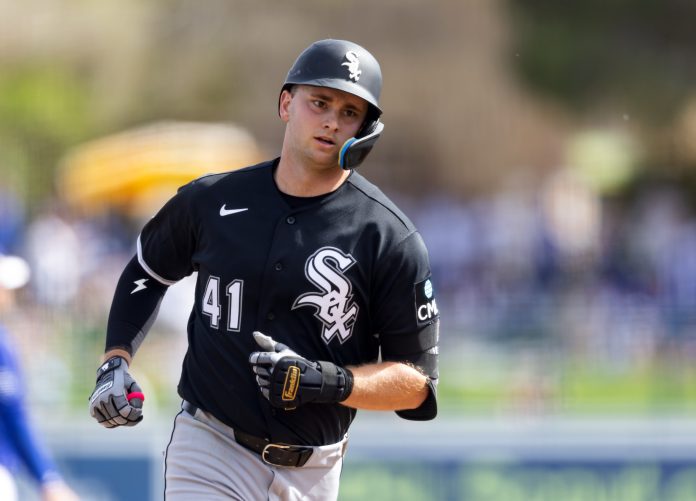
Feb 26, 2026; Phoenix, Arizona, USA; Chicago White Sox outfielder Tanner Murray rounds the bases after hitting a home run against the Los Angeles Dodgers during a spring training game at Camelback Ranch-Glendale. Mandatory Credit: Mark J. Rebilas-Imagn Images

This Spring Training is a bit different from the last few years, as there is a bit more set in stone on the 26-man roster. However, there are certainly still some key positional battles. For the first time in what seems like a very long time, there aren’t roster battles at practically every position, as the White Sox likely have their starting lineup locked up. However, there are still a few backup spots in the infield and outfield up for grabs, as well as a few spots in the bullpen.

As we get closer to the regular season, we will look at each fringe roster player and their chances to make the team out of Spring Training. The next player we will evaluate is Tanner Murray. Murray was acquired by the White Sox in a trade with the Tampa Bay Rays on November 18th. The White Sox traded reliever Steven Wilson and pitcher Yoendrys Gomez, and in return received Everson Pereira and Murray.

Murray has yet to appear in a major league game, but has been very impressive in camp to this point. In five games with the Chicago White Sox, he is 4 for 11, which is good for a .364 batting average. His on base percentage is .462, his slugging percentage is 1.091, and he has an inane 1.553 OPS. He’s hit two homers, drove in five runs, and has walked twice compared to just two strikeouts. This is a quite the impressive start to Spring Training and potentially gives him a opportunity to break the camp with the team.

Last year Murray struggled in AAA with the Tampa Bay Rays organization, as he hit .241 with a .299 on base percentage. However, he hit 18 home runs and drove in 58 runs. He unfortunately did strike out 138 times and only walked 39 times. This was a more powerful season for Murray, as he had never hit more than seven home runs in a minor-league season before last year.

Murray was very productive in AA in 2024, as he hit .290 and had a .328 OBP. He also had about half the strikeouts that he did in 2025. However, that season he only hit seven home runs, but he did have more RBIs, as he had 66.

Murray is an interesting player, as he could earn a spot out of camp if he continues this pace in Spring Training. Unfortunately, he is in a very crowded infield position group, as they have multiple players that are out of options. Murray has all his options left, so it’s likely that he will find his way to AAA to start the year. However, if the White Sox feel that he played his way onto the team, he could find himself in a nice utility role. 

Overall, I’d give Murray about a 30% chance to make the team out of Spring Training. That is no indication on how he’s played, as he’s been one of the better players in Spring Training to this point, he is just in a very crowded infield group. Regardless, he will likely have a very good season in AAA, and should be one of the first infielders up if there is an injury.

Roster Watch: Will Tristan Peters Crack The Crowded White Sox Outfield?

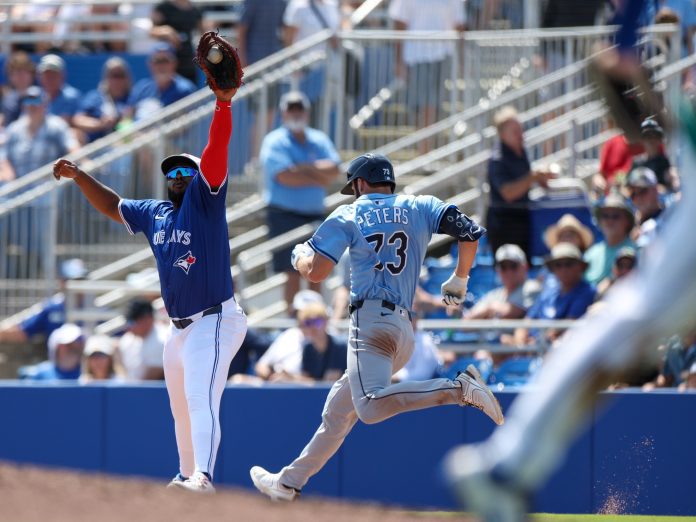
Mar 20, 2025; Dunedin, Florida, USA; Toronto Blue Jays first base Vladimir Guerrero Jr. (27) stretches ro the ball to get out Tampa Bay Rays outfielder Tristian Peters (73) in the fifth inning during spring training at TD Ballpark. Mandatory Credit: Nathan Ray Seebeck-Imagn Images

This Spring Training is a bit different from the last few years, as there is a bit more set in stone on the 26-man roster. However, there are certainly still some key positional battles. For the first time in what seems like a very long time, there aren’t roster battles at practically every position, as the White Sox likely have their starting lineup locked up. However, there are still a few backup spots in the infield and outfield up for grabs, as well as a few spots in the bullpen.

As we get closer to the regular season, we will look at each fringe roster player and their chances to make the team out of Spring Training. The next player we will take a look at is outfielder Tristan Peters. Peters was acquired from the Tampa Bay Rays after they designated him for assignment in December.

Peters does not have much Major League experience, as he has only appeared in four major league games. That came last year, as he had 12 at-bats with the Rays. Unfortunately, Peters went 0-12 with seven strikeouts. However, he has been a very solid hitter over his minor league career.

In 2025 for the AAA affiliate for Tampa Bay, he hit .266 with a very good .355 on base percentage. He added 15 home runs, 76 RBIs, and 65 walks. He also stole 11 bases. This is pretty solid all-around production.

Now, Peters finds himself in a competition for an outfield spot with the White Sox. As it stands, it is currently unclear how many outfielders the White Sox will keep on the roster. Last year, they kept five outfielders for a majority of the season. With the way the current roster is constructed this season, it is unlikely they carry five outfielders again. However, that could vary on depending what position the White Sox believe Brooks Baldwin will play. If they only view him as an outfielder, there may not be another spot. However, if they see him as a utility player, there may be another spot open. That is a spot that Peters could take if everything goes his way Spring Training.

Peters has gotten off to a decent start in Spring Training. In five games, he is 3 for 11 with one home run and 3 RBIs.

This is a solid start to the Spring, but he will need to do a little bit more if he wants to beat out the players ahead of him on the depth chart. In all likelihood, I imagine he will be a very good depth piece at AAA, coming up to Chicago when there’s an injury. 

At this point, I give his chances of breaking the camp with the team at about 15 to 20%. This is no slight to Peters, he just happens to find himself in a relatively crowded outfield positional group. 

Chicago Cubs Pitcher Ryan Rolison Could Make White Sox Regret Their Decision

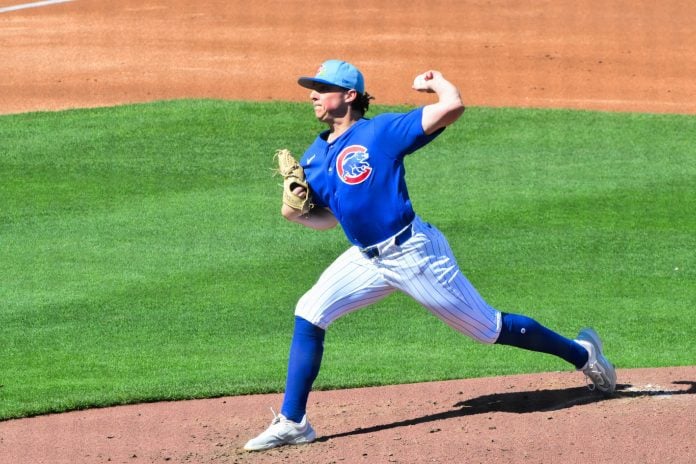
Feb 27, 2026; Mesa, Arizona, USA; Chicago Cubs pitcher Ryan Rolison (33) throws in the third inning against the Cleveland Guardians at Sloan Park. Mandatory Credit: Matt Kartozian-Imagn Images

The Chicago White Sox decided to designate left-handed pitcher Ryan Rolison for assignment in December to make room for Sean Newcomb and now the former first round pick is in the mix to steal an Opening Day roster spot for the Chicago Cubs. The White Sox tried to sneak the left-hander through waivers, but the Cubs scooped him up and Rolison could make the South Side regret its decision a lot sooner than anyone thought.

Rolison bounced around this past offseason as he was first designated for assignment by the Colorado Rockies, the team that selected him in the first round of the 2018 MLB Draft, 22nd overall. He was briefly with the Atlanta Braves, who acquired him for cash in a trade with the Rockies and then the White Sox grabbed him off waivers the very next day. Yet, when the White Sox came to an agreement with Newcomb they needed to make room on the 40-man roster and they decided to DFA Rolison, once again leaving the lefty up for grabs on the waiver wire.

The Cubs have done a pretty good job of uncovering diamonds in the rough in recent years both signing under the radar pitchers to minor league deals or like Rolison, getting them off waivers. The Cubs had several open 40-man spots this offseason and a guy with first-round talent certainly caught their attention.

Rolison, 28, only has 42.1 innings pitched in MLB, all coming in 2025 with the Rockies. It was a pretty rough rookie year for him as Rolison posted a 7.02 ERA in 31 appearances.

However, the lefty has seemingly found new life with the Cubs and Craig Counsell is loving what he’s seeing from his new reliever. Rolison made his second appearance for the Cubs in spring training on Friday against the Cleveland Guardians. The left-hander allowed one hit in his scoreless inning of work, but Rolison once again showed an increase of velocity compared to his 2025 debut season in the majors.

In 2025, Rolison’s fastball averaged 92.8 mph with the Rockies. In his spring training debut the lefty averaged 95.7 mph and on Friday maintained the higher velocity coming in at 95.5 mph.

The Cubs’ bullpen is pretty much set heading into the 2026 regular season if there aren’t any unexpected injuries during the next four weeks. The team re-signed veteran Caleb Thielbar and added fellow left-hander Hoby Milner in the offseason, giving Counsell a pair of lefties to utilize out of the bullpen.

There’s only one spot up for grabs out of spring training and while he’d represent a third left-handed reliever in the Cubs’ bullpen it sounds like Rolison is very much in the competition for the final spot on the pitching staff.

Velocity isn’t always everything for a pitcher. You still need to have the ability to miss barrels and throw strikes. That being said, the extra ticks on the radar gun may be able to elevate Rolison’s game to the next level. Last year the Cubs had an impressive turnaround with Brad Keller, who increased his fastball velocity by 3.5 mph.

Although Rolison’s fastball isn’t clocking in at Keller’s level he does feature similar movement to another successful Cubs pitcher in Justin Steele.

Now, it is only Feb. 27, and we’re talking about two spring training innings for Rolison, but he is definitely on the team’s radar. At the very least, he might be one of the first pitchers called up from Triple-A in the regular season if he doesn’t break camp with the Cubs.

Still, keep Ryan Rolison’s name in mind. He might really make the White Sox regret their decision to cut him loose.

Ten Arms, Five Spots: The White Sox Rotation Battle Is On

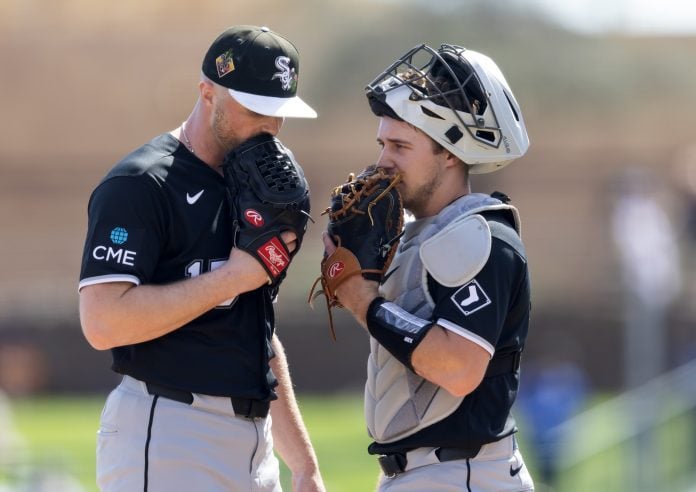
Feb 26, 2026; Phoenix, Arizona, USA; Chicago White Sox pitcher Sean Newcomb (left) with catcher Kyle Teel against the Los Angeles Dodgers during a spring training game at Camelback Ranch-Glendale. Mandatory Credit: Mark J. Rebilas-Imagn Images

Will Venable has yet to name the Chicago White Sox Opening Day starter, but with 10 pitchers competing for five spots in the rotation, that’s only one of several questions the club must answer this spring.

As the depth chart currently stands, Shane Smith, Anthony Kay, and Davis Martin appear to have firm holds on three of those spots. Smith posted a 3.81 ERA last season and was named the White Sox lone All-Star selection last season.

Martin showed flashes of potential, finishing the year with a 4.10 ERA and a near 46% ground-ball rate, giving the White Sox a steady middle-of-the-rotation option.

Kay marked one of the White Sox most significant offseason additions this offseason after signing a two-year, $12 million deal that includes a mutual option for a third season. The 30-year old southpaw returns to the MLB after a dominant stint in Japan’s Nippon Professional Baseball, where he recorded a 1.74 ERA over 155 innings. MLB insider Jon Heyman reported that Kay received larger offers to remain in Japan but chose to take a pay cut to return to the majors, a sign the White Sox view him as a key part of their 2026 rotation plans.

Erick Fedde

That is where the fun begins. Erick Fedde appears to be next in line for a rotation spot. The right-hander signed a one-year deal to return to Chicago after a breakout 2024 season in which he posted a 3.11 ERA across 21 starts for the White Sox before the club flipped him at the trade deadline.

The reunion appears mutually beneficial as the White Sox get an innings-eater for the back end of the rotation, while Fedde gets a chance to rebuild his value after a rough 2025 season that included a 5.49 ERA over 141 innings with the Cardinals, Braves, and Brewers.

But if those struggles continue, there is still a chance he could be moved into a swingman role out of the bullpen.  Last season, his already modest strikeout rate dipped further, while his walk rate spiked to 13.3 percent. He is still in line to crack the Opening Day roster as a starter, but if some of the White Sox other arms force the issue in camp, he could be one of the starters on the chopping block.

The remaining rotational options include Sean Burke, Drew Thorpe, Sean Newcomb, Mike Vasil, Jordan Hicks, with David Sandlin and Tanner McDougal being outside fridge candidates.

Sean Burke

Burke was named the Opening Day starter last season, and there was plenty to like about his body of work. He finished the year with a respectable 4.22 ERA across 134.1 innings, but was plagued by inconsistency. His 10.6% walk rate was one of the highest in baseball; he had difficulty generating swings and misses, and opponents didn’t have much issue drawing hard contact.

For Burke to take the next step, limiting free passes will be critical, as will inducing more ground balls to offset the contact he allows. But at 26 years old and with just 32 MLB appearances under his belt, there is still room for growth.

This spring carries added importance for Burke, and he is off to a promising start. In his lone Cactus League outing, he tossed two scoreless innings and allowed just one hit.

Drew Thorpe

Drew Thorpe missed the entire 2025 season after undergoing Tommy John surgery in the spring. He entered camp last year as one of the favorites to earn a rotation spot, but experienced multiple setbacks once he began throwing, including elbow discomfort that ultimately led to him being shut down.

While many pitchers return from Tommy John surgery with improved velocity, there is reason for caution in Thorpe’s case, given his recent injury history. He also missed the end of the 2024 season with a right flexor strain, adding another layer of uncertainty to his return.

Because of this, Thorpe will likely start the season in Triple-A as the White Sox try to gradually ramp up his workload.

Sean Newcomb

Newcomb presents an intriguing case. He has said multiple times that he prefers starting, citing the structure and routine that come with being part of a rotation. The White Sox are giving him that opportunity this spring, but his career splits suggest he may ultimately be better suited for a bullpen role.

The 32-year-old has been markedly more effective as a reliever. Last season, he recorded two saves with the Athletics and posted a 2.19 ERA over 70 relief innings split between the Red Sox and A’s. As a starter, he logged a 4.43 ERA.

That trend is consistent with his broader track record. In 158 career relief appearances, Newcomb owns a 3.84 ERA and has held opponents to a .213 batting average across 199 innings. As a starter, his ERA rises to 4.41, with hitters batting .257 over 324 1/3 innings. Because of this, the White Sox would be wise to keep him in the pen.

Jordan Hicks

Hicks has said he is comfortable in any role, but like Newcomb, his splits suggest he is more effective out of the bullpen. One of the hardest throwers in the game, Hicks owns a fastball that has averaged 97 mph during his career and has generated ground balls at a 56.8% clip over eight seasons.

Even so, he has struggled to establish a consistent role. Over his final 13 starts with the Giants, his ERA rose to 4.01, with opponents hitting .255 against him, as his velocity dipped late in the season. San Francisco gave him another opportunity to start in 2025, but the results regressed further. He allowed 36 earned runs on 55 hits in 13 appearances — nine of them starts — before being traded to Boston, where he spent the remainder of the year in relief.

Hicks said this offseason that he has touched 99.5 mph and is averaging around 96 mph with his fastball, an encouraging sign entering camp. A bullpen role could allow him to lean into that velocity and maximize his effectiveness in shorter outings.

Mike Vasil

It is also hard to justify moving Vasil from the bullpen after he emerged as one of the White Sox most effective bullpen arms last season. He posted a 2.50 ERA, 50% ground ball rate, and limited opponents to a .227 expected batting average.

While Sandlin and McDougal possess the arsenal to profile as middle-of-the-rotation starters long term, they are likely to open the season in the minor leagues to continue their development.

Projected Starting Rotation

As it stands, the projected rotation appears to be:

  • Shane Smith
  • Anthony Kay
  • Davis Martin
  • Erick Fedde
  • Sean Burke

Only Seven Defensive Linemen Reached The Dennis Allen “Gold Zone” At Scouting Combine

dennis allen
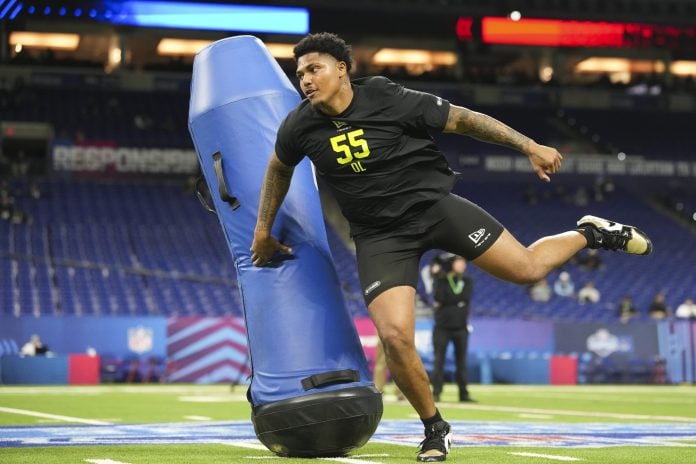
Feb 26, 2026; Indianapolis, IN, USA; Clemson defensive lineman TJ Parker (DL55) during the NFL Scouting Combine at Lucas Oil Stadium. Mandatory Credit: Kirby Lee-Imagn Images

Every team always says they’ll take the best player available, regardless of position. That is hardly ever true. What they mean is that they will take the best player who both fits a potential need and meets the physical parameters they want. General managers and coaches have certain thresholds they aren’t willing to compromise on when it comes to size, length, and speed for draft prospects. The Chicago Bears are no different. General manager Ryan Poles, head coach Ben Johnson, and defensive coordinator Dennis Allen each have their preferences.

Allen is likely to be the one who takes center stage in the upcoming draft. Already, the team is moving towards a significant overhaul on defense. That means Allen will have a strong voice in how they approach adding young talent. No unit figures to get more action than the defensive line. Looking at his track record, it becomes clear that the benchmarks players must meet in terms of size and athleticism to be considered for his defense. We’ll call it his gold zone.

Defensive tackle:

  • 290-300 lbs
  • 32+-inch arms
  • 10-yard split between 1.68 and 1.75

Edge rusher:

  • 250-285 lbs
  • 33+-inch arms
  • 10-yard split between 1.55 and 1.65

Only seven players reached that gold zone for Dennis Allen.

It’s worth noting that several notable names didn’t participate in drills at the event, including projected 1st-rounders like Peter Woods, Christen Miller, and Zion Young. All are expected to run at their pro days, so this list could change. As of now, there are nine players who have the required size, length, and explosive get-off to be circled by Allen as a good fit for his defense. Only two of them are currently projected as 1st round picks, and one will be long gone before the Bears go on the clock.

Prospect Weight (lbs)Arm Length (in)10-Yard Split (sec)
David Bailey (Texas Tech)25133 3/4″1.58
Malachi Lawrence (UCF)25333 5/8″1.59
T.J. Parker (Clemson)26333 1/8″1.61
Dani Dennis-Sutton (Penn State)25633 1/2″1.63
Zane Durant (Penn State)29031 7/8″1.66
Kaleb Proctor (SE Louisiana)29133″1.69
Jackie Marshall (Baylor)30032″1.69

Bailey is the one who is unlikely to make it out of the top 10 this April. He’s been one of the hottest names in the draft for months. The one 1st rounder left is Parker. He has prototypical defensive end size, length, and explosiveness. He was excellent in 2024 with 11 sacks. However, this past season saw a regression in stats. He was very good at the Senior Bowl, though. He is a legitimate option for the 25th pick. However, the most intriguing name on that list is Lawrence.

Allen will have some interesting options.

For the past few months, Lawrence was considered a 3rd or 4th round guy. He was consistently productive at UCF but never had that massive breakout season. Yet his size, length, and explosiveness are real. They pop on tape as well. His tackles for loss per game (TFL/g) sit at 0.92, which is right behind expected top 10 pick Rueben Bain Jr. (0.97). Depending on how the 1st round unfolds, it’s fair to wonder if Lawrence might go considerably higher than the media believes at this stage.

The far more problematic position is defensive tackle. Right now, the only one of the three listed who will go in the first three rounds is Durant. None of the 1st round prospects met the parameters. Most were too heavy or not explosive enough. This puts Dennis Allen in a predicament. The list of options is small, meaning he’ll either have to make some compromises on his desired length and weight or go after a guy he wants early. It puts the team in a serious conundrum. The hope is that some of the players who didn’t participate will check the necessary boxes at their pro days.

As of now, keep Parker’s name cirlced for the 1st round while Durant and Lawrence could be 2nd round options.

Chicago White Sox Get Good News On Acuña, Uncertainty On Pereira

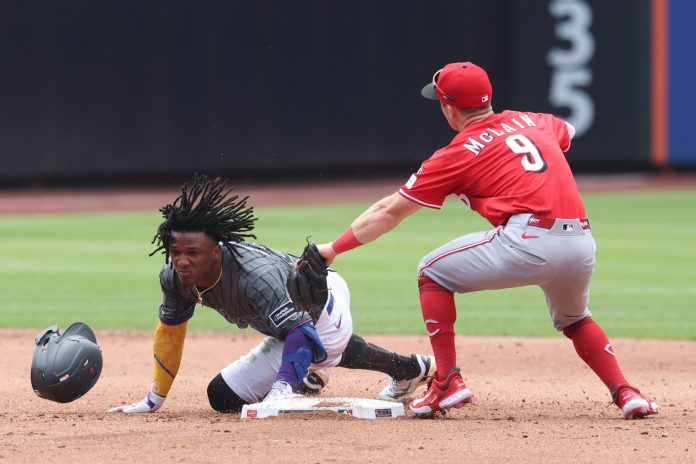
Jul 20, 2025; New York City, New York, USA; New York Mets second baseman Luisangel Acuna (2) reaches second base after hitting an RBI double during the fifth inning as Cincinnati Reds second baseman Matt McLain (9) attempt a tag at Citi Field. Mandatory Credit: Vincent Carchietta-Imagn Images

Luisangel Acuña wasted no time showcasing the skill set that made him the centerpiece of the Chicago White Sox’s trade of Luis Robert Jr. Unfortunately, he cut his face open in the process. 

Acuna went two-for-two in Wednesday’s Cactus League Action against the Cincinnati Reds before leaving with an injury. After lining a single to left field in the fourth inning off of right-hander Hector Richardson, Acuna proceeded to steal second base. But as he slid into second headfirst, his helmet slammed above his left-eyebrow, opening a cut on his face. He left the game and later received four stitches.

Acuna told reporters after the game that he felt good but expected to be out of the lineup for a couple of days. 

“That’s the way I play the game. That’s my intensity, and that’s how I do it,” Acuna told reporters via a translator before Thursday’s game against the Dodgers. “I feel good to play, but they said that for precautionary reasons, I’d be out for a couple of days.” 

The relatively minor injury is encouraging news for a Chicago White Sox team eager to see what the 23-year-old former top-100 prospect can provide this season.

Everson Pereira Still Experiencing Soreness

However, the same cannot be said for another former top-100 prospect, Everson Pereira. Acquired from the Rays this offseason, Pereira entered camp as the presumed frontrunner for the Opening Day job in center field. 

But after being sidelined by an oblique injury, his timeline for return remains uncertain. Pereira strained his right oblique while swinging off a Trajekt machine, which uses data to replicate pitches thrown across MLB. He told reporters he is still experiencing soreness as he works to ramp back up.

He underwent an exam on Wednesday and has begun running, which is a step in the right direction, but hasn’t been able to fully ramp up baseball activities yet. 

The setback has been understandably frustrating for Pereira, who is trying to make a positive first impression with his new team. Adding insult to injury, the White Sox have several outfielders vying for a roster spot. The White Sox already have six outfielders in camp on the 40-man roster, along with four non-roster invitees. While Pereira still has the inside track position to secure a spot, his injury could be enough for a non-roster invitee such as Jared Kelenic to steal a roster spot with an impressive Spring Training.

Tyler Austin Injury Confirms Major Change for 2026 Chicago Cubs Lineup

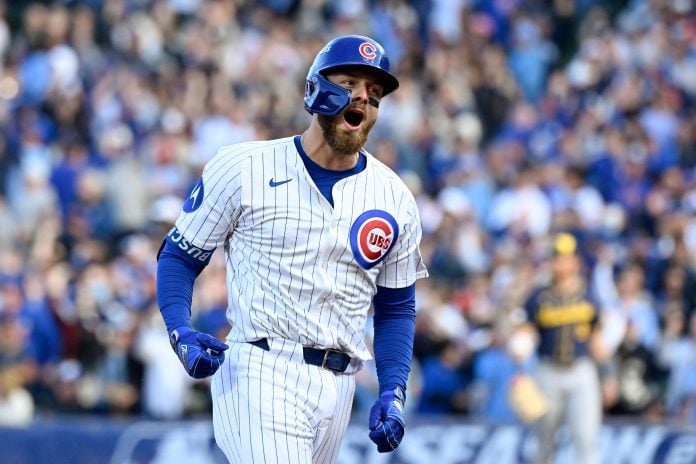
Oct 8, 2025; Chicago, Illinois, USA; Chicago Cubs first baseman Michael Busch (29) celebrates while rounds the bases after hitting a solo home run against the Milwaukee Brewers in the first inning during game three of the NLDS round for the 2025 MLB playoffs at Wrigley Field. Mandatory Credit: Matt Marton-Imagn Images

Chicago Cubs manager Craig Counsell talked about it briefly back in January, but the latest injury to the group of position players competing for a bench role has once again confirmed a major change for the 2026 Cubs lineup.

Earlier this week right-handed hitter Tyler Austin underwent knee surgery and Counsell revealed that the free agent signee coming over from Japan would be out of months. That immediately brought speculation regarding the rest of the bench heading into the 2026 season, but one factor that really won’t be affected is what Austin’s presence means at first base.

No More Platoon for Michael Busch

When Austin signed a one-year contract in the offseason, fans thought he would be the primary backup to Michael Busch at first base. The thought was that Austin would fill the Justin Turner role and be the right-handed hitter off the bench to serve in a platoon role against left-handed pitchers in 2026.

In 2025, Busch had 95 plate appearances vs. left-handed pitching and the overall numbers were poor. Busch slashed .207/.274/.368, with and 81 wRC+ in those matchups. However, he made great strides as the season progressed when facing left-handers and from July 4 through the end of the year Busch posted a 152 wRC+ against lefties, hitting four home runs with a slash line of .289/.333/.578, in 48 plate appearances.

So, half of his trips to the plates vs. LHP in the final three months of the year produced a pretty damn good hitter. The success against southpaws continued in the postseason, when Busch went 4-for-11, with a home run.

Cubs fans won’t have to worry about watching Busch have a big game one day and then see him on the bench the next just because a lefty is starting. Patrick Mooney eased any fears that Busch will continue to be in a platoon in his latest article in The Athletic.

Inevitably, Austin’s injury led to reporters asking Counsell several versions of this question: Who’s on first?

The answer is the Cubs want to give Busch 600-plus plate appearances, the long runway to build off a strong season (38 home runs, including last year’s playoffs) and continue proving himself as a Gold Glove-caliber defender. There’s no platoon system for a left-handed hitter who’s 28 with well-rounded skills and an October highlight reel.

Not only did Busch lead the Cubs’ offense in 2025, with 34 home runs and a 140 wRC+ in the regular season, the left-handed hitter ended the year as a top-10 hitter in MLB, sandwiched between Pete Alonso and Freddie Freeman.

So, entering his third year with the Cubs, Busch will no longer be trapped in a platoon under Counsell. The Cubs can easily hide Busch lower in the batting order when they’re facing a left-handed starter and honestly that may not even be a big deal in today’s game. Starting pitchers simply do not go deep in games, so it might just mean Busch faces a lefty once or twice before the opposing team goes to the bullpen.

Who Is Affected by Tyler Austin’s Injury?

While Busch’s playing time won’t be changed by Austin’s injury there are a few players who now have a big opportunity to make the Opening Day roster.

Michael Conforto signed a minor league deal with the Cubs and he now has a clear path to make the team with Austin out of the mix. Conforto gives the Cubs a solid track record to lean on, a left-handed bat off the bench and insurance in case rookie Moises Ballesteros stumbles out of the gate as the team’s primary designated hitter.

Meanwhile, looking ahead to the regular season, it doesn’t sound like Austin will return any time soon which means Cubs prospect Jonathon Long could be given a look if the team needs a righty bat. Long may have had a path to earning a bench role to begin the regular season, but he’s dealing with an injury of his own, setting him back in spring training.

Why Tremaine Edmunds’ Trade Market Is Reportedly Bigger Than We Thought

tremaine edmunds
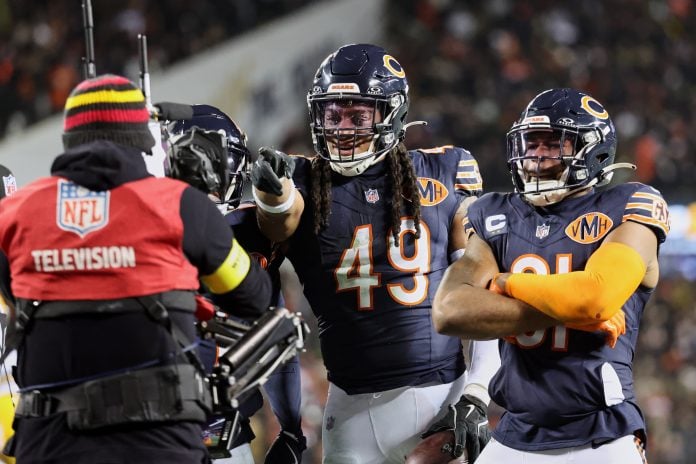
Dec 20, 2025; Chicago, Illinois, USA; Chicago Bears linebacker Tremaine Edmunds (49) poses for a television camera with safety Kevin Byard III (31) after recovering a fumble against the Green Bay Packers during the third quarter at Soldier Field. Mandatory Credit: Mike Dinovo-Imagn Images

The Chicago Bears knew they’d have to make some tough decisions this offseason to get under the salary cap. One of the most prominent was with linebacker Tremaine Edmunds. While the 28-year-old has been a quality starter since signing with the team in 2023, his contract has become problematic as the team faces salary cap issues. As a result, they’ve given Edmunds and his agents permission to seek potential trade destinations. Most believe this is a pointless exercise and the linebacker will eventually be released.

NFL insider Albert Breer isn’t so sure about that. He believes Edmunds is valued much more highly in NFL circles than among the fans and media. Given his age and productivity, there is a chance the Bears might not just get a return on him, but a decent one.

Tremaine Edmunds is somehow both heading into his ninth NFL season and still two months shy of his 28th birthday. And so as the Bears seek a potential trade partner to shed a little salary, there should be a market for the big, athletic, still relatively young linebacker.

What sort of return will Edmunds bring? My guess is that an early Day 3 pick is how most teams would value him, because he’s due $15 million this year, with what amounts to a $15 million team option for next year on the contract as well. That market, by the way, is dictated by the fact that most teams are hesitant to pay off-ball linebackers that don’t bring a lot of pass-rush value. Still, some team could get a good player here.

With little cap space to throw around, the only way the Bears can continue overhauling their roster is with draft picks. Getting a potential 4th rounder for Edmunds would be a significant victory for the organization.

The reasons someone would trade for Tremaine Edmunds are simple.

From what we’ve seen over the past several years, the linebacker is good for around 110 tackles, a couple of interceptions, and a sack every year. Several teams wouldn’t mind that kind of production from that position. He was playing great football for the Bears last season before getting injured. He’s well-known for being a great teammate. The only sticking point is that $17.4 million cap hit. That can be dealt with by handing him a limited extension, perhaps another two years. This would lower the hit considerably.

Conversely, the Bears would then have eight picks in the 2026 draft, giving them more flexibility to remake the roster as head coach Ben Johnson and defensive coordinator Dennis Allen see fit. Besides, getting a draft pick back for a player you signed using only money is pretty good football business. The challenge will be finding a buyer. Las Vegas, New York, Dallas, and Denver all need help at linebacker. Outside of the Cowboys, all of those teams have enough cap space to facilitate a trade. The Jets have extra picks to spare, as do the Raiders.

All the Bears need is more than one team to be interested.

The allure of Tremaine Edmunds is simple enough. Free agency has few clear answers at the position, which means several teams will be vying for his services were he to hit the market. Would you rather get in a bidding war for him and risk losing out, or flip a mid round pick to the Bears to guarantee landing him? That is what GM Ryan Poles is likely banking on. Somebody won’t want Edmunds reaching free agency and feel a 4th or 5th rounder is a reasonable price to pay. He’s still in his prime and should be a quality starter for a few more years at least.

Some don’t believe it will reach that point. The incoming 2026 draft class has a host of quality linebacker options this year. Teams will end up just taking their chances in that area, letting someone else pay for Edmunds. Chicago will likely move him before the start of the new league year on March 11th. All they need is a couple of teams to make offers. If they can snag any draft pick, it should be considered a win. More capital is a good thing for this organization.