
Friday, November 13, 2026
EDGE is live. Chicago fans can now access and explore the beta.
Home Blog Page 172

White Sox 2026 Top Prospects: No.18 Looks To Cement Himself In Chicago

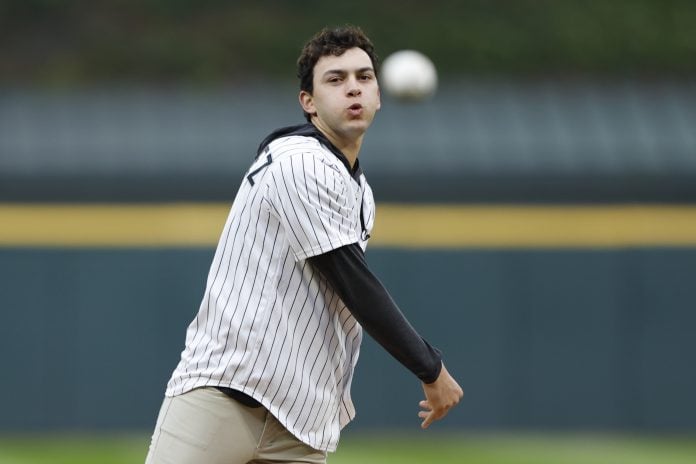
Sep 16, 2023; Chicago, Illinois, USA; Chicago White Sox 2023 MLB Draft first round pick Jacob Gonzalez throws a ceremonial first pitch before a baseball game between the Chicago White Sox and Minnesota Twins at Guaranteed Rate Field. Mandatory Credit: Kamil Krzaczynski-USA TODAY Sports

After the last White Sox failed rebuild, they took a hit in terms of talent throughout the minor leagues. For a few years in a row, the White Sox ranked in the middle of the pack or towards the bottom in farm system rankings. However, towards the end of Rick Hahn’s tenure and to start Chris Getz’s tenure, the focus has to been to build that talent pool back up.

Now, the White Sox farm system sits in the top half of the league and most outlets give them five to six top prospects, with a few more on the fringe of making the list. However, what differentiates this from the last rebuild is the fact that the farm system is significantly deeper, as they have some very intriguing players outside of the top “consensus” prospects.

This comes after many of their main guys on the roster have graduated off top prospect lists. Guys like Kyle Teel, Edgar Quero, Colson Montgomery, etc. are no longer considered prospects, but are already making a contribution at the major league level. Despite this, the White Sox still have many top prospects, making this vastly different from the early 2020s, as once all the main players made their debut, the farm system was depleted.

As we start the season, we will dive into our White Sox top prospect list, getting to know some of the depth in the system. We started with number twenty, making our way to the best prospect in the White Sox system. We just unveiled our 19th ranked prospect, Aldrin Bautista in the last article, here we cover number 18, Jacob Gonzalez. Gonzalez was a former first round pick of the White Sox back in the 2023 draft, out of Ole Miss.

Gonzalez made his debut in Kannapolis later that season, where he hit .207 with one home run and 13 RBIs over 30 games. He also had a solid .328 on base percentage, as he struck out 23 times compared to just 20 walks. While the advanced stats were relatively decent, the average could have been a few ticks higher.

In 2024, Gonzalez split time between the Winston-Salem Dash and the Birmingham Barons. He played 36 games with the Dash, hitting .273 with three home runs and 15 RBIs. This was much better than his debut last year and that’s what earned him his promotion to Birmingham.

However, once at Birmingham, the production took a little bit of a dip. In 94 games, he hit .225 with five home runs and 42 RBIs in 407 PA’s. He made a ton of contact, as he only struck out 57 times compared to 28 walks. He also added 10 stolen bases.

In 2025, Gonzalez resumed in AA. In 89 games, he hit .244 with six home runs and 47 RBIs. He also stole 12 bases and struck out 52 times compared to 28 walks. He then made his way to Charlotte after a promotion towards the end of the year.

In AAA with the Knights, he played in 46 games hitting .204 with two home runs and 14 RBIs. He walked 20 times compared to 34 strikeouts. This wasn’t exactly the season he wanted to have, as he was a streaky hitter.

However, Gonzalez is off to a scorching start in 2026, as he is two for six with two home runs. This is nice to see, as power hasn’t been a part of Gonzalez‘s game to this point.

Gonzalez is just 23 and still has a lot of time to prove he belongs in the MLB. His ability to limit his strikeouts and be an overall well-rounded player should help him get to Chicago at some point. However, his underwhelming performances in the minor leagues is what drops him on this list. For a first round pick, you would expect a little bit more out of Gonzalez, as he is a career .233 hitter in the minor leagues.

But, things can change and some players may just take a little bit longer to get used to their surroundings. He has never played more than 94 games at a level in a season before getting promoted to the next one. With more continuity he could potentially find his way to Chicago at some point this year.
Ben Johnson Explains Gangster Reason Dennis Allen Pushed For Coby Bryant

dennis allen
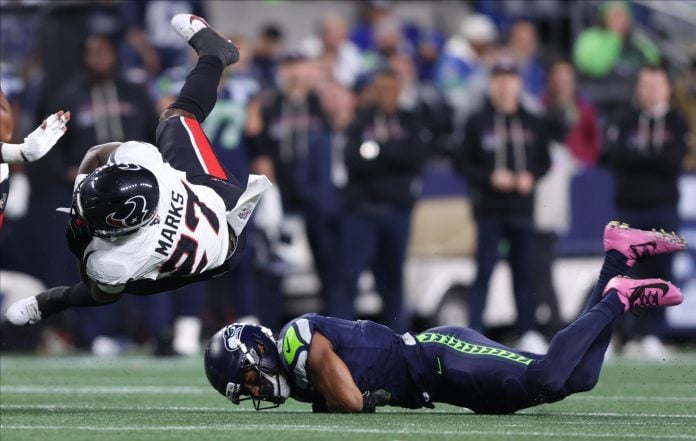
Oct 20, 2025; Seattle, Washington, USA; Houston Texans running back Woody Marks (27) is tackled by Seattle Seahawks safety Coby Bryant (8) during the third quarter at Lumen Field. Mandatory Credit: Kevin Ng-Imagn Images

There were plenty of intriguing free agents available on the market this year. While the Chicago Bears didn’t have a ton of spending money, they had enough to make one or two significant additions if they wished. Sure enough, their biggest swing came early when they signed veteran safety Coby Bryant to a four-year deal. That wasn’t the position many expected them to target, but with Kevin Byard and Jaquan Brisker both being free agents, it did make sense. Bryant was coming off a terrific season in Seattle, where he had four interceptions and helped the Seahawks win the Super Bowl. Why him, though? That came down to Dennis Allen.

After spending last season using mostly players acquired during the Matt Eberflus era, it made sense that the new defensive coordinator would want guys who better fit his vision. Bryant’s versatility to play coverage and around the line of scrimmage seemed like an obvious fit. However, it went deeper than that. Head coach Ben Johnson revealed the underlying reason it had to be Bryant specifically.

“It’s something that DA brought up as we’re going over self scout over the last month and a half was (that) the best defenses usually have two or three trained killers,” Johnson said. “It’s that you usually don’t have 11 of them, OK, but you got two or three that are tone setters that can really elevate the play of everyone around them.

“When we watched the tape, we felt like that jumped off when Coby was on the field. He’s a guy that comes out, whether he’s playing quarters, playing the post, playing down in the box, he’s coming down, and if he sees somebody, he’s looking to light them up. There’s certainly some things to his game that we’re going to look to improve. That’s like that with every player. And yet, we feel like he’s got a really solid foundation with his play style that’s going to naturally just percolate with the rest of the guys.”

Dennis Allen isn’t wrong about that.

If you look back through the Bears’ history, you’ll notice that their best defenses did indeed have those three or four trained killers. In the 1980s, it was Gary Fencik, Wilber Marshall, and Dan Hampton. Then, in 2005, it was Mike Brown, Lance Briggs, and Tommie Harris. Lastly was 2018. It wasn’t hard to see that Akiem Hicks, Danny Trevathan, and Adrian Amos were the guys offenses were the most wary of. The current Bears haven’t really had anybody who fits that profile, though Austin Booker might be blossoming into that role.

The bottom line is they needed more of two things. One was speed, and the other was grit. Great defenses have plenty of both. Dennis Allen had those crucial pieces in New Orleans for a good three or four-year period with Cameron Jordan, DeMario Davis, Malcolm Jenkins, and Tyrann Mathieu. Assembling those pieces took time, though. It is hoped the Bears can find another one or two in the upcoming 2026 draft. It’s a strong possibility with four picks in the first three rounds.

You can pinpoint certain players who fit the mold in this draft.

If the defensive line is the way they’re looking, then defensive end Zion Young from Missouri fits the mold. Not only is he big and strong, but he has the motor and nastiness to make life hard for blockers on every snap. At defensive tackle, Christen Miller of Georgia displays the kind of throwback physicality and violence you need in the middle of your defense. Need something similar at linebacker? Jacob Rodriguez of Texas Tech has often been referred to as a heat-seeking missile with knock-back power on his hits.

Most of the time, it’s about the mindset. Some guys just seem to revel in doling out punishment. The trick is finding them and determining if they also have the talent to play in your scheme. It isn’t easy to strike the right balance, which is why building great defenses is so difficult. Dennis Allen at least understands the blueprint and has the Bears focused in the right direction. The question remains whether this front office is capable of landing the talent necessary.

Bulls Waive Jaden Ivey After Stunning 24-Hour Spiral — AK’s Negligence Shines Again

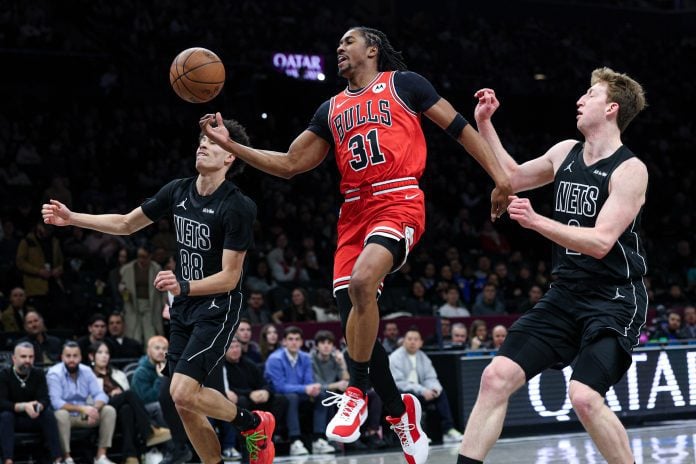
Feb 9, 2026; Brooklyn, New York, USA; Chicago Bulls guard Jaden Ivey (31) is fouled by Brooklyn Nets guard Nolan Traore (88) during the first quarter at Barclays Center. Mandatory Credit: Vincent Carchietta-Imagn Images

Per Shams Charania, the Chicago Bulls have waived guard Jaden Ivey following his recent social media activity. Over the last 24 hours, a flip was switched in the worst way for the former Detroit Pistons top-five draft pick. He began making comments, videos, and posts on social media that started with his views on religion and being combative with several fans, and have since expanded into his opinions on the NBA supporting the LGBTQ community and his disapproval of it. The Bulls wasted no time parting ways with the newly-acquired guard, whose contract expires this summer, and it turns all attention once again to Arturas Karnisovas in terms of the franchise’s future. Clearly, Ivey’s mental well-being is at the forefront of concern, but as far as the organization’s operations, the question remains how Karnisovas did not do more research into a player who not only has gone on this baffling social media tear, but also a guy who actively admits his playing days are over, he’ll never be the same player as he was prior to the massive injury he sustained in January of 2025, and that was pre-labeled a “preacher” according to Joe Cowley of Chicago Sun-Times.

Shifts The Front Office Summer Plan

With nine expiring contracts after the next eight games, Chicago’s summer could get hectic in a hurry. As detailed here, Ivey was one of the franchise’s long-term assets it planned to invest in as a running mate to Josh Giddey. Taking today’s news into consideration, they’ll clearly be pivoting from that projected backcourt. In short, it means Karnisovas traded Kevin Huerter to a contending roster for a player who appeared in only 4 games for the franchise. Two things to note: first, Huerter was never going to net a slam-dunk addition, but he could’ve been flipped elsewhere for draft capital or a young asset with investment potential, and the second being that the last 24 hours could not have been foreseen, but the writing was on the wall months ago that Ivey’s career between the lines was rapidly declining and that he was not going to be the same player he was coming out of Purdue. The latter portion should’ve been easily detectable by Chicago’s front office leader.

Without unraveling specifics on Ivey’s last 24 hours of rants and posts, all basketball fans hope he can find health and peace. For the Bulls, it shifts the future in a new direction.

Collin Sexton Might Be Sticking Around

The roster implications of today’s reports mean one thing: the door just opened for another guard to sign an extension. With Ivey out of the picture, Giddey and Tre Jones under contract for several years, and Rob Dillingham slowly earning his minutes off the bench, there’s new room for two more guards. Most mock drafts have Chicago finding the backcourt piece that fits best alongside their 23-year-old point guard, and the majority of rumors say Anfernee Simons is headed elsewhere this summer, leaving Collin Sexton as the lone option to fill the spot until the rebuild is closer to completion. This isn’t all bad news for Chicago, as he’s been the highest-motor, easiest-to-root-for addition at the trade deadline and brings a competitive fire that will help motivate and teach the youngsters how to play with grit and toughness despite the anticipated losing record. He’s already proven to be a solid role model for the next wave of talent and will run the bench unit until Dillingham’s offensive abilities fully evolve.

Is today’s news with Ivey the final straw for the Karnisovas leadership group, or does ownership see this as an unforeseen turn of events?

Why Nico Hoerner Signed: The Key to Contract Extension with the Chicago Cubs

Jun 27, 2024; San Francisco, California, USA; Chicago Cubs second baseman Nico Hoerner (center) is congratulated by teammates after hitting a home run against the San Francisco Giants during the third inning at Oracle Park. Mandatory Credit: Darren Yamashita-USA TODAY Sports

The Chicago Cubs have officially signed Nico Hoerner to a six-year, $141 million contract extension, and now we have additional details on how the agreement was reached. Hoerner, 28, was poised to become one of the most sought-after free agents following the 2026 season, but the Cubs paid up to lock up their Gold Glove second baseman, and they also gave the 2018 first-round pick peace of mind with a key incentive that was the difference-maker in the new contract.

Hoerner’s extension will begin in 2027, but he is receiving a $5 million signing bonus, split into two payments. The second baseman will earn $23 million over the first two years of his deal, and then Hoerner will make $22.5 million each year from 2029 to 2032. A total of $10 million will be deferred from the contract, which brings the present value of the deal to $137.5 million, according to New York Post reporter Joel Sherman.

Obviously, the money played a huge factor into Hoerner bypassing free agency and staying with the Cubs, but he specifically requested a no-trade clause from the team. Jed Hoyer told the media that without the no-trade clause, Hoerner would not have agreed to sign an extension with the Cubs.

Hoerner, who made his MLB debut in Sept. 2019, began the 2026 season with six years of service time, and he would have gotten his 10-5 rights in the next few years anyway, so this was really a no-brainer for the Cubs.

The Cubs have been more willing than other organizations in recent years to secure players on long-term contracts with this key incentive. Dansby Swanson got the no-trade protection as well as Ian Happ, who signed a three-year extension back in 2023. This past offseason, the Cubs were able to rip Alex Bregman away from the Boston Red Sox, and a leading reason was their commitment to him, by also adding in the no-trade clause to his five-year contract.

We talked more about Hoerner’s extension when the news first broke on Opening Day. Check out the Pinwheels And Ivy Podcast, as we’ll have more on Hoerner this week.

White Sox 2026 Top Prospects: No. 19 Aims To Bounce Back From Injury

Jul 8, 2025; Chicago, Illinois, USA; Chicago White Sox logo is seen on Rate Field before a baseball game between the Chicago White Sox and Toronto Blue Jays. Mandatory Credit: Kamil Krzaczynski-Imagn Images

After the last White Sox failed rebuild, they took a hit in terms of talent throughout the minor leagues. For a few years in a row, the White Sox ranked in the middle of the pack or towards the bottom in farm system rankings. However, towards the end of Rick Hahn’s tenure and to start Chris Getz’s tenure, the focus has to been to build that talent pool back up.

Now, the White Sox farm system sits in the top half of the league and most outlets give them five to six top prospects, with a few more on the fringe of making the list. However, what differentiates this from the last rebuild is the fact that the farm system is significantly deeper, as they have some very intriguing players outside of the top “consensus” prospects.

This all comes after many of their main guys on the roster have graduated off top prospect lists. Guys like Kyle Teel, Edgar Quero, Colson Montgomery, etc. are no longer considered prospects, but are already making a contribution at the major league level. Despite this, the White Sox still have many top prospects, making this vastly different from the early 2020s, as once all the main players made their debut, the farm system was depleted.

As we start the season, we will dive into our White Sox top prospect list, getting to know some of the depth in the system. We will start with number twenty, going all the way to the best prospect in the White Sox system. We just unveiled the 20th ranked prospect, Javier Mogollon, in the last article, here we cover number 19, Aldrin Batista.

Batista was acquired by the White Sox from the Los Angeles Dodgers after the trade deadline in 2023 in exchange for international bonus pool money. This turned out to be a fantastic trade for the White Sox, as Batista has been outstanding since joining the White Sox organization. 

In five games with the Kannapolis Cannon Ballers in 2023, Batista had a 2.66 ERA over 23.2 innings. He added 21 strikeouts, had a 1.06 WHIP, and hitters only hit .209 off him. This was a great start to Batista’s career with the White Sox organization. 

In 2024, Batista would open the season with the Kannapolis Cannon Ballers, as he ended up starting 17 games for them. In 84.2 innings, Batista struck out 87 batters, en route to a 3.51 ERA. He had a solid .223 batting average against, and a 1.25 WHIP. The White Sox took notice of his solid performance and promoted him to Winston-Salem to end the year. 

In five starts for the Dash, Batista threw 26 innings. In those innings, he struck out 29 batters, while only walking six, an improvement from Kannapolis. He also held batters to an impressive .176 average and had a fantastic .85 WHIP. Batista pitched as well as one could after a promotion and was poised for a true breakout in 2025.

Unfortunately, Batista was injured for a majority of the 2025 season, otherwise he could have skyrocketed up this list. As it currently stands, he is on the 60 day IL for the Winston-Salem Dash, so it is unclear what the plan is exactly for him. Regardless, Batista is just 22 and has been dominant throughout his young minor league career. The White Sox have a lot of top end pitching in their farm system, but don’t be surprised if Batista ends up being one of the better pitchers to come out of their farm system over the next few years.

Chicago’s Biggest Deadline Gamble Is Already Revealing If AK Was Finally Right

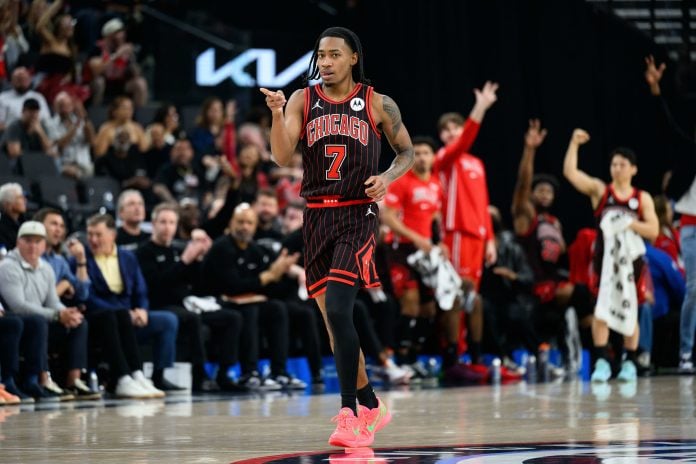
Mar 13, 2026; Inglewood, California, USA; Chicago Bulls guard Rob Dillingham (7) gestures after scoring during the first half against the Los Angeles Clippers at Intuit Dome. Mandatory Credit: William Liang-Imagn Images

Fans of the Chicago Bulls have been yearning for a full reset for several years. After the DeMar DeRozan, Zach LaVine, and Nikola Vucevic trio fizzled and failed to deliver playoff success, the masses thought Arturas Karnisovas should fire-sell and start over, trading those three and other aging veterans for future assets. Instead, AK’s group rode out the same bunch for far too long, failed to reach the second round of the postseason for a 10th consecutive season, and has landed in the middle of the draft order ever since Patrick Williams was selected fourth overall. This year, they finally got their wish, but it wasn’t all good news. The Bulls added a surplus of guards, several of them on expiring contracts, and created more confusion than clarity about the franchise’s future. With two months to decide which assets would be gone this summer and which they want to contribute to the rebuild project 3-5 years down the line, things have gone sideways. Several injuries to the newcomers and familiar faces, the refusal of head coach Billy Donovan to surrender their chances of winning each night in favor of developing young players, and a few meaningless victories later, the Bulls are in the same place they’ve been for five campaigns. Let’s check in on perhaps the highest upside add at the trade cutoff.

High Hopes For Rob Dillingham

Walking bucket. Shifty. Doesn’t get enough playing time. Elite scoring potential. These were all the things being said by the Timberwolves’ organization and fanbase, and a large reason Karnisovas sent Ayo Dosunmu up to Minnesota. The goal for Rob Dillingham, who’s under contract for the next two seasons before hitting restricted free agency, is to develop him into the sixth man in Chicago and replace Coby White at a cheaper price tag in the near future. Through his first 22 games, the potential has been seen in spurts, but the consistency is not dependable enough to give him the keys to the second unit. Coming out of the draft in 2024, many of his selling points revolved around his scoring abilities, offensive sparkplug abilities, and potential to be one of the league’s premier bucket-getters. The Bulls will need to see a much more sustainable product in the next two years if they hope to cement his status as the main scoring option off the pine.

Seeing The Potential In Spurts

In a five-game stretch in mid-March, the ideal Dillingham came to form. He averaged 25.2 minutes per night, the most for any five-game stretch in his young career, and posted 14.2 points with 4.0 assists with a 40.5% clip from the floor and 40.0% rate from three-point land. The shooting efficiencies will need to improve with time, but the flashes of offensive excellence are evident. At only 21 years old, he perfectly aligns with Chicago’s rebuild timeline, and with two additional seasons of contractual control, he’s a superb experiment to develop on a bottom-dwelling roster.

The potential for an explosive offensive weapon is there, but, as with Matas Buzelis, playing time and exposure are the two solutions in his formula for success. Will Dillingham evolve into the player Chicago hopes he can be, or will this trade with Minnesota haunt the franchise and add another tally to Karnisovas’s list of regrettable moves as the leader of the front office?

Chicago White Sox Seeing Early Returns In Munetaka Murakami Investment

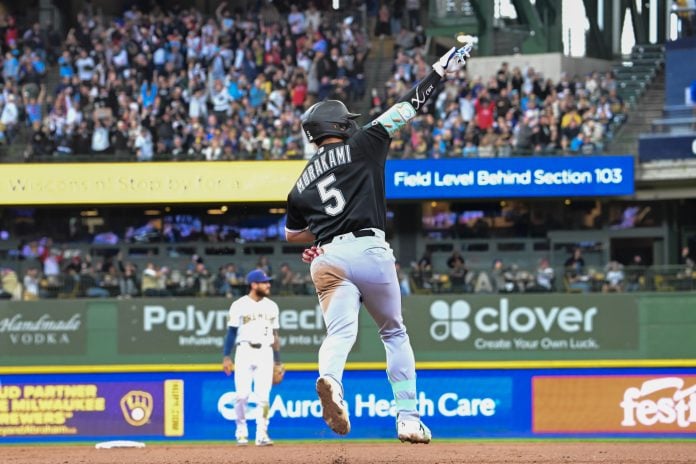
Mar 29, 2026; Milwaukee, Wisconsin, USA; Chicago White Sox first baseman Munetaka Murakami (5) reacts after hitting a solo home run in the second inning against the Milwaukee Brewers at American Family Field. Mandatory Credit: Benny Sieu-Imagn Images

Despite being the youngest player in Nippon Professional Baseball to hit for the triple crown, setting a single-season record by hitting 56 home runs, and winning an MVP award, Munetaka Murakami sat idly by waiting for his phone to ring this winter.

At just 26 years old, many assumed he would be one of the most sought-after free agents of the offseason. But MLB teams were wary of his high whiff rate on pitches in the strike zone. Over the past three seasons, Murakami averaged a 28% strikeout rate, well above last season’s MLB average of just over 22%, while his 72.6% contact rate on pitches in the strike zone would also have ranked among the lowest in the majors.

The lack of interest allowed the White Sox to swoop and secure him on a higher-dollar, short-term deal. But even White Sox had their reservations. The two-year, $34 million contract was so uncharacteristic for the White Sox that Chris Getz admitted during Murakami’s introductory press conference that he worked closely with the club’s marketing team to persuade Jerry Reinsdorf of Murakami’s significant international impact, helping push the deal across the finish line.

Just three games into the 2026 season, Murakami has wasted little time proving he was worth the investment. He has recorded a solo home run in each of his first three games, including a 375-foot shot to center field on Sunday, that left his bat at 102 mph. The hot start has resulted in a 2.700 OPS, which currently leads the major leagues.

Murakami is now one of four players to homer in at least their first three regular-season games, joining Trevor Story, Kyle Lewis, and Chase LeLauter. For his teammates who have watched him this spring, the power surge comes as no surprise. Murakami was billed as a power hitter when he joined the team, and he even admitted that it is the strongest aspect of his game.

“It’s what I expected, watching him for two years in Japan. I’m not surprised by it,” White Sox starter Anthony Kay told MLB.com. “I know some people are, but I’ve seen it. I’m not surprised.”

What has been surprising has been his plate discipline. While he’s struck out four times in three games, he’s also drawn four walks, including two against Milwaukee Brewers ace Jacob Misiorowski, one of which came after falling behind 0-2 in the count.

A major reason why is that he has not been expanding his strike zone. Despite a high whiff rate, which was to be expected, Murakami only owns a 22% chase rate. While the sample size is small, it is an encouraging sign. If Murakami can maintain this plate discipline, he is going to see more mistakes in the strike zone. With an average exit velocity of 94 mph so far this season, those mistakes are likely to translate into even more homers.

He’s already joined some elite company on the White Sox all-time leader board. His three home runs have him tied for 436th on the White Sox home run rankings, joining Hall of Famers Ken Griffey Jr and Ed Walsh (though Walsh was a pitcher who played 13 seasons with the White Sox).

Jokes aside, Murakami has the potential to climb that leaderboard quickly. He’s finding early success even while still learning how MLB pitchers attack him. In the first three games, he told reporters he’s been tuning in to White Sox PitchCom to get a better understanding of what pitchers are likely to throw in different situations.

As Murakami continues to refine his craft, he is only going to become more dangerous at the plate.

Bears’ Left Tackle Plan Revealed? How Ben Johnson Dropped Major Clue

ben johnson
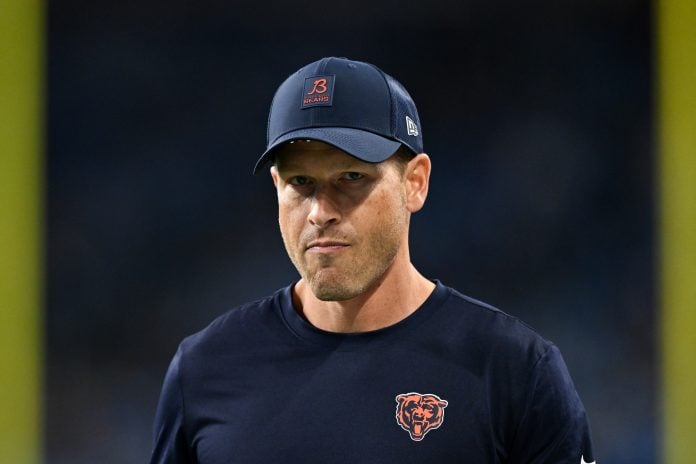
Sep 14, 2025; Detroit, Michigan, USA; Chicago Bears head coach Ben Johnson looks on during warmups prior to the game against the Detroit Lions at Ford Field. Mandatory Credit: Lon Horwedel-Imagn Images

The Chicago Bears feel they’ve done enough to address the most glaring holes on their roster. This was despite the difficult losses they suffered in free agency and via trade due to salary cap issues. Coby Bryant added some help at safety. Devin Bush stabilized the linebacker spot. Neville Gallimore and Kentavius Street bolstered defensive tackle. Garrett Bradbury arrived via trade to plug the hole at center created by Drew Dalman’s retirement. All things considered, Bears GM Ryan Poles and head coach Ben Johnson did a good job keeping things together.

However, there are lingering concerns about the left tackle position. Ozzy Trapilo is out for an indeterminate amount of time with that knee injury from January. The Bears opted for a solution-by-committee approach. They retained Theo Benedet, re-signed Braxton Jones, and brought in former 1st round pick Jedrick Wills from Cleveland. Johnson was asked about it during his interview session at the owners meetings in Phoenix. Let’s just say he passed on the opportunity to insist the Bears are set.

Ben Johnson left the door wide open.

“That’s something that Ryan and I always talk about. There’s a lot of ways that that could unfold. Obviously, you’d love to have your long-term starter for the next 10 years locked up. There’s a lot of uncertainty right now, though. We don’t know. Ozzy’s coming off a pretty serious injury. Not sure if we’ll have him next year or at what point he’ll come up. And so we’re going to have an opportunity right now for a lot of competition. I feel good about Braxton being in that fold. Theo being in that fold. We signed Jedrick Wills, who I think has got a lot of talent himself. He’s hungry to prove that he’s capable of being where he was drafted. And so we’re going to see what we can end up doing there. And you can’t rule out the draft either.

So I think we’ve put ourselves in a really good situation to where much like last year we can go into this draft and stay true to our board and not force any pick. If there’s a tackle or a defensive tackle or a (defensive) end, I think we can go any direction we need to and stay true to that and feel pretty good about it. To give you clarity, it’s hard to say right now what that left tackle spot’s going to look like this year or five years from now.”

Ben Johnson doesn’t sound like somebody content with things.

It isn’t hard to understand why. As much as the head coach may like Trapilo, the unfortunate reality is that the young tackle will be gone for months, if not the entire season. Worse still, there is no telling if he can be the same player he was before. Patellar tendon injuries are difficult to fully recover from. It wouldn’t be smart for the Bears to bank everything on him returning to form. As for their other options? They already have answers on Benedet. He’s a good run blocker but has clear limitations in pass protection. Jones can be solid when healthy, but is what you’d call replaceable. As for Wills, he has a lot of talent but is coming off a severe knee injury and has questions about his personal love for the game.

While Ben Johnson might be telling the truth about his optimism for those players, there is no way he is certain they will solve the Bears’ problem. If that were true, the team wouldn’t be looking into top tackle prospects in this draft. Poles was already spotted scouting 1st round names like Kadyn Proctor and Max Iheanachor in person. It is safe to assume they’ve been looking at others as well. This team isn’t operating as if they’re confident in that position.

One must not forget something critical about Johnson.

He has high standards. The head coach knows what great players at left tackle are supposed to look like. He worked with Laremy Tunsil in Miami and Taylor Decker in Detroit. He’s seen the best at the position up close. Johnson won’t lower his standards just to say the position is settled. He didn’t even go that far when Trapilo was starting. The last thing he wants is to be stuck in the same situation the Bears were in last season, constantly rotating guys to find a solution.

Jones and Wills should prepare themselves. While they’ve been given assurances they can compete for the starting job, they would be wise not to assume they will be the only two doing so. Barring some bad breaks on the board next month, the Bears will draft somebody. Johnson is willing to spend any resources necessary to find the answer. Considering the importance of left tackle on the football field, that isn’t a surprise. You’ll often find that eventual Super Bowl champions have good-to-great players at that position.

Luis Robert Jr. Takes Unnecessary Shot At Chicago White Sox Fans

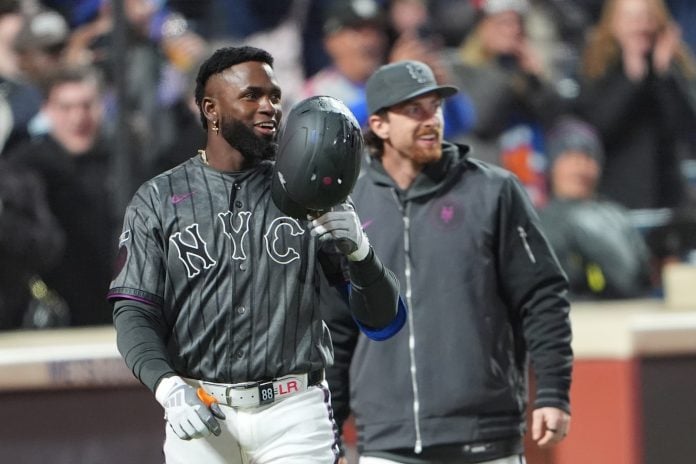
Mar 28, 2026; New York City, New York, USA; New York Mets center fielder Luis Robert Jr. (88) reacts to hitting a three run walk off home run against the Pittsburgh Pirates during the eleventh inning at Citi Field. Mandatory Credit: Gregory Fisher-Imagn Images

Luis Robert Jr. appears to be enjoying his new home in New York. 

The former Chicago White Sox center fielder is off to a strong start with the New York Mets, tallying five hits through his first three games, including a pair of multi-hit performances. In the one game he didn’t notch multiple hits, he launched a walk-off three-run homer in the bottom of the 11th to lift the Mets to a 4-2 win over the Pittsburgh Pirates on Saturday. 

After spending his first six seasons in the majors on the South Side of Chicago, Robert was dealt to the Mets this offseason, and it did not take him long to take a subtle jab at his former team in the process. 

Ahead of his first home game at Citi Field, Robert pointed to the expected crowd and didn’t hold back when comparing atmospheres. 

“I am sure that Thursday, the stadium is going to be packed,” Robert said. “Which is something that over the last few years in Chicago, I didn’t get to experience that. It’s going to be a new experience for me.” 

For White Sox fans, the sentiment is nothing new. The Pale Hose have long been the butt of attendance jokes, especially from their counterparts on the North Side. And to be fair, there’s some truth to it. Last season, the White Sox averaged just over 18,000 fans per game, ranking 27th in the majors. The last time they cleared the 20,000 mark was in 2023, when they drew an average of 21,405.

But the recent dip falls squarely on the team’s performance, something that Robert was one of the major culprits of. It’s hard to fault White Sox fans for not wanting to spend their hard-earned money on a team that’s lost 100-plus games in each of the last three seasons.

When the White Sox are competitive, fans show up. In 2021, they ranked 14th in attendance while winning the AL Central, and the following season, riding that playoff momentum, they posted their highest average of the past five years at 24,704 per game. 

Robert of all people should know this better than anyone, having a front row seat to a pair of sell-out crowds dressed in all black during the 2021 ALDS. Nobody heard a peep from Robert then. If he truly wanted to play in front of packed crowds, perhaps he should have looked in the mirror. 

Robert was expected to be a core piece of a contending team, but instead provided the White Sox with a litany of IL stints and mediocre at-bats. The 28-year-old Cuban had his moments, but they were few and far between. 

After winning a Gold Glove and finishing runner-up in the AL Central Rookie of the Year voting in 2020, Robert did little to turn the White Sox misfortunes around. Sure, he was named an All-Star after hitting 38 homers and stealing 20 bases in 2023. But you take away that season, and Robert was averaging just 13 homers and 44 games played with the White Sox. 

Even including that All-Star campaign, Robert struck out in 26% of his plate appearances and posted a .259/.313/.456 slash line. Solid numbers, but not nearly enough to match the expectations that came with his six-year, $50 million deal.

It’s clear that a change of scenery was necessary for both parties, and while there is likely no bad blood on either side, it is curious that Robert is choosing to throw stones from a glass hamstring.

Was his comment accurate? Yes. Was it necessary? Absolutely not. Call it an overreaction, but the White Sox have enough issues as it is without their former center fielder pouring salt in the wound, and with a combined .659 OPS over the past two seasons, Robert certainly has enough to keep him occupied.

The Patrick Williams Debate: Choosing Between Three Bad Options

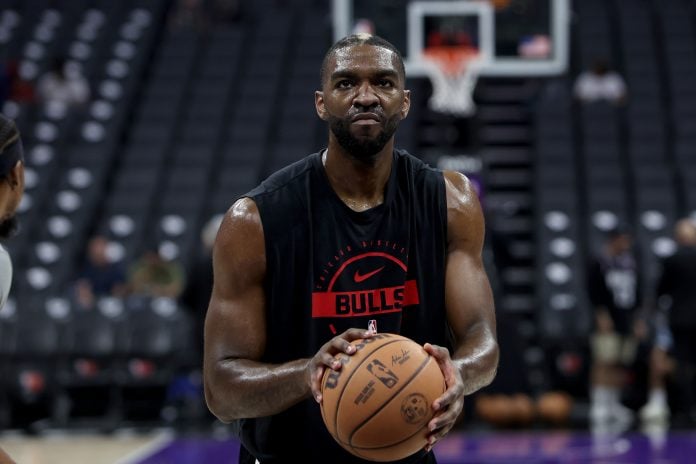
Mar 8, 2026; Sacramento, California, USA; Chicago Bulls forward Patrick Williams (44) warms up before a game against the Sacramento Kings at Golden 1 Center. Mandatory Credit: Dennis Lee-Imagn Images

As the season winds down and Chicago faces a summer that could have a thousand different outcomes in terms of roster, front office status, head coach uncertainty, and potentially franchise-altering draft choices, one name has slid under the radar for far too long. Patrick Williams is the most disappointing Chicago Bull of this decade, and potentially the biggest draft bust in the organization’s illustrious history. Three top-five picks from 2000-2006 were similarly terrible in Chicago, but they weren’t granted extensions to continue proving how lackluster the choice truly was. In Williams’ case, he’s had six seasons, is under contract for three more, and has only regressed throughout his NBA career. How do the Bulls get out from under his lucrative deal, and should this be a defining failure of Arturas Karnisovas?

Short Answer: There’s No Easy Way Out

All Bulls fans can agree that the former Florida State Seminole has been a nightmare in Chicago. Unfortunately, it’s not as simple as just cutting him from the team. This would create $18 million in dead cap over the next three seasons. Instead, the easiest route is to convince an opposing club that this is a 24-year-old player with upside that simply needs a scene reset. At this price, it’s a gamble for any other franchise to absorb a player who cannot earn minutes on one of the worst rosters leaguewide, has shown little to no improvement in six years, and who, at $54 million total left on his deal, is a long-term commitment. Assuming that Karnisovas tried his best to dump the overpriced forward at this year’s deadline, it’s a fair assessment to admit there are no willing suitors.

When it’s said and done, AK will have paid over $120 million for a player that averaged a career-low 6.8 points, 2.9 rebounds, and 19.7 minutes per contest while shooting an abysmal 38.1% from the floor this year. Drafting and extending this player should tell the Chicago ownership group all they need to know regarding his roster-building and player-evaluating capabilities, or lack thereof.

The Only Logical Solution: Waive And Stretch His Contract

The lone remaining solution after tricking someone into trading for the overpriced forward is to waive the player and stretch his contract. With this provision, the NBA allows a team to waive the player, and instead of the burden of a flat-rate dead-cap contract for his remaining years of guaranteed money, double the number of years and add one. In the case of Williams, this would mean taking his $54 million in fully guaranteed money left and, instead of the $18 million annual commitment from Chicago, they’d owe him $7.7 million until 2033.

Is adding dead cap better than trotting out this depreciated asset night after night and continually being disappointed? He’s not contributing to winning basketball, the front office has found similarly terrible ways to spend $8 million each year, and if they can’t find a trade partner, this might be the only solution left.

Take your pick: Commit to the next three years at a $18 million price tag and then move on, find a trade partner even if you have to add draft stock or other assets simply to dump him, or waive and defer his contract and create a financial burden for the next decade?

Whatever the answer, don’t let the predicament distract you from the loudest message here: Karnisovas not only drafted him fourth overall, but inked him to a 5-year, $90 million extension, and should be fired for those two moves alone.