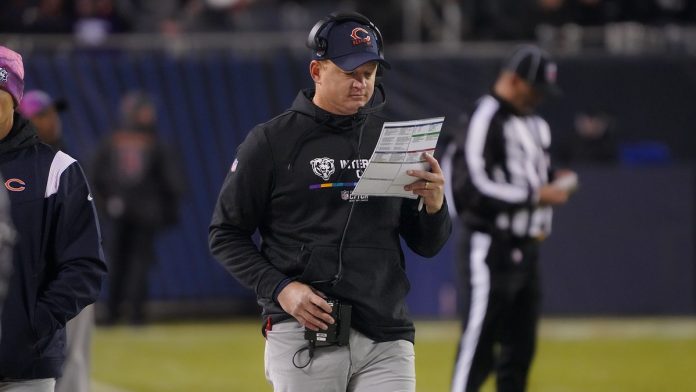
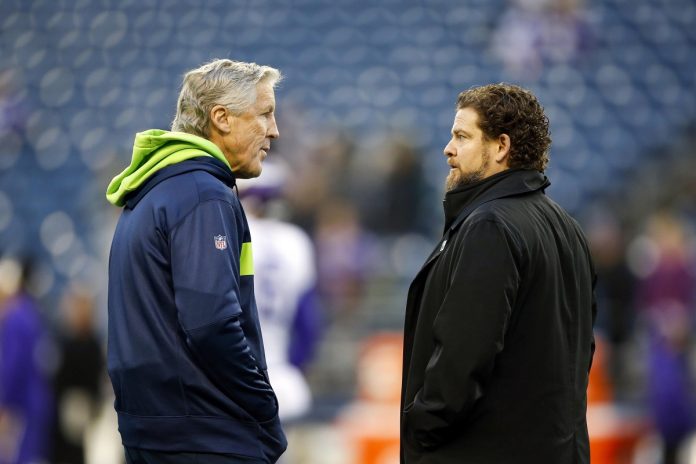
Luke Getsy didn’t have to leave Green Bay. He had a pretty sweet gig lined up had he stayed. He’d almost certainly be their offensive coordinator right now after Nathaniel Hackett left for Denver. They even tried convincing him to stay. Getsy though, decided to accept the Chicago Bears offer to take over Justin Fields’s development. It was a significant gamble with how rough the young quarterback looked in 2021 and this team’s long history of ineptitude at the position. The 37-year-old coach seemed confident he could pull it off.
Time has proven him right. After a rough start in September, Fields came alive in October. Over the previous six starts, he’s thrown 11 touchdowns, only four interceptions, and amassed over 1800 total yards with six rushing touchdowns. He has carried the Bears offense to an average of 29 points per game whenever he starts and finishes a contest. A big part of that success has been Getsy’s obsessive coaching style. Every little detail matters to him. No shortcuts. The coach revealed that approach yet again during his latest press conference, explaining how he stayed on Fields even though he sat out the Jets game last weekend.
Luke Getsy on what he wanted Justin Fields to learn from watching Trevor Siemian in game: "We were conversating after every drive. I think Andrew was doing it with Justin on the phone and I was doing it with him on the field. Just constantly, just that same growth that we, just
This man inherited a quarterback badly mismanaged by the previous regime and an offense with limited talent at every position. Somehow he turned that into the #1 rushing attack in the NFL that could score on almost anybody. The fact he’s done it with a pedestrian passing attack makes it all the more impressive. Once the Bears can fortify the offensive line and add more firepower at wide receiver, he can take Fields to the next level. Don’t forget he’s a former receivers coach and passing game coordinator. He knows what he is doing in that area of the offense.
The big question moving forward is how long Luke Getsy will stick around. Buzz has surrounded him for possible head coaching jobs since last year. His success with Fields this season may convince teams to give him a closer look next off-season. That would make life difficult for the Bears trying to find a replacement. Then again, this was why they hired him. They wanted Getsy to make Fields successful. He’s done that. They can only hope he stays long enough to take things to the next level.
ESPN’s Jesse Rogers published his annual MLB executives and insiders survey, giving us a look at what people within the game think will happen in the offseason. Obviously the big focus is on where and for how much money Aaron Judge will sign and how do things shake up with the four big free agent shortstops. Yet, there was also a question about who will be the most notable player to get traded and there was one White Sox player who made the list.
You have the usual suspects such as Sean Murphy and Pablo Lopez, each getting three votes out of the 12 people who answered the survey, and then two votes went to Lucas Giolito.
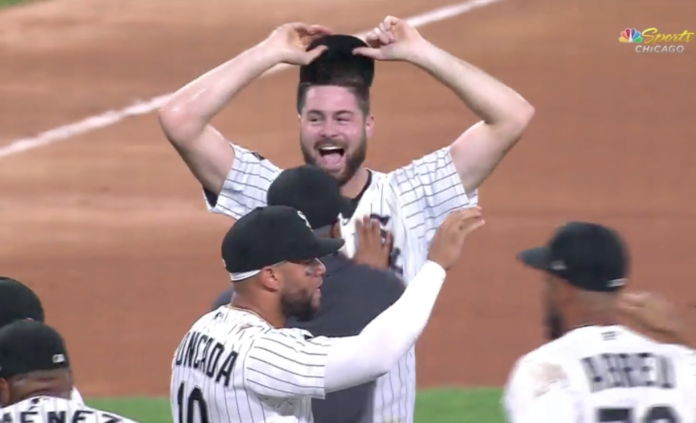
There’s no secret that things were a tad bit awkward between the White Sox and Giolito last offseason, when they couldn’t come to an agreement on his 2022 salary over $50,000.
Lucas Giolito described going to arbitration with White Sox as ‘frustrating, very unfortunate, disheartening.’
Said it came down to $50K difference prior to filing.
Things were eventually smoothed over as the White Sox and Giolito avoided an arbitration hearing and agreed to a $7.45 million salary. Unfortunately, Giolito had his worst season since 2018, which was his first full year in the majors. Now, entering his final year under team control, Giolito is projected to earn $10.8 million. That’s a hefty number for a starting pitcher that just had a 4.90 ERA in 161.1 innings.
So, maybe the initial disagreement last offseason wasn’t as serious as first thought, but then you also realize that Giolito has already reportedly declined a contract extension from the White Sox. According to James Fegan of The Athletic, the White Sox offered Giolito a four-year, $50 million contract extension before the start of the 2021 season. So, not great there, but Fegan added that not only did Giolito’s camp decline the offer, there was no counter made by his side because according to Fegan, “it was not viewed as being suitable enough to drive further discussion.”
Ouch.
So, as we stand here on Dec. 1, 2022, the feeling around the league is that Giolito won’t be with the White Sox after the 2023 season. At the start of the offseason, Jon Heyman was on MLB Network and he specifically named Giolito as one player he believes teams are asking about in trade talks. (55 seconds in)
The White Sox just made their first major move of the offseason, reportedly signing right-handed pitcher Mike Clevinger. Contract details aren’t clear yet, as Jon Morosi first said Clevinger will make at least $8 million in 2023, and then Jim Bowden reported the pitcher will earn $12 million with the White Sox. Maybe, that second figure includes buyout money that comes with an option for 2024? That’s my guess anyway.
With the addition of Clevinger, the White Sox have their starting rotation set, with Dylan Cease, Lance Lynn, Michael Kopech and Giolito. They also have Davis Martin, who proved to be a capable spot starter in 2022. However, there’s not a lot of depth behind that for Chicago, plus Kopech and Clevinger dealt with injuries last season. So, it’s not like the White Sox can easily replace Giolito unless they get a starter in return in a trade or sign another one. I mean, right now they should probably sign another starting pitcher. Doesn’t have to be a huge splash, but you can never have enough pitching.
Aug 21, 2022; Los Angeles, California, USA; Los Angeles Dodgers center fielder Cody Bellinger (35) hits a two-run home run scoring right fielder Joey Gallo (12) in the second inning against the Miami Marlins at Dodger Stadium. Mandatory Credit: Jayne Kamin-Oncea-USA TODAY Sports
Basically the only parameters that we had to follow was keeping the White Sox’s 2023 payroll at about $190 million, which was the team’s payroll in 2022.
Here are the biggest moves in the Pinwheels And Ivy Podcast White Sox offseason plan.
White Sox Free Agent Signings
Brandon Drury – 3 years, $19 million + incentives
Boom. The White Sox have a new starting second baseman.
Cody Bellinger – 2 years, $32 million
This is assuming the Dodgers non-tender Cody Bellinger. He’s been pretty bad since his 2019 MVP season, but you’re obviously hoping for a big bounce back from the left-handed hitter. We’ll slot Bellinger in as the Opening Day right fielder, which also relieves pressure from Oscar Colas being catapulted into the spotlight immediately in 2023.
Trade Liam Hendriks
In order to sign those free agents we had to shed some money from the books and the guy SouthsideZo targeted as a trade piece is closer Liam Hendriks. He’ll be making a little more than $14 million in 2023 and hey why not keep trading with the Dodgers. The White Sox will receive 25-year-old starting pitcher Ryan Pepiot in return from the Dodgers. Pepiot made his MLB debut for Los Angeles in 2022, and posted a 3.47 ERA in 36.1 innings. The right-hander was selected in the third round of the 2019 draft out of Butler.
White Sox Free Agents Leaving
The two main free agents we have leaving the White Sox are José Abreu and Johnny Cueto. We’re also saying goodbye to Elvis Andrus and Josh Harrison.
2023 White Sox Starters
C – Yasmani Grandal 1B – Andrew Vaughn 2B – Brandon Drury SS – Tim Anderson 3B – Yoan Moncada LF – AJ Pollock CF – Luis Robert RF – Cody Bellinger DH – Eloy Jimenez
2023 White Sox Rotation
Dylan Cease Lance Lynn Lucas Giolito Michael Kopech Ryan Pepiot
So, how’d we do. (Direct all angry messages at @SouthsideZo)
And check out this week’s episode of the Pinwheels And Ivy Podcast to listen to our discussion on this White Sox offseason plan. Oh and we talked about new White Sox manager Pedro Grifol, too!
The Chicago Bulls are currently stuck in NBA purgatory with a 9-12 record a quarter into the season. Three options are moving forward: trade for a superstar, tank completely, or keep this mediocre team together and lose the 2023 first-round pick to the Orlando Magic.
Bill Simmons, the founder of The Ringer, believes the Bulls should commit to the tank by trading away their stars for Victor Wembanyama, the best prospect since LeBron James. There are a few benefits if the Bulls decide to tank altogether: keep their pick if it’s a top 4 pick, Arturas Karnisovas can build a team from the ground up for the first time, and the Bulls would be in the running for the greatest prospect in decades.
“i have three trades right now to save chicago. trade number one: [DEMAR] DEROZAN AND [NIKOLA] VUCEVIC TO THE LAKERS FOR [RUSSELL WESTBROOK] AND THOSE TWO 1ST [ROUND PICKS]. MAKE THE 2027 PICK UNPROTECTED. make the 2029 pick top 5 protected. then trade zach lavine to the knicks for obi toppins and expiring contracts with a top 4 protected 1st round pick. then alex caruso to golden state warriors for Donte DIVINCENZO AND MOSES MOODY AND A FUTURE PICK SWAP.”
Bill Simmons
Breaking Down The Bill Simmons Trade Ideas
These moves would help the Bull sell high on their best players while keeping their 2023 first-round pick and entering the Victor Wembanyama sweepstakes.
Trade #1:
Bulls Trade: DeMar DeRozan and Nikola Vucevic
Lakers Trade: Russell Westbrook, 2027 unprotected first-round pick, 2029 Top 5 protected first-round pick
Tanking is never easy, but the Bulls are now stuck in the mud. They have some lovely young pieces, such as Ayo Dosunmu, Dalen Terry, Lonzo Ball, and Patrick Williams. Add RJ Barrett, Moses Moody, and Obi Toppin, two former lottery picks to the team, and the Bulls would then have a nice young core for Arturas Karnisovas to work with. The Bulls would also be left with three good draft picks that could land you the next Jayson Tatum and Jaylen Brown, using the exact blueprint the Boston Celtics used when they traded away their stars at the time.
Most importantly, the Bulls will have a direction. Whether they end up with Victor Wembanyama or not, they’ll at least still have a plan. Their goal is for Lonzo Ball to get healthy and lead them to the Finals. That’s not happening, but that is their plan. It’s time for a new project. Let’ the tank begin.
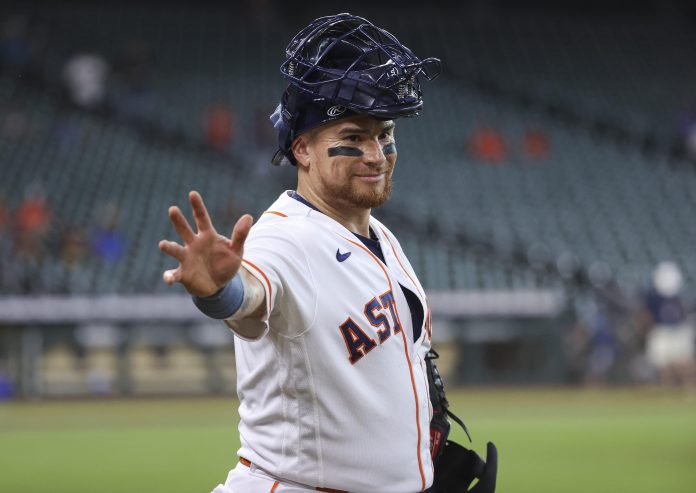
Sep 7, 2022; Houston, Texas, USA; Houston Astros catcher Christian Vazquez (9) waves while walking on the field before the game against the Texas Rangers at Minute Maid Park. Mandatory Credit: Troy Taormina-USA TODAY Sports
The Cubs are making a sharp transition to their catcher position as Willson Contreras is preparing to sign elsewhere, while the team continues to focus on a defense-oriented backstop. We already saw the shift last offseason, when the Cubs signed Yan Gomes to a multi-year deal and now Jed Hoyer and company are showing strong interest in Christian Vázquez.
This is now the third time the Cubs have been connected to the Astros free agent catcher in the past couple weeks. However, USA Today’s Bob Nightengale is making it seem like things are getting more serious between Vázquez and the Cubs. In turn, the Astros are reportedly pursuing Contreras.
It could turn out to be an intriguing free agent swap of catchers this winter: The Chicago #Cubs are showing strong interest in Houston #Astros free agent catcher Christian Vazquez; the Astros have engaged in early talks with Cubs free agent catcher Willson Contreras.
A big selling point the Cubs can present Vázquez is that they can certainly offer him plenty of playing time. The 32-year-old was traded by the Red Sox to the Astros in the summer and you would assume that he loved being on a World Series contender and eventually winning the Word Series with Houston. However, even before the postseason ended, Vázquez spoke to the Boston Globe and made it clear that where ever he was going to go next, playing time would be a priority.
Vázquez only started 24 of 58 games after he was traded to the Astros. He started 78 games for the Red Sox prior to the deal and in 2021, he started 119 games behind the plate. The Cubs currently have Gomes as their primary catcher, but he’s going to enter his age 36 season and in 2022 there were already signs of him regressing on offense and he dealt with injuries. Meanwhile, PJ Higgins couldn’t continue his hot start and Miguel Amaya is trying to overcome injuries of his own to get back into the catching picture for the Cubs.
Playing time behind the plate is more than available. Vázquez is not only a good defensive catcher, ranks high in framing, he’s also a solid hitter for a catcher at least. The transition to Houston wasn’t great, but Vázquez was having another good year at the plate for Boston in 2022. He slashed .282/.327/.432, with eight home runs in 294 at-bats. That was a great bounce back from 2021, when he had a .659 OPS, but that came after he posted an .800 OPS in 2019-20 combined.
Not only does acquiring Vázquez improve the team defensively, but the Cubs get better on offense too, especially when you consider that they’re losing Contreras’ numbers when he was starting at catcher.
At 32-years-old, I could definitely see Vázquez getting a three-year deal. Contract projections from Fangraphs and MLB Trade Rumors have the catcher getting a 2-3 year deal for about $9 million per year. Gomes is in the second year of his guaranteed contract with the Cubs, who owe him $6.5 million in 2023. The Cubs also have a team option on Gomes for 2024.
So, Christian Vázquez? I’d love it for the Cubs. Would you?
During last year’s trade deadline madness, the Chicago Bulls were in talks with the Detroit Pistons over the two-way swingman Jerami Grant. The deal never came to fruition, and many believe that was because of the Bulls’ unwillingness to deal the 2020 fourth overall draft selection Patrick Williams. Williams being only 20 years old and having played in just 88 career games; fans understood the reluctance from the Bulls’ front office. Seeing the aftermath, the failure to get this deal done has locked in a near future of mediocrity for the Windy City while Grant is flourishing elsewhere.
Patrick Williams Lack Of Development
Since entering the league in 2020, Patrick Williams has not evolved much on the court. From his rookie season to 20 games into the 2022 season, his field goal percentage, rebounds, assists, and steals have all decreased. His points have stayed constant at nine per game across the three seasons, and both his turnovers and fouls have increased in that time. Williams has fallen extremely short of expectations as a top-five pick in the draft. Only playing in 108 games in his young career has skated him from much responsibility for his poor performance thus far. With the likes of borderline all-stars Tyrese Haliburton, Tyrese Maxey, Desmond Bane, and Saddiq Bey all having been drafted after the Bulls’ selection, it leaves Chicago’s fanbase wondering what could have been.
The former Florida State Seminole small forward often referred to as “The Paw” or “Baby Kawhi”, Williams has yet to live up to that level of hype or production. There are a few noteworthy stats that are giving Bulls fans false hope and, in the minds of some, justify seeing his potential through to completion. He scored 20+ in two of his five career postseason games and also dropped a career-high 35 points in the highest usage game of his young career when the Bulls benched most of their starters for a regular-season finale against the Minnesota Timberwolves. The harsh reality is that both accolades are relatively meaningless. The 20+ point playoff performances came in games where the Milwaukee Bucks had gone up by 25+ points in each of the two, and starters on both sides were benched by then. The 35-point explosion at the end of last season would be promising if Williams were anywhere near the featured player on a nightly basis, but he’s at best the fourth or fifth-highest usage player on Chicago’s roster and needs to show he can be a more efficient scorer without the need for volume. Williams has only reached the 20-point mark three other times in his over 100 career games.
Chicago has shown two glaring problems in their poor start to the 2022-23′ season, three-point shooting and inside defense. This season, Grant is averaging nearly double the number of threes than Patrick Williams and is shooting them at a higher percentage, suitable for seventh best in the NBA. While the Portland Trail Blazers forward usage rate does favor his statistics, he’s averaging over double Williams’ points per game and more rebounds, assists, and blocks plus steals per contest. He’s also more efficient with his scoring, reaches the free throw line considerably more, and brings a taller frame that would elongate a small Bulls lineup defensively.
Grant is shooting a five percent better field goal percentage with three more points per game than last season, making a strong case for the Most Improved Player award, while Williams is losing value by the day. At only 28 years old, the former second-round selection out of Syracuse would still be a staple for the Bulls for years to come. His Player Efficiency Rating is also nearly seven points higher than Williams, and he would alleviate the slumps that stars Zach Lavine and Demar DeRozan are prone to going through for stretches of the season or playoffs.
The failure of the new front office led by Arturas Karnisovas to let go of their first draft pick Patrick Williams has cost the Bulls serious contention hopes. With the addition of an x-factor with defensive size, three-point shooting, and offensive efficiency, the 2022-23′ Bulls would be primed for a title run, and the 2021-22′ team would have certainly faired better than a 4-1 first-round exit. Instead, stuck with a borderline draft bust, the Chicago Bulls are anchored down by the limitations of a young, undeveloped wingman who is seemingly a longshot to peak at what a championship-aspiring team requires.
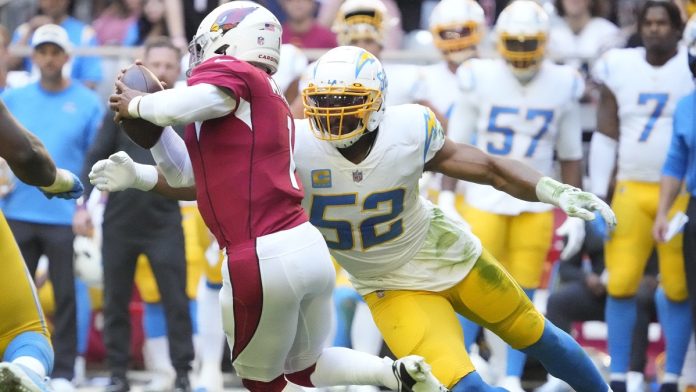
Nov 27, 2022; Glendale, AZ, USA; Arizona Cardinals quarterback Kyler Murray (1) is tackled by Los Angeles Chargers linebacker Khalil Mack (52) during the second quarter at State Farm Stadium. Mandatory Credit: Michael Chow-USA TODAY Sports
By most accounts, the Chicago Bears were decisive winners of the first Khalil Mack trade with the Las Vegas Raiders. They got multiple Pro Bowls, dozens of sacks, and two playoff appearances during his four-season stint with the team. The Raiders did little with the bounty of picks they got in return, with running back Josh Jacobs being their best selection. Sadly with the arrival of a new regime under GM Ryan Poles, it was decided the team needed to hit the reset button. So they traded Mack to a team he might have a chance to win with, the Los Angeles Chargers, securing a 2nd round pick in the process.
Things are going well enough for him. He has seven sacks this year, and the Chargers are 6-5, still in the AFC playoff picture. However, ESPN’s latest evaluation of the trade by insider Jeremy Fowler indicates the Bears are the winners. It’s not quite as lopsided as the first deal in 2018, but circumstances favor Chicago both for the immediate return in the draft pick and the ample salary cap space they have coming.
The Bears’ plan worked perfectly. Los Angeles’ only worked partially.
Grade for Bears: B
Grade for Chargers: C+
The Chargers’ deal for Mack was predicated on having a healthy Joey Bosa. Their plan was to have two dominant pass-rushers taking turns in the backfield, similar to the Raiders’ plan with Maxx Crosby and Chandler Jones.
The Raiders’ plan hasn’t worked because of lack of production (Jones has 0.5 sacks). The Chargers’ plan hasn’t worked because Bosa has missed most of the year with a groin injury…
…Overall, execs thought the Bears’ ask for Mack was “pretty fair” for both sides. Mack’s age made commanding a first-round pick difficult. The Bears used the pick to draft safety Jaquan Brisker, who looks like a player.
“With the Bears rebuilding and shedding money, it’s a pretty good deal,” an AFC exec said. “This was the first sign that Chicago was all-in on the rebuild.”
Khalil Mack will always be a bright spot in Bears’ history.
He was most directly responsible for getting the organization out of its extended funk between 2011 and 2017, where they’d failed to make the postseason. His 2018 campaign will go down as one of the best in Bears history. It’s just unfortunate the organization flubbed the quarterback with Mitch Trubisky. Had they drafted Patrick Mahomes, it’s likely Mack would still be in Chicago terrorizing opponents. Once it was clear the team was aging and falling apart, Poles made the right decision to cut ties.
Jaquan Brisker already looks like a future staple for their defense, leading the team in sacks (3) and ranking near the top in tackles as well. Poles had one shot, and he didn’t miss. Now he’ll be able to add more flavor with some moves in free agency using that money that would’ve otherwise gone to Khalil Mack. If he can land a strong veteran player that helps the organization immediately, it will make the trade look even better. One must credit the Bears GM for having the courage to make a move when he did.
Jul 3, 2022; Chicago, Illinois, USA; Boston Red Sox third baseman Rafael Devers (11) hits an infield single against the Chicago Cubs during the third inning at Wrigley Field. Mandatory Credit: David Banks-USA TODAY Sports
We did a White Sox offseason plan last week on the Pinwheels And Ivy Podcast, featuring @SouthsideZo‘s ideas. Now, it’s my turn to spend Tom Ricketts’ money and make the Cubs competitive ASAP. My budget for this exercise is $205 million, which is still $28 million below the first luxury tax threshold.
Guaranteed Money for 2023 (AAV)
Marcus Stroman – $23,666,667 million Jason Heyward – $23 million Kyle Hendricks – $13.875 million Seiya Suzuki – $17 million Yan Gomes – $6.5 million David Bote – $3 million
Ian Happ – $10.6 million Steven Brault – non-tender Franmil Reyes – non-tender Rowan Wick – non-tender Alec Mills – non-tender Brad Wieck – non-tender Nico Hoerner – $2.2 million Codi Heuer – $800K Nick Madrigal – $1.1 million Rafael Ortega – non-tender
Total: $14.7 million
Cubs Free Agents Heading Into Offseason
Willson Contreras Wade Miley Drew Smyly Sean Newcomb Michael Hermosillo Jackson Frazier
Offer qualifying offer to Willson Contreras. He declines and the Cubs get a comp pick in next year’s draft. Explore short-term deal with Drew Smyly.
Adios to Miley, Newcomb, Hermosillo and Frazier.
Estimated Salaries Pre-Arb, Other Costs
We’re using FanGraphs here to factor in the salaries of pre-arb players, minor leaguers on the 40-man roster and other costs.
Estimated salaries for pre-arb/non-guaranteed contracts – $11.52 million Estimated salaries for 40-man roster players in the minors – $2.5 million Estimated player benefits to be paid – $16.5 million Payment into $50 million pre-arb bonus pool – 1,666,667 Money owed to Jonathan Villar – $1.5 million Money owed to Padres (Yu Darvish) – $1 million Buyout for Drew Smyly – $1 million
Total: $35,686,667 million
CBT payroll heading into free agency: $137,428,334.
The luxury tax thresholds for 2023 are: $233 million $253 million $273 million $293 million
Penalties increase after passing each threshold. The Cubs did not surpass the luxury tax in 2022. So, that leaves us $67,571,666 to spend before going over the $205 million self-imposed luxury tax budget. Let’s get to it!
40-Man Roster
Pitchers
Marcus Stroman Justin Steele Keegan Thompson Hayden Wesneski Kyle Hendricks Adrian Sampson Adbert Alzolay Mark Lieter Jr. Michael Rucker Brandon Hughes Eric Uelmen Jeremiah Estrada Manny Rodriguez Codi Heuer Caleb Kilian Brailyn Marquez Ethan Roberts
Catchers
Miguel Amaya Yan Gomes
Infielders
P.J. Higgins Nico Hoerner Nick Madrigal Zack McKinstry Estaban Quiroz Alfonso Rivas Patrick Wisdom Jared Young
Outfielders
Alexander Canario Ian Happ Chistopher Morel Seiya Suzuki Nelson Velazquez
There are guys who are currently on the 40-man roster that I didn’t list. Several pitchers, who I think will be released, but the most notable absence is David Bote. I just don’t see a good fit on the roster with him anymore. The Cubs still owe him guaranteed money, but like Heyward, I don’t believe there’s any room for Bote to take up a spot right now. Also, the list is imperfect because a few others like Canario will go back on the injured list and not take up a roster spot, while a couple minor leaguers will be added later in the offseason.
OK, finally, let’s get to the free agents.
Cubs Free Agent Signings
Kodai Senga – 4 years, $60 million + 5th year option
Kodai Senga’s contract projections have been fairly modest, ranging from $13 million to $15 million per year. We’ll know more about the Japanese pitcher’s contract demands as the offseason passes, but the initial projection from is five years for $75 million. That’s pretty much my deal for Senga, but I’ll make that fifth year an option. Maybe include some incentives for innings pitched to entice the right-hander. Senga just seems like exactly what the Cubs are looking for in early free agency. A solid starting pitcher, who will not cost the team a draft pick and unlike the Suzuki signing last offseason the Cubs do not have to pay a posting fee to Senga’s previous team in Japan. And hey, Suzuki is already telling Senga good things about the Cubs.
$15 million AAV
José Abreu – 2 years, $32 million
I’m looking forward to see how Matt Mervis handles MLB pitching after he obliterated the minor leagues in 2022. Mervis does have some holes in his swing according to scouts, so I would prefer a safety blanket at first base. That’s where José Abreu comes into play. He might be getting up there in years, but the veteran first baseman is still producing at the plate. Abreu won’t completely get in Mervis’ way either because the Cubs could also use a DH.
$16 million AAV
Craig Kimbrel – 1 year, $5 million + incentives
Bring Craig Kimbrel back and have the Cubs fix him. At this point the Cubs don’t have anyone to take the reins as the closer and at the same time the organization has a good track record of signing veteran relievers and getting the most out of them.
$5 milion AAV
Brad Hand – 1 year, $7 million + incentives
Brad Hand is a left-handed reliever, who has had experience closing out games with Cleveland and Washington. He’s coming off a good year with the Phillies and right now the Cubs don’t have many options from the left side to use out of the bullpen.
My only caveat here is that I would sign ONE of Kimbrel or Hand to make the closer at the start of the season and then sign another veteran reliever.
$7 million AAV
Omar Narváez – 2 years, $10 million
The Cubs need someone else to pair with Yan Gomes and Omar Narváez might be the right guy. He’s solid behind the plate and despite the bad year offensively with the Brewers in 2022, Narváez has been fairly consistent throughout his career at the plate, which includes a 106 OPS+ against right-handed pitchers for the lefty-hitting catcher.
$5 million AAV
Alex Colomé – 1 year, $2 million
I’m looking at Alex Colomé as the ideal low risk, high reward type of signing. It shouldn’t cost much to sign the 33-year-old after his two down seasons with the Twins and Rockies. If the Cubs believe they can tweak something in mechanics or change something with his pitches, then Colomé has the potential to be a guy they can count on late in games. The righty has a career 3.34 ERA and 159 saves.
$2 million AAV
Offseason Cubs Trades
I’ve only signed one free agent starting pitcher and that’s because I’m trading for another legitimate arm to put in the rotation.
Keegan Thompson, Nick Madrigal, Nelson Velazquez for Pablo López
Shoutout to Greg Zumach, who I got this idea from. His trade proposal for Pablo López of the Marlins is Keegan Thompson, Christopher Morel and outfield prospect Yohendrick Pinango. I’ve kept Thompson in my offer, but replaced Morel with Madrigal and Pinango with Velazquez. The Marlins were reportedly asking for Gleyber Torres from the Yankees back in the summer for Lopez, but New York moved on from those talks. Is this a light package? Maybe, but maybe the Marlins buy Madrigals’s contact skills, which have led to positive results when he’s been healthy. And hey, Madrigal still is under team control with four years of arbitration before he becomes a free agent.
López is 27-years-old and has two years left of arbitration. His projected salary for 2023 is about $6.3 million. So, take that total and subtract Madrigal’s $1.1 million, Thompson’s and Velazquez’s league minimum ($720K each) for an added payroll of almost $4 million.
$3.76 million AAV
Trade pitching prospect for Twins Outfielder Max Kepler
I am terrible at coming up with viable trade packages. I admire anyone who attempts this practice. This is the best I can come up with when it comes to trading for Max Kepler. It’s vague because I think the Twins won’t be asking for much and the Cubs certainly have plenty of pitching depth to trade from. Kepler had his breakout season in 2019, but it’s been shaky ever since. In 2022, the left-handed hitter only mustered up a .666 OPS. Maybe get the Twins to cover some of the $8.5 million owed to him in 2023.
The Cubs can give Kepler center field and it’s basically a one-year, prove it deal as the Cubs have PCA and a few others waiting down in the minors. Or will they?!?!?!
$4 million AAV
Trade Pete Crow-Armstrong, Patrick Wisdom + Pitching Prospect for Rafael Devers
I’m using that one website that where you can pretty much make any trade you want, the Trade Simulator. In my plan I didn’t sign one of the top shortstops, so we’re going to pivot to 26-year-old Rafael Devers. He’s in his final year of arbitration and as of Thursday it doesn’t sound like negotiations are going well between the third baseman and the Red Sox. And obviously if you’re trading for Devers, then you’re doing it with the intention of immediately working out an extension. Devers’ estimated salary for 2023 is $16.9 million.
$16 million AAV
2023 Cubs Starting Rotation
Marcus Stroman Pablo Lopez Kodai Senga Justin Steele Kyle Hendricks/Hayden Wesneski
In my original plan I gave myself more room to spend, setting the first tier of the luxury tax as my limit. The biggest change from that plan to this one was there wasn’t a trade for Devers. Instead, I signed Carlos Correa to an eight-year, $256 million contract. That would have put my payroll at $220 million at the start of the 2023 season.
Oh and by the way, after 2023, Heyward’s $23 million and Hendricks’ $13.875 million comes off the books. The Cubs could also have more flexibility if Stroman opts out. I can’t say this enough, there is no reason the Cubs can’t make big moves THIS offseason.
So, what do you think? I already know the trade ideas are going to get roasted. Give it to me and let me know what moves you want to see the Cubs make this offseason.
And make sure to subscribe to the Pinwheels And Ivy Podcast.
Dec 10, 2018; Seattle, WA, USA; Seattle Seahawks head coach Pete Carroll talks with general manager John Schneider, right, during pregame warmups against the Minnesota Vikings at CenturyLink Field. Mandatory Credit: Joe Nicholson-USA TODAY Sports
The Chicago Bears currently hold the rights to the #2 overall pick in the 2023 draft. Barring something unexpected, there is a reasonable chance they will maintain control of that selection by the end of the regular season. Their defense is a shadow of its former self. Darnell Mooney is lost for the year. Justin Fields isn’t 100% healthy. Their schedule features three future playoff teams, along with the Packers and Lions. If this proves true, GM Ryan Poles will be in a terrific position to help his football team next spring.
The options on the table appear to be one of two scenarios. Either take the best defensive prospect on the board or trade down with another team seeking a quarterback. The latter seems so enticing, given the number of holes on this roster. If Poles sees it the same way, he’ll need to identify which teams are likeliest to entertain the possibility. Here are five, based on the current draft order, that makes the most sense.
The Chicago Bears have multiple teams worth calling.
Detroit Lions (3rd overall)
Jared Goff has been OK for Detroit, but GM Brad Holmes must be honest with himself. Will the Lions win a championship with him under center? The answer is no. That is why he may be keen on grabbing a quarterback. He’s already shown a willingness to trade within the division, as his two deals with the Minnesota Vikings show. He could pay a few picks to move up one spot, ensuring he gets the quarterback he wants before somebody else jumps ahead of him. This way, the Bears secure more picks while also still getting the top non-QB prospect on the board.
Seattle Seahawks (4th overall)
There are multiple reasons Seattle might do this. Geno Smith has played well this year but also turns 33 years old in 2023. The Seahawks may view him as the present but not the future. On the other hand, they may covet Alabama pass rusher Will Anderson. Their rush has been bad on defense this season. They sorely need somebody that can get after the quarterback. Chicago could make this deal while still having a reasonable chance to land Georgia defensive tackle Jalen Carter.
Carolina Panthers (5th overall)
Of the teams in the top five as it currently stands, the Panthers are probably in the most desperate need of a quarterback. They’ve tried half-measures with guys like Sam Darnold and Baker Mayfield. It hasn’t worked out. They have to get a franchise guy they can build around. Their options appear to be to settle for Will Levis, the #3 QB on most boards, or move up to get Bryce Young or C.J. Stroud. If it’s the latter, they are likely to give the Chicago Bears their most significant return in pick compensation while keeping them in the top five.
Indianapolis Colts (14th overall)
The compensation would need to be extensive to convince the Bears to move down even five slots in the draft. To drop out of the top 10 entirely would require a bounty. Colts GM Chris Ballard isn’t likely to do that, but he might not be calling the shots anymore after what Jim Irsay has done. He might push the GM to go after a new quarterback, tired of the cheap alternatives like Carson Wentz and Matt Ryan. Ballard has a personal connection with Poles from their time in Kansas City together. That could make such a deal go smoothly. Indy may even soften the blow by offering a player in that deal. DeForest Buckner is one example.
Atlanta Falcons (15th overall)
Another team that needs to find their franchise quarterback. Marcus Mariota isn’t their future. Are they desperate enough to jump that high? Atlanta has made aggressive moves in the past, and they have Ryan Pace in that front office now. The price would be staggering, but then again, the Rams went from #15 to #1 back in 2016. So this wouldn’t be something unheard of. It isn’t likely with their roster more than a QB away from contention, but it’s a scenario worth keeping in mind.
Nov 27, 2022; Philadelphia, Pennsylvania, USA; Philadelphia Eagles quarterback Jalen Hurts (1) runs with the ball against the Green Bay Packers during the first quarter at Lincoln Financial Field. Mandatory Credit: Bill Streicher-USA TODAY Sports
Justin Fields told reporters on Wednesday that he’s feeling better than he did last week. His shoulder injury remains an ongoing issue, limiting him in practice again. However, it appears he is pointed in the right direction. He came close to playing last weekend in New York, but warmups didn’t go as hoped. The pain was still too much. That may not be the case on Sunday at Soldier Field. Not with the Green Bay Packers coming to town. Fields has multiple incentives to push for a return in that game.
Start with the obvious. The Bears’ arch-rivals have beaten him three times since he was drafted. He’s yet to beat Green Bay in his NFL career. That is not something a competitor like him takes lightly. No doubt he would love a chance to play spoiler, ruining what little playoff hopes the Packers have left. It would be especially sweet, considering Aaron Rodgers and others are already assuming it will be a win.
There is one extra incentive, though. It comes from having watched what happened in Philadelphia last weekend. If Jalen Hurts can run for 157 yards against this Packers’ defense, why can’t he?
Justin Fields is in a far different place from September.
In Week 2, the Bears offense was still finding themselves. Green Bay took advantage, enacting a game plan that kept Fields in the pocket. Things have changed. Luke Getsy has re-crafted the scheme with a heavy incorporation of the Baltimore Ravens offense, making Lamar Jackson a huge success. People can’t say it hasn’t worked. Before his injury in Atlanta, the Bears averaged 29 points per game across six weeks. He may want to show Green Bay what he’s learned while also taking advantage of a wounded animal.
The Packers defense is significantly less healthy than three months ago. Star defensive end Rashan Gary tore his ACL. Cornerback Eric Stokes is also done for the year, while All-Pro linebacker De’Vondre Campbell might miss another game with a knee injury. Since Week 4 against New England, the Packers have allowed at least 150 yards rushing in six games, including 363 against Philadelphia. The Bears have had at least 160 yards rushing in six straight games with Justin Fields under center.
This is a prime opportunity if he is healthy enough to go.