
Friday, November 13, 2026
EDGE is live. Chicago fans can now access and explore the beta.
Home Blog Page 149

White Sox 2026 Top Prospects: No. 7 May Be The Left Fielder Of The Future

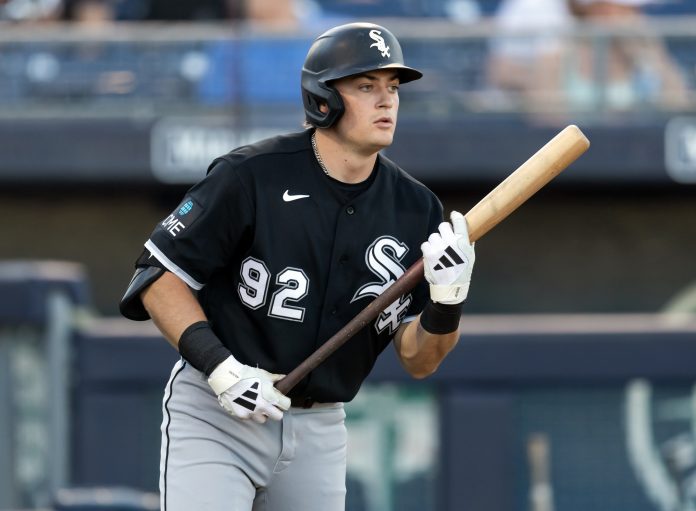
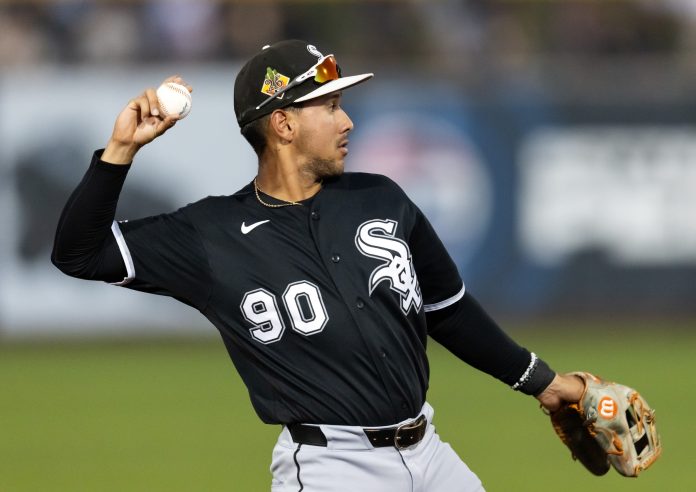
Mar 19, 2026; Peoria, Arizona, USA; Chicago White Sox second baseman Sam Antonacci against the San Diego Padres during a spring training game at Peoria Sports Complex. Mandatory Credit: Mark J. Rebilas-Imagn Images

After the last White Sox failed rebuild, they took a hit in terms of talent throughout the minor leagues. For a few years in a row, the White Sox ranked in the middle of the pack or towards the bottom in farm system rankings. However, to start Chris Getz’s tenure, the focus has been to build that talent pool back up.

Now, the White Sox farm system sits in the top half of the league and most outlets give them five to six top prospects, with a few more on the fringe of making the list. This doesn’t include players like Jacob Gonzalez or Colby Shelton off to insane starts to the season. However, what differentiates this from the last rebuild is the fact that the farm system is significantly deeper, as they have some very intriguing players outside of the top “consensus” prospects.

This comes after many of their main guys on the roster have graduated off top prospect lists. Guys like Kyle Teel and Colson Montgomery are no longer considered prospects, but are already making a contribution at the major league level. Despite this, the White Sox still have multiple top prospects, making this vastly different from the early 2020s, as once all the main players made their debut, the farm system was depleted.

As we sit about a month into the season, we continue our top prospect list, getting to know some of the depth in the organization. We started with our 20th ranked prospect, making our way to the best prospect in the system. We unveiled our 8th ranked prospect, William Bergolla Jr., in our last article. Here, we cover our 7th ranked prospect, Sam Antonacci.

Antonacci was selected in the 5th round in the 2024 draft out of Costal Carolina. He was a quick riser in the draft process, as he spent just one year at Costal Carolina after coming from a junior college.

After being drafted, Antonacci quickly acclimated to professional baseball, as he found success right away. In 2024 with the Kannapolis Cannon Ballers, Antonacci hit .333 with a .471 OBP over 102 plate appearances, adding 14 RBIs, seven stolen bases, and walking more than he struck out.

This lead to him starting the 2025 season with the Winston Salem Dash, where he earned a promotion to Birmingham after just 64 games with the Dash. Antonacci finished the season with the Barons by hitting .292 with a .435 OBP over 49 games.

This put Antonacci firmly on the radar for the organization, and he did not disappoint to start this season. After a solid performance in Spring Training, Antonacci was impressive in the World Baseball Classic, showcasing his impressive baseball IQ.

Antonacci would then start his season with the Charlotte Knights, just one step away from the major leagues. After 14 games hitting .313 with an impressive .500 OBP, he was finally promoted to the White Sox.

This was a well deserved promotion for Antonacci and he has looked pretty good so far with the Sox. In 30 at-bats, he is hitting .233 with one homerun and four RBIs. However, the most impressive part of Antonacci’s game is that he’s only struck out two times, while walking three times. This can translate to sustained major league success.

Antonacci looks to cement himself as the White Sox left fielder of the future, and he has certainly looked the part as of late after a bit of a rough start. While he is a natural infielder, he has looked pretty good in the outfield and he may be able to stick there. Antonacci won’t be considered a prospect much longer, but by that point he may be cementing himself as a major leaguer.
NFL Buzz Confirms Bears Outmaneuvered Rivals For Zavion Thomas — Here’s Why It Matters

zavion thomas
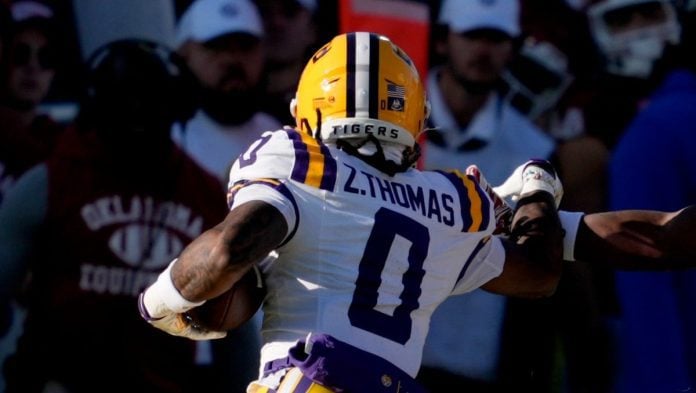
Oklahoma Sooners linebacker Kendal Daniels (5) reaches for Louisiana State Tigers wide receiver Zavion Thomas (0) beside Louisiana State Tigers defensive end Jimari Butler (12) during a college football game between the University of Oklahoma Sooners (OU) and the LSU Tigers at Gaylord Family – Oklahoma Memorial Stadium in Norman, Okla., Saturday, Nov. 29, 2025. Oklahoma won 17-13.

If there was one pick in the 2026 NFL draft that had Chicago Bears fans upset, it was Zavion Thomas. It wasn’t just the fact that they were taking a wide receiver after already grabbing a center and tight end with their two previous picks. People had been hoping the team would invest more on defense. Yet what made it worse was that many experts felt Thomas was no more than a 6th or 7th round prospect at best. So, to take him in the 3rd round looked like a massive reach by Bears general manager Ryan Poles.

It was Velus Jones all over again. Poles took the former Tennessee receiver earlier than he should’ve in 2022. Now he’s doing it again. However, is this actually true? Based on what Sports Mockery insider Jeff Hughes heard from scout friends in the league, it wasn’t a reach at all. If the Bears hadn’t taken him when they did, another team likely would have a few picks later.

This was later confirmed by ESPN insider Field Yates. He told Waddle & Silvy that a person he trusts in the league called him, insisting that Thomas was ranked way too low on his top-150 prospect rankings.

Zavion Thomas went at the going rate.

Since 2010, there have been nine wide receivers who ran a sub-4.3 in the 40-yard dash who were drafted to the NFL. Three went in the 1st round. The majority of the rest went somewhere between the 2nd and 4th rounds. That is the general range where superfast receivers go. It isn’t like the Bears did anything that other teams haven’t done for years. Speed is a precious commodity in this league. You can’t teach it. That is why it is worth taking a player earlier in the draft, even if he’s more unproven.

So why Thomas specifically? Head coach Ben Johnson described the reasoning. It wasn’t just about the speed. It was about the versatility.

“He’s got a unique skillset, just in terms of, he’s a 4.2 guy. Those guys don’t grow on trees. It’s easy to look at when it flashes up and everyone sees it, but yet when you turn on the tape, it’s more than just being able to run deep routes. The versatility that he showed – both at Mississippi and LSU – from the backfield, whether it’s running routes, or getting handoffs, and then the returning aspect of it. I think it all adds up.”

It isn’t a secret that Johnson loves to use his players like pieces on a chessboard. One must maneuver them around until you reach checkmate. Thomas has the kind of extensive skillset that allows him to create matchups in almost any situation. Go back and look at how Kalif Raymond impacted the Lions from 2022 to 2024. He was a solid third receiver, an occasional rushing threat, and a great returner. Thomas could do the same.

Besides, it’s not like the 3rd round has been good to the Bears.

That area of the draft has been a constant source of pain for this organization going back several years. In the past decade, only one player drafted in the 3rd round became a viable starter on the team. That was David Montgomery in 2019. Outside of that, it was a lot of awful.

  • 2024: Kiran Amegadjie (OL, Yale, Pick 75)
  • 2023: Zacch Pickens (DT, South Carolina, Pick 64)
  • 2022: Velus Jones Jr. (WR, Tennessee, Pick 71)
  • 2021: No 3rd round pick
  • 2020: No 3rd round pick
  • 2019: David Montgomery (RB, Iowa State, Pick 73)
  • 2018: No 3rd round pick
  • 2017: Adam Shaheen (TE, Ashland, Pick 45) 

Truth be told, they’ve had some decent fortune at wide receiver in that range. They selected Bernard Berrian in 2004 and later grabbed Earl Bennett in 2008. Both ended up becoming solid contributors on some good teams. You could argue Zavion Thomas is more talented than both of them, and he has a far better head coach to guide his development. The pick may have been unexpected, but that doesn’t means it wasn’t justified. Chicago acted on what they felt was good information, and they were right.

White Sox 2026 Top Prospects: No. 8 Is The Best Hitter In The Organization

Mar 19, 2026; Peoria, Arizona, USA; Chicago White Sox shortstop William Bergolla Jr against the San Diego Padres during a spring training game at Peoria Sports Complex. Mandatory Credit: Mark J. Rebilas-Imagn Images

After the last White Sox failed rebuild, they took a hit in terms of talent throughout the minor leagues. For a few years in a row, the White Sox ranked in the middle of the pack or towards the bottom in farm system rankings. However, to start Chris Getz’s tenure, the focus has been to build that talent pool back up.

Now, the White Sox farm system sits in the top half of the league and most outlets give them five to six top prospects, with a few more on the fringe of making the list. This doesn’t include players like Jacob Gonzalez or Colby Shelton off to insane starts to the season. However, what differentiates this from the last rebuild is the fact that the farm system is significantly deeper, as they have some very intriguing players outside of the top “consensus” prospects.

This comes after many of their main guys on the roster have graduated off top prospect lists. Guys like Kyle Teel and Colson Montgomery are no longer considered prospects, but are already making a contribution at the major league level. Despite this, the White Sox still have multiple top prospects, making this vastly different from the early 2020s, as once all the main players made their debut, the farm system was depleted.

As we sit about a month into the season, we continue our top prospect list, getting to know some of the depth in the organization. We started with our 20th ranked prospect, making our way to the best prospect in the system. We unveiled our 9th ranked prospect, Christian Oppor, in our last article. Here, we cover our 8th ranked prospect, William Bergolla Jr.

Bergolla Jr. was acquired at the 2024 trade deadline, when the White Sox sent lefty reliever Tanner Banks to the Philadelphia Phillies. This was an interesting trade at the time, as Banks had a ton of team control left and Bergolla Jr. was an intriguing lower level prospect.

However, since being acquired by the White Sox, all Bergolla Jr. has done is hit, as he had a very good first full season with the Birmingham Barons. In 2025 as a 20 year old in AA, he hit .286 with a .342 OBP, adding 19 doubles, two triples, and walked 37 times compared to just 26 strikeouts. If that wasn’t impressive enough, he also added 40 stolen bases.

Bergolla Jr. carried this momentum into Spring Training, as he was very impressive at the plate. In 37 plate appearances, Bergolla Jr. hit .314 with a .351 OBP. He added two doubles, four RBIs, and two stolen bases. He also walked twice while striking out only two times. This was a great spring, as he showcased his elite bat-to-ball skills.

Bergolla Jr. did not stop in Spring Training, as he became the hottest hitter in the minor leagues to start the 2026 season. Through his first 35 at-bats, Bergolla Jr. is hitting .457 with an insane .525 OBP. He’s added eight RBIs, two stolen bases, and has struck out four times while walking five times.

These numbers showcase exactly why Bergolla Jr. is a top eight prospect in one of the best farm systems in baseball and will be on many top-100 lists before the end of the year.

Bergolla Jr. will need to get healthy, as he has been sidelined since April 9th with an injury. If he comes back hitting like he did prior to his injury, the White Sox will have no choice but to promote him. Bergolla Jr. looks to be an important part of the White Sox rebuild, it just depends on what position he will play.

Relief Is On the Way for Depleted Chicago Cubs Bullpen

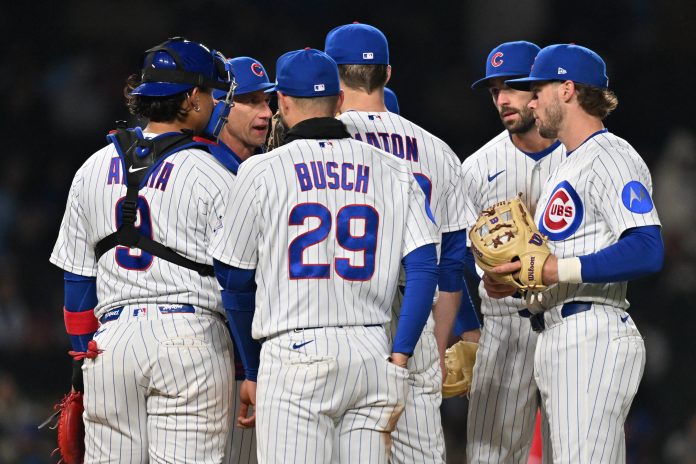
Mar 31, 2026; Chicago, Illinois, USA; Chicago Cubs manager Craig Counsell talks with pitcher Phil Maton (88) and his team during a mound visit against the Los Angeles Angels during the sixth inning at Wrigley Field. Mandatory Credit: Patrick Gorski-Imagn Images

The Chicago Cubs will have veteran right-hander Phil Maton back in the bullpen this week against the San Diego Padres following his rehab assignment in the minor leagues. Maton has been out for nearly three weeks after being placed on the 15-day injured list on April 10. The set-up man last pitched on April 7, against the Tampa Bay Rays.

It certainly wasn’t how Maton wanted to begin his tenure with the Cubs, as he was dealing with right-knee tendinitis. He tried to pitch through the issue, but he paid for it with his results. Maton signed a two-year deal in free agency to become one of the team’s high-leverage relievers, and early on fans were frustrated by Maton’s appearances.

The 33-year-old recorded a 13.50 ERA in four innings, allowing six earned runs, while walking four and striking out five in five appearances prior to his stint on the injured list. Maton made a rehab appearance at Triple-A with the Iowa Cubs on Friday night, and although he gave up two hits it was good to see that he didn’t walk anyone, and struck out two.

Cubs manager Craig Counsell told reporters on Sunday that Maton would be back on the active roster during the Padres’ series. Prior to Monday’s series opener in San Diego, the Cubs once again optioned lefty Charlie Barnes back to Triple-A, making room for Maton in the bullpen.

We’ll see how Counsell uses Maton right away, but because of all the bullpen injuries, Maton has by far the most experience in high-leverage spots and closer experience.

This is the current eight-man bullpen entering Monday night’s game against the Padres.

Current Chicago Cubs Bullpen (4/27)
RHP: Yacksel Ríos, Jacob Webb, Corbin Martin, Javier Assad, Ben Brown, Phil Maton
LHP: Ryan Rolison, Hoby Milner

In 2025, Maton pitched in 63 games between the St. Louis Cardinals and Texas Rangers. He recorded a 2.79 ERA in 61.1 innings, posting a 1.06 WIP and an impressive 32.7 K%. The 33-year-old then agreed to a two-year, $14.5 million contract with the Cubs. The deal also includes a mutual option for the 2028 season.

Maton has 10 career saves and 86 holds throughout his MLB career. That includes five combined saves last year between his time with the Cardinals and Rangers. The other seven relievers in the Cubs bullpen have 12 combined saves in their respective careers.

It’s kind of incredible that the Cubs are still thriving despite all the pitching injuries. The rotation has held strong, and even the bullpen has performed well, given its shortcomings. With a combined 3.76 ERA, the Cubs’ bullpen ranks 11th in MLB going into this week’s series against the Padres.

Why The Bears Were Even Luckier To Land Dillon Thieneman Than We Thought

dillon thieneman
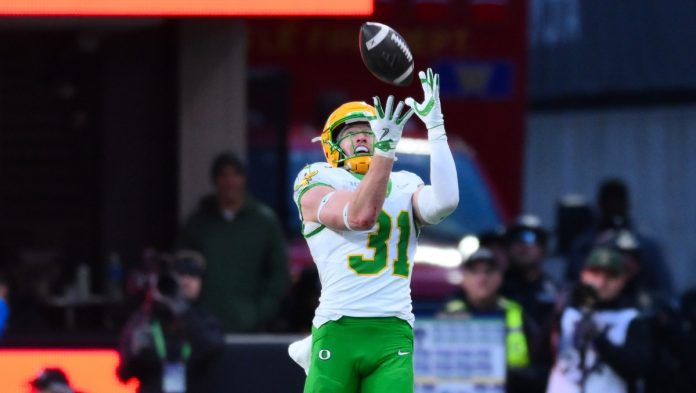
Nov 29, 2025; Seattle, Washington, USA; Oregon Ducks defensive back Dillon Thieneman (31) intercepts a pass against the Washington Huskies during the second half at Husky Stadium. Mandatory Credit: Steven Bisig-Imagn Images

The 1st round didn’t unfold as many expected for the Chicago Bears. For weeks leading up to the event, everyone believed the team was focused on one of two positions. Either they’d take an edge rusher or an offensive tackle. Both were obvious needs, and the class had some good options. However, with them sitting at 25th overall, the danger was there that both positions would be picked clean. Sure enough, over the first 24 selections, no fewer than six offensive tackles and five edge rushers were selected. Thankfully, the decision on what to do wasn’t difficult for general manager Ryan Poles. Oregon safety Dillon Thieneman was still on the board to the shock of many. The card was turned in without a second thought.

Several experts had believed Thieneman had a case for being the best safety in the class thanks to his rare mix of size, athleticism, and instincts. Plenty of teams needed help at that position, particularly the Minnesota Vikings at #18. Yet somehow he slipped through the cracks. Insider Albert Breer of the MMQB put the Bears’ remarkable good fortune into perspective during an appearance on ESPN 1000. He had it on good authority that Thieneman probably would’ve gone 12th overall to the Dallas Cowboys had Ohio State safety Caleb Downs not dropped.

Dillon Thieneman is a perfect example of the draft.

All it takes is one unexpected twist to start a massive cascade effect that can lead a player who should probably be a top 10-15 pick to fall to the bottom of the 1st round. It is all about finding the right conditions for such a thing to happen. The Bears needed Downs to get past the New York Giants at #10 overall, whom many saw as his obvious landing spot. Then they needed other teams to focus on different positions like offensive tackle, defensive line, and wide receiver in the middle of the 1st round.

Once he got past Minnesota, everybody knew the odds were high that he’d be there at #25. Chicago could’ve followed the other teams and focused on more premium positions, but that would’ve ignored their board. Thieneman was by far the best talent available. The fact that he played a position that the Bears needed another starter at was an added bonus. As cliché as it may sound, sometimes you shouldn’t look a gift horse in the mouth. Don’t overthink it. That is what the Bears did.

Bears fans should be familiar with this.

Back in 2014, hopes were high that Chicago could land Pitt defensive tackle Aaron Donald with the 14th pick. Sadly, he went one spot earlier to the Rams at #13. Rather than go after a different defensive lineman, the Bears opted to take the best player they could. That turned out to be cornerback Kyle Fuller, who became an All-Pro for the team during his career. This is why being married to needs is a bad strategy in the draft. Stick to the board. Trust your scouts. The Bears did that with Dillon Thieneman.

Now they have a chance to field one of the best safety tandems in the NFL over the next few years. Coby Bryant is already an established stud, having played at a Pro Bowl level for the past two years. If Thieneman reaches his potential, he has All-Pro capability. We’re talking peak, healthy Mike Brown territory. Defensive coordinator Dennis Allen is a great coach to learn from. This is the same man who developed names like Marcus Williams, Vonn Bell, and C.J. Gardner-Johnson. The setup couldn’t be better.

Edgar Quero Is Becoming A Major Problem

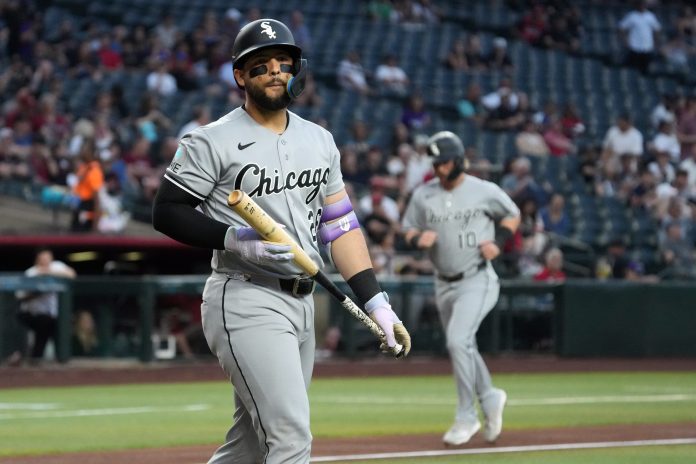
Apr 22, 2026; Phoenix, Arizona, USA; Chicago White Sox catcher Edgar Quero (26) draws an RBI walk against the Arizona Diamondbacks in the first inning at Chase Field. Mandatory Credit: Rick Scuteri-Imagn Images

Kyle Teel’s hamstring strain during the World Baseball Classic in early March was a big blow for the White Sox. Yet his injury opened the door for Edgar Quero, a talented catcher in his own right, to step into an everyday role at the beginning of the season. It was a golden opportunity to prove what he could do. Just over a month into the season, it’s now clear that he has not capitalized on that chance. His immense struggles have made it fair to question what his role will be once Teel returns…or if he will even stay in the majors at all.

Quero’s Struggles

After hitting a respectable .283 in 53 spring training at-bats, it felt like Quero was ready to take a step forward after a pretty strong rookie season. That momentum has not carried over. In 75 plate appearances this season, he is hitting .161/.274/.177 with only one extra base hit.

Quero’s metrics don’t paint a positive picture either. He ranks near the bottom of MLB in hard-hit %, barrel %, and bat speed, and would rank as the 4th-worst hitter in baseball per wRC+ if he were qualified. Simply put, he is not hitting the ball hard. His ground ball% is also 10% higher than last season and he is hitting just .190 against fastballs this season, compared to .281 last season.

Teel Injury Update

As for Teel, he is now past the original six-week expected recovery timeframe for his injury. Scott Merkin of MLB.com recently reported that although he is making progress in his recovery, he has not yet gone on a rehab assignment.

“He missed a chunk of Spring Training and all the regular season so far. So, you want some at-bats, you want him to experience the different nuances in every game: behind the plate, baserunning and certainly the at-bats as well.” Chris Getz told Merkin.

Given the nature of hamstring injuries and Teel’s importance over the long haul, it’s understandable that the team is operating in an abundance of caution.

When healthy, Teel and Quero formed one of MLB’s more interesting young catcher tandems last season. Teel excelled against righties and Quero mashed lefties, creating a natural platoon that put up impressive numbers. Teel’s absence this season has exposed Quero’s flaws from the left side of the plate, which Getz acknowledged and attributed to part of the development process. Still, his poor start to the season has created some clouds over his status moving forward.

New Backup Catcher

The White Sox have shuffled their backup catcher situation recently as well. Veteran Reese McGuire was recently DFAed, while Drew Romo had his contract selected from Triple-A Charlotte. Romo, 24, is a switch-hitter and put up a .298/.385/.561 line with four home runs in 17 games with the Knights this season. With McGuire struggling and not part of the team’s long-term plans, it made sense to give the younger Romo a chance. Given his ability to switch hit, it’s also fair to wonder if Quero could be sent down to Triple-A to reset once Teel returns, as Romo could take Quero’s place in the lineup against lefties. It’s not out of the question considering the team used the same approach for the struggling Shane Smith earlier this season.

Big Decisions Loom

Edgar Quero just turned 23 earlier this month and is more than five years younger than the average MLB player. It feels way too early to write him off after one bad month. Yet at the same time, his performance so far is a glaring issue and hindering the team. Something has to give. Teel’s eventual return will allow Will Venable to put Quero into more favorable matchups like last season, but a stint in Triple-A feels like a potential option too. Doing so would give Quero the chance to work through his issues in a low-pressure environment without the spotlight that comes with being in MLB. His status moving forward is a storyline to watch.

Riley Martin Sacrificed His Health to Save the Chicago Cubs in a Desperate Moment

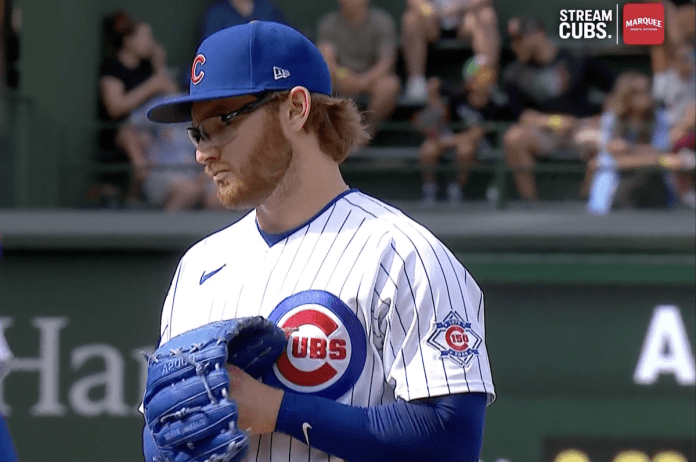
Just when you thought it wouldn’t get any more dire in the bullpen, another relief pitcher was placed on the 15-day injured list for the Chicago Cubs. This time, it’s rookie lefty Riley Martin, who began the season in Triple-A, was called up a few weeks ago, and in a short time became a key contributor in the depleted bullpen. Now, the Cubs are waiting to get results on Martin, who is dealing with an elbow injury, and it came after he stepped up in a very desperate moment for the team.

The Cubs were already down three top relievers when Caleb Thielbar exited Thursday’s series finale against the Philadelphia Phillies. The veteran left-hander suffered a hamstring strain. Craig Counsell had to scramble and brought in Martin to get out of the ninth inning. Well, during his emergency appearance, Martin was experiencing discomfort, and it became so obvious that Counsell came out with the team trainer to have a quick chat with the pitcher.

Martin didn’t relent, convinced the Cubs’ staff he was fine, and ultimately escaped a first-and-third jam to keep the game tied. A valiant effort from Martin as the Cubs were down to pretty much one guy left in Javier Assad, who did pitch the 10th inning. However, it turns out that Martin was indeed feeling something on Thursday: a few days later, he wasn’t recovering normally, and prior to Sunday’s series finale against the Los Angeles Dodgers, he was sidelined with elbow inflammation.

Martin made his MLB debut on April 6, against the Tampa Bay Rays. That scoreless inning came in mop-up duty, but because of more injuries, Martin suddenly became much more important in the bullpen. He was used as an opener, moved up to middle relief, and was then asked to get some big outs in high-leverage spots.

The left-handed pitcher only gave up runs in one of his eight relief outings, posting a 2.16 ERA in 8.1 innings. Martin looked good before getting injured as he struck out 10 batters, walked a pair, and gave up one extra-base hit.

It’s just a bummer for Martin personally. At 28 years old, Martin has been in the minor leagues since 2021, and now he has finally gotten his chance with the Cubs in MLB. Not only does he get a shot, but he also takes advantage and becomes a vital member of the bullpen, only to get injured.

Fingers crossed that the Cubs get positive news on Martin.

How Connor Bedard Stays in Elite Shape: Inside His Offseason Routine

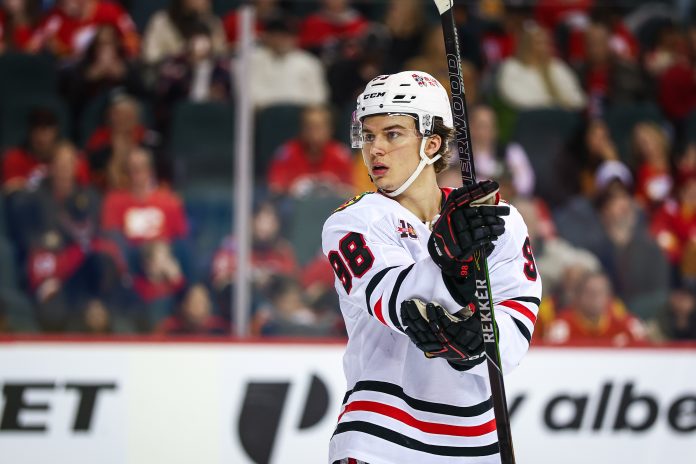
Nov 7, 2025; Calgary, Alberta, CAN; Chicago Blackhawks center Connor Bedard (98) during the third period against the Calgary Flames at Scotiabank Saddledome. Mandatory Credit: Sergei Belski-Imagn Images

Connor Bedard posted 75 points in 69 games during his third NHL season, a respectable total considering he missed significant time due to injury. But staying at the top of his game requires more than just showing up when the puck drops in October. Bedard’s offseason training regimen is a carefully balanced mix of recovery, explosive power development, skill refinement, and mental rejuvenation, all fueled by one of the strictest diets in professional hockey.

Injury Recovery and Plyometric Training

Injury recovery is a major focus for Bedard each offseason, and this year was no different after his December shoulder injury derailed what was shaping up as an even more dominant campaign. Recovery work includes physical therapy, mobility drills, and gradually ramping up intensity to ensure he’s fully healthy before training camp.

Once cleared, Bedard incorporates plyometrics, or “jump training,” into his routine. These explosive exercises are designed to increase power, speed, and strength by utilizing the muscle’s natural elastic qualities. Movements like jumping, hopping, and bounding train the nervous system and muscles to produce maximum force in short intervals, which translates directly to explosive first steps on the ice and quick directional changes.

The benefits are clear: increased vertical jump height, improved running speed and agility, and overall explosive power. Plyometrics also enhance functional strength and stability, helping prevent future injuries and improving on-ice balance during high-speed battles.

Bedard’s plyometric work targets both lower-body explosiveness (box jumps, depth jumps) and upper-body power (medicine ball throws), along with core stability exercises that translate into skating edge work and shot velocity.

Beyond the Ice: Boxing and Physicality Training

The Blackhawks’ development camp has incorporated unconventional methods to enhance player development, and Bedard has been at the forefront. One unique aspect is boxing training designed to improve physicality, hand-eye coordination, and mental toughness.

In a sneak peek of the upcoming Blackhawks documentary on development camp, Bedard was seen participating in boxing sessions; an approach that demonstrates Chicago’s commitment to comprehensive development beyond traditional hockey skills. Boxing improves footwork, reaction time, and the ability to absorb and deliver contact; all critical elements for a smaller player navigating an increasingly physical NHL.

This focus on physicality isn’t just about fighting; it’s about building the mental and physical toughness required to win battles in the corners, protect the puck under pressure, and finish plays through contact.

Skill Work and Training Partners

Bedard doesn’t take the entire summer off from hockey. He spends significant time working on skating edge work and stickhandling, refining the elite-level skills that separate him from his peers. Much of this work happens in his hometown of Vancouver, where he trains alongside fellow young superstar Macklin Celebrini.

Training with Celebrini, who went first overall to San Jose in 2024, keeps Bedard sharp and competitive even in the offseason. The two work on skill development, conditioning, and game situational drills, keeping their hockey IQ and technical abilities razor-sharp heading into training camp.

The Diet: No Fast Food, Maximum Performance

Perhaps the most widely discussed aspect of Bedard’s training regimen is his diet. The 22-year-old maintains a notoriously strict, clean eating plan designed to maximize energy and recovery. It’s been widely reported that Bedard has never eaten at McDonald’s or consumed typical fast food; a commitment his mother attributes to a desire for high-level nutrition from a young age.

Bedard consumes roughly 3,500 to 4,000 calories daily, split into approximately 50% carbohydrates, 30% protein, and 20% healthy fats. His meals focus on high-protein, nutrient-dense foods like salmon, chicken, and shrimp, paired with complex carbohydrates such as quinoa, rice, and mashed yams.

On game days, Bedard rotates lean proteins and complex carbs to fuel performance and aid recovery. He prioritizes hydration and high protein intake for muscle repair, similar to other top NHL players who treat their bodies like finely tuned machines.

Despite the strictness, Bedard isn’t completely rigid. He’s mentioned sushi as a favorite food, and while he avoids traditional fast-food chains, he’s occasionally eaten at Subway or local spots like White Spot. The key is that junk food, burgers, fries, and processed snacks have no place in his nutrition plan.

Balancing Intensity with Recovery

Entering his third NHL season, Bedard has learned an important lesson: you can’t burn the candle at both ends. Early in his career, he spent almost every waking moment at the rink, pushing his body and mind to the limit year-round. Now, he’s more intentional about balancing high-intensity training with mental rejuvenation.

“Chilling out” has become part of his offseason routine; taking time away from the rink to recharge mentally and avoid burnout. That doesn’t mean slacking off; it means being smarter about when and how he trains. Structured workouts, skill sessions, and conditioning are balanced with rest days, recovery protocols, and time spent doing things unrelated to hockey.

This approach ensures Bedard arrives at training camp physically ready and mentally fresh, critical for a player who shoulders as much responsibility as he does in Chicago.

How Ben Johnson Used A Stolen Lions Philosophy To Shape The Bears’ 2026 Draft

ben johnson
Bears head coach Ben Johnson speaks to 2nd round pick Logan Jones during the 2026 NFL draft.

The Chicago Bears pieced together a divisive 2026 NFL draft class, both to fans and the wider media. It wasn’t so much that they took a load of bad players. By most accounts, their selections were met with relative positivity. It was more the process involved. The team obviously needed help on defense after ranking 29th last year. Yet general manager Ryan Poles and head coach Ben Johnson ended up using three of their top four draft picks on offensive players. After taking safety Dillon Thieneman in the 1st round, they went with center Logan Jones, tight end Sam Roush, and wide receiver Zavion Thomas through the 2nd and 3rd rounds.

When asked about the odd approach to this class, Johnson made it clear the team’s process wasn’t focused on specific positions. They wanted to add players who fit their team identity.

“We’re looking for high-level competitors. (We’re after) guys who, if you took football away, they’d really not know what to do with themselves…We found guys who fit our DNA and what we want to be about.”

The reasoning was pretty simple. In Johnson’s experience as a coach, he’s often found that such players end up pushing a team toward where it wants to go.

“When you have guys like that, they usually find a way to come out on top.”

Criticize the failed investments on defense if you wish, but one thing that can’t be questioned is the Bears’ vision. They have a clear idea of what kind of team they want to build, and it’s a favorable one. While it would be easy to say Johnson developed this strategy on his own, the truth is simpler.

He’s stealing it from Detroit.

Ben Johnson learned the value of competitiveness with the Lions.

A few years ago, some media members for Pride Of Detroit noticed a specific approach the Lions took to the draft every year. The buzzword that emerged from their research was “grit.” The dictionary defines passion and perseverance as the drive to work toward long-term, meaningful goals, serving as a motivational force to continue working toward challenges despite setbacks, failures, or slow progress. Put simply, it describes players who are resilient, persistent, and passionate. That is why the two men created the GRIT index, intended to help identify which players the Lions may target and why. It was centered around three categories.

  • Identity
  • Football character
  • Football IQ

By sticking to this philosophy, the Lions have enjoyed some of their best drafting in years under general manager Brad Holmes. It continued in the 2026 draft as Detroit landed three players with GRIT scores over 9.0. However, they weren’t alone. One team outpaced them with four such prospects.

This should serve as undeniable evidence that Johnson has brought the same philosophy to Chicago. He saw such players help build the Lions into a contender, so it would make sense for the Bears to target them. As the saying goes, it’s a copycat league.

Johnson’s decision isn’t anything new.

For years, late Bears owner George Halas tried to find somebody who could build the roster properly after he’d retired. After years of ineptitude, he got fed up and decided to poach Jim Finks from the Minnesota Vikings. Finks was largely responsible for building the roster that reached four Super Bowls between 1969 and 1976. If it worked for them, there was no reason it couldn’t work in Chicago. Halas’ decision proved correct. Finks was the main architect of that 1985 team. It is honestly surprising the Bears never tried that strategy again, especially after watching Green Bay and Minnesota have so much success in the following decades.

It is somewhat ironic that they did it almost by accident when they hired Ben Johnson. Though not a general manager, they granted him significant authority over personnel decisions. That enabled him to make changes to the player evaluation approach that Chicago had. Poles seemed more than happy to make adjustments. The early results from last year signaled it was smart to do so. There is no reason to think the philosophy will suddenly steer them wrong now.

Kyle Monangai 2.0? Why The Bears May Have Done It Again With Jordan Van Den Berg

jordan van den berg
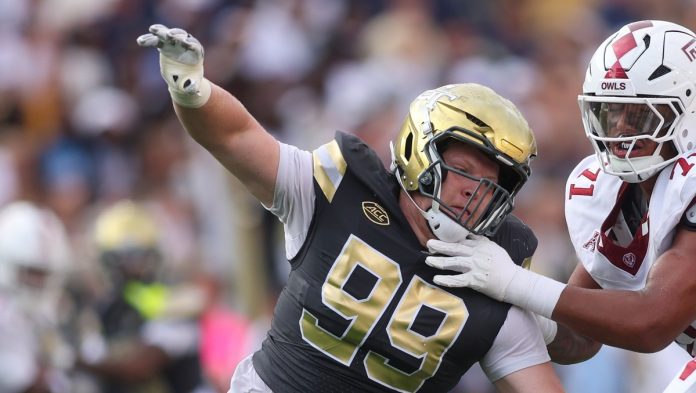
Sep 20, 2025; Atlanta, Georgia, USA; Georgia Tech Yellow Jackets defensive lineman Jordan van den Berg (99) rushes the passer against the Temple Owls in the second quarter at Bobby Dodd Stadium at Hyundai Field. Mandatory Credit: Brett Davis-Imagn Images

The Chicago Bears were forced into a difficult situation last year. Everybody knew they needed help at running back. New head coach Ben Johnson wanted to run the ball and preferred a stacked position group to make that happen. However, as the 2025 draft unfolded, the board kept drifting away from them every time an opportunity to get one was there. Rather than force the issue and just take anybody, general manager Ryan Poles elected to follow his board and take the best players. Not until the 7th round did the Bears finally land somebody. That was Kyle Monangai of Rutgers.

It was a major disappointment for fans. This was not one of the flashy names they’d been hoping for. What could this unassuming kid offer the team? They soon found out. Monangai accounted for 947 total yards from scrimmage and scored five touchdowns, helping to produce the NFL’s #3 rushing attack. By not chasing the board, the Bears produced one of their best draft classes in years and still landed a good running back. Is it possible lightning may have just struck twice in 2026?

According to prominent Bears draft expert Jacob Infante, he believes that is the case with the arrival of Jordan Van Den Berg.

Jordan Van Den Berg arrived the same way Kyle Monangai did.

As last year, fans and media entered the draft fixated on a single position. Instead of running back, this time it was the defensive line. The Bears had struggled to apply pressure on the quarterback or stop the run in 2025. Weakness up front was a big part of that. They needed to add somebody to help. Yet just like last year, the board seemed to tilt away from them every time there was a chance to do so. Five edge rushers went before they picked in the 1st round. Six went before they picked in the 2nd round.

As before, Poles didn’t rise to the bait. He took safety Dillon Thieneman in the 1st and center Logan Jones in the 2nd. The GM refused to be a prisoner of need. However, an opportunity finally came late in the draft. Seeing a cluster of defensive tackles still available, the Bears packaged both of their 7th round picks in a deal for Buffalo’s 6th round pick. This moved them up high enough to grab Georgia Tech’s Jordan Van Den Berg. While far from a household name, the South African native had an enticing 2025 season with three sacks and 11 tackles for a loss. He was also rated as the most athletic defensive tackle in the entire class.

Van Den Berg is fully capable of taking the Monangai route.

The Bears running back had one thing going for him last year. He was a proven commodity, having produced back-to-back productive seasons in college. People largely knew what he offered. With Van Den Berg, there is a little more projection involved. His first three years in college saw him stuck as a backup on a loaded Penn State team. This forced him to transfer to Georgia Tech. He showed promise in his first year with a sack, five tackles for a loss, and two recovered fumbles. Then came his final season, where he led all defensive linemen in tackles (44), all defenders in tackles for a loss (11), and was second in sacks (3).

He didn’t just do this against scrubs either. Van Den Berg had some strong performances against Georgia, Pitt, Boston College, and Virginia Tech. Those are legitimate programs. Such was the case with Kyle Monangai at Rutgers. Don’t focus on the draft position. Focus on the player. Is Van Den Berg talented enough to play in the NFL? Yes. He made significant progress in his final college season, doing so against quality competition. If he gets an opportunity to play this year, Infante is correct. He may surprise, just like Monangai did.