
Friday, November 13, 2026
EDGE is live. Chicago fans can now access and explore the beta.
Home Blog Page 144

How Allen Robinson’s Comments On Kalif Raymond Make The Signing Look Way Craftier

allen robinson
Dec 14, 2025; Inglewood, California, USA; Detroit Lions wide receiver Kalif Raymond (11) runs with the ball during the second quarter against the Los Angeles Rams at SoFi Stadium. Mandatory Credit: Kirby Lee-Imagn Images

Allen Robinson has a unique perspective on things compared to other people. He played for the Chicago Bears from 2018 to 2021. He also played for Ben Johnson with the Detroit Lions in 2024. That means the former wide receiver understands how the two sides are trying to mesh. He stated from the beginning that Johnson would be a breath of fresh air at Halas Hall, both with his leadership and offensive genius. That proved true. He also knows a few things about some of the guys Johnson brought in, such as Kalif Raymond.

Chicago added the veteran wide receiver two months ago, trying to fill in the gaps left behind by D.J. Moore and Olamide Zaccheaus. His previous experience in Johnson’s offense made it an easy move, along with his considerable speed and Pro Bowl return ability. However, Robinson believes those weren’t the primary reasons Raymond was brought in. It had more to do with the impact he would have on the locker room, particularly his fellow receivers. Robinson explained on 104.3 The Score.

Allen Robinson just proved again how subtle Johnson can be.

From the outset of his tenure as head coach, Johnson has repeatedly stated that his goal was to get the Bears to a point where everything they did was consistently at a high level. One of his most notable quotes was memed into oblivion.

“We are not chasing labels. We are chasing growth. Consistency will determine everything.”

Then you look at the Bears’ wide receivers last year. As a group, they had 15 official dropped passes, and it was probably more. There were also several instances of guys running the wrong routes, leading to incompletions or even interceptions. For a perfectionist like Johnson, that had to drive him crazy. Coming into this offseason, he had to make a plan to get those issues cleaned up. If coaching alone wouldn’t do it, maybe bringing in someone to hold the other guys accountable would.

That is where Raymond comes in. Johnson knew from years of working together that the receiver is a relentless worker and meticulously detailed in his approach. Combine that with vocal leadership, and it is the perfect solution to the problem. Johnson won’t be able to stay on top of the receivers all the time. Now he won’t have to.

This is a time-tested strategy for head coaches.

There have been many instances of someone taking over a team and recognizing pretty early that players don’t have a keen understanding of the preparation needed to win in the NFL. So rather than just relying on their coaching, they bring in players who live for that grind. Bill Walsh did it with Jack Reynolds in the 1980s. Jimmy Johnson did when trading for Charles Haley in the 1990s. Bill Belichick did it with Anthony Pleasant in the early 2000s. Philadelphia did it with Malcolm Jenkins in the 2010s.

Allen Robinson understands that approach as well as anybody. It was part of the reason why the Bears signed him in 2018. They knew he was a dedicated worker in addition to being so talented. Part of that was because of a bad knee injury earlier in his career. It forced him to become better at his craft. That is something Raymond will look to instill in the younger guys. If he’s successful, this Bears team will become significantly more dangerous than they were last year.

Oregon Reveals How Dillon Thieneman Mirrors Brian Urlacher — And It Makes Sense

dillon thieneman
Sep 6, 2025; Eugene, Oregon, USA; Oregon Ducks defensive back Dillon Thieneman (31) runs after Oklahoma State Cowboys wide receiver Christian Fitzpatrick (16) during the first half at Autzen Stadium. Mandatory Credit: Troy Wayrynen-Imagn Images

When the Chicago Bears drafted Dillon Thieneman in the 1st round of the 2026 NFL draft, the excitement was palpable. Many felt the team had just secured the next Harrison Smith, a dual-threat safety with elite intelligence. Others felt he was another Jevon Holland, a very good box safety who had the athleticism to play coverage as well. Every comparison centered on standout safeties for obvious reasons. However, coaches at Oregon used him in such a way that the name they dropped was way more ambitious. They saw Brian Urlacher.

In speaking to Phil Thompson of the Chicago Tribune, Ducks defensive coordinator Chris Hampton broke down what Thieneman did for their defense. It was not the traditional role for a safety; it was more a hybrid of safety and middle linebacker.

The Ducks used Thieneman in a variety of ways, taking advantage of his quarterback-like field instincts and downhill speed. But he was primarily a field safety, a rover, in Oregon’s three-safety system.

“He would play a little bit when we got into ‘umbrella” coverage,” Hampton said. “He was what we call our ‘adjuster.’”

That means he played in the middle of the field, but he could cover the slot, too, and various other responsibilities.

“It’s like what the Bears did with Brian Urlacher — highlighted him,” Hampton said. “We (would) just deepen him up about 4 or 5 yards deeper and kept our safeties deep.”

In this context, the comparison is surprisingly valid. Urlacher played a similar role in Lovie Smith’s defense. He manned the middle of the field, attacking the line of scrimmage as a linebacker but also having the speed to drop into coverage. All the while, he’d be constantly reading the offense and making adjustments to counter it.

Dillon Thieneman is not Urlacher.

At least not, in the way everybody might be thinking. He is basically what would’ve happened if the Hall of Famer had more of a safety body than a linebacker body when the Bears drafted him in 2000. People forget Urlacher was a safety in college for New Mexico. However, he was 6’4″ and 258 lbs. Guys that big were made for linebacker, especially in those days. Thieneman is 6’0″ and 201 lbs. He is far more the traditional safety size. Essentially, he has Urlacher’s intelligence and versatility in the body of a safety.

Perhaps a more apt comparison would be Eric Weddle.

Often forgotten, the former six-time Pro Bowler was one of the best safeties of the 2010s decade. He was widely known for his athleticism, versatility, instincts, and intelligence. The guy was a true conductor of the orchestra. San Diego had a top 10 defense three times with him on the back end. Baltimore did it twice in three years when he signed with them. Then, just for good measure, he signed with the Rams late in 2021 and helped their defense hold three of four playoff opponents to 20 points or less. Dillon Thieneman has a chance to be the same type of player.

All of this reinforces the original point.

The Bears made a good draft pick. All teams strive to draft what they call “clean” prospects. These are players who check almost every box and don’t have many glaring weaknesses. Thieneman falls into that category. Athleticism? Check. Size? Check. Production? Check. Intelligence? Check. Any concerns raised by experts leading up to the draft were minor. This doesn’t mean the young safety is guaranteed to become a great player. It is that his odds are much more favorable than those of typical prospects.

What we know for sure is that Dennis Allen’s defense tends to be at its best when it has a player like him on the back end. You saw it briefly with Brian Dawkins in Denver, and then with Malcolm Jenkins and Tyrann Mathieu in New Orleans. There is a reason Chicago felt so comfortable taking Thieneman. Players like that tend to become multipliers on the field, having an impact beyond just their position. It was that way with Urlacher.

Desperate Chicago Cubs Grab Pitcher from White Sox

I mean, there’s desperation, and then you have the Chicago Cubs, who can’t go a day without receiving bad injury news. Pitching is always at a premium, and the Cubs are scrambling to get any healthy arms into the organization following a ridiculous run of bad luck with injuries. Normally, guys claimed off waivers in April may not ultimately matter, but for the Cubs, the newly-acquired Doug Nikhazy could be someone to keep an eye on, considering the current state of the team’s injury report.

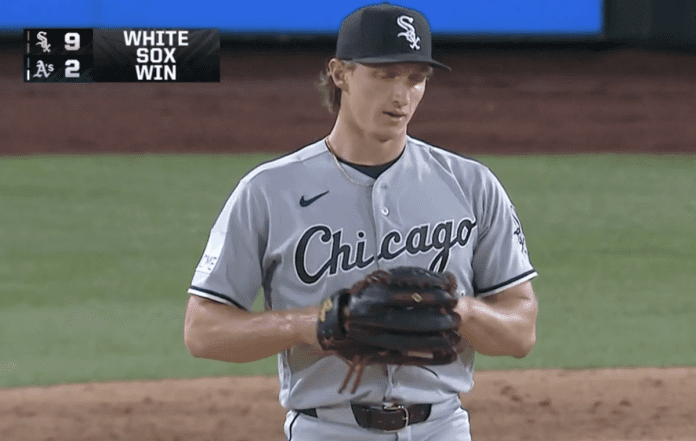
The Cubs grabbed Nikhazy from the White Sox, who tried to sneak the left-handed pitcher through waivers. The 26-year-old is now on the Cubs’ 40-man roster and has been assigned to Triple-A Iowa. To make room on the roster, the Cubs have once again designated infielder Ben Cowles for assignment. Cowles has been let go by the Cubs three times since last September.

Nikhazy hasn’t pitched much at all in the majors. The lefty tossed two innings with the White Sox on April 17, and in 2025, he appeared in two games with the Cleveland Guardians. So, what exactly do the Cubs see in Nikhazy that they view him as worthy of a 40-man roster spot? Maybe this was a Carter Hawkins guy.

Hawkins, now in his fourth year as the GM of the Cubs, spent 10+ years working in Cleveland’s organization, including five years as the Guardians’ assistant GM. His last year in Cleveland was 2021, when the team selected Nikhazy in the second round with the 58th overall pick out of Mississippi.

The left-handed pitcher had a breakout season in the minor leagues in 2024, when Nikhazy posted a 2.98 ERA in 123.2 innings. Between his time in Double-A and Triple-A, Nikhazy recorded a 25.4 K%, while holding opponents to a .190 batting average. The lefty had a 1.09 WHIP and surrendered 12 total home runs in 24 starts.

Unfortunately, Nikhazy hasn’t quite reached that level of success since 2024. He struggled at Triple-A in 2025, pitched only four innings in his brief cup of coffee with the Guardians, and was then designated for assignment a month ago. The White Sox claimed Nikhazy off waivers, called him up in mid-April, but sent him back down to Triple-A after his two-inning appearance against the Athletics.

One advantage Nikhazy has over some others is that, because of his limited MLB time, he still has minor league options available. So, the Cubs can easily try him out at any moment, and if Nikhazy doesn’t perform, then he can be sent right back down to the minors.

Shocker, he doesn’t throw hard. No clue why, but the Cubs seemingly have no concerns over pitchers who just don’t come with high velocity. Nikhazy throws his fastball in the upper 80s, averaging 87mph. He mixes in a changeup, sinker, and sweeper with the occasional slider and curveball.

The Truth Behind The Chicago Bears’ Draft: Why Edge Rusher Was Never A Priority

ryan poles
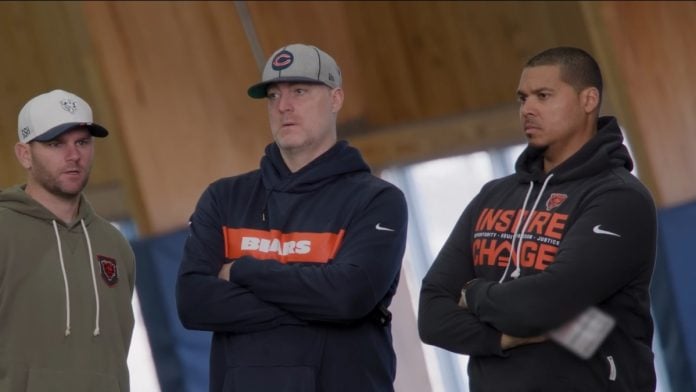
Bears general manager Ryan Poles and assistant general manager Jeff King take in the team's local pro day.

If you asked fans or local media members what the Chicago Bears‘ biggest need was going into the 2026 NFL draft, a large majority of them probably would’ve said edge rusher. Outside of Montez Sweat last year, the Bears were painfully ineffective at that position. Austin Booker missed half of the season with a knee injury. Dayo Odeyingbo tore his Achilles and missed 11 games. Shemar Turner tore his ACL and wasn’t overly effective even before that. Everything pointed to this draft being the one where the Bears had to find help.

So you can imagine the sheer confusion when not only did they not take one in the 1st round, they didn’t take one at all. The only defensive line addition made in the entire draft was 6th round pick Jordan Van Den Berg, a defensive tackle from Georgia Tech. The initial belief is that the board never offered a good opportunity for the Bears to pounce. That is partially true. However, another part of it, according to Adam Hoge of CHGO, is that the team had been particularly ruthless in whittling down the list of options they liked in this class.

“This was probably the most aggressive we were in terms of the guys that we really like. They have to play our style. They’ve gotta have the right makeup. In terms of our scheme fits, all of that had to be there. If it wasn’t there, you’re off the board. We were really aggressive with it, so when you look at it, it feels really thin, but that’s a good thing.”

In other words, the Bears’ draft board was smaller this year. And from my understanding, that held particularly true on the defensive line – including the defensive tackles.

Things finally make sense about the Chicago Bears’ draft approach.

Poles was pretty specific in mentioning those three categories: style, makeup, and scheme fit. When you start digging into what he means and apply it to the available information on this draft class, everything starts lining up. Let’s start with style. From what we know about defensive coordinator Dennis Allen, his #1 priority for his defensive ends is stopping the run. They must be able to set the edge. Unfortunately, several prominent names in the class were noted for having problems doing that.

PlayerSchoolReported Run Defense Concerns
David BaileyTexas TechFrequently described as “light in the pants” at 251 lbs; struggles to hold the point of attack and is often washed down the line.
Cashius HowellTexas A&MPure pass-rush specialist who offers “little against the run”; lacks the functional strength and length (historic 30.3″ arm outlier) to set a strong edge.
Joshua JosephsTennesseeLacks the anchor to prevent offensive tackles from moving him off the line consistently; weight (242 lbs) is in the 5th percentile for edge rushers.
Akheem MesidorMiamiCategorized as a “questionable” run defender; short arms can cause him to get steered out of gaps or stuck on blocks once a lineman gets inside his frame.
Derrick MooreMichiganDespite his power, he is noted for being on the ground too often when defending the run and lacking “pop” in his hands to effectively disengage.
Malachi LawrenceUCFAn “absolute blazer” as a pass rusher, but his undersized 253-lb frame raises significant questions about his ability to handle NFL-level run blocking.
Max LlewellynIowaReportedly “lacks the play strength” to be a sturdy run defender, projecting more as a situational pass-rush rotation player.
Keyron CrawfordAuburnConsidered “not ready” for full-time run-game responsibilities; lacks the early-down consistency needed at the pro level.

Next, we have the right makeup. Poles and head coach Ben Johnson have said on several occasions that they want players with high character. They must be good teammates, great workers, and passionate about the game. Some in the class checked that box with flying colors. Unfortunately, a few of the more notable names did not.

PlayerSchoolReported Scouting & Character Concerns
Zion YoungMissouriCharacter: Pending legal issues including a December 2025 DWI arrest and a prior misdemeanor assault charge from an on-field tunnel fight while at Michigan State.
Joshua JosephsTennesseeCharacter: Teams reportedly noted it took significant time for him to develop “professional habits” and gave mixed feedback on interviews.
Derrick MooreMichiganCharacter: Reportedly showed an “uncooperative attitude” during drills at the Senior Bowl, drawing negative attention from scouts.
T.J. ParkerClemsonCharacter: Faced criticism for “inconsistent effort” during the 2025 season after a dip in production compared to his sophomore year.
Dani Dennis-SuttonPenn StateCharacter: Described as having “personality quirks” that some scouts translate as being potentially difficult to coach.

Lastly, there is scheme fit.

Another key with Allen is that his defensive ends always tend to fit the same mold. They must be at least 6’4″, 260 lbs, and have 33-inch arms. That pool was noticeably light this year. Many of the prominent options in this class either didn’t have the necessary height/length or weight.

PlayerSchoolHeightWeight
Arvell ReeseOhio State6’4″241 lbs
R Mason ThomasOklahoma6’2″241 lbs
Joshua JosephsTennessee6’3″243 lbs
Trey MooreTexas6’2″243 lbs
Romello HeightTexas Tech6’3″239 lbs
George Gumbs Jr.Florida6’4″245 lbs
Jaishawn BarhamMichigan6’3″240 lbs
Quintayvious HutchinsBoston College6’3″233 lbs
Marvin Jones Jr.Oklahoma6’5″245 lbs
Keyshawn James-NewbyNew Mexico6’2″244 lbs
Dasan McCulloughNebraska6’4″235 lbs
Myles TerryNorth Dakota6’1″242 lbs
Nadame TuckerWestern Michigan6’2″247 lbs
Zach DurfeeWashington6’5″247 lbs
Bryan Thomas Jr.South Carolina6’2″249 lbs
Isaiah SmithSMU6’4″248 lbs

Each category on its own would trim the board down. So you can imagine what happens when the Chicago Bears combined all three together. There was probably a very small box of players they would’ve considered, which drastically decreased the odds of picking one, what with 31 other teams also hunting for edge rush help. While it is still disappointing that the team wasn’t able to address the position, at least now we have context for why they didn’t.

Trade Garrett Bradbury? Why The Bears Could Change Plans At Center

garrett bradbury
Feb 8, 2026; Santa Clara, CA, USA; New England Patriots center Garrett Bradbury (65) prepares to snap the ball to quarterback Drake Maye (10) against the Seattle Seahawks during Super Bowl LX at Levi's Stadium. Mandatory Credit: Mark J. Rebilas-Imagn Images

The Chicago Bears traded for Garrett Bradbury in March, sending a 5th round pick to the New England Patriots for the veteran center. It was easy to understand. Their original starter, Drew Dalman, had abruptly retired at age 27, leaving the team in a compromised position. Not wanting to get into a free-agent bidding war, they made the deal to gain some much-needed stability. Still, it didn’t completely solve the problem. Bradbury is in his 30s and has one year left on his contract. That gave the Bears two options.

Either they extend him, or they go hunting for an eventual replacement in the draft.

They chose option #2, selecting Iowa center Logan Jones with the 57th pick in the 2nd round. Initial expectations were clear. Bradbury would be the starter this upcoming season while Jones prepared to replace him in 2027. However, some wonder if it stays that way. Mike Sando of The Athletic spoke to people inside the league. All agree that Jones is the exact duplicate of Bradbury. Rather than forestall things, maybe the better option is to turn around and trade the veteran to another team that needs a center.

Two months after trading a fifth-round pick to New England for center Garrett Bradbury, the Bears used their second-round pick on Logan Jones, the first center drafted. Both players are centers only, meaning it’s unlikely both would be active for a game. Might the Bears eventually trade Bradbury to a center-needy team such as Baltimore? Or, will this be a redshirt season for Jones?

“They’re the same guy: both undersized, tough technicians,” another exec said.

Flipping Garrett Bradbury does make sense.

For one, it gives the Bears a chance to get their pick back. While it is unlikely to be a 5th round like what they gave up, it would still be something. Chicago only has six picks next year. Anything extra would be helpful. Besides, this isn’t a normal rookie situation with Jones. He isn’t some kid fresh out of his teens, still learning the position. He started 51 games for Iowa in his career. He’ll be 25 later this year. This young man is more than ready to play immediately. Why waste one of his seasons making him wait?

The one argument against such an idea would be concerns about depth. Having two capable centers is never a bad thing, especially with how attritional the NFL can be. Regardless of who starts, the Bears would have someone capable ready to step in. Much of this comes down to the team’s opinion of undrafted rookie Jaren Kump. He was the pivot man for a very good Utah offensive line. Like Jones, he is highly experienced, having started 41 games in college. Though athletically limited, he has good power and technique. If they think he has the capability to step in as a backup, trading Garrett Bradbury gains more credence.

The Bears likely won’t make a decision until June.

They will want to see how Jones looks in spring practices between minicamps and Organized Team Activities. If he settles in quickly and develops a rapport with Caleb Williams, that might be the catalyst for a Bradbury trade. The key here is that another team would likely want to bring the veteran in before training camp, which begins in late July. The Bears have until around that time to decide which direction they wish to go. It might not be ideal from Bradbury’s point of view, but he would be on board if the alternative is him sitting behind Jones.

Either choice is a win for the Bears in the end. Keeping Bradbury ensures they have multiple options at a key offensive position. Trading him returns some draft currency for next year that they can hopefully use to keep improving the roster. This falls into the jurisdiction of head coach Ben Johnson. If he’d be more comfortable having two options, then that is how it will be. Otherwise, don’t be surprised if Ryan Poles finds a buyer by summertime.

A World Series Reunion Got Kyle Hendricks A New Job But Not with the Chicago Cubs

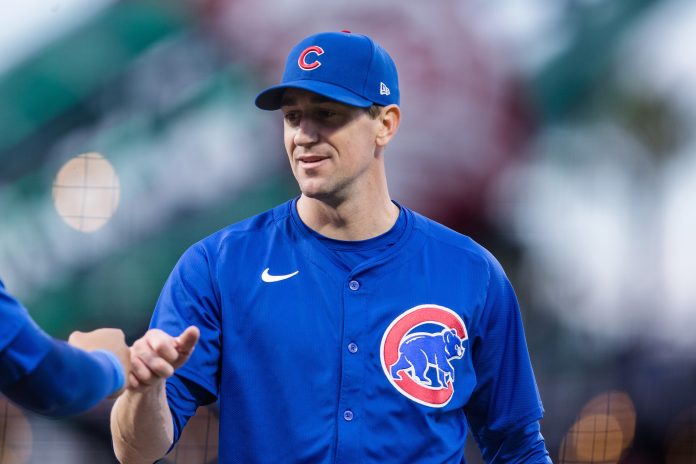
Jun 25, 2024; San Francisco, California, USA; Chicago Cubs starting pitcher Kyle Hendricks (28) walks off the field against the San Francisco Giants in the fifth inning at Oracle Park. Mandatory Credit: John Hefti-USA TODAY Sports

Former Chicago Cubs pitcher and World Series champion Kyle Hendricks retired after a 12-year MLB career following his 2025 season with the Los Angeles Angels. He’ll always be remembered for his starts in the NLCS and World Series during the team’s 2016 World Series run, and while it seemed like a match made in heaven, Hendricks is back working in MLB, but it’s not with the Cubs.

Earlier this week, The Athletic reported that Hendricks agreed to become a special assistant in the Detroit Tigers front office. At first blush, that seems like a random destination. Hendricks pitched 11 seasons with the Cubs, one with the Angels, and he’s from Newport Beach, Calif. However, it’s all about who you know, right?

According to Patrick Mooney of The Athletic, Hendricks was first approached by Scott Harris during a Cubs’ 10-year World Series reunion this past offseason. Harris, who is the current president of baseball operations for the Tigers, worked in the Cubs’ front office from 2012-19, before he was hired as the San Francisco Giants GM heading into the 2020 season.

Interestingly, as the assistant GM for the Cubs in 2019, Harris reportedly took a leading role in negotiating Hendricks’ four-year extension, which was completed before Opening Day that year. So the two men obviously have a relationship, and Harris isn’t the only familiar name to Hendricks in Detroit, either.

Via The Athletic.

The source also cited Hendricks’ established connections to Detroit’s front office, which features several officials who worked for the Cubs during their 2016 championship season. That group includes Tigers president of baseball operations Scott Harris, general manager Jeff Greenberg and vice president of baseball strategy Alex Smith.

Harris, in particular, talked with Hendricks about a potential role with the Tigers during a 10-year reunion for the 2016 World Series team, according to league sources, and the conversations continued after that January event in Chicago.

Hendricks, 36, made his MLB debut with the Cubs on July 10, 2014. While the right-handed pitcher was never recognized as an All-Star, Hendricks was the MLB leader in ERA during the 2016 season. Throughout his career, Hendricks posted a 3.12 ERA in 12 postseason games, including 11 starts, which all came with the Cubs.

According to Mooney, Hendricks and the Cubs are on good terms. It’s not like Jed Hoyer turned him down as Hendricks searched for a new challenge after retiring. Hendricks will reportedly focus on pitching development now that he’s working with the Tigers.

Other Teams Aren’t Happy Chicago Took Sam Roush – And It Makes Sense Why

sam roush
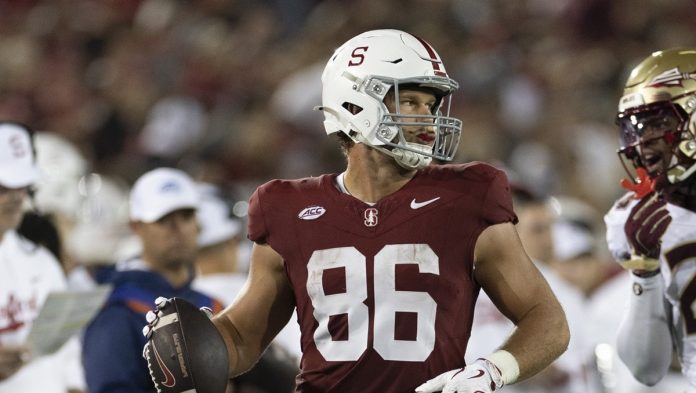
Oct 18, 2025; Stanford, California, USA; Stanford Cardinal tight end Sam Roush (86) during the third quarter against the Florida State Seminoles at Stanford Stadium. Mandatory Credit: Stan Szeto-Imagn Images

The Chicago Bears‘ 2026 draft class is best described as…unorthodox. Things started with clear intent. They selected Oregon safety Dillon Thieneman in the 1st round, finding that second starter next to Coby Bryant they were missing. Then, in the 2nd round, they secured their center of the future with Iowa’s Logan Jones. Nothing crazy so far. That abruptly changed in the 3rd round. After trading down to the #69 spot, general manager Ryan Poles delivered a shocker by taking Stanford tight end Sam Roush.

Initial reactions were utter confusion. A tight end? Why? The Bears already drafted Colston Loveland in the 1st round last year. They still had Cole Kmet. Sure, they’d lost Durham Smythe to free agency, but he’d been a cheap addition anyway. It shouldn’t be that hard to replace him. Spending a higher pick on a third tight end defied conventional wisdom. Mike Sando of The Athletic went searching for answers, and the feedback from other teams helped paint a picture of what the Bears are doing. Those other teams aren’t happy about it.

“Chicago was really good in the run game this past year, and to get Roush to play tight end, damn, they are going to be able to run some strong-side runs,” a third said. “This guy can block all the defensive ends.”

Sam Roush enhances one of the team’s biggest strengths.

Last season, the Bears ranked 3rd in rushing across the NFL. They did this without a true #1 running back, instead utilizing the talents of D’Andre Swift and Kyle Monangai, and excellent blocking up front. Anybody who has watched Ben Johnson’s system over the years will know that tight ends play a key role in that execution. They are the ones who help spring guys to the outside, creating big-play opportunities. Now they’re adding perhaps the best blocking tight end in the entire draft class.

If Roush can block opposing defensive ends, it frees up their tackles to either double-team a defensive tackle or spring to the second level to pick off a linebacker or defensive back. That means more holes, and more holes mean more chunk plays. Nothing is more demoralizing to defense than being physically bullied at the line of scrimmage. Roush specializes in that. He’s basically an offensive lineman with the frame and speed of a tight end. The vision is pretty clear.

The Bears basically added Marcedes Lewis.

Fans will remember the ageless veteran spent two years in Chicago trying to help the team during a rebuild. While he was no longer the solid pass-catching threat he’d been in his younger days, he remained a very good blocker who helped the team finish 2nd in rushing in 2023. Now, think about what would happen if the Bears got the young version of him coming out of college. That is what Sam Roush is.

He is almost exactly the same size at 6’6″, 267 lbs. His blocking is strong and technically proficient. Even crazier is that he is a better athlete than Lewis was.

MetricMarcedes Lewis (2006)Sam Roush (2026)
Height6′ 6″6′ 6″
Weight261 lbs267 lbs
40-Yard Dash4.84s4.70s
Vertical Jump37.0″38.5″
Broad Jump9′ 10″10′ 6″
3-Cone Drill7.24s7.08s
20-Yard Shuttle4.84s4.37s
Bench Press23 reps25 reps

This doesn’t mean Roush is destined for a 20-year career, but it doesn’t indicate the Bears got way more value with that pick than people realize. Lewis was a 1st round pick. If people want a taste of what he’ll do in Ben Johnson’s offense, go watch Lewis from 2019 through 2022 when he was with the Green Bay Packers.

It was a perfect marriage of scheme and player. Johnson’s system, at least in the running game, is very similar. That Packers team reached two NFC championships. Lewis was a big part of why. Roush will be the same if he carries over what he was becoming in college.

Oh, the Chicago Cubs Really Hated Kyle Tucker, Huh?

Apr 18, 2025; Chicago, Illinois, USA; Chicago Cubs outfielder Kyle Tucker (30) hits a two-run home run against the Arizona Diamondbacks during the eighth inning at Wrigley Field. Mandatory Credit: Kamil Krzaczynski-Imagn Images

I didn’t put too much thought into how Kyle Tucker was perceived in his one year with the Chicago Cubs. He was and still is the silent type with the Cubs, but that doesn’t really matter when you’re performing. Tucker was a star in his first three months with the Cubs, but then a finger injury completely derailed his 2025 season. A second injury killed Tucker’s momentum in September, and a strikeout in Game 5 of the NLDS is his lasting legacy with the Cubs.

Tucker signed with the Los Angeles Dodgers in the offseason, which instantly made him a villain across the league. As for the Cubs, there was definitely some coping going around after the team let one of their best hitters from the previous season walk away, but you started hearing stories about Tucker. Unflattering ones, painting Tucker as a me guy, who maybe didn’t show the passion you want from a star player.

Those tales eventually made it into the national media, and now Cubs Hall of Famer Rick Sutcliffe spilled the beans on how the Cubs really felt about Tucker in comparison to Alex Bregman, the team’s star free agent signing.

During Wednesday’s series finale against the San Diego Padres, Sutcliffe brought up the conversation, unprompted. He wasn’t going to shit on Tucker live on air, but you could read between the lines.

“I had a lot of people in Spring Training ask me about Tucker and Bregman. What’s the difference? Is this just the same kind of deal? You got the same kind of player? I didn’t know then. I know now. No. Yeah their career averages are .272. Both of them. But this is a completely different guy. This guy is there to help everybody. Nothing against Kyle Tucker. He was quiet. He just didn’t chat. He didn’t really do anything with anybody other than himself and his computer.”

We’ve seen the stories coming out of Boston since the offseason, which have raised Bregman’s profile as one of the most respected players in MLB and a true leader among his peers. Sure, that quote from Sutcliffe was praising Bregman, but he didn’t have to compare him to Tucker. He did though, and even though it wasn’t a character assassination, it did expose a glimpse of how the Cubs felt about the outfielder.

You can always yell about the Cubs not spending, but it spoke volumes how the team had absolutely no interest in re-signing Tucker after 2025. So far, the results are working in the Cubs’ favor as Seiya Suzuki has come on strong after returning from the injured list, and rookie Moises Ballesteros has become a real threat in the lineup. Those are the two main hitters that need to step up to replace Tucker’s numbers from last season.

Meanwhile, Tucker hasn’t shaken off the second-half struggles through April with his new team. The left-handed hitter entered Friday with a 100 wRC+, slashing .241/.333/.371, with three home runs in 30 games.

While Bregman got off to a slow start with the Cubs, he’s remained a positive presence in the clubhouse. Plus, the veteran third baseman has turned it around at the plate in the past three weeks. Before going 1-for-4, with an RBI double on Friday against the Arizona Diamondbacks, Bregman slashed .306/.400/.403 in his previous 18 games.

So yeah, the Cubs aren’t missing Kyle Tucker all that much so far in 2026.

Chicago Cubs Got First-Hand Proof How They Dodged Bullet in Free Agency

Remember when Bob Nightengale reported that the Chicago Cubs were going to sign free agent starting pitcher Zac Gallen to a multi-year contract? That was somewhat surprising news, given how early it was in free agency, and a major revelation for Gallen, who did not have any agreement with the Cubs. Reporters around the industry almost instantly refuted Nightengale’s information, and he eventually walked back his reporting as well.

Yet that wasn’t the last of the Gallen-to-Cubs rumors in the offseason. Bruce Levine spent a month almost guaranteeing that the Cubs were going to sign Gallen heading into spring training. It was a constant tease from Levine, who was ultimately wrong. There’s no question that the Cubs had interest in Gallen this past offseason, but once his market crashed, he re-signed with the Diamondbacks for $22.05 million on a one-year deal.

The Cubs traded for Edward Cabrera and didn’t go out and add another starter in free agency, besides bringing back Shōta Imanaga, who accepted the qualifying offer. The team is currently dealing with major pitching injuries as Cade Horton had Tommy John surgery in April, and Justin Steele suffered a setback a few weeks back in his recovery from elbow surgery.

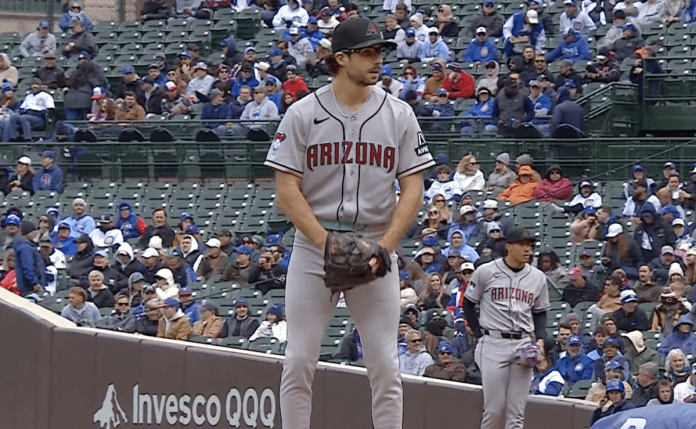
However, on Friday, the Cubs got first-hand proof that despite being desperate for arms, they dodged a bullet by not investing in Gallen in free agency.

The right-handed starter entered the series opener against the Cubs with good results. Gallen posted a 3.14 ERA through his first six starts of the year. Yet, there were major red flags that predicted regression for the 30-year-old pitcher.

Marquee Sports Network play-by-play man Jon Sciambi mentioned it during Friday’s broadcast, but Gallen only had 17 strikeouts in 28.2 innings. The 14.2 K% ranked 10th lowest among all starting pitchers, and hitters had an average exit velocity of 92mph against Gallen through the month of April.

You just cannot sustain success as a starting pitcher if you can’t strike more guys out, and that was on full display in Friday’s 6-5 win for the Cubs. Gallen gave up six earned runs on seven hits, while also walking three batters in 3.2 innings. The righty did strike out three, but the fourth inning served as more evidence that he is no longer the Cy Young caliber pitcher he once was.

The Cubs scored three runs against Gallen in the first inning, and then in the fourth, Gallen allowed three consecutive two-strike hits. Dansby Swanson broke Gallen’s spirit, as the Cubs’ shortstop battled back from a 0-2 hole to work a 3-2 count. Then, Swanson fouled off four straight pitches before hitting a line drive to left to drive in a run.

Pete Crow-Armstrong later scored on a wild pitch, and Alex Bregman chased Gallen out of the game with a two-out RBI double.

Gallen had a rough 2025 season, posting a 4.83 ERA in 192 innings. However, he did have a solid stretch to end the year. In his last 11 starts, Gallen had a 3.32 ERA in 65 innings, but even that stretch consisted of a below-average strikeout rate of 20.3%.

After six straight seasons of posting a strikeout rate above 25%, Gallen was only at 21.5% last year. Following Friday’s game against the Cubs, Gallen’s strikeout rate is at 14.2%.

Sometimes the best moves are the ones you don’t make. Gallen is simply not the same dominant pitcher he used to be, and it’s looking like the Cubs dodged a bullet by ultimately staying away from him in free agency.

Meanwhile, Colin Rea, who earned his fourth win of the season, pitched 5.1 innings against the Diamondbacks. Out of his five starts since joining the rotation, Rea has given up three or fewer runs in four of them.

Rea re-signed with the Cubs after 2025 as he and the team agreed to a new one-year contract that includes a mutual option for next season.

Craig Counsell Pressing All The Right Buttons: New Hero Steps Up in Chicago Cubs Bullpen

Jacob Webb Cubs Contract

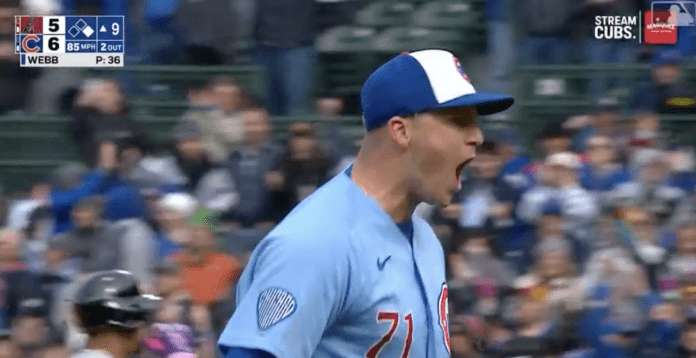
The Chicago Cubs have won 14 of their last 18 games, and while they certainly have talent up and down the roster to go on a run like this, you have to consider all the pitching injuries that make the 14-4 stretch even more impressive. This week started with the fan base having had enough of right-handed reliever Jacob Webb, but on Friday, he became the newest bullpen hero for Craig Counsell.

Starter Colin Rea turned in another solid performance against the Arizona Diamondbacks in Friday’s series opener. Rea bounced back from a rough outing against the Los Angeles Dodgers, as he was charged with two earned runs in 5.1 innings. At first, the bullpen move from Counsell backfired when Ryan Rolison walked the first batter he faced, and then after a weird play on a bunt, the Diamondbacks hit a three-run home run that cut the Cubs’ lead from five to one.

So, what looked like a somewhat stress-free afternoon suddenly turned into a one-run game with the Cubs’ bullpen in tatters. Phil Maton made his second appearance since coming back from the injured list, and he had the best inning of his season, retiring the side in order with two strikeouts in the seventh. Then, Counsell made the move every fan was dreading.

Still at 6-5 in the eighth, Jacob Webb entered to protect the lead. He also set down Arizona 1-2-3, including a strikeout of Geraldo Perdomo. Ben Brown and Hoby Milner closed out Wednesday’s game in San Diego, and whether they were simply unavailable or Counsell didn’t like the matchup or a combo of both, the manager surprisingly stuck with Webb in the ninth inning.

After walking the hottest hitter on the planet, Ildemaro Vargas, Webb struck out Corbin Carroll, got a ground ball out off the bat of Ketel Marte, and then recorded the save by striking out Gabriel Moreno.

Prior to his two-inning save on Friday, Webb was giving up a run every other appearance out of the bullpen. He had a 5.06 ERA in 13 games with two blown saves. Hitters are slashing .314/.390/.529 against Webb this season, but for at least one game, he was the hero the Cubs needed.

Webb became the sixth Cubs pitcher to record a save this year. Looking at the stats, it is truly incredible how well Counsell has mixed and matched his relievers to get through this painful stretch of injuries.

That list doesn’t include Brown, who has arguably been the most important reliever for the Cubs this season. The right-handed pitcher has a 1.99 ERA in 22.2 innings this year. He’s been an exceptional multi-inning reliever, getting at least five outs in all 10 of his relief outings to begin the 2026 season.