Iowa Cubs right fielder Alexander Canario waits in the batter's box against St. Paul during a MiLB baseball game on Tuesday, Aug. 23, 2022, at Principal Park in Des Moines. Iowacubs 20220824 Bh
The Chicago Cubs called up 23-year-old prospect Alexander Canario on Sept. 1, and in 11 games played by the team, the right-handed slugger was given exactly one plate appearance before being optioned back down to Triple-A on Monday.
I understand the reasoning as to why Canario wasn’t used during his brief cup of coffee in the majors, but I cannot grasp the thought process behind his promotion to the big leagues if this was the plan all along. On Monday, the Cubs called up Pete Crow-Armstrong, who replaced Canario on the team’s 28-man roster.
The Cubs are sending down Alexander Canario to make room for PCA. Probably a good thing for Canario as he got one AB in mop up time. Could use the playing time after missing a lot of the season with injuries. So Cubs trade Kris Bryant trade piece for Javy Baez one. https://t.co/mntsRLzhEV
Prior to his September call up, Canario last started at Triple-A with the Iowa Cubs on Aug. 30. His next plate appearance came on Sept. 6, a pinch-hit at-bat in the eighth inning against San Francisco Giants closer Camilo Doval. Canario struck out swinging on a 3-2 fastball.
I mean, there were definitely chances to get Canario a few plate appearances. The Cubs played a double header against the Cincinnati Reds when Canario was first called up and during this time on the active roster guys like Mike Tauchman and Christopher Morel were both struggling.
The baffling thing, though, is that Canario missed the majority of the 2023 season, returning until June after recovering from two separate surgeries to repair his shoulder and ankle that were both injured during a game in Winter Ball in October 2022. You would think the Cubs would want him to get as much playing time as possible after missing multiple months to start the year. Canario’s played in 53 minor league games so far this season.
Plus, after his long layoff and getting back into a rhythm, Canario was finally looking like himself at the plate. During the month of August, Canario had a slash line of .305/.356/.632, with 7 home runs in 104 plate appearances. And then he got called up to sit on the bench for almost two weeks.
I don’t know, it just doesn’t make sense to me.
At least Canario will now get every-day at-bats to end the season at Triple-A.
Alexander Canario Called Back Up
Well, the unusual journey in the major leagues continues for Alexander Canario, who is back with the Cubs a day after he was demoted to Triple-A. The Cubs placed Jeimer Candelario on the 10-day injured list. The switch-hitter did not play on Monday after he was taken out early during Sunday’s game against the Arizona Diamondbacks.
Canario stayed in Colorado, is already in the clubhouse.
Well, at least Canario wasn’t stuck on a plane, needing to fly back and forth from Triple-A to Colorado, where the Cubs will continue their series against the Rockies. Still not sure how many, if any at all, at-bats Canario will receive while Candelario recovers, but at least he’ll continue to live the MLB lifestyle a little bit longer.
Sep 10, 2023; Chicago, Illinois, USA; Chicago Bears offensive lineman Darnell Wright (58) blocks against the Green Bay Packers at Soldier Field. Mandatory Credit: Jamie Sabau-USA TODAY Sports
The Chicago Bears lost their 11th straight game dating back to last season on Sunday. It was also their seventh consecutive loss to the Green Bay Packers. So, one can understand if fans weren’t in the mood to look at possible bright spots from the game. There were some, though. Yannick Ngakoue was an immediate factor as a pass rusher. Darnell Mooney looked healthy. D.J. Moore was open frequently. Roschon Johnson was a load to bring down at running back. It might not have been what anybody wanted to hear, but it was something.
The most encouraging thing was the performance of some of their rookies. Mason Cameron of Pro Football Focus listed the 15 rookies with the highest grades from the first week of action. Two Bears cracked the list.
“10. DI ZACCH PICKENS, CHICAGO BEARS: 75.6
While Pickens played just a limited role during the Bears’ Week 1 loss to the Packers, he comes away as one of the highest-graded rookies in the NFL. Pickens may have been a non-factor in the pass rush, but he graded positively on 28.6% of his run-defense snaps without a single negative grade.
15. DARNELL WRIGHT, CHICAGO BEARS: 72.1
Wright, the 10th pick in this year’s draft, is the second Bears rookie to make this list. He may not have had the cleanest box score, as he allowed five hurries on 52 pass-blocking snaps and graded negatively on 14.3% of his run-blocking snaps. However, he did show some strength as an inside-zone blocker, earning a positive grade on 37.5% of his plays in these concepts.”
People shouldn’t overlook how important this is.
One of the biggest knocks on Pickens was his bad run defense at South Carolina. To see he’s made this much progress already is a great sign. The same goes for Wright. Run-blocking was a concern with him coming out of Tennessee. It appears he made some good adjustments. Pickens only rushed the QB five times. He didn’t get many opportunities. As to Wright’s protection? Here’s an interesting tidbit. The Bears asked him to block one-on-one 27 times in that game. He gave up three pressures. For context, Mike McGlinchey, the pricey free agent everybody wanted the Bears to sign, gave up three on 14 one-on-one blocks.
The Chicago Bears should be encouraged by this development.
Building through the trenches is something they haven’t done well for years. Part of that is not investing enough draft resources into them. GM Ryan Poles is working hard to change that. Wright is the 10th overall pick in the 2023 class. Pickens was a 3rd rounder. Ryan Pace drafted a lineman in the first three rounds five times in seven drafts. Poles did it three times in just the 2023 draft alone. This doesn’t include the five he selected last year or 7th round pick Travis Bell this year. It’s clear this regime is committed to upgrading the trenches.
While these performances by Wright and Pickens weren’t perfect, it was a sign that they have the talent necessary to impact Sundays. They don’t have the polish yet. That will come as the season progresses. There is no greater teacher than playing experience. Head coach Matt Eberflus and his staff are committed to developing them the right way. It appears those efforts are bearing fruit.
There is just no excuse for what David Ross did during Monday night’s game, when it seemed like he was doing everything he could to give the Colorado Rockies a win. Ross has to change his circle of trust in the bullpen now or it’s going to cost him down the line against better teams as the Cubs are fighting to maintain a playoff spot.
You only needed one working eye to see that José Cuas had nothing against the Rockies in the seventh inning. He was able to get the first two outs in the seventh inning, but then gave up a single, hit a batter, a double and another single before Ross finally came in to replace Cuas with Drew Smyly.
Yes, Cuas has put up good results since the Cubs acquired him at the trade deadline from the Kansas City Royals, posting a 1.17 ERA through his first 17 appearances. That’s only 2 earned runs in 15.1 innings. However, within those good results, the Cubs have also seen Cuas struggle finding the strike zone and before Monday’s outing, Cuas had more walks than strikeouts (12BB/10K) plus two hit batters on his stat sheet.
I’ll get to the bigger point, but Monday alone was another brutal call from Ross. When Cuas has looked great, he’s done it behind a nasty sweeping slider. Cuas threw 31 pitches, 1 was a sweeper. It was so obvious that he didn’t have confidence in his sweeper and had to rely on his other stuff that was hit hard. No idea why Ross kept him in after the double that made it 3-2, which ended up with the Cubs down 4-3 after the next hitter singled home two more runs against Cuas.
Moving forward, Ross cannot rely on Cuas in close games. I know Monday’s bullpen situation wasn’t great, as Julian Merryweather wasn’t available after pitching in three straight games and Adbert Alzolay was placed on the injured list. Plus, a few of the other relief options have been shaky as of late, too, like rookie Daniel Palencia. But you know what, I hope that from now on, Smyly will be higher up on the depth chart.
Smyly’s been ousted from the starting rotation, but since he’s been moved to the bullpen, the veteran lefty has been great. Smyly got the win Monday, pitching 1.2 scoreless innings after replacing Cuas. Since Aug. 13, Smyly has made 8 relief outings and he’s only allowed two runs, while striking out 15 batters and walking just three. Give me the guy who has consistently thrown strikes instead of the guy who has mostly gotten away with his bad control and doesn’t have much of a track record in his career like Cuas.
Also, I know his walk issues can be concerning in Coors Field, but how about giving Luke Little a shot. This dude has MLB stuff and is great against lefties and righties.
Maybe Cuas will develop into a guy who you can trust throughout the season in close games, but he’s not there yet. There are other guys in the bullpen that should be given those chances and seeing that Smyly did go multiple innings late, he probably will be handed the ball in close games more often down the stretch.
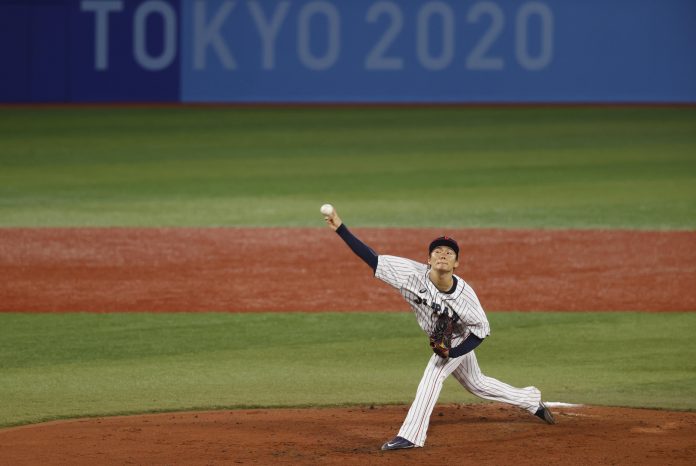
Aug 4, 2021; Yokohama, Japan; Team Japan pitcher Yoshinobu Yamamoto (17) throws against Korea in a baseball semifinal match during the Tokyo 2020 Olympic Summer Games at Yokohama Baseball Stadium. Mandatory Credit: Yukihito Taguchi-USA TODAY Sports
The Chicago Cubs are going to have plenty of money to spend in free agency following the 2023 season and Jed Hoyer is going to see for himself if they want to aggressively pursue Japanese star Yoshinobu Yamamoto. According to USA Today’s Bob Nightengale, Hoyer is going to Japan to watch Yamamoto’s next start with the Orix Buffaloes.
Yamamoto, 25, is expected to sign a contract worth more than $200 million once he’s made available in the offseason. He is a legit ace and pretty much every single team in baseball is going to have some level of interest in the star pitcher. Back in August, Jon Heyman reported that the Cubs were one of several teams that had scouts in attendance and now Hoyer is headed across the Pacific Ocean to see Yamamoto pitch in person.
So, just how coveted is Japanese star pitcher Yoshinobu Yamamoto, who threw a no-hitter in his last start? There were 29 #MLB scouts on hand for his last start, including #Yankees GM Brian Cashman. Jed Hoyer,Chicago #Cubs president of baseball operations, is coming for next start
The 25-year-old pitcher is in the midst of his third consecutive sub-2 ERA season pitching for the Orix Buffaloes. Yamamoto has been compared to Masahiro Tanaka, who signed a seven-year, $155 million contract with the New York Yankees in 2014.
Yamamoto struck out eight batters in his last start, tossing a no-hitter against Chiba Lotte Marines.
The right-handed pitcher has 1.84 ERA in seven seasons pitching professionally in Japan.
The most recent comparison to Yamamoto is Kodai Senga, who ended up signing a five-year deal with the New York Mets worth $75 million last offseason. Senga has been great in his first year in MLB, posting a 3.07 ERA while striking out 181 batters in 149.1 innings so far in 2023. Well, Yamamoto is not only five years younger than Senga, he’s also been better in Japan than Senga was before signing with the Mets.
The Cubs will be in the starting pitching market this offseason and they’ll have several big-name pitchers to pick from. If you’re a Cubs fan, you certainly hope that they’ll become serious contenders to sign Yamamoto.
Yoshinobo Yamamoto's Yo-Yo Curve…and No Hitter!
'1st time a pitcher has tossed no-hitters in back-to-back seasons since the two-league system was formed in 1950'
He's coming to MLB and you're gonna want him on your team.
Green Bay Packers fans were feeling pretty good about themselves after Sunday’s game in Chicago. Their team had once again throttled the Bears, and their young quarterback made some nice plays. The team would continue winning. However, there is a time when the celebration needs to settle down. Some cheeseheads got a little carried away with it on Monday night. Several of them were gathered in a Wisconsin bar called Jack’s American Pub to watch their former quarterback, Aaron Rodgers, lead his new Jets team against the Buffalo Bills.
The bar owner set the tone for the night when he declared patrons would drink for free every time the Jets lost. That was a clear dig at Rodgers. Then things got out of hand. Cameras caught several Packers fans cheering when the future Hall of Fame quarterback went down with an injury four plays into the game. It became clear right away he was hurt badly. New York carted him to the locker room. The celebration came from their bitterness towards his exit from Green Bay and the undoubted assurance that the Jets would lose now.
The people hear roared when Rodgers got sacked…and cheered again when they realized he was hurt.
Karma has a way of winning in the end, though. Thanks to four Josh Allen turnovers, a great rushing performance from Breece Hall, and an epic punt return from Xavier Gipson, New York stunned the Bills 22-16 in overtime. Packers fans started in disbelief, realizing the gigantic bar tabs they’d been running up all night would have to be paid. Their reactions were priceless.
This is incredible. A Wisconsin bar offered free drinks if the Jets lost. After Rodgers went down, they started running up their tabs. The news was live when the jets won in overtime and everyone realized they had to pay. pic.twitter.com/1QDVJq9Zlr
Aaron Rodgers also delivered one last kick to the nuts.
Not only did the Jets win to ensure they pay those bills, but his injury is now confirmed season-ending. The quarterback tore his Achilles, necessitating surgery and months of rehab. This is a big problem for the Packers. As part of the trade to acquire Rodgers, New York sent Green Bay a 1st round pick in 2024. However, that pick came with a condition. For it to become a 1st, the quarterback needs to play at least 65% of the offensive snaps this season. Otherwise, it reverts to a 2nd round pick.
With Aaron Rodgers done for the year, there is no way that condition gets met. While the Packers still get a 2nd rounder, it’s a huge loss of value in the trade. Packers fans may have had a fun weekend, but it sure ended on a sour note. Couldn’t happen to a nicer bunch.
Sep 10, 2023; Chicago, Illinois, USA; Chicago Bears quarterback Justin Fields (1) hands off the ball against the Green Bay Packers at Soldier Field. Mandatory Credit: Jamie Sabau-USA TODAY Sports
As I started writing this, I was genuinely uncertain about where to begin. The game plan for Sunday’s game was frustrating because it seemed like the Bears deviated from the successful approach they used last year for Justin Fields and the offense after their win vs New England. This decision was the primary factor behind the Bears lack of competitiveness against the Packers. The encouraging aspect is that they are already aware of what works. It’s crucial they return to that strategy, especially with the upcoming game in Tampa.
Utilize Justin’s Legs
While watching the film back, I noticed that there were only two designed QB runs called throughout the entire game, which I find unacceptable. Justin managed to gain 64 yards after contact, ranking third in this category for Week 1. Impressively, he averaged 7.11 yards after contact per rushing attempt, leading the NFL in this stat. Additionally, he forced four missed tackles and gained 60 yards on scramble plays alone. However, on those two designed QB runs, he managed to actually lose yards finishing with -1 yards, ranking 13th worst in the NFL.
It’s tempting to attribute this to Green Bay’s defense, but I believe the real issue lies in the play calling. Justin Fields is arguably one of the best running quarterbacks in the NFL, and utilizing his mobility should obviously be a priority. This not only enhances our offensive options but also eases the stress on the offensive line and keeps the opposing defense guessing. Unfortunately, it seemed like Luke Getsy made the same mistake as Matt Nagy by trying to turn Justin Fields into a “pure pocket passer”. Can Justin win in the pocket? Yes. But there has to be a pocket there to begin with. The offensive line as it is, just isn’t good enough. Given Justin’s current stage in his career, this strategy is simply not going to work. I believe Fields can be a dual threat QB as he showed that at Ohio State. But we’ve already been down this road before which is why Sunday’s game plan drives me nuts. Just take a look back at the first 6 games of last season? Why did they think this would be a good idea to go back to?
This leads me to another significant concern I had with the Bears game plan from last Sunday.
Move The Pocket, Roll Justin Out
On Sunday, Justin Fields had 49 drop-backs during the game. The Bears only rolled him out twice, which is more than concerning. Additionally, the offensive line had a tough time stopping the Packers defensive line from putting pressure on Fields. They managed to pressure him on 22 out of his 49 drop-backs, with 86.4% of those pressures being attributed to the offensive line. Justin Fields did show some improvement, as he was responsible for creating only 13.6% of the pressures himself. Now, let’s take a look at the passing chart from Sunday’s game.
When I first saw this chart, I immediately drew a parallel to Mitch Trubisky and Matt Nagy. Which about made me puke. It’s crucial for Getsy and the coaching staff to remember that one of Justin’s strengths is his ability to excel in deep passing plays. In plays where he attempted passes of 20 yards or more, Justin was deadly, going 2 for 2 for 43 yards and a touchdown. We definitely need to see more of this aggressive approach. Interestingly, though, Fields had 8 pass attempts behind the line of scrimmage, that turned into 5 completions that only gained a total of 29 yards due to 2 dropped passes. This resulted in an average of just 3.6 yards per attempt, which isn’t ideal.
Throughout the off-season, the team placed a strong emphasis on the short passing game. This was clearly evident in Fields performance on Sunday, where he completed 17 out of 22 passes within the 0-9 yard range. His averaged 6.5 per attempt, with just one dropped pass, resulting in 8 first downs and a solid 93.8 passer rating. However, despite these positive aspects, there were moments when the game plan seemed predictable.
Bears offense seems a little to predictable on some downs?
In particular, when it came to intermediate routes (those ranging from 10 to 19 yards in depth), Fields struggled. He completed zero of his two attempts unless you count the interception, although it’s worth noting that he was under pressure during one of these plays. In fact, Fields faced pressure on 22 of his drop-backs, which was the second-highest in the NFL for week 1, with Daniel Jones being just slightly ahead with one more pressure.
If they want to change the course of the season, the Bears need to strike a balance between their quick passing game, which has shown some promise, and exploring other dimensions of their offense. The quick slants to DJ Moore were effective, but they only threw it to him twice, both occurring during their second drive of the game, and never returned to it. Therefore, finding a happy medium between the quick game and attacking down field will be the key to improving the offense heading into week 2.
This was the only slant thrown to DJ Moore yesterday.
To add unpredictability, Getsy will need mix up his approach. More roll outs. Change the launch points like I mentioned earlier. While Fields may not be flawless, he is very dynamic. Unfortunately, what Luke Getsy did on Sunday was significant regression. He’s aware of the adjustments he needs to make to get back on track. He found the blueprint last year. He even has more talent to work with now. If he resists reverting back to those changes, it could be time to consider a personnel change. The clock is ticking.
Bears vs Packers Recap: What The Hell Just Happened?
Feb 16, 2023; Nashville, Tennessee, USA; Boston Bruins left wing Taylor Hall (71) warms up before the game against the Nashville Predators at Bridgestone Arena. Mandatory Credit: Christopher Hanewinckel-USA TODAY Sports
When the Blackhawks take the ice for the first time this October, all eyes will be on the team’s top attacking line featuring rookie sensation Connor Bedard. The line was injected with fresh talent this summer, and will now include Bedard and former first-overall pick Taylor Hall. The trio will be an exciting one and will look to score goals in bunches this year.
However, this is a Blackhawks team that has seen the lowest of lows. The offense was an embarrassment for much of last year, often stymied by opposing defenses. Last season’s top line wasn’t all too exciting, often featuring some combination of Tyler Johnson, Jason Dickinson, and Jonathan Toews. The unit wasn’t very productive, especially when compared to the first lines of other teams.
This year’s group has the potential to completely buck the trend. While some may argue that the Blackhawks’ top line has become overhyped, the group has practically limitless upside. If that’s the case, then what’s the best-case scenario?
Lines being used in this series are from the team depth chart at CBS Sports.
Connor Bedard
Let’s start with the obvious – the 18-year-old rookie has the potential to be the most lethal scorer and playmaker in the entire NHL. There’s a reason he was heralded as one of the greatest prospects of all time, alongside the likes of Connor McDavid and Sidney Crosby. The only problem that would hold him back from an absolutely monster season is the potential lack of talent around him, though we argued Wednesday that that may not be the case. He has the skills to put up one of the best rookie seasons we’ve ever seen.
Bedard lands in a great situation on the top line and is a great fit with the other two skaters. The addition of Taylor Hall on his left will take a lot of pressure off the young prospect, as Hall is a more-than-competent shooter and playmaker. Meanwhile, Taylor Raddysh is a perfect fit on his right. Last season, Raddysh performed best statistically when he was setting up uber-talented teammates like Toews. This year, he’ll provide great chances for Hall and Bedard to score and achieve their best-case scenarios.
Taylor Hall
Of all the acquisitions made by GM Kyle Davidson and his staff this summer, Hall was one of the top headliners. The five-time All-Star and 2018 Hart Trophy winner isn’t necessarily the same threat he was at the top of his game but is still lethal on the offensive end. His upside is still pretty much limitless, and he could easily lead the team in goals.
With Bedard leading the charge for Chicago’s top line, Hall could surprise many with a monster goal-scoring season. While opposing defenses will be primarily focused on the young star, Hall could find himself open more than ever before. Becoming a second option on the top line could do Hall some good, and he could be a great fit in the group.
Taylor Raddysh
Raddysh is gathering plenty of momentum to hold down a spot on the top line this season, and for good reason. He produced at a high level last year on a team without much talent, and would be a great option alongside Bedard and Hall. I made the complete case for Raddysh on the top line last week here.
If Raddysh finds himself on the team’s top line this year, he’ll be a perfect fit alongside what should be two of the league’s best scorers. He’s a great puck rebounder who excels at cleaning up loose pucks around the net and has proven in the past that he’s most productive when playing alongside lethal shooters. His skill set consistently creates numerous chances for his teammates.
There’s plenty of pressure on the Blackhawks’ top forward line this year, but in the group’s best-case scenario, they could certainly be lethal on a nightly basis. Hall, Bedard, and Raddysh should fit well together and have massive potential as the top line in Chicago.
Keep this one in your back pocket for bar trivia. If you didn’t already know, Pete Crow-Armstrong’s Mom Ashley Crow, starred in the 1994 movie, “Little Big League,” and on Monday the mother and son embraced at Coors Field following PCA’s MLB debut with the Chicago Cubs.
Crow-Armstrong was called up from Triple-A and got into Monday’s game against the Colorado Rockies, pinch-running for Mike Tauchman in the seventh inning. Crow-Armstrong stayed in the game to play center field. The top-ranked prospect in the Cubs system had one plate appearance, coming in the ninth inning when he put down a sacrifice bunt.
The Cubs came back in the ninth inning to beat the Rockies 5-4 and PCA was able to celebrate his first game in the big leagues with his mom.
Ashley Crow, played the role of Jenny Heywood, the mother of the protagonist Billy in, “Little Big League,” where in the film her son becomes the owner of the Minnesota Twins after inheriting the team from his grandfather. Billy eventually names himself the team manager. Of course, the big kicker is that Billy is only 12-years-old.
Flash forward three decades and Ashley Crow can now see her real son play in the big leagues with the Chicago Cubs.
She is also known for her roles in the movie, “Minority Report” and TV shows like “Supernatural,” “Grey’s Anatomy” and more. Not to be left behind, Matthew John Armstrong, Pete’s dad, also starred along his wife Ashley in the NBC show, “Heroes.” Armstrong was raised in Illinois, attending Naperville Central High School, where he played football and was the two-time Defensive Player of the Year in the DuPage Valley Conference.
Also, what an incredible tidbit about PCA’s dad.
PCA's dad Matthew John Armstrong, "For the record, I am not the GEICO caveman." lmao pic.twitter.com/01NZWzcI3V
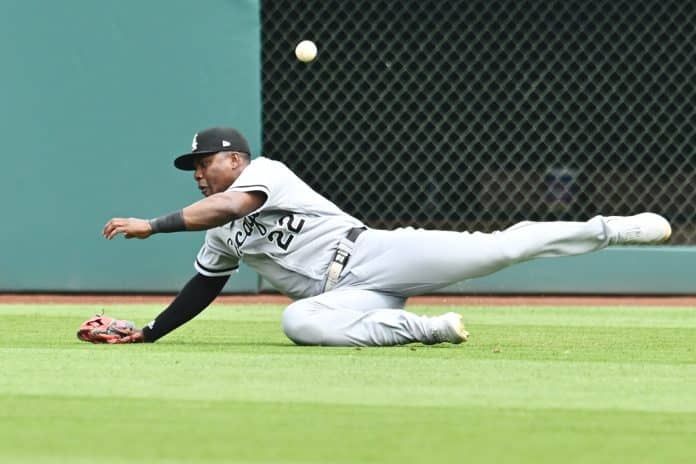
Aug 6, 2023; Cleveland, Ohio, USA; Chicago White Sox right fielder Oscar Colas (22) misses a ball hit by Cleveland Guardians first baseman Kole Calhoun (not pictured) during the fifth inning at Progressive Field. Mandatory Credit: Ken Blaze-USA TODAY Sports
White Sox General Manager Chris Getz and manager Pedro Grifol did not hold back when asked about Oscar Colás. They did not like what they saw.
The Cuban outfielder was optioned to Triple-A Charlotte on Monday, just six days before his 25th birthday. He struggled during his rookie season hitting just .216/.257/.314 with five home runs and 19 RBIs. While Pedro Grifol acknowledged Colás’s impressive skill set and potential, he believes Colás needs to clean up his game.
“He’s got to go down there and take care of those fundamentals,” Grifol told reporters. “We talked a lot here about those fundamentals. We’ve worked a lot, we’ll continue to work with him. However, we thought it was just a good time for him to go down there and just attack those things on the Minor League side.
“I talked about this over and over again, and Chris and I are aligned on this vision: We want to play a fundamental style of baseball. We want to eliminate mistakes, and details are extremely important to us. That’s what we’re going to be looking for moving forward.”
Grifol on Oscar Colas: "We need him to completely clean up his whole game. I’m talking about baserunning, defensively, these are things I’ve spoken about all year. These are not new."
This was a brutally honest but fair assessment from the White Sox manager. Grifol is trying to build a culture and after reports have come out that players have been skipping practices and falling asleep in the bullpen under his watch, he is trying to tighten the screws on his player’s attention to detail. His comments were directed at Colás’s lack of focus, not talent.
Colás was pegged as the long-term solution in right field the White Sox have been searching for. His arm strength and quick left-handed stroke helped place him as the White Sox No. 2 overall prospect last season.
After breaking camp with the team it became clear that the rookie lacked plate discipline. He was sent back down to Triple-A Charlotte on May 2nd to improve his approach. When he was recalled on July 4th and given another chance in the big leagues he squandered it with his poor fundamentals which ultimately led to his demotion.
“We sent him down, he made some of those adjustments in Triple-A, came back up here – and sometimes you could see adjustments, sometimes you couldn’t,” Grifol said. “Some of the mistakes kept recurring. This has nothing to do with tools. This is sharpening his toolbox to be able to come up here and play consistent baseball, detailed baseball, fundamentally sound baseball, and be a part of this moving forward.”
The overall numbers were ugly for Colás. However, the front office was more frustrated with his mental errors. Colas had multiple instances of throwing to the wrong base from right field, overshooting the cutoff man, getting poor secondary leads, and running into outs.
His pitch selection was also brutal. Colás owned a 39.8 percent chase rate, 31.8 percent whiff rate, and 27 percent strikeout rate, paired with just a 4.8 percent walk rate.
“He’s made some mistakes, not that we were too surprised when those mistakes have happened,” Getz told the media in Detroit. “It’s a matter of minimizing those. You want players to go out there and play freely and be the athletes they are but within the approach of winning a baseball game and making good decisions on the field. There have been moments that perhaps have gotten a little too big for him.”
It is ironic that Getz, who was in charge of the White Sox minor league development and was hired by Reinsdorf for “teaching baseball the right way” had to send down the organization’s former No. 2 prospect because he lacked fundamentals.
The fact that the White Sox sent him down despite being eliminated from postseason contention is very telling. At this point in the year, the White Sox should be trying to give their prospects as much playing time as possible to determine if they have a future with the team. Yet the front office still felt it was in Colás best interest to send him down.
“That’s the way it’s always been,” Grifol said. “Even though we’re 30 under and we’re officially eliminated, we’re still trying to win Major League games. Sometimes the environment up here creates a level of anxiety that doesn’t allow the player to maximize his capabilities and potential.
“When you send him down, it kind of frees him up a little bit, it lets him do more things in a more controlled environment. At this time, we made this decision so he can go down there and finish the season, hopefully, on a strong note. We’ll talk to him again and give him a plan for the offseason.”
Sep 10, 2023; Chicago, Illinois, USA; Green Bay Packers cornerback Rasul Douglas (29) tackles Chicago Bears quarterback Justin Fields (1) after a 10-yard gain during the second quarter of their regular season opening game at Soldier Field. Mandatory Credit: Mark Hoffman-USA TODAY Sports
Blame is getting thrown in all directions after the ugly loss to Green Bay on Sunday. The coaches got it for their baffling game plan that leaned away from the Chicago Bears’ strengths. The offensive and defensive lines both looked overmatched, especially along the interiors. Then there was Justin Fields. While some had sympathy for him due to the rough protection, there was a growing undercurrent of frustration with his inability to progress as a pocket passer. It was more of the same from what they saw in 2022.
Pro Football Focus charted how many pressures the Packers defense had on Fields. It worked out to 36. That is a lot, obviously. However, where it gets interesting is that 25 of those pressures allowed were credited to the Bears’ offensive line, tight ends, and running backs. Those numbers don’t match up. This means that 11 of those pressures are believed to have resulted from Fields himself. He held the ball too long or ran into pressure that wasn’t there. It showed up multiple times on tape.
Protection is supposed to be a symbiotic relationship. Yes, the offensive line must do their part by making their blocks. However, it’s almost impossible to be perfect at all times in the NFL. A quarterback must learn to help himself by pulling the trigger quickly. This is a regular problem Fields has. NFL Next Gen Stats charted Fields with the fourth-longest time to throw in 2022 at 3.12 seconds. Even worse, he coupled this with an aggressiveness percentage of 9.1, the lowest in the NFL. That is the percentage of time he threw the ball into tight windows.
So not only was Justin Fields holding the ball too long, but he often didn’t bother to make an aggressive play when he did. It was more of the same against Green Bay. Fields had the seventh-highest time to throw at 2.95 seconds and an aggressiveness rating of 2.7%. There is no getting around it. He refuses to turn the ball loose unless the protection is perfect and the receiver is WIDE open. That is why he is so easy to defend as a passer.
Nothing about this is easy to admit. Fields is such a great talent. Unfortunately, talent alone doesn’t cut it in the NFL. You need a certain processing speed and aggression level to thrive at this level. So far, he hasn’t shown enough of either.