
Sunday, April 12, 2026
✶ Untold Chicago Stories ✶ Amazon Music
Home Blog Page 42

Getz Got Creative on a Shoestring: Why This White Sox Offseason Deserves Props

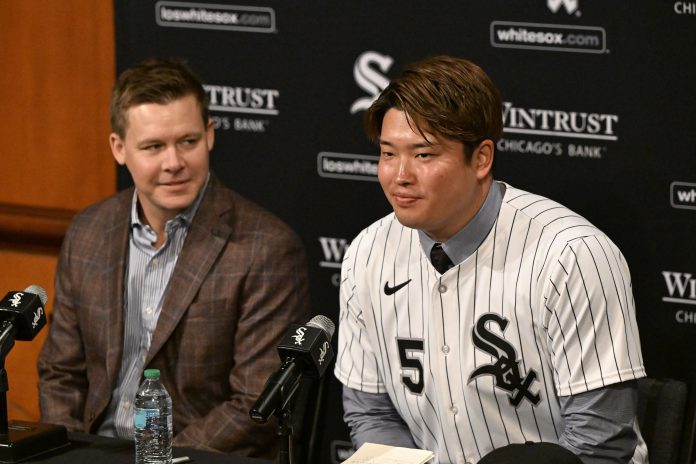
Dec 22, 2025; Chicago, Il, USA; New Chicago White Sox player Munetaka Murakami, right, speaks with general manager Chris Getz, left, during a press conference where he was introduced at Rate Field. Mandatory Credit: Matt Marton-Imagn Images

The White Sox enter the 2026 campaign following a busy offseason, with budget constraints forcing Chris Getz to get creative while trying to improve the roster.

The White Sox carried the second-lowest payroll in baseball last season at $87 million, despite generating $277 million in revenue. While that revenue figure ranked second-lowest in MLB, ahead of only the Athletics, just 31% of it was allocated to player payroll, again the second-lowest percentage in the league.

Currently, the White Sox have $64.4 million in guaranteed contracts, which ranks 29th in MLB. Their projected total payroll, including tax, sits at $101.5 million. Although that marks an uptick from last season, it still places them 29th in baseball.

Given the clear handicap that Getz had to work with, he deserves credit for how he managed to improve the roster.

His key moves include signing Munetaka Murakami to a two-year deal, a gamble made possible after the Japanese slugger’s free-agent market dried up. Getz acknowledged that when free agency first opened, he believed the odds of signing Murakami were slim. Because of this, the organization continued evaluating other first-base options, knowing that any deal could potentially take them out of the Murakami sweepstakes.

The signing not only fills a clear need at first base but also elevates the White Sox’s international profile and injects much-needed power potential into the middle of the lineup.

After picking up Luis Robert Jr’s $20 millon option, Getz parlayed that into some extra roster flexibility by trading him to the Mets for Luisangel Acuna. The move gives Acuna a fresh start and the White Sox some roster versatility, given Acuna’s skill set. But more importantly, it also freed up money, allowing Getz to add Seranthony Dominguez to a two-year deal and Austin Hays to a one-year deal.

Dominguez helps solidify a bullpen that blew 24 saves last season, while Hays filled a much-needed hole in the outfield. When the dust settled, Getz had essentially traded Robert, who had a 1.4 WAR last season, for Acuna, Dominguez, and Hays, who combined for a 1.9 WAR.

To address the starting rotation, Getz took a flier on KBO standout Anthony Kay and reunited with former KBO MVP, Erick Fedde. The moves not only give the White Sox potential trade chips to flip at the deadline, but also some much-needed depth to help eat innings for a pitching staff forced to resort to opener strategies last season.

Will the White Sox be contenders for the division? Probably not. But in the short term, Getz has constructed a roster that should help supplement the team’s young core, while still positioning the White Sox to make a legitimate postseason run in 2027.

Long term, Getz may not have the same financial constraints. The Ishbia family, led by Justin Ishbia, is lined up to potentially take control of the organization as early as 2029. While White Sox fans are hoping for a quick Jerry Reinsdorf, the agreement does say that Reinsdorf must give up control by 2035 at the latest, meaning fans could be waiting years.

Once the transition does happen, fans could see the team steadily climb the payroll rankings, given the Ishbia family’s track record of aggressive spending in free agency during their ownership of the Phoenix Suns.

That’s what makes this past offseason so promising for White Sox fans. Even if Getz’s moves don’t pan out, he proved that he could get creative in improving the roster despite some clear financial constraints. Assuming those constraints are lifted under Ishbia, it could provide a runway for sustained success.

That’s what makes this past offseason so encouraging for White Sox fans. Even if every move doesn’t hit, Getz showed he can be creative and opportunistic while operating under clear financial constraints. If those limitations ease under Ishbia, it could open the door to sustained success.
To Start Or Not To Start: The Grant Taylor Dilemma

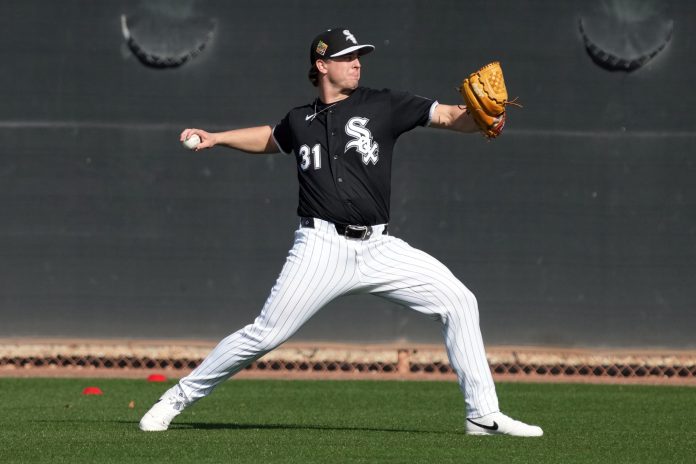
Feb 10, 2026; Glendale, AZ, USA; Chicago White Sox pitcher Grant Taylor (31) warms up during spring training camp at Camelback Ranch. Mandatory Credit: Rick Scuteri-Imagn Images

For the first time in what seems like forever, the White Sox may have more young talent in their position player pool than they do with their pitchers. However, the White Sox do have two consensus top-100 pitching prospects in Hagen Smith and Noah Schultz, but they seem to have more young bats that are viewed highly around the league.

While there are still some young exciting arms outside Smith and Schultz, like Tanner McDougal and Christian Oppor, the White Sox rotation isn’t one of their stronger positional groups. It certainly could turn out to be that way if Smith and Schultz are ace pitchers and McDougal becomes a top of the rotation arm, but outside of that, there are certainly some question marks.

This is where it gets interesting, as the White Sox have a very talented young arm already on the roster, that being Grant Taylor. While there have been reports about the White Sox stretching out Grant Taylor to get more innings, as he was a starter in college and in the minors, it seems like he’s going to be working mainly from the bullpen this year. That in itself begs the question, do you keep a 24-year-old hard throwing right hander in the bullpen if he is elite, or do you try and turn him back into a starter?

Last season Taylor had a 4.91 ERA over 36 innings. However, he struck out 54 batters, which is good for an elite 13.25 K/9 ratio. His ERA was a bit elevated, but that came from a few rough outings in July and August. He righted the ship, as he ended the season strong. In September, he threw 8 scoreless innings, striking out 15. He also looked lights out in his one appearance so far this Spring.

Taylor had success in the minor leagues when he threw multiple innings, but he never pitched more than just a few innings, as his pitch count was always capped. If Taylor pitches like he did to end the year, he is arguably a top-10 bullpen arm, as he has absolutely devastating offspeed pitches to go with a 100 mph+ fastball. Pitchers with that kind of arsenal don’t grow on trees.

Due to his rare ability, do you see if he can be stretched out and do that for six innings at a time, or do you allow him to be one of the best relievers in the game? I have always been of the opinion that you should make a starting pitcher a starter as long as possible, until they prove that they can’t do it. This is partially because starting pitching is more valuable to a team than relievers are.

However, it’s rare that we see a player become elite in the bullpen before getting a chance to start in his professional career. This makes for a tough decision for the White Sox brass.

At this point, I believe that decision comes down to the play of the other young pitchers in the White Sox organization. If Noah Schultz, Hagen Smith, Shane Smith, and Tanner McDougall pitch to their potential, Taylor stays in the bullpen. However, if one or more begin to falter, it might be worth checking out.

Regardless, Taylor will be a very important piece of the White Sox pitching staff this year and hopefully could earn an all-star appearance out of the bullpen. This is a good problem to have, but it certainly is an interesting dilemma and it will be interesting to see how it plays out.

Roster Watch: Has Curtis Mead Already Secured His Spot?

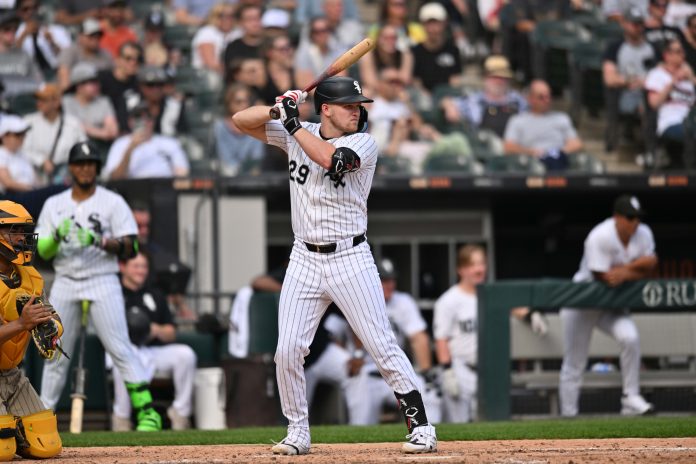
Sep 21, 2025; Chicago, Illinois, USA; Chicago White Sox first base Curtis Mead (29) at bat against the San Diego Padres during a game at Rate Field. Mandatory Credit: Patrick Gorski-Imagn Images

This Spring Training is a bit different from the last few years, as there is a bit more set in stone on the 26-man roster. However, there are certainly still some key positional battles. For the first time in what seems like a very a long time, there aren’t roster battles at practically every position, as the White Sox likely have their starting lineup locked up. However, there are still a few backup spots in the infield and outfield up for grabs, as well as a few spots in the bullpen.

As we get closer to the regular season, we will look at each fringe roster player and their chances to make the team out of Spring Training. The next player we will take a look at is infielder Curtis Mead. Mead was acquired at the 2025 trade deadline, when the White Sox traded starting pitcher Adrian Houser to the Tampa Bay Rays. Mead was the headliner in the return, as he was a former top-100 prospect.

Mead started out in AAA with the Charlotte Knights after the trade, but quickly made his way up to Chicago to make his debut for the White Sox. Mead had a strong month of August for the White Sox, as he hit .258 with a .312 on-base percentage. He added seven RBIs and one stolen base. This was a solid start for him, as he hadn’t had much consistent playing time in the major leagues.

Mead continued his nice start into the first week of September, as he strung together nine hits over the first five games. Unfortunately, Mead hit a cold streak, as he only had six more hits from September 6th to September 28th. This tanked his average, as it fell to .220 in the month of September. However, Mead flashed his ability to be a productive major league player. 

Mead has gotten off to a solid start in Spring Training, as before today’s game, he was 3 for 12 with two RBIs. In today’s game, he was one for three with a solo homerun. 

This is a nice start for Mead, as he has kept up his spot in the infield competition. However, Mead is out of minor league options, so if he does not make the team, another organization can pick him up when he’s placed on waivers. With his solid play in 2025 and his former prospect status, a team is very likely to do that. That gives the White Sox an interesting decision to make.

What makes things interesting is the fact that Mead is going to be playing for team Australia in the World Baseball Classic. While he will likely get consistent at-bats for team Australia, that won’t be coming in front of the White Sox coaches. I’m sure they will be paying attention to Mead’s performance in the WBC, but they aren’t getting to interact with him everyday.

I’m not sure if Mead playing in the WBC will hurt or help his chances at a roster spot, but I believe he should be on the roster. It may be a foregone conclusion that Mead is on the team due to the fact that he is playing in the WBC, because I can’t imagine he would play if his spot was in jeopardy. I would put his chances at about 95% to make the team, especially because he was a Chris Getz acquisition.

However, I could see a scenario where a team reaches out for a potential trade involving Mead, as other players in Spring Training could fill in as a backup infielder/utility role. If the White Sox got a decent offer, I could see them accepting that, but I would like to see Mead get an opportunity with the White Sox. However, with the crowded infield there may be some tough decisions to make.

Bears Trade Rumors Heat Up: What Chicago Really Wants For Tyson Bagent

tyson bagent
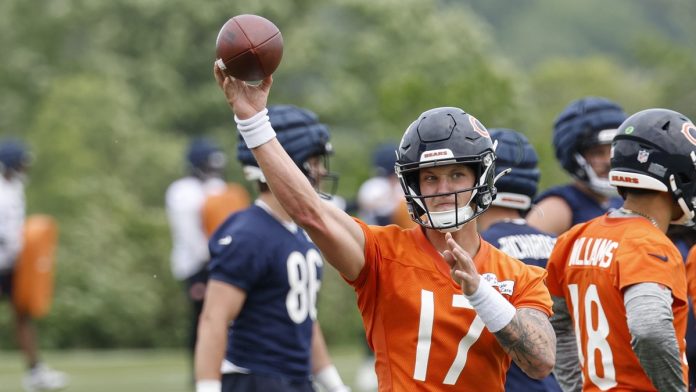
Jun 3, 2025; Lake Forest, IL, USA; Chicago Bears quarterback Tyson Bagent (17) passes the ball during minicamp at Halas Hall. Mandatory Credit: Kamil Krzaczynski-Imagn Images

Usually the weeks leading up to free agency become one of the hottest periods for trades to take place. The Chicago Bears are one of those teams that never fear being active on the market. They proved it last season when they swung deals for Joe Thuney and Jonah Jackson. It seems the same could be true again this year, but with a twist. This time it will be players going out instead of coming in. It’s already known wide receiver D.J. Moore could be on the block. Tremaine Edmunds was given permission to seek a trade. Now, Gervon Dexter is receiving a lot of interest. However, the big discussion centers on Tyson Bagent.

Quarterbacks are always the premium commodity in the NFL. This offseason could prove especially true. Free agency won’t offer any solutions outside of Malik Willis, who has been a career backup and will cost around $30 million. As for the draft, every QB not named Fernando Mendoza won’t crack the 1st round. In situations like this, teams can often get desperate. That means taking calculated risks on backups. Bagent is a popular name, having looked good in each of the past two preseasons and getting an education from head coach Ben Johnson. However, interested teams face a problem, according to Tony Pauline of Essentially Sports.

There’s been talk of teams interested in trading for Chicago Bears backup Tyson Bagent, but I’m told the only way the team moves him is if they’re offered a significant package of picks and/or players.

During the early part of the 2025 season, when Caleb Williams was struggling, I previously reported on the affection head coach Ben Johnson has for Bagent. I’m told that the Bears really like their quarterback room the way it presently stands. Not only does the team want to hold onto Bagent, but it will try to bring back 13-year veteran Case Keenum as a coach for the two younger signal callers.

The Bears have no reason or desire to move Tyson Bagent.

They already signed him to a contract extension last year, meaning they control him for two more seasons. That control is likely of interest to other teams. It gives them a two-year window to evaluate him on a cheap deal to see if he can play. Coach Johnson knows what he has, though. He believes Bagent is one of the 32 best quarterbacks in the league right now. In other words, this guy should be starting somewhere, and the Bears are fortunate enough to have him locked up.

Put simply, if you want him, you’ll have to make an offer with the idea that you’re trading for a starter. There have been plenty of starters traded in the NFL since 2000. Obviously, the biggest names involved at least a 1st round pick or more. Based on the information available, the Bears will be looking for a Sam Darnold or Josh Rosen package. That means a 2nd round pick and one or two late-round picks. It might sound crazy, but that is the nature of being in a seller’s market.

RankQuarterbackYearTrade Cost (Major Assets)
1Deshaun Watson2022Three 1st-rd, one 3rd-rd, two 4th-rd picks
2Russell Wilson2022Two 1st-rd, two 2nd-rd, one 5th-rd picks + 3 Players
3Matthew Stafford2021Two 1st-rd, one 3rd-rd picks + QB Jared Goff
4Eli Manning2004Two 1st-rd (via Rivers/2005 pick), one 3rd-rd, one 5th-rd
5Jay Cutler2009Two 1st-rd, one 3rd-rd picks + QB Kyle Orton
6Aaron Rodgers2023One 1st-rd (swap), one 2nd-rd, one 6th-rd + 2024 1st-rd
7Carson Palmer2011One 1st-rd, one 2nd-rd picks
8Carson Wentz2021One 1st-rd, one 3rd-rd picks
9Drew Bledsoe2002One 1st-rd pick
10Alex Smith2013Two 2nd-rd picks
11Donovan McNabb2010One 2nd-rd, one 4th-rd picks
12Sam Darnold2021One 2nd-rd, one 4th-rd, one 6th-rd picks
13Carson Wentz2022One 2nd-rd, two 3rd-rd picks
14Josh Rosen2019One 2nd-rd, one 5th-rd picks
15Daunte Culpepper2006One 2nd-rd pick
16Alex Smith2018One 3rd-rd pick + CB Kendall Fuller
17Geno Smith2025One 3rd-rd pick
18Matt Ryan2022One 3rd-rd pick
19Sam Howell2024Pick swap (3rd/5th for 4th/6th)
20Kenny Pickett20243rd-rd pick swap + two 7th-rd picks
21Joe Flacco2019One 4th-rd pick
22Brett Favre2008One conditional 4th-rd pick
23Baker Mayfield2022One conditional 5th-rd pick
24Justin Fields2024One conditional 6th-rd pick
25Mac Jones2024One 6th-rd pick

Is there a team out there willing to gamble on Bagent?

The one that started the rumors was Arizona. Their head coach, Mike LaFleur, is apparently a fan of the Bears’ quarterback. However, the believed offer from them would be a 4th or 5th rounder with incentives that could turn it into a 3rd. That won’t cut it. The Atlanta Falcons are another team to watch. Ian Cunningham was Chicago’s assistant GM when they signed Tyson Bagent as an undrafted free agent. He knows better than most what his makeup is and how good he could be. The Falcons will release Kirk Cousins soon and aren’t sold on Michael Penix. Bagent might be a worthwhile gamble, inheriting a talented supporting cast down there.

Not that it matters to the Bears. They are perfectly content with the way things are. This isn’t a team motivated to unload Bagent. In such cases, it is on the interested team(s) to make an offer that brings them to the table. It doesn’t sound like things have reached that point yet. Whether that changes might be determined by how free agency unfolds next month. All it takes is a couple of teams missing out on key veterans and not liking the draft to build a market. Poles will be listening.

Can The White Sox Replicate Their Rule-5 Draft Success In 2026?

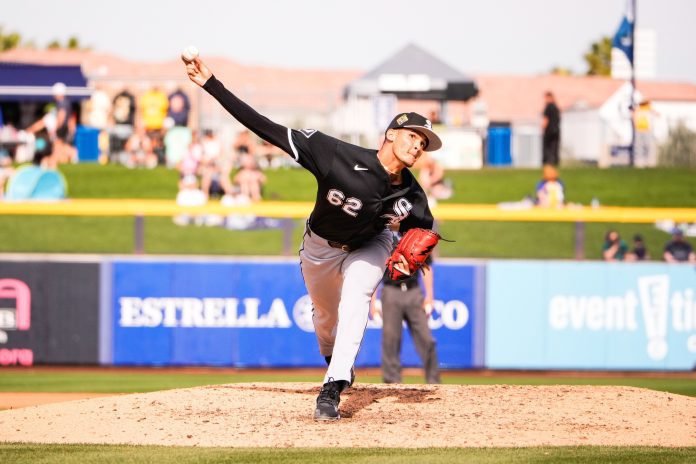
Feb 24, 2026; Peoria, Arizona, USA; Chicago White Sox pitcher Alexander Alberto (62) pitches during the fifth inning against the Seattle Mariners in Peoria, Arizona. Mandatory Credit: Arianna Grainey-Imagn Images

The Rule-5 draft is a very interesting part of Major League Baseball, as it allows teams to poach minor league talent from other organizations. However, while most players don’t end up sticking on the new team’s 26-man roster, there have been some very good players selected in the draft. 

The White Sox struck gold last year when they selected pitcher Shane Smith from the Milwaukee Brewers organization, as Smith went on to have an all-star year for the White Sox. In 146 innings, Smith had a 3.81 ERA and a 1.2 WHIP, while striking out 145 batters in those 146 innings. Now, the White Sox will rely on him to likely be their Opening Day starter.

Mike Vasil was another Rule-5 pick, however he wasn’t selected by the White Sox. The White Sox acquired him from the Tampa Bay Rays who selected Vasil in the Rule-5 Draft. Vasil became one of the most important relief pitchers for the White Sox, as he had a 2.5 ERA over 101 innings and struck out 82 batters. He got the White Sox out of a ton of tough jams last season and will be a big part of the pitching staff this year. There is a chance that he wins a spot as the fifth starter, although I think he fits best as a long reliever or as a one inning guy.

Now with two more Rule-5 players added to the team this off-season, the White Sox will look to strike gold again, but history is not on their side. It is not often that a team is able to consistently churn out Rule-5 picks that stick on the roster.

The first player the White Sox selected was pitcher Jedixson Paez from the Red Sox organization. Paez has yet to make his appearance in Spring Training, which may not bode well for his chances to make the team, as there are a ton of arms fighting for the last few bullpen spots.

It is unclear what the White Sox will want to do with Paez, as he could be competing for one of the last spots in the rotation as well. Paez may be a very good major league player, however he is only 22 years old and has not played against any competition above A+ ball. It remains to be seen what he can do, but it’s hard for the White Sox to judge him if he doesn’t play in any games. If he doesn’t make the initial roster out of Spring Training, he is subject to being returned to the Boston Red Sox, who will gladly take him back.

The White Sox also selected Alexander Alberto from the Tampa Bay Rays organization in the second round. Alberto, unlike Paez, has made a few appearances in Spring Training so far. In two innings, he gave up two runs, but has shown his swing and miss stuff, as he had three strikeouts in his last outing. Like Paez, he also hasn’t pitched above High-A, but he is 24 years old, so he may be able to acclimate to the MLB quicker. Alberto has exclusively worked as a reliever over the last few years, so he looks to earn a spot in the bullpen.

With the amount of competition with the veteran arms in camp, it may be hard for both players to break camp with the team. This would subject them to be returned to their original organization. However, it is likely that they at least get a shot to see what they can do when the regular season starts, as they both have been very productive minor leaguers and posses Major League stuff.

But, if they struggle throughout Spring Training, that certainly may change things. I would imagine that both have successful MLB careers, but it may be with other teams as they might not be ready to pitch in the pros quite yet. It will be hard for the White Sox to replicate their production out of the Rule-5 draft from last year, but there certainly is a chance if things go right.

How Illinois Is Now Flirting With Disaster In Chicago Bears’ Latest Stadium Update

chicago bears stadium
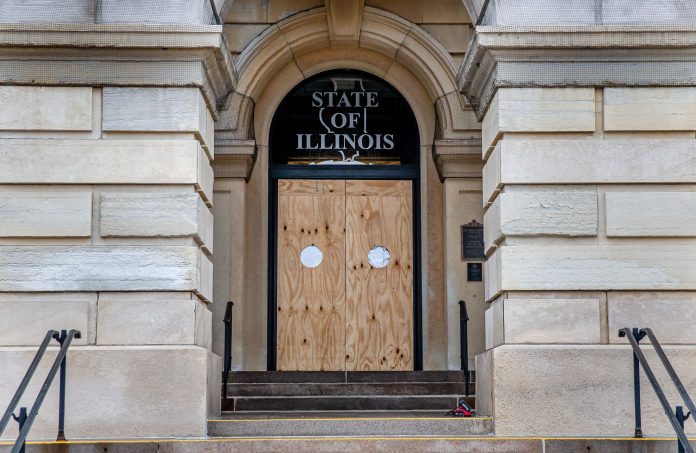
An entrance to the Illinois State Capitol is boarded up with plywood that has holes cut out to see through in preparations for possible protests at the Illinois State Capitol, Saturday, January 16, 2021, in Springfield, Ill. Illinois Gov. JB Pritzker announced that he has activated 250 members of the Illinois National Guard amid threats of armed protests in capital cities across the country in the days leading up to President-elect Joe Biden's inauguration. [Justin L. Fowler/The State Journal-Register]

The Chicago Bears have been patient with the state of Illinois, perhaps more so than most teams would be. There is something to be said for the history the state and the franchise have shared for over a century. However, everything has a breaking point. After three long years of tense discussions about helping the Bears build their new stadium in Arlington Heights, things finally seemed ready to move forward. The megaprojects bill that would give them infrastructure and property tax assistance was being heard by the House Revenue Committee on Thursday. It passed by a vote of 13-7.

Unfortunately, things fell apart on the House floor. According to Brenden Moore of Capitol News Illinois, the House adjourned before even hearing the bill. That means the Bears must wait another two weeks before it reconvenes in mid-March. It sounds like there is still considerable resistance inside the state government on this issue. The wait will continue for fans who have grown weary of the matter. A better question is, have the Bears run out of patience? Don’t forget it was reported that if nothing was achieved by the end of February, they’d choose to leave for Indiana.

Indiana continues their courting of the Chicago Bears.

While Illinois keeps hemming and hawing over the issue, its eastern neighbor had no such qualms. Their state senate has already approved a new bill that would make it much easier for big businesses to build in Northwestern Indiana by providing infrastructure and property tax support. It passed by a 45-4 vote. It will now go to the governor’s desk for a signature, which is expected in the next 24 hours. They have shown time and time again that they are serious about bringing the Chicago Bears to the region.

Illinois governor J.B. Pritzker has insisted that talks have been productive for the past few weeks. The problem is that not everyone in his government agrees on this issue. Many believe the Bears don’t deserve any tax breaks for what, in their minds, is a vanity project for the billionaire McCaskey family. This division could cost the state one of its most historic entertainment draws. Indiana is almost ready to go, and Illinois is basically telling the Bears they’ll have to wait. That doesn’t seem like a sound strategy.

The Bears’ decision, from a business standpoint, is obvious.

They should take the deal with Indiana and not look back. That state wants them and is willing to provide the financial incentives to make it happen. Under normal circumstances, the Bears probably would’ve already started the process of leaving. However, when you have over 100 years of history with a state whose name is in your literal fight song, it is difficult to just up and leave. The McCaskeys never wanted to move to Indiana. It just got to a point where they couldn’t take being ignored anymore.

More than ever, it feels like a breaking point is near. If the Illinois government fails to make a decision on this bill next month, it is a safe bet that the Bears will cease all negotiations and begin their shift to Indiana. They’ve already shown interest in the town of Hammond, which is a half-hour drive from downtown Chicago. They would be free to remake the land as they desired, turning it into a major tourist destination. Once the debt on the stadium is paid, they will own it fully.

Something has to give.

Skeptics Sleeping on the White Sox? The White Sox Over Is Screaming Value

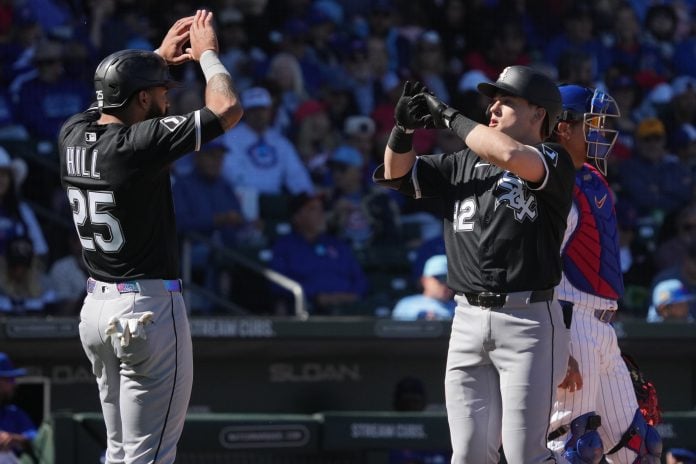
Feb 20, 2026; Mesa, Arizona, USA; Chicago White Sox shortstop Colson Montgomery (12) celebrates with center fielder Derek Hill (25) after hitting a two run homerun against the Chicago Cubs in the second inning at Sloan Park. Mandatory Credit: Rick Scuteri-Imagn Images

Spring Training is the time of year when optimism runs through every clubhouse in Major League Baseball. It’s a fresh start, a new year, a new roster, and a clean slate for players eager to prove the doubters wrong.

The White Sox have no shortage of doubters, but that skepticism could create real value for optimistic bettors. Most sportsbooks have set the White Sox’s 2026 win total around 66.5, after going 60-102 last season.

Yet a budding young core, highlighted by standouts like Colson Montgomery, Kyle Teel, and Edgar Quero, combined with some intriguing offseason additions, has the club positioned to exceed expectations.

Baseball Prospectus’ PECOTA system, one of the most respected projection models, currently forecasts the White Sox to win  69 games, placing them last in the AL Central. While contention for the division title remains unlikely, there’s reason to believe they can clear the 66.5 line and even push past 70 wins overall.

The White Sox should benefit from one of the weakest divisions in baseball. As things currently stand, PECTOA has the Royals favored to win the AL Central with just 85 wins, the lowest ceiling among all divisions. The Tigers are the only other team in the division projected to win 80 games.

The White Sox biggest Achilles heel last season was the bullpen, which blew 24 saves and converted on just 51% of their save opportunities. It was a major factor in the team’s MLB-leading 36 one-run losses, turning winnable nights into missed opportunities.

Chris Getz made a concerted effort to address this issue over the offseason, which included adding Serantony Dominguez, Sean Newcomb, and Jordan Hicks to add depth around promising young arms like Jordan Leasure, Grant Taylor, and Mike Vasil.

Dominguez gives the White Sox a defined closer after Will Venable was forced to use eight different arms last season to record a save. Newcomb provides a much-needed left-hander to bolster the bullpen, assuming he doesn’t land a spot in the rotation, while Hicks gives the bullpen another versatile arm who can touch triple-digits.

Together, Leasure, Taylor, and Domínguez form a trio of hard-throwing right-handers capable of dominating the back end, giving the bullpen a stronger spine for close games.

The rotation also gets a modest boost from targeted moves. The White Sox reunited with Erick Fedde on a low-risk one-year deal for familiar veteran innings and depth. They signed KBO standout Anthony Kay to a two-year contract, betting on his dominant overseas performance to solidify the middle of the rotation.

Shane Smith enters 2026 looking to build on his breakout All-Star rookie campaign, while Davis Martin provided optimism last year with a near-46% groundball rate and reliable innings-eating ability.

On the offensive side, the White Sox took a hit by trading away Luis Robert Jr., a 1.4 WAR contributor last season, to the Mets, receiving infielder/outfielder Luisangel Acuña (who posted a  0.6 WAR in 2025).  However, Acuña, now with a full, everyday runway in Chicago after limited big-league opportunities with New York, has real upside to outperform that baseline. The 23-year-old showed flashes of power in the Venezuelan Winter League, slashing .282/.397/.542 with 8 HR in 39 games.  If he capitalizes on regular at-bats and the South Side’s hitter-friendly environment, his production could climb.

Getz also landed Japanese slugger Munetaka Murakami, the NPB’s home run leader,  on a two-year, $34 million deal, adding a high-upside power bat who could anchor the middle of the order and provide immediate thump. Meanwhile, Austin Hays brings a much-needed outfield bat and has plenty of motivation on a one-year deal.

The farm system also features Sam Antonacci, who is making an early case to crack the roster, as well as power arms Tanner McDougal, Hagen Smith, and Noah Schultz, who could see action at some point. At the very least, the added organizational depth will help prevent the team from bottoming out should the injury bug strike. 

These aren’t blockbuster overhauls, but they’re smart, cost-effective steps to raise the floor, especially in a forgiving AL Central. If the new bullpen pieces click in high-leverage spots and the rotation holds together, and the young core benefits from the added lineup protection, the White Sox could turn more late leads into wins and push past PECOTA’s modest 69-win outlook. With the betting lines sitting at 66.5, there’s a clear case to hammer the over.

The Least Talked About, Most Important Story For The Chicago Bulls Down The Stretch

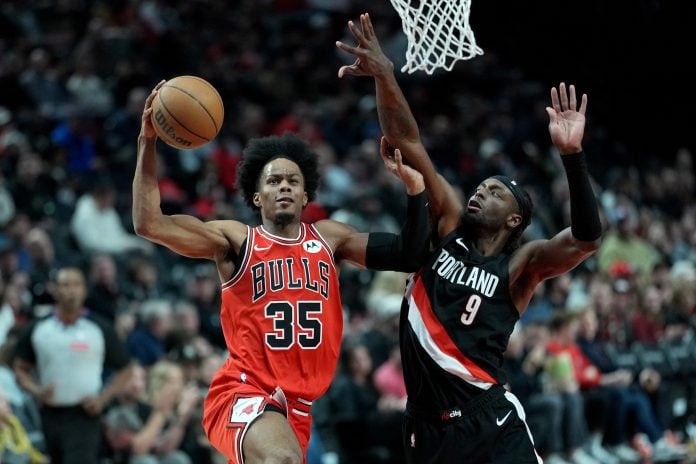
Nov 19, 2025; Portland, Oregon, USA; Chicago Bulls forward Isaac Okoro (35) goes up for a shot under pressure from Portland Trail Blazers forward Jerami Grant (9) during the second half at Moda Center. Mandatory Credit: Soobum Im-Imagn Images

The two highest-priority tickets for the remainder of the Chicago Bulls’ regular season are to keep losing games and improve their draft odds for the 2026 NBA Draft, and to fully unleash the roster’s youngest players to maximize development opportunities. A few nights ago, extending their losing streak to 10 games and watching Matas Buzelis drop a career-high 32 points was the perfect example. Since the franchise knows what it has in Josh Giddey and Buzelis, the focus should shift to what the newcomers can contribute to the future of a rebuilding organization. Names like Jaden Ivey, Rob Dillingham, Anfernee Simons, and Leonard Miller should be thoroughly vetted to narrow down who is worthy of long-term investments and who will be playing their final stretch with the team. Recently, with the surging of one Western Conference team, there’s a third important storyline to follow, and potentially franchise-altering additive that could turn Chicago’s entire offseason around.

Big Portland Trail Blazers Fans

In 2021, when the Bulls shipped off Lauri Markkanen as part of a three-team deal with the Cleveland Cavaliers and Portland Trail Blazers, Chicago was granted a protected first-round draft pick from Portland. This pick is top-14 protected, has been for several years, and won’t be possessed by Arturas Karnisovas’s group until the Blazers find themselves selecting between 15 and 30 in the first round of one of the next three NBA Drafts. Led by first-time All-Star Deni Avdija, Portland is currently ninth in the Western Conference standings and is pacing to qualify for the play-in tournament after the regular season concludes. If they’re able to sneak their way into the final eight slots out West and qualify for the postseason, Chicago would add another first-round pick to their artillery.

As CHSN’s K.C. Johnson details, Bulls fans should be rooting for Portland to win out and Chicago to lose out, which, in a perfect world, would result in Karnisovas having one first-round pick between 15 and 20, and one in the top-ten.

Find Out Leonard Miller’s Value

Miller was a long-shot prospect added in as a sweetener in the Ayo Dosunmu for Rob Dillingham swap a few weeks ago. At only 22 years old and having no real body of work in his three seasons at the NBA level, the verdict is still out on whether or not he’s a long-term asset or a revolving door trade addition. With injuries to Jalen Smith, Zach Collins, and recently Patrick Williams, now is the time to maximize his minutes and see what the kid has to offer. He’s appeared in only 53 games at the professional level, and since he’s under club control for the next two seasons, Chicago needs to determine his future outlook. As a much cheaper and more athletic version of Williams, fans would not be opposed to letting the former Florida State Seminole walk in favor of the newcomer.

Bulls fans should be excited at the prospect of gaining a second first-round draft pick, but also pessimistic for a few reasons. While Portland will likely land in the mini-tournament, they are the least experienced and least talented of the four teams headed to it, and it’s doubtful they’d advance. Even if Chicago does add the pick, what has Karnisovas proven with previous draft selections that would excite the fanbase about gaining another one?

Dennis Allen Has One Significant Quirk That Complicates Bears Draft Plans

dennis allen
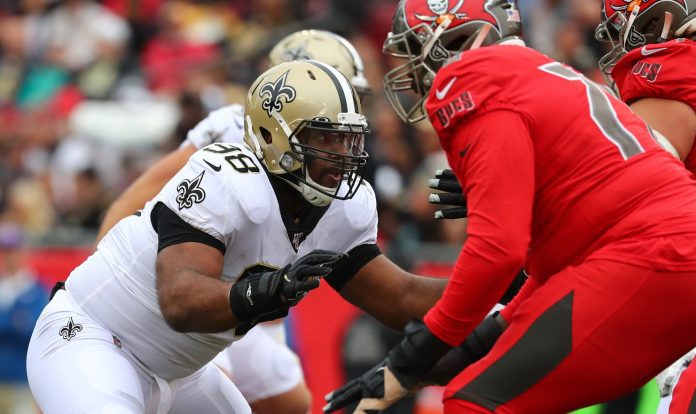
Nov 17, 2019; Tampa, FL, USA; New Orleans Saints defensive tackle Sheldon Rankins (98) during the first half at Raymond James Stadium. Mandatory Credit: Kim Klement-USA TODAY Sports

When discussing the Chicago Bears’ 2026 draft plans, most agree that the primary focus will be on the defense. Left tackle is the only position the team has to worry about offensively. Meanwhile, they have several unanswered questions on the defensive side. Both starting safeties will be free agents this year. Tremaine Edmudns was just granted permission to seek a trade. That basically means he’ll get cut if his agents can’t find a taker. Then you have the defensive line. Andrew Billings is a free agent. Dayo Odeyingbo is recovering from an Achilles tear. Dennis Allen needs help on that side of the ball.

The Bears’ defensive coordinator is certain to have a strong voice in the evaluation process. It’s his unit after all. General manager Ryan Poles and head coach Ben Johnson will receive his input on types of players he’d prefer at every position, then adjust their draft board accordingly. Here is where things get complicated. Quinten Krzysko of On Tap Sports pointed out something noteworthy. If you follow Allen’s long career as a defensive coordinator and head coach, he tends to build his defensive lines a specific way.

This has led to a rather unique quirk regarding defensive tackles his teams have drafted over the past 15 years.

Dennis Allen is very particular with his defensive tackles.

The data backs up what Krzysko says. Since 2012, every defensive tackle taken in the first three rounds of the draft, while Allen ran the unit, was under 300 lbs. They were known for their athleticism, quickness, and violence. The one correction is that technically the picks don’t go over 300 lbs until the 4th round, not the 6th. Still, the point is pretty clear. Allen doesn’t think it’s necessary to target bigger defensive tackles early in the draft. You have favorable odds of landing one later on.

Player YearTeamRoleRoundWeight (lbs)
Bryan Bresee2023New Orleans SaintsHead Coach1st298
Sheldon Rankins2016New Orleans SaintsDefensive Coordinator1st299
Shemar Turner2025Chicago BearsDefensive Coordinator2nd290
David Onyemata2016New Orleans SaintsDefensive Coordinator4th300
Justin Ellis2014Oakland RaidersHead Coach4th334
Tyeler Davison2015New Orleans SaintsDefensive Coordinator5th316
Khristian Boyd2024New Orleans SaintsHead Coach6th320
Jordan Jackson2022New Orleans SaintsHead Coach6th294
Stacy McGee2013Oakland RaidersHead Coach6th310
Christo Bilukidi2012Oakland RaidersHead Coach6th290

It isn’t a coincidence that Allen’s best defensive unit of his career, the 2020 Saints, finished in the top five in total interior pressures. The combination of David Onyemata and Sheldon Rankins created havoc in the middle. Unfortunately, Rankins left after that season, and the defense took a dip. It’s becoming clear why the Bears pursued Grady Jarrett and Dayo Odeyingbo in free agency. Both fit the exact types of players that Allen built that Saints defense with. One should expect that plan to continue in this draft.

The Bears face a problem in this regard.

Knowing this information, it’s only natural to look at the 2026 draft class and seek out the top defensive tackles who come in at 300 lbs or less. There is one problem. None of the top options in the draft currently fit those criteria. When looking at all five of the names expected to be in the mix for the 1st round this year, three of them are over 320. That leaves Peter Woods of Clemson (listed at 298). As of now, he is the only one who fits the criteria. Christen Miller of Georgia, originally listed at 305, came in at 321 at the combine.

PlayerSchoolWeight (lbs)Projected Round
Caleb BanksFlorida3351–2
Kayden McDonaldOhio State3261–2
Lee HunterTexas Tech3251–2
Peter WoodsClemson2981–2
Christen MillerGeorgia3211–2
L.T. OvertonAlabama2832–3
Darrell Jackson Jr.Florida State3372–3
Dontay CorleoneCincinnati3352–3
Chris McClellanMissouri3202–4
DeMonte CapehartClemson3202–4
Gracen HaltonOklahoma2902–4
Domonique OrangeIowa State3353–5
Tim Keenan IIIAlabama3263–5
Cameron BallArkansas3243–5
Brandon ClevelandNC State3003–5
Rayshaun BennyMichigan2963–5
Zane DurantPenn State2904–5
Albert RegisTexas A&M3104–6
Jackie MarshallBaylor2907–UDFA

This could mean one of two things. The first possibility is that Dennis Allen might have to compromise on his standards by a few pounds. It isn’t crazy to think he could get one of those guys to shed some weight, slimming them down to gain some quickness. If not, then the Bears may have to wait on finding that defensive tackle until day two, when guys like Grace Halton come into play. It is an interesting dilemma for the Bears to sort through, and much depends on if they think dropping weight might negatively impact Woods’s games.

The Gervon Dexter situation makes this even more interesting.

Word came out on Thursday that teams are calling the Bears about the 24-year-old defensive tackle. It makes some sense. He’s coming off a career-best six sacks, but has just one year left on his contract and isn’t a great fit for the scheme Dennis Allen runs. With so much money already invested on the line, it is unlikely the team will want to pay him. That leaves them with two options. They either trade Gervon Dexter now or let him play out his contract and leave as a free agent in 2027, likely netting them a future compensatory pick.

If they go the former route, it makes defensive tackle in the 1st round a virtual certainty. That creates a problem. If Peter Woods goes before the 25th pick, which is a strong possibility, none of the remaining options meet Allen’s criteria for the position. That means they’d have to draft somebody out of his comfort zone or reach for somebody who would not be considered 1st round material. Neither of those options feel like the proper way to build a roster.

McDougal’s Debut Sparks Buzz: Is Relief Role Fast Track To The Majors?

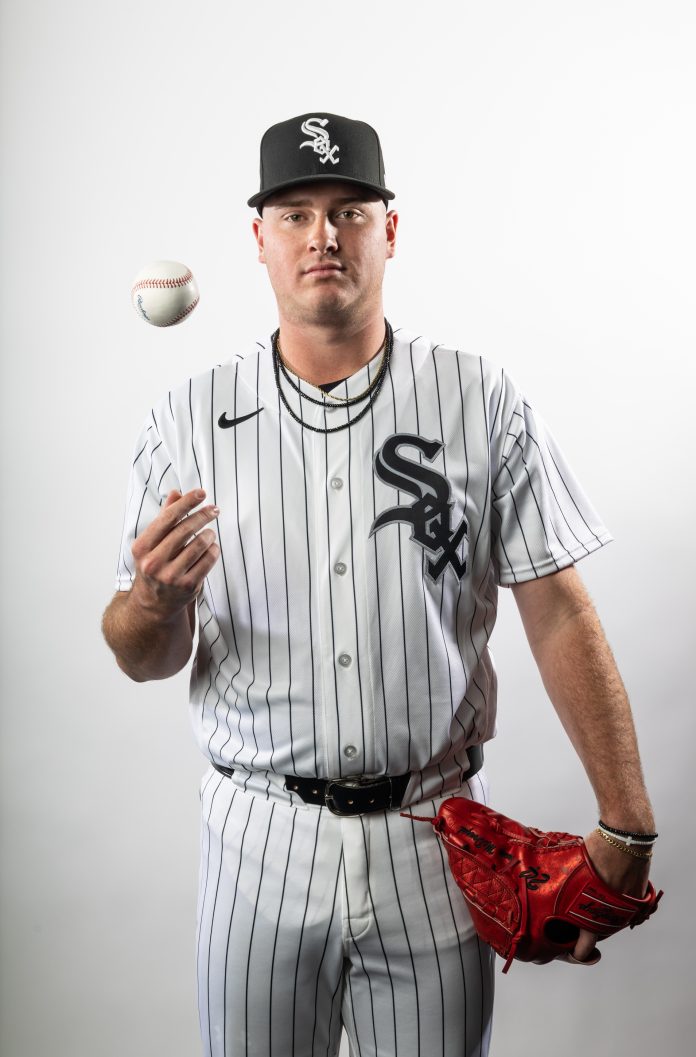
Feb 17, 2026; Glendale, AZ, USA; Chicago White Sox pitcher Tanner McDougal poses for a portrait during photo day at Camelback Ranch. Mandatory Credit: Mark J. Rebilas-Imagn Images

White Sox right-hander Tanner McDougal made his first MLB Spring Training appearance over the weekend, and the 22-year-old did not disappoint.

McDougal took the mound in the eighth inning of Sunday’s game against the Brewers at Camelback Ranch, tasked with protecting a two-run lead. He proceeded to fire two dominant, scoreless innings, allowing just one hit while striking out two en route to recording a save.

What stood out most was his fastball, which touched triple digits multiple times. His 15 heaters averaged 99.5 mph, an eye-opening early statement. After some lingering concerns about his command, McDougal came out and attacked hitters aggressively, throwing 17 of his 28 pitches for strikes, primarily with challenging hitters with fastballs and sweepers.

While he turned to his curveball and slider four times, he made it count. One of the three curveballs he mixed in was particularly filthy, freezing the hitter for a backwards K to record the second out of the ninth inning.

It’s still early in Spring Training, but Tanner McDougal already looks like a pitcher who could make an immediate impact in the White Sox bullpen.

Many evaluators see him as a future mid-rotation starter, and that long-term role remains very much in play. White Sox manager Will Venable has called the idea of the 6-foot-5 McDougal in the rotation “really attractive.” In the short term, though, a relief role might be the smarter path to the majors.

Lighting up the radar gun in your first bullpen appearance in February is one thing. Sustaining that over a 162-game season is another. McDougal has spent most of his minor-league career as a starter, but breaking into the big leagues as a reliever could ease the transition, giving him the freedom to unleash his high-octane fastball without worrying about pitch counts or deep outings.

To stick as a starter, McDougal will need to prove he can consistently throw strikes. He made real progress in that area last season. After averaging more than five walks per nine innings in 2024, he cut that rate to 3.89 in 2025.

There’s no doubt his stuff is major-league caliber. In High-A last year, McDougal posted a 3.28 ERA over 57⅔ innings with 73 strikeouts. After his promotion to Double-A, he was even sharper, logging 55⅔ innings across 15 starts with a 3.23 ERA, 1.19 WHIP, and 63 strikeouts.

Chris Getz has loaded up the bullpen with plenty of relief options, so cracking the Opening Day roster won’t be easy for the Las Vegas native. Even if he doesn’t break camp with the big-league club, a strong case can be made for starting him in Triple-A. A few starts there would build arm strength and give him valuable innings before a midseason call-up, where he could ease into big-league hitters out of the bullpen in the second half.

The White Sox have successfully transitioned relievers into starters in the past, the most recent example being Garrett Crochet. McDougal’s raw tools and improving command make him a candidate for a similar path if the organization decides to go that route down the line.