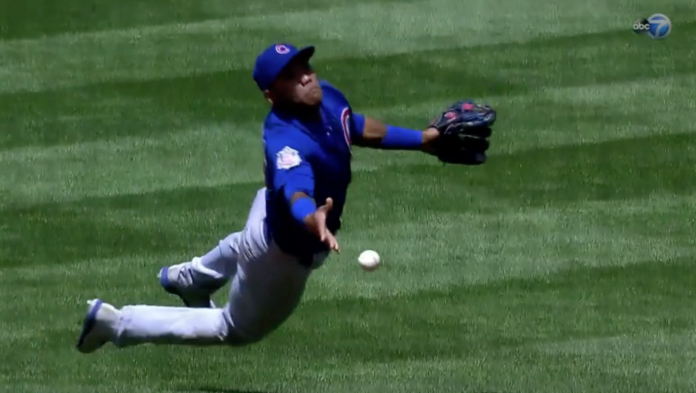
CLEVELAND — If you had told me during Spring Training, on Opening Day, or even after the Chicago Cubs’ brutal first 10 games of the season that they would be in first place in the NL Central by the All-Star break, I think every Cubs’ fan would’ve been content with the news.
Alas, after an absolutely wild roller coaster of a first half, the Cubs are indeed in first place in the NL Central. But the vibes surrounding this team aren’t that of a first place team. They’re a shell of their former World Series champion selves and have been trending in the wrong direction over the last two months.
Here’s a crazy stat for you: The Cubs are actually below .500 over their last 50 games (22-28). Twenty-two and Twenty-eight! That’s about one third of the season — not a small sample size — and the Cubs have lost more games than they have won during that stretch. Remarkable.
And yet, they are still in first place. Even more remarkable.
Said Kris Bryant after the first half ended with a 3-1 loss to the White Sox:
More Bryant: “I don’t think what we’ve done in the first half is going to be good enough.”
I’m going to venture out and say that’s probably correct.
There are plenty of theories and even more questions about the Cubs as we head into the All-Star game tonight and resume the season this weekend.
With that, let’s reach into this week’s Cubs Mailbag: All-Star break edition!
Q: This team just can’t seem to get all three phases working together at a time. What’s wrong with them? — Jackie U.
I love the football reference, and you’re correct: The Cubs’ hitting, pitching, and fielding haven’t been consistently strong at the same time for much of this season. The Cubs were on a roll for a bit after their disastrous opening road trip, but their extended rut seems to coincide with when they recalled Addison Russell and Ben Zobrist left the team.
First of all, Russell never should’ve been recalled. A big part of this team’s aura the last few years has been their chemistry, good vibes and likeability. Russell’s return killed that. Bad human being realities aside, he’s also not hitting or playing good enough defense to warrant a roster spot, let alone a lineup spot. It’s also disconcerting that the Cubs are so heavily reliant on Zobrist. He’s a truly professional hitter and has been a boon for this team, but for their offensive production to shut down since his departure is concerning.
The bullpen, despite signing Craig Kimbrel, has weak links. Kimbrel himself is still getting up to speed and grasping his command. Mike Montgomery shouldn’t be in a specialist role. The Cubs don’t have a real lefty specialist (Kyle Ryan barely counts) and Joe Maddon doesn’t seem to trust reverse splits. And Brad Brach hasn’t been good enough.
A signature of this team from 2015 through the first half of last year was exceptional fielding and overall smart baseball. Alas, the Cubs rank near the bottom in fielding percentage this year and lead the league in outs made on the basepaths (not including pickoffs / caught stealing). That is indicative of dumb baseball. When you’re not hitting enough, mental errors can’t happen and you can’t give a team free outs. But the Cubs are doing exactly those things. And that’s why this team is stuck in a prolonged rut.
Until these things get cleaned up, the Cubs will continue to struggle. Their issues with RISP are well documented, but their rates of driving runners in are rather consistent with past years. The biggest issues are with the bullpen, base-running and fielding. Get those on track, and the Cubs will immediately play better baseball more consistently.
Who do you think they will make a trade for and when soon or later ?
I know it seems almost impossible, but we need to also consider the possibility that the Cubs will be sellers at the deadline. If the Cubs go on a demoralizing skid to open the second half and, coupled with a hot streak by their NL Central opponents, if the Cubs find themselves a healthy set of games out of first with many teams ahead of them, I wouldn’t be surprised. The Cubs are stuck in the middle-ish among non-division leaders in the Wild Card race as well. So it remains an unlikely possibility.
That said, this team needs left handed relief help and offensive depth. As I mentioned above, Mike Montgomery isn’t a lefty specialist, Kyle Ryan is average at best and Joe Maddon doesn’t play on reverse splits much (e.g. areas where someone like Dillon Maples would be effective). So I wouldn’t be surprised if they took a look at relievers like Tony Watson or Will Smith. Both of them would be extremely expensive in a trade, but if the Cubs are all in, I wouldn’t be surprised. But help here is needed.
And of course, offensive depth. Robel Garcia has provided a great spark in his limited time with the team so far, and hopefully he will stick around. The Cubs have gotten nothing from Addison Russell or Daniel Descalso and they just don’t have a strong enough bottom of the order. Depth here is prudent. Perhaps they may target someone like Whit Merrifield or Nick Castellanos to get some offensive depth. And getting Ben Zobrist back, if he does come back, will be helpful.
The reality is the Cubs’ roster should, and likely will, look different by the time August 1 rolls around. And the fact that there is no waiver period trade deadline means all the deals must happen by July 31. It’ll be an interesting, and hopefully exciting, three weeks.
Q: What are the chances that the Cubs fire Joe Maddon in-season? — Natalie V.
About as close to zero as one can get without actually hitting zero. Something about never saying never…
Despite all the injury setbacks in recent years, nobody can argue Kyle Long is the best offensive lineman the Chicago Bears have employed since Olin Kreutz departed in 2011. A three-time Pro Bowler, he was the fixture up front through some dark years from 2013 to 2017 before finally getting his first chance to play in the postseason in 2018. Now 30-years old, he’s one of the most experienced veterans on the entire offense.
His body is finally healthy and expectations are for this team to be in the running for a Super Bowl. Getting a ring would instantly put him among the most beloved Bears in history. Not just for his play on the field but also his infectious personality that goes with it. The guy has been one of the great entertainers this franchise has produced in a long time.
It would be hard to imagine that all of this success almost didn’t happen. There was a point in his athletic career where Long had a difficult decision to make. Does he stick with football or go with his other great sports love of baseball. He was great at both but wasn’t sure which was the best for him. He couldn’t reach a satisfying conclusion.
So drastic measures were taken.
Kyle Long left the fate of his sports life up to chance. According to Kevin Fishbaine of The Athletic, a friend offered the idea of leaving it up to a coin flip. True to his aggressive and care-free personality, Long agreed.
“They always said, ‘Do what you love and do it to the best of your ability and if you’re not having fun, don’t do it.’ I have fun with everything I do, so it was always a hard decision for me,” Long said. “(My friend) had a coin with him and we flipped it and heads is baseball — use your head — then tails, go kick some tail (and play football). We ended up landing on tails. Coach (Mark) McElroy, I was in his office the next week.”
From there, things moved fast. After two years at Saddleback Junior College, Long was recruited to Oregon in 2012. He showcased his freakish mix of athleticism and size almost right away. This caught the eye of Bears GM Phil Emery leading up to the NFL draft that next April and the guard became the 20th overall pick. The rest is history.
It’s difficult to explain to people who aren’t Chicago Bears fans just how inept the franchise has been with quarterbacks. There are many stats to help illustrate the point. Just two Pro Bowl appearances since the mid-1960s. No 30-TD or 4,000-yard seasons in an era where they’re commonplace. A staggering number of starters over the decades who tried and failed (often spectacularly) in their bid to change the fortunes.
In the end, the best thing to do might be to go back and recount it all. Every single step of the journey in all its misery to gain a greater appreciation of how much things have changed. The idea is to help explain why skepticism continues to reign even in the face of mounting signs the team may finally have a quarterback they can be proud of. It isn’t because fans are callous or negative. It is a simple case of them having been burned too many times in the past.
Others may claim they understand. They don’t. Every other organization in the NFL has had at least one true franchise passer during the Super Bowl era. Only the Bears fail in that qualification. So it’s time to begin with the question. Does the greatest run of quarterback ineptitude have a flashpoint? Where did the disease arrive and start to spread?
Ironically at a point when the team was burdened with too many good ones.
Chicago Bears QB problems began with poor George Halas decision
Believe it or not, there was a time in Bears history where they were loaded to the brim with good quarterbacks. In 1948, the team was two years removed from their fourth NFL championship of the decade. Sid Luckman, their longtime starter, was on his way to the Hall of Fame. However, at 32-years old his time in the league was starting to run short. It is for this reason that team owner and coach George Halas had begun preparing for the future.
In 1946, the Bears had used their 1st round pick on Notre Dame quarterback Johnny Lujack. Then that same year of ’48, they struck again by using another on Texas star Bobby Layne. Suddenly the team was loaded with talent at the position. It appeared that their future going into the next decade was secure. Whenever Luckman was ready to step down, Halas would be free to choose a successor.
Unfortunately, such plans rarely survive the human element. After the end of that season, Layne came to Halas. He was not content to serve as a backup to Luckman. He also probably realized that because Lujack got there two years ahead of him that he would get the first crack at the starting job. Thus Layne asked the Bears patriarch to trade him if he wasn’t going to be allowed to play.
Halas surprisingly agreed.
Today people would wonder why he’d do that. He certainly wasn’t under any obligation. In truth, it comes down to two factors: money and loyalty. Layne later explained that Halas had selected him with the belief Luckman was going to retire. When that didn’t happen, he had a choice to make on who the eventual successor would be. The choice was less about ability and more about who would be the bigger draw in Chicago.
“Johnny Lujack and I were rookies together at Chicago. Mr. Halas thought Sid Luckman was going to retire, but Sid decided to play two or three more years.
Mr. Halas was a great man. He told me, ‘Bobby, I can’t afford to keep three quarterbacks and I can’t make Sid retire. He’s Jewish, which means a lot of season tickets. Johnny’s from Notre Dame, which means more season tickets. And you’re a Baptist from Texas. You have to understand.'”
One must understand that back in those days, money was always a prevalent issue. Teams weren’t worth nearly as much as they are today. Franchises folded left and right. Staying alive was about finding ways to sell tickets. With Notre Dame being one of the most popular colleges in that era, keeping Lujack had plenty of logic behind it. Nevermind the fact the guy was a war hero, having served in the Navy during World War II.
There was no reason at the time to think Lujack wouldn’t be good.
He was a three-time national champion in college and made All-Pro the first of three consecutive seasons in 1948. Halas was right to think his decision wasn’t the wrong one. Sadly, it was that faith in the school connection that would ultimately prove to be his undoing. In a move he would later declare his “biggest blunder,” the Bears owner traded Layne to the New York Bulldogs.
From there the quarterback ended up in Detroit where he would reach six Pro Bowls in his NFL career and helped them to win three championships in the 1950s. Meanwhile, Lujack appeared to be ascending as well. He set an NFL record with 11 rushing touchdowns by a QB in 1950. At the start of 1951, Luckman had finally retired. It was Lujack’s team now. Barely a few months later, that would no longer be the case.
One thing about Lujack was his commitment to continue playing had never been overly strong. His big fear was whether he could find a career that would last. This was true even when he started playing professionally.
“When I got out of Notre Dame, I wasn’t sure what I wanted to do. There was the job with the Bears, of course. I was thrilled with the idea of playing for the great Chicago Bears. But even then I was looking beyond and wondering what I would do eventually. I wasn’t silly enough to think that heroes last forever.”
That flakiness would end up burning the Bears when Lujack abruptly retired at the age of 26. His reasoning was a return to Notre Dame at the behest of his former coach Frank Leahy to become an assistant. Lujack felt he owed the Irish legend for granting him a scholarship. Expectations were Leahy hired him to eventually become the successor as head coach.
The great irony is that didn’t happen.
Lujack was passed over for the job and he left the team shortly afterward in 1954. He admitted later that he wasn’t even all that interested in coaching to begin with. The man soon became a car salesman. The Bears, having been left high and dry, were forced to act quickly to fill the void he’d left behind. It is here where the decades-long disaster truly began to unfold.
Bob Williams: Chasing a shadow
The first sign that the Bears had lost their magic at finding quarterbacks wasn’t long in coming. With Lujack gone, Halas was forced to turn to Bob Williams as the new starter. Chicago had selected the Notre Dame quarterback 2nd overall in 1951. No doubt the Bears owner was really leaning into the Irish euphoria of that time and wanted to cash in.
The problem was such a pursuit robbed him of his credible eye for talent. Williams had been a great success in college, winning a national title and coming close to the Heisman trophy twice. There was confidence he could step in for Lujack. In the end, his career spanned a total of seven starts. Williams threw 87 passes in 1952 with 6 touchdowns and 5 interceptions, posting a 3-4 record.
A few months later he was in the United State Navy heading off to fight in Korea. Once again a Notre Dame QB had left Halas twisting in the wind. Yet that may not be what stings the most about the affair. If the Bears owner had operated with a clearer head in that 1951 draft, he might’ve noticed a far better quarterback sitting the board.
His name was Y.A. Tittle. After his original team folded the year before, he’d applied for entry into that draft. After the Bears took Williams at #2, the San Francisco 49ers grabbed him at #3 overall. He would end up a seven-time Pro Bowler and went on to the Hall of Fame.
Then again, it wasn’t like Halas needed another Hall of Famer.
George Blanda: A sign of Papa Bear’s age
When people hear the name George Blanda, most images conjured are of him in his 40s throwing the Oakland Raiders to improbable victories in the 1960 and ’70s. Most don’t remember the first half of his career. They don’t remember that he was a former 12th round pick who’d spent his first 10 years in Chicago. It’s a piece of info that doesn’t get around much.
So that begs the question. If the Bears had this guy on their roster, why didn’t they make him their featured QB? The simple answer is Halas didn’t like him. He and Blanda were constantly battling over contract issues. The Bears owner wasn’t impressed with him as a quarterback and wanted to use him primarily for his other job: kicking.
Blanda felt Halas was way too cheap and had lost his fire for the sport by the 1950s. Not to mention a belief the evolving game was quickly leaving him behind, especially in terms of passing offenses. It got so bad to a point where the coach actually took to humiliating Blanda during games.
“Once, the Bears were getting crushed in the second half and the crowd started to chant, ‘We want Blanda. We want Blanda.’ Halas looked down the bench and barked, ‘Blanda.’ George jumped to his feet and ran over to his coach, buckling his helmet. Halas jerked his thumb toward the stands and said, ‘Get up there. They’re calling for you.’ ”
Blanda started his last game for Chicago in 1954.
He retired in 1959 but soon returned to join the upstart American Football League with the Houston Oilers. He quickly became their starter and won two championships. Twice he threw for over 3,000 yards and even had 36 touchdowns in ‘1961. In total, he played 16 more seasons after leaving Chicago.
Oh, and his statements about Halas’ commitment to the game? They were proven true. The head coach retired in 1956. He spent two years away from the sidelines before he finally rediscovered his fire and returned. Ironically the same year Blanda left.
Ed Brown: Dawn of “okay is good enough”
Nobody would’ve imagined it at the time, but Bob Williams would end up being the last quarterback the Bears would take in the 1st round for the next 31 years. If that isn’t a surefire sign that Halas had lost at least some interest in the position, nothing is. During that time he would most often settle for cheaper options. What we might call the “okay is good enough” years.
Perhaps no player exemplifies this better than Ed Brown. A 6th round pick out of San Francisco in 1952, he eventually replaced Blanda as the starter in 1955. His numbers by today’s standards would be called atrocious, but back then when defenses were allowed to do whatever they wanted? He was viewed as competent. What the Bears liked about him was his ability to run the offense without constant oversight from the coaches.
“If the throwing of the … quarter back has been a big factor in the Bears’ success this season, his ball handling and play calling have played at least as important a role. … Brown occupies a position that is becoming progressively more unique in pro football — he calls all of the plays.”
Brown went to the Pro Bowl his first two years as a starter, scoring 23 touchdowns with 22 interceptions. He was also their punter during that time. This was enough to get the Bears back to their first NFL championship in 10 years during the ’56 season. Sadly his limitations and the weaker disposition of his teams during that period showed up as Chicago was annihilated by a superior New York Giants team 47-7.
A game in which he threw for just 97 yards and 2 interceptions.
That tendency to shrink against better teams haunted him the rest of his time as the starter. In 1958, the Bears had a chance to get back to the championship game. They finished one win short with an 8-4 record, bowing out to the Western champion Baltimore Colts. In both meetings that year, Brown threw a total of seven interceptions to just one touchdown. What stings about that is the ’58 team may actually have been better than the one in ’56.
They had the #1 defense in the league and an outstanding running game led by Rick Casares and Willie Galimore. The quarterback proved to be their Achilles heel. This would become a statement Bears fans became used to for decades to come.
Billy Wade: Game manager extraordinaire
By the end of 1960, Halas was back on the sidelines. He felt the team had something building in terms of talent and that the quarterback spot was an area in serious need of an upgrade. This time though he wasn’t willing to wait on the development of a rookie. He wanted a veteran with leadership and intelligence like Brown but was a better passer.
This led to Chicago trading for ex-Rams starter Billy Wade. Though he wasn’t gaudy in terms of numbers, the man did play well on some otherwise bad teams. One thing he developed a knack for was coming up clutch late in games. From 1958 to 1960, he had two 4th quarter comebacks and four game-winning drives.
The biggest reason though that Halas wanted him? He fit the profile of what people today would call a “game manager.” Wade wasn’t looking for big plays. He wanted to control the ball, move the chains, and wear opponents down. Former teammate Ed O’Bradovich said that was exactly what the Bears needed at the time.
“When we traded for Bill Wade, he was the right quarterback at the right time. He had the years behind him, he had the passing ability and he was a smart quarterback. The key was don’t make any turnovers. They converted on third down, they ate up the clock a little bit and that gave us some help. It was an offense that was so controlled with the short passes.
Wade was not a star.
Still, he was the first QB in years to play his Bears career throwing more TDs (68) than interceptions (66). His first three seasons were by far his best. His first year in 1961 he threw 22 touchdowns to 13 interceptions, posting a 93.7 passer rating. That proved to be a mark that would stand for the next 57 years when Mitch Trubisky finally broke it in 2018 with a 95.4. That alone should illustrate the state the position would be in soon enough.
Wade threw for 3,000 yards the next year and then in 1963 he earned his second All-Pro honor while guiding the Bears to the NFL championship. Fittingly it was a rematch against the Giants and their quarterback Y.A. Tittle. In frigid conditions, Wade completed just 10 of his 28 passes. However, he delivered when it counted with two QB sneaks for touchdowns.
Aided by one of the greatest defenses in franchise history, that would prove enough in a 14-10 victory. Wade may not have carried the team, but he etched a well-deserved place in history. After just one more season as a starter though, he was benched in favor of another.
Rudy Bukich: A man too late to the party
There are many great stories throughout NFL history, but Rudy Bukich is a wild one. Here’s a man who wasn’t even a quarterback in college, having played wingback during his two years at USC. Then in the final game of his college career in the Rose Bowl against Wisconsin, he was forced to take over passing duties when the starter broke his leg.
Bukich promptly guided the Trojans to a touchdown. The only score of the game. USC won and he was named Most Valuable Player. A few months later, the Los Angeles Rams drafted him in the 2nd round. As a quarterback. His timing though wasn’t the greatest.
Los Angeles already had future Hall of Famer Norm Van Brocklin under center. So rather than stick around as a backup, Bukich left football for two years to join the Army. He returned in 1956, spent one more year with the Rams before leaving to join the Washington Redskins. Again though, he’d picked his moment poorly.
Eddie LeBaron was their starter at that point, a four-time Pro Bowler. All Bukich could do was accept his role as the #2 guy. Eventually, he left Washington via trade to the Bears midway through 1958. This was where Halas got his first look at the quarterback. That experiment lasted through the next season but Bukich was soon moved to Pittsburgh where, once again, he was backing up a legend. This time the aging Bobby Layne.
How ironic, eh?
However, Halas made it clear to him before the trade that it wasn’t permanent. He planned to bring Bukich back when the QB depth chart was less crowded.
“Mr. Halas told me it was only temporary,” Bukich recalls. “He said he would get me back in a couple of years. I didn’t believe it at the time, but he was true to his word.”
Indeed he was. The Bears traded to get him back in 1962 where he became Wade’s backup. This was a role he’d grown used to by then, but signs soon began to appear that others on the team would’ve preferred those roles were flipped. Though he didn’t play a lot, when he did there was substantial evidence he was the superior passer.
For example, the Bears trailed Baltimore 3-0 in their 1963 season home opener. Wade was 5-of-21 throwing and looked completely lost. Halas sent Bukich in. He immediately struck with a 44-yard touchdown pass that proved the difference in the game. Teammates found it hard not to notice and some weren’t afraid to say so publicly.
“Bukich was a favorite of teammates and tight end Mike Ditka once incensed coach George Halas when he stated publicly that he preferred Bukich to Wade.”
Halas, who was fiercely loyal to Wade, held off as long as he could but by the end of 1964, it was clear the man was no longer effective. Thus Bukich became the starter. This resulted in one of the best passing seasons of the decade for a Bears QB. In 1965, he threw for 2,641 yards with 20 touchdowns and nine interceptions, tying Wade’s mark of a 93.7 passer rating. It looked like Chicago had their next guy. There was just one problem.
Bukich was 35-years old.
The next season, the magic he’d had was gone. He threw for 10 touchdowns to 21 interceptions and was demoted to backup after that. It’s hard not to wonder what might’ve happened if Bukich got his opportunity sooner. Maybe if Halas had been more open-minded back during his first stint in the late ’50s, his NFL career might’ve been different. Sadly his remarkable bad luck for joining teams when they already had Pro Bowlers in place became the epitaph of his career.
Jack Concannon: That guy Mike Ditka was traded for
Halas had hoped to improve the Bears’ quarterback situation by 1967 in an effort to ease the pressure on star running back Gale Sayers. His solution to the problem actually ended up being one of the worst moves of an otherwise peerless career. Tired of battling Mike Ditka over contract issues, Halas traded him to the Philadelphia Eagles for Jack Concannon.
A Hall of Fame tight end for a backup QB.
One has to question Halas’ true commitment to the game by this point. That season would be his last as a coach. He retired for good when it ended. So it’s hard not to think his head wasn’t in the right place at that time. After all, this was a man who’d tolerated personalities like Doug Atkins for years. Clearly, he was burned out and simply got sick of dealing with players on such issues.
None of this was Concannon’s fault, of course. He came in committed to making the most of his opportunity. There’s just one thing. He was a backup for a reason. When one can’t overtake Norm Snead (career passer rating 65.5) for the starting job, one can assume he might not me your answer under center.
Jim Dooley, who replaced Halas as head coach from 1968 to 1971, put it best.
“He wasn’t the greatest of passers but he had ability. With the way quarterbacks today have made the game wide open with the shotgun, rollouts and bootlegs, he would have made it today.”
Concannon was another of those hybrid players Halas loved. Running backs who could also throw the ball better than average. He just wasn’t all that special in that second part. His audition in ’67 went poorly, only throwing 6 touchdowns to 14 interceptions. The Bears demoted him at times over the next two years, fighting for time with Virgil Carter.
He did regain the job in 1970 but didn’t do much with it. His time in Chicago ended with a 17-22-1 record and 52 touchdown passes to 93 interceptions.
Virgil Carter: The ticking time bomb
There were many times where the Bears quarterback position was in a state of turmoil and the late 1960s was the perfect example. While Concannon was busy underwhelming people, 6th round pick Virgil Carter had thought he’d done enough during the ’68 season to claim the job after winning four-straight games. Unfortunately, he had the bad luck to break his ankle in November, creating a controversy going into 1969.
Head coach Jim Dooley seemed more comfortable with Concannon and so went with him to start. However, as things began to snowball downhill following an 0-4 start, it seemed like Carter would get a chance to play. That is until Dooley went with rookie Bobby Douglass instead. This incensed Carter but he didn’t let it show. At least not right away.
His opportunity finally did come in December when he started in San Francisco. A game where he threw for 301 yards and two touchdowns. He also had three interceptions though as the Bears were blown out 42-21. The next week, the explosion finally came.
The whole sorry kettle of fish boiled over the next week when Carter, who says he was promised the whole game, was pulled at halftime of a 21-3 loss to the Packers in Wrigley Field. In one of the more infamous locker room scenes of all time, the usually mild-mannered Carter went ballistic, calling Dooley “gutless and a liar.”
While Concannon sat nearby cooing, “Where you gonna be next year, Virgil?” Carter snapped: “Anywhere but here.”
When reporters asked about the fact that Halas still had an option in his contract to return for one more year, the quarterback sealed his fate.
“I hope he wouldn’t be chicken shit enough to do that.”
Carter was traded to the Cincinnati Bengals.
There he eventually became their starter and led them to the playoffs (throwing 9 TDs and 9 INTs) in 1970. He later bolted for the World Football League in 1974 where he threw 27 touchdowns in 11 games. Amazingly, Carter returned to the Bears in 1976. One of the final passes of his career came on a 55-yard touchdown in a 34-7 romping of Seattle. A weird ending to one of the weirdest QB careers of that time.
Bobby Douglass: Just wing it
In terms of pure arm talent, a case can be made that Bobby Douglass had the best one in Bears history. Anybody who saw him truly cut it loose back in the early 1970s would understand. He had a cannon for a left arm, able to go 60 yards down the field with ease. Odds were he could get it 90 to 100 yards in the right conditions. Teams would’ve salivated over him today.
They would’ve encountered the same problem though.
Douglass wasn’t the best learner.
The man himself admitted that he lacked the patience to absorb teaching from his coaches, which is why he always struggled with playbooks. More often than not he was prone to just drawing things up in the dirt or improvising on the fly. One can imagine this drove his coaches crazy. So how in the world did he survive as the starter for three seasons?
Douglass was an exceptionally rare athlete. Not only did he have that rocket arm. He also was 6’4, 225 lbs and could run like the wind. People today might call him the first Michael Vick. A guy defenses were scared to go against because he was so dangerous on the move. Between 1971 and 1974, he ran for 2,007 yards and 17 touchdowns including a then-NFL record 968 yards in ’72.
The guy was entertainment personified.
Nobody had any clue what he was going to do from one play to the next. His limitations as a passer though held the team back. He barely completed 41% of his passes with 19 touchdowns and 34 interceptions, averaging just 88.9 yards per game. To be fair he played on some really bad teams but his lack of accuracy and inability to hone his game ended up costing him in the long-term.
He believes though that he simply came around in the wrong era. With the rules they have now and the more diverse offenses? He feels he would’ve thrived.
“I’m not sure I wouldn’t have a 1,500-yard [rushing] season, because they spread the field so much. It’s so much easier to scramble. Plus, they’ve put a lot of rules in that help the quarterback and help the line with things they couldn’t do in the 70s.”
That would’ve been something to watch. Not that it would’ve won a lot of games. Douglass went 10-22-1 as a starter. So in 1974, they made a change.
Gary Huff: Trapped in the past
Blaming the quarterbacks for everything is easy enough, but it isn’t the reality. For all the problems they themselves had, the Bears were just as guilty for the string of disasters due in large part to their inability to adjust with the times. By the 1970s, it was becoming clear that the NFL was transitioning more and more towards the passing game.
Offenses were becoming more sophisticated. Route running by receivers gained complexity. Audibles grew more numerous and the shotgun formation rose in popularity. Had the Bears embraced such trends, maybe Gary Huff would’ve had more success. Or at least that’s what he believes.
”It`s a mystery to me still why they drafted me,” he said. ”We never ran an offense that was anything but conservative, entirely run-oriented.
”We didn`t even have audibles in those days because there was no passing scheme. There were no adjustments to throw the ball. And yet I wouldn`t trade the experience. I was happy in Chicago.”
Huff was a 2nd round pick out of Florida State in 1973. He’d led the nation in touchdown passes two-straight years in college and threw for over 6,300 yards. A lot for those days. It’s no surprise he was confident he could turn things around in Chicago once he got his opportunity. Yet when it came, he was unequal to the task.
Huff can blame the bland offenses he played in, but the fact is he just wasn’t all that great. While he had a decent arm and size, his decision-making left a lot to be desired. Too often he would put the ball up for grabs and the defense would come down with it. In 22 starts, he went 5-17 with 12 touchdowns and 34 interceptions.
Huff’s biggest claim to fame came after leaving Chicago in 1977? As the starter in Tampa Bay, he helped the Buccaneers to their first win in franchise history. A game in which he threw a total of nine passes. One would think he represented the low point for Bears quarterbacking.
Amazingly, the years that followed would make such a notion laughable.
Most would’ve thought that the Chicago Bulls were done making any big moves this offseason. They added Coby White and Daniel Gafford in the NBA draft. Then they secured Thaddeus Young and Tomas Satoransky in free agency. While none of those could be considered blockbuster moves, the belief is the team got considerably better from last season. True to form though, sports have a way of throwing unexpected curveballs.
The Oklahoma City Thunder have reached a point of no return. Their failure to reach the Finals last season put their money troubles front and center. Already they committed to a massive deal with the Los Angeles Clippers in exchange for star forward Paul George. That move made their intentions crystal clear. The organization is poised to start rebuilding, which means star point guard Russell Westbrook, who is 30-years old, is the next to go.
Already word has emerged that the two sides are in agreement on seeking out trade possibilities. This has led to rampant speculation about where he could land. Popular theories include Atlanta, New York, Houston, and Miami. Not a lot of people have mentioned the Bulls. If only because they’ve never been known for making such a move.
Brian Windhorst of NBA on ESPN believes though that they may, in fact, be the most ideal landing spot for him.
Chicago Bulls have the right mix to entice a Westbrook deal
There are many factors in play here. In order for the Bulls to pull off a trade, they need to have a trade package that would interest the Thunder and also find a way to absorb the massive $38.5 million cap hit he’d bring with him. Not to mention the question of whether the man would be interested in playing in Chicago.
Adrian Wojnarowski revealed that the Miami Heat have a lot of interest, but there’s a problem. Following the deal for Jimmy Butler, the team’s money situation is tight. They’d have to shed a ton of salary to get Westbrook. The only way this happens is they get the Thunder to take on some contracts on their payroll, which is unlikely, or they get a third team involved.
This is why Windhorst likes the Bulls more.
“Chicago makes a little bit more sense. They have some really good, young shooters. If you made Zach Lavine the centerpiece of a trade, potentially threw in a 1st round pick? Now you’d have to include other players to make the money work but you wouldn’t have the hard cap problem there.
Oklahoma City is interested in reducing its salary because they’re into the repeater tax and they would be interested in moving out of the luxury tax in the trade. It would be impossible to do it with the Heat unless there was a third team involved. The Bulls could accommodate them in that way.”
Trading Zach Lavine in the deal would shed $19.5 million off the cap, but it’s likely the Bulls would need another contract to go with it. Cristiano Felicio and his $8,156,500 make a lot of sense. This puts the number at $27,656,500. That makes it more tolerable to absorb Westbrook’s contract. Meanwhile, the Thunder are able to shed $10.84 million off their salary while gaining a young shooter and likely a 1st round pick in the process.
Then the Bulls would have a fascinating core centered around Westbrook, Lauri Markkannen, and Otto Porter Jr. That could make Chicago a serious dark horse in the Eastern Conference. Especially if White and Wendell Carter Jr. are able to develop their potential. Westbrook, an 8-time All-Star, averaged a triple-double last year (22.9 points, 10.7 assists, 11.1 rebounds).
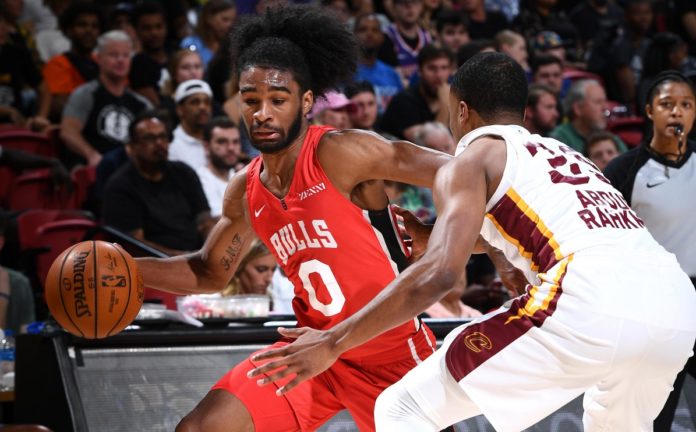
Chicago Bulls 1st round pick Coby White is off to a good start in his NBA career. Through two Summer League games, he’s provided a nice cache of highlights that showcase his potential as a point guard. His ability to run the floor and find teammates for big baskets and also his underrated talent for creating his own shot. Sure, there are things to work on like his decision-making and his accuracy from long range, but there is reason for optimism.
That said, White isn’t a robot by any means. He’s human and as anybody knows, humans have their eccentricities. White is no different. Intentionally or not, he revealed a couple of them during an AMA on the Chicago Bulls Reddit page before the team’s next Summer League contest. Most of the questions were fairly straightforward.
What does he use for shampoo?
Who is his favorite musician?
What does he think his NBA 2K rating will be?
His answers were short and to the point. However, two other questions managed to elicit some juicy responses from the young point guard. One was whether he had any pregame routines.
“In order: I put my left sock on, then right, then left shoe, then right shoe.”
He’s nothing if not consistent. A short time later another fan asked why he chose to wear the #0. The reply started off innocently enough, then took a surprising left turn.
“I wore it in high school. I would have worn it in college but someone had it. Also because Sub-Zero is my favorite game character.”
Coby White certainly seems like a character with character
One of the common lines used about great teams in sports is that they were made up of “characters with character.” That is to say players who had rather unique quirks to their personality but also were dedicated workers who thought more about the success of the team than themselves. Based on those answers and the rest of the Reddit, it seems like White fits that mold perfectly. Works hard, plays hard, and has personal reasons for why he does things.
Odds are the team won’t regret making him the 7th overall pick. Thus far in Summer League action he leads the Bulls averaging 16 points per game. That along with 4.5 rebounds and 4.0 assists. He’s shooting 0-for-11 from behind the arc and had seven turnovers in the loss to Cleveland in the Bulls’ second game. So he wasn’t lying when he said there were things he needed to work on.
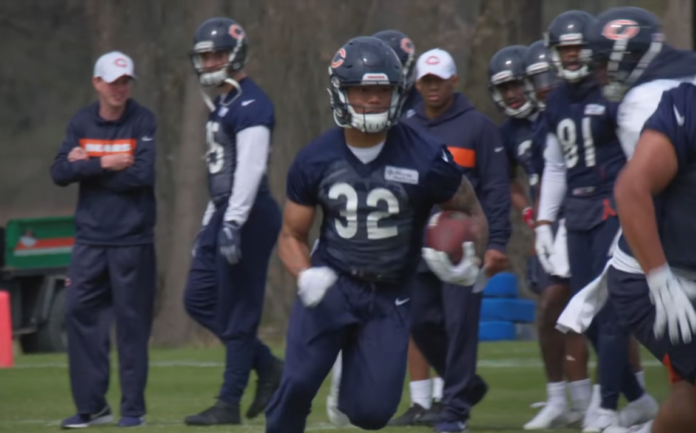
David Montgomery is a 3rd round pick. That is set in stone. Normally players drafted that late tend not to get a ton of attention from analysts. At least in regards to their chances of becoming top contributors in the NFL right out of the gate. Those votes are reserved for the 1st and 2nd round guys. Yet Montgomery is a special case.
For one, he’s a running back. Players at that position tend to get action as rookies more often than others because of how easy it can be to execute. Just take the ball and run to daylight. Many times there have been picks even later than the 3rd round who had instant success as rookies. Jordan Howard set the Bears rookie rushing record in 2016 as a 5th rounder.
So this is a big reason there is such optimism around Montgomery. The feeling is he’ll likely be the primary back in the offense by the second half of the season. If everyone else improves around him, it should open up big opportunities to excel. In fact, belief is so high that some have taken to stating he can claim a notable NFL award.
David Montgomery ranked 3rd among favorites for Rookie of Year
Lance Zierlein of NFL.com is their primary draft expert. He constructed a list of the top 10 players he feels have the best shot to win Offensive Rookie of the Year in 2019. His first two choices weren’t all that surprising. At #1 was 1st overall pick Kyler Murray of Arizona. Right behind him at #2 was another 1st rounder, Oakland Raiders running back Josh Jacobs. Then, sitting neatly at #3, was Montgomery.
“Of all the running backs in the 2019 draft, Montgomery might be the safest, based on his size, toughness and creativity as a runner. While Mike Davis may begin the season as the starter, Chicago finished tied for sixth in the league in rushing attempts last season (468), so there should be more than enough carries to go around.
The Bears have a solid group of talent along the offensive line and if Mitchell Trubisky can continue to improve as a passer and force safeties off the line of scrimmage, the running game has a chance to take off with Montgomery leading the charge by midseason.”
In fact, Montgomery was the only player drafted outside the first two rounds to make the list. That should offer a clear indication that the Bears may have gotten themselves a steal. He’s already been turning heads in minicamp practices with his mixture quickness, vision, and receiving prowess. People are anxious to see what he can do in this Matt Nagy offense.
The Chicago Bears were a big part of the future success of Indianapolis Colts GM Chris Ballard. He’s coming off the best year of his career as a talent evaluator. His nabbing of two All-Pros in Quenton Nelson and Darius Leonard along with the hiring of Frank Reich as head coach propelled his team back to the playoffs just one year after their worst season in a long time.
This is why he was named Executive of the Year by the Pro Football Writers of America. Since then people have wanted to pick his brain about how he’s gotten to where he is. In a recent column for NBC Sports, he decided to write a detailed article on everything from his personal history to how he evaluates players today. The came across as humble and thankful to all those who help him reach this point.
Some notable people he thanked included former Bears GM Jerry Angelo as well as former coaches Lovie Smith and Rod Marinelli. Three men who were considered instrumental for the last successful period of Bears football before the arrival of Ryan Pace and Matt Nagy. However, there is one other notable Chicago name that Ballard is a big fan of.
Chris Ballard is a major admirer of Cubs guru Theo Epstein
One team builder whom Ballard sang major praises of was Chicago Cubs president Theo Epstein. The Colts GM feels that the man is one of the great masterminds not just in baseball but all of professional sports. Turning around one team is hard enough to do. He’s done it twice, all while changing his entire approach to the job.
“One executive that I have tremendous respect for is Theo Epstein. I think he will go down in history as one of the best executives and leaders in sports. He has won three World Series in two different cities that were both suffering long droughts. Under his leadership, Boston won in 2004 and 2007 after not winning a title since 1918.
Theo and his staff did it again with the Chicago Cubs in 2016 to break a 108-year drought. His ability to adapt and grow after leaving Boston is very hard to do and what led to one of the great turnarounds in sports history. Epstein went from an analytical approach with the Red Sox to a character-based approach plus analytics with the Cubs.
Even though I am not a Cubs fan—I grew up in Texas City, close to Houston, and am a big Astros fan—I have great respect for the approach they have taken in Chicago.”
Epstein did tremendous work building the Cubs into a champion and has continued to keep the team competitive in the years since. If one were to look at Ballard’s approach in Indianapolis, they would see a number of similarities in terms of the type of athlete and character they seek out. A good reminder that despite their current struggles, the Cubs remain in good hands.
The Chicago Bears draft season appeared to conclude back in late April with the selection of Stephen Denmark in the 7th round. All told the team appears happy with their 2019 class. It’s headlined by three players they’re particularly excited about in running back David Montgomery, wide receiver Riley Ridley, and cornerback Duke Shelley. All of whom they feel have the long-term capability to become quality NFL starters.
Thus far signs out of practice would seem to reinforce that belief. One would think GM Ryan Pace can take a breath and relax for the next month or so. His draft work is done, right? Well, maybe. July 10th will provide an answer to that question. It will be the day the NFL holds its annual Supplemental draft. An event where players who weren’t eligible to make it in April have a chance to apply for entry to the league.
Normally the circumstances for this are based around either academic issues or some sort of NCAA rules violation. Nobody can call it a prime avenue for finding premier players but every once in a while, teams have found quality talent worth investing in. Josh Gordon, Terrelle Pryor, and Ahmad Brooks are some of the most recent examples. So is there anybody worth noting that the Bears may have interest in?
Chicago Bears draft plans will center around two players
The way things stand, it appears the consensus is two players in the supplemental class are worth the attention of teams. One is West Virginia wide receiver Marcus Simms and the other is Washington State safety Jalen Thompson. Simms had a rather bland three years for the Mountaineers, posting 663 and 699 yards over his final two seasons there. His big draw is an athletic upside. He has good size at 6’0 and has been clocked in the 40-yard dash as low as 4.40. So he has speed too.
However, after making several additions to the receiver position this offseason it’s unlikely the Bears would consider Simms.
If they were to make a move, it would likely be for Thompson. The young safety has a nice blend of skills. He’s both aggressive as a tackler and run defender and has the instinct and quickness to react in coverage. He finished with six interceptions in his final two seasons with an additional 10 passes defended and 8.5 tackles for a loss. A key reason the Bears would be interested is the state of their safety position.
No fewer than three of its current members in Ha Ha Clinton-Dix, Deon Bush, and DeAndre Houston-Carson will be free agents in 2020. Added a young player like Thompson would give them some flexibility at that position next offseason. It will come down to whether the Bears are willing to spend one of their 2020 draft picks in order to get him.
The Chicago Bulls have reasons to love their pick of Coby White at #7 overall in the NBA draft. His mixture of size (6’5), speed, and energy make him a constant presence on both sides of the floor. His ability to run and distribute the ball are two things they’re hoping blossoms sooner than later as it is exactly what the team is missing at the point guard spot. Thus far through two Summer League games, there have been flashes.
However, there is also a glaring concern. White struggles to shoot from 3-point range. Through two games thus far, he is a 0-for-11 from behind the arc, a troubling number that reinforces the concerns about his shooting consistency that followed him out of North Carolina. He struggled at times from a distance there as well. This should reinforce why the Bulls can’t be too anxious to get him on the floor for extended minutes.
NBA defenses are a different animal. They will quickly identify the weakness and work out way to where they take away what he does best and force him to take shoots from range, daring him to hit them. This is why the entire emphasis for Jim Boylen and his staff moving forward should be to work with White on improving his stroke.
The good news is White isn’t under pressure to be that guy. Not yet. Chicago has some pieces in place with the capability to shoot from 3-point land. This includes Otto Porter, Lauri Markkanen, and Zach Lavine. None of them might be called sharpshooters but the Bulls can at least say they have that in their arsenal. They don’t need White for that job. The issue is there will inevitably come a time when the team needs it.
Not having the option makes the pursuit of winning more difficult. This may be why the team could still seek out more help on that front. A cheap option who can ease the pressure until White is ready. That likely won’t be this season, but this is still something worth monitoring. Depending on how he improves or doesn’t improve at this area of his game will determine how far he can rise with this team.
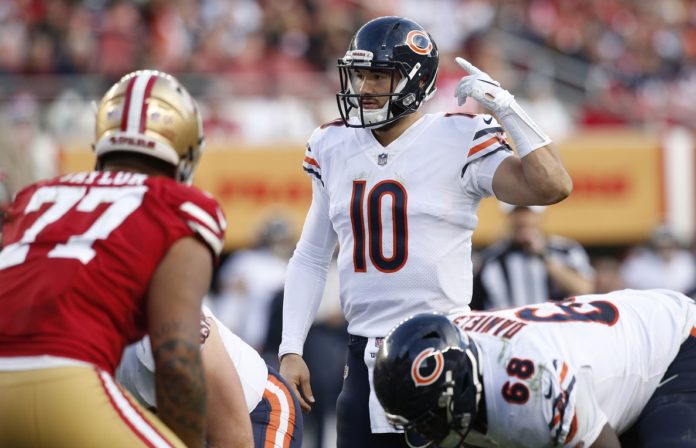
There have already been plenty of nicknames for Mitch Trubisky since he arrived in Chicago as the new Bears quarterback. “Pretty Boy Assassin” and “Mr. Biscuit” were among the most well-known from teammates. Fans soon added favorites like “Maserati Mitch” and “Truth-bisky.” All certainly have their good points, but do they capture the man himself? Leave that to fellow 2017 draft class member Eddie Jackson.
The All-Pro safety has been the voice of the Bears so far this offseason. Every chance he’s found a microphone, he’s made his belief clear that this team is good enough to win a championship. They aren’t thinking playoffs anymore. It’s about winning the Super Bowl now. The talent is there and now the hunger and work ethic is starting to catch up. It’s about putting it all together.
Trubisky is obviously a huge part of that. Jackson has unwavering confidence in his quarterback. So much that when discussing the topic with Zack Pearson of 24/7 Sports, he delivered what had to be the best description of Trubisky to date.
“Mitch is like a smooth criminal. We look at him like a James Bond, he’s smooth, he’s laid back, he’s a silent assassin,” Jackson said. “But we have a lot of confidence in Mitch, we really don’t pay attention to the outsiders because we know what he can do, we go against him in practice. Like I said, from rookie year to last year to this year, it’s a huge leap.”
Eddie Jackson can be trusted with his Mitch Trubisky words
Jackson knows what good quarterbacks are supposed to look like. He played against several of them, not just in the NFL but college too. At Alabama he tangled with Dak Prescott, Deshaun Watson, and Sam Darnold. Since turning pro Aaron Rodgers, Tom Brady, Drew Brees, Cam Newton, Matt Ryan, and Ben Roethlisberger have all joined that list. So when he says Trubisky is better than people say, he’s not just saying it for kicks.
Is he biased? Sure. Being teammates certainly helped.
Still, the words he used paint a clear enough picture. Trubisky may not be a star (yet) but he is somebody the Bears know they can trust. This is showcased by his impressive performances in the 4th quarter, completing over 64% of his passes with 5 touchdowns and 2 interceptions for a 95.7 passer rating. If he was able to do that in a brand new offense with unfamiliar receivers? It’s reasonable to think he’ll be even better this year.